DD
MM
YYYY

PAGES

DD
MM
YYYY

spot_img

PAGES

Home Blog Page 4186

Samsung Records $3.4 Billion Loss in The First Quarter as Chip Demand Slumps

0

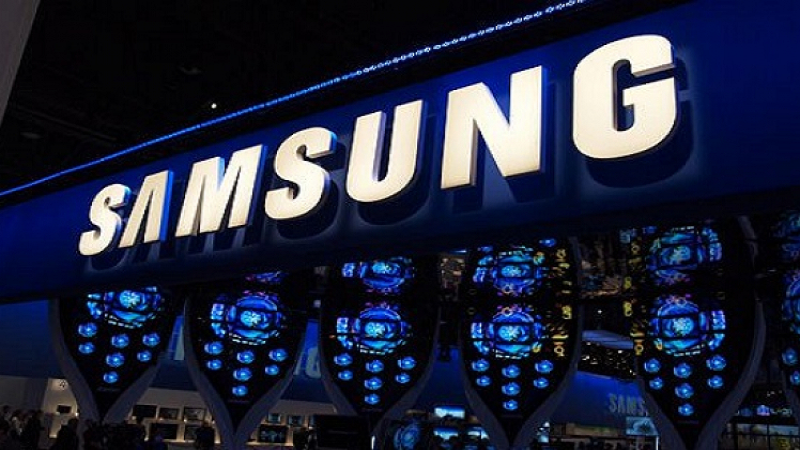
Giant tech company Samsung recorded a $3.4 billion loss in its first quarter report following the slump in the demand for microchips, which often generate about half of its profits.

The South Korean company which reported its worst quarterly profits in 14 years, disclosed that its operating profit fell 640 billion ($478.6 million) down from 95 percent from a year earlier. The company’s chip division reported 4.58 trillion won in losses, its first operating loss since 2008.

Samsung said in a statement, “The slump in the Microchip division was due to continued price declines and an increased valuation loss, amid weakening sentiment and continued impacts of inventory adjustments by customers caused by prolonged external uncertainties.”

Samsung’s first-quarter net income fell 86.1 percent to 1.57 trillion won, and sales dropped 18 percent to 63.75 trillion won. It stated that overall consumer spending slowed amid the uncertain global macroeconomic environment.

Samsung’s first-quarter revenue decline is the third consecutive margin squeeze, which saw a 70 percent fall in operating profits in the fourth quarter-on-year. The South Korean giant tech company has for a long time enjoyed record profits in recent years as prices for its products soared, unfortunately, the global economic slowdown has dealt a blow to memory sales.

While increased sales in its new flagship mobile device Galaxy S23, helped offset deficits in the chip sector in the first quarter (Q1), analysts predict that from April to July, the company would experience the worst first profit loss since 2008. Samsung is focusing on profit rather than shipments as it meets more resilient demand for premium smartphones rather than volume. The tech giant has forecasted that the smartphone market would increase in both shipment and revenue.

Despite the decline in profits in its chip division, Samsung has remained committed to pushing forward after it unveiled that its investment in memory chips this year will be similar to last year because it is seeking to safeguard its longer-term competitiveness.

The company revealed plans to contribute $227 billion over the next two decades to building the world’s largest chip center in Yongin. Samsung is optimistic about its long-term outlook, noting that the proliferation of electric vehicles, artificial intelligence, and high-performance computing would fuel demand for chips.

On the other hand, shoppers around the world have slowed down on their purchases of tech devices due to the uncertain economy and surging inflation. As a result, smartphones, PCs, and server companies have run down inventories, causing chip prices to plunge by about 70 percent over the past nine months.

Samsung’s first-quarter profit has tumbled 95% from a year ago, its steepest decline since 2009, due to plummeting chip demand. The memory chips that are found in computers, phones, and a wide range of other electronics are the company’s mainstay, but after a period of high demand and stockpiling during the pandemic, buyers have pulled back amid economic uncertainty. Samsung is cutting production in line with demand, but the South Korean firm expects sales to gradually pick up in the second half of the year.

Samsung’s mobile business was a bright spot, with revenue up 22% from last quarter as customers snapped up its premium smartphone, the $1,200 S23 Ultra. (LinkedIn News)


The Steady Rise Of Uwerx (WERX) Presale And A Price Prediction For Solana (SOL) In 2024

0

The advancement of blockchain technology into traditional market segments is inevitable and will be one of the key growth areas in 2023 and beyond. Analysts have pointed to Uwerx, currently in its presale, as a protocol leveraging blockchain to challenge the status quo. Analysts have also weighed in with price predictions for Solana (SOL) in 2024, which may surprise many investors. The digital asset space continues to soar, and early investors in solid projects will begin to reap the rewards in 2023 after the harsh year that was 2022.

What Is Uwerx (WERX)?

Uwerx will launch a decentralized blockchain based hub for the gig economy that will challenge the current market leaders such as Upwork and Fiverr. Uwerx will replace a standard platform service fee of 20% with 1%, and thanks to blockchain technology, protect intellectual property rights and keep an immutable record of every freelancer’s work record. As well as reducing fees, the Uwerx platform will eradicate fraud abuses and lengthy escrow periods thanks to smart contracts.

According to Forbes, 80% of business leaders report that they are more likely to hire freelancers rather than full-time employees. The trend toward freelancing developed rapidly during the pandemic and has grown even stronger post-pandemic. Freelancing is a fundamental shift in how people work, and Uwerx will lead the charge for developing a modern platform for these global workers. Uwerx leads with innovation, and analysts expect freelancers to view this platform highly favorably and expect that millions of workers could migrate within the first year of its operation. This would naturally drive the valuation of the WERX token up, and it could trade as high as $4 by the end of 2023, according to senior analysts.

With a 25-year liquidity lock after the presale closes and an audit from InterFi Network and SolidProof, Uwerx looks ready to fly and may be one of the key launches of 2023.

Solana (SOL) Price Prediction

Solana (SOL) dropped below $9 at the end of 2022 but has since rallied back up above $20. Solana (SOL) faced enormous sell pressure due to FTX and Alameda Research holding large quantities of the Solana (SOL) token on their balance sheets. They offloaded this Solana (SOL) onto the open market during their insolvencies. Many believed that Solana (SOL) would not make a comeback, but analysts have remained solidly bullish on Solana’s (SOL) long-term potential.

Analysts predicted that Solana (SOL) would reach a minimum of $60 by the end of 2023, with several predicting it could trade above $100. When making these predictions, analysts pointed to the Solana (SOL) community itself and the single-minded vision of Solana (SOL) developers to create the world’s fastest blockchain. Despite solid price predictions, analysts commented that Solana’s growth potential (SOL) does not come close to that of Uwerx.

Uwerx (WERX) Presale Live Now

Uwerx is currently in its presale now, and investors can participate. The market Uwerx looks to disrupt continues to grow in size each day, and with increasing reliance on freelancers, Uwerx could quickly absorb market share. Analysts confidently stated that given sufficient adoption that Uwerx may become a blue-chip project as early as 2024 – we believe investors need to make moves now, especially with the competition to win $5,000 that ends tomorrow as well as the 25% purchase bonus that is currently ongoing.

Find Out More Here:

Presale: invest.uwerx.network

Telegram: https://t.me/uwerx_network

Twitter: https://twitter.com/uwerx_network

Website: https://www.uwerx.network/

Dr. Yasam Ayavefe Provides An Introduction To Free Software Development Fundamentals

0

What should we do to contribute to the development of free software under a set of favorable conditions? We can piece together the factors that contribute to minimizing the marginal cost of effort required. These conditions become important if there is an online help system among users.

The system works not only because there are individual benefits (learning and reputation), but also because it practically costs nothing.

There is at least one user in the system whose effort to find the solution requested by another user is minimal. (Very likely that the solution is located somewhere in the system)

The cost of delivering this solution is almost zero. The Internet effect (in the sense of minimizing the marginal cost of storing and transmitting information) is crucial here.

In the context that prevailed until recently, the people who benefited from the use of free software were mostly people involved in its development.

Participation in the effort to develop the software base has benefited everyone from its use. It is assumed that the expected gains in learning and reputation constitute a sufficiently high advantage to offset the minimum cost of participation.

The internal dynamics of the market show that this condition can be generally accepted as fulfilled without opportunistic behaviors that endanger the viability of the system.

On the basis of a very simplified coalition model, we will show that the equilibrium of such a configuration corresponds to internal and external conditions that can be achieved quite easily.

We will also examine the effects of size. For example, we will show that a simple hypothesis of rigid concavity in public good production has a limiting effect on size, justifying the need to organize the free software community around projects that only tend to invest.

But the real question that interests us here is the context in which an increasing number of simple users benefit from the development efforts of the free software community without any compensation, especially financially.

This expansion of the population concerned is the result of three complementary factors:

  • First, free software products have reached a certain level of maturity. Products are now very efficient and at a very high level of reliability due to the unmatched testing capacity represented by the market model compared to any corporate structure.
  • Second, this expansion is driven by the extraordinary dissemination tools represented by the Internet, which add this capability to the interconnectivity capabilities of the developer community.
  • Finally, more detailed designs are organized with user interfaces, user manuals and utilities.

The establishment of commercial businesses dedicated to the distribution of free software has a purpose. It constitutes a decisive factor for a category of users who are not very technical and not very experienced in browsing.

This third type of player in the free software world bases its profitability on the sale of related services.

This finds a way to reconcile business logic and non-allocation principles. Helpline, updates, “debugging”, engineering of computer systems etc.

To these three explanatory factors it would be appropriate to add a fourth argument, which derives from the logic of the conflict between two radically opposed models of production.

Many free software is involved in the fight against private ownership of the code and the nature of the software industry. The adoption of free software by a growing number of users is a relevant indicator of market share.

From the growing number of agents, the marketing and use of free software, it is not difficult to see their evolution.

First of all, the broadening of the target audience facing free software today achieves clear recognition. Therefore, it constitutes a success factor. Just seeing the proliferation of opportunistic behaviors would be limiting.

  • free software development bootcamp
  • software development courses
  • best free software development courses
  • free software development courses for beginners
  • software development courses online
  • free software engineering courses
  • free online software courses with certificates
  • software development courses fees

So, at every programmer’s level, the achievements and recognition of free software undoubtedly reinforce the reputational effects that developers have. It also creates dissatisfaction with the lack of reward for efforts made.

It would risk dragging the market system into a dynamic of resignations and getting out of balance. It is the success of free software that will cause its downfall at this point.

Even as the number of adopters and beneficiaries of free software increases, it is difficult to maintain the balance. Therefore, it requires the establishment of new mechanisms that can compensate for the effects of inhibition at the source of the defects.

This incentive compensation can take the form of a monetary incentive through remuneration. Two alternative and complementary methods are essential.

What is currently most influential is hiring in companies that are adapting to the free software model to varying degrees.

These hirings often result in the allocation of the individual’s working time, on the one hand, among the tasks delegated to the specific goals of the company, and on the other hand, an implication in the joint activities of the market.

The second type of compensation belongs to the public sector. It should be considered as one of the ways to integrate support for free software into technology policy goals.

This could be a compensation policy that benefits approved developers who spend some of their time on public research projects.


Dr.Ya?am Ayavefe

 Click the below links to view Dr. Yasam Ayavefe’s projects:

https://greenclimate.io/

Yasam Ayavefe

Milaya Capital

Sparklo (SPRK) is Poised to Skyrocket Ahead of XDC Network (XDC) and Frax Share (FXS)

0

The excitement around the Sparklo project is gradually reflecting in its presale, with hundreds of investors already committed. The confidence in the project is a result of its fundamentals and the team behind it. At the moment, Sparklo presale is a popular investment choice ahead of XDC Network (XDC) and Frax Share (FXS). Continue reading to learn the reason behind this investment strategy.

XDC Network (XDC): DAO’s Introduction a Bullish Indicator, or Not Necessarily

XDC Network (XDC) is a combination of permissioned and public chains aimed at addressing issues around scalability and security. The utilities of the native token, XDC Network (XDC), include payment of network fees and the deployment of applications.

Over time, XDC Network has established decent partnerships, some of which include Travala and Guarda Visa cards. However, the most important news that came out of the ecosystem recently was the introduction of a DAO—a decentralized autonomous organization in the network.

The introduction of a DAO within the network has contributed to the increase in the price of XDC Network (XDC). Ranked 82 by market cap, XDC Netwoek (XDC) is currently traded at $0.04, having experienced a 2.46% increase in price in the past 30 days. However, on the 7 days and 24-hour trading charts, XDC Network (XDC) is in a downtrend.

In light of investors’ lack of confidence in XDC Network (XDC), Sparklo purportedly comes with higher returns on investment, piquing their interest in its presale.

Frax Share (FXS): Elevation from Binance’s Innovation Zone an Important Milestone

Investors and holders of Frax Share (FXS) will be reeling with joy due to Binance’s recent announcement. Frax Share (FXS), which ranks 76 on CoinMarketCap by market cap, was recently moved out of Binance’s Innovation Zone for showing significant development activity, community participation, and trading volume.

Binance’s Innovation Zone is meant for new and innovative crypto projects with inherent risks and exposure. Fras Share’s (FXS) elevation from this position is an important milestone and development for its ecosystem and community. It has also sparked interest and speculation among investors and traders regarding its future price movement.

At the time of writing, Frax Share (FXS) trades at $8.59, experiencing a bull ride of 6.6% in the past 24 hours, albeit in a downtrend of 9.6% in the past 7 days.Frax Share (FXS) currently trades at $8.59. With uncertainties surrounding Frax Share (FXS), investors are opting for more certain projects, particularly Sparklo and its presale.

Sparklo (SPRK): The Token Poised to Skyrocket in the Coming Year

Sparklo is currently the rave of the moment in the crypto community. The presale, set to skyrocket in the coming year by about 3,000%, is a project in the metal investment industry.

Sparklo is an innovative investment platform where investments can be made in fractional NFTs that are backed by rare metals such as platinum bars, gold, and silver. As early adopters, investors get the pick of their profits from a presale price that costs only $0.015. Furthermore, investment guarantees are provided by the team with an ongoing KYC audit, 100 years of locked liquidity, and an audited smart contract.

Find out more about the presale:

Buy Presale: https://invest.sparklo.finance

Website: https://sparklo.finance

Twitter: https://twitter.com/sparklo_finance

Telegram: https://t.me/sparklofinance

Sparklo (SPRK) Offers More Utility Than Solana (SOL) And Tezos (XTZ)

0

In recent times, two platforms, Solana (SOL) and Tezos (XTZ) have gained significant attention. However, a new player, Sparklo (SPRK), has entered the market, offering a more extensive utility than its competitors. Sparklo (SPRK) blockchain is designed to provide lower fees, enhanced security, and faster transactions.

Solana (SOL) at Crossroads: Bull Prevails

Solana’s (SOL) price is at a crucial juncture in the 1-day chart, as it faces a decision on whether to continue its uptrend or not. If the uptrend is invalidated, there is a risk of a drop to the important $20 level.

Meanwhile, Solana (SOL) attempted to breach the 200-day Exponential Moving Average (EMA) in mid-April but failed, though it has since rebounded. For Solana (SOL) to resume its upward trend, it needs to surpass the daily closing resistance level of $22.78.

This could lead to buyers targeting the 200-day EMA. If the major trend line is broken dynamically, then the focus could shift towards the yearly high of $27.13, which is also the location of the 38.2% Fibonacci level. By press time, Solana (SOL) is trading at %22.92, an increase of 8.97% in the past day.

NFT Cricket Game Lauches On Tezos (XTZ)

Tezos India, an organization dedicated to developing Tezos-based projects, has partnered with GoLive Games, an esports game publisher, to launch Cricket Stars, a multiplayer NFT cricket strategy game on the Tezos blockchain.

It’s worth noting that despite the game’s name, there are no apparent licensing agreements in place with real-life cricket stars. Moreover, the game is free-to-play.

Meanwhile  the Tezos (XTZ) token has been bearish in the past week. However, the token has recorded some gains today. As of today, the trading price of Tezos (XTZ) stands at $1.03, The price has risen by 3.10% in the last 24 hours, but has witnessed a drop of 11.80% over the past 7 days.

Sparklo (SPRK) Offers Opportunity For Many To Invest In Precious Metals

Sparklo (SPRK) is leading the way in the fast-evolving metals investment industry. With Sparklo, investors can now easily access fractionalized NFTs representing rare metals such as silver, platinum, and gold. This platform has made it possible for both seasoned and novice investors to invest in precious metals with ease.

Sparklo (SPRK) utilizes the Ethereum blockchain to power its platform, employing the widely adopted ERC-20 token format. This seamless integration with existing Ethereum wallets and infrastructure ensures smooth transactions for users.

Additionally, Interfi Network has audited the platform. Investors seeking real investment opportunities in the cryptocurrency space can opt for buying a complete NFT and transferring the physical asset to their preferred location. This feature makes Sparklo (SPRK) a compelling choice for such investors.

Sparklo is presently in its presale stage, offering investment opportunities to early adopters at $0.015. It’s a great opportunity to buy into Sparklo (SPRK) now as its price would increase to $0.017 by April 30th.


Find out more about the Sparklo presale:

Website: https://sparklo.finance

Presale: https://invest.sparklo.finance

Twitter: https://twitter.com/sparklo_finance

Telegram: https://t.me/sparklofinance