DD
MM
YYYY

PAGES

DD
MM
YYYY

spot_img

PAGES

Home Blog Page 4195

Blockchain in Cross-Border Payments and more Applications

0

The financial sector has undergone a transformative evolution in recent years, driven mainly by the revolutionary technology known as blockchain. Blockchain, originally devised as the backbone of cryptocurrencies like Bitcoin, has transcended its initial purpose and found many applications across various industries. In the financial sector, blockchain’s potential to streamline cross-border payments, reduce transaction costs, and automate complex processes is reshaping the landscape, making financial services more efficient, secure, and accessible than ever before.

In the financial sector, Blockchain is like a decentralized and distributed ledger technology that records transactions across multiple computers in a tamper-proof and transparent manner. The core features of blockchain—immutability, transparency, security, and decentralization—make it an ideal fit for the financial sector. Here’s what it does;

Streamlines Cross-Border Payments

Cross-border payments have historically been fraught with inefficiencies and delays due to the involvement of multiple intermediaries, differing regulatory frameworks, and the need for currency conversion. Blockchain simplifies this process by enabling direct peer-to-peer transfers with reduced fees and faster settlement times.

Reduced Transaction Costs: Blockchain eliminates the need for intermediaries such as banks or clearinghouses, significantly reducing transaction fees associated with cross-border payments.

Faster Settlements: Traditional cross-border transactions can take several days to complete. With blockchain, settlements can occur in minutes or seconds, improving liquidity and reducing currency exchange risks.

Automating Complex Processes:

Many financial processes involve complex, multi-step workflows that require manual verification and reconciliation. Blockchain can automate these processes, ensuring accuracy and reducing the risk of errors.

Smart Contracts: Smart contracts are self-executing contracts with predefined rules and conditions. They automatically trigger actions when specific criteria are met. In finance, smart contracts can automate tasks like loan approvals, insurance claims, and trade settlements, eliminating the need for intermediaries and reducing operational costs.

Auditing and Compliance: Blockchain’s transparent ledger makes it easier for regulators and auditors to monitor transactions in real time, enhancing compliance and reducing the risk of fraud.

Enhancing Security:

Security is paramount in the financial sector, and blockchain protects against fraud and unauthorized access. We have discussed this previously. For instance;

Immutable Records: Once a transaction is recorded on the blockchain, it cannot be altered or deleted. This immutability reduces the risk of fraudulent activities.

Decentralization: The decentralized nature of blockchain means that there is no single point of failure. Even if one node is compromised, the network remains secure.

Increasing Accessibility:

Blockchain technology is inherently global and accessible to anyone with an internet connection. This accessibility can potentially bring financial services to underserved and unbanked populations.

Financial Inclusion: Blockchain-powered financial services can reach individuals and businesses in remote or underserved areas, expanding financial inclusion.

Lower Barriers to Entry: Blockchain lowers barriers to entry for fintech startups, enabling them to compete with traditional financial institutions and offer innovative solutions.

In a few words

As blockchain technology matures and regulatory frameworks evolve, financial institutions and fintech innovators are poised to unlock new levels of efficiency, security, and inclusivity.

The future of finance lies in the integration of blockchain, where transactions are not only faster and cheaper but also more secure and accessible to everyone, regardless of their location or financial status. As blockchain continues to disrupt traditional financial systems, we can expect a financial sector that is more efficient, transparent, and equitable for all.

ZK Roll UPs vs Privacy Pools

0

Zk roll ups and privacy pools are two techniques that aim to improve the scalability and privacy of blockchain transactions. We will compare and contrast these two approaches and discuss their advantages and disadvantages.

Zk roll ups are a layer 2 solution that aggregates multiple transactions into a single one, and then submits it to the main chain with a zero-knowledge proof. A zero-knowledge proof is a cryptographic method that allows one party to prove to another that a statement is true, without revealing any information other than the fact that the statement is true.

Zk roll ups use zero-knowledge proofs to verify the validity of the aggregated transactions, without requiring the main chain to process them individually. This reduces the gas fees and congestion on the main chain, and also enhances the privacy of the transactions, since only the proof and not the details are revealed.

Privacy pools are a layer 1 solution that use secret contracts to hide the inputs and outputs of transactions. A secret contract is a smart contract that executes on a trusted execution environment (TEE), such as Intel SGX, that prevents anyone from accessing or tampering with the data or code inside.

Privacy pools use secret contracts to encrypt the transaction data, and then send it to a public pool, where anyone can join and withdraw funds. The secret contract ensures that only the sender and receiver can decrypt and verify the transaction, while the public pool provides anonymity and fungibility for the participants.

Both zk roll ups and privacy pools have their pros and cons. Zk roll ups offer higher scalability and lower fees than privacy pools, since they reduce the load on the main chain. However, they also have some drawbacks, such as requiring trusted relayers to submit the proofs, relying on complex cryptography that may have bugs or vulnerabilities, and having limited support for complex smart contracts.

Privacy pools offer stronger privacy guarantees than zk roll ups, since they hide not only the transaction details but also the balances and identities of the participants. However, they also have some challenges, such as requiring trusted hardware to run the secret contracts, having higher latency and lower throughput than zk roll ups, and facing regulatory and legal uncertainties.

Privacy pools are important because they offer several benefits for crypto users and the broader ecosystem. Some of these benefits are Privacy: Privacy pools protect the users’ personal and financial information from prying eyes, such as hackers, regulators, or competitors. They also prevent blockchain analysis and tracing, which can compromise the users’ security and freedom.

Fungibility: Privacy pools ensure that all crypto assets are treated equally, regardless of their history or origin. They prevent discrimination or censorship based on the source or destination of the funds, which can affect the value and liquidity of the assets.

Innovation: Privacy pools enable new use cases and opportunities for crypto users and developers. They can facilitate anonymous donations, voting, governance, lending, borrowing, and more. They can also foster creativity and experimentation in the decentralized finance space.

Zk roll ups and privacy pools are two promising techniques that can improve the scalability and privacy of blockchain transactions. However, they also have different trade-offs and limitations that need to be considered. Depending on the use case and preferences of the users, one may be more suitable than the other.

Ghana Aims to Achieve 100% Universal Energy Access to Export Electricity to Nigeria

0

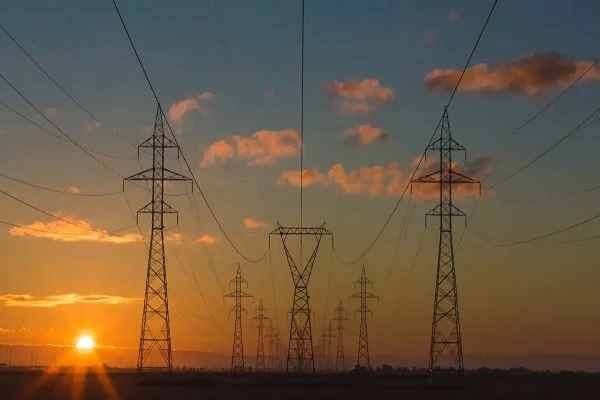
The Ghanaian government is exploring ways to achieve 100% universal energy access, potentially making its power sector viable for export.

Mr. Hanson Monney, the Head of the Generation and Transmission Unit at the Ministry of Energy in Ghana, who announced the efforts during his presentation in Lagos on the 2nd Day of the Nigeria Energy Leadership Summit, said “big brother” Nigeria is their top export target.

Nigeria is Ghana’s West African neighbor with chronic power supply limitations that have lingered unsolved for decades, despite billions of dollars in investments in the power sector.

Monney said that the strategies and policy implementation are already yielding results, with Ghana having achieved a remarkable 80% to 85% universal energy access within its borders.

“So, we are working on all these things to make sure that the power system of Ghana continues to be as good as it is or even better, and then, maybe, we can be exporting more to our big brothers in Nigeria when the grid is finally settled.

“So, ladies and gentlemen, this is an overview of the Ghana power system and challenges,” he said.

Ghana’s approach involves collaboration among regulators, the private sector, and various stakeholders, with the existence of an “Integrated Power Sector Master Plan” to consolidate long-term plans for the sector.

Nigeria’s epileptic power supply, which has significantly impacted its economic growth, has passed through successive governments with different policies. Though Nigeria supplies electricity to its neighbor, Niger Republic, its meager 4,000 MW capacity has belied the country’s status as Africa’s largest economy.

The poor electricity situation in Africa’s most populous nation is evident in the frequent collapse of its national grid – throwing the entire country into darkness. The national grid has collapsed more than 100 times since 2015, despite the over N1.51 trillion intervention in the sector by the federal government.

This stands in stark contrast to Ghana, where the government is actively pursuing a range of energy solutions, including grid-based energy, mini-grids, and solar-dominated renewable energy, with the goal of achieving “Universal access to energy by 2024” as mandated by the country’s President.

However, Monney acknowledged that Ghana faces challenges ranging from gas supply to tariff, in its quest to achieve universal energy access. He said the challenges are significant especially in remote islands, riverside, or lakeside communities due to geographical constraints.

“So, now, we are trying to scale our renewable energy access, and that is how we have planned in 2022 to scale up our renewable energy program.”

He further noted that one of the primary hurdles in Ghana’s power sector is achieving financial sustainability. The government is contending with escalating debts and the procurement of excess capacity, which are impacting the country’s economy.

“There is so much debt that the government has to shore up to make sure that the system is afloat because we have procured a lot of excess capacity, which comes with attendant costs. So, these financial challenges require some policy actions to eliminate legacy debts,” he said.

With Ghana’s economy in shambles, squeezing consumers’ spending power, Monney said high electricity tariffs are a significant concern in Ghana, with a need to make electricity more affordable, especially for industries. He explained that historically, industries have been subsidizing the residential sector, and efforts are underway to rationalize tariffs to rectify this issue.

Another challenge highlighted is the security of the gas supply in Ghana. Nigeria has been a consistent supplier of gas to Ghana from the east, but additional measures are required to ensure a consistent fuel supply. Currently, Ghana is experiencing an 80-day shutdown of its gas supply, which has had a significant impact on the power sector.

Despite these challenges, Monney affirmed that the Ghanaian government is actively working to advance the electricity sector in the country.

Soludo Announces Compulsory Free Nursery to Junior Secondary Education in Anambra State Nigeria

0

Governor Charles Soludo of Anambra State has introduced a policy of free and compulsory education from nursery to Junior Secondary School (JSS 3) in public schools across the state. 

He made this announcement at Premier Primary School in Obosi, Idemili North Council Area. 

Soludo expressed his administration’s commitment to achieving inclusive education, emphasizing that no child within the school age range, from nursery to JSS 3, should be required to pay school fees or any other educational fees in the state. 

“The aim is to go back to the basics when education was used as the equalizer, such that children from poor and rich backgrounds will attend the same school and compete favorably.

“Children of school age will no longer be deprived of access to quality education. Education from nursery to JSS is free and compulsory in the state.

“This will increase the access of children to basic education and to ensure the fullest development of personality, talents, mental and physical abilities of our children.

“We will not look kindly on anyone who fails to comply with the above pronouncement,” he said.

Governor Charles Soludo also announced plans for significant infrastructure development in all government-owned schools in the state in the near future. 

He mentioned that community schools would be transformed into “smart schools” to align with the goal of providing skillful and sustainable education. 

Soludo assured that the necessary measures would be taken to ensure the effective implementation of smart schools throughout Anambra State.

Tackling the menace of out-of-school children

Soludo’s move is aimed at tackling the growing number of out-of-school children in Nigeria, which has grown to over 15 million, according to NMPI. 

The Southeast accounts for 7.6% (390,000) of the total number of out-of-school children aged 6-16 years, with Anambra having a significant share. 

The Southeast region has N12.2 billion in Universal Basic Education funds yet to be accessed. Out of this fund, N3.18 billion belongs to Anambra. 

States must provide 50% matching funds to access the grant, which comes from the 2% of Nigeria’s Consolidated Revenue Fund designated for UBE.

Several other states in the country are yet to access the UBE grant. 

United States Federal Reserve Pauses Interest Rate Hikes, Keeping Rates at 5.5%

0

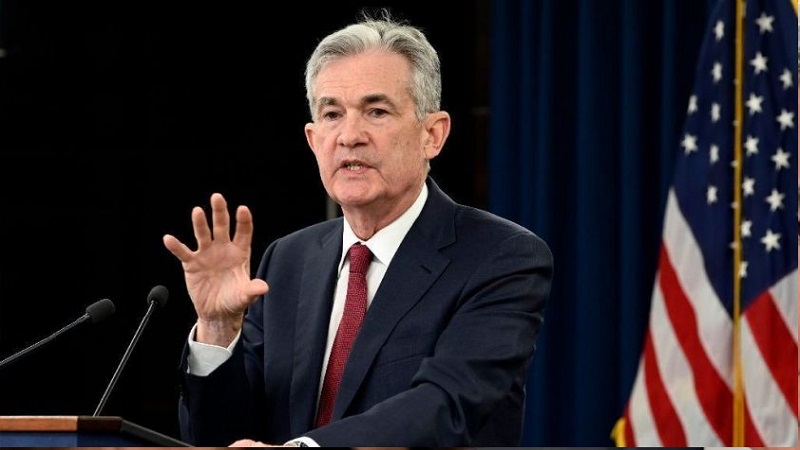
In a surprising move, the US Federal Reserve announced today that it will not raise interest rates any further, leaving them at 5.5%. This decision comes amid growing concerns about the state of the global economy and the impact of trade tensions on growth and inflation.

The Fed had previously signaled that it would continue to gradually increase interest rates to keep inflation under control and prevent the economy from overheating. However, in recent months, the Fed has faced mounting pressure from financial markets, businesses and politicians to pause or reverse its tightening cycle.

The Fed’s statement acknowledged that the economic outlook has become more uncertain and that some of the risks to growth have increased. The Fed also noted that inflation remains below its 2% target and that it will monitor incoming data closely to assess the appropriate path of monetary policy.

The Fed’s decision to pause interest rate hikes is likely to have significant implications for the US and global economy. On the one hand, it could provide some relief to borrowers, consumers and investors who have been struggling with higher borrowing costs and market volatility. On the other hand, it could also signal that the Fed is worried about the strength of the economy and that it may have to cut interest rates in the future if conditions worsen.

The Federal Reserve has recently announced its economic projections for the next six years, and the outlook is optimistic. According to the Fed, the US economy is expected to grow at a moderate pace, with low inflation and unemployment, and no signs of a recession until at least 2027.

This is good news for investors, businesses, and consumers, who can enjoy the benefits of a stable and expanding economy. The Fed’s projections are based on several factors, such as the ongoing vaccination campaign, the fiscal stimulus measures, the accommodative monetary policy, and the global recovery from the pandemic.

However, the Fed also acknowledged some risks and uncertainties that could affect its forecast. For instance, the emergence of new variants of the coronavirus, the supply chain disruptions, the labor market frictions, and the inflationary pressures. The Fed said it will closely monitor these developments and adjust its policy accordingly if needed.

The Fed’s announcement has implications for various sectors of the economy and financial markets. Here are some of the main takeaways:

Interest rates: The Fed expects to keep its benchmark interest rate near zero until 2024, and then gradually raise it to 1.8% by 2027. This means that borrowing costs will remain low for consumers and businesses for a long time, which could stimulate spending and investment. However, it also means that savers and bondholders will earn low returns on their assets.

Stock market: The Fed’s optimistic outlook could boost the confidence and optimism of investors, who may see more opportunities for growth and profits in the stock market. The low interest rates could also make stocks more attractive compared to bonds and other alternatives. However, the stock market could also face some volatility and corrections if the Fed changes its policy stance or if the economic conditions worsen.

The Fed’s outlook could affect the value of the US dollar relative to other currencies. The low interest rates could weaken the dollar, as investors may seek higher returns elsewhere. This could make US exports more competitive and increase the purchasing power of Americans abroad. However, it could also make imports more expensive and increase the trade deficit.

The Fed’s announcement has already sparked mixed reactions from various stakeholders. Some have praised the Fed for being flexible and responsive to changing economic conditions. Others have criticized the Fed for being too cautious and giving in to political pressure. The Fed’s credibility and independence may also come under scrutiny as it tries to balance its dual mandate of promoting maximum employment and stable prices.