DD
MM
YYYY

PAGES

DD
MM
YYYY

spot_img

PAGES

Home Blog Page 4199

Understanding NFT Staking

0

NFT staking is a new way to earn passive income from your non-fungible tokens (NFTs) while keeping ownership of them. NFTs are unique digital assets that can represent anything from art and collectibles to gaming items and virtual land. NFTs have gained popularity in recent years as a way to create and trade digital scarcity and authenticity on the blockchain.

However, holding NFTs can also be costly and risky. You may have to pay high fees to mint, buy or sell them, especially on the Ethereum network. You may also face uncertainty about the future value of your NFTs, as they depend on the demand and supply of the market. Moreover, you may not be able to use your NFTs for anything else besides displaying them in your wallet or gallery.

This is where NFT staking comes in. NFT staking allows you to lock up your NFTs on a platform or protocol that offers rewards and benefits for doing so. By staking your NFTs, you can earn passive income in the form of cryptocurrency or NFT tokens while maintaining ownership of your collection. Some platforms or protocols may also offer other perks, such as governance rights, exclusive access or enhanced features.

How does NFT staking work?

The process of staking NFTs is similar to staking cryptocurrencies, where you deposit your coins or tokens into a smart contract or a pool and receive rewards for securing the network or providing liquidity. However, not all NFTs are eligible for staking. You need to find a platform or protocol that supports the specific type of NFT that you own.

To participate in NFT staking, you need to own an NFT that is eligible for staking. Not all NFTs qualify for staking, so you need to check with the specific project or platform to see if they support your asset. Once you have an eligible NFT, you can stake it by holding it in a platform that allows staking. The platform will usually have a web3 wallet that you can connect to your NFT wallet.

For example, if you own an NFT from Bored Ape Yacht Club (BAYC), a popular collection of 10,000 unique ape avatars, you can stake it on Binance NFT PowerStation, a platform that allows you to earn BNB rewards by staking various NFTs. Alternatively, if you own an NFT from Polychain Monsters, a collection of 1000 digital monsters with different attributes and rarities, you can stake it on their own platform and earn their native token POLY.

The amount and frequency of rewards will vary depending on the project or platform. Some platforms may offer fixed rewards, while others may have variable rewards based on supply and demand. Some platforms may also have different tiers of rewards based on the rarity or quality of the NFTs staked.

One thing to remember is that staking your NFTs may involve locking them up for a specific time. This means you won’t be able to sell or transfer them during that time. The length of the lock-up period will vary depending on the project or platform, so be sure to check with the specific project or platform to see how long your NFTs will be locked up.

The rewards and benefits of staking NFTs vary depending on the platform or protocol that you choose. Some factors that may affect the rewards are:

  • The rarity and value of your NFT

  • The duration and frequency of your staking

  • The demand and supply of the reward token

  • The total amount of NFTs staked on the platform

  • The rules and conditions of the platform

Before staking your NFTs, you should do your own research and understand the risks involved. Some of the risks are:

Losing access to your NFTs while they are staked.

Losing your rewards if the platform gets hacked or exploited.

Losing your NFTs if the platform gets shut down or discontinued.

Losing value of your NFTs if the market crashes or changes.

Losing compatibility of your NFTs if the platform upgrades or migrates.

NFT staking is an exciting and innovative way to utilize your digital assets and generate passive income from them. However, it is not without its challenges and uncertainties. You should always weigh the pros and cons of staking your NFTs and make informed decisions based on your own goals and preferences.
SEC Striving on crafting Frameworks for Crypto Regulation

0

The SEC is pushing forward with its agenda to regulate the securities industry more effectively, especially in areas where new practices and products are emerging. I will discuss some of the recent proposals and actions by the SEC that aim to enhance disclosure and investor protection, as well as address some of the challenges and opportunities that SPACs and other shell companies face in the current market environment.

Just recently Coinbase Inc sued the SEC for lack of clarity on classifications of digital assets and crypto regulations in general. However, SEC in a tweet said the agency is in no rush to regulate the industry as it is still finding more resource ways and frameworks to guide crypto regulations.

One of the most notable developments is the SEC’s proposal to adopt new rules and amendments that would apply to IPOs by SPACs and de-SPACs, which are business combination transactions between SPACs and private operating companies. The SEC’s proposal, which was announced on March 30, 2022, would require additional disclosures about SPAC sponsors, conflicts of interest, sources of dilution, fairness of transactions, and projections made by SPACs and their target companies. The proposal would also align the financial statements required for de-SPACs with those required for traditional IPOs and clarify the status of SPACs under the Investment Company Act of 1940.

The SEC’s proposal reflects its concern that SPACs may pose significant risks to investors due to information asymmetries, fraud, and conflicts of interest. The SEC also believes that SPACs may be used as an alternative means to conduct an IPO without providing investors with the same level of protection and transparency that they receive from traditional IPOs. The SEC’s proposal is open for public comment for 60 days following publication on the SEC’s website or 30 days following publication in the Federal Register, whichever period is longer.

Another area where the SEC is pushing forward with regulation is the use of digital engagement practices (DEPs) by online brokers and investment advisers. DEPs are features or practices that use behavioral prompts, differential marketing, gamification, or other design elements to influence customer behavior on digital platforms. The SEC has expressed concern that DEPs may create conflicts of interest, mislead investors, or induce excessive trading or risk-taking.

The SEC has issued a request for information and public comment on DEPs, which was published on November 4, 2021. The SEC is seeking input on various aspects of DEPs, such as their prevalence, benefits, risks, disclosure practices, and regulatory implications. The comment period for this request will end on January 18, 2022.

The SEC is also actively pursuing enforcement actions against entities that violate securities laws or regulations in emerging areas such as cryptocurrencies and cybersecurity. For example, on December 22, 2021, the SEC charged a cryptocurrency platform and its founder with operating an unregistered securities exchange and defrauding investors.

The SEC alleged that the platform offered trading in digital asset securities without registering with the SEC or operating under an exemption from registration. The SEC also alleged that the platform misrepresented its compliance status, security measures, and trading volume to investors. The SEC is seeking permanent injunctions, disgorgement plus prejudgment interest, civil penalties, and other relief against the defendants.

The SEC’s enforcement actions demonstrate its willingness to use its authority to protect investors from fraud and misconduct in new and evolving areas of the securities industry. The SEC has also indicated that it will pursue high-impact cases that send a clear message to market participants about its expectations and priorities.

The SEC’s push for regulation in these areas reflects its recognition of the rapid changes and innovations that are occurring in the securities industry. The SEC’s proposals and actions aim to balance the need for investor protection with the promotion of capital formation and market efficiency.

However, they also pose significant challenges and uncertainties for market participants who may have to adapt to new rules and standards or face potential liability or sanctions. Therefore, it is important for market participants to stay informed of the SEC’s regulatory developments and initiatives, and to seek legal advice when necessary.

WhatsApp Rolls Out New Feature to Enable Users Hide Sensitive Conversations

0

Meta-owned messaging platform WhatsApp has rolled out a new feature known as “Chat Lock”, to enable users to hide sensitive conversations.

The tool allows users to lock any conversations by placing them in a folder that is only accessible via biometrics like face recognition, fingerprint, or by entering a password. This also automatically hides any references to locked chats in the notifications feed.

Announcing this feature, WhatsApp wrote via a post,

Our passion is to find new ways to help keep your messages private and secure. Today, we’re announcing Chat Lock on WhatsApp, which lets you protect your most intimate conversations behind one more layer of security. Locking a chat takes that thread out of your inbox and puts it behind its folder that can only be accessed with your device’s password or biometric, like a fingerprint.

“It also automatically hides the contents of that chat in notifications, too. We believe this feature will be great for people who share their phones from time to time with a family member, or in moments when someone else is holding your phone at the exact moment an extra-special chat arrives. You can lock a chat by tapping the name of a one-to-one or group and selecting the lock option.

To reveal these chats, slowly pull down on your inbox and enter your password or biometric. Over the next few months, we’re going to be adding more options for Chat Lock, including locks for companion devices and creating a custom password for your chats so that you can use a unique password different from your phone”.

This latest feature rolled out by Meta, further expands the array of privacy options offered by WhatsApp which includes message encryption and encrypted backups.

Notably, Chat Lock is coming after Whatsapp revealed plans to add more security features on the platform in the coming months, to enhance users’ protection. The social media platform revealed that it would be rolling out features such as Device verification, Automatic security codes, and Account protection.

As of 2022, WhatsApp reached over 2.44 billion users worldwide, as the popularity of WhatsApp has been ascribed to its ease of use and simplicity. The app’s intuitive user interface is a hit among users of various ages and backgrounds.

Not only is WhatsApp incredibly user-friendly with a simple interface, but the real-time chat, mobile accessibility, and file sharing features, amongst other features, are just unbeatable which makes it stands out amongst other messaging platforms.

Nigeria’s Central Bank Unveils E-Learning Platform SabiMoni, to Deepen Financial Inclusion

0

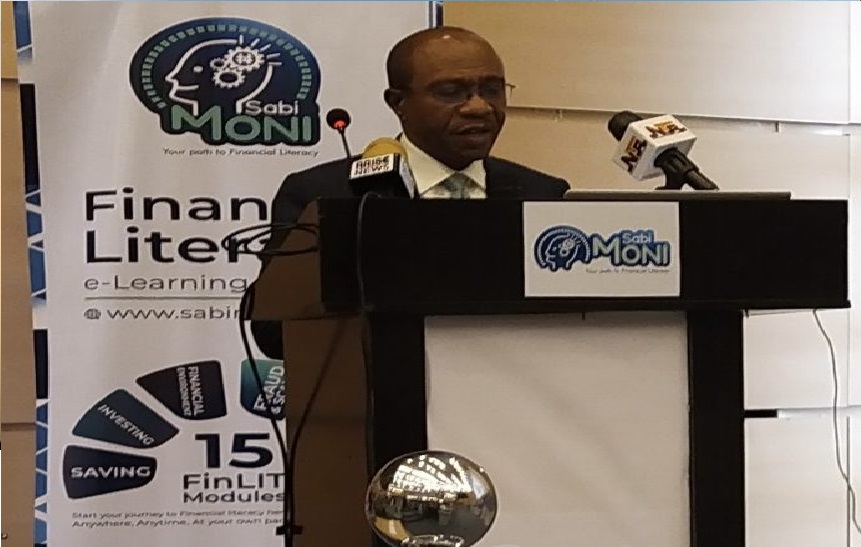
The Central Bank of Nigeria in a bid to deepen financial inclusion in the country has launched an e-learning platform known as ‘SabiMoni’.

The platform is a fully designed digital national e-learning portal that provides a comprehensive knowledge base for financial literacy. SabiMoni aims to serve as a repository of information for both learners and researchers, thereby bridging the gap in financial knowledge and understanding.

Speaking at the launch of the e-learning platform, CBN governor Godwin Emefiele said that the platform was built to provide a knowledge base for financial literacy, adding that it is aimed at providing individuals with the opportunity to be trained to become Certified Financial Literacy Trainers (CFLT) through self-service.

In his words,

“The platform is aimed at supporting our efforts toward ramping up the number of experts that can be used to drive financial education in the country and perhaps beyond. One of the key drivers of financial inclusion today, is no doubt financial literacy.

“It is a prerequisite for greater financial inclusion, which would lead to the stability of the financial system and ultimately economic growth and development. The pace of financial inclusion is directly related to the level of financial literacy and financial Capability”.

Emefiele stated that the absence of or low levels of financial literacy constituted an impediment to financial inclusion. He said to address the financial inclusion gaps, the National Financial Inclusion Strategy 2022, identified increasing adoption and usage of financial services in priority demographics.

The CBN governor further expressed optimism that the platform will boost consumers’ confidence in the uptake of the utilization of digital financial services, thereby contributing to the stability of the financial system in Nigeria.

There is growing recognition that financial literacy has an important role to play in financial inclusion. In the developing world, people are excluded from formal financial services for many reasons. One common issue is that banks use jargon, or even fail to provide marketing and product information in local languages.

With the launch of SabiMoni, the country now has a knowledge base where citizens can learn about financial literacy at their own pace, from the comfort of their homes. Notably, the CBN has set a target of achieving 94 percent financial inclusion by the end of January 2024.

It is worth noting that financial inclusion in Nigeria has had undeniable successes, with the onboarding of residents to the banking sector, but the overall exclusion rates continue to exceed official targets due to low financial literacy.

While Nigerians with bank accounts or mobile wallets can access critical loan products and build a credit history, those without access to digital financial services and products are shut out from these life-changing services that could improve their financial situations.  

Policing Deviant Musicians in Nigeria

0

In any media system, music is a component that is essential for the full creation of media products, particularly when those products are meant to enliven people through rhymes that deal with a variety of psychological issues and unite them despite cultural and linguistic differences. When this strategy is used, one can say that music nourishes love and sustains the required social cohesion. However, one could say that music turns into a destructive tool in the hands of those who are expected to uphold the norms when the artistes create content and act in ways that are in opposition to the accepted and existing norms.

This position has already been captured in the previous two pieces by our analyst with the examination of what Nigerians have been saying on digital platforms about Seun Kuti’s police assault. As stated in one of the pieces, Nigerians used the incident to reenact similar discourses they expressed some months ago when Habeeb Olawunmi, popularly known as Portable or Dr Zeh, harassed police officers at his clubhouse. Clearly, the majority of people on digital platforms and those who spoke with mainstream media outlets called out the two musicians, labelling them as deviants and disrespectful.

As the conversations continue, our analyst discovers that different moral panics are being created by moral entrepreneurs. One of the moral panics observed in several tweets is the idea that Seun Kuti is a danger to society because of his supposed disrespect for law enforcement. This is evident in tweets such as “Seun Kuti is a menace to society; he has no respect for law and order” and “Seun Kuti should be ashamed of himself for slapping a police officer; this is unacceptable behaviour.” The focus is on Seun Kuti’s actions as a threat to society rather than the actions of the police officer.

Similarly, in relation to Portable’s police assault, there is also a moral panic that focuses on the supposed threat he poses to society. This is evident in tweets such as “Portable is a menace to society; he has no respect for authority” and “Portable’s behaviour is unacceptable and should not be tolerated.” Specifically, both Seun Kuti’s and Portable’s actions are being framed as deviant and threatening to society, which is leading to the creation of moral panics by the users. However, it is essential to consider the larger social and political context in which these incidents occurred and question the power dynamics at play between law enforcement and citizens.

A Framework for Policing the deviant musicians

Community Policing: The police should work closely with the communities where musicians live and work to identify and prevent deviant behaviour. This will involve building relationships with community leaders, educating them on what to look out for, and working together to address issues as they arise.

Regular Training: The police should receive regular training on how to deal with musicians and other members of the creative industry. This will include training on cultural sensitivity, de-escalation techniques, and the appropriate use of force.

Accountability: Police officers who violate the rights of musicians should be held accountable for their actions. This will involve a system for investigating complaints, and appropriate disciplinary measures for officers found to have acted improperly.

Collaboration: The police should collaborate with other government agencies, such as the National Council for Arts and Culture, to create guidelines for the conduct of musicians. These guidelines should be reviewed periodically and updated as necessary.

Rehabilitation: Finally, the police should work with musicians who have been found to have engaged in deviant behaviour to rehabilitate them. This will involve counselling, mentorship, and other forms of support to help them reintegrate into society and become positive role models for others.