DD
MM
YYYY

PAGES

DD
MM
YYYY

spot_img

PAGES

Home Blog Page 42

GM’s Breakout Year: Inside the Forces Powering General Motors to the Top of the U.S. Auto Market

0

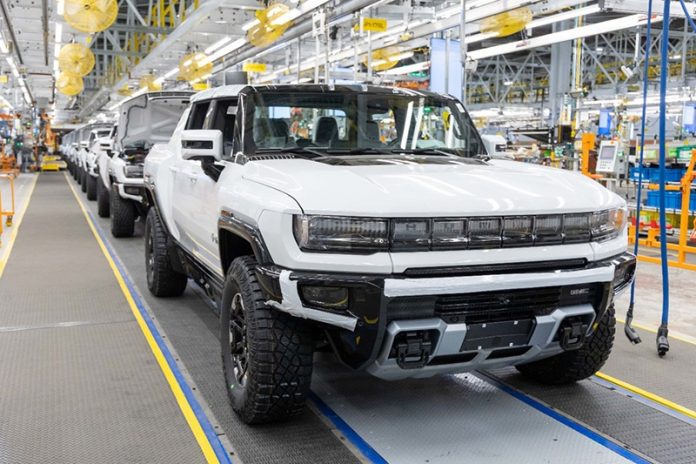
General Motors is heading into the final days of 2025 as the strongest-performing U.S.-traded automaker, capping what has become its most consequential year in the equity markets since emerging from bankruptcy more than a decade ago.

A powerful mix of earnings consistency, shareholder-friendly capital allocation, regulatory tailwinds, and a recalibration of the auto industry’s electric vehicle ambitions has driven GM shares to record highs and reshaped how investors view the Detroit manufacturer’s long-term prospects.

GM stock has climbed more than 55% this year to above $80 per share, marking its best annual performance since 2009 and surpassing last year’s 48.3% gain. The rally has accelerated into year-end, with shares rising nearly 13% in December alone and extending a streak of five straight months of gains, according to FactSet data. Since June, the stock has remained positive on a cumulative weekly basis, underlining the durability of investor confidence rather than a short-lived trading surge.

According to CNBC, that performance places GM well ahead of its peers. Tesla has gained about 17% this year, Ford Motor is up roughly 34%, while Stellantis, the parent of Chrysler, has recorded a notable decline. Japanese rivals Toyota Motor and Honda Motor have posted more modest advances, leaving GM as the clear outlier among major global automakers listed in the U.S.

For GM’s management, the rally validates an argument they have made repeatedly over the years: that the company’s market valuation failed to capture its earnings power and operational discipline. Chief Executive Mary Barra has consistently pointed to GM’s ability to generate cash through cycles, manage costs, and deliver shareholder returns as evidence that the stock was mispriced.

“Great vehicles, innovative technology, a rewarding customer experience, along with strong financial results, will continue to set GM apart in an increasingly competitive landscape,” Barra told analysts during the company’s October earnings call.

Earnings execution has been central to that narrative. Over the past five years, GM has beaten Wall Street’s adjusted earnings-per-share expectations in every quarter except one, based on analyst estimates compiled by FactSet. That track record has given investors confidence in management’s guidance and long-term planning. The third-quarter earnings report in October proved to be a turning point, with GM not only exceeding forecasts but also raising its full-year outlook and signaling that earnings in 2026 are expected to surpass those projected for 2025. The stock jumped more than 19% that week, its largest weekly gain of the year.

Analysts responded quickly. UBS raised its 12-month price target on GM by 14% to $97 per share and named the automaker its top pick heading into 2026. Morgan Stanley followed with an upgrade to overweight and a $90 price target, highlighting GM’s performance relative to what it called the “Detroit Three.”

“In our view, General Motors leads the D3 in the North America and global market with steady unit sales growth, average transaction price growth, disciplined incentive spend and inventory management,” Morgan Stanley analyst Andrew Percoco wrote in a Dec. 7 note.

He added that this operating approach has translated into stronger margins and returns than those of competitors.

Beyond earnings, GM’s capital allocation strategy has played a major role in the stock’s ascent. The company has leaned aggressively into share buybacks, reducing its share count and amplifying earnings per share. Chief Financial Officer Paul Jacobson said earlier this month that buybacks remain a priority as long as management believes the stock trades below its intrinsic value.

“As long as the stock remains as undervalued as it is, the priority is to buy back shares,” Jacobson said at a UBS investor conference. “And I think you’ll continue to see that from us going forward.”

That approach has coincided with notable insider activity. Barra has exercised options or sold roughly 1.8 million shares this year, transactions valued at more than $73 million, according to public filings confirmed by GM. As of her most recent disclosure in September, she still owned more than 433,500 shares worth over $35 million, with a significant portion of her compensation delivered through equity awards.

External policy shifts have also reshaped GM’s operating environment. Under President Donald Trump’s administration, the U.S. has loosened fuel economy and emissions standards, removed penalties introduced under the previous administration, and renegotiated aspects of its trade relationship with South Korea, a key manufacturing hub for GM. Analysts say these changes favor automakers with strong North American footprints and traditional internal combustion portfolios.

“GM is effectively a regional North American automaker, and we believe it is well positioned to benefit from the relaxed U.S. regulatory environment on emissions and fuel economy,” UBS analyst Joseph Spak said in a Dec. 15 note raising his price target.

At the same time, the broader auto industry has pulled back from aggressive electric vehicle expansion after slower-than-expected demand and pressure on margins. That shift has worked to GM’s advantage. The company has moderated EV spending, prioritized profitability over volume, and leaned on its highly profitable trucks and SUVs, a strategy investors see as pragmatic in the current market.

Taken together, these forces have transformed GM’s standing on Wall Street. Once viewed as a cyclical manufacturer struggling to convince investors of its future relevance, the company is now being priced as a disciplined cash generator with clear strategic priorities. Analyst averages compiled by FactSet currently rate the stock overweight, with a consensus price target of about $80.86.

Overall, GM’s rally tells a broader story about how execution, policy alignment, and capital discipline can converge to reshape investor perception. With guidance pointing to stronger earnings ahead and buybacks set to continue, the company enters 2026 with momentum that few would have predicted just a few years ago.

Samsung to Bring Google Photos to TVs in 2026, Filling a Long-Standing Gap in the Living Room Screen

0

Google Photos, one of Google’s most widely used consumer services, has been available for years across smartphones, tablets, laptops, and the web. Yet it has remained absent from what is arguably the most prominent screen in many homes: the television.

Even Google’s own Google TV platform does not offer a native Google Photos app, forcing users to rely on casting from phones or using indirect workarounds to view personal photos and videos on a large display.

Samsung is now moving to close that gap.

Ahead of CES 2026 early next year, the South Korean electronics giant announced a partnership with Google that will integrate Google Photos directly into Samsung’s TizenOS-powered smart TVs. The move marks Samsung as the first major TV manufacturer to offer a built-in Google Photos experience without requiring an external device or smartphone connection.

Under the integration, Samsung TVs will not provide unrestricted access to a user’s entire Google Photos library. Instead, the experience will center on curated “Memories” generated by Google Photos, organized around people, places, and moments. According to Samsung, this design is intended to suit lean-back viewing, where photos and videos surface automatically rather than requiring active searching or scrolling.

The Memories feature is scheduled to launch in March 2026 and will be exclusive to Samsung TVs for the first six months. The exclusivity underscores Samsung’s broader strategy of using software partnerships to differentiate its televisions in an increasingly competitive market where hardware innovations alone are no longer enough to stand out.

Later in 2026, Samsung TVs will also gain access to creative tools powered by Google’s generative AI. Through a “Create with AI” feature within Google Photos, users will be able to generate themed templates and apply stylistic transformations to photos and videos directly on their TV screens. This includes the Nano Banana feature and a Remix tool that allows users to change the visual style of media. Samsung said some AI templates will be available only on its TVs, reinforcing its push to position TizenOS as an AI-forward entertainment platform.

Personalization will be expanded further in the second half of 2026. Samsung and Google plan to enable personalized slideshows based on themes detected in a user’s photo library, such as beach scenes, hiking trips, or city visits like Paris. The feature is designed to surface related images automatically, turning personal photos into ambient content suitable for family viewing or background display.

The Google Photos integration will debut on Samsung TV models launching in 2026. Samsung said it will also roll out to select existing TVs via a software update later in the year, though it has not yet detailed which models will be eligible.

The partnership also highlights an unusual industry dynamic. While Google owns both Google Photos and Google TV, it is Samsung that will first deliver a native TV-based Photos experience. That raises questions about Google’s broader platform priorities and whether similar functionality will eventually arrive on Google TV or competing smart TV operating systems.

For consumers, the announcement marks a long-awaited step toward making personal photo and video libraries easier to enjoy on large screens, even if the experience is initially shaped by curation rather than full manual control. For Samsung, it strengthens its ecosystem strategy by tying cloud services, AI features, and everyday personal content more closely to its TVs.

Smart TVs’ increasing competition in software and services rather than just display technology, as underscored by Samsung’s integration of Google Photos, signals how personal media and AI-driven experiences are becoming central to the future of the living room. Whether Google extends the same capabilities to other platforms will likely become clearer as 2026 approaches.

China to Pay Interest on Digital Yuan Holdings in Major Overhaul Aimed at Reviving Adoption

0

China’s central bank has unveiled a sweeping overhaul of its digital yuan framework, announcing that commercial banks will soon begin paying interest on digital yuan holdings — a significant policy shift designed to accelerate adoption of the country’s central bank digital currency after years of slow uptake.

In an article published on Monday by state-owned Financial News, Lu Lei, a deputy governor of the People’s Bank of China (PBOC), said the digital yuan, officially known as the e-CNY, will transition from functioning primarily as digital cash to operating as a form of “digital deposit currency.” The new framework is set to take effect on January 1, 2026.

The move marks the most substantial change yet in China’s decade-long digital currency project and signals Beijing’s recognition that the e-CNY needs stronger economic incentives to compete with dominant private payment platforms.

From digital cash to digital deposits

Under the new framework, verified digital yuan wallets will earn interest, with rates aligned to existing self-regulatory agreements governing deposit pricing in China’s banking system. In addition, digital yuan balances will be covered by China’s deposit insurance scheme, giving them the same level of protection as conventional bank deposits.

Lu said the reform follows more than ten years of experimentation and pilot programmes, noting that the e-CNY is widely viewed as one of the most advanced central bank digital currencies globally. Despite that technological lead, adoption has lagged behind expectations since the formal pilot began in 2019.

By allowing interest payments, the PBOC is effectively positioning the digital yuan closer to a bank deposit rather than a simple cash substitute — a shift analysts say could make the currency more attractive to households and businesses that currently see little reason to hold it.

The policy also gives banks greater flexibility to integrate digital yuan balances into their broader asset and liability management, potentially easing concerns that widespread e-CNY use could disrupt traditional funding structures.

For non-bank payment institutions, Lu said digital yuan reserve funds will be treated the same as existing customer reserves, with a 100% reserve requirement applied — a measure aimed at maintaining financial stability and regulatory consistency.

Scale without mass adoption

As of the end of November 2025, China had processed 3.48 billion digital yuan transactions worth a cumulative 16.7 trillion yuan ($2.38 trillion), according to PBOC data cited by Lu. While the figures highlight the scale of the pilot programme, they also mask a key challenge: the e-CNY remains marginal in daily consumer payments compared with entrenched platforms such as Alipay and WeChat Pay.

Those private platforms dominate China’s cashless economy, offering seamless ecosystems that combine payments with messaging, shopping, credit, and wealth management. By contrast, the digital yuan has largely been used for government disbursements, transport payments, pilot retail scenarios, and controlled trials.

The introduction of interest and deposit insurance appears aimed squarely at narrowing that gap and encouraging users to hold e-CNY balances rather than treating the currency as a pass-through payment tool.

Renewed push at home and abroad

The overhaul comes as Chinese authorities intensify efforts to promote the digital yuan both domestically and internationally. Last week, the PBOC said it would expand cross-border use of the e-CNY, including a planned pilot with Singapore, while deepening CBDC payment links with Thailand, Hong Kong, the United Arab Emirates, and Saudi Arabia.

In September, the central bank also launched the e-CNY International Operation Center in Shanghai, a move widely seen as part of Beijing’s broader ambition to increase the global role of the yuan and reduce reliance on dollar-based payment systems.

The international push contrasts with China’s continued hard line against decentralized cryptocurrencies. While Beijing has embraced blockchain technology and state-backed digital money, cryptocurrency trading and mining remain banned on the mainland, underscoring the government’s preference for tightly controlled digital finance.

By paying interest on digital yuan holdings, China is addressing one of the core weaknesses of its CBDC rollout: the lack of a clear financial incentive for users. The shift also blurs the line between traditional bank deposits and central bank-issued digital money, raising longer-term questions about competition for deposits and the evolving role of commercial banks.

However, the PBOC is betting that aligning the e-CNY more closely with existing banking norms, rather than positioning it as a disruptive alternative, will finally help the digital yuan move from pilot projects to everyday use. Whether that is enough to challenge China’s powerful private payment giants remains the next test.

U.S. Pledges $2bn in Humanitarian Aid After Dismantling of USAID Reshapes Foreign Assistance

0

The United States will commit $2 billion in life-saving humanitarian assistance next year to tens of millions of people facing hunger, disease, and displacement across dozens of countries, the State Department said on Monday.

The move marks a significant recalibration of Washington’s aid architecture following the Trump administration’s decision to dismantle the U.S. Agency for International Development (USAID) earlier this year.

The funding will be overseen by the United Nations Office for the Coordination of Humanitarian Affairs (OCHA) and disbursed through UN agencies and international humanitarian partners, according to the statement. The move effectively shifts the management of a large portion of U.S. emergency aid away from a standalone American development agency toward multilateral coordination under the UN system.

The pledge comes against the backdrop of a major restructuring of U.S. foreign assistance. Earlier this year, the Trump administration announced the cancellation and winding down of USAID, arguing that the agency had become inefficient, overly bureaucratic, and misaligned with the administration’s “America First” foreign policy doctrine. USAID, founded in 1961, had for decades served as Washington’s primary vehicle for delivering development aid, disaster relief, and health programmes in some of the world’s poorest and most fragile countries.

Its closure marked a sharp break from past U.S. policy and sparked concern among humanitarian organizations and foreign policy experts, who warned that dismantling USAID could weaken America’s influence and slow emergency responses in crisis zones. In response, administration officials said humanitarian assistance would not disappear but would instead be restructured, with greater reliance on multilateral institutions and tighter oversight of how funds are spent.

The newly announced $2 billion package appears designed to reassure allies and aid agencies that Washington intends to remain a major humanitarian donor, even as it overhauls the way assistance is delivered. According to U.S. officials, the funding will support emergency food aid, nutrition programmes, access to clean water, basic healthcare services, and disease prevention efforts, particularly in conflict-affected and climate-vulnerable regions.

Much of the assistance is expected to be directed to sub-Saharan Africa, the Middle East, and parts of Asia, where prolonged conflicts, droughts, floods, and economic shocks have pushed millions into acute food insecurity. The United Nations estimates that more than 300 million people globally will require humanitarian assistance next year, with funding shortfalls already forcing aid agencies to scale back operations.

By placing the funds under OCHA’s coordination, Washington said it aims to improve efficiency and ensure resources are allocated based on the severity of need. OCHA plays a central role in prioritizing crises, coordinating donor responses, and managing pooled humanitarian funds that can be rapidly deployed in emergencies.

The State Department also framed the pledge as part of a broader effort to prevent humanitarian crises from escalating into security threats, mass migration, or regional instability. Officials argue that early intervention on hunger and disease is more cost-effective than responding to full-blown crises later.

Aid groups have cautiously welcomed the funding commitment but stressed that the loss of USAID leaves a gap in long-term development planning and on-the-ground expertise that humanitarian aid alone cannot fill. They have urged the administration to clarify how future development and resilience programmes will be handled alongside emergency relief.

While the State Department did not provide a detailed breakdown of country allocations, it said further details would be released as needs assessments are completed. However, the $2 billion pledge signals that even after the dismantling of USAID, the United States intends to retain a visible — if restructured — role in the global humanitarian system.

Strategy Acquires More Bitcoin For $108.8M, Draws Heavy Criticism From Analysts

1

Strategy has acquired 1,229 BTC for $108.8 million at an average price of $88,568, increasing total holdings to 672,497 BTC acquired for $50.44 billion at $74,997 per coin, achieving 23.2% BTC yield year-to-date.

According to a Form 8-K filed on Monday, the coins were acquired Dec. 22-28 and funded through at-the-market stock sales. This purchase extends CEO Michael Saylor’s aggressive Bitcoin treasury strategy since August 2020, positioning the firm as the largest corporate holder and leveraging debt and equity issuances to fund acquisitions amid BTC’s 116% rise from the average cost basis.

The latest buy brings Strategy’s year-to-date BTC yield to 23.2%, a metric the company uses to measure how much its Bitcoin holdings have grown relative to shares outstanding.

As BTC dipped ~1.7% to $87,122, reactions split between supporters celebrating the milestone and critics alike questioning the timing and value extraction from existing Strategy’s reserves versus stock discounts.

While the company remains confident in Bitcoin’s long-term value, analysts such as Peter Schiff and Christopher Bloomstran are increasingly questioning the risks and balance-sheet impact of such aggressive accumulation.

Gold advocate and strong Bitcoin critic Peter Schiff critiques MicroStrategy’s Bitcoin strategy, noting a 16% unrealized gain on holdings bought at an average price of $75,000 since 2020, yielding just a 3% annualized return compared to other assets.

He wrote in a post on X,

“Strategy has been buying Bitcoin for five years. With an average cost of $75K, the company has a “paper profit” of just 16%. That’s an average annual return of just over 3%. $MSTR would have been much better off had Saylor bought just about any other asset instead of Bitcoin.”

Schiff argues that MicroStrategy would have been better off investing in almost any other asset rather than Bitcoin. He further pointed to gold and silver, both of which have recently reached record highs, suggesting that diversification into precious metals would have been a more prudent strategy. He maintains a bearish outlook on Bitcoin and has warned that a potential crash could further undermine MicroStrategy’s Bitcoin-heavy approach

Also, President and Chief Investment Officer of Semper Augustus Investments Group LLC Christopher Bloomstran, has criticized Michael Saylor’s decision to issue shares for MicroStrategy’s latest 1,229 BTC purchase, labeling it desperate and idiotic as the company’s $46 billion market cap trades at an 82% discount to its $58.5 billion Bitcoin holdings valued at $87,000 per BTC.

He wrote,

“Selling shares (to suckers) when your equity market value traded at a large premium to your Bitcoin was smart, albeit immoral. Now selling shares to buy yet more Bitcoin, but with your market cap now at 82% of the market value of your Bitcoin is just plain desperate. And idiotic.”

This contrasts with prior share sales at NAV premiums, which Bloomstran calls smart yet immoral, highlighting ongoing shareholder dilution amid a 52% stock decline since July 2025 versus Bitcoin’s 15% drop.

Amidst the criticism, MicroStrategy’s aggressive strategy has achieved 23.2% BTC yield year-to-date and outperformed traditional value funds over five years, though it amplifies volatility through $16 billion in debt and preferred stock leverage.

Outlook

Looking ahead, Strategy’s Bitcoin-centric treasury strategy is likely to remain highly polarizing. On one hand, management’s conviction is clear: the company continues to treat Bitcoin as a long-term, scarce monetary asset and a core measure of corporate performance, as reflected in its emphasis on BTC yield rather than traditional earnings metrics.

If Bitcoin resumes a strong upward cycle, Strategy could benefit disproportionately due to its scale, early accumulation, and leveraged exposure, potentially restoring equity premiums and validating Michael Saylor’s long-term thesis.

On the other hand, risks are becoming more pronounced. Continued equity issuance at or below net asset value (NAV) raises concerns around shareholder dilution, while the growing debt and preferred stock obligations amplify balance-sheet fragility during prolonged market downturns.