DD
MM
YYYY

PAGES

DD
MM
YYYY

spot_img

PAGES

Home Blog Page 42

Summary of Tekedia Graduation Lecture: 2030s – The Decade of Nigeria’s Capital Market

0

“Capital markets are the factories of wealth. When nations build them well, prosperity follows the citizens” – Ndubuisi Ekekwe

The central thesis of the lecture is that every decade in Nigeria’s economic life has been defined by a dominant innovation arc, and the 2030s will belong to the capital market—driven by regulatory modernization, technology, and a new class of assets enabled by the Investment and Securities Act (ISA) 2025.

The lecture begins by tracing Nigeria’s transformation timelines. The 1990s delivered the new-generation banks, which used VSAT-powered connectivity to outcompete the legacy institutions by making banking “location-agnostic.” In the 2000s, GSM operators democratized voice telephony and created a mass market for mobile communications. By the 2010s, the telcos became internet utilities, enabling fintech, content distribution, on-demand banking, and mobile learning. Today, in the 2020s, the nation is witnessing a Cambrian explosion of digital applications in  payments, logistics, mobility, lending, and software services, driven by young innovators combining digital primitives to solve market frictions.

Upon these pillars, the next frontier of economic transformation will happen. Yes, the 2030s will be the Decade of Capital Market Expansion, unlocking Nigeria’s trapped wealth and enabling large-scale asset formation, fractionalization, liquidity creation, and investment democratization. The transformational trigger for this shift is the Investment and Securities Act of 2025, described as the most consequential legislation in Nigeria’s business landscape in the last 25 years. ISA 2025 provides the legal foundation for new asset classes, digital securities, derivatives, commodities trading modernization, private market infrastructure, and blockchain-based market utilities. With this enabling architecture, Nigeria can now build a multi-layered capital market ecosystem comparable to NASDAQ, NYSE, JSE, and LSE.

The lecture notes that South Africa’s stock market exceeds $1 trillion, while Nigeria’s remains under $70 billion, not because Nigeria lacks economic activity but because Nigeria has not historically created many investable asset classes. With ISA 2025, everything from mortgages, royalties, commodities, energy credits, insurance risk pools, municipal bonds, infrastructure notes, agricultural futures, and digital asset-backed securities can become part of the national portfolio.

Prof. Ndubuisi Ekekwe explains that wealth is a product of asset formation, not merely entrepreneurial energy. Without a robust capital market, capital cannot scale; without liquidity, innovation cannot compound. The 2030s will therefore witness the rise of new financial market infrastructures: blockchain clearing systems, digital depositories, all-hours trading, regulated private markets, stablecoin-backed settlements, and transparent derivatives platforms that will derisk sectors like agriculture, housing, and manufacturing.

He highlights how global exchanges operate diverse product lines like from ETFs, REITs, ABS, MBS, commodities futures, FX options, carbon credits, structured notes, ADRs/GDRs, municipal securities, and more. Nigeria currently offers only a fraction. The 2030s will change that.

The lecture concludes by urging Nigerian innovators, professionals, policymakers, and investors to prepare for a new era where finance becomes the fuel for national reconstruction. With the right institutions, Nigeria’s capital market can unlock hundreds of billions of dollars in domestic and diaspora capital, deepen industrial capacity, fund infrastructure, and accelerate national development. The graduates are encouraged to see themselves not only as business builders but also as participants in a historic redesign of Nigeria’s financial destiny as we prepare for a Decade of Capital Market Abundance.


The Importance of Regular Financial Checkups

0

You get a health check-up each year. You also change the oil in your car. But what about your money? Your finances need attention, too. This is where a financial check-up comes in. It is a simple way to ensure you are on track.

Financial checkups are not hard. You just need some time to look at your whole financial life. It is a wise habit that helps you save a lot in the long run. Here is a detailed explanation of why this routine is the key to your peace of mind.

What is a Financial Checkup?

Think of a financial plan as a full scan of your earnings and spending. You look at what you have and what you owe. You check your budget, debts, savings, and assets. The goal behind this is to see where you stand so you can plan your next move accordingly. Reviewing your finances is essential to ensure your money is working for you.

Why are Financial Checkups Important?

Your financial life moves fast. But a regular check keeps you in control and on the path to your goals. Here is why financial checkups are important.

1.       Set and Reevaluate Goals

Your goals shift over time. What you wanted last year might not matter now. A financial check-up helps you see if your aims still match your goals. Maybe you have repaid a car loan, and now you want to save for a new house.

However, when reviewing your finances, keep in mind that a major goal is retirement planning. You have to save for your later years. But if you are a Tempe resident and feeling overwhelmed in setting and reevaluating your goals based on your needs, worry not. Seek help from a professional who offers retirement planning in Tempe. Their experts will better guide you.

2.       Manage Debt and Budget

Debt can significantly affect your finances. But a financial check-up makes you face it. It lets you check if your card balances are going down and your budget is still perfect. After reviewing these statements, you may find you spend too much on fun and can then fix it fast.

3.       Prevent Overspending

You must keep in mind that your small buys add up. Those coffee bills, that shirt you purchased, and the book you bought, all can significantly affect your monthly budget.

However, a financial check-up shows you the real picture of where every dollar goes. You see your earnings and spending clearly. This ultimately makes you more careful, allowing you to cut the extra expenses.

How Often Should You Review Your Finances?

Once a year is an ideal timeline to review your finances. But a quick look each month is a smart approach. You can check your budget monthly to see if you spent too much.

The yearly financial checkup is to look at your goals, debt plan, and your investments. On the other hand, a monthly review ensures you are not overspending.

Conclusion

Your financial health has a significant impact on your overall life. And a regular financial check-up is the best way to protect it. This review gives you power. You cut out the extra spending and move to building the future you want. So you must mark a date on your calendar now and review your finances annually.  Your future self will thank you for this act of care.

Saylor’s Enigmatic Post Triggers Rapid Bitcoin Rally Amid Evolving MicroStrategy Policies

0

Bitcoin staged a sharp rally early Monday after a cryptic message from MicroStrategy’s CEO Michael Saylor ignited a wave of speculation across the market.

Saylor on his X profile posted, “Back to Orange Dots?” His post teases at a potential new Bitcoin purchase by Strategy, referencing “orange dots” as markers for their acquisition events on a StrategyTracker chart showing 659,000 BTC held at a $57.8 billion valuation.

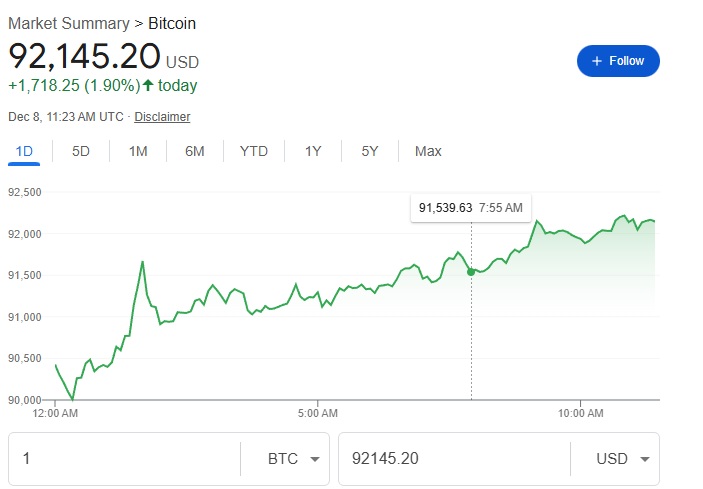
This single enigmatic post from Saylor sent Bitcoin soaring by more than $4,000 in under three hours, driving the asset from just below $88,000 to above $91,000. The reaction underscored how strongly the executive chairman’s remarks continue to sway market sentiment even as broader indicators remain locked in extreme fear.

Strategy’s “Orange and Green Dots” Tracking System

The strategy color-coded tracking system has become a key signal for crypto observers. The “orange dots” represent each Bitcoin purchase by MicroStrategy, displayed on the company’s tracker portfolio chart. Every dot marks another addition to its long-running accumulation strategy.

Alongside these markers, a green line tracks the company’s average purchase price, a benchmark for gauging portfolio performance. As of December 8, MicroStrategy held 650,000 BTC valued at roughly $57.80 billion, with an average cost of $74,436 per coin. This position reflected a 19.47% gain, amounting to about $9.42 billion in unrealized profits.

As at 6.27am New York, 12/8/2025

Recently, Saylor introduced “green dots,” prompting speculation about a strategy shift. The green dashed line showing the average cost has drawn increased attention, with some analysts suggesting that renewed or heavier buying could push it higher.

MicroStrategy’s holdings, acquired at an average $74,436 per BTC, underscore their leveraged accumulation approach, drawing both praise for bold HODLing and criticism for shareholder dilution risks. Last week, the company announced the establishment of a USD Reserve of $1.44 billion to support the payment of dividends on its preferred stock and interest on its outstanding indebtedness (“Dividends”).

The USD Reserve was funded using proceeds from the sale of shares of class A common stock under Strategy’s at-the-market offering program. Strategy’s current intention is to maintain a USD Reserve in an amount sufficient to fund at least twelve months of its Dividends, and intends to strengthen the USD Reserve over time, with the goal of ultimately covering 24 months or more of its Dividends.

The maintenance of this USD Reserve, as well as its amount, terms, and conditions, remains subject to Strategy’s sole and absolute discretion and Strategy may adjust the USD Reserve from time to time based on market conditions, liquidity needs, and other factors.

Commenting on it, CEO Saylor said, “Establishing a USD Reserve to complement our BTC Reserve marks the next step in our evolution, and we believe it will better position us to navigate short-term market volatility while delivering on our vision of being the world’s leading issuer of Digital Credit”.

Strategy is the world’s first and largest Bitcoin Treasury Company. The treasury strategy is designed to provide investors with varying degrees of economic exposure to Bitcoin by offering a range of securities, including equity and fixed-income instruments.

CEO Phong Le acknowledged that the company may consider selling Bitcoin if its stock falls below 1x modified Net Asset Value and external capital cannot be raised. With mNAV having dipped to 0.95 in November 2024, the scenario is no longer theoretical.

This marks a notable departure from the firm’s earlier “never sell” philosophy. Rising annual dividend obligations estimated between $750 million and $800 million—are forcing a reassessment of liquidity options. As a result, MicroStrategy’s role in the market is increasingly being compared to that of a leveraged Bitcoin ETF. Meanwhile, the company’s stock has dropped more than 60% from its peak, raising questions about how sustainable aggressive accumulation will be during high-volatility periods.

Outlook

Despite the sudden rally in the price of Bitcoin, overall market sentiment has remained cautious. The Fear and Greed Index continued to signal anxiety, even though trader positioning leaned bullish.

The contrast between fearful sentiment indicators and bullish trader positioning highlighted the market’s current psychological divide: fear persists, yet many traders are willing to bet on momentum, especially when triggered by influential Bitcoin holders.

Meanwhile, former BitMEX CEO Arthur Hayes, has noted that Bitcoin is poised for lift-off as key bullish catalysts kick in.

Core Personal Consumption Expenditures (PCE) Inflation Cools to 2.8%, Solidifying Case for Imminent Fed Rate Cut

0

The core Personal Consumption Expenditures (PCE) price index, the Federal Reserve’s preferred inflation gauge, indicated a lower-than-expected annual rate of 2.8% in September.

This long-awaited data point, released by the Commerce Department’s Bureau of Economic Analysis (BEA), strongly reinforces expectations that the Fed will opt to lower interest rates at its monetary policy meeting next week.

The report’s release was significantly delayed—originally scheduled for late October—due to the government shutdown, which had halted all data collection and economic reporting for over 40 days. Despite the data being backward-looking, it is the final piece of inflation evidence the FOMC will receive before making its rate decision, granting it immense significance.

PCE Readings and The Fed’s Rationale

The September core PCE annual rate of 2.8% was a slight deceleration from 2.9% in August and was 0.1 percentage point below the Dow Jones consensus forecast. The monthly core PCE rise of 0.2% was in line with expectations.

Measure September Annual Rate Monthly Change Comparison to Expectations
Core PCE (Excluding Food & Energy) 2.8% (Lowest since May) 0.2% Annual rate lower than 2.9% consensus
Headline PCE (All Items) 2.8% (Highest since April) 0.3% In line with 2.8% consensus

Why the Fed Prefers PCE Over CPI

Federal Reserve officials use PCE as their primary policy tool for inflation targeting (2% long-term goal) over the better-known Consumer Price Index (CPI) for several key methodological reasons.

The PCE index’s weighting of goods and services is updated monthly, which better captures how consumers substitute cheaper goods for more expensive ones when prices rise. The CPI only updates its weights annually.

PCE is a more comprehensive measure because it includes expenditures made on behalf of consumers by third parties, such as employer-provided healthcare and government programs. The CPI only tracks out-of-pocket expenses.

PCE places a greater emphasis on healthcare and a lower emphasis on housing costs compared to the CPI, which is often seen as providing a clearer picture of underlying inflationary pressures.

The details of the report revealed a divergence in price pressures between goods and services. Goods prices rose 0.5% on the month, accelerating sharply. This is largely attributed to the continued impact of President Donald Trump’s tariffs working their way through the economy.

Services prices were up just 0.2% (a step down from 0.3% in August). The main contributors to the services increase were health care and housing, and utilities (led by rent).

Food prices rose 0.4%, while energy prices were up 1.7%, driving the slight acceleration in the Headline PCE rate.

The data also showed that Personal Income rose 0.4% (a beat over the forecast), while consumer spending was up 0.3% (a slight miss). Real consumption, when adjusted for inflation, was flat for the month, which, alongside the unchanged personal savings rate of 4.7%, signals a loss of momentum in household demand after a resilient summer.

Path to a Rate Cut

The softer Core PCE data, particularly the annual decline from 2.9% to 2.8%, strengthens the position of the FOMC faction that supports additional rate cuts to head off potential weakness in the labor market.

The odds of the Fed cutting the benchmark interest rate by a quarter percentage point when it meets next week held firm at 87.2%, according to the CME Group’s FedWatch tool.

While labor market indicators show a slow pace of hiring, a separate report on Friday revealed consumer sentiment improved more than expected to start December (the University of Michigan survey rose to 53.3). Crucially, consumer one-year inflation expectations dropped to 4.1%, easing policymakers’ concerns about the public’s view of future prices.

The combination of cooling core inflation, slowing momentum in consumer spending, and contained long-term inflation expectations sets a clear stage for the Fed to deliver a widely anticipated rate reduction next week.

USE.com Presale Ignites Massive Early Demand as Traders Race for First Access Ahead of the Beta

0

USE.com is igniting a wave of early demand as its presale accelerates and traders across global markets race to secure first access ahead of the highly anticipated Beta launch. The platform’s rapid rise in visibility reflects a growing belief that USE.com may become one of the most influential new centralized exchanges entering the market in 2025. With a fully developed ecosystem, next generation infrastructure and a global rollout timeline, the presale is capturing strong attention from both retail and professional traders.

The surge in demand is driven by a broader market shift. Traders are no longer satisfied with unfinished products or speculative early stage offerings. They want exchanges that are built, tested and engineered with real performance standards. By entering the presale with a ready-to-operate multi-product ecosystem, use.com is setting a new benchmark for presale credibility in the exchange sector.

Presale Momentum Fueled by Advanced Exchange Readiness

The hallmark of the USE.com presale is its foundation in real infrastructure. The platform’s ecosystem includes spot markets, perpetual futures, earning products and token launch tools already built into a unified interface. This level of readiness is uncommon in presale environments and has become one of the main catalysts behind the presale’s explosive traction.

Contributors entering the presale understand that they are supporting a platform that is operationally prepared rather than reliant on future development. This immediate clarity is driving strong early confidence in use.com across global trading communities.

Traders Moving Quickly as USE.com Approaches Its Beta Phase

The approaching Beta launch is creating additional urgency. Early contributors recognize that first access to the platform offers a strategic advantage, allowing them to evaluate execution speed, liquidity behavior and platform stability before the general public.

Beta launches typically act as decisive turning points for exchanges, and expectations are particularly high for USE.com due to its performance-first engineering. Contributors want to be among the first to experience what analysts believe could become one of the fastest and most stable new trading engines in the sector.

Global Demand Driven by High Performance Engineering

The platform’s technical architecture is a key reason traders are entering the presale swiftly. USE.com is engineered with a low latency, high throughput matching engine designed to maintain stability even under extreme market volatility. This performance-driven design appeals to traders who depend on precision, speed and reliable order flow during fast-moving market conditions.

The fact that use.com is introducing such advanced engineering at the presale stage is generating considerable hype, particularly among active traders who demand institutional-quality infrastructure.

A Surge of Interest Rooted in Security and Operational Integrity

Security is also playing a major role in the presale’s rapid growth. USE.com integrates multi-tier custodial protections, robust internal oversight and a compliance-aligned operational framework, offering contributors a level of assurance rarely seen in early-stage exchange offerings.

Traders who have previously experienced challenges with unstable or poorly structured exchanges are gravitating toward use.com because of its strong operational discipline. This credibility is fueling both the presale’s momentum and the platform’s global visibility.

A Potential Landmark Moment for New Exchange Launches

The market has been waiting for a new exchange launch that reflects modern technological standards and disciplined operational structure. USE.com is entering the sector at a moment when traders are actively seeking alternatives to older exchanges that have struggled with outages, operational inconsistencies or slow development cycles.

As anticipation grows, use.com is being recognized as a presale that could mark a landmark moment in the next wave of global exchange rollouts.

Analyst Perspective

Analysts observing the presale note that USE.com demonstrates several characteristics associated with early-stage platforms that later become major players. These include advanced technical readiness, a comprehensive product ecosystem, strong security foundations and an aligned presale-to-Beta rollout strategy. If the Beta delivers the performance expected, USE.com may emerge as one of the strongest new exchanges of 2025, making the current presale phase a strategically significant early opportunity.

Telegram: https://t.me/useglobal

X: https://x.com/useexchange