DD
MM
YYYY

PAGES

DD
MM
YYYY

spot_img

PAGES

Home Blog Page 4213

Exports of Liquefied Petroleum Gas to Nigeria Banned by Niger Military Junta

0

In a surprising move, the government of Niger has announced that it will stop exporting liquefied petroleum gas (LPG) to Nigeria, effective from October 1, 2023. This decision has sparked mixed reactions from both countries, as well as from regional and international observers.

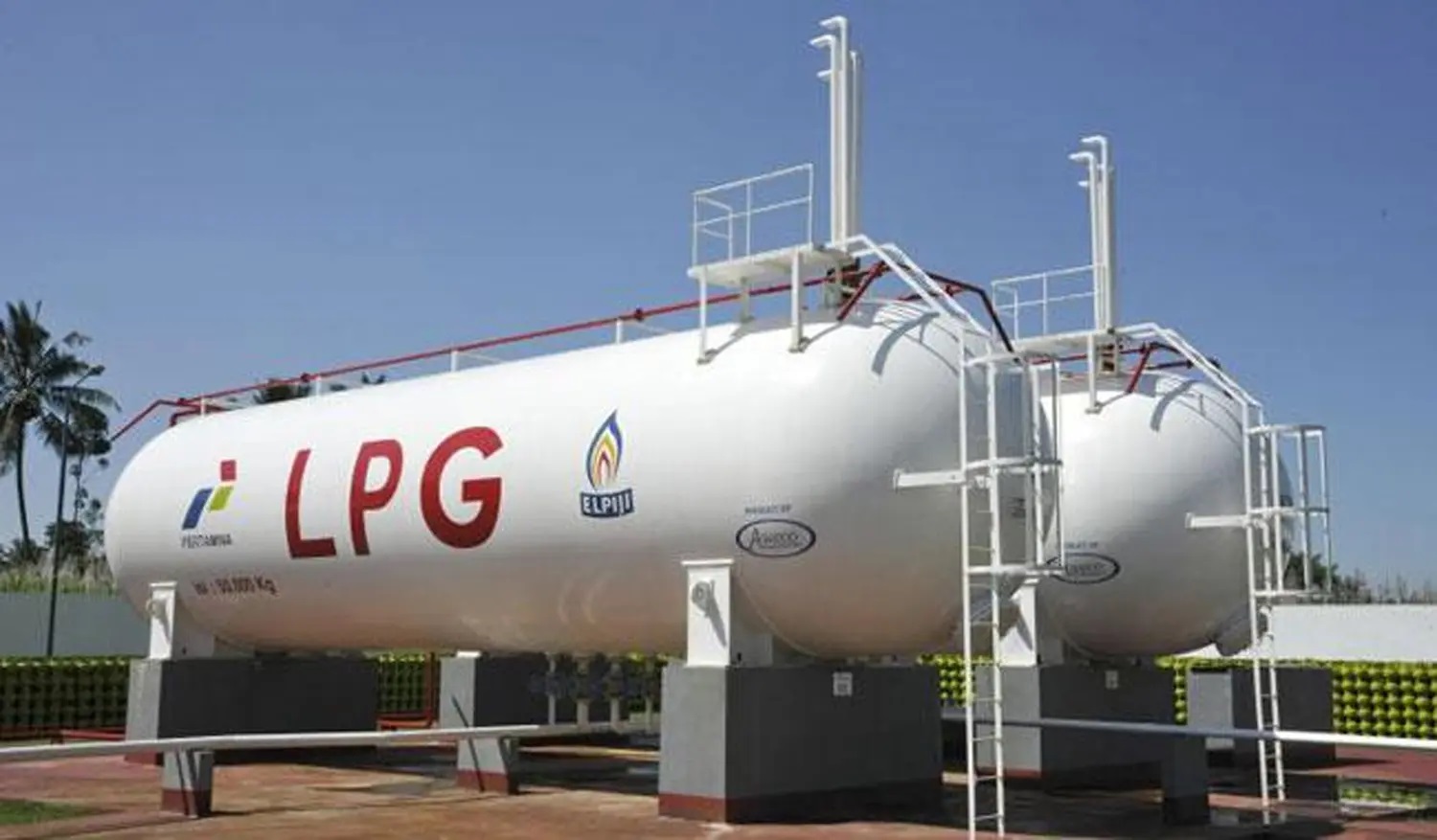
LPG, also known as cooking gas, is a flammable mixture of hydrocarbon gases used as fuel in cooking, heating, and other applications. Nigeria is the largest consumer of LPG in Africa, with an estimated demand of 1.8 million metric tons per year. However, due to the lack of adequate infrastructure and domestic production, Nigeria relies heavily on imports from neighboring countries, especially Niger, which has abundant natural gas reserves.

According to the Nigerien Minister of Energy and Petroleum, Abdoulaye Issa, the ban on LPG exports to Nigeria is part of a strategic plan to develop the domestic gas sector and promote industrialization in Niger. He said that Niger has been exporting LPG to Nigeria at a subsidized price, which has been detrimental to the Nigerien economy and the environment. He also said that Niger intends to use its own gas resources to generate electricity, produce fertilizers, and support other industries.

The Nigerian Minister of State for Petroleum Resources expressed disappointment and concern over the Nigerien decision, saying that it will have negative impacts on the Nigerian economy and the welfare of millions of Nigerians who depend on LPG for their daily needs. He said that Nigeria has been a reliable partner and a major investor in the Nigerien gas sector, and that the ban will undermine the existing cooperation and integration between the two countries. He urged the Nigerien government to reconsider its decision and engage in dialogue with Nigeria to find a mutually beneficial solution.

The ban on LPG exports to Nigeria has also raised questions about the future of the Trans-Saharan Gas Pipeline (TSGP) project, which aims to transport natural gas from Nigeria to Europe via Niger and Algeria. The project, which has been in the works for over a decade, is expected to boost the economic development and energy security of the participating countries, as well as reduce greenhouse gas emissions. However, the project has faced several challenges, such as funding, security, and regulatory issues. The Nigerien decision to ban LPG exports to Nigeria could further complicate the prospects of the TSGP project.

Some analysts have suggested that the ban on LPG exports to Nigeria is not only motivated by economic reasons, but also by political and diplomatic factors. They have pointed out that the relations between Niger and Nigeria have been strained in recent years, due to various issues such as border disputes, migration, terrorism, and trade barriers. They have also noted that Niger has been strengthening its ties with other regional and global powers, such as France, China, and Turkey, which could influence its energy policy and interests.

The ban on LPG exports to Nigeria is likely to have significant implications for both countries, as well as for the regional and international energy landscape. It remains to be seen how the two governments will handle this situation and whether they will be able to reach a compromise that will satisfy their respective interests and aspirations.

INEC and The Tax Reforms Nigeria Desires

1

INEC (Independent National Electoral Commission) needs reforms to save Nigeria’s economy and its democracy, and everything that nation plans to achieve.  What do we pay INEC to do? To just sit down and do minimal work? See how tribunals are ruling left and right across the nation, making judges now the ABSOLUTE VOTERS.

I have no problem with people who work in INEC but if you have this level of failure rate in your processes, you must change how you do things. Good People, for Nigeria to advance, we need to spend significant efforts to reform how INEC does business, from the local to the federal levels because in most elections, the judges are the real voters now. Yet, we can blame the judges, but if you look deeper, INEC is feeding them nonsense, because in many House races, INEC does not even have means to defend its called results? In short, it makes no effort!

As that happens,  the national assembly must begin work on fiscal federalism. I have been watching the new tax reform committee. My hope is that they will understand the power of co-opetition and find a mechanism to make states in Nigeria to compete even as they cooperate.  That system will make everyone look back to our local and state governments, and in the process diminish the influence from Abuja.  

For me, that is the tax reform that will work, because with fiscal federalism, the states and the local government systems will evolve based on their inherent capabilities, and simply pay taxes to the federal government.  We must inject competition into the DNAs of our states.

Lagos State keeps its financial services. Rivers State does oil. Abia State pushes its maker’s spirit in Aba. Kano State continues to advance its trade. Jos’ Plateau returns to tourism. etc. Yes, we can see states innovate based on the inherent advantages they have  over the one coming from Abuja.

Comment on Feed

Comment 1: Thank you for putting this forward, Prof!

Until the burden of proof shifts to INEC, we won’t do well that much. Of course, I expect litigation to triple (all Nigerian politicians are sore losers). Still, the burden of proof will ensure that INEC MUST defend its process rather than give that baggage to one of the competitors.

Will this fix our electoral problems? Not so much. Until we take the purse away from politicians, empower career civil servants with some decision-making power, and reduce politicians’ ability to policymaking, we will still have do/die elections.

Chicago State University Confirms Certificate Tinubu Summitted to INEC Was Forged

0

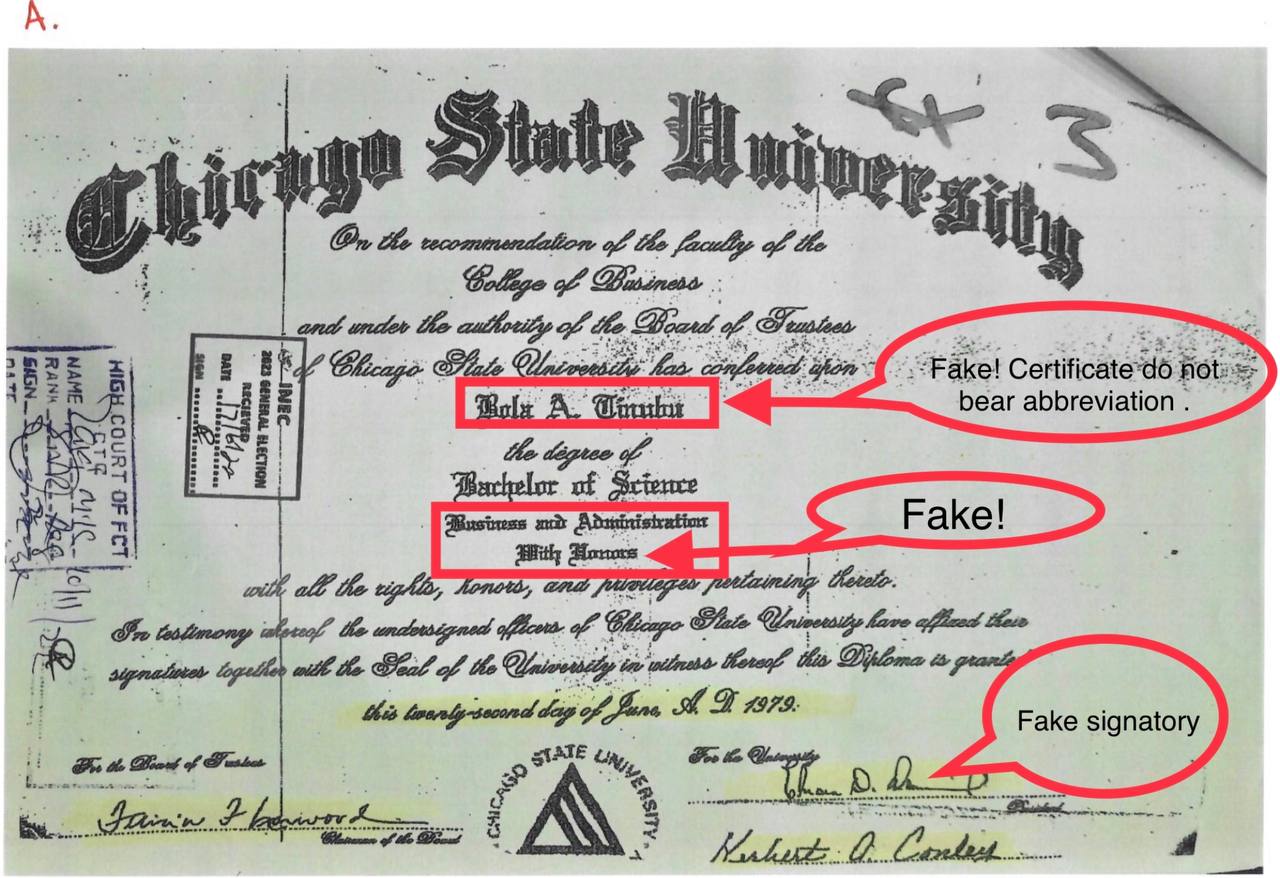
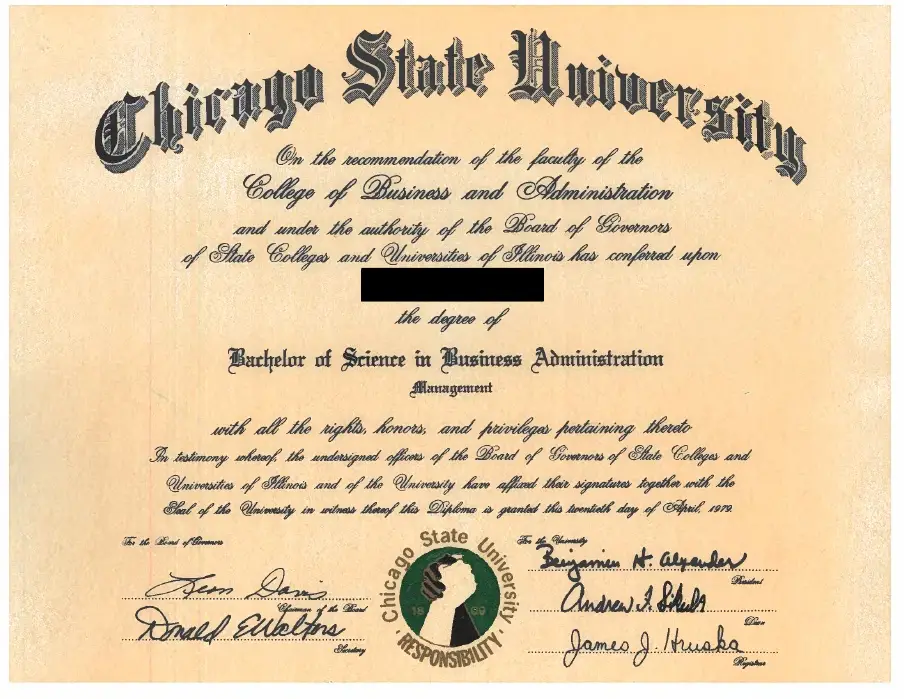
Findings from the sworn deposition of Chicago State University (CSU) have revealed that President Bola Tinubu presented a forged certificate to the Independent National Electoral Commission (INEC) when he filed his paperwork to contest Nigeria’s presidential election in June 2022.

The new development opens a new critical front in the ongoing legal battle challenging Tinubu’s electoral victory, and will likely cost him his presidency.

For years, Tinubu has been entangled in cases of certificate forgery shrouded in his secretive educational background. The former governor of Lagos State was caught changing his earlier claims that he attended St. John’s Primary School, Aroloya, Lagos, and Children Home School Ibadan. He also claimed to possess two degrees from two American universities, both of which he said were stolen by unidentified soldiers during the military regime of the 1990s.

It was based on these ever-changing stories about Tinubu’s education that his co-contestant in the last presidential election, Atiku Abubakar, filed a suit in the United States District Court for the Northern District of Illinois in Chicago on August 2, seeking an order to force the CSU to release Tinubu’s academic record.

Federal District Judge Nancy Maldonado’s decision to grant Atiku’s request and issue an order for a deposition is significant, as it allowed for the revelation of several important details. One notable revelation is that the certificate presented by Tinubu to INEC was forged.

While the full transcript of the deposition is yet to be released, excerpts show that the certificate the Nigerian president submitted to the electoral commission was not issued by Chicago State University.

Caleb Westberg, the registrar at Chicago State University since November 2020, said Mr Tinubu’s certificate, dated June 22, 1979, and tendered to INEC on June 17, 2022, was not issued by the school and its administrators could, therefore, not be able to authenticate its source. He also said that Mr Tinubu did not apply for a replacement certificate, nor was he ever issued one.

The controversy trailing Tinubu’s CSU certificate has caught so much interest, with the National Democratic Coalition in the United States of America (NADECO – USA) asking him to resign and save Nigeria from further embarrassment.

A staff member of CSU reportedly said during the deposition that “It is a Nigerian thing to forge stamps of organizations.”

Tinubu has fought vigorously to keep his record with the CSU sealed. The president said making his CSU academic record public would infringe on his privacy rights under the Family Educational and Privacy Rights Act (FERPA), a U.S. law that protects the academic records of students.

Read also: Tinubu’s Baffling Desperation to Block the Release of His Academic Record At Chicago State University

He also appealed an earlier ruling by Judge Jeffrey Gilbert of the United States District Court for the Northern District of Illinois, who on September 19 ordered CSU to release the contested record.

At the Court of Appeal, Tinubu’s lawyers argued before Judge Nancy Maldonado that “Severe and irreparable harm will be done to Bola Tinubu if the records are released.”

Chicago State University has maintained that Tinubu graduated from the school, even though his record has been characterized by discrepancies. But a document earlier released by the school showed that Bola Tinubu who graduated from the school was a female.

Among the many of Tinubu’s academic qualifications claims that have been discovered to be false, is that he graduated from Government College Lagos in 1970, whereas the school was founded in 1974.

Early last month, the Presidential Election Petition Tribunal (PEPT) upheld Tinubu’s electoral victory, dismissing the petitions of Peter Obi and Atiku. The duo, who have appealed the judgment, will now count on Tinubu’s latest certificate forgery to win their case at the Supreme Court.

Section 137 (1)(j) of the Nigerian Constitution (amended in 2010) addresses the issue of presenting a forged certificate to the INEC in the context of presidential elections. It stipulates that no one can be legitimately elected as the President of Nigeria if they have presented a forged certificate to INEC.

Meta is Considering Charging European Users Who Opt Out of Ad Tracking $14 Monthly

0

Meta, the parent company of Instagram and Facebook, is reportedly exploring the possibility of introducing monthly subscription fees for users in Europe who opt not to consent to the use of their data for targeted advertising. This initiative comes amid increasing privacy concerns and regulatory scrutiny over data collection and user tracking by tech giants.

According to The Wall Street Journal, Meta is considering this subscription model as a way to generate revenue while addressing data privacy issues.

Meta’s consideration of $14 monthly subscription fees for users in Europe who choose not to consent to data-driven advertising aligns with the EU’s efforts to enhance user privacy and allow individuals to opt out of personalized ads based on their online activity.

However, the implementation of such a subscription model may face challenges and uncertainties, particularly regarding its compliance with EU laws and regulations.

These potential subscription tiers also reflect the broader trend of increased regulatory scrutiny and pressure on tech giants in Europe. Meta, in particular, has faced significant fines and regulatory hurdles related to data privacy and antitrust concerns in the region.

As privacy and data protection continue to be central issues in the digital landscape, tech companies are likely to explore various approaches to adapt to evolving regulations while maintaining their business models. The proposed subscription model is just one of many potential strategies being considered to navigate the changing regulatory environment in Europe.

“Meta believes in the value of free services which are supported by personalized ads,” said a Meta company spokesperson.

“However, we continue to explore options to ensure we comply with evolving regulatory requirements,” they added.

The potential introduction of monthly subscription fees for users who opt out of data-driven advertising on Meta’s platforms in Europe reflects the ongoing efforts by European regulators to protect user privacy and give individuals more control over their data and online experiences.

Apple’s introduction of the option for users to opt out of ad-tracking in 2021 had a significant impact on Meta’s anticipated revenue, highlighting the financial consequences of such regulatory changes. The proposed subscription tiers are a way for Meta to potentially recoup some of these losses and adapt to the changing landscape.

However, the success of this subscription model will depend on its acceptance by users and its compliance with EU laws. European regulators will likely closely scrutinize the plan to ensure that it aligns with data protection and privacy regulations.

Ultimately, this development underscores the evolving nature of the tech industry, where companies must navigate a complex regulatory environment while seeking to balance their business models with user privacy and preferences.

Nigerians Should Pray the Refineries Don’t Work – Oyedele

0

Chairman of the Presidential Fiscal Policy and Tax Reforms Committee, Taiwo Oyedele, has said that Nigerians should pray that the country’s refineries do not become operational.

During his speech at The Platform’s Independence Anniversary event in Lagos, Oyedele expressed concern that if Nigerian refineries were to produce petroleum, the inefficiencies in their management could lead to the country having the most expensive petrol in the world.

“Nigerians would say if only our refineries were working, then we’ll be fine. Nothing can be farther from the truth than that. In fact, Nigerians should come together and say please make sure that our refineries don’t work. We should sell them.

“If Nigerian refineries process crude oil unless we deal with our inefficiency, one liter of petrol will be the most expensive in the world. You would have succeeded in replacing the subsidy at the pump with subsidy for the refineries.

“The National Assembly said we have spent over N10 trillion maintaining our refineries even when they have not produced anything,” Oyedele said during the event tagged ‘Africa Rising Continent – Nigeria’s Strategic Role’.

Oyedele’s claim that the Nigerian government may struggle to effectively manage refineries echoes similar concerns voiced by former President Olusegun Obasanjo. In an interview with The Cable, Obasanjo recounted an incident where he attempted to attract Shell investors to invest in the country’s refineries. However, they declined, citing concerns about the pervasive corruption within the refinery sector.

“They (refineries) will not work as long as the government is keeping hold of them. When I was president, I invited Shell to a meeting. I told them I wanted to hand over the refineries for them to help us run. They bluntly told me they would not. I was shocked,” he said.

The clamor for working refineries has been loud recently amid the rising cost of petroleum products, buoyed by the removal of fuel subsidy. This has pushed the inflation rate to 26% as the cost of living soars.

The government is once again making moves to revitalize the refineries in the hope it will cut down high petrol pump prices, which have stirred frequent threats of nationwide strikes from organized labor unions.

Minister of State for Petroleum, Heineken Lokpobiri, said the refineries are expected to be functional by the end of next year. He said that the Port Harcourt refinery will come on board by the end of the year.

The refinery at Port Harcourt is undergoing a $1.5bn upgrade after Tecnimont from Italy secured the contract for revamp in 2021. This upgrade is expected to take up to 44 months to complete.

There has been a high expectation that Dangote Refinery would cut down petrol pump prices when it became operational.

The dilapidated three refineries; Warri, Port Harcourt, and Kaduna, have a combined capacity to process around 4.45 million barrels per day. The government aims to revive them to reduce dependency on petrol importation.

Lokpobiri said the Warri and Kaduna refineries are slated to commence crude processing sometime between the first quarter and the culmination of 2024.

However, some stakeholders disagree with Oyedele, saying that Nigeria needs government-owned refineries.

“The government that wants the refineries to work knows what they are doing. Having our own refineries guarantees energy security and would also create more jobs,” the National Controller, Independent Petroleum Marketers Association of Nigeria, Mike Osatuyi, said.

“You can’t control what you don’t own. So, it is good for us to have our own. The cost of importing petrol is now very high. I think government is moving in the right direction by making the refineries work very soon.”