DD
MM
YYYY

PAGES

DD
MM
YYYY

spot_img

PAGES

Home Blog Page 4219

Notable Provisions of the CBN Guidelines on Web-Based Payments in Nigeria

0

The Central Bank of Nigeria CBN released the Guidelines on Web acceptance services as a means of providing a regulatory framework for supervising the safe operation of Web-based card acceptance services in furtherance of e-commerce and digital payments.

This article will be specifically focused on the provisions of the Guidelines regarding :-

– The applicability scope of the guidelines

– The objectives of the guidelines

– The stakeholders of the Web-based card acceptance value chain and their roles and responsibilities.

– Consumer Protection/Dispute Resolution

– Charge back period for Web-based transactions

What is the applicability scope of the Web-based card transactions guidelines?

The guidelines shall be applicable to all forms of transfers of monetary value on the website of a merchant or a payment aggregator in fulfillment of consideration for the purchase of goods and services on  the internet. 

What are the objectives of the guidelines?

The objectives of the guidelines are :-

  1. To provide minimum standard requirements for the processing of transactions on the web.
  1. To promote the safety and effectiveness of web acceptance services and thereby enhance user confidence in the service.
  1. To identify the roles and responsibilities of stakeholders.
  1. To encourage the development of effective, low risk, low cost and convenient payment and financial services to customers and businesses through the internet. 

Which entities are named by the guidelines as stakeholders in web-based card transactions and what are their respective roles and responsibilities?

  1. Issuer

Roles and Responsibilities

– To be responsible for the issuance of the cards. Only licensed deposit taking banks shall serve as issuers of payment cards. 

– To provide additional security measures to cardholders who intend to utilize their cards for transactions via the web. 

– To maintain internal records over a minimum period of 7 years to enable audit trails on card-related transactions.

– To not enable a card for web transactions unless requested by the customer.

  1. Merchant (Website owner)

Roles and Responsibilities

– To ensure that the terms and conditions for its products and services are properly communicated and conspicuously displayed on its website.

– To ensure that it cooperates with the acquirer in implementing appropriate security measures. 

– To provide the customer with clear instructions on the process for making payments on its website.

  1. Payment gateway providers

Roles and Responsibilities

– To provide services with respect to the processing of online payment transactions related to the sale of goods and/or services. 

– To be responsible for the security of the data related to the payment instrument that is possessed, stored, processed or transmitted on behalf of cardholders.

– To hold all forms of customer data securely and take responsibility for the security of the data.

  1. Customers/Cardholders

Roles and Responsibilities

– To guard their cards, PINs , and hardware tokens with utmost care.

– Immediately notify the issuer if the card, PIN, or token is lost or compromised. 

  1. Acquirer

Roles and Responsibilities

  1. To be responsible for engaging and managing the web payment gateway provider.
  1. To test the website’s payment integration and ensure that sensitive customer data are not retained on the merchant’s website.
  1. To acquire all transactions done on the website of merchants acquired by them.
  1. The acquirer shall sign an agreement for acceptance and payment via the web channel with the merchant.

What are the provisions of the guidelines on the twin issues of Consumer Protection/Dispute Resolution? 

The guidelines provide that any dispute, controversy or claim arising out of it or the breach, termination or invalidity thereof shall be settled in accordance with the CBN dispute resolution mechanism and if unresolved may be referred to an arbitrary panel as provided under the Arbitration and Conciliation Act. 

What is the charge back time frame for failed web transactions under the guidelines?

Refunds on disputed or failed Web transactions shall be treated within 48hours. 

Find that #GreatestBusiness which remains unborn with Tekedia Capital

0

We have this startup which came to Tekedia Capital Syndicate. It was oversubscribed by multiples and before we could even finish,  all our members had doubled their investments. Yet, the startup has not even launched! But when you see amazing business models, you admire them. No wonder, everyone wants  in, from Europe to Africa to the Americas. The fun fact: they baked the startup in Lagos!

Young people, start building. The greatest business in Nigeria has not been started. We’re just entering the application utility era in the nation and the cambrian moment of entrepreneurial capitalism is still at infancy.

If anyone tells you that the future does not offer a promise, ignore. Simply, Abundance is in the future. Think. Think. Think. There are many amazing things in Africa. Look at those local challenges from a new dimension, not necessarily in the way Silicon Valley would have looked at them. Find that #GreatestBusiness which remains unborn.

At Tekedia Capital, I will like to explore how to help you. We invest $$millions of dollars yearly with positions in dozens of companies. They will tell you that there is no money in Africa. Sure, I can tell you that in our current Tekedia Capital cycle, our challenge is how to ration investments due to oversubscriptions! Africa has funds. But it needs visionary entrepreneurs for those with the funds to release them. #build

The Nature of Job is Changing

We need to build because the nature of jobs is changing as the World Economic Forum projects that 14 million jobs would be lost in the next five years.

Nearly one in four jobs are set to change over the next five years as a result of trends including artificial intelligence, digitization, the green energy transition and supply chain-reshoring, according to a new report from the World Economic Form. The report, which is based on a survey of over 800 employers, also said global job markets are set for a “new era of turbulence” as clerical work declines and employment growth shifts to areas such as big data analytics, management technologies and cybersecurity.

Employers expect to create 69 million new jobs by 2027 and eliminate 83 million positions, with a net loss of 14 million jobs, it said.

Up to 26 million jobs in record-keeping and administrative positions will be eliminated as roughly 75% of surveyed companies said they expect to adopt AI technologies over the next five years.

Slower economic growth, supply shortages and inflation remain a bigger threat to jobs than AI for now, the report said.

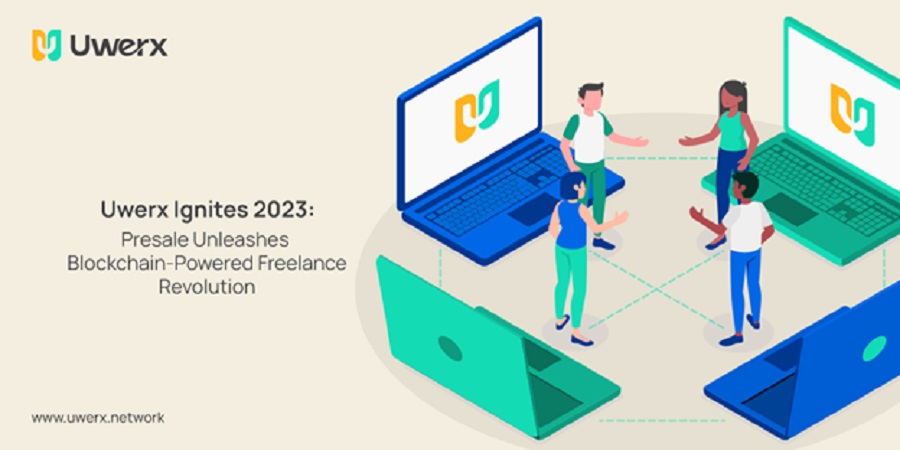
The Crypto Presale of 2023, Uwerx: The Future of Crypto and Tokenized Freelance Work?

0

Technology continues to innovate how humans live, and a huge area of human life is work. Technology has brought enormous boosts to productivity globally, and with the massive increase in the number of global freelancers, technology has become increasingly essential to the worldwide economy. Connecting freelancers and employers is big business, and Uwerx, a new blockchain protocol, has a perfect solution.


What is Uwerx?

Uwerx has opened its presale and is raising funds to create the world’s first decentralized freelancing marketplace. Uwerx will leverage the Polygon (MATIC) network and introduce a permissionless service accessible from anywhere. For too long, the industry has been plagued with high service fees, the industry average resting at 20%, and Uwerx plans to deliver a more trusted and cost-efficient service laying the foundations for even greater innovation in the freelancing space.


The team behind Uwerx has announced a 25-year liquidity lock when the presale closes. SolidProof and InterFi Network have audited the protocol: both great indicators of a long-term mission.

Growth in the Freelancing Economy

Freelancing has been the largest growth sector for the global workforce. According to Forbes, freelancers will play a key role in solving the global tech talent gap. The world has become globalized and borderless, and the job market has slowly begun to reflect this. Millions of workers will become freelancers in the coming decade, and the revenue of freelance marketplaces will continue to surge.

Freelancers can work anywhere and will be pivotal in driving modern industry forward, with many freelancers having technical specifications and training. Uwerx will build a technology-first platform to accommodate this new wave of workers. Analysts have pointed to this synergy between technologically adept freelancers and the Uwerx platform when discussing the growth potential, signaling that tech-friendly workers are likely to adopt the platform rapidly.

WERX Token Uses Cases

The WERX token will be the governance token of Uwerx and will drive the entire Uwerx economy. For example, freelancers can create webinars, display their work/ skills to potential employers, and pay a small fee of WERX token for the privilege. Holders of the WERX token will gain access to premium features giving users an incentive to hold and accumulate WERX. Uwerx will also pay incentives in the WERX token, such as referrals, participation bonuses, or content creation. The Uwerx economy will run on the WERX token, and the more WERX tokens users hold, the greater their experience.


Presale Open Now

Uwerx has opened its presale, giving fair and free access to global investors. Investors have the possibility to join a disruptive protocol at the ground level, and analysts believe that Uwerx may become a blue chip project as early as Q4 2023. Analysts gave price predictions for WERX, stating it could trade between $1.80 and $2.20 by Q1 2024- huge gains from its presale price of $0.00995.

Investors who want to join the future of freelancing and contribute to a protocol making a global difference can follow the links below to join the Uwerx presale today and purchase bonus 20%..

Find Out More Here:

Presale: invest.uwerx.network

Telegram: https://t.me/uwerx_network

Twitter: https://twitter.com/uwerx_network

Website: https://www.uwerx.network

XRP (XRP) and Ethereum (ETH) Crypto Price Predictions for 2024: Can Uwerx (WERX) Surpass Other Coins?

0

Investors were miserable in 2022, so far 2023 has been far better, and senior analysts expect another fully-fledged bull market in 2024. A new protocol, Uwerx, provides a better platform for freelancers, and analysts have begun speculating on its potential, comparing it to established giants like XRP (XRP) and Ethereum (ETH).

A Plan to Disrupt Freelancing: Uwerx

Industry leader Upwork was a disruptor in 2015; however, it has grown bloated, oversized, and suffers from a severe lack of competition. This has led the company to continue offering poor service, knowing freelancers have limited options: a key pain point is the 20% service fee charged on all earnings.

Uwerx will deploy a decentralized freelance marketplace that will usher in a new standard of service for freelancers. Uwerx will feature transparent pricing, built-in conflict resolution tools, social impact initiatives, and personalized matching, joining clients with freelancers through pricing and skills algorithms.

According to Forbes, 40% of users reported that accessing highly skilled workers through new digital talent platforms helped improve speed to market, boost productivity, and increase innovation. Companies desperately want freelancers, and Uwerx will create a modern platform where they will be easily accessible. Uwerx will charge a platform service fee of 1%, and analysts expect this potent disruptor to be adopted rapidly by the freelancing community. 

XRP (XRP) Price Prediction

XRP (XRP) continues to battle the SEC in the XRP vs. SEC court case, and investors wait nervously for an outcome. XRP (XRP) was designed to facilitate rapid international transactions, and the XRP (XRP) network has been operational since 2012.

XRP (XRP) currently trades at $0.46, and analysts from priceprediction.net have given a ranging price prediction for 2024, stating XRP (XRP) should trade between $0.77 and $0.89. This muted price prediction is due to XRP’s (XRP) reduced use case from the mass adoption of stablecoin for international transfers. XRP (XRP) has a rough road ahead, and many analysts expect XRP (XRP) will drop out of the top ten by 2024. 

Ethereum (ETH) Price Prediction

Ethereum (ETH) is the second largest crypto, and Ethereum (ETH) has been garnering attention recently due to the expected Shanghai hard fork that will see Ethereum (ETH) staking withdrawals go live. Ethereum (ETH) has seen a huge influx of developer activity, specifically in the layer two space. And analysts remain bullish on Ethereum’s (ETH) long-term prospects.

Analysts from priceprediction.net expect Ethereum (ETH) to trade between $3,175 and $3,882 in 2024. This price prediction seems very cautious for Ethereum (ETH), according to other senior analysts, who expect Ethereum (ETH) to target $6,000 in 2024.

Uwerx Presale Live Now

Uwerx has opened its presale, and investors have already begun flooding in. With audits from SolidProof, InterFi Network, a 25-year liquidity lock post-presale, and a massive price prediction of $3.60 for the WERX token in Q1 2024, it is easy to see why. Analysts believe that Uwerx could massively outpace XRP (XRP) and Ethereum (ETH) in 2024.

Uwerx is a disruptor, and investors curious to join the coming freelancing revolution can participate in the presale by following the links below to enjoy a purchase bonus of 20%.

Find Out More Here:

Presale: invest.uwerx.network

Telegram: https://t.me/uwerx_network

Twitter: https://twitter.com/uwerx_network

Website: https://www.uwerx.network

How Decentralized is Central Bank Digital Currency?

0

A central bank digital currency (CBDC) is the digital form of a country’s fiat currency, such as the dollar, euro, pound or yuan. It is issued by the central bank and has the same value and legal status as the physical currency. CBDCs are different from cryptocurrencies, which are not backed by any government or central authority and have volatile prices.

One of the main questions about CBDCs is how decentralized they are, or how much control the central bank has over them. Decentralization is often seen as a desirable feature of digital currencies, as it can enhance privacy, security, innovation and resilience. However, decentralization also comes with trade-offs, such as scalability, efficiency, regulation and governance.

Decentralization is a term that describes the degree of control and influence that different entities have over a system or a network. In the context of digital currencies, decentralization can refer to several aspects, such as:

– The governance of the currency: who decides the rules and parameters of the currency, such as its supply, distribution, and interest rate?
– The issuance of the currency: who creates new units of the currency and how?
– The validation of the transactions: who verifies and records the transactions on the ledger and how?
– The access to the currency: who can use the currency and how?

Cryptocurrencies are generally considered to be highly decentralized, as they rely on distributed networks of nodes that operate according to a consensus protocol, without the need for a central authority or intermediary. Anyone can join the network, create new units of the currency (through mining or staking), validate transactions (through proof-of-work or proof-of-stake), and access the currency (through wallets and exchanges). However, decentralization is not absolute or uniform across different cryptocurrencies, and there may be trade-offs between decentralization and other features, such as scalability, security, and usability.

CBDCs, on the other hand, are inherently centralized, as they are issued and controlled by a single entity: the central bank. The central bank decides the rules and parameters of the currency, creates new units of the currency (through monetary policy), validates transactions (through a centralized ledger or a permissioned blockchain), and regulates access to the currency (through identity verification and eligibility criteria). However, centralization does not necessarily imply uniformity or rigidity across different CBDCs, and there may be variations in design and implementation that affect the degree of decentralization.

The anonymity of cryptocurrency transactions has left it susceptible to crimes and scams over the last decade — but there has also been a growing business of companies tracking that down, The New York Times reports. Chainalysis is one of the companies involved in deciphering blockchain records, drawing in tens of millions of dollars in contracts with federal agencies to monitor crypto transactions. But with privacy concerns on the rise these days, other companies such as Cake Wallet are trying to make crypto transactions less traceable again, making it harder to determine who is sending and receiving money. (LinkedIn News)

For example, some CBDCs may adopt a two-tier model, where the central bank delegates some functions to intermediaries, such as commercial banks or payment service providers. These intermediaries may provide retail services to end-users, such as account opening, transaction processing, and customer support. This may increase efficiency and competition in the payment system, but also introduce some degree of decentralization and fragmentation.

Another example is that some CBDCs may use a hybrid blockchain architecture, where the central bank maintains a master ledger that records the aggregate balances of intermediaries or users, while allowing for sub-ledgers that operate on different platforms or protocols. These sub-ledgers may enable faster and cheaper transactions among participants within a network or a community. This may enhance innovation and inclusion in the payment system, but also create some degree of decentralization and interoperability.

Therefore, CBDCs are not necessarily monolithic or homogeneous in terms of decentralization. They may exhibit different degrees of decentralization depending on their design choices and objectives. However, CBDCs are unlikely to match cryptocurrencies in terms of decentralization, as they still rely on a central authority that has ultimate control over the currency. This may limit some of the advantages that cryptocurrencies offer, such as censorship-resistance, anonymity, and permissionlessness. However, it may also mitigate some of the risks that cryptocurrencies pose, such as volatility, fraud, and illicit activity.

The degree of decentralization of a CBDC depends on its design choices and implementation. There are many possible ways to design a CBDC, such as:

– Who can access and use it? Is it available to everyone (retail CBDC) or only to financial institutions (wholesale CBDC)?
– How is it issued and distributed? Is it directly from the central bank or through intermediaries such as commercial banks or payment platforms?
– How is it stored and transferred? Is it based on a centralized ledger or a distributed ledger technology (DLT) such as blockchain?
– How is it validated and secured? Is it based on a permissioned or permissionless system, where different actors have different roles and responsibilities?
– How is it governed and regulated? Is it subject to existing laws and regulations or does it require new ones?

Depending on these design choices, a CBDC can be more or less decentralized. For example, a retail CBDC that is issued directly by the central bank and based on a centralized ledger would be more centralized than a wholesale CBDC that is distributed through intermediaries and based on a DLT. However, there is no clear-cut answer to how decentralized a CBDC should be, as different levels of decentralization may suit different purposes and contexts.

The benefits and risks of decentralization for CBDCs are still being explored by researchers, policymakers and practitioners. Some potential benefits include:

– Enhancing privacy and anonymity for users, by reducing the need for intermediaries and third-party verification
– Improving security and resilience for the system, by reducing single points of failure and cyberattacks
– Fostering innovation and competition for the market, by enabling new entrants and business models
– Increasing financial inclusion and access for the public, by lowering barriers and costs of participation

Some potential risks include:

– Reducing efficiency and scalability for the system, by increasing complexity and latency
– Complicating regulation and oversight for the authorities, by creating new challenges for compliance and enforcement
– Eroding trust and stability for the economy, by undermining the role and credibility of the central bank
– Exposing users to new risks such as fraud, theft or loss of funds

In conclusion, CBDCs are not inherently centralized or decentralized, but rather reflect a spectrum of possible design choices that have different implications for their performance and impact. The optimal degree of decentralization for a CBDC depends on its objectives, functions and context. Therefore, each central bank needs to carefully weigh the benefits and risks of decentralization for its own CBDC project.