DD
MM
YYYY

PAGES

DD
MM
YYYY

spot_img

PAGES

Home Blog Page 4223

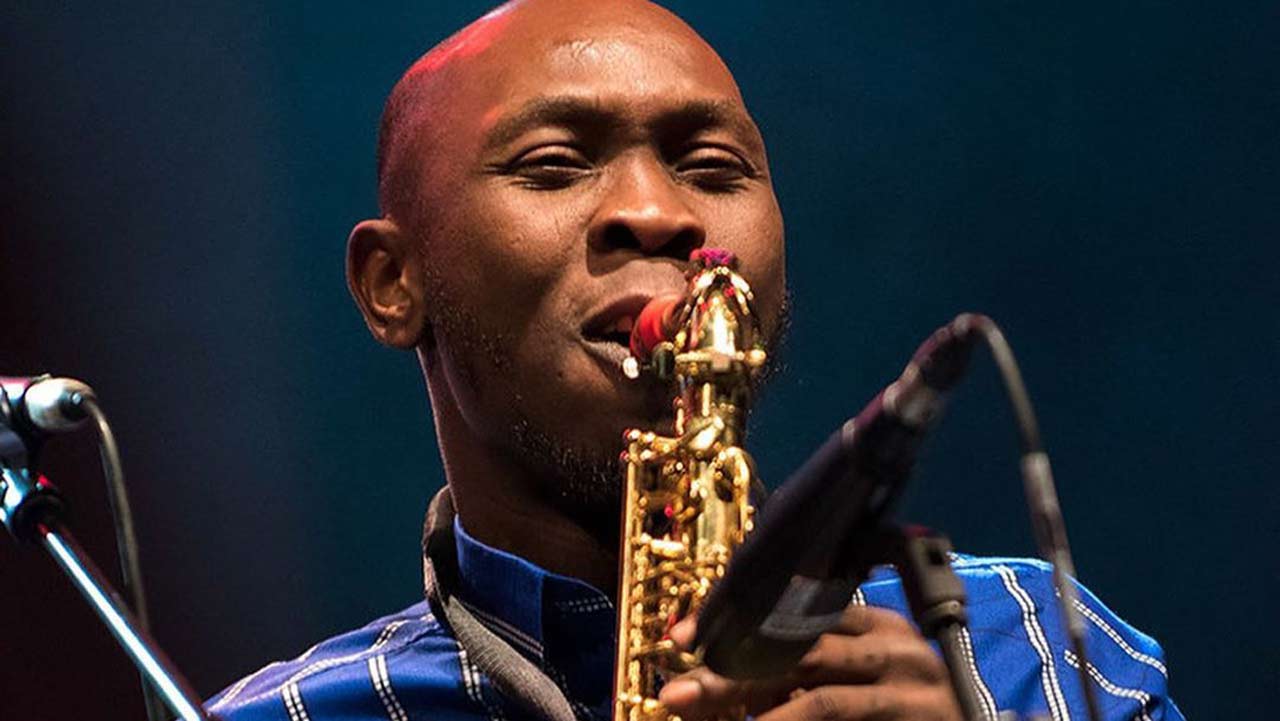
The Rule Creators, Enforcers and Breakers in Seun Kuti’s Police Assault

0

In keeping with our sociological analysis of some Nigerian musicians’ aberrant behaviour, our analyst reexamines Nigerian Twitter users in light of the categories of rule-makers and enforcers they recommended for policing the musicians. In another context, as Seun Kuti’s police assault continues to garner national and international attention, the article examines the creators, enforcers and breakers from the perspective of the netizens based on their tweets that indicate being moral entrepreneurs.

The two perspectives are examined using the theoretical position of American sociologist Howard Saul Becker, who teaches at Northwestern University. The sociology of deviance, the sociology of art, and the sociology of music have all benefited from Becker’s contributions. In 1963, he came up with the idea that “deviance is a consequence of external judgements, or labels, that modify the individual’s self-concept and change the way others respond to the labelled person. Becker grouped behaviour into four categories: falsely accused, conforming, pure deviant, and secret.”

Out of these four categories, our analyst notes that Seun Kuti and Portable’s recent behaviour aligns with pure deviant, which indicates “individuals who have engaged in rule-breaking or deviant behaviour and have been recognised as such. Then, labelled as deviant by society through moral entrepreneurs who could be on digital platforms or in physical settings.

Howard Becker’s sociology of deviance suggests that deviance is not an inherent characteristic of an act but rather a consequence of the social reactions to it. Therefore, in analysing the tweets about Seun Kuti, it is important to identify the rule enforcers and creators among the users and those they suggested outside  Twittersphere. The rule enforcers are the individuals or groups that have the power to enforce rules and punish those who violate them. In the case of Seun Kuti’s altercation with the police officer, the rule enforcers are the police force and the state. Many of the tweets express support for the police officer and suggest that Seun Kuti should be punished for his actions. These tweets reinforced the rules and norms established by the state, and as such, the netizens who expressed these views are also rule enforcers.

On the other hand, rule creators are individuals or groups who create the rules and norms that govern behaviour. In the case of Seun Kuti’s altercation with the police officer, the rule creator is society, which has been exemplified through various voices on digital platforms and in the physical sphere, and the cultural norms that guide behaviour.

Some of the tweets express support for Seun Kuti’s actions and suggest that the police officer deserved to be slapped. These tweets can be seen as challenging the rules and norms established by the state, and the netizens who expressed their opinions are rule breakers, a concept that Becker did not consider.

Overall, our analysis demonstrates the intricate interplay between societal norms and the laws and regulations of the state and how they influence how people respond to deviant behaviour.
Nigerian Telcos to Withdraw USSD Services Monday Over Banks’ N120bn Debt

0

Nigerian mobile network providers will stop their Unstructured Supplementary Service Data (USSD) to banks until the financial service providers clear a total of N120 billion ($259 million) debt they accumulated in about nine years.

The USSD is used by the banks to offer various services, ranging from money transfer to airtime purchase, to their customers – but has been a bone of contention between the telcos and the banks.

Chairman of the Association of Licensed Telecommunications Operators of Nigeria (ALTON), Gbenga Adebayo, told Bloomberg in a telephone interview on Monday that some banks will be disconnected as early as today (Monday).

The USSD has become key to Nigeria’s cashless policy since it was adopted, with a large section of the country relying on it to execute various transactions via mobile phones. The banks identified the USSD channel as a cost-efficient way of delivering financial services to their customers. Services provided by the banks constitute a minimum of 90% of the total traffic on the USSD channels, according to ALTON.

But as the number of users increase, the loggerhead between the telcos and the banks increase. The dispute had hung on payment of arrears and pricing model that the service providers failed to agree on. In 2020, the telcos moved to implement a N4.00 per 20-second session access to USSD services charge, escalating the dispute.

The association claimed that the banks paid its members as low as 0.85k per 20 second session to as high as N2 per 20 second session depending on the transaction volumes generated by the banks. But the banks in turn charged their customers for the same services between the range of N10-N50 depending on the bank and the service accessed by their customers.

The Central Bank of Nigeria and the Nigerian Communication Commission waded in as the dispute reached a boiling point, with the telcos threatening to withdraw the USSD services, alleging that the banks are ripping them off.

An agreement for a flat fee of N6.98 per transaction was brokered by the regulators, with a directive from the Minister of Communication and Digital Economy, Dr. Isa Pantami, that the telcos suspend their plan to charge subscribers since the banks are deducting the charges from customers accounts.

The telcos agreed to comply with the directive on one condition – the banks must pay their outstanding debt and must agree to remit subsequent charges in due time.

Adebayo said late last year that the arrears have risen from N42 billion to N80 billion, with the banks showing no readiness to pay. He indicated that the telcos’ decision to withdraw the USSD services is borne of frustration.

“We have engaged them severally but they refuse to do anything,” Adebayo told Bloomberg. “If we withdraw the service and they feel the impact, maybe they will come to find a way to resolve it.”

How Nigerian Banks Can Fix Transfer Failures and Eliminate Reversals

3

As a former Systems Automation Engineer in a Lagos bank, I worked at the heart of the bank: maintaining the systems which kept the general ledger working. Interestingly, when I came to the United States, I noticed that we could do things differently from how we worked in Lagos. And if we follow along, we will fix most of the bank transfer failures and reversals which have become prevalent in the nation’s banking sector. Here is my suggestion which I have shared here many times:

In Nigeria, the bank debits you before the ATM dispenses money. If the seconds between debiting you and dispensing money, a technical glitch happens, you will go home with no cash even though you have been “paid” according to the bank’s general ledger. The same applies in electronic transfer, POS, etc. In Nigeria, it is Debit and then Pay.

In the US, they actually “lock” your money, put a temporary pending state, then pay before they debit you, making sure under no circumstances would you be debited with no dispensing of cash. For electronic fund transfer, there is a PENDING state (you see that in your online account) before any debit as the bank “warehouses” the fund, making sure the payer cannot re-use it.

Notice that it has already sent value to the recipient. Once it establishes the recipient has the value, it moves from PENDING to DEBIT. Where it is unable to deliver value, it aborts that process and returns money to the payer. By doing this, it cannot debit you without serving your purpose; a great system design which works irrespective of network speed. This whole thing takes a short time. And because of it, there is no need for reversal as a confirmation handshake is established with the recipient before you are debited.

We can learn from this, upgrade our system design and get over the failures, irrespective of where the weak links are localized. This system design works for slow and fast networks because it is agnostic of speed, being fully structured to be state-based which means one state has to finish before the next begins, with all happening in seconds.

Comment on Feed

Comment 1: Your explanation immediately made me think of the seven-layer Open Systems Interconnection (OSI) model, which is a conceptual framework that standardizes the communication functions of computer networks….
1. Physical layer
2. Data link layer
3. Network layer
4. Transport layer
5. Session layer
6. Presentation layer
7. Application layer

And how each layer is responsible for ensuring one task is performed theoretically without fail. Where the Data link layer (layer2) his provides error-free transmission of data frames between two nodes on the same network segment, layer 3 (network) manages the addressing and routing of data packets between different networks, and layer 4 (transport) provides end-to-end communication between applications on different devices. The other layers providing equally important tasks on their own to ensure packets are delivered as they were sent. If an error is detected a request to resend a packet is produced.

It seems so simple – <debit account> only after confirmation of <credit account> is established.

My Response: Absolutely – resilient by design. When you check all the layers, it seems like an orchestra where everything works as expected.

Comment 2: These are technologies our country, particularly the banking sector shouldn’t be hesitant to adopt. At least, with such, there would be an enormous decline in the inflow of complaints revolving around these issues…either physically or electronically via social media or emails. Prof, could be that the banks don’t have the necessary capital to harness this sophisticated technology(ies)?

My Response: They already have the technology. They just need to change the system design flow. This is not about tech. This is about system design. Nigeria operates from the angle of trust deficit – a key reason to debit FIRST before doing anything. But we can handle that with a Pending state.

A Simple Reconfiguration for Nigerian Bank Transfer Failures in POS, ATMs, etc to Disappear

Hilda Baci: The World Most Hardworking Chef

0

The name Hilda Baci keeps popping up on my timeline across all the social media pages all weekend and it got me curious to dig down to know who she is because the name does not sound familiar and this is the first time I’m getting to hear or know of her.

Well, for most of us who have been seeing the name since last weekend and as well  wondering who she is like me or asking if she is another big brother Naija contestant; here is a brief info about her ;

Hilda Bassey Effiong popularly known as Hilda Baci is a Nigerian chef who has become a national sensation after cooking non-stop for more than 90 hours in an attempt to break the world record. Hilda Baci has used over 100 different dishes since she embarked on the world-breaking record at 3 pm last Thursday. Hilda Baci has currently broken the former record for longest cooking hours by an individual. She has cooked for over 96 hours and is still cooking, beating the old record of 87 hours, 45 minutes which was set by Chef Lata Tondo of India in 2019. The Nigerian chef has blown past this record of Chef Lata Tondo as at the time this article was written, having already cooked for 96 hours, wanting to cook extra four hours to set a new world record of cooking for 100 hours.

From my further digging, I got to know that Hilda is no stranger to the Nigerian cooking scene. She regularly engages and participates in cooking contests on the Pop Central channel of the DSTV and has even won some of the contests. Hilda in 2021 also participated in the maiden edition of the Jollof Face-off Competition where she won the contest and bagged the contest grand prize of $5000.

Hilda hails from Akwa Ibom state, an oil-rich southern state in Nigeria but she is based in Lagos where she engaged in the cooking marathon which she called “Cookathon” in Amore Gardens, an open field in Lekki, Lagos.

She has enjoyed massive support from Nigerians from every walk of life. Renowned politicians, religious leaders, celebrities, social media influencers etc have all trooped to the Amore Garden where the event is taking place to show their support. Prof Yemi Osinbanjo, the current Vice President of Nigeria had also called her cell yesterday to congratulate her and to show her support and most importantly to encourage and cheer her on to the finish line.

Congratulations are in order for the queen chef. 

Twitter could Transition into a different Business Model

0

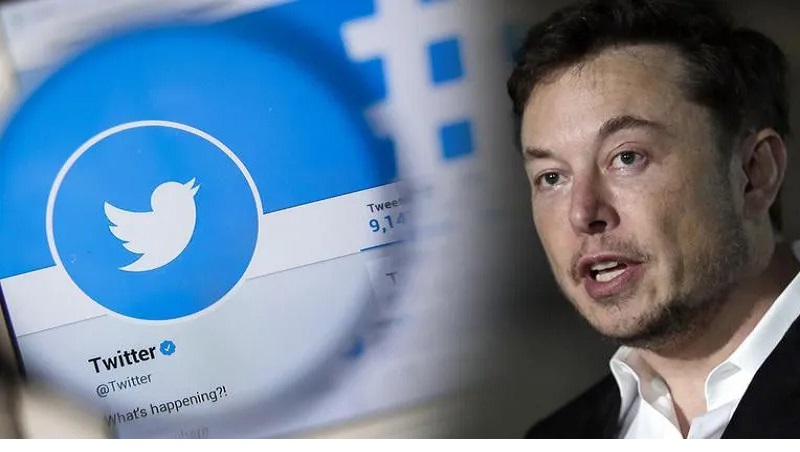
Twitter is one of the most popular social media platforms in the world, with over 300 million active users. However, the company is facing some challenges in terms of user growth, revenue, and innovation. I will explore how Twitter could transition into a different business model that could offer more value to its users and stakeholders.

One of the main reasons for Twitter’s financial woes is its reliance on advertising as its primary source of income. Advertising accounted for 86% of Twitter’s revenue in 2020, but it also exposed the company to the volatility of the ad market and the competition from other platforms. Moreover, advertising may not be the best way to monetize Twitter’s unique value proposition: its ability to connect users with real-time information and conversations on various topics.

One possible direction for Twitter is to become a platform for content creation and monetization. Twitter already has a large and engaged audience that consumes and shares various types of content, such as news, opinions, memes, videos, and podcasts. However, Twitter does not have a clear way for content creators to earn money from their work, unlike other platforms such as YouTube, Patreon, or Substack.

Twitter could leverage its existing user base and network effects to create a subscription-based service that allows content creators to charge their followers for exclusive access to their content. This would create a new revenue stream for Twitter and incentivize more quality content on the platform. Elon Musk is already pushing this feat, but the pathway isn’t clear right now.

Another possible direction for Twitter is to become a platform for social commerce and transactions. Twitter already has a lot of influence on consumer behavior and trends, as well as a rich source of data on user preferences and interests. However, Twitter does not have a seamless way for users to buy and sell products or services on the platform, unlike other platforms such as Instagram, TikTok, or Shopify.

Twitter could integrate e-commerce features into its platform that allow users to discover, browse, and purchase products or services from other users or brands. This would create a new revenue stream for Twitter and enhance the user experience on the platform.

Twitter could create a more differentiated and valuable experience for its users, while also generating a more stable and diversified revenue stream. According to some estimates, Twitter could potentially earn $1 billion in annual revenue from subscriptions if it charges $5 per month to 20% of its user base. Additionally, Twitter could also reduce its dependence on advertising and improve its brand image and reputation.

Of course, transitioning into a subscription-based model is not without challenges and risks. Twitter would have to convince its users that the premium features and services are worth paying for, while also maintaining a free tier that attracts new users and retains existing ones. Twitter would also have to invest in developing and maintaining the premium features and services, as well as ensuring their quality and security. Furthermore, Twitter would have to deal with the potential backlash from some users who may perceive the subscription model as unfair or elitist.

However, I believe these challenges and risks can be overcome with careful planning and execution. Twitter has a loyal and engaged user base that values its platform for its unique content and communication capabilities. By offering them more value-added features and services that enhance their experience and satisfaction, Twitter could create a win-win situation for both it and its users. Therefore, I think that transitioning into a subscription-based model is a viable and desirable option for Twitter’s future growth and success.

These are just some of the potential ways that Twitter could transition into a different business model that could offer more value to its users and stakeholders. Of course, there are also many challenges and risks involved in such a transition, such as user backlash, regulatory hurdles, technical difficulties, and competitive threats. However, I believe Twitter has the potential to reinvent itself and become a more innovative and profitable company in the future.