DD
MM
YYYY

PAGES

DD
MM
YYYY

spot_img

PAGES

Home Blog Page 4226

Binance Exits Canada – And Why Many Cannot Just Give Up on Bitcoin

1

Across most indicators,  the United States cryptocurrency sector may not exist at scale in years. I mean, I just think the organized governments are converging on this thing. While the coins are showing resilience, looking at where BTC is trading, the high voltage assault seems unprecedented. With Binance out of Canada, the question is which country is next: “One of the largest crypto exchanges in the world, Binance, has exited Canada amid tough regulatory rules. The company cited increasing regulatory tensions as the primary reason behind its exit. Binance via a tweet disclosed that the new guidance concerning stablecoins and investor limits provided to crypto exchanges has made the Canadian market untenable.”

Yet, provided the US does not enter into a severe recession, nothing will happen. But if it does, crypto would be part of the collateral damage.  

I am concerned because the Russian sanction experiments have shown that sanctions do affect both the sanctioned and the person delivering the sanctions. The gravity of global inflation was partly exacerbated by those sanctions.  If China does try to take over Taiwan by force (pray against it), the world economy will experience severe recession and stock markets will be ravaged. How do you sanction China? Or what happens when China sanctions you?

Those permutations are the reasons people are looking for alternative ways to store wealth because geopolitics is distorting national currencies at scale. This is partly why some people believe in Bitcoin! If the US sanctions China, the US dollar will get a hit, just as if China sanctions the US. Forget what will happen to the yuan: massive depreciation! 

So, where is the value-storing refuge? Hodlers will say BTC and its cousins, and are not giving up, to hold them. Yes, the tension in geopolitics, created by governments,  is  one of the reasons many are believing! A huge #irony!

For many true crypto believers, digital currencies were never simply financial instruments — they were a way of life. Writing in Bloomberg, Christopher Beam looks at how blockchain devotees have reacted to the long crypto winter, which has shattered the value of many coins. Only a few crypto fans have had their fervor chilled. Many believe a bounce back is just around the corner, others see a conspiracy to drag down a world-changing technology, while some just miss the sense of community they experienced in buzzing crypto chatrooms that now sit empty. (LinkedIn News)

Comment on Feed

Comment 1: Undoubtedly, geopolitical tensions threaten financial stability through a financial channel, however, they are exactly what they sound like and these tensions can stem from several factors such as power, trade, military activity, climate change or a significant event like Brexit.

On the one hand, many investors see Bitcoin as the best store of value because it has best aspects of both gold and digital currencies: its widely accepted, liquid, scarce, divisible and portable. The only thing that it is lacking is durability over time and on the other hand, a store of value in cryptocurrency must however be exchangeable with something else (like gold or dollars). In other words, a store of value should be worth the same or more over time.

Comment 2: I’m always leery of cryptocurrency exchanges: too many have gone belly-up. When was the last time you heard of a stock exchange fail?

I have been an opponent of Bitcoin but the more I think about it it is unique and may actually be a reasonable method to defend against currency debasement (inflation).

Bitcoin is limited in volume. The maximum supply of Bitcoin is set at 21 million coins, and this limit is hardcoded into the Bitcoin protocol. This means that once 21 million bitcoins have been mined, no more bitcoins can be created.

As of May 2023, the total number of bitcoins in circulation is around 19 million, and the rate at which new bitcoins are created is gradually decreasing over time. This is because the Bitcoin protocol uses a process called “halving” to reduce the amount of new bitcoins that are created as time goes on. Roughly every four years, the reward for mining new bitcoins is cut in half, which slows down the rate at which new bitcoins are added to the total supply.

The final halving event is expected to occur in the year 2140, at which point the maximum supply of 21 million bitcoins will have been reached, and no new bitcoins will be created. After that point potentially becoming very valuable.

But not all cryptocurrencies are created equal, and none like Bitcoin. That is the underlying problem with “cryptocurrencies” not “Bitcoin”.

My Response: “I’m always leery of cryptocurrency exchanges: too many have gone belly-up.” – I have argued in the past that Bitcoin and all coins are centralized because at the end, exchanges bring all together, and if the government cannot reach the decentralized coins, it can via exchanges handle everything, Real investments in BTC and others happen via legal exchanges. Interestingly, those exchanges need bank accounts which means they will need to be registered to operate. As that happens, governments will put them in line.
Binance Exits Canada Following Tough Crypto Regulatory Rules

0

One of the largest crypto exchanges in the world, Binance, has exited Canada amid tough regulatory rules.

The company cited increasing regulatory tensions as the primary reason behind its exit. Binance via a tweet disclosed that the new guidance concerning stablecoins and investor limits provided to crypto exchanges has made the Canadian market untenable.

The tweet reads,

Unfortunately, today we are announcing that Binance will be joining other prominent crypto businesses in proactively withdrawing from the Canadian marketplace. We would like to thank those regulators who worked with us collaboratively to address the needs of Canadian users. Albeit a small market, it held sentimental value for us as the home country of our founder.

We had high hopes for the rest of the Canadian blockchain industry. Unfortunately, new guidance related to stablecoins and investor limits provided to crypto exchanges makes the Canadian market no longer tenable for Binance at this time. We put off this decision as long as we could to explore other reasonable avenues to protect our Canadian users, but it has become apparent that there are none.

Our remaining Canadian users are receiving an email with comprehensive information on how this will impact their accounts going forward. While we do not agree with the new guidance, we hope to continue to engage with Canadian regulators aimed at a thoughtful, comprehensive regulatory framework. We are confident that we will someday return to the market when Canadian users once again have the freedom to access a broader suite of digital assets.”

It is worth noting that throughout the previous year, Binance faced heightened regulatory scrutiny from authorities in North America, which spurred the crypto exchange to scale back its operations in the region.

Binance joins the list of crypto companies such as Paxos and dYdX that have exited the Canadian market amid tough crypto regulatory rules. Following the shutdown of Binance operations in Canada, the company expressed confidence in its eventual return to the North American country, considering that it is the home of CEO Changpeng Zhao. The company further added that it is still maintaining discussions with Canadian authorities to establish a well-considered and comprehensive regulatory framework collaboratively.

Meanwhile, analysts disclose that Binance’s exit from Canada may have a negative impact on the country’s crypto ecosystem, which can lead to market fragmentation and discourage other exchanges from expanding in the country.

Recall that in February this year, the Canadian Securities Administrators (CSA) issued new guidance that banned crypto asset trading platforms from allowing customers to purchase or deposit stablecoins without prior approval from the CSA. To obtain approval, crypto trading platforms would need to successfully pass the CSA’s thorough due diligence checks.

How The Economist Lost Me!

0

When I came to the United States many years ago, I used any change available as a student to subscribe to The Economist, Fortune, Businessweek (now Bloomberg Businessweek), Forbes and Harvard Business Review. I did not read newspapers; I read only magazines which provided insights and perspectives on business, economy and geopolitics. Engineering work for the week, learning business was for the weekend.

The Economist was special. However, over time, it evolved, losing, for me, what made it GREAT – unbiased, nuanced and insightful examinations of issues. For the new Economist, the world must be seen from the lens of the West; any deviation is a rebellion. I canceled.

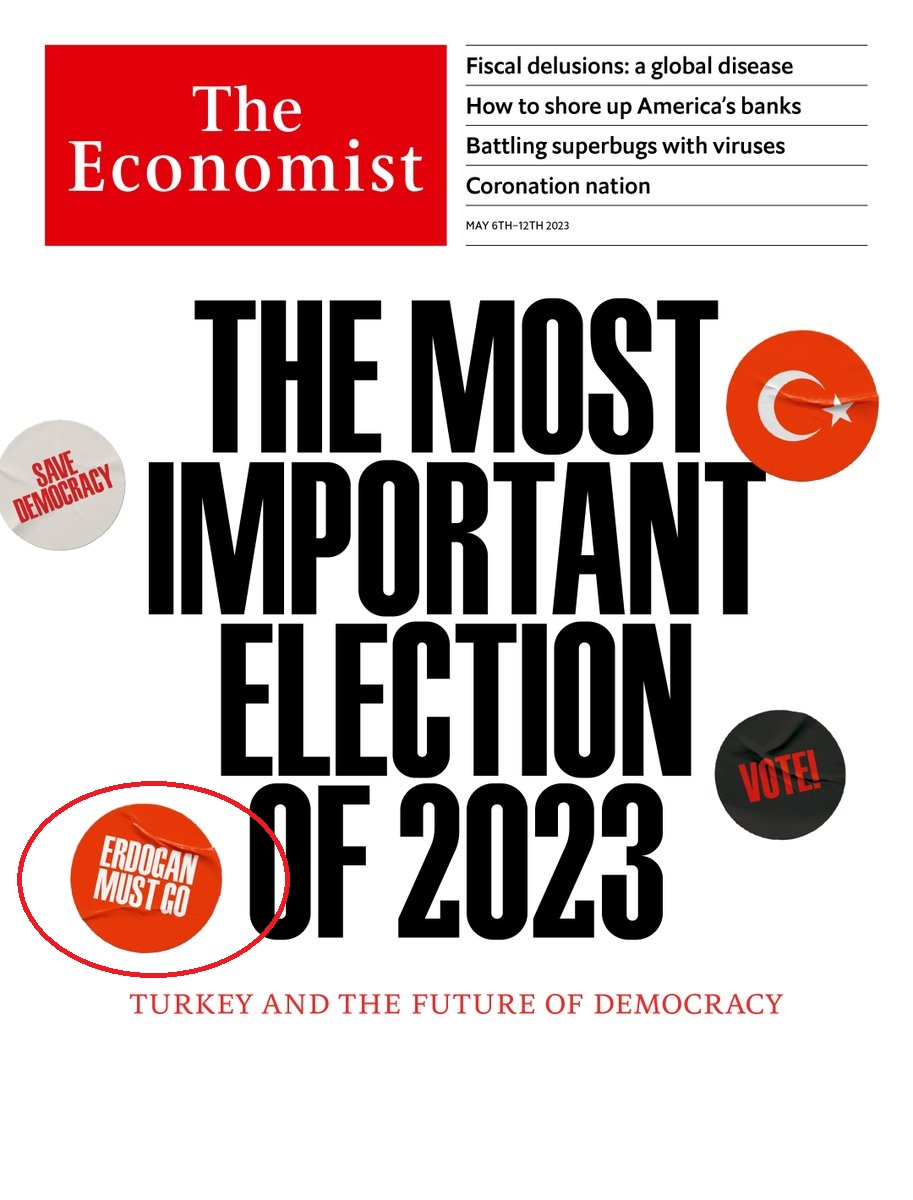
When I saw that it said that Turkey’s leader must go for this weekend’s election, I felt bad. Its standards keep shifting. Like I told a Swiss friend, if Switzerland should join the Western world 100% against Russia and China, the world may be in a state where there is no mediator, and if that becomes the case, we’re finished in this world. Yes, we still need a respectable country that can say “Hey, the collective West, Russia, China, come together and talk over these issues”.

Imagine a world without Turkey as Russia and Ukraine battle. Simply, what you may hate about Turkey is the reason it is vital to the world in this war; a mediator that can get two warring parties together even for marginal issues like shipping grains! Turkey may not align 100% with London; London should appreciate that because through Turkey, London can reach its enemies!

Who becomes the president of Turkey is irrelevant to me. But the standard to anoint “bad” and “good” should not be changing. The people of Turkey should decide who should go or stay, and not some guys in London!

Comment on Feed

Comment 1: Traditional business publications like the Economist should provide an object evaluation of business needs, outcomes, and affects without providing an opinionated commentary on either side. Showing their bias alienates a section of their readership and just as you proved it reduces subscription readrship. So overall a bad move on their part.

Beyond the Economist I’m getting annoyed by the partisan/nationalistic(fascist?) narrative and commentary happening around the globe. The broader global reality is almost everyone purchases goods from China, America, and Europe, many times made from products sourced in Africa, South America, and perhaps Canada. Enough with this decisiveness…..please!

My Response: You may wonder how many bad things happened pre-internet when there was no other way to know because some institutions controlled the news. The world is fractured. Russia fired some missiles today in Ukraine. In the Western world, journalists are showing the aftermath of destroyed homes; in RT, you see industrial warehouses. So, CNN will say homes were attacked; Russia is saying it destroyed warehouses.  Certainly, there is no way to know who is telling the truth. But the web gives you access to the other side. If not, you can just take whatever CNN says as the home run.

Comment 2: he world is moving towards a dangerous place where both extremes are becoming stronger and the middle ground is becoming thinner.

We need a world where the middle ground is bigger and not thinner. I believe that most people in the world are in the middle, but the louder extremes on both sides are pushing us to the brink.

Ethereum Gas Fee is on the High End

0

If you have ever used Ethereum to process transactions on the Blockchain, you might have noticed that the gas fee is not cheap. Gas fee is the amount of Ether that you pay to the network for processing your transaction. The gas fee depends on two factors: the gas price and the gas limit.

The gas price is the amount of ether that you are willing to pay for each unit of gas, and the gas limit is the maximum amount of gas that your transaction can consume. The higher the gas price and the gas limit, the higher the gas fee.

Why is the Gas Fee so high on Ethereum Network?

The main reason is that Ethereum is a popular platform for decentralized applications (dApps) that run on smart contracts. Smart contracts are pieces of code that execute automatically on the blockchain according to predefined rules.

However, smart contracts also consume gas when they are executed, and some of them can be very complex and require a lot of computation. Therefore, when there is a high demand for dApps and smart contracts on Ethereum, the network becomes congested and the gas fee increases.

How To reduce Gas Fee on Ethereum Network

There are a few ways to save on gas fees when using Ethereum. One way is to adjust your gas price and gas limit according to the network conditions. You can use tools like Etherscan or EthGasStation to check the current average gas price and the recommended gas price for fast or slow transactions.

You can also use MetaMask or other wallets that allow you to customize your gas price and gas limit before sending a transaction. However, you should be careful not to set your gas price too low or your gas limit too high, as this might result in your transaction being rejected or stuck in the network.

Another way to reduce the gas fee on Ethereum is to use layer 2 solutions or sidechains. Layer 2 solutions are protocols that run on top of Ethereum and provide faster and cheaper transactions by using different consensus mechanisms or off-chain computation.

Some examples of layer 2 solutions are Optimism, Arbitrum, Polygon, zkSync, Loopring, and StarkWare. Sidechains are independent blockchains that are compatible with Ethereum and allow users to transfer assets between them.

Some examples of side chains are xDai, Binance Smart Chain, Avalanche, and Fantom. By using layer 2 solutions or sidechains, you can avoid paying high gas fees on the main Ethereum network.

Ethereum gas fee is not cheap because of the high demand for dApps and smart contracts on the platform. However, you can reduce the gas fee by adjusting your gas price and gas limit or by using layer 2 solutions or sidechains. These DApps and smart contracts require a lot of computation and storage, which consume a lot of gas.

Moreover, Ethereum has transitioned to a proof-of-work (PoW) consensus mechanism, which requires a lot of energy and resources to secure the network. PoW also limits the scalability of Ethereum, as it can only process around 15 transactions per second.

PoS has helped stimulate lower gas fees significantly on the Ethereum network, as it will reduce the need for intensive computation and competition among miners. Ethereum is not cheap, but it is valuable.

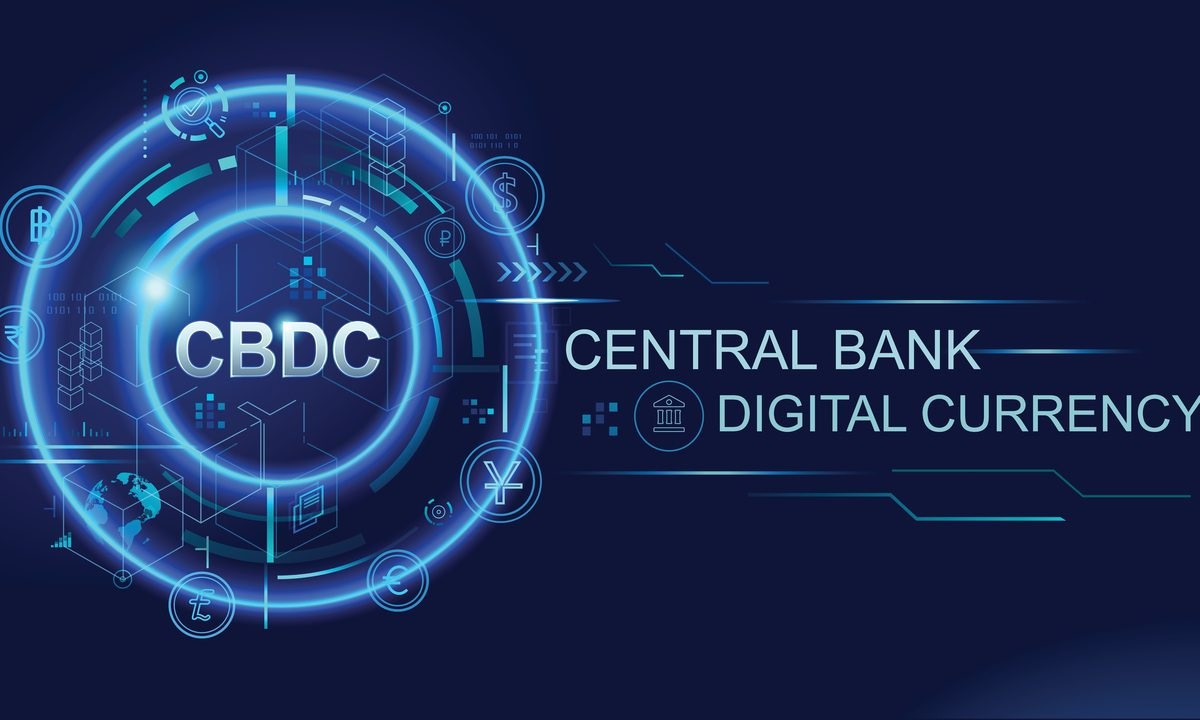
Will CBDC (Central bank Digital Currency) Transform Global Payments?

0

Central bank Digital Currencies (CBDCs) are the digital form of a country’s fiat currency that is also a claim on the central bank. They are issued by central banks, whose role is to support financial services for a nation’s government and its commercial-banking system, set monetary policy, and issue currency. CBDCs have the potential to enhance the efficiency of cross-border payments, as long as countries work together.

CBDCs are not yet widely available, but several countries are exploring or testing them. For example, China has launched a pilot program for its digital yuan, which allows users to make payments through mobile apps or smart cards. The Bahamas has also issued its own CBDC, called the Sand Dollar, which can be used for online and offline transactions. Other countries, such as Sweden, Japan, and Canada, are conducting research or experiments on CBDCs, and Nigeria in 2022 launched the E-Naira CBDC systems.

Cross-border payments are currently slow, costly, and opaque. They involve multiple intermediaries, such as correspondent banks, payment service providers, and clearing houses, each with their own fees, regulations, and risks. CBDCs could offer a faster, cheaper, and more transparent alternative for transferring money across borders, by reducing the number of intermediaries and simplifying the payment process.

However, CBDCs also pose significant challenges and risks for cross-border payments. For example, CBDCs could increase currency substitution and capital flight in countries with weak macroeconomic fundamentals or unstable exchange rates. CBDCs could also create spillover effects on monetary policy transmission and financial stability in other jurisdictions. Moreover, CBDCs could raise legal, regulatory, and operational issues related to cross-border coordination, interoperability, and compliance.

However, CBDCs also pose some challenges and risks that need to be carefully addressed. Some of these are:

They could affect the profitability and role of commercial banks, by reducing their deposits and intermediation functions.

They could raise privacy and security concerns, by exposing users’ data and transactions to cyberattacks or surveillance.

They could create legal and regulatory uncertainties, by requiring new frameworks and standards for CBDC issuance and use.

They could have unintended consequences for the global financial system, by affecting exchange rates, capital flows, and monetary sovereignty.

Therefore, the introduction of CBDCs requires careful design and coordination among central banks and other stakeholders. The benefits and costs of CBDCs depend on various factors, such as the type of CBDC (wholesale or retail), the degree of anonymity (full or partial), the technology platform (centralized or decentralized), and the interoperability (domestic or international). The optimal design of CBDCs may vary depending on the specific needs and circumstances of each country.

Therefore, to achieve the potential benefits of CBDCs for cross-border payments while preserving financial stability, further exploration of design choices and their macro-financial implications is essential. Moreover, international cooperation and collaboration are key to ensure that CBDCs are compatible with common standards and can interoperate with existing payment infrastructures. Several initiatives are already underway to test and experiment with cross-border CBDC arrangements, such as the Multiple CBDC Bridge project by the Bank for International Settlements (BIS) along with Thailand, Hong Kong, China and the UAE, or the Project Dunbar by the central banks of Australia, Singapore, Malaysia, and Africa.

CBDCs have the potential to transform global payments by offering a more efficient, cost-effective, and transparent way of transferring money across borders. However, CBDCs also pose significant challenges and risks that require careful analysis and international coordination. As more countries explore or launch their own CBDCs in the near future, it is crucial to ensure that they are designed and implemented in a way that supports global financial stability and inclusion.