DD
MM
YYYY

PAGES

DD
MM
YYYY

spot_img

PAGES

Home Blog Page 4244

Stellar (XLM) and The Graph (GRT) Struggle as Sparklo (SPRK) Presale Worries Other Altcoins

0

The upcoming launch of Sparklo (SPRK) is expected to challenge the dominance of major altcoins as its presale buzz keeps growing fast. Its price is already expected to rise by the end of April. In other news, Stellar (XLM) has lost its bullish run in the past few weeks. It was rallying in March, but that momentum has greatly declined since the first few weeks of April. Furthermore,

The Graph (GRT) is pulling off a resilient show by holding on tightly to the $0.1 mark – a crucial point investors want the coin to maintain before the 2nd half of the year when the crypto winter will probably be gone.

Stellar (XLM) Sharp March Rally Cut Short in The Past Few Weeks

Stellar (XLM) was growing quite stably until March, when it peaked. Unfortunately, the past few weeks have brought a serious price correction for Stellar (XLM). It was trading around $0.07 at the start of 2023. Stellar (XLM) then embarked on a rally to take it close to $0.08. The rally was sustained until it dropped sharply in March.

From then on, Stellar (XLM)’s price rose again and reached $0.1. It stayed in that region for a few weeks before dropping back to $0.09.  One positive for Stellar (XLM) investors is that the coin’s overall performance in 2023 has been bullish. Perhaps, the price might rally again, especially as we approach the end of the crypto winter.

>>>> BUY SPARKLO TOKENS <<<

The Graph (GRT) Maintains The $0.1 mark

Popular blockchain data aggregator, The Graph (GRT) has held on to the $0.01 for the past few months despite a bullish but volatile performance. The Graph (GRT) was trading around $0.09 in the last week of January 2023.

The price then rallied sharply to $0.2 before returning to $0.1 a few weeks later. Since then, The Graph (GRT) has stayed in that prize zone despite significant value drops. The Graph (GRT) has been resilient in locking down some of the value it accrued in February. At the time of this writing, The Graph (GRT) is trading for around $0.13.

Alternative Investment Platform, Sparklo (SPRK), Set To Challenge Industry Dominance of Major Altcoins

Sparklo is an alternative investment platform with a unique focus on gold, silver, and platinum. Sparklo uses high-end blockchain technology to provide a simple, smooth way for investors to trade precious metals.

Sparklo’s users will enjoy higher liquidity, worldwide access to markets for precious metals, instant transactions, and withdrawals, coupled with some of the lowest fees available in the precious metals industry.

For example, Sparklo’s users will be charged around 0.1% asset management fee per year, whereas traditional asset exchanges for precious metals charge users between 0.5% to 0.7% per year.

Sparklo will also offer exceptional security and anonymity. At the same time, transactions will be public on the network to increase transparency. Investors will own NFTs that will represent their assets. They are free to trade these NFTs on the Sparklo marketplace exchange or to liquidate them for equal cash value. Investors who purchase a full NFT can have it delivered to their preferred location. Sparklo has announced that liquidity will be locked for 100 years while team tokens will be locked for 1000 days as a sign of assurance to new investors.

Sparklo’s presale is causing quite the buzz. Right now, the token costs $0.015 but will rise to $0.017 by the end of April. Investors who buy now will also enjoy a special 30% bonus on all token purchases. To find out more about the Sparklo presale, check the links below.


Find out more about the Sparklo presale:

Website: https://sparklo.finance

Presale: https://invest.sparklo.finance

Twitter: https://twitter.com/sparklo_finance

Telegram: https://t.me/sparklofinance

Jevinik And What Nigerian Brands Can Learn from Chick-fil-A

0

Chick-fil-A, a fast food chain which makes chicken right, is blowing financial metrics.  The US-based fast food chain  is a revelation. It has a cheap fee to open a chain but it has a premium royalty. About 60,000 people apply for an outlet operating license but only 80 are selected yearly! This company which has the highest customer satisfaction in the fast food business, in the U.S, has built a Perception Demand. How did it do it? Focus on those who can make customers to become fans.

Yes, you just need to have $10,000 and if they pick you because you really like the business of serving customers, your outlet can generate $8.1 million in average yearly sales. And you do not need to be a person of means (with a big net worth); you just have to be the right person to run a restaurant and feed people!

Let’s move to Nigeria, focusing on Jevinik, a casual dining restaurant. It does not run a franchise model. Franchising is always challenging in Nigeria. They used that to destroy Mr. Biggs when lack of standards across the outlets affected the brand. Yet, franchising is going to become part of the future because it is the most efficient way to scale.

Tekedia Institute has developed a case study on Jevinik on the crosshairs of Chick-fil-A!

The Physics of Fundraising for a Business Venture – Tekedia Live

0

We just finished Tekedia Capital’s Startup DEMO Day. Part of the process is pitching to investors by startups. But before these startups come, Tekedia Capital has to “pitch” them before our members. Most times, before the Demo Day, many startups have raised on commitments all the money they want. Simply, we pitch their missions to our members.

Join me today at Tekedia Mini-MBA as I explain the physics of fundraising for a business venture. Here, we raise $$millions yearly and we understand what works.

Meanwhile, register for the next edition of Tekedia Mini-MBA. Beat the early bird which is coming on April 30 for big discounts, Register here.

Southeast POST – and Displacing the Irredeemable NIPOST with Regional Postal Services in Nigeria

1

One of Nigeria’s weakest links on its development is lack of logistics. Without efficient logistics,  the largest component of the nation’s GDP (agriculture) will continue to struggle. As nations transmute into the digital space, with ecommerce displacing and distorting old empires (superstores, mega stores), the promise of ecommerce in Nigeria remains distant and unlockable. Amazon directly and indirectly have knocked out many physical stores (Sears, BBB, Radioshack, etc) as commerce moves online.

Yet, without the United States Postal Service (USPS),  the ascension of Amazon will not have happened. The USPS is the operating system which enables it to serve rural America. Yes, it picks those packages and then drops them in the nearest local USPS, for nothing, which must now do the loss-making deliveries to the rural homes.

America wants it that way as it wants rural and urban America to operate on the same frequency. Any major change, rural America may not afford those online goodies because of high distribution and delivery costs. So, Amazon and other ecommerce firms rely on that “discount” to scale.

In Nigeria, we have not picked up that message that supply chain is commerce, and without that postal service, many sectors fade. The question is this: if NIPOST (Nigerian postal service) has failed, can regional economies come together and cement postal delivery partnerships since only intra-state may not be viable. Yes, build Southeast POST which covers the five states in the country, and enable the awakening of the comatose sectors! Northeast, Southwest, etc can do the same and later, they can integrate.

What do you think since NIPOST seems irredeemable?

NIPOST’s problem is not recording losses, but the fact that it is not working. Most postal systems around the world these days are strategic loss-makers. Yes, “the United States Postal Service (USPS) announced an annual loss of $8.8 billion for fiscal year 2019, more than double its annual loss for FY18. This loss, the largest on record, marks the 13th consecutive year the USPS has finished in the red.” Yet, if you examine the period when the USPS lost this amount of money, businesses actually expanded in the core domains it served. Largely, USPS losing money was not necessarily a bad thing as its functions were critical for most of those companies to thrive.

Possibly, for every $10 billion lost by the U.S. Post, it could be adding excess new $200 billion of value in the economy. For the United States, in general, that is a net positive. The USPS saw marginally revenue increase despite the match to global digitization, implying that it was powering core elements of that new redesign. Simply, Nigeria needs to decide the role NIPOST will play in our economy and that means reforming it. What we have now does not make sense.

Remember: NIPOST was not out-competed by anyone and changes in communication – indeed email – was not the fatal blow. NIPOST simply gave up because Nigeria failed to reform its systems.  That one company is a regulator and an operator, taxing its competitors, makes no sense in a modern market system. Operators are expected to contribute 2% of their annual revenue to NIPOST via the postal fund which does nothing of value to Nigerians. Which company can survive in a tight margin business like courier and  logistics?

Comment on Feed

Comment 1: Thanks Prof for highlighting this point.

The critical role supply chain play in driving all sectors of the economy is often neglected because it works smoothly at the background to make things happen hence often taken for granted.

Probably when the inputs and/or margins created through supply chain efficiency (and effectiveness) are always quantified in commercial terms (gains or lossed, whethe actual or projected), it will enable Governments and CEOs understand the value of compounding these Supply chain values.

Imagine trucks driving from Kano to Port Harcourt filled with agricultural products but return empty or half empty with people at the back. With appropriate planning that truck can deliver multiple values across towns via making minor stops to deliver and pick up goods for the next town.

With NIPOST now alomst comatose, the Government should look for avenues to outsource the use of NIPOST infrastructure to private sector actors that will add more value to the economy in the interest of the people and economy.

Thanks again for highlighting this point.

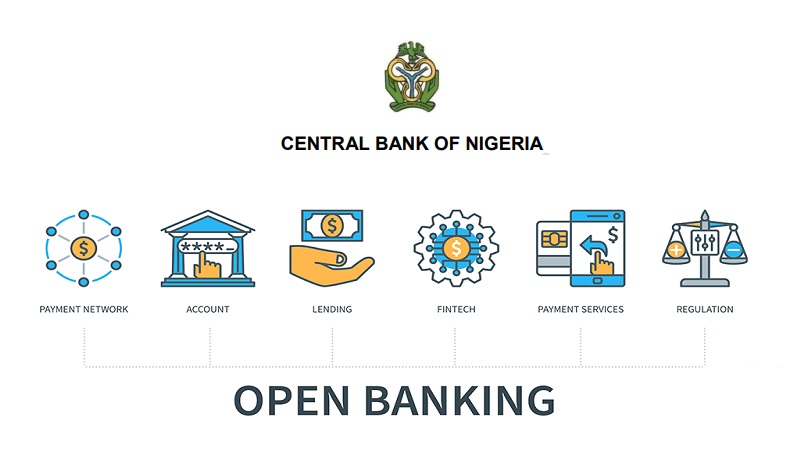
Notable Provisions of the CBN 2023 Guidelines on Open Banking in Nigeria

0

The Central Bank of Nigeria (CBN) on the 7th of March, 2023 , passed its Operational Guidelines For Open Banking in Nigeria pursuant to its earlier issued Regulatory Framework For Open Banking in Nigeria (which i had written about in a previous article as well).

These guidelines were issued in order to give a more regulatory backbone as well a functional Framework for the orderly and safe conduct of open banking services in Nigeria, which is why the focus of this article will be on the notable provisions of the guidelines regarding :-

– Their applicability scope

– Their objectives

– Some notable open banking terms and their meanings

– The recognized participants of the Nigerian Open Banking system and their responsibilities

– Anti-Money Laundering and Combating The Financing of Terrorism(AML & CFT) 

– The Open Banking Registry (OBR) 

– Interface Requirements

– Dispute Resolution

– The incident reporting portal

What is the applicability scope of the guidelines?

The guidelines apply to banking and other related financial services as categorized and determined by the bank in the regulatory framework for open banking in Nigeria.

What are the objectives of the guidelines?

– To provide clear responsibilities and expectations for the various participant categories.

– To ensure consistency and security across the open banking system.

– To stipulate safeguards for financial system stability under an Open Banking regime.

– To promote competition and enhance access to banking and other financial services.

– To outline minimum requirements for participants.

What are the meanings of some of the open banking terms commonly used in the guidelines?

Some of the terms commonly used by the guidelines include:-

– 2FA – 2 Factor Authentication

– CM – Configuration Management

– OLTP – Online Transaction Processing

– DMZ – Demilitarized Zone(pertaining to TCP/IP Networks)

Who are the recognized participants in the Nigerian Open Banking system and what are their responsibilities?

The participants in the Nigerian Open Banking system are :-

The AP – or API Provider who is to use Application Programming Interfaces (APIs) to avail data or services to another participant. 

The AC – or API Consumer who typically accesses data belonging to an AP by means of an Open Banking Service Level Agreement (SLA).

The Customer – The data owner that shall be required to provide consent for the release of data for the purpose of accessing financial services.

What are the provisions of the guidelines regarding the Open Banking Registry or OBR?

The guidelines reaffirm the OBR as being provided and maintained by the CBN for the industry to :-

– Provide regulatory on participants

– Enhance transparency in the operations of open banking

– Ensure that only registered institutions operate within the open banking ecosystem

– Serve as a public repository for details of registered participants. 

What are the provisions of the guidelines on interface requirements?

The guidelines require that regarding interface requirements :-

– The integration and communication interface between an AP & AC shall be 100% electronic using a system of API taxonomy as defined by the API guidelines

– The software architectural style shall be representational state transfer (REST) while the data interchange format shall be JavaScript Object Notation(JSON). 

– In order to be comparable with evolving global financial standards,the data standard for financial transactions shall be a model based on ISO 20022 or any other acceptable minimum standard. 

What are the provisions of the guidelines on Anti-Money Laundering and Combating The Financing of Terrorism (AML/CFT)?

The guidelines provide that APs and ACs shall comply with the extant AML/CFT regulations in Banks and Other Financial Institutions (OFIs).

What are the provisions of the guidelines on Dispute Resolution?

The guidelines provide that participants shall abide by the dispute resolution mechanism laid down under the “Liability management, customer complaint & redress management” of the customer experience standards (Appendix IV) as well as the CBN Consumer Protection Framework.

The bank shall approve appropriate liability models and redress mechanisms such as insurance, collateral requirements, pool industry funds, etc, for participants.

What are the provisions of the guidelines on the incident reporting portal?

The guidelines provide for the introduction of an incident reporting portal to enable easy and fast reporting by participants in the ecosystem concerning incidents that may affect participants, operations or the Open Banking system.