DD
MM
YYYY

PAGES

DD
MM
YYYY

spot_img

PAGES

Home Blog Page 4286

Apple Launches ‘Apple Pay Later’, its Buy Now, Pay Later Service

0

Apple has launched its Buy Now, Pay Later service that it announced more than eight months ago, becoming the latest big name to jump on the trend that allows customers to pay for online purchases in installment.

The Cupertino giant plans to execute the feature known as Apple Pay Later by allowing customers to split payments for purchases into four installments that will span over six weeks, after making the first installment at the time of purchase.

The feature also allows users to apply for a loan within the Wallet app, ranging from $50 to $1000, with no interest or fees, to make online or in-app purchases.

“There’s no one-size-fits-all approach when it comes to how people manage their finances. Many people are looking for flexible payment options, which is why we’re excited to provide our users with Apple Pay Later,” said Jennifer Bailey, Apple’s vice president of Apple Pay and Apple Wallet. “Apple Pay Later was designed with our users’ financial health in mind, so it has no fees and no interest, and can be used and managed within Wallet, making it easier for consumers to make informed and responsible borrowing decisions.”

Apple said it will roll out the payment option to select users in the United States now, with plans to offer it to all eligible customers over the next several months.

Apple Pay Later, which is fully integrated into Apple’s digital wallet and attracts zero interest and no late fees, was announced in June last year. Apple said users can apply for a loan within the Apple Wallet app without it affecting their credit score. Once they select the amount they would like to withdraw, a soft credit pull will be conducted to make sure they are in “a good financial position” to take on a loan, the company said in a release.

The launch now sets Apple up to compete with the likes of Affirm, Klarna, and Afterpay in the buy now, pay later space.

Buy now, pay later saw an increase in adoption as inflation forced consumers to tighten their spending in the past few years. Other companies that offer BNPL service had sought partnership for expansion. Affirm partners with Amazon and Stripe.

Affirm shares dropped 7% on the news of Apple’s launch of BNPL.

Apple users will be able to track and manage upcoming loan payments in the Wallet app. Any loan application can also be done in the app with no impact on credit, according to the company.

Apple’s Pay Later option is enabled through the Mastercard Installments program, so merchants that accept Apple Pay do not need to do anything to implement Apple Pay Later for their customers, the company said.

Approved users will see a “Pay Later” option while using Apple Pay to check out online and in apps on iPhones and iPads. They will also be able to apply for a loan right at checkout. Apple said purchases using the software will be authenticated using Face ID, Touch ID or a passcode.

“Once Apple Pay Later is set up, users can also apply for a loan directly in the checkout flow when making a purchase,” Apple said.

The company said users can see the amount due for their existing loans, as well as the total amount due in the next 30 days, in Apple Wallet. Users will be asked to link a debit card as their loan repayment method. Credit cards won’t be accepted.

Apple has debuted its “buy now, pay later” (BNPL) service in the U.S., the tech giant’s latest push into financial services and a major challenge to BNPL stalwarts Affirm and Klarna. The service, called Apple Pay Later, will split purchases into four equal payments spread over six weeks. The zero-interest, no-fee loans of $50 to $1,000 will be made through a subsidiary, Apple Financing. Apple said the service, which will live in the Wallet app, will initially be available to “randomly selected” users before being rolled out to “eligible” customers in the coming months.
Twitter to Show Only Verified Accounts on its “For You” Feature in Latest Push to Promote Paid Verification

0

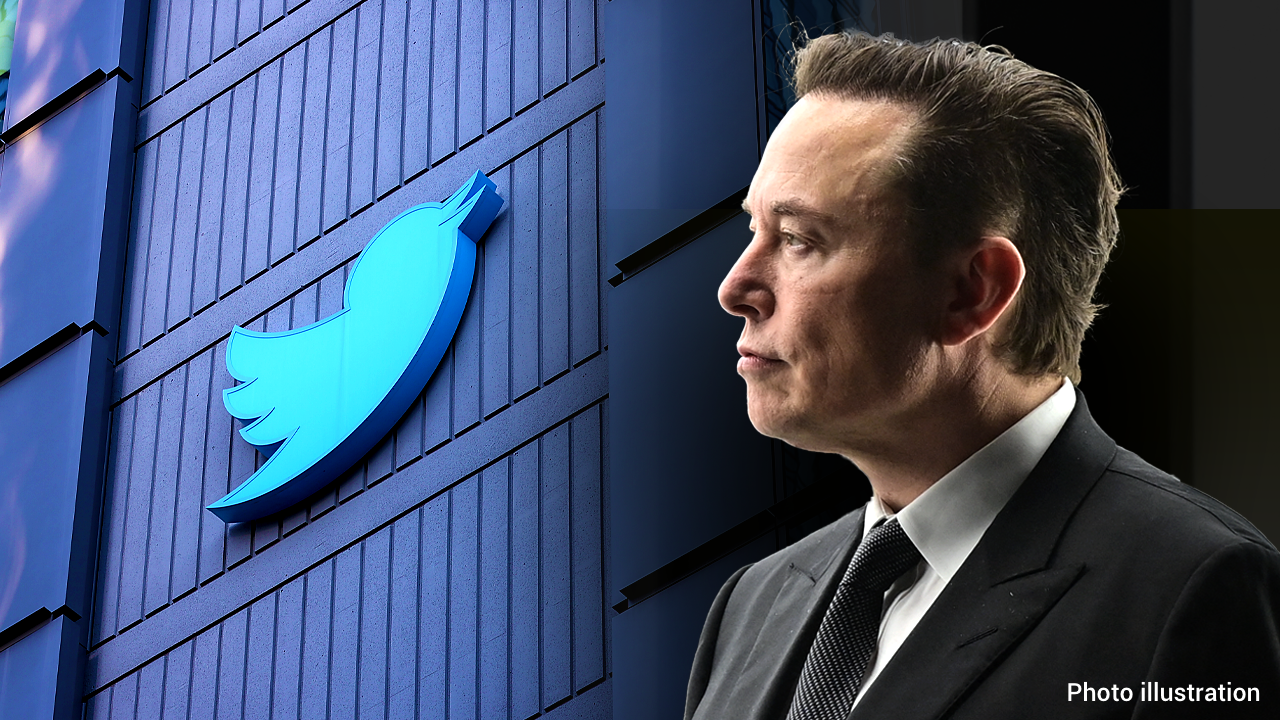
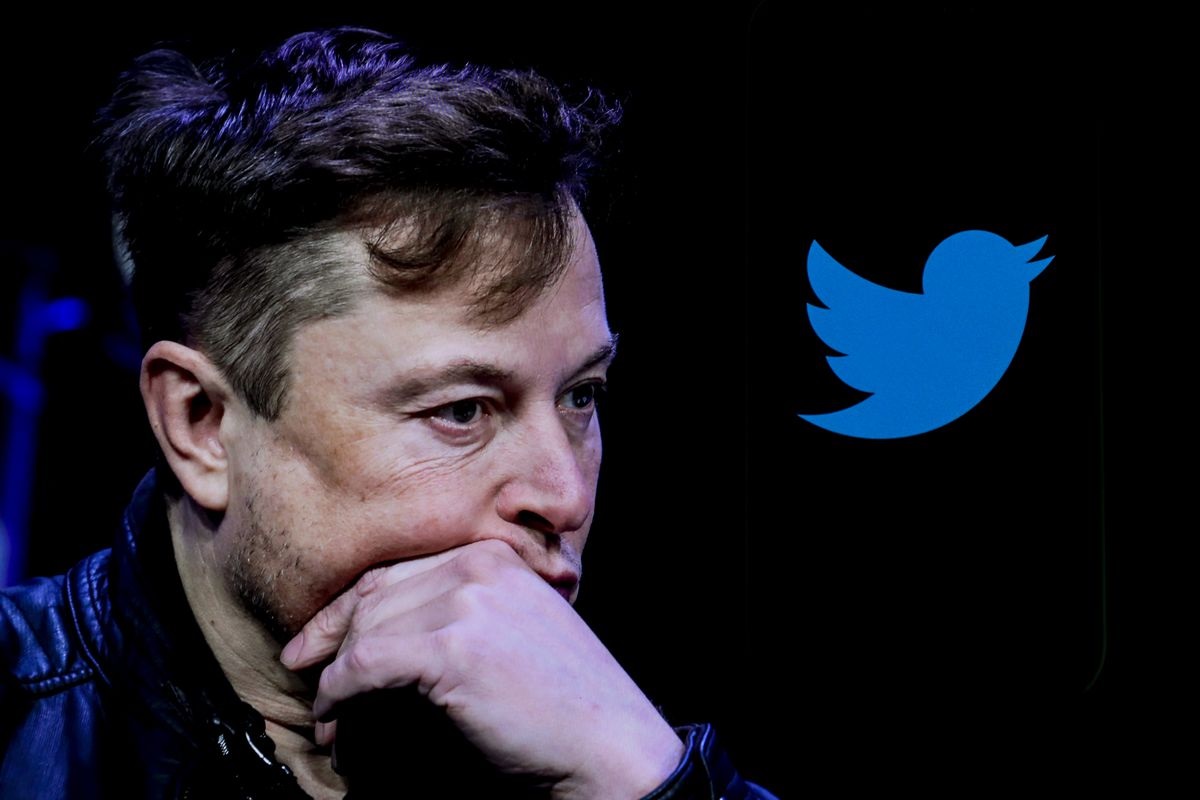
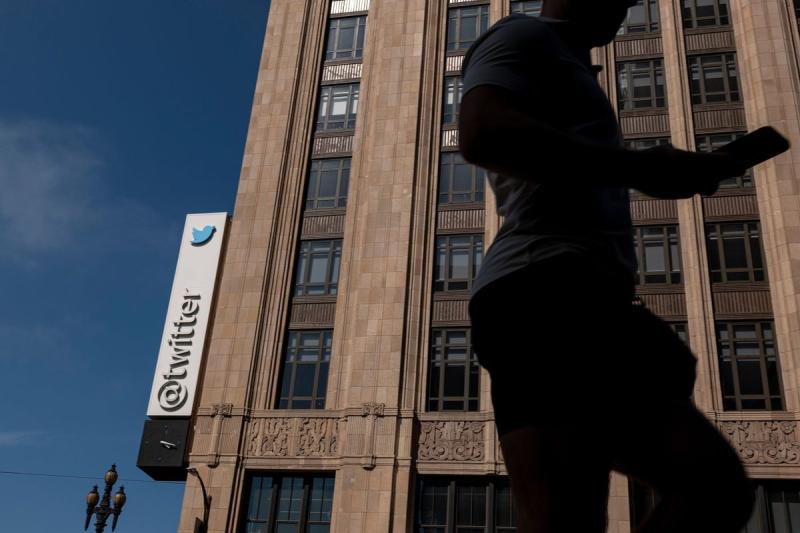
Elon Musk has announced the next phase of his push to implement monetized Twitter verification checkmark. The app’s chief executive said starting April 15, Twitter algorithm will only show verified accounts on the “For You” timeline.

The latest move is geared toward ensuring equality and fighting potential influx of advanced AI-powered bots that can beat “prove you’re not a robot” tests. Musk has touted paid verification as an ideal way to keep bots, which have been a major concern for him, out of Twitter.

“Given that modern AI can solve any “prove you’re not a robot” tests, it’s now trivial to spin up 100k human-like bots for less than a penny per account,” he said. “Paid verification increases bot cost by ~10,000% & makes it much easier to identify bots by phone & CC clustering.”

Musk who argued that the verification checkmark is the “only realistic way to address advanced AI bot swarms taking over,” added that “it’s ok to have verified bot accounts if they follow terms of service & don’t impersonate a human.”

Besides increased visibility, Twitter will hence, allow only verified accounts to participate in polls. With these privileges, Musk admitted that “paid account social media will be the only social media that matters.”

While Musk is keen to eliminate legacy verification, he said accounts attached to verified organizations will be automatically verified.

Twitter’s “For You” feature has become a key way to give posts a wider reach. Musk is believed to have integrated it into monetized blue check in a bid to woo users to subscribe for paid verification. This means that you have to be a paid user, a brand, or a government official to be recommended by Twitter’s algorithm.

Twitter’s struggle with depleted revenue has aggravated since Musk purchased the platform in late October. Musk’s acquisition of the social media company triggered mass exodus of advertisers, plummeting its earnings. Twitter generates about 90 percent of its revenue from ads.

Though he is hopeful for a comeback that will see Twitter sit at $250 billion value, the Tesla CEO told employees in an internal email that the microblogging app is now valued at $20 billion, less than half the $44 billion he paid for it.

The paid verification checkmark is likely going to be embraced more by brands and accounts seeking wider reach. Analysts suggest that Twitter has only 385,000 paying users at the moment.

The company said it will remove all legacy verification checkmarks starting April 1. But several users have criticized the decision, saying it defeats the objective, which is to distinguish real account owners from impersonators.

Musk said the new idea is “more about treating everyone equally” and that “there shouldn’t be a different standard for celebrities.”

To curb the likelihood of impersonation, Twitter ruled that you have to verify your identity to have a subscription. Meta is another social media platform that has adopted the idea – rolling out paid verification feature that will boost the reach of subscribers.

However, Musk may be forced to recruit more workers as pressure piles on Twitter to abide by European Union laws that requires that social media platforms have content moderation teams. Musk disbanded Twitter’s content moderation team last year as part of his efforts to cut cost and promote free speech. It’s part of the reasons advertisers left Twitter.

Pan African Payment Startup Kora Rolls Out USD-Card Acquiring Service to Improve Merchants Experiences

0

Pan-African payments startup, Kora, has launched USD card-acquiring service, allowing merchants on its platform to accept payments in US dollars.

By introducing USD card-acquiring, Kora plans to enable its merchants to create global businesses and contribute to accelerating Africa’s participation in global trade.

Speaking on the launch of the new service, Kora’s head of product Sandra Israel-Ovirih disclosed that it will be a game changer for African businesses selling to a global market.

In her words, “Incorporating USD card payments has been a priority for a while now. We understand that many businesses operate in a global marketplace and need a seamless payment system to handle cross-border transactions. This will be a game changer for African businesses selling to a global market.”

Also commenting on the service is the company’s CEO Nsofor Dickson who said,

We want the merchants we serve to scale globally. Giving them the option to accept USD is an important milestone in this effort. The focus is on Africa. But despite an increase in Africa’s participation in global trade, our contribution is still only around 3%. Giving African businesses the ability to accept global payment will accelerate Africa’s contribution to global trade. Our next step is launching a multicurrency bank account product that allows our merchants to access banking solutions currencies like EUR, GBP and USD via the Kora platform.”

The USD card-acquiring product is the latest in a series of merchant-facing initiatives launched by the company this year. Experts believe that Kora’s latest product launch will have a significant impact on Africa’s participation in global trade.

Founded in 2018 by Dickson Nsofor and Bryan Uyanwune, Kora was built to help Africans in the diaspora make remittances into the African continent. So far, the startup has evolved into a payment infrastructure that fosters payments made by indigenous and international businesses in and out of Africa.

With a single integration, Kora powers businesses to accept payments, make payouts to customers and settlements across multiple payment channels. As a pan-African payment infrastructure, it offers a robust payment API for payment collections, disbursements, and cross-border settlements with offices in Nigeria, Canada, and the United Kingdom.

Earlier in 2022, the company received a commercial PSSP license from the Central Bank of Nigeria (CBN). Later in the year, Kora expanded to the United Kingdom by partnering with the municipal government in Birmingham to open its first fully operational UK office.

At the 2022 Commonwealth Games opening ceremony, Kora was announced as a new Commonwealth-sourced foreign direct investments (FDI) project for the West Midlands. Since its launch, it has onboarded top locals and international brands like Payfuture, GiG, Juice Africa, and dLocal. The company said in a statement that it’s currently available to businesses across 25 African countries

The Twitter’s $24 billion Markdown

1

It is a market system: you win some, you lose some. But just make sure that you win most of the time. It is looking like Musk will waste more than 50% of Nigeria’s annual budget on Twitter; he paid $44 billion and the business is now worth $20 billion, as revenue continues to drop. Yet, I posit that Twitter will be a great company in the near future. It has no competitor in its category, and because of that, it will  find a way to make money. Indeed, category-king companies always do. 

Twitter CEO Elon Musk has put the current value of Twitter at $20 billion, less than half of the $44 billion he paid for the social media platform late last year.

The current value of the social media platform was disclosed by Musk through an internal email seen by American news media.

According to reports, the email to employees addressed issues of Twitter stock compensation program and the attribution to employees of stock in X Holdings, the microblogging app umbrella company since Musk purchased it in late October.

The valuation of the platform in the compensation plan is $20 billion, which is slightly higher than that of publicly traded companies such as Snap, the parent company of Snapchat, valued at $18.2 billion, and the social network and creative website Pinterest, valued at $18.7 billion. Notably, Twitter is not publicly traded unlike these two companies.

The challenge for Musk is this:  how to avoid scoring own-goals which may annoy people and advertisers to leave the platform.  And part of it comes down to how he treats his people and the ecosystem. In this beautiful America, despite all the free markets and individual liberty which are preached by conservatives,  the fact remains that LIBERALS dominate economically.

In the ranking of the top 20 universities in America, more than 15 are possibly in democratic CITIES (I did not say states). In the chronicle of America’s largest cities, more than 70% are democratic cities. In short, when you get into a Republican enclave like Texas, check their highest ranked university, it is possibly in one blue city island (here, Austin Texas). From airports to anything, America’s wealth is in blue cities or islands.  Check it: more blue cities host more Fortune 500 than red cities.

Where am I going? The largest American companies and those who are potential Twitter advertisers  are largely headquartered in blue cities, and they share some of their values. In other words, big money America is blue in its DNA. Not understanding that fact will alienate them. Musk must modulate how he annoys those liberals (people and firms) if he wants to keep them and monetize them on Twitter!

The Twitter evolution

There is a big redesign: “In order to fight off “AI bot swarms,” Twitter CEO Elon Musk says that from April 15th, only tweets from verified users will show up in the platform’s “For you” feed. Users will need to subscribe to Twitter Blue, which costs around $11 a month, to be verified by April 1st, when free legacy blue checks end. Musk added that only verified users will be able to vote in polls. Yet, some celebrities and Twitter household names have scoffed at paying: Monica Lewinsky shared a paid verified account impersonating her, while William Shatner pointed out that he’s been providing content on the platform for years for free. The “For you” tab shows recommended tweets based on Twitter’s algorithm, instead of only from those you follow. It’s worth noting that Musk has a history of tweeting changes to the platform that don’t end up happening”.

Read well, this is a request to pay for the checkers. In other words, all posts are not the same: the verified person has an edge.

Comment on Feeds

Comment 1: You are right that Elon Musk faces a significant challenge in avoiding own goals that may alienate people and advertisers on his platforms. As a public figure, Musk’s actions and statements can have a significant impact on public opinion and the perception of his companies.

To avoid scoring own goals, Musk can take several measures: Think before tweeting: Musk is known for his active presence on social media, particularly Twitter. However, he should take the time to think carefully about his tweets and their potential impact before hitting the send button.

Listen to feedback: Musk should be open to feedback from his followers and take their concerns and criticisms seriously. This can help him avoid making mistakes that may offend or alienate people.

Keep a professional tone: Musk should maintain a professional tone in his public statements and interactions. This can help him avoid making off-the-cuff remarks that may be misinterpreted or taken out of context.
Be transparent: Musk should be transparent about his company’s policies and decision-making processes. This can help build trust with users and advertisers and reduce the likelihood of misunderstandings.

Apologize when necessary: If Musk makes a mistake or says something offensive, he should be willing to apologize and take corrective action. This can help to mitigate the damage caused by any missteps.

In conclusion, to avoid scoring own goals that may annoy people and advertisers, Musk should think before tweeting, listen to feedback, maintain a professional tone, be transparent, and apologize when necessary. By taking these measures, he can help build a positive reputation for himself and his companies.

Comment 2: Prof, the places you mentioned were mostly republican cities that later turned blue. For instance, California used to be Republican and even New York. New York almost turned red in the last mid term elections but for the money bags.

Again, some of the Universities were also conservative until recently…

My questions:

From the perspective of policy, whose policy (Republican or Democrat) do you think catalyzed those economic growth?

What role do you think immigration played in turning those cities blue? I suspect a fowl play in this regard..

The economy is not looking good in the hands of the blue guys and the mistakes are obvious. All one needs to understand why the economy is wobbling is high school economics. Do you think the blues are really economic giants or hijackers or giant economies…

Finally, the use of race to emotionally influence voters seems to favor the blue guys. Do you think America is not being blackmailed by the blue guys to stay on to power?

Should Elon Musk do the right things or simply do what they want him to do so as to grow revenue from adverts?

My Response: I only shared data and in the last 30 years, blue has outperformed red on per capita income in the US. Elon moved Tesla HQ to Texas. In a few months, he relocated it back to California. The irony is this: without blue states, especially California, his Tesla business would have done well. California’s tough environmental regulation and emission mandate are the reasons Tesla is viable. And liberals who believe in climate change are the highest buyers of his car.

Then he moved to a space where most people do not believe in EV cars (I said he was not reading perception well). Magically, in the car pack, everyone came with petrol cars because the whole EV car idea is a liberal agenda. It took him months to understand why HQ’ing EV cars in a red city makes no sense.

My point is this: Musk can live his dream but respect is key. When he was leaving CA to TX, he said many things about California and the leaders. Interestingly, he returned back https://www.forbes.com/sites/brianbushard/2023/02/22/tesla-engineering-headquarters-will-open-in-california-musk-announces/

Musk Places Twitter Value at $20bn, Down from $44bn he paid

0

Twitter CEO Elon Musk has put the current value of Twitter at $20 billion, more than half of the $44 billion he paid for the social media platform late last year.

The current value of the social media platform was disclosed by Musk through an internal email seen by American news media.

According to reports, the email to employees addressed issues of Twitter stock compensation program and the attribution to employees of stock in X Holdings, the microblogging app umbrella company since Musk purchased it in late October.

The valuation of the platform in the compensation plan is $20 billion, which is slightly higher than that of publicly traded companies such as Snap, the parent company of Snapchat, valued at $18.2 billion, and the social network and creative website Pinterest, valued at $18.7 billion. Notably, Twitter is not publicly traded unlike these two companies.

Twitter has been on crossroad with its finances following its acquisition by Musk. The San Francisco-based company has had to struggle to stay afloat after the $44 billion takeover deal, which was way above its actual value at the time.

Other factors, including mass exodus of advertisers, exacerbated the app’s revenue ordeal. Musk said last year that he was taking Twitter private to grow the company’s revenue – making more money for its shareholders.

In the internal email, Musk highlights the significant decrease in Twitter’s value and describes it as a brutal contraction. He also reveals that the platform encountered severe financial troubles, to the point where it was almost bankrupt.

The Tesla CEO said in a tweet on Saturday that “Twitter was trending to lose $3B/year.”

“Twitter was trending to lose ~$3B/year (revenue drop of ~$1.5B + debt servicing of ~$1.5B) and had $1B in cash, so only 4 months of money,” he tweeted, describing it as “extremely dire situation.”

Musk said he hopes that the return of advertisers to Twitter will change the story in near term.

“Now that advertisers are returning, it looks like we will break even in Q2,” he said.

Musk has created a new avenue to generate revenue for Twitter. Following cost-cutting measures that have seen the company cut workforce from 7,500 to fewer than 2,000 employees, he announced the monetization of the verification marks, charging $7 to $11 per account.

Musk hopes that Twitter has passed the worst of financial woes. He said in the email that he sees a “clear but difficult path” to a valuation of $250 billion.

In the stock compensation programme, Musk said that Twitter would allow employees of the social network to cash in shares every six months.

However, he did not say how long the projected $250 billion valuation would take. Analysts believe that Twitter’s new revenue stream will take some time to yield the needed result and the possibility of total return of advertisers to the platform is not certain.