DD
MM
YYYY

PAGES

DD
MM
YYYY

spot_img

PAGES

Home Blog Page 4290

Are Video Game Consoles Becoming Obsolete as Technology Advances?

0

Video game consoles first hit the market way back in the 1970s, with the most famous of the era produced by Odyssey and Atari. Games such as Pong, Space Invaders and Donkey Kong sparked a love affair with video games that still endures to this day. In 1977, Atari followed the success of the first Odyssey home video game console, releasing their own version the Atari 2600.

The buzz surrounding the development of video game consoles saw an over-saturation of the market with too many consoles and sub-standard games, leading to a crash in the late 1970s/early 1980s. A swing towards Japanese technology fostered a much-needed industry revival, with Nintendo releasing the iconic NES in 1985 and the Gameboy in 1989.

In recent decades, the market has been dominated by Microsoft, Nintendo and most notably Sony. However, as technology continues to evolve, with virtual reality, mobile devices and online gaming sites increasing in popularity, are video game consoles as relevant today as they used to be?

Moving Towards a Digital Future  – And Away From the Physical

In all aspects of our daily lives, we are seeing a shift towards a digital landscape. From banking to shopping and social interaction, internet and technology users appreciate the ease and convenience of digital platforms. The 21st Century has seen large tech companies exploring the impact of a digital presence on their revenue.

The Covid-19 pandemic played an important role in the progression of digital media. Although this was underway before its onset, the pandemic accelerated the process with people being forced to change their habits. Multiple lockdowns resulted in isolation, with people having too much time on their hands to fill and being unable to shop for physical items.
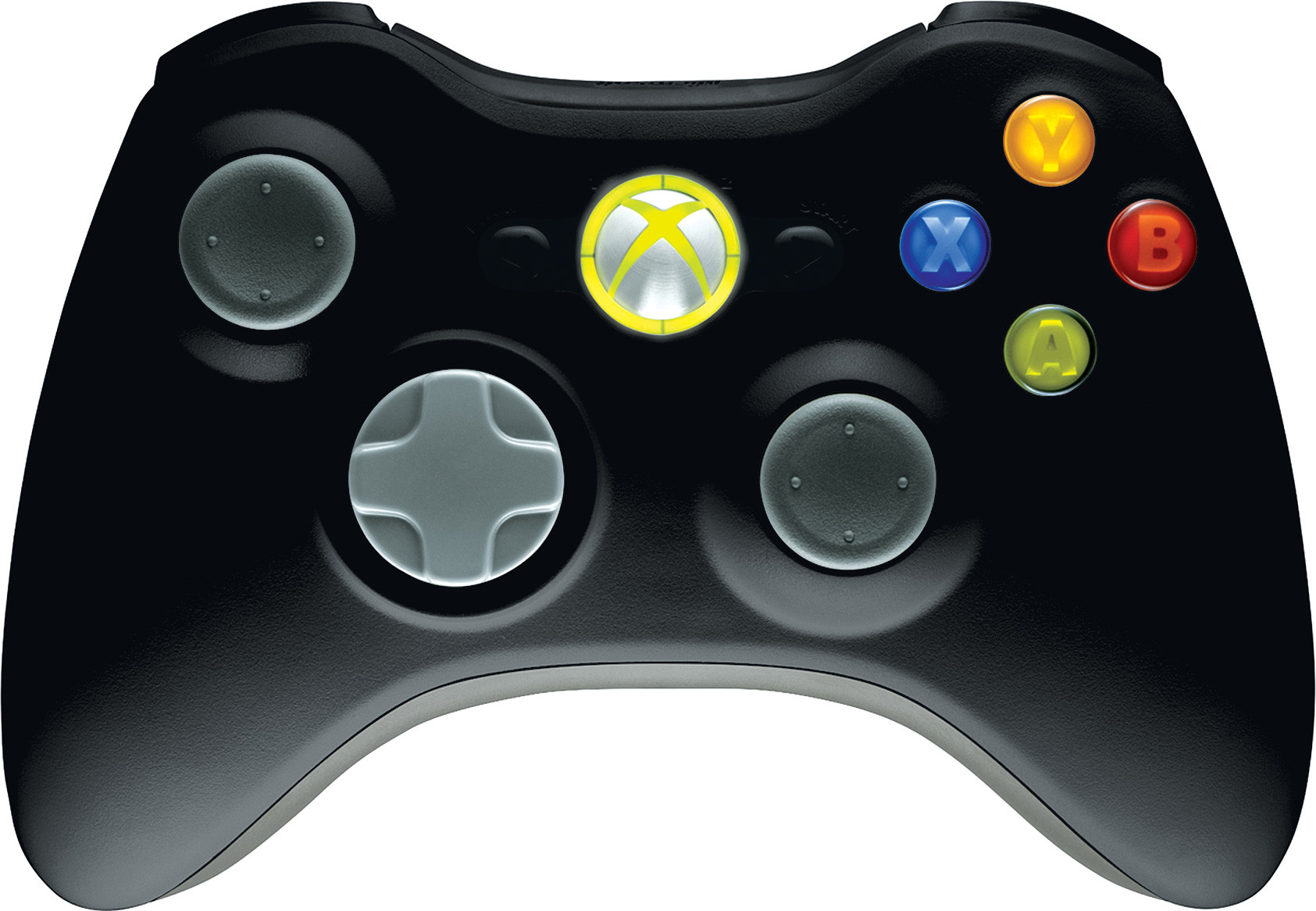
Digital games became even more appealing. The convenience of an instant download negated the need to search in the shops and avoided face-to-face interaction, while enthusiastic gamers were able to boot up their machines at midnight to grab the latest release of a much-anticipated game.

The Launch of the Smartphone

The advent of the smartphone changed the mobile phone industry beyond recognition. With the launch of the iPhone in 2007, closely followed by Google’s release of its Android system in 2008, users now had a whole vista of opportunity at their hands. The iPhone and Android featured fully functioning internet browsers and app stores, moving beyond phones which were purely designed for calls and messaging.

Wireless cellular technology has made massive strides since its humble beginnings; 1G only allowed users to communicate via calls, while 2G ushered in text and picture messaging. 3G improved data speeds and supported web browsing. In today’s digital age, the increased capabilities of 4G have opened the door for even more possibilities.

Even though 5G is still in its infancy, the industry is already looking ahead to the impact of 6G, with even faster download speeds. If we can accomplish even more with our mobile phones, it begs the question of whether consoles may one day lose their appeal.

Mobile Phones are Revolutionizing the Gaming Industry

The software underpinning the mobile gaming industry is becoming even more sophisticated, with immersive graphics and increasingly realistic settings. The quality of mobile games is vastly superior to their initial starting point and can hook users in very quickly.

As users have a vast plethora of games to choose from in the App stores and can download them instantly at the touch of a button, the cost of playing games on mobile devices is drastically reduced in comparison to video game consoles. Increased storage and data allow mobiles to cope adequately with both apps and gaming websites. From immersive VR simulators to traditional online casino games like blackjack, the possibilities of gaming online are endless across multiple devices – be it desktop or mobile.

From the first mobile phones which made voice calls possible, we now have smartphones which entertain us on the commute, or sat in a waiting room for an appointment. We have become accustomed to amusement at the touch of a button, both at home and out and about.

Does This Signal the Decline of the Video Game Console?

The move towards a more digital gaming landscape is not a new concept, with tech giants Microsoft and Sony focusing on the possibilities afforded by mobile and online gaming. Comprising nearly 57% of total, global video games revenue throughout 2021, it would be short-sighted not to invest in this growing market. With 5G becoming more widespread, users can enjoy even faster, more sophisticated gaming experiences.

In the US in 2021, there were 2,182 releases of new digital games compared to 1,324 in the previous year, while physical console game releases are decreasing. However, physical game releases are still eagerly anticipated, especially when the titles are part of a popular series. It may be that consoles become more of a niche genre in the future, with less widespread appeal.

As technology continues to advance, it is feasible that video game consoles will no longer hold the lion’s share of the market. Nevertheless, the tech giants that have delivered our favourite consoles continue to offer new, exciting releases, ensuring that they will continue to form part of our technological lives for many years to come.

Why Crypto and Bitcoin in Particular Will Transcend Inflation

0

Inflation is a phenomenon that affects every economy in the world. It is the general increase in the prices of goods and services over time, which reduces the purchasing power of money. Inflation can have various causes, such as excessive money supply, high demand, supply shocks, or government policies.

One of the main challenges of inflation is that it erodes the value of savings and investments. People who hold their money in fiat currencies, such as dollars or euros, see their wealth diminish as inflation rises. This can discourage saving and encourage spending, which can further fuel inflation.

However, there is a way to protect oneself from inflation and preserve one’s purchasing power: crypto. Crypto is a term that refers to digital assets that use cryptography to secure transactions and control the creation of new units. Crypto can be divided into different categories, such as cryptocurrencies, tokens, stablecoins, or non-fungible tokens (NFTs).

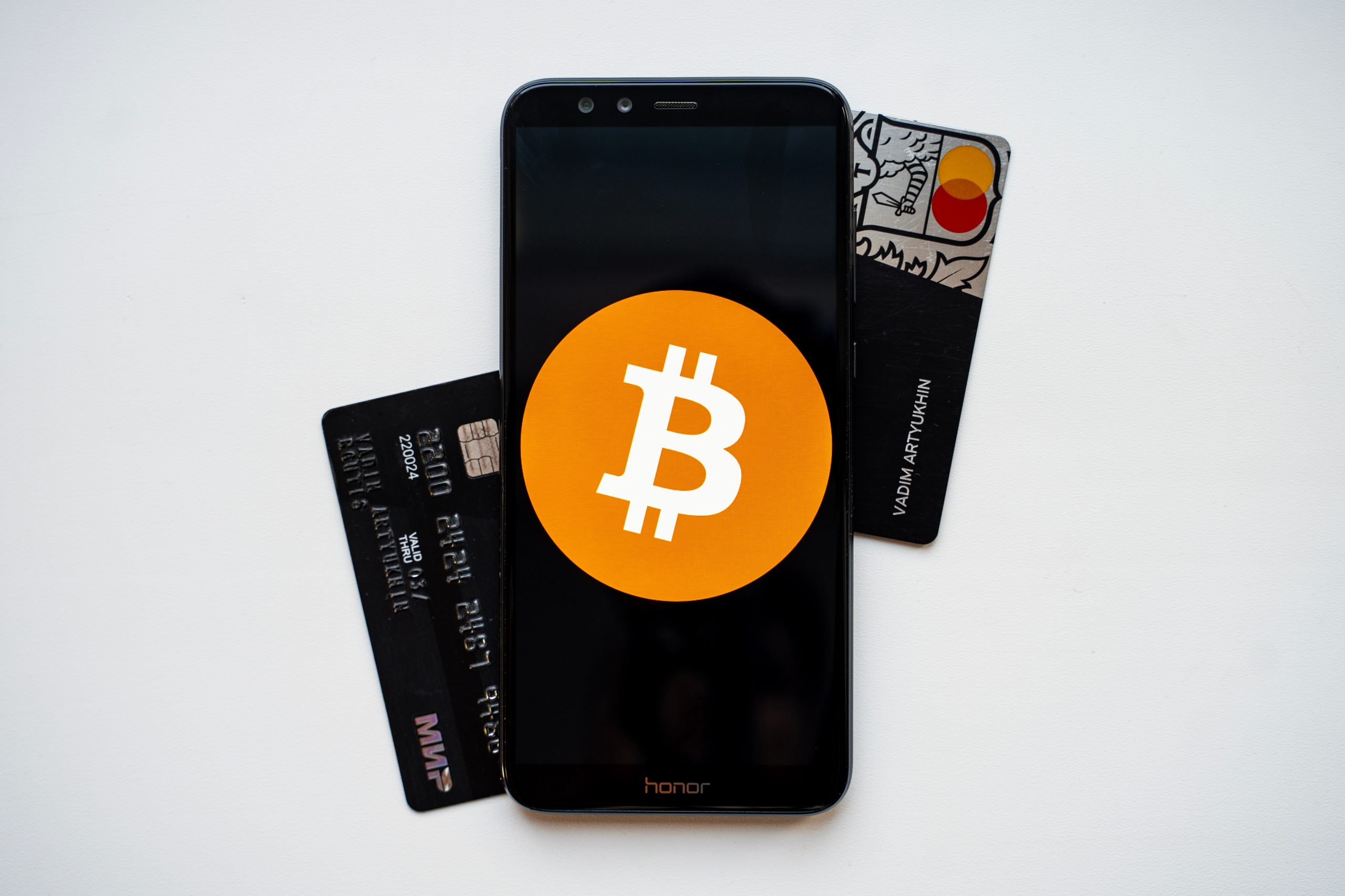
Among all the crypto assets, one stands out as the most popular and valuable: bitcoin. Bitcoin is the first and largest cryptocurrency by market capitalization. It was created in 2009 by an anonymous person or group using the pseudonym Satoshi Nakamoto. Bitcoin is based on a decentralized network of computers called nodes that validate transactions and maintain a public ledger called the blockchain.

Bitcoin has several features that make it an ideal hedge against inflation. First, it has a limited supply of 21 million units, which means that no more bitcoins can be created after that number is reached. This makes bitcoin scarce and deflationary, unlike fiat currencies that can be printed at will by central banks.

Second, bitcoin is decentralized and independent of any government or central authority. This means that no one can manipulate its value or supply by changing monetary policies or imposing sanctions. Bitcoin is governed by its own protocol and consensus rules that are transparent and immutable.

Third, bitcoin is global and borderless. It can be transferred anywhere in the world in minutes, without intermediaries or fees. Bitcoin is also accessible to anyone with an internet connection and a device, regardless of their location or identity. Bitcoin enables financial inclusion and empowerment for millions of people who are unbanked or underbanked.

Fourth, bitcoin is innovative and adaptable. It is constantly evolving and improving through the efforts of its community of developers, users, miners, and entrepreneurs. Bitcoin also inspires new technologies and applications that leverage its potential, such as the Lightning Network, which enables fast and cheap micropayments, or Taproot, which enhances privacy and scalability.

These are some of the reasons why crypto and bitcoin in particular will transcend inflation and preserve their value over time. Crypto and bitcoin offer an alternative to fiat currencies that are subject to inflationary pressures and political interference. Crypto and bitcoin represent a new paradigm of money that is digital, decentralized, and democratic.

Tekedia T-Shirts: Thanks for wearing them!

0

Just to thank Eyitayo Adeleke, mMBA for bringing a lot of ideas to Tekedia programs. The day he told me that some learners would like permission to make our t-shirts, I was like “are you sure people will wear the t-shirts?” Fascinatingly, the learner-managed cup-, t-shirt-, hoodie-, and broad merchandize-idea has distributed hundreds of these items.

The biggest delivery was the day he went to Kwara State Government House to deliver a Tekedia t-shirt to the First Lady. She had sent 600 youth from Kwara State for Tekedia Institute to train them on business management. He led a team to the government house, and that is part of our history. See Eyitayo as he handed the t-shirt to First Lady, Amb Dr Mrs. Olufolake Abdulrahman.

I want to thank our Learners for making us feel great by buying these t-shirts which continue to bring us learners. Thanks. How many schools can boast that their learners graduate and are happy to spend their money to buy the school’s t-shirts?

If you need one, contact Eyitayo, I know nothing about it. He does all with our learners, from design to delivery. I thank our learners who spend their money on these shirts for honouring Tekedia Institute in this way. Thanks.

Igba-Boi Center – for developing and advancing the Igbo Apprenticeship System

0

The proposed Abia State University’s Igba-Boi Centre will have a mandate to train and educate students and the world on the principles of Igba-Boi (the Igbo apprenticeship system), the Igbo worldview business philosophy of entrepreneurial capitalism and prosperity through enterprise, succession planning, retirement, etc.

The Centre will work to uplift and internationalize this Igbo heritage in this age of stakeholder capitalism, and upgrade, codify and modify where necessary the framework, for more international adoption. We expect the world to come to Abia and learn about Igba-Boi, and understand how the Igbos, for centuries, have been practicing what the modern world has called “stakeholder capitalism” as I wrote in Harvard https://hbr.org/2021/05/a-nigerian-model-for-stakeholder-capitalism

(Our expectation is that someone will fund and endow this center, and we do believe in the Economic Transformation team that institutionalizing Igba-Boi in a modern way, where our sons actually go to school, before going into trade/commerce, is going to be catalytic in the knowledge base of the state).

Invest in Abia because #AbiaIsBetter

Prof Ndubuisi Ekekwe

Co-Chair, Abia State Economic Transformation Transition Council

The Most Important A+ in School

1

I read a particularly unflattering LinkedIn comment on my piece where I noted that I do not invest in undergraduate students building startups, since running a startup (not a small business) cannot be a part-time job! The argument was this: a smart student could maintain good grades while running a company! Good People, there is a clear difference between running a company and working in one.  Grades are not everything!

Understand that companies do not hire you just because you made good grades in school. You are hired because you’ve demonstrated attributes which resulted in a good outcome (good grades). To get good grades, you managed your time, showed discipline to accomplish a purpose, etc. The assumption is this: if you can apply those attributes in a job, the outcome would be good. 

Please understand that the processes to get a good grade are more important than the grade. Most attributes to success are universal while grades are not.  Staying on course with those attributes makes the future predictable even when the grades become irrelevant!

Success in life is not defined by academic grades even though good grades will not hurt. The fact is this: a person can make As in a university-life-phase and still fail drastically in a professional-life-phase. While the phase-exams are different, behind them are clear relationships: process. It is safer to hire an A student than a C student as the A student has demonstrated the ability to set goals (every student desires to make good grades) and accomplished them. The key thing is not the A but the process that leads to the A. Simply, if you hire that A-student graduate, and he/she continues to apply those principles, there is a high chance he can deliver A performance in the company. That also explains the quality and the difficulty of getting that A in a school. One school’s A is another’s C. So, it comes down to processes which are needed for those grades.

To be a founder of  a startup, some attributes which will make you a great staff may not favour you! So, combining school with work, and building your company (a startup, not a small business)  while in school are different things! But even that requires a process. So, the key is mastering the process of what you need to thrive.

If someone asks you the “course” you must make A+ in school, tell him/her: PROCESS.