DD
MM
YYYY

PAGES

DD
MM
YYYY

spot_img

PAGES

Home Blog Page 4295

The Defense of Entrapment in Criminal Trial

0

Sometimes, law enforcement agencies in order to catch criminals go the extra mile by setting up traps for the alleged criminals to fall into.

For instance, when the government of Edo state, Nigeria decided to take aggressive action against street prostitution in the city of Benin and chased the roadside prostitutes away from the regular stands, Some policemen or task forces set up by the Edo state government will sometimes disguise and appear like patrons of the prostitutes; how they operated was that they will approach a random girl standing by or walking around this renown prostitutes stand, they negotiate the price with the girl for sex and once the girl accepts the fee for the sex, thereby agreeing that she is a street prostitute the task force will bring out their handcuffs and get her arrested.

This is called entrapment and it is a valid defence in criminal trials, i.e. the girl arrested or the alleged prostitute that was arrested through this ploy of the task force when charged to court can raise the defence of entrapment and she could be acquitted by the defence.

The most prevalent entrapment used by law enforcement agencies in the USA is law enforcement agents pretending to be minors or underage girls on social media and engage in sensual and sexual conversations with adults in other to catch or arrest paedophiles: A law enforcement agent will create a social media account and pretends to be a minor or an underage girl, then initiates a sex chat with an adult, once the adult offers to meet the minor physically for sex, the agent will burst the adult and arrest him for being a paedophile.

This is also another example of entrapment but for this defence to successfully get a suspect an acquittal, the law enforcement agents must have been the ones that induced the suspect to commit the crime.

Therefore, the entrapment defence is used when an accused person while facing trial alleges that he never would have committed the crime or he never would have formed the intent (the mens rea) to commit the crime if a law enforcement officer had not invited, inspired, incited, persuaded and lured him to commit the crime. The defence of entrapment is thereby established where the defendant engaged in criminal conduct after being induced or encouraged to do so by law enforcement who was trying to obtain evidence against that defendant. This is most common in drug cases both possession and sale of a controlled substance and prostitution cases just like the early example I raised.

The most populous case in the history of criminal trials where the defence of entrapment was used as a defence to acquit an accused person despite the fact that he was caught red-handed committing the crime was the case of United States v. John DeLorean, 561 F. Supp. 797 (C.D. Cal. 1983). 

In this case, John Z. DeLorean, a renowned American car builder and one of the richest men in America (at that time) was arrested on October 19, 1982, by the Federal Bureau of Investigation (FBI). He was caught with 55 pounds of cocaine in his hotel room and was immediately charged to court for smuggling drugs, conspiracy to obtain and distribute cocaine etc.

What could have led a renowned automotive builder and one of the richest men in America to start dealing and smuggling drugs? 

His (John DeLorean’s) car company was on the verge of going bankrupt and he needed $17 million to save the company from collapse.  He was desperately in need of money to save his company. Out of this desperation, he was approached by a person claiming to be an investor named James Hoffman who claimed to have a business opportunity to help save DeLorean’s company. Unknown to DeLorean, James Hoffman, was an FBI informant who decided with the help of the FBI to prance on DeLorean’s desperation for money and entrap him into smuggling drugs to sell in order for him to raise money and save his company.

DeLorean’s attorney successfully argued the defence of entrapment claiming that John Delorean, a reputable inventor and businessman would never have thought of engaging in drug smuggling had the FBI through their informant not induced and incited him to. He was therefore based on this defence acquitted of all the drug charges brought against him after two years of trial.

It should be noted however that the defence of entrapment can only be valid if raised in victimless crimes, such as buying illegal narcotics or soliciting prostitution. Charges of violent crimes like rape or murder or robbery cannot usually be avoided or evaded by the accused by raising the defence of entrapment.


 

United States’ User Data Can Still Be Accessed in China – TikTok CEO Chew Tells Congress

0
The brand is growing

On Thursday, TikTok CEO Shou Zi Chew testified before U.S. Congress in a much anticipated hearing prompted by the U.S. government’s move to ban the video-sharing app, as security concerns from its use heightens.

TikTok has been banned on government-issued devices by governments, including the Congress, in and outside the U.S. The ban stems from concern that U.S. user data can be accessed in China.

Chew told U.S. lawmakers that TikTok employees in China, who had been caught earlier tracking the location of journalists in the West, still have access to some U.S. data from the app. The CEO explained that such access will be completely eliminated at the completion of Project Texas; a risk mitigation plan the company had activated to ameliorate the national security concern that has become an existential threat to the app in the West.

TikTok is owned by ByteDance, a Chinese tech giant based in Beijing. Under the Chinese Communist Party (CCP) law, the government is empowered to obtain information from any company when the need arises, particularly in relation to national security.

However, untangling the video-sharing app from its ties with Beijing, to set it free from the CCP law, has become the hard nut to crack. The U.S. has asked TikTok’s Chinese stakeholders to sell their stakes in the company.

The U.S. and its allies are becoming increasingly concerned that ByteDance, upon demand, will deliver user data into the hands of the Chinese government.

TikTok has been trying to move its data centers to the U.S., out of the reach of the Chinese government. Chew, in response to Rep. Bob Latta’s question on whether ByteDance employees could currently access U.S. data, implied that the answer lies on Project Texas.

“After Project Texas is done, the answer is no,” Chew said. “Today, there is still some data that we need to delete.”

CNBC quoted TikTok as saying on Thursday that Project Texas is already in action but there are many steps to reach its completion. The company said it began the process, which includes deleting data from TikTok’s servers in Singapore and Virginia, last week. The data on those servers is the kind that could theoretically still be accessed by China-based ByteDance employees for the time being.

TikTok said once that data is deleted those employees will no longer have access to U.S. user data from the app.

The testimony before the House Energy and Commerce Committee came amid growing decision by Western governments to prohibit the use of TikTok on work devices due to concern that the app could be used as a back door for Chinese espionage.

There was a bipartisan agreement by the U.S. lawmakers during the testimony that TikTok poses a national security risk through its handling of user data from 150 million Americans.

Chew said that TikTok is a “private business” that, like many others, relies on a “global workforce,” denying that it shares U.S. data with the Chinese Communist Party. The short-form video app had last week denied a report by Wall Street Journal that it represents a Chinese espionage operation. A TikTok spokesperson said in a statement that there is no truth in the allegation.

“Since October of 2022, all new U.S. user data has been stored exclusively in the Oracle Cloud Environment, with protected data fully out of reach of any foreign government,” the spokesperson added. “That data is managed exclusively by U.S. Data Security—a TikTok subsidiary made up of Americans, led and located in America—whose sole focus is to protect U.S. national security interests by securing U.S. user data and preventing outside manipulation of our systems.”

Also, in a statement on Thursday, a TikTok spokesperson criticized the lawmakers and the entire hearing, saying it was “dominated by political grandstanding that failed to acknowledge the real solutions already underway through Project Texas or productively address industry-wide issues of youth safety.” The spokesperson added that the committee failed to take into account the livelihoods of the 5 million businesses on TikTok or the First Amendment implications of banning a platform loved by 150 million Americans.

Fintech Company Klarna Integrates ChatGPT Into Platform to Provide Product Recommendations to Users

0

Swedish fintech company that provides online financial services such as payments for online storefronts and direct payments along with post-purchase payments Klarna, has recently integrated OpenAI ChatGPT into its platform to provide product recommendations to users.

According to the firm, the AI technology will go live with a highly personalized and intuitive shopping experience by providing curated product recommendations to users who ask the platform for shopping advice and inspiration, along with links to shop those products via Klarna’s search and compare tool.

Commenting on the integration of ChatGPT into its products, the CEO and co-founder of Klarna wrote, “I’m super excited about our plugin with ChatGPT because it passes my ‘north star’ criteria that I call my ‘mom test,’ I.e would my mom understand and benefit from this. And it does because it is easy to use and genuinely solves tons of problems, it drives tremendous value for everyone.

Klarna is in a unique position to leverage the best technology and data to help people discover new products and solve problems for consumers at every stage of the shopping journey, and we will continue innovating to bring these services to our 150 million consumers.”

Klarna disclosed that the plugin will first be available to ChatGPT plus subscribers in the U.S. and Canada, and will subsequently be rolled out to other regions as it is currently passing through a safe testing phase.

Klarna is the latest tech company to integrate ChatGPT into its product to enhance users’ experience. The fintech firm is on a mission to provide millions of users with a new, engaging, and intuitive way to discover products they love, while also creating opportunities for retailers to connect with broader audiences and acquire new customers.

How ChatGPT Will Work on Klarna

  • Consumers can install the Klarna plugin from ChatGPTs plugin store
  • After it has been installed, consumers can go ahead to ask ChatGPT for shopping ideas to get a curated selection of items relevant to their request. ChatGPT automatically chooses when to use the plugin based on the conversation
  • Shoppers have the option to provide further prompts or request additional product recommendations
  • By tapping on the product link, consumers can easily navigate to the product page on Klarna’s search and compare tool to compare prices across different brands.

Klarna’s core service is to provide payment processing services for the e-commerce industry, managing store claims and customer payments. The fintech firm is widely known as a “Buy now, pay later” (BNPL) service provider, offering customers credit on their purchases as part of the checkout process.

In 2021, the company reportedly handled US$80 billion in online sales. In the same year, Klarna 2021,  emerged as Europe’s most valuable private tech company, with a valuation of $45.6 billion, however, it witnessed a massive decline to $6.7 billion in 2022.

ChatGPT’s new plugins. No longer limited to information in its training data ending in 2021, a small set of users now have ChatGPT plugins. At first, people will have access to 11 plug-ins for external sites like Expedia, OpenTable, and OpenAI’s own plugins, which can interpret code and pull information from the internet. OpenAI boasted about the variety of new use cases like browsing product catalogs, booking flights, or ordering food while also stressing that there could be negative consequences. “At the same time, there’s a risk that plugins could increase safety challenges by taking harmful or unintended actions, increasing the capabilities of bad actors who would defraud, mislead, or abuse others,” OpenAI said in an announcement post.

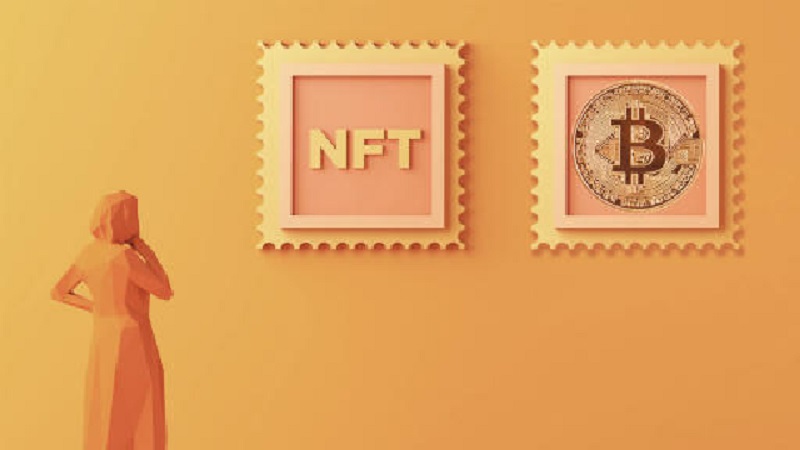
What are Bitcoin NFTs? A Comprehensive Guide to Getting Started

0

The Origins of Bitcoin NFTs

Bitcoin NFTs have a history that predates Ethereum and Solana NFTs. The concept first emerged in 2012 with Meni Rosenfeld’s paper on “Colored Coins.” This approach sought to embed additional information within Bitcoin transactions to represent various assets. However, the technology and research at the time were not advanced for practical implementation.

In 2014, Counterparty emerged as an early pioneer of Bitcoin NFTs. It introduced “The First Rare Pepes” in September 2016, a collection of collectible Pepe the Frog memes traded using Bitcoin or Counterparty’s native token (XCP). The OP_RETURN function, which allowed data storage up to 80 bytes on the Bitcoin blockchain, proved inadequate for sustaining these collectibles.

In 2023, Bitcoin NFTs gained prominence through a method called “Ordinals,” allowing the Bitcoin blockchain to securely store and transfer NFTs.

The Emergence of Ordinals

Ordinals, introduced by Casey Rodarmor, represent a significant advancement in Bitcoin NFTs. Rodarmor developed the “Ord” wallet, which assigns unique numbers to each Satoshi (the smallest unit of Bitcoin). Users can attach media files, such as images or videos, to these numbered Satoshis, thus creating digital assets or NFTs.

What Are Ordinals and How Do They Work?

Ordinals assign a unique number to each Satoshi, allowing precise tracking and identification of Bitcoin units. This system provides greater granularity in monitoring Bitcoin movements.

What are Digital Artefacts?

Digital Artefacts are NFTs that are immutable once they have been created. To qualify as a digital artefact, an NFT must adhere to a standard protocol for compatibility with decentralized platforms, be stored on a decentralized blockchain, and be freely transferable without external restrictions.

What are Inscriptions?

Inscriptions are digital artefacts added to Bitcoin using the Ord client. They do not require sidechains or separate tokens and can be viewed publicly via the original Bitcoin blockchain explorer.

What is the value of Bitcoin NFTs?

The value of Bitcoin NFTs is influenced by factors such as rarity, demand, and the overall Bitcoin market conditions. The reputation and experience of the creator also play a role in determining value.

How to Get Started with Bitcoin NFTs

To invest in Bitcoin NFTs:

i. Run a full Bitcoin node to create, sell, or transfer NFTs on the network.
ii. Use a wallet like Sparrow Wallet to manage Bitcoin and NFTs.

Advantages of Bitcoin NFTs

Bitcoin NFTs are important to the growth of Web3 and blockchain at large. Below are some of the benefits of Bitcoin NFTs:

Ecosystem Expansion

Bitcoin NFTs attract new creators and users. This encourages widespread adoption and expands the blockchain ecosystem as a whole.

Community Building

Bitcoin NFTs create a community around digital collectibles, providing new monetization avenues for creators.

Innovative Use Case

NFTs offer a novel application for Bitcoin beyond its traditional role of serving as a digital value exchange.

Disadvantages of Bitcoin NFTs

While Bitcoin NFTs are essential for fostering Web3 growth and ecosystem expansion, they have certain limitations. Below are some of the weaknesses of Bitcoin NFTs:

Slower Transactions

Bitcoin’s transaction speed (approximately 7 transactions per second) could lead to higher fees and longer confirmation times as NFT transactions increase.

Node Requirement

Running a full node is necessary to create, sell, or transfer Bitcoin NFTs, which may be a barrier for some users.

 Selling or Transferring Bitcoin NFTs Without a Full Node

To sell or transfer Bitcoin NFTs without running a full node:

Join the Community

Engage with NFT communities, such as Discord, for minting opportunities.

Utilize P2P or OTC Trading

  • Connect with buyers through Peer-to-Peer (P2P) or Over-the-Counter (OTC) channels.
  • Make sure you are in the Discord community and have the mint opportunity.
  • Send crypto to the creator to help you keep the NFT in his wallet.
  • Use the Peer-2-Peer or OTC Trading channel to connect with your buyer.
  • Chat with your buyer and have a mutual agreement.
  • Reach out to the creator and request an escrow service.
  • The buyer sends the crypto to the escrow, and the escrow releases your NFT to their wallet.
  • The escrow releases the crypto to you.

Creating Your Own Bitcoin NFTs

To create a Bitcoin NFT:

  • Use the Ord Wallet
  • Execute the command `ord wallet inscribe file.jpg` to inscribe an NFT on the Bitcoin blockchain
  • Set Custom Fee Rates. Use `ord –wallet ord-dotta wallet inscribe file.jpg –fee-rate 5` for custom fees.
  • Manage UTXOs: Each NFT inscription requires a separate Unspent Transaction Output (UTXO). Ensure sufficient Bitcoin to cover minting fees.

 How to Evaluate Bitcoin NFTs for Investment

When evaluating Bitcoin NFTs, consider various factors similar to other asset criteria, such as the project team, roadmap, and influential figures. However, the unique and unconventional nature of Bitcoin NFTs can make their value harder to assess compared to Ethereum or other blockchain NFTs.

Additionally, focus on derivative or historically significant projects, as they mostly have higher demand and are easier to liquidate in any market.

Finally, target top Bitcoin NFTs, which are more expensive due to their rarity. The earlier an NFT is inscribed, the greater its demand and perceived value.

Conclusion

Bitcoin NFTs have shown promising potential since their inception, emerging from early concepts like Colored Coins to a more advanced Ordinals system. While they offer exciting opportunities for innovation, community building, and expanding the Bitcoin ecosystem, their future remains uncertain. As with any emerging technology, it is important to conduct thorough research before investing.

Why We’re Using LinkedIn

1

When McKinsey & Company did it, it was evident that other big consulting companies will follow, and cut workers: “An Irish-American professional services company based in Dublin, which specializes in information technology services and consulting, Accenture, has revealed plans to trim its workforce by laying off 19,000 workers”. The new normal since Q4 2022 is that when companies trim workers, Wall Street rejoices. Accenture’s stock is up more than 7% since this announcement. Of course, without this redesign, there will not be a LinkedIn.

Accenture is laying off 19,000 employees worldwide — about 2.5% of its workforce — and consolidating office space as it seeks to shrink costs amid rising economic uncertainty. The Irish-American consulting giant said the layoffs will mostly affect employees in in back-office or non-client facing roles; it expects to spend $1.2 billion on severance over the next 18 months. A slowdown in client spending has hit other consultancies: KPMG recently announced it was cutting 2% of its U.S. workforce and McKinsey is reportedly considering eliminating 2,000 jobs.

Accenture also lowered its revenue growth outlook for the current fiscal year to between 8% to 10%, down from a previous estimate of 8% to 11%.

For decades, the social contract of labour was to get a job in a company, grow on that job, and retire while working for that firm. Then, people spent decades in one company. The phrases “company man”, “company lifer”, and “one-company man” made sense.

Then in early 1980s, the redesign started: companies started killing that social work contract between employer and employee. Legends like Jack Welch of GE made it a management system – fire the bottom performers, promote the best. It went wild and just like that, there was no hiding place. American law evolved, the world followed: no human has any protection from axing managers. Labour was indeed labour, tedious and painful because jobs were offered as “as is”, uncontracted for most workers.

Before then, employees were loyal. Resumes or CVs were like classified documents: they were totally personal and secretive. But as the employees saw the dismantling of the work order, they revolted. They needed to, because they had lives and families to take care.

LinkedIn, a professional networking site, provided a cover, for these global employees. Simply, across industrial sectors, people felt it was normal to post their resumes publicly, for all to see, including the present employer and potential ones. The secretive resumes were gone. You can see the resumes unconstrained and unbounded on LinkedIn. That was a new world.

A local Nigerian proverb explains it all: “As hunters have learned to shoot without missing, birds will have no choice but learn to fly without perching”. In my local language which I share with peerless Chinua Achebe, he used the Eneke, a bird, to take home the same point, “Men have learned to shoot without missing their mark and I have learned to fly without perching on a twig.” We are the Enekes and we are flying on LinkedIn without deleting our accounts. That is the only way to survive in a world of firing managers.

Comment on Feed

Comment 1: It’s interesting to see how the social contract of labor has evolved over the years, and how technology like LinkedIn has provided new opportunities for job seekers to connect with potential employers.

However, the constant need to be “available” and to showcase oneself can inadvertently create a sense of competition and pressure that may not always be healthy or sustainable.

Comment 2: Now we describe our career in terms of roles we’ve played across board and not the ladder we’ve climbed in one organization.

Even athletes score against a club at the beginning of a season, and lift trophies with it by the second half of the season. Maybe we would reserve loyalty for family.