DD
MM
YYYY

PAGES

DD
MM
YYYY

spot_img

PAGES

Home Blog Page 430

Why TikTok Likes Are Crucial for Influencers Growth

0
Why TikTok Likes Are Crucial for Influencers Growth

TikTok has quickly risen to become a leading platform for social media personalities. Getting noticed on TikTok can be challenging due to its algorithmic content distribution and the millions of videos uploaded every day. One key factor that determines an influencer’s success on the platform is the number of likes their posts receive. TikTok Likes are a crucial metric for growth, as they increase visibility and engage audiences.

In this post, we’ll explore why TikTok Likes are so important for influencers and how the number of likes can significantly impact an account’s growth.

Why TikTok Likes Matter for Influencers

  1. Drive Content Visibility

TikTok Likes are important for the growth of influencers due to one big reason- It gets your content across more people. The TikTok algorithm favours content that has high engagement, most notably likes. If a video earns enough likes, it can be recommended in TikTok’s “For You” feed where the majority of content is consumed. This wider visibility greatly improves the likelihood of your content finding a larger audience.

As an influencer, this means your content can be displayed to people outside of your current followers which can help you attract a larger audience. TikTok Likes are essentially the currency that can expose your account and content to a larger audience.

2.     Building Social Proof

TikTok Likes act as a form of social proof, which is crucial for building credibility and trust with your audience. Social proof is a psychological and social phenomenon wherein people copy the actions of others in an attempt to undertake behaviour in a given situation. This means that for influencers, the more your videos are liked, the more new users may engage with them.

People are more likely to watch, like and share a video with lots of likes already on it. This becomes a loop where more engagement will result in more likes and attract even bigger audience. Likes help you to create social proof, which is an essential factor in trust and success on TikTok.

  1. Enhance Credibility

Credibility is the name of the game for influencers. Your TikTok Likes are a reflection of the quality and relevancy of your content. When an influencer gets likes on every video, it tells the algorithm as well as viewers that these videos are worth watching. This is the street cred you need to also begin bringing in brand partnerships, collaborations and an audience that keeps coming back.

Content that is good enough to get ‘liked’ will have an increased likelihood of being shared, commented on and promoted by TikTok’s algorithm. For influencers, it means more likes and a higher digital status.

  1. Boost Engagement Rates

TikTok’s algorithm leans into videos that provoke a reaction. Likes are one the major engagement forms, and the more people like it the more likely others will see it. TikTok Likes can help to influence engagement like comments, shares and followers which play a part in your likelihood of going viral.

As an influencer, the content you share should matter to your audience. If you continue to get likes, there’s a much greater chance that the next batch of your videos will be sent to new users who have not yet seen your content. The circle of influence is a ripple effect that will make it easier for you to grow your following and likes as time passes.

  1. Foster Community Growth

Forming a community is critical to influencer achievement, and TikTok Likes help tremendously. With a heavy liftoff of likes to their posts it gets other folks to jump in, comment and share. This fosters a sense of community, and invites the followers to connect with influencer in more profound way.

Likes also help to build up a loyal following that values your content. It’s a snowball effect: The more people who like your posts, the more people are likely to engage with them and thus be inspired join your following. TikTok Likes play a huge role in building this community, and that is vital to influencer growth over time.

  1. Gain Algorithm Favor-ability

The TikTok algorithm is designed to push videos that drive strong engagement, and likes are a key form of engagement. The more people who like a video, the more likely TikTok is to push that video out to other users and feature it on the “For You” page.

As an influencer, you want to make your content favourited in the algorithm and TikTok Likes is one of the best way to do so. The more likes you get, the higher your odds of getting even more exposure and thus closer to reaching that elusive viral status. More visibility leads to more likes, creating a virtuous cycle of growth.

  1. Unlock Monetization Options

As an influencer, you are trying to increase your audience and also figure out how to monetize that following. TikTok Likes are crucial to secure brand deals, sponsored posts and media partnerships. It’s because brands are more likely to partner with influencers whose content is received well by a large and engaged audience, and likes are an important measure of engagement.

Getting a lot of likes on your videos makes other possible sponsors think you have some power over people, so it’s worth actually bringing you on their team. This creates new income opportunities and enables you can make your TikTok account a lucrative one.

  1. Increase Followers Easily

One of the most straight forward advantages of getting TikTok Likes is may lead to more followers. When you get a lot of likes in your videos, it attracts people who like what you do. This additional exposure can result in more fans who will interact with your content to like, share and comment on it.

When you amass a large enough following, your power on the platform increases. With that and a better, more engaged follower base, you can keep the momentum going and add to your successes with an onslaught of likes, views and engagement. TikTok Likes is the key to that great network where people are looking at your content.

9.     Purchase to Boost Growth Quickly

If you are looking immediately visibility and popularity by getting to buy TikTok Likes can be trusted as an option. Purchasing likes helps you increase social proof and visibility quickly, giving your content the initial momentum it needs to gain traction.

Media Mister is reputable and trusted provider for purchasing TikTok Likes which is a reliable solution to increase your visibility and engagement. When you buy TikTok Likes, you give your videos that head start which ensures they reach a wider audience. Between Media Mister’s quick delivery and quality services, it is ideal for influencers interested in elevating their presence on TikTok and maintaining growth.

Conclusion

Having likes on your content directly helps you gain views from users interested in your posts. They bring visibility, create social proof, build credibility, and drive engagement, all essential for growing your influence and attracting more followers.

By understanding the value of TikTok Likes and implementing effective strategies to increase them, creators can optimize their growth potential and move toward influencer success more quickly and effectively.


Top Considerations When Converting PNG to JPG for Business Use

0

In today’s digital world, great images can make a big difference in how a business looks online. Changing a PNG file to a JPG can help your website load faster, look better, and even improve your marketing. But there are a few things to keep in mind. If you don’t handle the file conversion right, you could lose image quality or run into problems with how your content shows up.

Many businesses don’t realize that these small details can really affect how people see their brand online. Let’s break it down.

Why Convert PNG to JPG?

When building a strong online presence, images play a big role in how people view your brand. High-quality visuals can make your website look more professional and keep visitors engaged. But not all image formats work the same way, especially when it comes to speed and performance.

PNG files are great for keeping every detail, but they’re often large in size. This can slow down your website, especially if you have lots of images. JPG files are smaller and load much faster, which helps your site run better and gives users a smoother experience.

Converting PNG to JPG is a smart move when you want to improve your website’s speed without sacrificing too much image quality. It’s also helpful for social media, emails, and other digital platforms where fast loading and smaller file sizes matter. Making the switch can help your business look sharp and stay competitive online.

Key Factors to Consider When Converting Images

Converting images isn’t just about changing file types-it’s about making smart choices that impact your website’s performance and appearance. From image quality to compatibility, each factor plays a role in how your visuals support your business online.

Understanding PNG and JPG Formats

To manage your image files well, it helps to know the difference between PNG and JPG formats. PNGs use lossless compression, which keeps the image quality even after editing. This makes them great for images that need transparency or fine details, like logos.

JPGs, on the other hand, use lossy compression. That means the file size is smaller, but some image quality is lost.

This format is best for photos or images with smooth color changes, where a small drop in quality won’t matter much. Choosing the right format can make your business visuals look more professional and load faster online.

The Impact of Image Quality

When converting PNG files to JPG, one of the most important things to think about is keeping the image quality. JPG files are smaller and load faster, but they can lose some of the finer details during the conversion.

To keep your images looking good, it’s a good idea to adjust the compression settings when saving the JPG. Most editing tools let you pick the quality level, so you can find a balance between file size and how sharp the image looks.

File Size and Loading Speed

File size is also an important thing to think about when converting images for your business. Large image files can slow down your website, which can make visitors lose interest or leave before it even loads. Converting PNG files to JPG can help make the file size much smaller, which helps your site load faster.

A good converter can shrink the file size without losing too much image quality. For websites, it’s best to keep JPG files under 100KB so pages load quickly. If you have lots of images to convert, using a tool that can handle many files at once can save you a lot of time.

Choosing the Right PNG to JPG Converter

Selecting an effective PNG to JPG converter is critical for achieving the best results. Some tools offer superior quality preservation, while others focus on speed. Many online converters allow you to make adjustments during the conversion process, giving you greater control over the outcome.

Free online options are available, but they may come with limitations, such as file size restrictions or fewer editing features. Premium software often provides better quality outputs and additional functionalities, such as image editing tools. Whichever option you choose, reading reviews and comparing features can help you determine the best fit for your business needs.

Maintaining Compatibility Across Platforms

Another important thing to think about when changing PNG files to JPG is making sure your images work well on different devices and platforms. JPG files are supported by almost all browsers, phones, tablets, and computers, so they are a safer choice for online use.

PNG files can sometimes have problems showing up correctly, especially on older devices or less common systems. This can cause images to look broken or not appear at all, which hurts the user experience.

Using JPGs helps make sure everyone can see your images without any issues, which is very important if your business reaches people all over the world. It’s also a good idea to test your images on different devices and browsers to catch any problems before your visitors do.

Ensuring Accessibility

Accessibility is an often-overlooked aspect of digital marketing. When converting your images, it is crucial to consider how your audience will interact with them.

For instance, using descriptive alt text for your JPG images enables screen readers to convey the content to visually impaired users. This must be incorporated regardless of whether you’re using PNG or JPG.

The World Wide Web Consortium (W3C) provides guidelines on ensuring digital accessibility, which include using appropriate formatting and alt text. Making your images accessible not only helps reach a wider audience but also aligns your brand with inclusive practices.

Make Informed Decisions for Image Conversion

Converting PNG to JPG can have significant implications for your business. By considering image quality, file size, compatibility, and accessibility, you can optimize your images to enhance your digital marketing efforts effectively. Ensuring that you use the right tools and methods will improve your visuals and contribute positively to your site’s loading speed and user experience.

Don’t hesitate to explore the best PNG to JPG converter options available to optimize your business images today.

Is this article helpful? Keep reading our blog for more.

Nvidia’s Jensen Huang Says China Is Nanoseconds Behind the U.S. in Semiconductor

0

Nvidia’s chief executive Jensen Huang has issued one of his most pointed warnings over China’s unrelenting pace in tech innovation. He warned that China is advancing at breakneck speed in semiconductor development, and U.S. restrictions risk accelerating that progress rather than containing it.

Speaking on the BG2 podcast, Huang described China as “nanoseconds behind” the United States in chipmaking. He painted a picture of a rival that is “formidable, innovative, hungry, fast-moving, underregulated,” driven by an engineering workforce molded by the punishing “9-9-6” culture of working from 9 a.m. to 9 p.m., six days a week.

For Nvidia, one of the challenges is Washington’s ban on shipping its flagship A100 and H100 accelerators to China, which has forced the company to scramble for alternatives. It rolled out the H20 GPU, a cut-down processor designed specifically to comply with U.S. export rules. After months of uncertainty, the Commerce Department began granting licenses in August, allowing shipments to resume. Nvidia is also preparing a successor to the H20 that would push performance higher while still staying under Washington’s regulatory ceiling.

But as Nvidia adapts, China is pressing forward with its own counteroffensive. Huawei has launched volume shipments of its Atlas 900 A3 SuperPoD, built on the domestically produced Ascend 910B chip. The company has laid out a roadmap through 2027, targeting chips that could match or even surpass today’s leaders. Importantly, Huawei’s ecosystem is CUDA-free, a deliberate move away from the proprietary software platform that cemented Nvidia’s dominance in China, where the company once held a 95% market share.

Chinese hyperscalers are rallying behind that shift. Baidu, Alibaba, Tencent, and ByteDance have either built in-house processors or deepened their reliance on local startups. Tencent even confirmed that its infrastructure has been fully adapted to Chinese-designed chips, signaling how far Beijing’s self-reliance drive has advanced.

Huang insists both sides would benefit from renewed openness. “They [China] publicly say… they want China to be an open market, they want… companies to come to China and compete in the marketplace… and I believe and I hope that we return to that,” he said.

For Nvidia, the H20 may lack the power of its flagship hardware, but it offers a way to keep Chinese customers within Nvidia’s orbit rather than losing them entirely to homegrown rivals.

A wider industry contrast

Nvidia’s balancing act stands in contrast to the paths chosen by rivals like AMD and Intel. AMD, which has also been hit by U.S. restrictions, has moved more cautiously in tailoring chips for China. Its MI300 accelerator family, seen as a competitor to Nvidia’s H100, has no sanctioned China-specific version yet. Reports suggest AMD is weighing whether to design compliant hardware for the Chinese market, but it risks cannibalizing margins while exposing itself to regulatory whiplash.

Intel, by contrast, has leaned heavily into government partnerships, positioning itself as the cornerstone of Washington’s domestic semiconductor push. Through multibillion-dollar subsidies under the CHIPS Act, Intel is expanding U.S. foundry capacity, while simultaneously threading the needle in China. The company still supplies certain lower-performance products into the Chinese market, but CEO Lip-Bu Tan has largely aligned Intel’s strategy with U.S. policymakers’ vision of securing advanced manufacturing at home, especially after President Donald Trump accused him of having ties with China.

The divergent playbooks underscore the pressure facing the industry. Nvidia, with a 95% market share in Chinese AI accelerators before the bans, has the most to lose if Beijing achieves chip independence. AMD, with less exposure, has more freedom to wait out the policy climate. Intel, straddling between being both a design house and manufacturer, is doubling down on subsidies while limiting its China bets.

Nvidia’s $2.5 trillion market capitalization has been built on riding the AI wave, and China — one of the world’s largest buyers of advanced chips — remains too important to abandon. The H20, though technically hobbled compared to its top-tier models, represents a compromise: a way to maintain relevance in China without crossing Washington’s red lines.

Although Beijing recently warned Chinese companies to stay off H20, the strategy reflects Huang’s broader point — that trying to wall off China could accelerate Beijing’s push toward full independence. Huawei’s Ascend roadmap, hyperscaler investments, and CUDA-free software ecosystems are already evidence of that momentum. Against this backdrop, Nvidia is betting that staying inside China’s ecosystem — even with constrained offerings — is better than being shut out altogether.

Elon Musk’s X is Digging in its Heels in India After a Major Legal Setback, Vowing to Appeal a Court ruling that Upheld New Delhi’s Tougher Content Removal Regime

0

Elon Musk’s X is refusing to back down in India, vowing to appeal a court ruling that upheld New Delhi’s expanded content removal regime — the latest turn in a rocky relationship between the billionaire and the world’s largest democracy.

The social media company said on Monday it was “deeply concerned” by the judgment, which quashed its petition challenging India’s tightened takedown mechanisms. X warned that the framework had “no basis in the law,” violated Supreme Court precedents, and undermined Indians’ fundamental rights to freedom of speech and expression.

Prime Minister Narendra Modi’s government has defended the system, arguing it tackles a flood of unlawful content and ensures accountability online. Under new rules introduced in 2023, far more government officials can issue takedown requests and submit them directly to platforms through a portal launched in October that year. Last week, a judge reinforced the state’s position, saying every company operating in India “must accept that liberty is yoked with responsibility.”

In its response, X stressed that it “respects and complies with Indian law,” but disagreed with the view that it had no right to question the framework simply because it was incorporated abroad. The platform, owned by Musk since 2022, has consistently framed the dispute as a fight for free expression.

Musk’s fallout with India

Musk’s dealings with India have been fraught for years, long before this court challenge. His flagship company, Tesla, has repeatedly sparred with New Delhi over import duties, which Musk has called among the highest in the world. Attempts to negotiate tax breaks for bringing Tesla cars into the country have stalled, frustrating his broader ambitions in one of the fastest-growing automotive markets.

On the social media front, X (then Twitter) had already clashed with Indian regulators in 2021 when it resisted government orders to block accounts critical of the Modi administration during protests by farmers. That standoff escalated into raids on Twitter’s offices in New Delhi and a broader push by the government to force the platform into compliance. Musk’s ownership has not changed the pressure: since 2023, the government has leaned more heavily on its content removal powers, and X has become the most vocal challenger.

A global pattern of clashes

Musk’s struggle in India is part of a wider pattern of friction between X and regulators worldwide. In Brazil, the company faced the threat of a nationwide suspension earlier this year after refusing to comply with Supreme Court orders to block accounts accused of spreading disinformation. In Europe, the platform is under investigation for alleged failures to curb hate speech and disinformation under the EU’s new Digital Services Act. Musk has often presented these disputes as battles for free expression, positioning himself as a “free speech absolutist” against what he describes as heavy-handed governments.

But many believe that his approach is inconsistent. In Turkey, for instance, X has been accused of yielding to government demands to restrict opposition voices ahead of elections. The push-and-pull has created uncertainty for X’s global standing, leaving users, advertisers, and policymakers questioning how far Musk is willing to go in defending speech when his companies face commercial or legal risk.

India’s stakes in the fight

The battle in India carries outsized importance. With over 800 million internet users, the country represents one of the most critical growth markets for global tech firms. Yet it is also among the most tightly regulated, with frequent demands on platforms to remove politically sensitive or security-related content. For Musk, India is both a potential goldmine for X’s user growth and a difficult market that has already complicated his automotive ambitions with Tesla.

Thus, by appealing the ruling, X is effectively betting that higher courts might still rein in New Delhi’s powers. But if the government’s position is upheld, the decision could cement India’s authority to dictate digital speech at a scale unmatched in most democracies. That leaves Musk — who has championed “absolute free speech” as a core principle for X — facing a choice: adapt to India’s regulatory strictures or risk exclusion from one of the largest and fastest-growing online communities in the world.

Cloudflare Explores NET Dollar Stablecoin Launch As Gate Looks Into L2 Creation

0

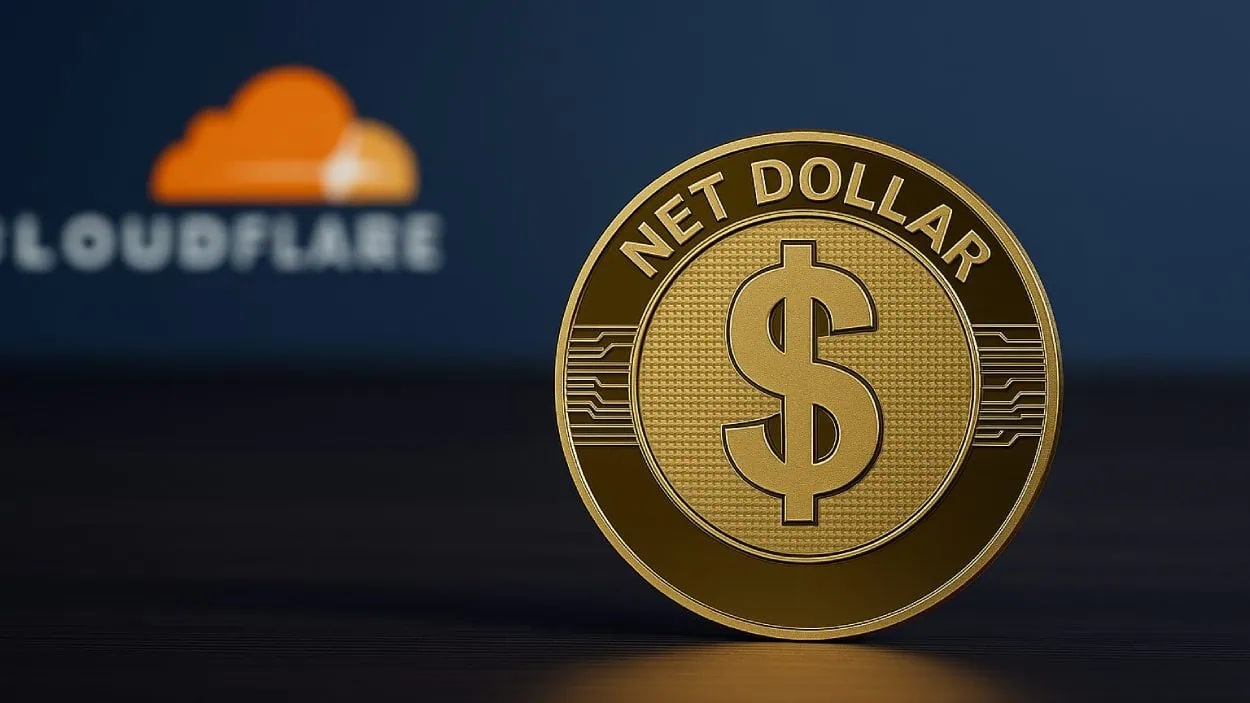
Cloudflare, the global cloud infrastructure provider, revealed plans to launch NET Dollar, a fully U.S. dollar-backed stablecoin designed to facilitate instant, secure, and programmable transactions in an AI-driven “agentic web.”

loudflare, Inc. (NYSE: NET), the leading connectivity cloud company, today announced plans to introduce NET Dollar, a new U.S. dollar-backed stablecoin that will enable instant, secure transactions for the agentic web. NET Dollar will help power a new business model for the Internet that rewards originality, sustains creativity, and enables innovation in an AI-driven world.

AI is fundamentally changing how humans interact with the web. Instead of driving every interaction themselves, humans are beginning to delegate tasks to autonomous AI agents to book a flight, order groceries, manage calendars and more. For this to happen, the underlying financial system will also need to evolve. The AI-driven Internet will need money that is instant, global, and secure so that AI agents, developers, and creators can transact instantly, automatically, and reliably.

This ecosystem envisions autonomous AI agents handling tasks like booking travel, ordering goods, or managing schedules without human intervention, with payments occurring seamlessly across networks.

CEO Matthew Prince highlighted that NET Dollar could redefine the internet’s business model by enabling microtransactions, pay-per-use services, and fractional payments, shifting incentives toward rewarding original content creators, developers monetizing APIs, and AI firms compensating data sources fairly.

The stablecoin will leverage Cloudflare’s vast network—handling 78 million HTTP requests per second across 330+ cities in 120 countries—for real-time settlement and global interoperability, integrating with open standards like the Agent Payments Protocol and x402.

No exact launch date was specified, but it’s slated for “soon,” positioning Cloudflare alongside players like Tether (USDT) and emerging entrants in the booming stablecoin market, projected to reach $1.9 trillion in issuance by 2030 in Citi’s base case.

Gate Crypto Exchange’s L2 Announcement

In a parallel development on the same day, September 25, 2025, Gate (formerly Gate.io), a leading centralized crypto exchange with over 23 million users and support for 3,600+ tokens, officially launched Gate Layer, its high-performance Layer 2 (L2) network built on the Optimism (OP) Stack.

Secured by GateChain as the settlement layer and using the upgraded GT token as native gas, Gate Layer aims to deliver faster, cheaper, and more secure Web3 services globally, addressing blockchain inefficiencies like high fees and slow finality.

Key specs include over 5,700 transactions per second (TPS), 1-second block times, and EVM compatibility for easy dApp migration via tools like MetaMask. It supports cross-chain transfers to Ethereum mainnet and other L2s via LayerZero, with GT staking enhancing consensus and security.

To bootstrap the ecosystem, Gate introduced three flagship products: Perp a decentralized perpetual futures DEX, Gate Fun a memecoin launchpad inspired by Pump.Fun and Meme Go a meme token trading/monitoring platform.

The launch coincides with a GT tokenomics overhaul, elevating GT from an exchange utility to the “fuel” of Gate’s Web3 infrastructure, complete with staking rewards and ecosystem incentives. This positions Gate among eight major exchanges including Coinbase’s Base and Kraken’s Ink racing to own L2s, capturing DeFi value like trading, lending, and staking.

Cloudflare’s entry into the stablecoin space with NET Dollar represents a pivotal convergence of cloud infrastructure, AI, and blockchain, potentially reshaping the internet’s economic foundation.

As a U.S. dollar-backed asset designed for the “agentic web”—where AI agents autonomously handle tasks like booking flights or ordering goods—NET Dollar enables instant, programmable microtransactions across global networks. This could disrupt traditional revenue models reliant on advertising and slow bank transfers, shifting toward pay-per-use and fractional payments that reward creators for original content, developers for APIs, and AI firms for data usage.

By leveraging Cloudflare’s network—processing 78 million HTTP requests per second across 330+ cities—NET Dollar promises real-time settlement and interoperability via standards like the Agent Payments Protocol and x402.

This could unlock a $1.9 trillion stablecoin market by 2030 (base case), or up to $4 trillion in a bull scenario, fueling AI-driven economies where agents become primary users for everyday transactions. However, fragmentation risks loom, as competing stablecoins from tech giants could create silos, complicating adoption unless interoperability standards prevail.

NET Dollar’s full USD collateralization ensures stability and trust, positioning Cloudflare—already powering 20% of websites—as a leader in secure, AI-native finance. It complements existing systems while addressing pain points like cross-border delays, potentially accelerating mainstream AI commerce.

Developers and projects like OPUS are already integrating, signaling ecosystem momentum. Challenges include regulatory scrutiny for stablecoins and proving utility beyond hype, but Cloudflare’s developer trust could drive rapid uptake.

This move drags enterprises onchain, rewiring treasury, payroll, and BI tools for real-time flows, while pressuring legacy SaaS to adapt or perish. It underscores stablecoins’ role in AI, with Galaxy Digital’s Mike Novogratz predicting agents as top users.

Implications of Gate Exchange’s Gate Layer L2 Network

Gate’s launch of Gate Layer, an OP Stack-based L2 secured by GateChain and fueled by the upgraded GT token, intensifies competition in the blockchain scaling wars, empowering centralized exchanges (CEXs) to capture DeFi value directly.

With 5,700+ TPS, 1-second blocks, and EVM compatibility, it slashes fees—e.g., $30 for a million transfers vs. $700 on Base—while enabling seamless cross-chain bridges via LayerZero. This positions Gate among eight CEXs including Coinbase’s Base and Kraken’s Ink building L2s to retain users and bootstrap ecosystems.

GT’s overhaul—from exchange utility to L2 gas token—includes dual deflation (burns from trading fees and network usage), with 60% of supply already burned, tightening scarcity and incentivizing staking for security.

Flagship dApps like Perp (perp DEX), Gate Fun (memecoin launchpad), and Meme Go (meme tracker) leverage Gate’s 23 million users for instant liquidity, fostering DeFi innovation in trading, lending, and staking. This “All in Web3” strategy could sustain long-term growth by reducing reliance on external chains.

Gate Layer enhances scalability and cost-efficiency, addressing blockchain bottlenecks and appealing to global users via MetaMask integration. It signals a trend where CEXs evolve into full-stack Web3 providers, deepening liquidity and control over on-chain activity.

Risks include OP Stack saturation and execution challenges, but Gate’s dual security GateChain settlement + GT staking mitigates single points of failure. Broader implications: L2 proliferation could fragment liquidity but drive Ethereum ecosystem TVL, with exchanges like Gate prioritizing speed over decentralization.

Both launches, highlight 2025’s theme of infrastructure convergence: Cloudflare bridges AI/web with payments, while Gate fortifies crypto trading/scaling. Together, they could enable hybrid ecosystems—e.g., AI agents settling trades on low-cost L2s via stablecoins—accelerating Web3 adoption amid projected stablecoin volumes hitting $1 trillion annually by 2030.