DD
MM
YYYY

PAGES

DD
MM
YYYY

spot_img

PAGES

Home Blog Page 4340

Naira Redesign: 10 States Move to File Contempt Proceeding Against CBN, Nigerian Government

0

About 10 states are preparing to file a contempt suit against the federal government and the Central Bank of Nigeria (CBN) over their refusal to obey the Supreme Court judgment, ordering that both old and new N200, N500 and N1,000 notes be allowed to coexist till the end of the year.

The apex court’s judgment was in response to a suit filed against the federal government by 16 states, challenging the naira redesign policy, which was announced late last year by the central bank. The court had described the policy as an affront to Nigeria’s constitution.

The federal government and the CBN have refused to comply with the court’s judgment, prolonging the chaos that was unleashed by the policy. The policy has exposed the Nigerian public to severe cash crunch that has scuttled economic activities.

President Muhammadu Buhari, in his February 16 national broadcast, said the policy was targeted at curbing money laundering, terrorism financing and moneybag politics. He appealed to Nigerians to be patient as the measure will lead to “the collapse of Illegal Economic Activities which would help to stem corruption and acquisition of money through illegal ways.”

However, the disadvantages of the policy have outweighed the gains. The federal government had disobeyed the Supreme Court earlier order, restraining it from enforcing the February 10 deadline set by the CBN to phase out old naira notes.

Following the March 3 judgment, the federal government and the CBN have been mum, creating anxiety as banks are restrained from implementing the judgment. The banks said they’re waiting on the CBN’s directive on the judgment, which has not come. This means that the despite the Supreme Court’s ruling, the old naira notes are not regarded as legal tender, compounding the cash crunch crisis.

On Friday, the governments of Kaduna, Kogi, Zamfara, Ondo, Ekiti, Katsina, Ogun, Cross River, Lagos and Sokoto states served the Attorney General of the Federation (AGF) Abubakar Malami, the enrolled order and certified true copy (CTC) of the supreme court judgment. They were among the 16 states that initiated the suit against the CBN and the federal government.

“We have finally served the Attorney-General of the Federation the enrolled order of the Supreme Court,” the plaintiffs’ lead counsel, Abubakar Mustapha said.

“What we did on Friday was to fulfill all righteousness by serving the enrolled order on the AGF. The Federal Government has been evasive by claiming that it had not received the Certified True Copy (CTC) of the judgment, which we have obtained and made available to it. The burden is on Malami to act as the Chief Law Officer of the Federation to comply with the order.

“There is no hiding place for the government; there is no excuse again. While we are waiting for the government’s decision, the law provides us backing for Plan B.”

Mustapha said serving the enrolled order is the first step to instituting a committal proceeding against the CBN and federal government if they do not comply immediately with the judgment.

“The Attorney-General of the Federation has been served now and we will take it up from there; if there is no compliance now, we will commence committal proceedings against the attorney-general and the CBN governor,” Mustapha told ThePunch.

“When the Supreme Court talks, the constitution makes it compulsory for all government representatives and everybody to comply with its order. It’s not discretional, you have to obey, it is the last and the final and that is why we have separation of power.

“The presence of separation of power is for checks and balances; when the Supreme Court talks, it must be complied with by all persons.”

The enrolled order reads as follows: “It is ordered that this suit has merit. That the demonetization directive/policy by the President of the Federation to wit: withdrawal of the old 200, 500, and 1000 naira notes is not consistent with the provision of the Constitution of the Federal Republic of Nigeria 1999 (as amended) which makes provision for the Executive power of the President of the Federation and the extant laws on the subject matter.

“That the three months’ notice given for the implementation and completion of the said demonetization policy by which time the old N1,000, N500 and N200 naira notes shall cease to be legal tender does not satisfy the condition set out in Section 20(3) of the CBN Act 2007.

“That the President cannot unilaterally give a directive to embark on the demonetization policy pursuant to Section 20(3) of the CBN Act 2007 in view of Nigeria’s Fiscal Federalism, the economic interest of the Constituents of the Federation and without consultation with, and advice from the plaintiff, individually, and in their capacity as members of the National Council of States and National Economic Council and that the directive cannot be given without consultation with, and advice from the cabinet, the National Security Council and other stakeholders.

“That in issuing the directive for demonetization policy pursuant to Section  20(3) of the CBN Act, 2007 on behalf of the Federation of Nigeria, the President is under an obligation to ensure that adequate structures are put in place for the plaintiffs and Nigerian citizens prior to the implementation  of the said directive.

“That the demonetization directive/policy by the President of the Federation to wit: withdrawal of the old N200, N500 and N1, 000 notes unlawfully impede the exercise of the Executive Powers of the plaintiffs’ states and other obligations to facilitate and protect the welfare of the citizens of the said states pursuant to Section 5(2) and other provisions of the Constitution of the Federal Republic of Nigeria 1999(as amended) as well as other extant laws.

“That the directive given by the President pursuant to Section 20(3) of the CBN Act 2007 limiting the amount that can be withdrawn and the charges therein without an enabling law is unconstitutional and not binding on the plaintiffs.

“That the directive of the President of the President of the Federation exercised is illegal to the extent that it restricts, without an enabling law, the rights of the plaintiffs to freely use their money in various bank accounts.

“That the old version of N200, N500 and N1,000 notes shall continue to be legal tender alongside with the new or redesigned version until 31st December, 2023.

“That the reception of old N200, N500 and N1,000 notes and the swapping of same with new Naira notes shall continue till 31st December, 2023.

“That all the consolidated suits listed in pp. 12-13 of the judgment shall abide this judgment.”
Collapse of Silicon Valley Bank Sends Shock Waves to Many Indian Startups

0
FILE PHOTO: SVB (Silicon Valley Bank) logo and decreasing stock graph are seen in this illustration taken March 10, 2023. REUTERS/Dado Ruvic/Illustration

Due to the recent collapse of Silicon Valley Bank which acted as life support to so many startups, reports reveal that so many Indian startups have been severely impacted.

This collapse has sent shock waves in the Indian startup sector, which was already facing a funding problem.

Several venture capitalists disclosed that some Indian startups delayed withdrawing their funds from the bank because they do not have another U.S. banking account readily available. Many Indian startups are reported to be incorporated in Delaware to make it easier for them to raise capital from the U.S.

Several Indian startups such as One97 Communications & Bharat Financial Inclusion, Bluestone, and PayTM, who have exposure to SVB’s investments may now be worried that their raised funds are stuck.

This sudden collapse of SVB would no doubt have a ripple effect on India’s startup ecosystem, which could lead to a cash crunch for many firms, which would lead to delays in executing projects, cutting costs, or mass laying off employees.

SVB has been a major player in the Indian startup ecosystem, providing banking services and funding to many of the country’s most successful startups such as Zomato, Ola, and Flipkart.

The bank has also been instrumental in helping Indian startups expand into the US market, by providing them with the necessary infrastructure and support to set up operations in Silicon Valley. Nearly all Indian SaaS startups with a large presence in the U.S. banked with Silicon Valley Bank.

A US-based investor, who requested anonymity disclosed that he knew for a fact that many Indian firms had about $4-10 million parked in their Silicon Valley bank accounts. A group of Indian YC founders polled members about their exposure to SVB and found that more than 60 firms had over $250,000 stuffed in SVB.

Indian SaaS startups and those backed by YC who set up their companies in the US and raised their maiden round there often had SVB as their default bank. India’s head of Mirae Asset Ashish Dave said, “Uncertainty is killing them. Growth ones are relatively safer as they diversified”.

The collapse of Silicon Valley Bank has had a significant impact on startups’ finances, including a 30% payroll deficiency among Y-Combinator-backed companies exposed through the bank.

Founded in 1983, the bank had since been the go-to bank for startups and entrepreneurs in Silicon Valley and beyond.

SVB’s downfall can be attributed to a bank run, which is when a large number of depositors withdraw their funds from a bank all at once, due to fear of insolvency.

Silicon Valley bank was hit hard by the downturn in technology stocks over the past year as well as the Federal Reserve’s aggressive plan to increase interest rates to combat inflation.

SVB bought billions of dollars worth of bonds over the past couple of years, using customers’ deposits as a typical bank would normally operate.

These investments are typically safe, but the value of those investments fell because they paid lower interest rates than what a comparable bond would pay if issued in today’s higher interest rate environment.

The bank’s massive decline began late Wednesday, when it hit investors with news that it needed to raise $2.25 billion to shore up its balance sheet. This spurred customers to move in droves withdrawing a staggering $42 billion of deposits by the end of Thursday.

By the close of business that day, SVB had a negative cash balance of $958 million, according to the filing, and failed to scrounge enough collateral from other sources. Currently, those who still have their funds left with the bank face an uncertain timeline for retrieving their money.

Silicon Valley Bank’s Bank Run, Americans, Nigerians – And Why Humans Are Really The Same

1

Humans are the same. Americans. Nigerians. Indians. We’re just the same. What differs is our environment. And that environment shapes how we act, making it look like we’re different. Like  I have written many times, there is a liberation that comes when you land in Lagos from Europe or the Americas. The Lagos police officer stops you but you know that he wants some “goodies” knowing that a brother or sister is making into the country. Statistically, he knows you are 99.99% unarmed on the streets of Lagos, and he does not worry about that risk to his life.

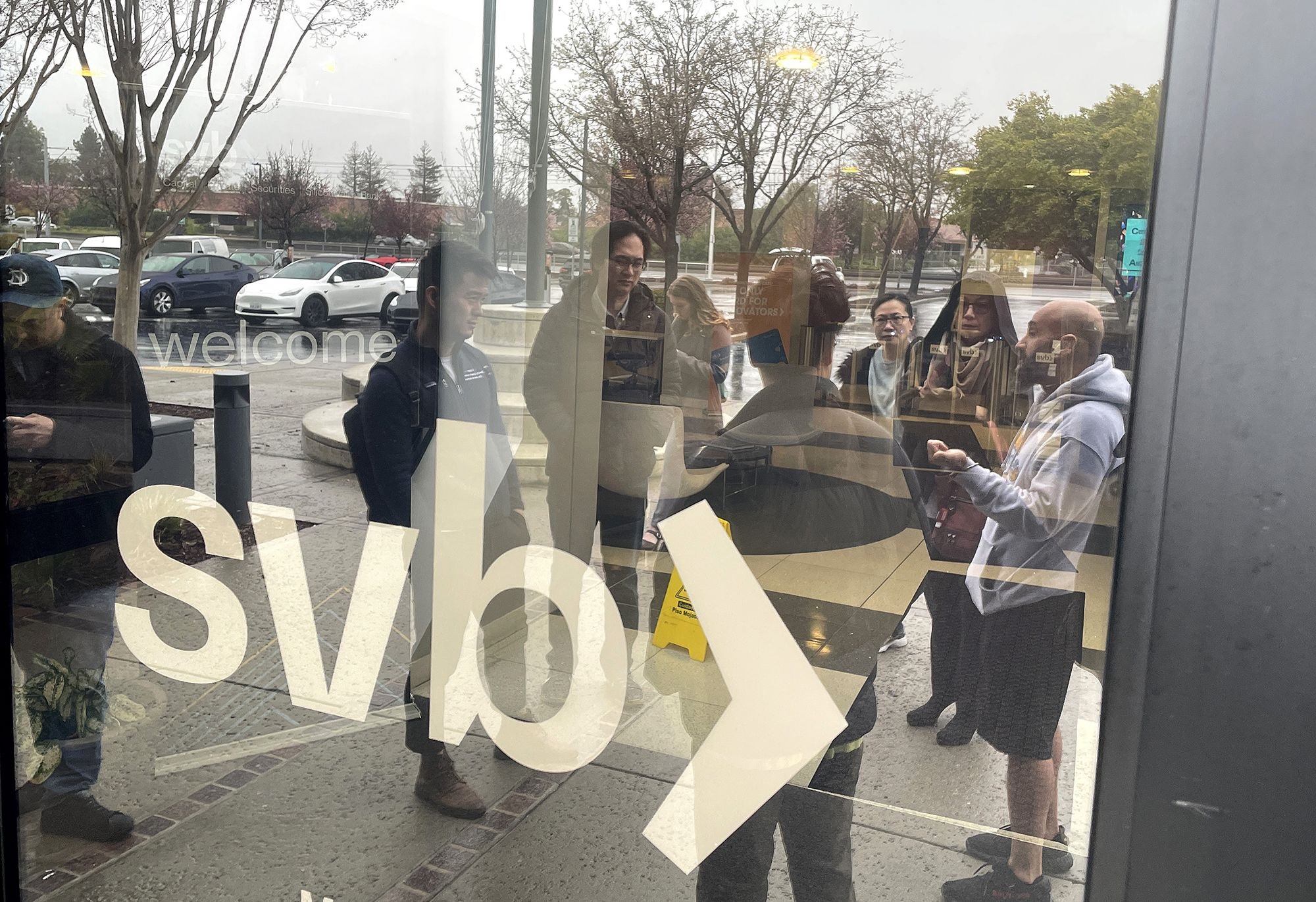
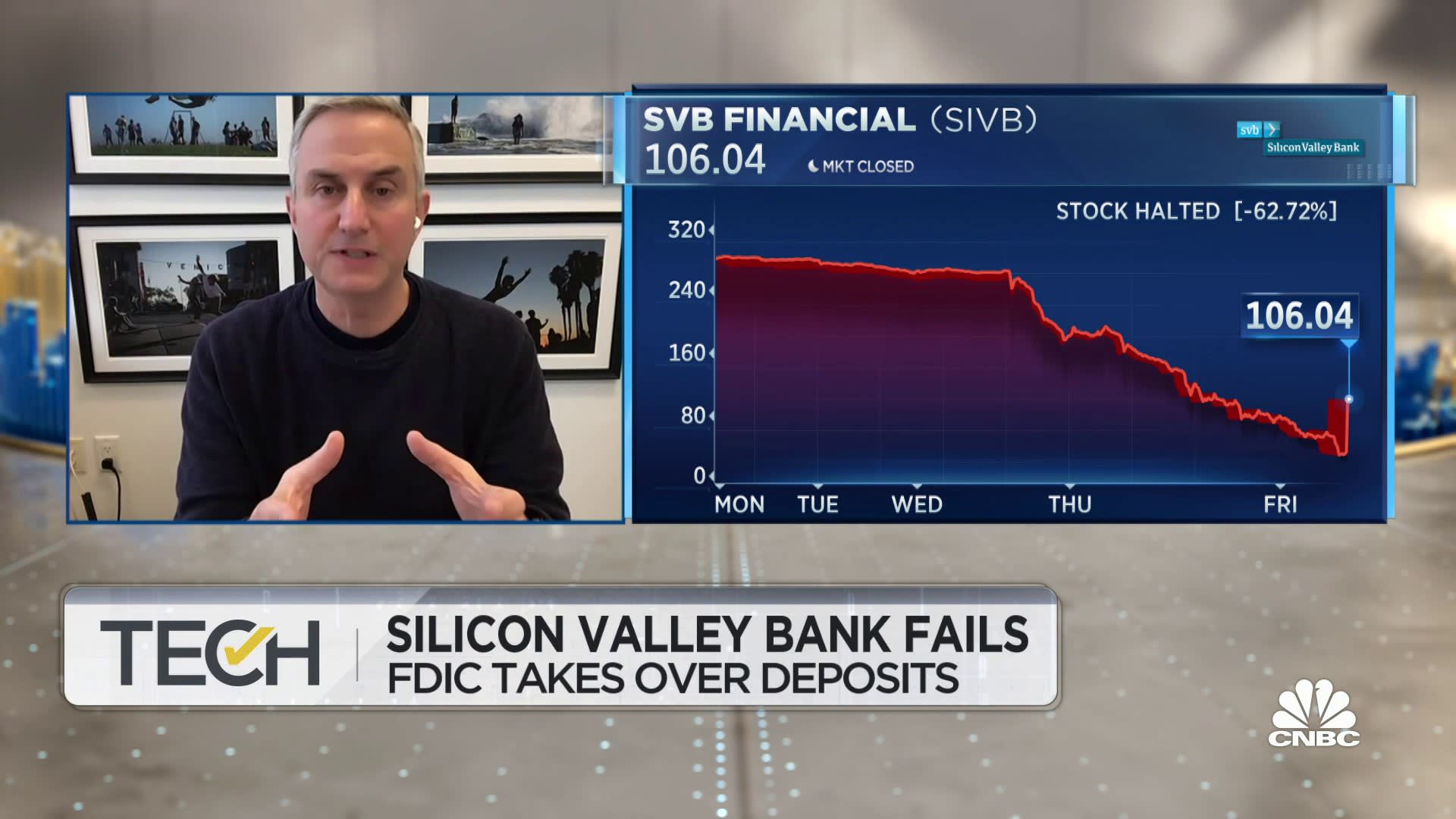
Silicon Valley Bank is no more. The FDIC seized the assets of the bank, a fixture of the VC world and a prolific lender to the tech and life sciences sectors, on Friday, marking the largest bank failure since the height of the 2008 financial crisis.

Silicon Valley’s clubby world of venture capital investors and entrepreneurs plunged into panic on Thursday amid fast-spreading reports of financial trouble at one of the startup industry’s most important banks.

SVB announced a day earlier that it was selling off securities and seeking to raise billions in a public share sale to cover steep losses on its balance sheet. Shares of Silicon Valley Bank crashed by roughly 60% in regular trading on Thursday, while the bank’s tech clients scrambled to figure out whether to withdraw their deposits, sparking concerns of an old-fashioned bank run. (Fortune newsletter)

Less than 24 hours later, bank regulators stepped in to take control, and investors and founders alike are scrambling to figure out the best next move.

But in the United States with as many guns as burgers in a day, the police officer assumes you’re armed, and with that mindset, how he engages is transformed. Look deeper, the Lagos police officer has a more nuanced use of force because his risk model is well mitigated.

Why this? The collapse of a US tech-focused bank, Silicon Valley Bank, reminds me that we’re all the same. When Silicon Valley millionaires heard that the bank had a minor problem, they triggered a bank-run, and within hours the bank collapsed: “Within 48 hours, a panic induced by the very venture capital community that SVB had served and nurtured ended the bank’s 40-year run.”

Looking deep, if the bank had not carelessly disclosed that statement of capital inadequacy, it would still be here. Ideally, it had done the right thing by raising capital to cushion its liquidity. But it assumed that Silicon Valley founders, entrepreneurs and millionaires would understand its point: we raised small funds by diluting existing investors to clean our balance sheet; a really sensible call for a bank.

Like what an akara and corn seller will do in Lagos on bank rumours, when the startups heard that news, they went to the bank and said: “give me my money”. And the bank login froze; none could get in – and that was it.

Mark disclosed that even though the bank announced that they were selling long-term investments at a loss and investing in higher-yield investments to improve their financial metrics, he took that at face value, and strongly believes that they would get things sorted out, but unfortunately, it has been followed by the widespread panic which led to the collapse of the bank.

Within 48 hours, a panic induced by the very venture capital community that SVB had served and nurtured ended the bank’s 40-year run.

[…]

@btc_banker wrote, “Businesses withdrawing their deposits are behaving rationally, given the hysteria. Nobody wants to be the calm one holding the bag.”

@robertmclaws wrote, “If you have more than $250k at any single bank then your money is at risk if the bank goes south. SVB is a bank for VCs, not for startups. I would question ANY VC that is not advising their companies to minimize their risk and protect their runway.”

@MalibuAlex wrote, “The biggest risk to any company is running out of cash.Not having access to money is the same as running out, which could happen if there’s a run.Since it’s easy to move the cash out of SVB – and that lessens whatever unknown risk there is, why not do that?”.

Comment on Feed

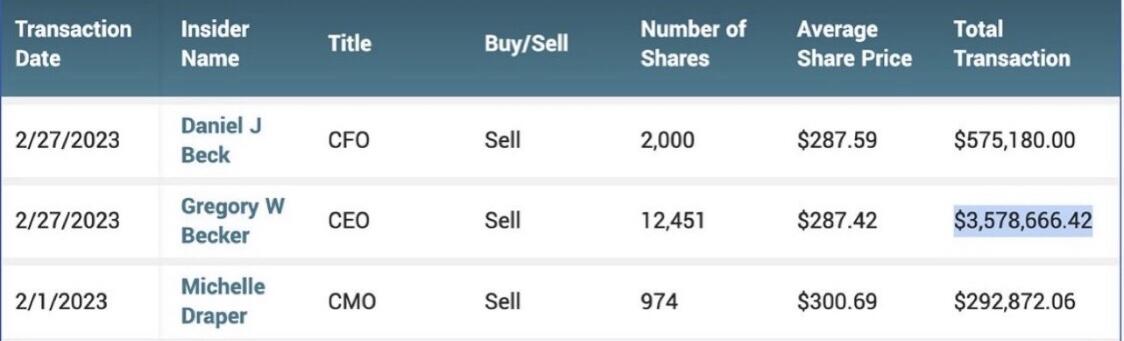
Comment: Perhaps someone figured out their top three were cashing-out last month and spread the news that everything was not all sunshine at SVB.

My Response: That may not be a problem. Most publicly traded companies are required to have share sales planned weeks ahead, for executives. In other words, if you work at Apple, as an executive, and you want to sell,  there is a window you can only do that. The compliance team will schedule the sale. The goal is to avoid timing the market. I am hoping that was what happened here. Of course, they will explain that in the court as the trial lawyers are gathering!

Several Bad Actors in Venture Capital sector Destroyed Silicon Valley Bank, Says Investor Mark Suster

0

American entrepreneur and venture capitalist Mark Suster has recently disclosed that several bad actors in VC (venture capital) led to the collapse of silicon valley bank.

Mark Suster who still rates the bank as one of the biggest banks in the U.S. despite its present financial crisis, disclosed that more people in the VC community need to speak out publicly to quell the panic about Silicon Valley Bank. He stated that he believes the biggest risk to startups AND VCs (and to SVB) would be a mass panic which would further compound more problems for the bank.

Mark disclosed that even though the bank announced that they were selling long-term investments at a loss and investing in higher-yield investments to improve their financial metrics, he took that at face value, and strongly believes that they would get things sorted out, but unfortunately, it has been followed by the widespread panic which led to the collapse of the bank.

Within 48 hours, a panic induced by the very venture capital community that SVB had served and nurtured ended the bank’s 40-year run.

Mark who took to his Twitter handle to express his concerns via a thread wrote:

More in the VC community need to speak out publicly to quell the panic about Silicon Bank Valley. I believe their CEO when he says they are solvent and not in violation of any banking ratios & goal was to raise & strengthen balance sheet”

They announced that they are selling long-term investments at a loss and investing in higher-yield investments that improve their financial metrics. They are raising $2.25bn to stabilize their balance sheet. But they say they are not insolvent & I take at face value”

“I believe the biggest risk to startups AND VCs (and to SVB) would be a mass panic. Classic “run on the bank” hurt our entire system. People are making public jokes about this. It’s not a joke, this is serious stuff. Please treat it as such”.

“I have founders contacting me saying “I heard XYZ firm is saying pull all your cash” but until such time as anybody has public statements or confirmed private statements I think you should at least be cautious about what is being said. Lots of innuendoes”.

“I believe SVB is one of the 20 largest banks in the US. I do not believe the US government would like to see them fail. I know it is NOT in the Tech & VC’s interests to see them fail. I believe they could only fail if everybody panics so I would urge calm decisions based on facts”.

“I know some have already withdrawn money. I know some are advising this. I know it’s scary. More VCs need to speak up. It doesn’t matter exactly what banking solutions are chosen – what matters is that we don’t have or create mass hysteria”.

“Finally, I believe (but can’t say for sure) that the timeframe for their funding round is 7-10 days (not months) and that GA is also backing SVB.”

He further added that if the market can avoid panic, he believes things would settle quickly, with the hope that that would be the case eventually.

Commenting on his Tweet, only very few users agreed with his point raised while several others quite disagreed with him.

@btc_banker wrote, “Businesses withdrawing their deposits are behaving rationally, given the hysteria. Nobody wants to be the calm one holding the bag.”

@robertmclaws wrote, “If you have more than $250k at any single bank then your money is at risk if the bank goes south. SVB is a bank for VCs, not for startups. I would question ANY VC that is not advising their companies to minimize their risk and protect their runway.”

@MalibuAlex wrote, “The biggest risk to any company is running out of cash.  Not having access to money is the same as running out, which could happen if there’s a run.  Since it’s easy to move the cash out of SVB – and that lessens whatever unknown risk there is, why not do that?”.

Silicon Valley Bank’s downward spiral began late Wednesday when it informed investors with the unpleasant news that it needed to raise $2.25 billion to shore up its balance sheet. This spurred customers to withdraw a staggering $42 billion of deposits by the end of Thursday. Meanwhile, those who remained with SVB face an uncertain timeline for retrieving their money.

Silicon Valley Bank’s failure is reported to be the largest since Washington Mutual went bust in 2008, a hallmark event that triggered a financial crisis that hobbled the economy for years.

The 2008 crash prompted tougher rules in the United States and beyond. Since then, regulators have imposed more stringent capital requirements for U.S. banks aimed at ensuring individual bank collapses won’t harm the wider financial system and economy.

How To Become a Category-King In Your Market: Tekedia Mini-MBA

0

Join us at Tekedia Live, the Live Zoom session of Tekedia Mini-MBA, as we discuss the characteristics of great companies. If you can have those in your business, you become a category-king in your market. Zoom link in the Board. Meanwhile, we have opened registrations for the next edition of Tekedia Mini-MBA; go here, beat the early bird for big discounts .