DD
MM
YYYY

PAGES

DD
MM
YYYY

spot_img

PAGES

Home Blog Page 4346

The role of Bitcoin exchanges in converting Bitcoin to cash

0

In recent years, Bitcoin has become increasingly popular as a decentralized digital currency. It offers many advantages over traditional fiat currencies, including lower transaction fees, faster settlement times, and greater privacy. However, one of the main challenges faced by Bitcoin users is how to convert their digital assets into cash. This is where Bitcoin exchanges come in. Bitcoin trading, you may consider using a reputable trading platform like https://www.bitlq.net

What are Bitcoin exchanges?

Bitcoin exchanges are online platforms that allow users to buy, sell, and trade Bitcoin and other cryptocurrencies. They act as intermediaries between buyers and sellers, matching orders and facilitating transactions. These exchanges typically charge a fee for their services, which can vary depending on the platform and the type of transaction.

How do Bitcoin exchanges work?

Bitcoin exchanges work by matching buyers and sellers and facilitating transactions. Buyers can deposit fiat currency into their exchange account and use it to purchase Bitcoin at the current market rate. Similarly, sellers can deposit their Bitcoin into their exchange account and sell it for fiat currency, which can then be withdrawn to their bank account.

Bitcoin exchanges also provide a range of other services, such as wallets for storing and managing Bitcoin, trading tools for advanced users, and customer support for users who need assistance. Some exchanges even offer margin trading, which allows users to trade with borrowed funds and potentially increase their profits.

Why are Bitcoin exchanges important for converting Bitcoin to cash?

Bitcoin exchanges play a crucial role in the process of converting Bitcoin to cash. Without these exchanges, it would be much more difficult for users to buy and sell Bitcoin, and the market would be much less liquid. By providing a platform for buyers and sellers to connect, Bitcoin exchanges make it easy for users to convert their Bitcoin into cash and vice versa.

Furthermore, Bitcoin exchanges provide a level of security and trust that is essential for many users. By using a reputable and reliable exchange, users can be confident that their transactions will be processed quickly and securely, and that their funds will be protected from theft or fraud. This is particularly important for users who are new to Bitcoin and may be unfamiliar with the risks involved in buying and selling cryptocurrencies.

How do Bitcoin exchanges impact the price of Bitcoin?

Bitcoin exchanges can have a significant impact on the price of Bitcoin, especially in the short term. This is because the price of Bitcoin is determined by supply and demand, and Bitcoin exchanges are the primary marketplaces where buyers and sellers meet to trade Bitcoin.

When there is high demand for Bitcoin and a limited supply, the price of Bitcoin will typically rise. Conversely, when there is low demand for Bitcoin and a high supply, the price will typically fall. Bitcoin exchanges play a crucial role in determining the supply and demand for Bitcoin by matching buyers and sellers and facilitating transactions.

Bitcoin exchanges can also impact the price of Bitcoin through the fees they charge for their services. If the fees are high, this can discourage some users from buying and selling Bitcoin, which can reduce the demand for Bitcoin and potentially lower the price. Conversely, if the fees are low, this can encourage more users to buy and sell Bitcoin, which can increase the demand for Bitcoin and potentially raise the price.

What are the risks of using Bitcoin exchanges?

While Bitcoin exchanges offer many benefits for users, there are also some risks associated with using these platforms. One of the biggest risks is the potential for theft or fraud. Bitcoin exchanges are a popular target for hackers and other cybercriminals, who may attempt to steal users’ funds or personal information.

Another risk of using Bitcoin exchanges is the potential for regulatory changes or government intervention. As Bitcoin and other cryptocurrencies become more mainstream, governments around the world are starting to take notice and develop regulations for these digital assets. This can create uncertainty for users and potentially impact the value of Bitcoin and other cryptocurrencies.

Finally, there is also a risk of technical issues or glitches on Bitcoin exchanges are complex technological platforms that require a high level of security and reliability to function effectively. However, despite their best efforts, technical issues can occur that can impact users’ ability to buy and sell Bitcoin. For example, an exchange may experience downtime due to maintenance or upgrades, which can prevent users from accessing their accounts or completing transactions.

Conclusion

In conclusion, Bitcoin exchanges play a crucial role in the process of converting Bitcoin to cash. They provide a platform for buyers and sellers to connect and facilitate transactions in a secure and reliable manner. While there are risks associated with using these platforms, the benefits they offer are significant, and they are essential for the growth and development of the Bitcoin ecosystem. As the market for Bitcoin continues to evolve, it is likely that we will see even more innovation and competition in the Bitcoin exchange space, which will ultimately benefit users and help to drive the adoption of this exciting new technology.


The Security Risks of Storing Cash vs Bitcoin

0

In today’s digital age, financial transactions are not just limited to traditional cash exchanges. More and more people are turning to cryptocurrency, particularly Bitcoin, as an alternative means of payment and investment. While there are certain benefits to using Bitcoin, such as anonymity and decentralization, there are also some security risks associated with storing Bitcoin as compared to cash. For more information visit the official Bitcoineer site

Physical Security Risks of Storing Cash

When it comes to storing cash, physical security is the primary concern. Cash is a tangible asset that can be stolen, lost, or damaged easily. Keeping large sums of cash at home, in a safe or under a mattress, is not a secure method of storage. In case of a break-in or natural disaster, cash can be stolen or destroyed, resulting in a significant financial loss. Banks offer a more secure option, but there is still a risk of robbery or fraud.

Digital Security Risks of Storing Bitcoin

On the other hand, Bitcoin is a digital currency that is stored in a digital wallet, and it is not subject to the same physical security risks as cash. However, it does come with its own set of digital security risks. The digital wallet used to store Bitcoin can be hacked, and if the hacker gains access to the private key, they can steal the Bitcoin. If the digital wallet is lost or damaged, there is no way to recover the Bitcoin stored within it. These risks can be mitigated by using a secure wallet and keeping backups of the private key.

Risk of Losing Passwords

Another security risk associated with storing Bitcoin is the risk of losing passwords. When a user creates a Bitcoin wallet, they are given a password or passphrase that is used to access the wallet. If the password is lost, forgotten, or stolen, the user may not be able to access their Bitcoin. There is no central authority that can help the user recover their password, which means that the Bitcoin may be lost forever. This risk can be mitigated by keeping a backup of the password in a secure location and using a password manager.

Risk of Scams and Fraud

Another security risk associated with Bitcoin is the risk of scams and fraud. Bitcoin transactions are irreversible, which means that if a user sends their Bitcoin to a fraudulent address, they will not be able to recover it. There have been many instances of scams and fraud in the Bitcoin space, and users need to be careful when sending or receiving Bitcoin. This risk can be mitigated by only sending Bitcoin to trusted parties and by using a reputable exchange or wallet.

Regulation and Compliance Risks

Another risk associated with Bitcoin is the lack of regulation and compliance. Unlike traditional financial institutions, Bitcoin is not subject to the same regulations and compliance requirements. This lack of regulation and compliance makes it easier for criminals to use Bitcoin for illegal activities, such as money laundering and terrorism financing. Additionally, there is a risk that governments may start regulating Bitcoin, which could impact its value and usability. 

Conclusion

In conclusion, while Bitcoin offers certain benefits over traditional cash, there are also several security risks associated with storing Bitcoin. These risks include digital security risks, the risk of losing passwords, the risk of scams and fraud, and regulation and compliance risks. Users need to be aware of these risks and take steps to mitigate them, such as using a secure wallet, keeping backups of passwords, only sending Bitcoin to trusted parties, and using a reputable exchange or wallet.

Overall, the security risks associated with storing cash versus Bitcoin vary greatly. While cash is subject to physical security risks, Bitcoin is subject to digital security risks, scams and fraud, and regulation and compliance risks. It’s important for individuals to weigh the risks and benefits of each option and take appropriate measures to ensure the security of their assets. As with any financial decision, it’s important to do your research and stay informed.

The Role of Online Brokers in the Rise of Retail Trading

0

The world of finance has undergone significant changes over the past few decades, and the rise of retail trading is one of the most prominent examples of this evolution. Retail trading, also known as individual trading, is the practice of individual investors buying and selling securities for their personal accounts. While retail trading has always existed, the advent of online brokers has led to a significant increase in its popularity. In this article, we will explore the role of online brokers in the rise of retail trading. If you want to invest in bitcoins then you can visit online trading platforms like: immediateconnect.org

The Convenience of Online Trading Platforms

One of the main factors that has contributed to the rise of retail trading is the convenience of online trading platforms. In the past, individual investors had to rely on traditional brokerage firms to execute their trades, and the process was often time-consuming and expensive. With the advent of online brokers, however, investors can now access trading platforms from the comfort of their homes or offices. Online trading platforms are user-friendly and offer a wide range of tools and resources that make it easy for investors to buy and sell securities. This convenience has made it possible for more people to participate in the market, contributing to the rise of retail trading.

Low Cost of Trading

Another significant factor that has contributed to the rise of retail trading is the low cost of trading offered by online brokers. Traditional brokerage firms typically charge high fees and commissions for their services, making it difficult for individual investors to participate in the market. Online brokers, on the other hand, offer low-cost trading services, with many offering commission-free trading. This has made it possible for more people to invest in the market, regardless of their financial means. Additionally, online brokers often have lower account minimums, making it easier for investors to open and fund their accounts.

Access to Information and Research

Online brokers have also played a significant role in the rise of retail trading by providing investors with access to information and research. In the past, individual investors had limited access to market data and research tools, making it challenging to make informed investment decisions. With the advent of online brokers, however, investors can now access real-time market data, news, and research tools that can help them make informed investment decisions. This has empowered individual investors to take control of their investments and make more informed decisions, contributing to the rise of retail trading.

The Rise of Social Media and Online Communities

Social media and online communities have also played a role in the rise of retail trading. Online forums and social media platforms have made it easier for individual investors to connect with one another and share information about investments. This has created a community of retail investors who share tips, strategies, and insights about the market. Online brokers have also leveraged this trend by providing social media integration and community features on their platforms, allowing investors to connect and share information with one another. This has made it easier for retail investors to learn about the market and make informed investment decisions, contributing to the rise of retail trading.

The Emergence of Fractional Shares

The emergence of fractional shares has also played a significant role in the rise of retail trading. Fractional shares are a type of investment that allows investors to buy a portion of a share of stock, rather than buying an entire share. This has made it possible for individual investors to invest in expensive stocks that were previously out of reach. Online brokers have been quick to adopt this trend, offering fractional shares as a standard feature on their trading platforms. This has made it easier for retail investors to diversify their portfolios and invest in a wider range of securities, contributing to the rise of retail trading.

The Bottom Line

In conclusion, the rise of retail trading is a significant trend that has been fueled by the convenience and low cost of online trading platforms, access to information and research, the emergence of social media and online communities, and the emergence of fractional shares. Online brokers have played a critical role in this trend by providing investors with easy access to trading platforms, low-cost trading services, research tools, social media integration, and fractional shares. These features have made it possible for more individual investors to participate in the market, contributing to the rise of retail trading. As technology continues to evolve, we can expect to see more innovations that will further empower individual investors and change the face of the financial industry.

The Electoral Act 2022- Understanding The Legal Framework Governing Elections in Nigeria.

0

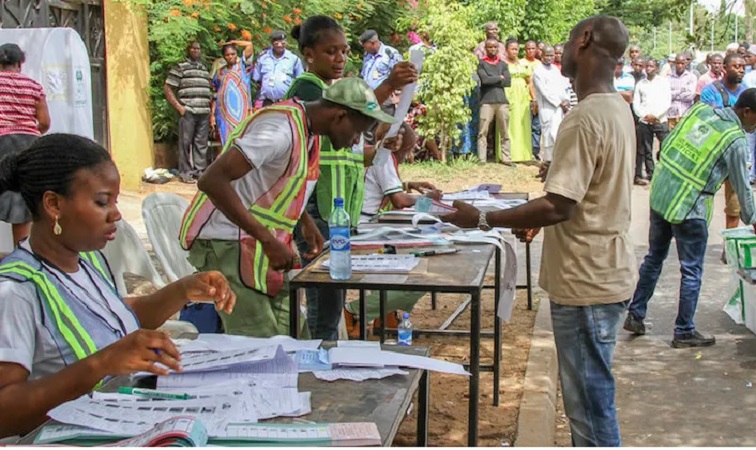
Once again, Nigeria is in a period where its citizenry will have to head to the ballot stand and give their general verdict on the performance of an incumbent political party at the Federal and State levels as well in their Federal and State legislative houses and whether they seek a continuum or a change.

However, the reality is that in Nigeria, elections do not always go according to plan, with varying issues from doubts about the neutrality of the country’s electoral bodies to the constant worries of practices like election thuggery and vote-buying.

In the year 2022, the new Electoral Act of 2022 was passed, effectively repealing the former Electoral Act 2010 & introducing to the Nigerian Electoral space a new set of lexicons , the most infamous of them undoubtedly being the Bimodal Voter Accreditation System, BVAS, which has for good or bad, dragged Nigerian Electoral Practice into the era of Technology. 

This article will be focused for the most part on the topics of :-

– The regulatory framework governing elections in Nigeria & its functions.

– The requirements for a validly held election in Nigeria.

– The requirements for elections conducted in cases of emergency.

– The practice of over-voting under Nigerian Law.

– Election result collation procedures.

– The use of violence during elections under Nigerian Law.

– The secrecy requirement in voting.

Which regulatory agency is in charge of conducting elections in Nigeria?

Elections in Nigeria under the purview of the Electoral Act 2022 & its pursuant INEC Regulations & Guidelines For Elections 2022 are placed within the jurisdiction of the Independent National Electoral Commission (INEC) which is statutorily charged with the functions of :-

– Voter & Civic Education.

– Promoting knowledge of sound democratic election processes.

– Conducting any referendum required to be conducted under the provisions of the Constitution of The Federal Republic of Nigeria or an act of the National Assembly.

What are the requirements for a validly held election under the Electoral Act?

For an election(in this case a presidential election) to be deemed validly held the following must occur :-

– The INEC must within 90 days to an election, put on display in every voter registration area and on all of its official online platforms, a list of voters assigned their Permanent Voter Cards (PVCs) and being eligible to vote.

– Ensure on the election day proper, full accreditation of each voter in an orderly line using the BVAS system device at a Polling Unit (PU).

– Assigning ballot papers to each accredited voter for voting .

– Carry out an open count of valid votes witnessed by agents of each participant political party and voters if any and an announcement of the results.

– Imputing the results(co-signed by each political party agent present) in the regulatory forms as prescribed by INEC and uploading same through the BVAS device into the INEC database.

– Onward physical transmission of results by the INEC PU presiding officer and other INEC staff accompanied by the agents of political parties present to the Ward collation center for further collation and in turn, transmission to the LG(Local Government) Collation center , to the State Collation Center & then the National Collation Center in that order.

What does the act say about voting in cases of emergencies?

The Electoral Act clearly states in its Section 24 that an emergency such as violence will not be a basis for disenfranchising a section of the populace and as a result, elections in such areas affected by emergencies are to be rescheduled by INEC.

What does the act say about over-voting

The Act clearly states in its Section 51 that where over-voting (a situation of total votes cast being more than actually accredited voters) is seen to have occurred, the election results of any affected PU will be cancelled and there will be no return, necessitating a rerun election.

What does the act say about underage voting?

Underage persons are deemed ineligible to vote even where they somehow procure PVCs, but where a protest is made against this by INEC staff or other voters and the ineligible/underaged voters still go ahead to vote, Section 57 of the Act states that the words “protested against for impersonation”  shall be placed by the INEC staff against the name of the ineligible voters in the voter register copy in their possession. 

What does the Act say about the secret ballot practice?

The Act in its Section 122 clearly prohibits the practice of openly displaying their votes at a PU and prescribes a punishment of 100 Thousand Naira or an imprisonment term of 3 months .

What are the requirements for qualifying a voter under the act

To be qualified to vote in Nigeria, a voter must:- 

– Be a Nigerian citizen of at least 18 years of age & registered as a voter as evidenced through the issuance of a PVC.

What are the requirements for running for an electoral position under the Act

To be able to run for an election, a prospective candidate must be :-

– a Nigerian citizen;

–  registered as a voter;

– be of a minimum age of 25 years;

– have a minimum educational qualification requirement of a School leaving certificate or  its equivalent;

– political party membership and sponsorship. 

What are the  factors that will disqualify a candidate from contesting or running for an election

The factors that will disqualify a candidate from running for an election in Nigeria?

The factors that can disqualify an election candidate as prescribed by Section 102 of the Electoral Act include :-

– Lunacy/An unsound mind.

– A pending death sentence.

– A conviction and sentencing over an offence of dishonesty, or contravention of the code of conduct.

– Bankruptcy.

– Presenting a forged certificate within the preceding 10 years.

– Dismissal from public service.

Election Petitions in Nigeria

Under Nigerian Law, when election results have been announced, aggrieved parties have the option of seeking legal redress through a procedure known as an election petition.

This article will be looking at election petitions under the Electoral Act 2022, with a focus on :-

– Who is qualified to file an election petition.

–  The grounds for filing an election petition.

– The legal effects on non-compliance with the provisions of the Electoral Act regarding election petitions.

– The effect of INEC regulations made pursuant to the Electoral Act regarding election petitions.

– The legal position of persons deemed to be winners of an election during the pendency of an election petition.

Who can present an election petition?

An election petition can be filed by either a candidate in an election or a political party that participated in an election. INEC can also be joined as a respondent where its officers are accused of violating the Electoral Act or contributing to the election result being contested by the petitioner.

What are the valid grounds for an election petition?

The grounds for an election petition as prescribed by the Electoral Act are :-

– A query against the qualification status of an elected candidate.

– Corrupt practices & non-compliance with the provisions of this Act.

– The respondent not being duly elected by the majority of lawful votes cast at the election.

It should be noted that an act or omission contrary to an instruction or directive of INEC shall not itself be a ground for an election petition. 

It should also be noted that unsubstantial non-compliance with the the provisions of the Electoral Act or inconsistencies in election result dates will not be a valid ground for the success of an election petition. 

When would a candidate be deemed qualified in the estimation of an election petition tribunal?

By virtue of Section 134 of the Electoral Act 2022, a person is deemed qualified to run for an election if he meets the applicable requirements of Sections 65,106,131 & 177 of the Constitution of The Federal Republic of Nigeria (as amended) and he is not in breach of Sections 66,107,137 or 182 of the Constitution as well. 

Which body has jurisdiction over Election petitions in Nigeria? 

The Court of Appeal of Nigeria & the Supreme Court of Nigeria have original jurisdiction & appellate jurisdiction respectively over presidential election petitions in Nigeria while Tribunals made up of Judges of High Courts have original jurisdiction over Gubernatorial Election petitions in Nigeria.

In what time frame should an election petition be filed?

An election petition must be filed within 30 days from the date of announcement of the election results.

What are the legal effects of INEC regulations made pursuant to the Electoral Act? 

Section 148 of the Electoral Act states that regulations made pursuant to it such as the 2022 INEC Regulations & Guidelines For Election are for the purposes of giving effect to the provisions of the act and for its proper administration.

What this means is that provisions of the INEC regulations on electronic election results transmission (made pursuant to Section 62 of the Electoral Act) would be seen as carrying the force of law themselves.

What exactly is the provision of the Act on electronic collation of results?

Section 62 of the Electoral Act provides that INEC shall compile, maintain and update on a continuous basis, a register of election results to be known as the national electronic register of election results and the register of election results shall be kept in electronic format by INEC at its national headquarters.

This means that results are to be sent from the PU level, maintained and constantly updated electronically, hence the legal basis for the BVAS system.

What would be the legal position of elected persons who are parties to petitions contesting their elections?

Section 138 of the Electoral Act states that persons wrongly returned or elected shall remain in office pending the determination of am election petition. 

Legal Child Adoption in Nigeria – What You Need To Know. 

0
a young west african girl smiling happily

Child Adoption is the legal process by which a child or minor is made a a part of a family he is not biologically connected to.

It should be noted that child adoption is different from Child fostering, which is the process of a child being placed under the care of a caregiver or guardian (known as a ” foster parent”) licensed to do so by the state . 

This article will be looking at child adoption as it currently exists under Nigerian Law, with a focus on the topics of :-

– The legal framework governing child adoption in Nigeria.

– Who is qualified to be adopted in Nigeria.

– Who is qualified to adopt a child in Nigeria.

– The legal requirements for child adoption in Nigeria.

– The restrictions on child adoption in Nigeria if any.

What makes up the legal framework governing child adoption in Nigeria?

Child Adoption in Nigeria is regulated mainly by the Child Rights Act of Nigeria as well as the domesticated Child Rights laws of the component states of Nigeria.

These laws give jurisdiction over child adoption matters to the High Courts and Magistrate Courts in the country.

Who can be legally adopted under Nigerian Law?

The following persons can be legally adopted in Nigeria :-

– Children without surviving parents.

– Children with consenting guardians.

– A child that is abandoned, neglected or persistently abused or ill-treated & there are compelling reasons for an order of adoption.

Who is legally qualified to adopt a child in Nigeria?

The following persons can legally adopt a child in Nigeria :-

– A married couple (with each spouse being 25 years of age minimum or 21 years older than the child to be adopted).

– A married person with the consent of his/her spouse.

–  A single person who is of a minimum age of 35 years.

– A Nigerian citizen.

– An adult residing in the same state as the child for a minimum period of 5 years.

Is inter-state adoption/adopting a child residing in another state allowed under Nigerian Law?

No, this is not allowed without a license to that effect. Violating this provision of law can earn a jail sentence of up to 10(Ten) years.

What are the legal requirements for adoption?

The requirements for child adoption in Nigeria are :-

– Consulting a lawyer on the applicable child adoption law & process in your jurisdiction  as well as then hiring him to document and file an application in court for an adoption order . This application is to be supported by :-

  1. A copy of a marriage certificate where the applicant is a married couple.
  1. A copy of the birth certificate of each applicant.
  1. 2 passport photographs of each applicant.
  1. A copy of a medical certificate of fitness from a government hospital.
  1. Such other requirements as the court may require.

What are the restrictions if any on child adoption?

An application for child adoption will be rejected where:-

– The applicant expresses an intent to impose his religious beliefs on the child.

– Where the adopted child is of a gender different from that of the applicant. 

– Where a married sole applicant fails to show proof of his/her spouse’s written consent.

– Where the applicant is shown to lack fitness to be a parent in the estimation of the court.