DD
MM
YYYY

PAGES

DD
MM
YYYY

spot_img

PAGES

Home Blog Page 4348

The Blue Bird Gets A New CEO – And Musk’s Mission of Everything App

7
The Bluesky social media app logo is seen on a mobile device in this photo illustration in Warsaw, Poland on 21 April, 2023. Founder Jack Dorsey of twitter has released the Bluesky application on Android. (Photo by Jaap Arriens / Sipa USA)(Sipa via AP Images)

Tesla investors can now relax and take ice cream. Yes, Elon Musk has hired a CEO to run Twitter. If not for  Tesla being asked to “recall” 1.1 million cars in China, the stock  would have seen a huge rally. (The  word “recall” is weak here  since most of its fixes are done over the air with no need to visit any dealership). Yes, Tesla will use over the air software updates to fix whatever the issues are with no need for any dealership visit. 

If Twitter succeeds in the everything app, many companies including PayPal, Booking , and Live Nation for tickets, could be disintermediated. But do not bank on that as these companies will not just wait to be flanked and destroyed.

This new CEO brings two key things: give Musk a cover to appear not to be running Twitter so that investors in SpaceX and Tesla will remain calm, AND as CEO, take the verbal and textual fires which Musk has been absorbing since he took the blue bird home. Left and Right, Musk will not allow this $44 billion special bird to fly out of his view! 

I predict that Musk will raise a huge sum of money on Twitter/X very soon because this company is coming back to NASDAQ within two years as a public company. It is a toy!

Yet, if you look at the big picture, Tesla will compound for Musk faster than whatever Twitter can deliver. Tesla is a category-king company in a huge market (all cars could become electric in decades) and if the goal is to add more digits in personal fortune, focusing on Tesla and SpaceX will serve Musk better.

But when you realize that rich people like toys with some buying football clubs, you cannot blame Musk for taking a bird home!

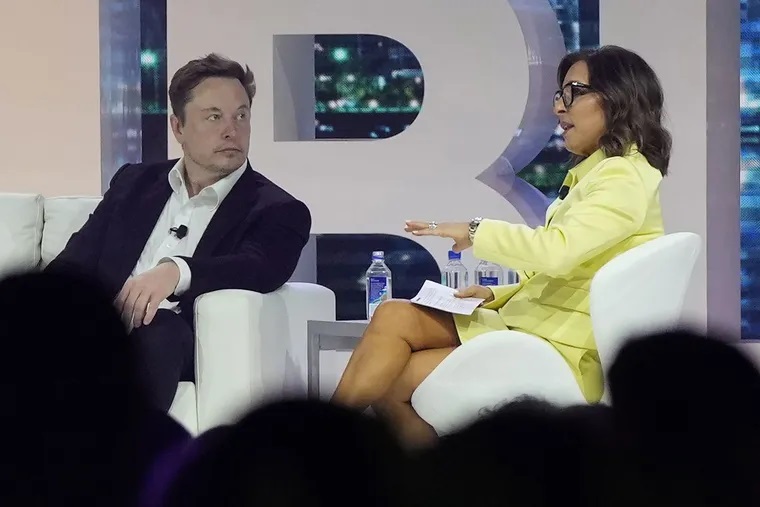
It’s official: Twitter has a new CEO. Linda Yaccarino, head of global advertising and partnerships at NBCUniversal, will take over the top job from Elon Musk, who acquired Twitter in October for $44 billion. Musk confirmed Yaccarino’s hiring Friday, saying she will “focus primarily on business operations, while I focus on product design and new technology.” Musk said Thursday that he will transition to new roles as executive chair and chief technology officer. Yaccarino had been at NBCU for over a decade and was instrumental in launching the Peacock streaming service. Musk says Yaccarino will help “transform this platform into X, the everything app.” He recently merged Twitter into a firm called “X Corp.” and has said he wants to build an all-in-one app similar to China’s WeChat. (LinkedIn News)

Elon Musk Appoints New Twitter CEO Linda Yaccarino, to Focus Primarily on Business Operations

0

Twitter owner Elon Musk has finally appointed a new CEO of the micro-blogging platform, Linda Yaccarino, a former NBCUniversal advertising executive to focus primarily on business operations,

Announcing her appointment via a tweet, Musk wrote,

“I am excited to welcome Linda Yaccarino as the new CEO of Twitter! Linda will focus primarily on business operations, while I focus on product design & new technology. Looking forward to working with Linda to transform this platform into X, the everything app”.

Linda’s appointment is coming after Musk had earlier tweeted that he had hired a new CEO for X/Twitter who will be starting in 6 weeks. He disclosed that his role will transition to being exec chair & CTO, overseeing product, software & sysops.

Linda Yaccarino in a statement on Friday announced her departure from NBCUniversal as she is set to resume the CEO position at Twitter.

She wrote, “It has been an absolute honor to be part of Comcast NBCUniversal and lead the most incredible team. We have transformed our company and the entire industry, and I am proud of what we have accomplished together and grateful to my colleagues and mentors, especially Brain Roberts, Mike Cavanagh, and the entire NBCU leadership team”.

Linda Yaccarino is an American female business personality, who has spent her entire career in the media, notably at NBCUniversal, where she has held senior advertising positions for ten years. She helped oversee the launch of NBC Peacock and advocated for the modernization of ad measurement technologies. She is also credited with helping NBC forge non-traditional partnerships with companies like Apple, YouTube, Snapchat,

As Chairman of Global Advertising and partnerships, Yaccarino is responsible for over $10 billion in revenue annually and stewarding the company’s industry-leading portfolio of linear networks, distribution partnerships, digital platforms, and client relationships. Her entrepreneurial energy coupled with her record for delivering growth has helped her connect established and emerging brands in every industry with millions of viewers.

Netizens believe that Yaccarino’s appointment as CEO of Twitter could have significance on the platform, as it relies heavily on advertising to generate revenue, and Yaccarino’s extensive experience in this area could turn things around and help the company become more profitable.

Also, several analysts are quite ecstatic about Musk stepping down from the CEO of Twitter, as they disclosed that it will give him more time to focus on other things.

An analyst with Wedbush, Dan Ives wrote, “We believe Musk leaving CEO of Twitter earlier than originally thought is a positive development for Tesla as well as spaced with Musk needing to spend more and more time on these golden child platforms rather than Twitter”.

Recall that Tesla stock plummeted since Elon Musk took over Twitter, falling more than 45% in about two months. This occurred after some analysts and major investors criticized Musk over a perceived lack of focus on Tesla, saying the company needs leadership as it contends with an adverse business environment.

Musk responded by stating that he will resign as head of Twitter when the company identifies a successor. His step down from the CEO position might possibly lead to a surge in the stock of Tesla.

Nigeria’s Most Profitable Public Companies – When Profit Margins of Cement Firms Outperform Telcos

0

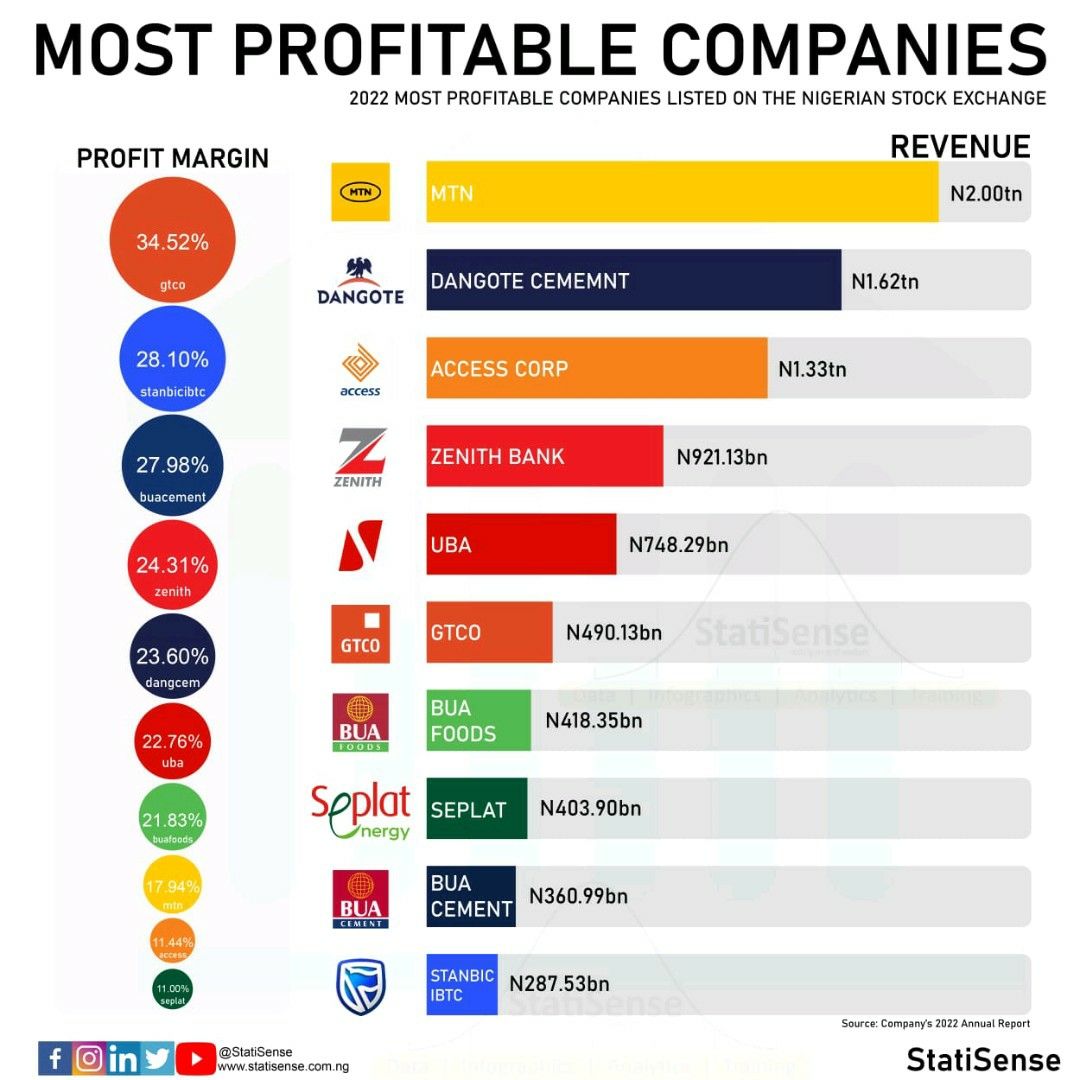
GTBank (yes, GTCO) was peerless a few years ago when it delivered an industry-leading cost-to-income ratio (CIR) of sub-35%, a critical indicator of operational excellence in banking. But recently, the CIR has dropped; from 42.3% in 2021 to 48% in 2022. Yet, it still leads the profit margin element in Nigeria’s leading companies.

From this plot, it is interesting how Dangote Cement outperformed MTN (a telecom company) on profit margin. Airtel Africa did not even make the cut, implying that it was somewhere below 11% on profit margin! Very interesting indeed!

Comment on Feed

Comment 1: Thanks for sharing Prof. I would love to understand this economics. In Market Cap, Airtel is No.1, But in Profitability, they are not even in top 10. As an investor, one is tempted to ask, “should I invest in a company with a higher Market Cap or a Company with a higher profitability”? Seems like a no-brainer right, because with more profit comes more dividend. So I am curious, what is the mathematics behind Market Cap and Profit Margins?

My Response: You have largely 3 types of public market investors – income chaser (dividend loving who want the certainty of income coming in),  growth builder (they invest for shares to grow fast), and value picker (pick beaten down equities and hope they recover).  Airtel has delivered great valuation growth which favours the growth builder. Dividend paying companies like Dangote Cement will appeal to the income chaser. Investment thesis is not about “profit”; Amazon was loss-making but was improving valuation over years.

That is why bankers will ask you “what do you want to accomplish in this investment?” Answering that question will help one build a portfolio.  I recommend this Tekedia course -Tekedia Investment and Portfolio Management –  for everyone .

Comment 2: Cement, which ordinary should be classed as ‘staple’ or essential product enjoys unregulated price regime, while telecom services have price control always looking over their shoulders. This is why both Dangote and BUA can enjoy better margins than MTN.

For the banks, their own profit margins aren’t much about hardwork or innovation, rather the system favours them so much that by doing the barest minimum, they can still turn in significant profits; we rarely have commercial banks that are not recording profits.

Our market system is broken, just like the Nigerian State, so profits and advancements aren’t necessarily tied to ingenuity and excellent execution, rather a case of aligning with the right forces, and your small hustle will balloon in profits.

The wealth without enterprise (or subpar enterprise) maxim is always in play here.

Comment 3: Everything should not be about profitability. Do a Salary survey and staff welfarism in those companies with high profitability ratio to revenue, then you will understand that this profit is to the detriment of their staff.

My Response: Actually, in the CEO Report, these companies with the highest profit margins outperform. Profitable companies have funds to pay workers. They represent the best paid sectors in the public market – banking, oil/gas, telecoms. I am not sure if you have data to show otherwise. By far, these 10 companies are the best to work for all companies traded in the public exchange in Nigeria. So, unless you show data, your comment that profit is detrimental to staff is not there

Follow Ndubuisi Ekekwe for more feature-worthy perspectives at LinkedIn

0
The Bluesky social media app logo is seen on a mobile device in this photo illustration in Warsaw, Poland on 21 April, 2023. Founder Jack Dorsey of twitter has released the Bluesky application on Android. (Photo by Jaap Arriens / Sipa USA)(Sipa via AP Images)

In the Harvard Business Review,  I proclaimed, “The Best Global Leaders are Local Leaders” because if you look critically, every business is local! Stripe, a payment giant noted that more than 90% of all purchases still happen in person! https://hbr.org/2012/01/the-best-global-leaders-are-local . So, to unlock and capture opportunities in some markets, you need to win the meatspace (i.e. physical), even though you could deploy digital frameworks along the way. 

Amazon, the world’s leading ecommerce company, understands that construct and is doing everything possible to battle in the physical space for its grocery business: ‘Amazon has gone back to the future. CEO Andy Jassy has renewed a commitment to opening more food stores “given that most grocery shopping happens in physical venues.’ Yes, more stores will unlock the future!

In that post, our piece on logistics, connecting the latent opportunities which companies like Konga are pioneering in Nigeria, was featured by LinkedIn News. Read it here https://www.linkedin.com/news/story/can-amazon-bag-grocery-market-5274553/

Follow Ndubuisi Ekekwe for more feature-worthy perspectives.

Why the Global Push for Decentralization?

0
The Bluesky social media app logo is seen on a mobile device in this photo illustration in Warsaw, Poland on 21 April, 2023. Founder Jack Dorsey of twitter has released the Bluesky application on Android. (Photo by Jaap Arriens / Sipa USA)(Sipa via AP Images)

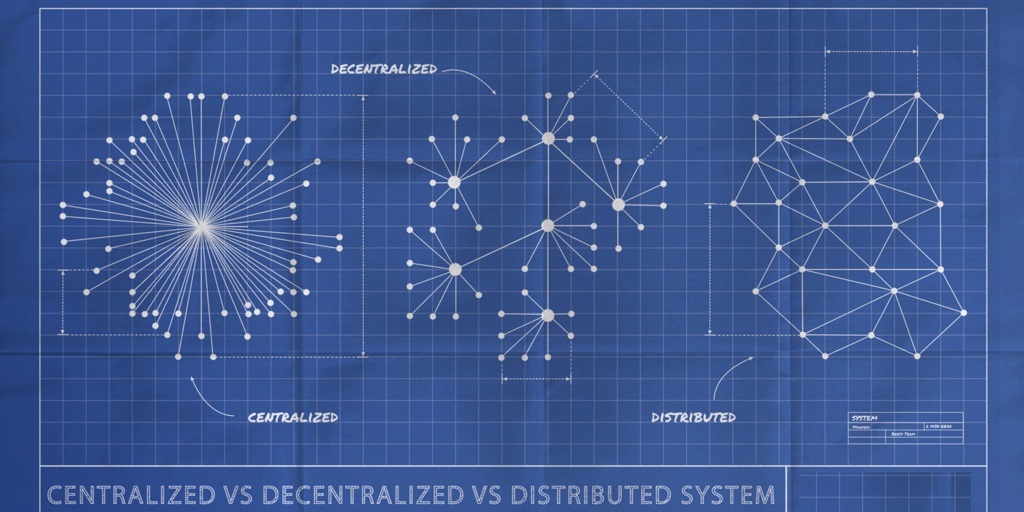
Decentralization is a system in which lower-level components operate on local information to accomplish global goals, without a central authority or controller. In contrast, a centralized system is one in which a central entity exercises control over the lower-level components, either directly or through a power hierarchy.

Decentralized systems have many advantages over centralized systems, such as failure tolerance, redundancy, scalability, and autonomy. For example, the Internet is a decentralized system that allows users to communicate and share information across the world, without relying on a single server or authority. However, decentralized systems also have some challenges, such as management complexity, security risks, and coordination difficulties.

In recent years, there has been a growing interest and demand for decentralized systems in various domains, such as computing, information technology, economics, and governance. One of the main drivers of this trend is the emergence of blockchain technologies, such as those used in cryptocurrencies like Bitcoin and Ethereum.

Blockchain technologies use cryptography and consensus algorithms to create a distributed ledger of transactions that is verifiable and immutable, without the need for a centralized intermediary or authority. This enables new possibilities for peer-to-peer transactions, smart contracts, digital assets, and decentralized applications.

Another reason for the world push for decentralized systems is the increasing awareness and concern about the drawbacks and dangers of centralization. Centralization can lead to inefficiency, corruption, censorship, surveillance, and abuse of power by the central entity or authority.

For instance, many people are dissatisfied with the centralization of social media platforms, which can manipulate user data, influence public opinion, and censor content that they deem inappropriate or harmful. Decentralized systems can offer more privacy, freedom, and control to the users, by allowing them to choose their own rules and preferences.

Decentralization has some challenges and limitations, some of these include:

Management complexity and coordination: Decentralized systems require more effort and resources to manage and coordinate the components, especially when they are large and diverse. This also increases the risk of conflicts and inconsistencies among the components.

Quality assurance and accountability: Decentralized systems may lack standards and regulations to ensure the quality and reliability of the components. This also makes it harder to monitor and evaluate the performance and behavior of the components, as well as to enforce rules and sanctions.

Scalability and efficiency: Decentralized systems may face difficulties in scaling up or down to meet changing demands and conditions. This also affects the speed and cost of the system, as well as its environmental impact.

Therefore, decentralized systems are not a panacea or a one-size-fits-all solution. They need to be carefully designed and implemented according to the specific context and objectives of each domain and application. They also need to be balanced with centralized systems when appropriate, to optimize their strengths and mitigate their weaknesses.

In conclusion, decentralized systems are systems that operate on local information to achieve global goals, without a central authority or controller. They have many benefits over centralized systems, such as failure tolerance, redundancy, scalability, and autonomy. They also address some of the problems and challenges of centralization, such as inefficiency, corruption, censorship, surveillance, and abuse of power.