DD
MM
YYYY

PAGES

DD
MM
YYYY

spot_img

PAGES

Home Blog Page 4349

U.S Government Bailout of Silicon Valley Bank Won’t Happen, Says Treasury Secretary

0

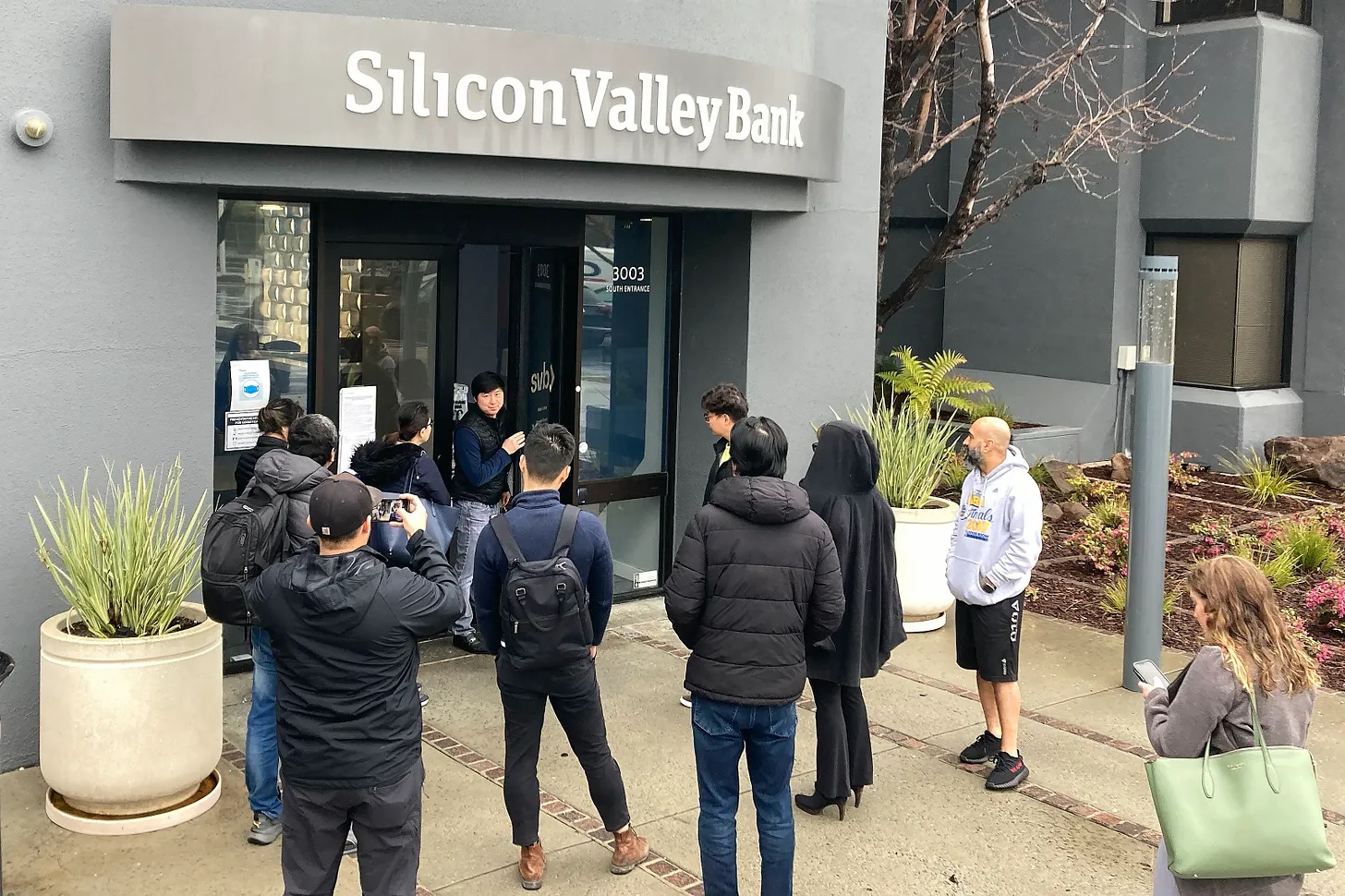
As people continue to make sense of the collapse of startup-focused lender Silicon Valley Bank (SVB), U.S. Treasury Secretary Janet Yellen has recently disclosed that the U.S. government will not in any way bail out the bank.

She added that the government is more concerned about depositors and is focused on trying to meet their needs.

In her words,

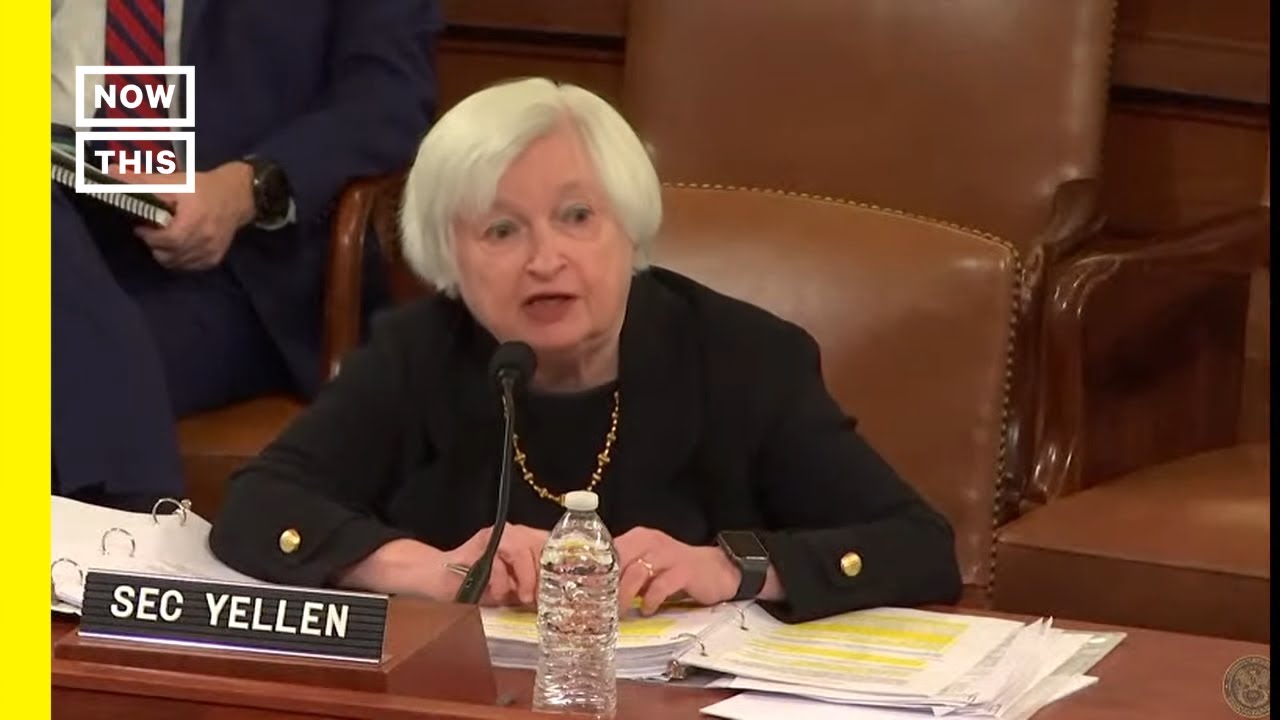
“Let me be clear that during the financial crisis, there were investors and owners of systemic large banks that were bailed out, and the reforms that have been put in place mean that we are not going to do that again. But we are concerned about depositors and are focused on trying to meet their needs”.

Yellen’s comment is coming after several investors called on the U.S. government to step in after the Silicon Valley bank witnessed a financial implosion. Venture capitalist and former tech CEO David Sacks had called on the government to push another bank to buy SVB’s assets.

While responding to a tweet with the heading “Treasury and the fed cannot execute a bailout or force a bank merger on their own”. He tweeted, “where is Powell?, where is Yellen?, Stop this crisis now. Announce that all depositors will be safe. Place SVB with a top 4 bank. Do this before Monday opens or there will be contagion and the crisis will spread”.

Venture Capitalists investor Mark Muster agreed, he wrote, “I suspect this is what they are working on. I expect statements by Sunday. We will see. I hope so or Monday will be brutal”.

It is interesting to note that some U.S politicians opposed any bailout by the government with Rep. Matthew Louis Gaetz disclosing that if there is an effort to use taxpayer money to bail out Silicon Valley Bank, the American people can count on the fact that he will be there leading the fight against it.

Meanwhile, Investors are reportedly concerned that SVB collapse could lead to a lack of confidence in the banking sector, particularly mid-sized banks with under $250 billion in deposits. Benchmark investor Eric Vishria disclosed that if Silicon Valley Bank depositions are not made whole, then corporate boards will have to insist their companies use two or more of the big four banks which will crush smaller banks and make them too big to fail which may become a challenge.

Since the collapse of Silicon Valley Bank, reports disclose that financial regulators have taken over its deposits. According to press releases from regulators, the California Department of Financial protection and Innovation named the FDIC as the receiver.

The FDIC’s standard insurance covers up to $250,000 per depositor, per bank, for each account ownership category. The FDIC stated that uninsured depositors will get receivership certificates for their balances. The regulator said it will pay uninsured depositors an advanced dividend within the next week, with potential additional dividend payments as the regulator sells Silicon Valley Bank’s assets.

Whether depositors with more than $250,000 ultimately get all their money back will be determined by the amount of money the regulator gets as it sells Silicon Valley assets or if another bank takes ownership of the remaining assets.

The fallout of the Silicon Valley Bank collapse could be far-reaching. Startups may be faced with the challenge of paying salaries of employees in the coming days, venture investors may struggle to raise funds, and an already battered sector could face a deeper problem.

However, reports disclose that the FDIC could help startup companies with payroll in the case that there is a systemic risk exception, which could be an extraordinary procedure. SVB was a major bank for venture-backed companies which were already under pressure due to higher interest rates and a slowdown for initial public offerings (IPO) that made it more difficult to raise additional cash.

Silicon Valley Bank’s financial implosion began late Wednesday when it informed investors with the unpleasant news that it needed to raise $2.25 billion to shore up its balance sheet. This spurred customers to withdraw a staggering $42 billion of deposits by the end of Thursday.

The shares of the company fell 60% on Thursday and dropped another 60% in premarket trading on Friday before being halted. While many Wall Street analysts predict that the financial crisis of Silicon Valley Bank is unlikely to spread to the broader banking system, shares of the midsized and regional banks came under pressure on Friday.

American entrepreneur and venture capitalist Mark Suster believes that several bad actors in VC (venture capital) led to the collapse of Silicon Valley bank. He stated that he believes the biggest risk to startups AND VCs (and to SVB) would be a mass panic which would further compound more problems for the bank.

Within 48 hours, a panic induced by the very venture capital community that SVB had served and nurtured ended the bank’s 40-year run. Silicon Valley Bank’s failure is reported to be the largest since Washington Mutual went bust in 2008, a hallmark event that triggered a financial crisis that hobbled the economy for years.

Crypto Weekend Round Up

0

This weekend the Cryptocurrency industry witnessed a huge clap back owing to the the winding up of crypto friendly bank Silvergate, Crash of Silicon Valley Bank, Fed Tax introduction on Crypto Mining Electricity and Circle USDC and stablecoins like Frax and DAI losing its 1:1 peg against the US dollar. The market sentiment had been negative with many Crypto assets depreciating in value within a relatively short span.

Litecoin was trading at $66.020 by 07:38 (07:38 GMT) on Saturday, down 10.21% on the day. It was the largest one-day percentage loss since November 9, 2022.

The move downwards pushed Litecoin’s market cap down to $5.131B, or 0.54% of the total cryptocurrency market cap. At its highest, Litecoin’s market cap was $25.609B.

Litecoin had traded in a range of $66.020 to $73.740 in the previous twenty-four hours. Over the past seven days, Litecoin has seen a drop in value, as it lost 21.45%. The volume of Litecoin traded in the twenty-four hours to time of writing was $1.096B or 1.18% of the total volume of all cryptocurrencies.

It has traded in a range of $66.0200 to $91.7300 in the past 7 days. At its current price, Litecoin is still down 84.28% from its all-time high of $420.00 set on December 12, 2017.

Bitcoin was last at $20,049.5, up 0.50% on the day trading chart, Ethereum was trading at $1,447.81 on the CoinGecko Index, a gain of 2.54%.Bitcoin’s market cap was last at $395.334B or 41.96% of the total cryptocurrency market cap, while Ethereum’s market cap totaled $179.199B or 19.02% of the total cryptocurrency market value.

Over the next 6-18 months we are setting up a monster rally for $BTC. World will wake up to the reality that $BTC is the most useful bearer asset in existence and that credit assets are dangerous. Bank failures one year before halving. Could not have written a better script, Avi Felman noted.

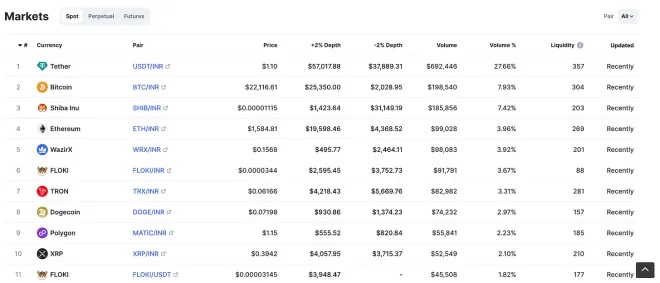
Floki is currently the third most traded cryptocurrency on India’s largest and most recognized exchange WazirX days after its listing. It is ranked after $BTC and $SHIB.

$FLOKI is also the only cryptocurrency with two trading pairs in the top 10 that is not a stablecoin.

Polygon zkEVM Hype Intensifies

Polygon has been recently hyping up its zkEVM scaling solution, something that very few teams are currently working on.

That’s because zkEVMs are notoriously hard to develop. A zkEVM stands for zero-knowledge Ethereum Virtual Machine and is considered to be the holy grail of Ethereum scaling. zkEVMs improve throughput and decrease gas prices by computation and storage off-chain and generating zero-knowledge proofs to verify the validity of off-chain transaction batches.

There are currently no zkEVMs that are deployed on Ethereum mainnet but Polygon’s co-founder Sandeep Nailwal tweeted on January 17 that the team developing Polygon’s zkEVM has set a launch date and that it’s “soon.”

On top of that, Eduardo Antuña, Polygon zkEVM’s core developer, tweeted on Thursday that Polygon has managed to increase its zkEVM’s proving time and costs. Really excited about our results on the Polygon zkEVM Prover, Batchproof 2:30 (2min soon) ~500 or ~250 ERC20 tx/batch.

On a spot m6id.metal prover’s cost: $0.064/proof ($0.0001/tx) The fastest ZK tech and the first production-ready zkEVM. The prover is no longer a bottleneck. All of this indicates that Polygon’s zkEVM, at least in theory, will soon be deployed on Ethereum mainnet. That would be an achievement like none other and potentially take MATIC to new highs.

Death of the financial system: Our much-needed hard reset after SVB implosion

0

I concluded in my last article on Silicon Valley Bank (SVB) that (1) the Federal Reserve of US should step in (2) cut rates and start a quantitative easing (QE) program (QE is a monetary policy where central banks spur economic activity by buying a range of financial assets in the market).  I now stand to be corrected as I hold only my first conclusion. Yes, the Fed should step in but stay put on rates or hike slightly to continue to check inflation, which is on its way higher if a FUD takes place or a rate cut or QE happens.

Not to be alarmist but we’re in Armageddon and the end of an era of money. The current monetary and financial system cannot survive for long in the internet age where it takes 48 hours to tumble a bank and an economy.

Since all roads lead to inflation, the most important solution now is reducing the impact of the FUD, which is bound to happen regardless because everywhere is already heated up, except something miraculous happens. We actually need a miracle at this point, we need a break from all these uncertainties, I didn’t think I’ll be spending my early to mid-twenties under an economically repressive regime in Nigeria and my late twenties in a global economic meltdown.

The Fed should as a matter of urgency ensure that SVB continues operations as normal under a new entity, providing some level of relief to the market frenzy. If the frenzy is left unchecked, inflation will spiral out of control with increasing cash in circulation due to mass withdrawals, and the economy overheats and burst. Bailouts, especially for individuals, will also heat up the economy until there is a burst.

Let me add that a flight to treasuries will send bond prices higher and drop yields so hard that it will be more profitable to hold cash and spend, leading to inflation of course again. Many will argue about a flight to crypto or alternative assets but I don’t see that happening at least in the short term. It will be difficult to educate everyone in one year on the difference between custodial and noncustodial wallets.

The current inertia is crazy. We’re dealing with a loss of trust in everything we know about finance and money. Centralized crypto failed last year, and now the banking and fiat system. The only miracle now, which is highly unlikely, is that we don’t give into FUD and avoid triggering mass bank withdrawals, either way, we may have a crisis. The best bet as I mentioned is a hawkish Fed stance ~ hike rates even further or stay put. The Fed may also potentially ensure that there is enough liquidity in the banking sector to meet the withdrawal frenzy, which will increase system liquidity and inflation again. Inflation seems to be our nemesis in all of this. You fight it, you kill the economy, you allow it, you kill the economy.

The great reset is here

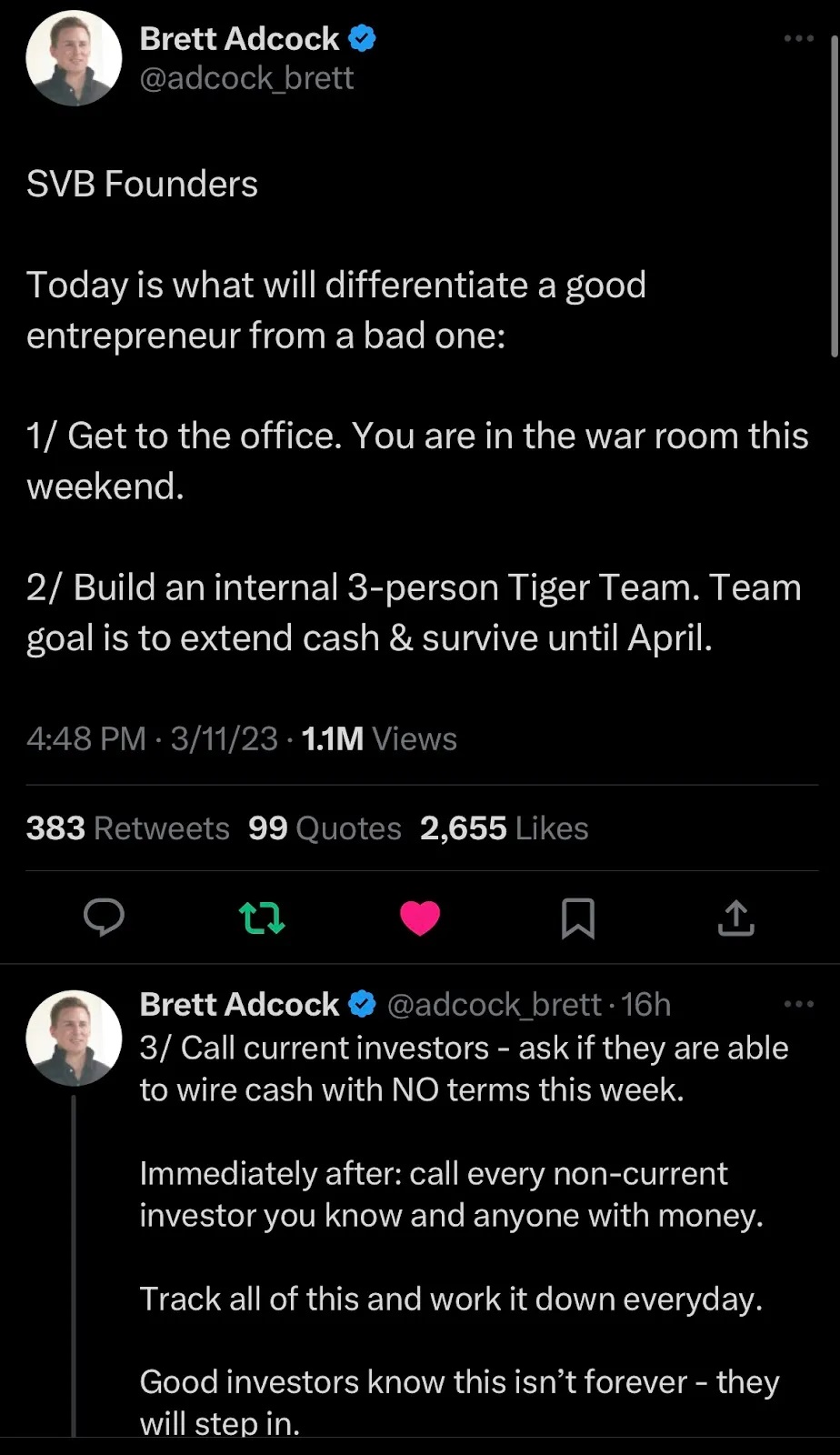
Now, this is where I rant. I saw a thread where founders were advised to cut costs and be in wartime mode, which is true. But it is very ridiculous that we went on a money-spending spree and jettisoned unit economics under the guise of high growth not minding the broader economic implications.

Crazy high valuations, oversized venture rounds, mismanaged funds, stupendous marketing budgets & CAC spending, excessive salaries pricing talent too high, now we can all rest and build more sustainable businesses. Startups and VCs also threw risk management out the door concentrating all their funds in single accounts. We will see less competition from too many businesses doing the same thing and racing to zero with revenue. I continue to expect more consolidations, faster exits, and the emergence of category kings.

Before I continue my rant, I’m now more curious about businesses that enable business models and individuals to manage and operate multiple bank accounts and wallets at the same time.

Now back to my rant; for banks like SVB, it’s even more annoying when you think about it. The concept of fractional reserve banking means that a bank doesn’t need to have all of its deposits readily available to meet withdrawals. They just need to have a portion and can chase yields by investing or creating loans. This may have worked in the pre-internet world, but in today’s world, it takes just 48 hours to crumble one of the world’s largest financial institutions by spreading information about insolvency.

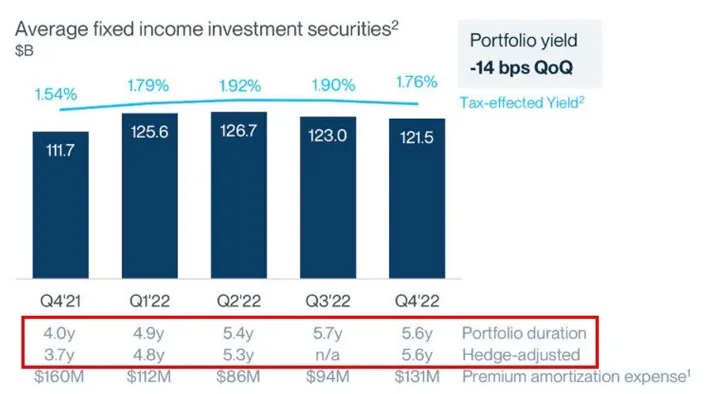
The chart below shows poor management of risk as SVB’s duration and interest rate risk were essentially the same, implying they didn’t even have any interest rate hedges on nearly $200B of assets.

For me, this is the end of an era of money, fractional reserve banking is dead at least without strict withdrawal limits, yield chasing is dead as demand for securities will drive prices up and lower yields, and everything we know about inflation and fighting it is also dead. Trust in the financial system and regulators guiding the economy is dead.

All of a sudden, we all agree on the need for regulation and institutions to save us from ourselves somehow; despite spending the better part of the last decade building innovation to replace regulation. I honestly think the age of regulation is also dead. I make it bold to say that the Fed has lost its control of the economy in the Information Age. I already highlighted in my last article about Fed’s role in the whole crisis by sending wrong signals to the market.

The new reality is until we embrace a new financial order, we will keep having these frequent boom and bust cycles in a much faster-paced world.

Final thoughts

I’m sorry to break the sad news, but we are in for a long haul, the next five years at least are set before us. I don’t see how we can escape a meltdown. Money and banking need to be fixed, or else we keep having frequent cycles of boom and burst. In a digital, more connected, and faster world, we could be seeing these cycles every three years, until we collectively rethink money. Perhaps, we may all eventually agree that crypto – “Internet money” is sound money and the future of money.

The best option is to start thinking of how to profit from the market. I have ideas.

I will be watching how things unfold over the next 6-9 months and if my postulations hold through, I’m going all in on the market.

With an equity-first strategy, I’d pick up blue-chip tech and non-tech stocks with strong cash flows and reserves at cheap prices in a couple of months. I’d also buy bitcoin and ethereum when they collapse. At least, we get a rare opportunity to start all over. Might be an actual wealth transfer as we get to invest at the bottom of the market.

One can also look out for breakout companies in AI, the future of work and money, with sound corporate governance. On fixed income, yields are dead, so lending especially venture debt to them with strict covenants may flourish.

Most importantly, swift rotation between cash and investment is important to win in these times. Same old buy low and sell high or wait for 20-30 years in hope of an innovation that truly advances human progress.

Be safe. Hope to write again soon.

Entertainment Law :- The Most Important Legal Validity Requirements For Music Producer Contracts in Nigeria.

0

Under the laws of Intellectual Property in Nigeria, creative service contracts like music producer agreements come with a lot of legal implications and come in many variants.

This article will be focused on the topics of :-

– What music production contracts are.

– The different types of music production contracts available in Nigeria.

– The requirements of a valid music production contract.

– The legal effect/implication of each type of music production contract in Nigeria.

What is a music production contract?

A music production contract is an agreement for the delivery of music production services (including but not limited to composing, licensed sampling and synthesization) between one party known as a music producer or a  producer and another party which can either be a musical artiste, a music record company, or any other individual or company that would qualify as a client.

What are the different types of music production contracts in Nigeria?

There are several types of music production contracts namely :-

– Producer/Record Company Contracts :- These are music production contracts that are usually paid for on an upfront & one-off but renewable basis by a record company.

– Publishing Split Sheet Contracts :- These are contracts for back-end consideration in place of upfront payments to the producer to be advanced for music production services. 

Such agreements are to be documented as split-sheet percentage sharing formulas between the producer, the artiste, and the record company for earnings from royalties, publishing rights, neighbouring rights and masters recording sales among others.

– Sync Licensing Agreements :- These are agreements for the licensing by a producer where he’s a part or full owner of the copyright of a creative work allowing his content to be used in an audiovisual format such as advertisements or movie soundtracks.

What are the requirements of a valid music production contract?

To be valid and enforceable music production contract must meet the following requirements :-

– It must have a set of defined parties :- This means that in cases where a client in a music production agreement is a label or record company seeking production services for its signed artiste, it is proper to have the agreement signed with the record company rather than the artiste.

– It must clearly define the services to be rendered by the producer.

– It must clearly outline the production process utilized by the producer.

– It must clearly state who has proper ownership of all intellectual property rights following any output produced under the contract.

This agreement must also not be contrary to public policy and statutory provisions on copyright law which expressly state that individual ownership of copyrights are to last for life and 70 years afterwards.

– It must clearly state appropriate dispute resolution measures in place.

What are the legal implications of each type of contract mentioned in this article so far?

Each type of music production contract comes with the following implications:-

– Producer/Record Company Contracts :- Agreements of this nature come with the major implication of usually stripping the producer of any right to copyright ownership of material produced pursuant to the contract, placing him strictly in the category of an independent contractor.

– Split-Sheet Contracts :- Typically the most commonly used musical production contract, split-sheet agreements carry the legal effect of rendering a producer a part-owner of all Copyrights created by such an agreement, placing him in the category of contracting partner.

– Sync Licensing Agreements :- Agreements of this nature render the rights of the producer enforceable where his musical output is delivered or used in any audiovisual format without his permission.

Strategic Perspectives on the Application of Social Marketing to Promote Health

0

In order to influence a target audience to voluntarily accept, reject, modify, or abandon a behavior for the benefit of individuals, groups, or society as a whole, social marketing is used. The purpose of marketing is to make money while also meeting customer needs. Service providers and manufacturers create products and services to satisfy the needs of their current and potential customers while also turning a profit from their business ventures. When marketing tools are used to promote behaviour change, social marketing is taking place.

Why is it necessary to alter or change behaviour? Societies have different short- and long-term goals for peace, prosperity, and development, but individuals within those societies behave differently due to differences in their socialization, perceptions, needs, attitudes, and practices. Corrective and/or change measures to ensure compliance may be implemented where behaviours are not consistent and there are deviants. Moral persuasion for change can be a solution because such different behaviours are not always prohibited.

The adoption of social marketing theory, competencies, and procedures aimed at influencing change is motivated by this understanding. Social marketing is based on the idea of voluntary exchange, which acknowledges that consumers do not use or purchase goods and services if they cannot provide certain advantages. Customers and consumers consider the advantages associated with using or consuming a product or service when making decisions to buy or use it.

There are numerous public health issues where state actors and private organizations anticipate that for change to occur, people must alter their behavior. For instance, one of the protocols for limiting the spread of the COVID-19 pandemic calls for citizens to practice social distance, and security agencies are given the authority to ensure compliance.

In conjunction with this, health campaign messages are also created and disseminated in an effort to increase awareness, foster understanding and knowledge, inspire individuals to adopt positive attitudes, and ultimately assist citizens in embracing social seclusion and the use of face masks. The overall objective of the COVID-19 campaign messages distributed through various media is to promote social estrangement to the public and encourage them to see it as a means of slowing and halting the spread of COVID-19.

It is significant to remember that individual health decisions depend on the cultural and social context in which they are made. Health promotion that takes into account their sociocultural environment is necessary for their decisions to be in line with socially acceptable recommendations.

Because social marketing aims to alter behavior at the individual, organizational, and systemic levels, health promotion must target intrapersonal, interpersonal, social, environmental, and institutional spheres of influence. Social marketing places a high value on the health and well-being of people as individuals, members of communities, and members of societies, making this a key communication tactic for behaviour change.