DD
MM
YYYY

PAGES

DD
MM
YYYY

spot_img

PAGES

Home Blog Page 4352

The Blue Bird’s New Words: “This account is verified because it’s subscribed to Twitter Blue or is a legacy verified account”

1

Twitter scored an own-goal with the blue tick’s old explanation. Yes, a line, and that will help its business: “This account is verified because it’s subscribed to Twitter Blue or is a legacy verified account.” Just like that, you may not know who is paying and who is not paying, masking the feelings of some who may not like to be accused that they’re paying.

Indeed, it is a very important distinction which will help the blue bird company to deal with the perception game where successful or popular people have to pay to be seen as being “important”.

Get the gist: pay and you become a legacy verified account because there is no difference between a subscriber and a legacy verified account since the tick is the same. You may not like Elon Musk, but understand that his experimentation could change how companies monetize social digital platforms, if he thrives here.

Sure, there is a huge risk since the algorithms are prioritizing the checkmarks and not necessarily the contents, for what people see. If that remains, the mission of Twitter may be lost. Who comes to read those with ticks? People come to get informed!

Meanwhile, we made the Top 10 posts on LinkedIn” today and also got featured by LinkedIn News editors.

Payment Startup Moni Rolls Out Range of Business Loans to Enable Businesses in Africa Scale

0

Y-combinator-backed payment fintech startup Moni has recently rolled out a new range of business loans that enables small business owners in Africa to take advantage of the power of their communities to access the working capital they need to run and scale their businesses.

With 22% of businesses according to a PWC 2020 report, stating that obtaining finance for their business is the most pressing challenge they face, Moni seeks to solve this challenge by providing these businesses with the required capital/loans they need.

Speaking on the rollout of loans to businesses, CEO and co-founder of Moni Femi Iromini said, “Our community-powered business loans product is just one of the ways we are innovating around our unique context in Africa to make the most of what is already in place to deliver the financial services business owners need to create long-lasting wealth for themselves and their communities. We have ample evidence to show that this approach works and we are excited to be bringing more businesses on board to drive the economic development we all want to see on the continent.”

Founded in 2017, Moni is a community-powered, digital financial services platform that leverages the concept of community and social trust to deliver a range of products and services that makes it easier for Africans to build lasting businesses and wealth. The startup has built a risk platform that enables small business owners to take advantage of a good social reputation to access the working capital, loan savings, and insurance they need to scale their various business activities.

Moni’s lending system heavily draws on a four-point system. The first deals with the process of getting loans. For most lending startups, the process requires signing up, providing certain documents, getting verified, and then applying for a loan.

But on Moni, after signing up, users who need a loan join a cluster. Only after getting approved can they begin their loan applications. Essentially, clusters are groups of individuals who know each other and can vouch for one another, but the startup also takes it a step further by conducting additional checks.

The second part deals with recourse in the event of a default. If a business owner defaults on a loan from a bank, they often get their properties repossessed, but on Moni, the inability of one user to repay a loan affects every other person in the cluster. By getting every member committed to the outcome of an individual’s activity, Moni has been able to reduce default rates to 1%.

Finally, the startup has launched a savings feature, Moni Vault, which can be used for group savings. Essentially, the startup has leveraged the social capital of its users to provide financial services.

In 2022, Moni disbursed more than $22 million in loans to more than 11,000 SMEs, with a 99 percent repayment rate. The company is now building on the success of its community-powered model to deliver game-changing financial services to a wider range of African SMEs who have previously been underserved by the traditional financial system.

MONI platform is accessible from any feature or smartphone, and enables every citizen to identify themselves, and provides them with basic financial services. Its technology works on any carrier network anywhere in the world.

Since its inception, Moni has served over 10,000 businesses, even expanding beyond Nigeria into the Benin Republic. The startup is building the bridge between the now and the future of banking and financial services, with a mission to provide simple low-cost mobile personal banking tools for everyone, everywhere, and credit in real-time.

Apple Wins Appeal Against UK Antitrust Watchdog CMA to Investigate Its Market Dominance

0

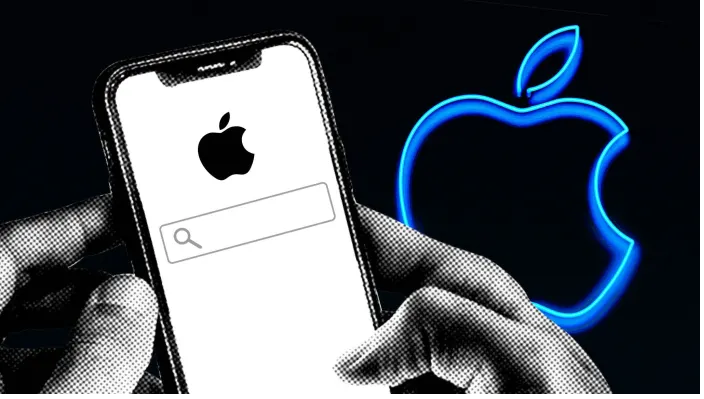
Tech giant Apple has won an appeal against the Competition and Markets Authority (CMA), the UK’s principal authority responsible for competition and consumer protection to investigate its market dominance.

Apple had successfully argued that the antitrust watchdog had no power to investigate its position in the mobile browser market.

Recall that the CMA last November disclosed that it was conducting a probe into Apple’s dominance in the mobile phone market. The antitrust regulator further revealed that it received widespread support for its proposals which saw it launch an investigation into Apple’s cloud gaming and mobile browsers.

According to the CMA’s interim Chief Executive Sarah Cardell via a statement, she disclosed that many UK businesses and web developers disclosed that they feel they are being backed by restrictions set by Apple.

The CMA noted that Apple and Google have a strong hold over mobile device operating systems, app stores and browsers. It said 97 percent of UK web browsing in2021 happened on either Apple or Google’s browser engines.

In its victory over the CMA investigation into its market dominance, Apple said the CMA should have opened the probe at the same time its first published its report on mobile ecosystems last June. The Competition Appeal Tribunal (CAT), the court that oversees CMA cases, agreed with Apple, stating that the regulator gave notice of its investigation too late.

Apple, which was pleased with the CAT decision, disclosed that it would continue working to deliver support for developers and a safe and secure experience for users.

On the other hand, the CMA was displeased with the judgment, refusing it access to investigate Apple’s market dominance. It wrote in a statement, “We are disappointed with today’s judgment. We made this market investigation reference to make sure that the UK consumers get a better choice of mobile market services and that UK developers can invest in innovative new apps.

Our concerns, and the reasons why we launched our market investigation, we’re not challenged by Apple. Given the importance of today’s judgment, we will be considering our options including seeking permission to appeal.”

Since the launch of its first phone, Apple has continued to dominate the mobile market. It has been a trend setter and has attracted a large number of loyal customers who buy every product they launch.

It is interesting to note that with 38 Apple stores In the United Kingdom, Apple remains undisputed in the smartphone and tablet computer markets. In 2021, Apple’s iOS accounted for over half of both the mobile and tablet operating system market share.

Baboon is no longer in the zoo

0

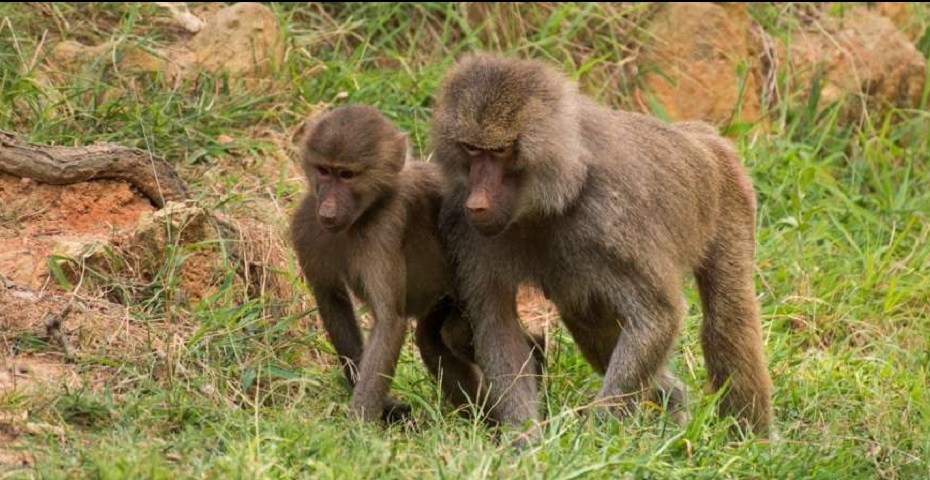
“I am a baboon, I live in the zoo, Zazooo”

Every Nigerian must have heard of the above rhythmic and poetic line which trended across every social platform throughout last week. 

The originator of it was Mr Habeeb Olalomi Oyegbile popularly known as Portable Aka Dr Zeh, the leader of the Zeh nation. He voiced those words over and over again while having a standoff with some police officers who came to effect an arrest on him last week. Portable violently resisted the arrest and attacked the police officers while making so many other uncouth utterances like “he is a liability to the government”. 

People applauded him for the “bravery” and turned the “I’m a baboon, I live in the zoo” into a trend whilst in solidarity with Portable. Some music producers turned that into a hit song and some dancers danced to it while some skit makers and comedians turned it into skit content.

Seeing Portable inside the dock of the court this morning having been arraigned looking all humble, meek and gentle gave me some amount of hope. The first thing I said was so this portable can look this humble and meek, he is obviously no longer a baboon that lives in the zoo. He has learnt a little bit that a civilized society like Nigeria is not a zoo and he is a human, not a baboon. 

I know an army of Portable’s fans may likely come for my head for saying this but it really needs to be said that someone like Portable needs to be taught a hard lesson that we live in a civilized society and not a zoo or a jungle where any and every uncivilized act is permissible. 

There’s no week that passes since portable came into the limelight that Portable does not trend for the wrong reasons; he regularly gets into street fights, which in some cases have led to the loss of lives and destruction of properties, he has attacked law enforcement agents on numerous occasions. He is always issuing death threats to individuals who get in his way. He once threatened the organizers of the headies award that he must win the category he was nominated for. The other time he claimed to be the founder of a notorious court group  (one million boys) that was causing havoc in Lagos while threatening to unleash them.

What led to his recent ordeal was that he assaulted a colleague of his and the victim petitioned him to the police for assault and threat to life. The police officers invited him to come and answer his case at the police station but he blatantly refused to honour the invitation. After the expiration of the invite, the police last Tuesday secured his arrest warrant, and went down to enforce his arrest; Portable being portable resisted the arrest and attacked the police officers while claiming to be a baboon that lives in the zoo and above the law.

The police went back, regrouped and arrested him days later and today they arraigned him in court for the charges around his neck which could possibly send him to jail for some time.

People like portable if ignored will reinforce bad behaviour in our society; he always claims that he is a star and famous, therefore he is untouchable and will always go scot-free. I so much want him to go to jail for a little time so that he will come out rehabilitated and a new man who will no longer be a nuisance in society and most importantly, that those who are learning from him, towing his part of becoming a societal nuisance with the mindset that our legal system is weak will learn and turn a new leaf.

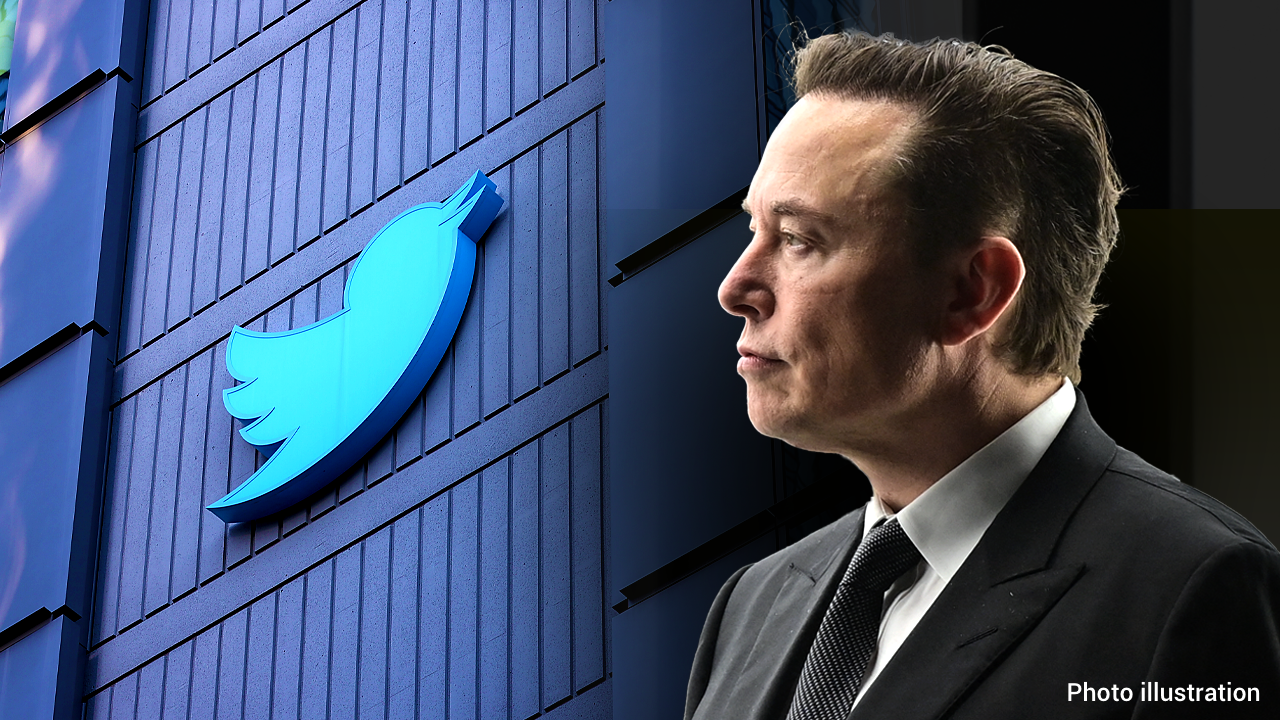
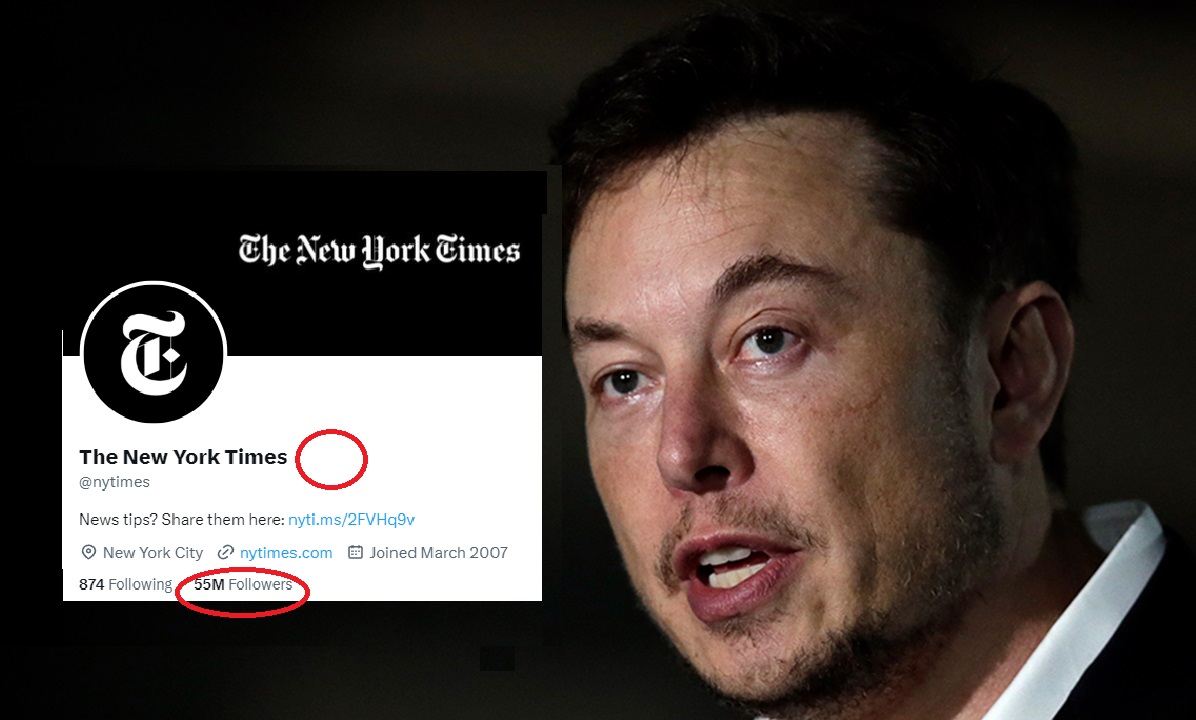
The Message from Elon Musk As The New York Times Loses Its Blue Tick on Twitter

3

Wow. The New York Times has lost its blue tick on Twitter after it refused to pay the subscription which Twitter has mandated for accounts to do. A few days ago, the social media entity started removing verification badges from accounts which already had the checkmark.

The New York Times has about 55 million followers. Yet, Elon Musk did not care as he zapped the checkmark. I do not know why the Times did not think it is part of the game to pay for services since people pay subscriptions to read their newspaper.

Founders: there is something we can learn from Elon Musk. You cannot be making customers happy and not capture value. I made that point in a well-received piece in Harvard  where I challenged entrepreneurs to be bold, offer the best services possible and also CAPTURE. Musk is making that point clearer.

“The real tragedy of @NYTimes is that their propaganda isn’t even interesting”, Mr Musk, who owns Twitter, wrote on the platform.

“Also, their feed is the Twitter equivalent of diarrhea. It’s unreadable,” he added.

There has been no official comment from Twitter and the New York Times has not responded to Mr Musk’s comments. Under Twitter’s new rules, blue ticks which once showed official, verified accounts, will start to be removed from accounts which do not pay for it. 

Organisations seeking verification badges instead have to pay a monthly fee of $1,000 (£810) to receive a gold verification tick, while individual accounts must pay $8 (£6.40) a month for a blue one.

Comment on Feed

Comment 1: “I do not know why the Times did not think it is part of the game to pay for services since people pay subscriptions to read their newspaper. This is quite poignant” . These media folks are the same business that harassed Google for publishing news articles without royalties being paid to them. The hands of the clock have now turned the other way and they want to fight it? It’s bill paying time.

My Response: The media world is not fair. Interestingly, they have one man who has so much money to take them up.

Comment 2: Will not having the blue tick make New York Times lose credibility or number of subscribers? If it’s a NO…then maybe the checkmark may not be a priority after all. They may still go ahead and pay for the verification just for the prestige it now carries!

My Response: Ideally, the checkmark should not affect the credibility since 55M followers would not have been following the wrong NYTimes. Yet, if the global perception is that a tick is a validation, if you do not have it, it degrades the brand on Twitter.

Comment 3: Their business model is to ultimately grow their subscriber list. Twitter certainly helps them in achieving this. More news is consumed more quickly on Twitter vs their website/app. These media houses campaigned vigorously to stop Google sharing news articles without royalty payments, and now themselves do not want to pay Twitter for its service? They will moan and pay, because they need the reach of the likes of Twitter to sell new subscriptions at scale

Comment 4: That is just one aspect. Another aspect is that new subscribers may not subscribe if they do not see the blue checkmark and even already current subscribers might doubt the veracity of their posts now. You would be surprised what a blue checkmark can do to a human being’s perception in a world where everyone that is supposed to be “trusted” has one. Another even more important factor is that it makes it easy for someone to clone an account that looks like a New York Times account, post half truths on it and discredit the New York Times brand.