Every great digital platform has a stable state of offering a financial solution. I called that fintechnolization: “a construct that every digital platform must have a maturity state of offering a fintech solution. I had watched all great digital platforms on how they ended up providing fintech solutions even when they began in an unrelated sector.”
The idea that Elon Musk has a digital banking playbook as part of Twitter 2.0 is superb: “Behind Elon Musk’s gamble to turn Twitter Inc. into a company worth more than $250 billion is a beloved idea he has hung on to for more than two decades: digital banking. The billionaire entrepreneur has talked in dribs and drabs about what Twitter 2.0 might ultimately look like under his control. But late last week, he gave employees a taste of how grandiose his plans are, telling them he envisions Twitter being worth more than 10 times its current value of around $20 billion.”
Yes, it has not started this banking future at scale, as LinkedIn Newsnoted: “The idea stems from Musk’s first startup, X.com, which eventually morphed into PayPal. But so far, Twitter has only filed paperwork with the U.S. Treasury to become a payments processor, and has yet to register for a license in states it wants to do business in”
Looking at Chinese digital platforms (Tencent, Alibaba) and US counterparts (Google, Facebook), my conclusion is this: every platform will become a fintech company at the end. So, I do want to see how Tekedia would become an investment club, a lending ecosystem, etc, at the lowest marginal cost, to members and readers in the ecosystem. This construct tracks the recent trajectories of Facebook and Google. Alibaba and Tencent have validated my thesis as I have studied their evolutions and revolutions in the markets.
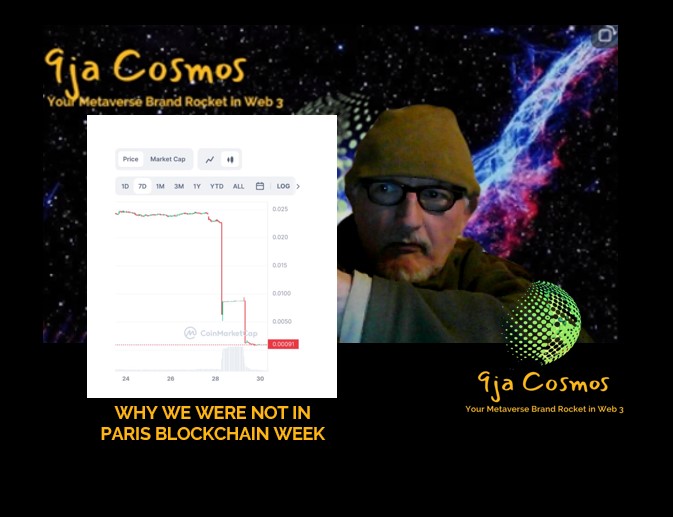
No.. this is not a graph of the fortunes of 9ja Cosmos.
This is a recent coin graph of another blockchain related business, which I won’t name.
They are winding up. A quote from the notice said:
‘As we have built the entirety of our tech stack, it comes with expensive operational costs of $50,000 USD per month’
I’m taking that to mean the operational costs of their platform; not the total costs of running their business.
It doesn’t seem a lot of money, when its considered Facebook lost millions for years and still made it. Now in this current age, Meta are seriously curtailing their immersive product ambitions, if not mothballing them indefinitely.
Back to the company in the graph: ‘ ….we have so far been unsuccessful in raising additional capital to enable us to grow….
Despite our best efforts, several deals that were in the pipeline did not come to fruition, which has left us unable to continue…’
It’s getting to be a bit repetitive and predictable in the blockchain space isn’t it?
Ventures get a pot of money, they operate at a loss on ‘wing and a prayer’ growth projections that are not based on any flavour of sane normality, and still, they expect another round of funding to descend with angels.
Why?
If they were not deliberate, measured and frugal with the first injection, why would they expect to be trusted with another one that is bigger?
As founder of 9ja Cosmos which on 13 September 2022 – Launched the first ever Web 3 Country Top Level Domain (ccTLD) in the world – .9jacom for Nigeria… I am running a bootstrapped business.
The last time I spent money on something for 9ja Cosmos benefit was October last year (around $300). Now the venture has to sustain itself.
I won’t give it a dime. Its’ ‘baby’ period is over. Time to grow up.
It may have growth challenges but it isn’t posting losses.
A lot of people ask me why I wasn’t in Paris Blockchain Week this month.
9ja Cosmos can’t afford it. I won’t pay for it myself, so it didn’t get done.
But 9ja Cosmos is still here, and not being in Paris didn’t kill it.
400+ West Africans provided innovation stimulus through region centric Web 3 SLDs (Second Level Domains) since September 2022.
200+ Web 3 TLDs (Top Level Domains) sold in 2023 alone.
Promotion Spend: 0. Community Development Spend: 0.
Naija say cut suit to size cloth.
New tech businesses still need to follow traditional lessons.
9ja Cosmos is here…
Get your .9jacom and .9javerse Web 3 domains for $2 at:
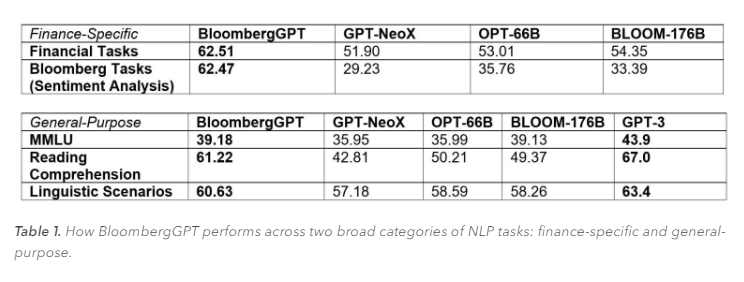
Generative Pre-trained Transformer (GPT), a type of language model that uses deep learning to generate human-like, has moved into finance at scale. Yet, BloombergGPT has been born: “Bloomberg today released a research paper detailing the development of BloombergGPT, a new large-scale generative artificial intelligence (AI) model. This large language model (LLM) has been specifically trained on a wide range of financial data to support a diverse set of natural language processing (NLP) tasks within the financial industry.” According to Bloomberg, “BloombergGPT outperforms similarly-sized open models on financial NLP tasks by significant margins — without sacrificing performance on general LLM benchmarks”. AI is taking over this world.
Recent advances in Artificial Intelligence (AI) based on LLMs have already demonstrated exciting new applications for many domains. However, the complexity and unique terminology of the financial domain warrant a domain-specific model. BloombergGPT represents the first step in the development and application of this new technology for the financial industry. This model will assist Bloomberg in improving existing financial NLP tasks, such as sentiment analysis, named entity recognition, news classification, and question answering, among others. Furthermore, BloombergGPT will unlock new opportunities for marshalling the vast quantities of data available on the Bloomberg Terminal to better help the firm’s customers, while bringing the full potential of AI to the financial domain.
For more than a decade, Bloomberg has been a trailblazer in its application of AI, Machine Learning, and NLP in finance. Today, Bloomberg supports a very large and diverse set of NLP tasks that will benefit from a new finance-aware language model. Bloomberg researchers pioneered a mixed approach that combines both finance data with general-purpose datasets to train a model that achieves best-in-class results on financial benchmarks, while also maintaining competitive performance on general-purpose LLM benchmarks.
To achieve this milestone, Bloomberg’s ML Product and Research group collaborated with the firm’s AI Engineering team to construct one of the largest domain-specific datasets yet, drawing on the company’s existing data creation, collection, and curation resources. As a financial data company, Bloomberg’s data analysts have collected and maintained financial language documents over the span of forty years. The team pulled from this extensive archive of financial data to create a comprehensive 363 billion token dataset consisting of English financial documents.
This data was augmented with a 345 billion token public dataset to create a large training corpus with over 700 billion tokens. Using a portion of this training corpus, the team trained a 50-billion parameter decoder-only causal language model. The resulting model was validated on existing finance-specific NLP benchmarks, a suite of Bloomberg internal benchmarks, and broad categories of general-purpose NLP tasks from popular benchmarks (e.g., BIG-bench Hard, Knowledge Assessments, Reading Comprehension, and Linguistic Tasks). Notably, the BloombergGPT model outperforms existing open models of a similar size on financial tasks by large margins, while still performing on par or better on general NLP benchmarks.
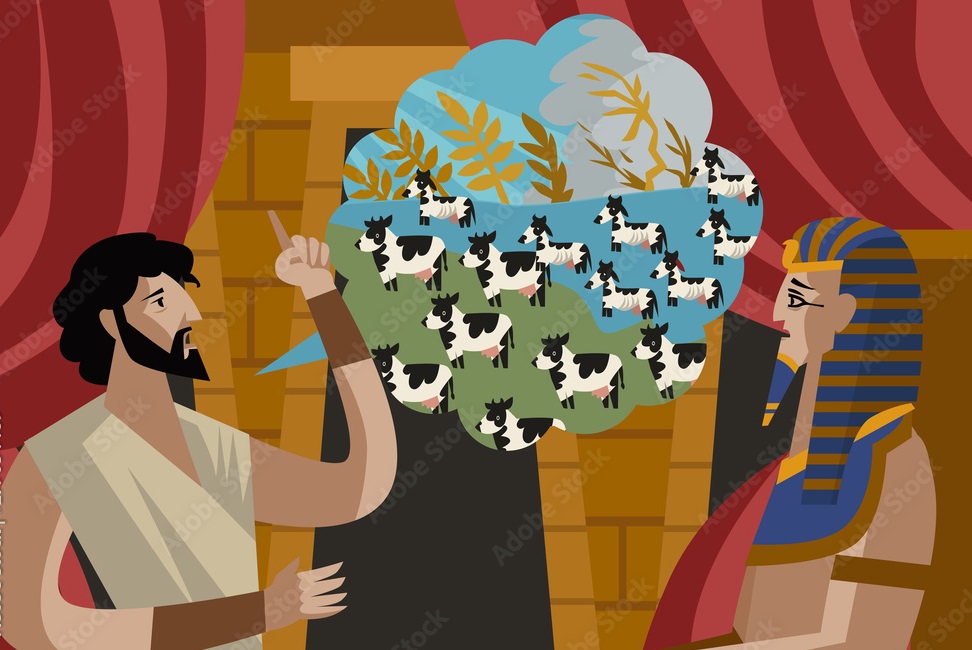
He had a dream: “seven cows came out of the river and stood there eating grass. They were healthy, good-looking cows. Then seven more cows came out of the river and stood on the bank of the river by the healthy cows. But these cows were thin and looked sick. The seven sick cows ate the seven healthy cows.” And Pharaoh was troubled because none of his thinkers, strategists and astrologers could interpret this dream.
Ancient Egypt was unrivaled in knowledge and wealth. It had the best “universities” with the finest thinkers. When Moses was called to lead the Israelites and he appeared before his brethren, they marveled because he had studied under the Pharaohs. Egypt was the home of the world’s greatest leadership and management system. The Pharaoh’s conceived and built engineering wonders, and executed things which remain wonders even in our modern world.
They called Joseph and he interpreted the dream: “It means that you’re going to have seven lean years eventually, but the good news is you’ll have seven good years first.” On the strength of this interpretation, Egypt planned its economy for the next 14 years. In anecdotal non-Biblical data, Egypt was the only country during those years which got things right; others had issues.
Across Africa, we have many modern Josephs: your crude oil will run dry in 30 years; your diamond mines will lose value in 30 years, etc. What are the leaders doing since the dreams have been interpreted? We have many interpreters today but we do not have great planners and implementers of visions. Pharaoh did not just plan, he also executed the plan, and when the famine came, he was able to ensure his people did not suffer.
In your company, what are you doing on those dreams of market changes (petro-yuan, ChatGPT, etc) which have been interpreted by the head of strategy? Learn from Pharaoh: he received the message, and he executed on the message. #action
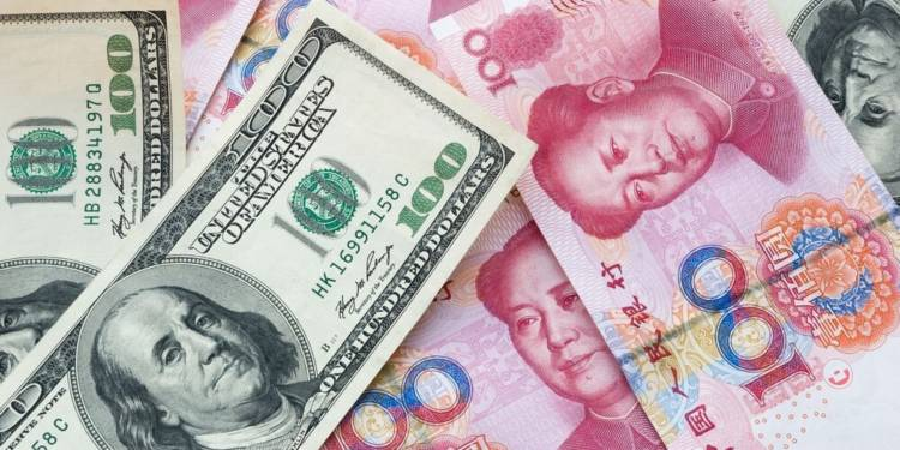
Question: What will happen to our startup investments if the Yuan takes over USD as the world’s leading currency: “Saudi Arabia is open to discussions about trade in currencies other than the US dollar, according to the kingdom’s finance minister.”
My Response: If part of the world decides to use Yuan over Dollar, that will not destroy a Kenyan or Nigerian or Chilean business. You just re-price in the new currency. Our world is moving into a phase where currency will be abstracted out (you want to pay someone in London from New York, PayPal takes care of everything, and you will not see GBP anywhere). Sure, the US may see pressure on its economy if countries begin to pack reserves in Yuan.
The CFA franc zone has been in a union for decades. Yet, that zone is one of the least developed regions in Africa. In other words, currency does not offer huge advantages in the international market if you are not productive. That was my specialty in my Banking and Finance PhD and I wrote the lead paper for the African Union on this matter
In the 1890s as Great Britain began to pass the baton to the US as the world’s dominant economy, it did all but with a diminishing production capacity, the message was clear: balance of trade wins, and powers economic supremacy. In the last ten centuries, China has dominated at least 6 economically. China is winning on the balance of trade and will pass the US – and the Yuan will rise. But just like the UK and broad Europe did not collapse when the pound lost to the USD, Africa should be fine. Indeed, most of the things used in Africa are imported from China, paying for those in Yuan may even help Africa.
We will win by solving market problems; currency strategies are limited to pushing competitive positioning in markets over a long time. If our startups offer value in markets, they will be fine, whether they’re paid in USD or Yuan, and irrespective of what the world uses.
Comment: ..but prof due to the expected collapse in the value of USD, should we not expect that all countries with USD denominated assets will experience a corresponding devaluation of their assets which would negatively impact their economies and standard of living. Thus one would expect that in order to escape the effects of the anticipated changes, entities with Dollar denominated assets should move them to more immune holders of value.
My Response: Certainly, there would be perturbations but people who remain productive will be fine. If the US empire begins to fade and people think putting their money in Chinese banks would be safer, people will do that. Yet, the openness in New York and London will not be replaced in months but decades if China takes over economically. More so, nothing stops UK and US banks to benchmark Yuan making sure your money stays in Goldman Sachs in its Yuan docket instead of in a bank in Beijing.
My thesis remains: the structural alignments where currency tracks economic dominance may be muted due to technology as tech will abstract currency just as tech will take out language barriers. If you have an asset in Morgan Stanley in USD and Yuan becomes dominant, they will offer a Yuan product. You can ask them to move everything to a “Yuan wallet”. If they do not do that, a startup will do that.
And the big one – would China be happy to allow its currency to appreciate? For years, the US has been demanding that as it continues to give China a huge advantage in the international market. In other words, if the US-based assets in Morgan Stanley begin to lose value compared to Yuan, it means Yuan is strengthening. That will become a huge issue for China, taking out what has helped it in global commerce. That can even shift back the advantage to the US.
Ghana explained why production matters (it lost its peg to USD). And Russia, through Elvira Nabiullina, their central bank governor, makes it clear that national economies cannot kaput even with the highest sanctions in records and blockade on currencies. The only thing that works is this: be productive as a nation or company, and you will be fine.
Finally, for Tekedia Capital portfolios priced in USD (dynamic assets, not docile dollar denominated assets), if USD is losing value, you simply re-price considering the new reality. That is what we do with naira where as exchanges move, real estates, etc reprice. The key thing remains: are you productive as that is what gives power to do anything? If you are, you can change move from USD to Yuan and still pursue the business missions. Great products and visions will thrive, in USD or Yuan!