DD
MM
YYYY

PAGES

DD
MM
YYYY

spot_img

PAGES

Home Blog Page 4388

Atiku, Obi File Petition Challenging INEC’s Declaration of Tinubu As the Winner of Presidential Election

0

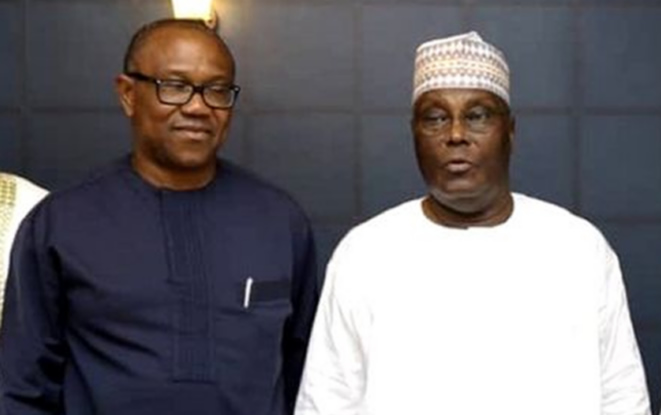
Peter Obi and Labour Party have formally filed a petition to challenge the outcome of the February 25 presidential election at the Election Petition Tribunal in Abuja.

Also, the Peoples Democratic Party (PDP) candidate Atiku Abubakar has similarly filed a petition challenging the election result.

Obi filed the petition after waiting in vain on the Independent Electoral Commission (INEC) for days to allow him and his party to inspect the materials used for the election as ordered by the Court of Appeal.

In the petition marked: CA/PEPC/03/2023, which has INEC and Tinubu as the 1st and second respondents; his running mate, Senator Kashim Shettima, and the APC as the 3rd and 4th respondents, the LP and Obi are praying the Tribunal to nullify INEC’s declaration of Tinubu as president.

The petition is also praying that the tribunal declare that Tinubu was not duly elected by a majority of the lawful votes cast at the election. It also asks for an order mandating INEC to retrieve the certificate of return issued to the APC candidate and issue a fresh one to Obi.

Other prayers of the LP and Obi include request for the cancellation of the election and that the tribunal make an order compelling INEC to conduct a fresh election in which Tinubu, Shettima, and the APC will not participate.

The petitioners argued that Tinubu was not qualified to contest the election, citing his involvement in drug trafficking in the United States. They also noted among other things, that the election was invalid because of corrupt practices and non-compliance with the provision of the Electoral Act 2022.

Similarly, in their petition marked: CA/PEPC/05/2023, which also has INEC; Tinubu, Kashim Shettima, and the APC as the 1st to 4th respondents, Atiku and the PDP are praying that the Tribunal annul the declaration of Tinubu as the president, citing failure by INEC to conduct the presidential election in line with electoral guidelines, which gave room for the APC’s massive rigging.

In response to the petitions, the spokesperson for Tinubu presidential campaign, Bayo Onanuga, said Tuesday that Obi is trying to replicate the annulment of the June 12, 1993 election won by late M K O Abiola.

“Peter Obi of Labour Party seeks the annulment of the election of President-elect Bola Tinubu just like the military annulled MKO Abiola’s election of 12 June 1993,” he tweeted.

The 1993 election, which was duly won by Abiola, was annulled by ex military dictator, Ibrahim Babangida.

Onanuga who has championed the ethnically-charged campaign rhetoric of the APC that brewed violence during the March 18 governorship and State House Assembly election, said Tinubu is ready to defend his victory. “Team Tinubu will certainly meet you [Obi] in court,” he tweeted.

Two other political parties, the Action Alliance and the Allied Peoples Movement, have equally lodged separate petitions to challenge the outcome of the presidential election.

OBI’S 5 PRAYERS IN FULL

The Petitioners, therefore, seek the following Reliefs from this Honourable Court:

  1. (i) That it be determined that at the time of the Presidential Election held on 25th February, 2023, the 2nd and 3rd Respondents (Tinubu and Shettima) were not qualified to contest the election.

(ii) That it be determined that all the votes recorded for the 2nd respondent in the election are wasted votes, owing to the non-qualification/disqualification of the 2nd and 3rd respondents.

(iii) That it be determined that on the basis of the remaining votes (after discountenancing the votes credited to the 2nd Respondent) the 1st petitioner (Mr Obi) scored a majority of the lawful votes cast at the election and had not less than 25 per cent of the votes cast in each of at least 2/3 (two-third) of the states of the federation, and the Federal Capital Territory, Abuja, and satisfied the constitutional requirements to be declared the winner of the 25 February 2023 presidential election.

  1. That it be determined that the 2nd Respondent having failed to score one-quarter of the votes cast at the presidential election in the Federal Capital Territory, Abuja, was not entitled to be declared and returned as the winner of the presidential election held on 25 February 2023.

IN THE ALTERNATIVE TO 2 ABOVE:

  1. An order cancelling the election and compelling the 1st Respondent to conduct a fresh election at which the 2nd, 3rd and 4th Respondents shall not participate.

IN THE ALTERNATIVE TO 1, 2 AND 3 ABOVE:

  1. (i) That it may be determined that the 2nd Respondent was not duly elected by a majority of the lawful votes cast in the election for the office of the President of the Federal Republic of Nigeria held on 25 February 2023; and therefore, the declaration and return of the 2nd Respondent as the winner of the Presidential election are unlawful, unconstitutional and of no effect whatsoever.

(ii) That it be determined that based on the valid votes cast at the Presidential election of 25 February, 2023, the 1st Petitioner scored the highest number of votes cast at the election and not less than one-quarter of the votes cast at the election in each of at least two-thirds of all the States in the Federation and the Federal Capital Territory, Abuja and ought to be declared and returned as the winner of the Presidential election.

(iii) An Order directing the 1st Respondent to issue the Certificate of Return to the 1st Petitioner as the duly elected President of the Federal Republic of Nigeria.

(iv) That it be determined that the Certificate of Return wrongly issued to the 2nd Respondent by the 1st Respondent is null and void and be set aside.

FURTHER ALTERNATIVE TO 1, 2,3 AND 4 ABOVE:

5 (i) That the Presidential election conducted on 25th February, 2023 is void on the ground that the election was not conducted substantially in accordance with the provisions of the Electoral Act 2022 and Constitution of the Federal Republic of Nigeria 1999, as amended,

(ii) An order cancelling the’ Presidential Election conducted on 25th February 2023 and mandating the 1st Respondent to conduct a fresh election for the office of President, the Federal Republic of Nigeria.
Value Comes In Different Forms: Advert or No Advert in your Business Model

1

Most customers like adverts provided those adverts are used to subsidize the price of products or to make them free: “Roughly one million people are subscribed to Netflix’s ad-supported tier after its second month, based on data seen by Bloomberg, and anonymous sources say it has made good on its forecasted deliveries to advertisers.” 

At the same time, removing adverts while marginally increasing price can also work (that is what Disney is doing and it is also working). The key thing here is VALUE. Subsidizing a product through adverts or eliminating adverts by jacking up product  price will just be fine, if you can create value for the specific user base.

Yahoo advertised its Yahoo premium which does not offer adverts; it was not that lucky. But Google signed millions of paying customers on Gmail. Gmail is not just an email; it is a gate pass to the modern internet; I pay for my personal Gmail!

Look at your market from the lens of value and stop being fixated on price. If customers see value, the purses will open. But if there is no value, no mission. That is why I hate cost-based pricing; I prefer value-based pricing which focuses on the value created, and based on that, one can arrive at an optimal price point which is typically more superior than a cost-based mindset, for innovative products.

At the end, check the value you are delivering.

Roughly one million people are subscribed to Netflix’s ad-supported tier after its second month, based on data seen by Bloomberg, and anonymous sources say it has made good on its forecasted deliveries to advertisers. Adding to the encouraging news for Netflix, existing customers largely stayed put, and the lower-priced ad tier attracted new and lapsed users. By contrast, Disney successfully used ads to justify a price increase: Disney+ without ads now costs $3 more a month, and existing subscribers “didn’t care.” CEO Bob Iger has already signaled more price hikes are coming.

Comment on Feed

Comment 1: But, in a place like Nigeria where price of things is a heavy weight decision factor for most customers, how does this still hold?

My Response: It comes down to value. While we can be more sensitive to price in Nigeria, everyone will still look for value. More parents choose private schools over the FREE public schools these days. Check your village, the private primary school is possibly outperforming the free public ones on relative enrollments.

Comment 2: Very interesting submission. However, in my opinion, I believe that appropriate pricing models should be determined by a few factors howbeit non-exhaustive:
1. Cost of manufacture to market (distribution channels inclusive, adverts etc.)
2. Competing goods/services – alternatives usually, when looked at in a broad sense
3. Value of goods/services -pedestrian or innovative
4. Customer perception – branding, micro/macro environmental influences etc.
5. Term goals – short/medium/long.

When products or services are looked at within a melting pot of these factors, the right compromises would determine the best pricing model to adopt.

My Response: Sure – value based pricing does not mean you do not have your cost in view. It is saying that you are not tethered to cost and margin to arrive at what you ask customers to pay.

Comment 3: For those who like summaries:

Two Types of Pricing

  1. Cost-Based Pricing–focuses on cost of producing the goods sold (COGS), indirect costs (adverts, salaries, logistics.)
  2. Value-Based Pricing—focuses on the value created, and based on that, one can arrive at an optimal price point that is superior to cost-based pricing.

If customers see value, the purses will open. But if there is no value, no mission.

U.S. Vows to Impose Visa Restrictions on Those Responsible for Electoral Violence In Lagos, others

0

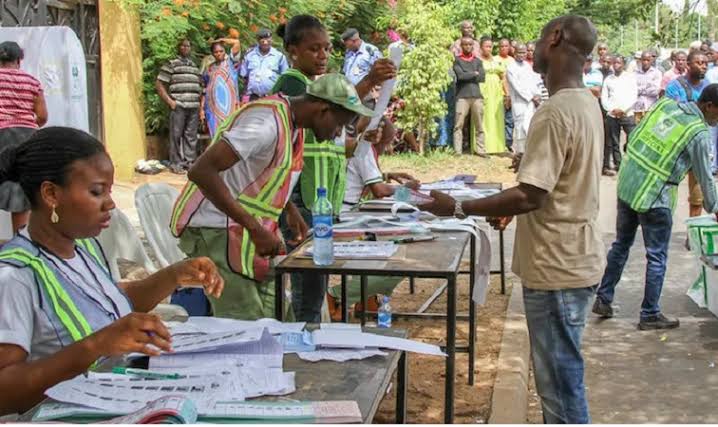
Aftermath of the March 18 governorship and State House of Assembly election that was largely characterized by organized violence, voter intimidation and disenfranchisement, the United States has said it is going to take action against the perpetrators.

In a statement issued on Tuesday, U.S. Embassy and Consulate in Nigeria said the United States is deeply troubled by acts of violence and voter suppression that took place across the country, especially in Lagos and Kano.

The statement said the U.S. diplomatic mission observed first hand in Lagos the use of ethnically-charged rhetoric before, during, and after the gubernatorial election.

The U.S. asked Nigerian authorities to ensure that perpetrators are brought to book, adding that it “likewise will consider all available actions, including additional visa restrictions, on individuals believed to be responsible for, or complicit in, undermining the democratic process in Nigeria.”

The gubernatorial election in Lagos was ethnically-charged, with Igbo residents of the state targeted with violent attacks designed to disenfranchise them. The ethnic rhetoric, which was championed by the ruling All Progressive Congress (APC), resulted in injury to many voters as organized thugs unleashed violence on voters perceived to be Igbo.

Like the U.S., the European Union Election Observation Mission (EU EOM) to Nigeria has also condemned the violence.

Read the United States statement below:

“Nigeria carried out the second round of its electoral process with gubernatorial and state assembly elections on March 18.  The United States is deeply troubled by the disturbing acts of violent voter intimidation and suppression that took place during those polls in Lagos, Kano, and other states.  Members of the U.S. diplomatic mission observed the elections in Lagos and elsewhere and witnessed some of these incidents first-hand.  The use of ethnically charged rhetoric before, during, and after the gubernatorial election in Lagos was particularly concerning.

“We commend all Nigerian political actors, religious and community leaders, youth, and citizens who have chosen to reject and speak out against such violence and inflammatory language, affirming Nigerians’ commitment to and respect for the democratic process.

“We call on Nigerian authorities to hold accountable and bring to justice any individuals found to have ordered or carried out efforts to intimidate voters and suppress voting during the election process.  The United States likewise will consider all available actions, including additional visa restrictions, on individuals believed to be responsible for, or complicit in, undermining the democratic process in Nigeria.

“Following the February 25 national elections, the United States joined other international observers in urging the Independent National Electoral Commission (INEC) to improve voting processes and technical elements that experienced flaws in that voting round.  The March 18 elections appear to have had significant operational improvements, as polling stations generally opened on time and most results were visible on an electronic viewing platform in a timely manner.

“The United States renews its call for any challenges to election results to go through established legal processes, which must not be interfered with.  We further call for Nigeria’s people to work together as they participate in and continue to strengthen the country’s vibrant democracy.”

Central Bank of Nigeria (CBN) Raises Interest Rate to 18% in Further Push to Tame Inflation

0

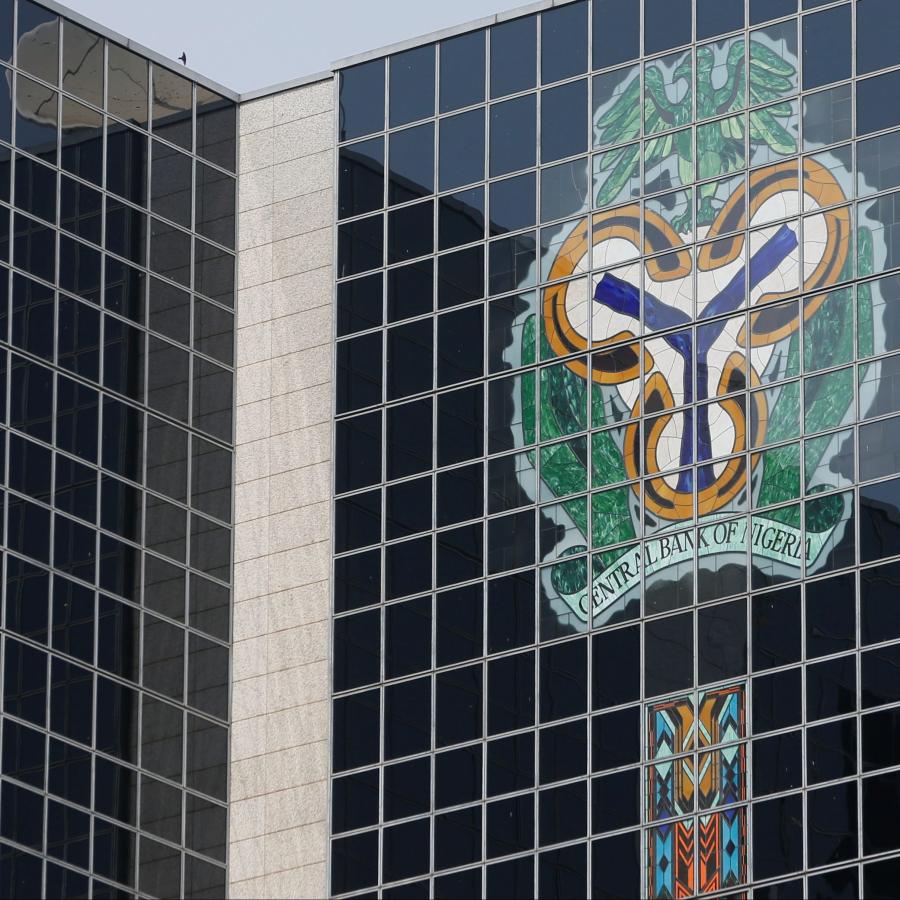
The Central Bank of Nigeria (CBN) has once again raised the interest rate in a push to contain the pressure rising inflation has put on the naira.

The benchmark lending rate was raised to 18 percent on Tuesday following the apex bank’s Monetary Policy Committee (MPC) meeting, which was held in Abuja, beginning on Monday.

The CBN governor Godwin Emefiele said after the meeting that the committee voted to keep the asymmetric corridor at +100 and -500 basis points around the Monetary Policy Rate (MPR). In addition, the MPC voted to keep the Cash Reserve Ratio (CRR) at 32.5 percent, as well as the Liquidity Ratio at 30 percent.

The CRR is the share of a bank’s total customer deposit that must be kept with the central bank, while the bank’s liquidity ratio is the proportion of deposits and other assets that must be maintained to enable the banks to meet their short-term obligations.

This marks the sixth consecutive time the CBN is raising the MPR, a decision it said has significantly helped to tame inflation. The MPC raised its benchmark lending rate from 16.5 percent to 17.5 in January.

The 18 percent raise comes amidst biting effects of the naira redesign policy, introduced by the CBN in October last year.

The policy implementation resulted in a cash crunch that stifled economic activities across the country, accelerating inflation. A February report by the Nigerian Bureau of Statistics (NBS) said that inflation rose by 0.09 percent to reach 21.91 percent from 21.82 in January.

Emefiele said Tuesday the measures taken by the CBN is paying off, and would be sustained to keep inflationary pressure down.

“We believe that as we continue this process that inflation will eventually begin to trend downwards.

“Whether we like it or not, between now and May, or the end of the administration, we will expect that subsidy will disappear. Subsidy removal has its own implication on prices which is inflation, so we are not optimistic that prices will continue to come down because of these measures but we feel we need to continue to tighten,” he said.

The CBN governor said the financial soundness indicators show that Nigerian banks remain resilient, adding that the Prudential Guidelines of the CBN have insulated Nigerian banks from the current financial crisis.

He assured customers of improved online banking services; says eNaira has emerged as the electronic channel of choice with an upsurge in wallets creation.

However, economists have expressed worry that raising interest rates will further hurt the economy that is still grappling with the negative effects of other economic policies made by the CBN. Small and Medium Enterprises (SMEs) are said to be the most vulnerable.

Google Rolls Out AI-Chatbot “Bard”, Only Available to Limited Users

0

American multinational technology company Google has rolled out its AI-powered chatbot “Bard”, which is only available to limited users.

The company revealed that Bard is an experiment and may likely give inaccurate or inappropriate responses to users. To access the feature, Google has directed users in the U.S and U.K to its website to enable them join the waitlist and try it out. Users are mandated to drop feedback to help make Bard better.

The chatbot will be accessible via its web page, separate from Google’s regular search interface. It will offer three answers to each query, a design choice meant to impress users that Bard is generating answers on the fly and may sometimes make mistakes.

Speaking on the roll out of Bard, Google VP of Product Sissie Hsiao and Google VP of Research Eli Collins wrote in a blog post,

Today we’re starting to open access to Bard, an early experiment that lets you collaborate with generative AI. This follows our announcements from last week as we continue to bring helpful AI experiences to people, businesses and communities.

You can use Bard to boost your productivity, accelerate your ideas and fuel your curiosity. You might ask Bard to give you tips to reach your goal of reading more books this year, explain quantum physics in simple terms or spark your creativity by outlining a blog post. We’ve learned a lot so far by testing Bard, and the next critical step in improving it is to get feedback from more people.

Asked whether competitive dynamics were behind Bard’s rollout, Jack Krawczyk, a senior product director, said Google was focused on users. Internal and external testers have turned to Bard for “boosting their productivity, accelerating their ideas, really fueling their curiosity,” he said.

Google AI-chatbot Bard is powered by a research large language model (LLM), specifically a lightweight and optimized version of LaMDA, and will be updated with newer, more capable models over time. Bard, like OpenAI chatbot ChatGPT, will respond to questions about and discuss an almost inexhaustible range of subjects, showing humanlike understanding to users’ questions. In a conference in Paris, Google had explained that Bard would work particularly well for “NORA” queries questions to which there’s no one right answer.

Recall that in February this year, shares for Google’s parent company, Alphabet, dropped 9% after the AI chatbot, Bard, gave an incorrect answer. Google’s reportedly lost $100 billion in market value after its new artificial intelligence technology produced a factual error in its first demo.

Ever since the error of its chatbot, in a bid to redeem its reputation, Google has been working tirelessly to enhance Bard to ensure it operates at its maximum capacity, to ensure that the chatbot doesn’t repeat the same costly mistake like that of last month. The tech giant revealed that it knows the limitations of the technology, and so it wants to be very deliberate at the pace at which it will be rolled out.

Google also added that it will be closely monitoring Bard to make sure it adheres to its own “AI principles” which include avoiding the creation or reinforcement of bias. Bard will not be able to express opinions or take on a persona, although like ChatGPT it will be able to mimic the writing styles of others.