DD
MM
YYYY

PAGES

DD
MM
YYYY

spot_img

PAGES

Home Blog Page 4397

Booty Party, NCEF Endorse Labour Party’s Peter Obi for President

0

About 24 hours after the African Democratic Party (ADC) adopted Peter Obi as its presidential candidate, another political party, Booty Party, collapsed its structure into the Labour Party.

In a ceremony held in Lagos on Tuesday, the two parties formed an alliance that was facilitated by the leader of the Yoruba socio-political group, Afenifere, Pa Ayo Adebanjo, who has been a staunch supporter of Obi.

Booty Party’s governorship candidate Olawale Oluwo, said he has given up his governorship ambition to support the presidential candidacy of Peter Obi for the greater interest of Nigeria and Nigerians.

The ceremony was graced by political bigwigs, including Mrs Akerele Bucknor, who served as Lagos State deputy governor under Bola Tinubu, the presidential candidate of the All Progressives Congress. Labour Party’s governorship candidate in Lagos State, Gbadebo Rhodes-Vivour, was also in attendance.

The Booty Party also adopted Gbadebo Rhodes-Vivour, as its governorship candidate in Lagos, but said the state House of Assembly will be harmonized. Oluwo urged the people of Lagos to come out en masse to vote, assuring them of protection against intimidation or attack.

The ADC had similarly adopted Obi as its presidential candidate on Monday. The party said it made the decision following consultations with its stakeholders.

“After our due diligence and critical assessment of the 17 presidential candidates and what they have to offer Nigerians, and after consulting our Grand Patron and former President, Olusegun Obasanjo, we decided as a party that the Obi-Datti Movement is a worthy cause to endorse,” the ADC said in a statement.

Obi has been racking up endorsements from opposition parties ahead of the February 25 election. Other parties like National Conscience Party (NCP) had earlier thrown their weight behind the Labour Party presidential flagbearer.

The National Christian Elders Forum, a group of Christian elder statesmen across the geopolitical zones, has likewise endorsed Obi. The Christian elders, in a statement titled, “Resolutions towards 2023 elections: Think new”, signed by its chairman Dr. Samuel Gani and Secretary, Pastor Bosun Emmanuel, in Abuja on Tuesday, said Nigeria requires new leaders, new methods, new policies, and new political parties for equity, justice, inclusiveness, and unity to produce the preferred future for Nigerians.

The body said: “The National Christian Elders Forum is endorsing Mr. Peter Obi of the Labour Party as the Presidential candidate to be voted for. NCEF encourages all Nigerians of voting age to exercise their civic duty and ensure that they vote for capacity, competency, integrity, and good health. Nigerians, think new!”

Kenyan HR Startup WorkPay Raises $2.7 Seed Funding Million to Expand Operations

0

An African HR & Payroll solution provider Workpay has recently raised $2.7 million in seed funding to expand its operations.

The funding round included investors such as Launch Africa, Saviu Ventures, Acadian Ventures, Proparco, Fondation Botnar, Kara Ventures, Axian, P1 Ventures, and Norrsken.

Workpay’s CEO and Co-founder Paul Kimanu disclosed that he sees a massive opportunity for market leadership in Africa, noting that the startup is set to launch a payroll engine that can serve customers in additional markets in a bid to stay ahead of their customers’ needs. He added that the startup will also release an API to enable, for instance, accounting firms to be payroll providers.

In his words, “On the tech side, we have integrated with nearly everyone who is processing payments to allow us to send money to as many countries in Africa as possible. Non-tech means we have established a presence in these countries, and have partners that allow us to be compliant, which is very important.

“We are a full-stack HR Payroll company, and we help employees to manage their people and pay them. And ours is a very neat platform that processes payrolls and helps employers to be compliant. As an employer, you are able to pay employees wherever they are, and in their preferred accounts, they don’t have to be forced to open accounts with specific banks just because the employer banks there and files taxes too”.

He further added that Workpay is building a marketplace, and is bringing in other players that can serve employers and employees on its platform.

Workpay relies on Google Maps Platform’s attendance tracking feature to help business clients analyze their employees’ attendance. Attendance information is fed to the payroll system. For those who are paid based on attendance, the Google Maps Platform helps to locate, or geofence, that attendance.

Founded in 2019, Workpay is a Payroll, benefits, and compliance software company with embedded finance for local and remote teams in Africa. The startup empowers teams to hire local and remote teams across Africa while staying compliant and without the hustle of having local entities.

Workday Payroll is robust and enables the calculation of hourly, weekly, bi-weekly, monthly, or semi-monthly pay runs in any African country. The payroll consists of all statutory deductions (NHIF, NSSF, NITA, PAYE) allowance (benefits) deductions, employee loans, salary advances, paid leaves, etc, for statutory compliance. Employees can access their payslips through the the Android/iOS app’s employee service (ESS) portal.

It is however interesting to note that In 2021, Workpay was selected for the Google for Startups Black Founders Fund in Africa, which provides Black-led startups with equity-free funding, Google Ad grants, and mentorship. Workpay received $100,000 of the first $3 million fund, which is allocated across 50 startups across Africa.

Workpay has recently expanded beyond Kenya, opening an office in Lagos to cater to Nigerian and West African SMBs. 

How Nigerian Electorates Can Prepare for the 2023 Polls

0

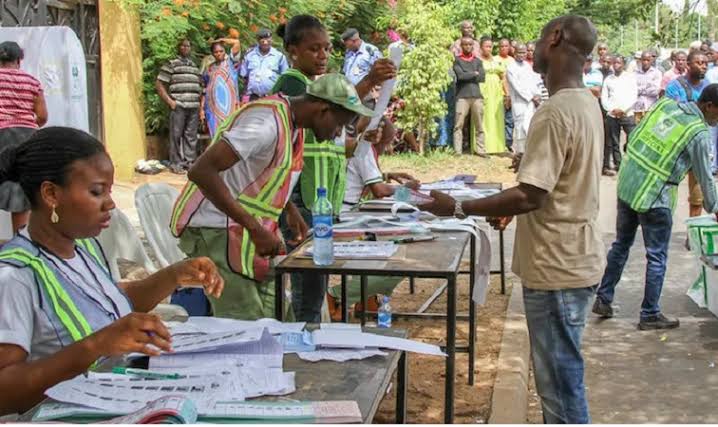
On Saturday, February 25, Nigerian electorates, registered and endorsed as credible voters by the Independent National Electoral Commission, INEC, are expected to make it to their various designated polling units to decide who will govern them at the national level for the next four years. Based on existing data of registered voters by INEC and the political issues that have surfaced in the country in the last couple of months, it is expected that the 2023 polls will record massive turn out at both the national and the state levels.

However, while evidences have shown that quite a number of Nigerians are excited about the forthcoming general election which is fewer than five days away, it is important for the Nigerian electorates to note the general and some specific facts about the coming elections that will prepare and enable them to exercise their franchise in a peaceful and ethical manner.

The following are tips on how the Nigerian electorates can brace for the coming elections:

Understand voting is your civic responsibility and civic right.

As a citizen, one of your obligations to your state is to actively participate in its process leading to the establishment of a new institution of government which will be saddled with the responsibility of looking over your security and welfare. It is also your prerogative as a citizen to vote for any individual or party you deem fit for the task among alternatives presented to you.

It is important to understand that the government is an institution of the state. Thus, Whether you feel included in or alienated from the government of the past should not deprive you of the opportunity to influence the collective choice of a new government towards a better future for your state.

Be excited about exercising your franchise and trust in the process.

Since voters apathy often results from lack of motivation of the electorates and lack of trust in the system, being intentionally optimistic and having trust in the process is a good way to cope with temptations to not participate in the election.

Be familiar with your Polling Unit.

Your polling unit is where you are expected to cast your vote on the election day. Your polling unit is the closest voting venue to you based on the address you registered during the voters registration exercise. It is generally advised to visit your polling unit a day or two days prior to the election date as this will enable you to familiarize yourself with the terrain and confirm your details on the voters registration lists pasted at the venue.

Don’t Forget your PVC.

Your PVC is your identity without which you cannot not be allowed to exercise your franchise. It is recommended to always keep your PVC handy and within reach a day or two days to the election date. You can place the PVC in the pocket of the cloth you intend to wear to your polling unit the night before.

Be resolute about your choice of candidate.

Before the election day, one is expected to have reached a decision about who one intends to vote for. However, when you leave your home for the polling unit, ensure you are still clear about the motive or rational behind your choice because at the polling unit you will likely meet party agents and loyalists who may hope to influence your decision. The election day is not a day to be credulous or entertain indecision.

On Accreditations and Voting

With your PVC you will be mobilized for accreditation based on the direction of the INEC officials at your designated polling unit. After accreditation, you will be presented with ink and a ballot paper with which to cast your vote.

Note that voting is a secrete ballot system. You will be directed to a cubicle where you can cast your vote privately.

To avoid casting a void vote, ensure the ink is appropriately applied to the box allotted to your preferred party and does not smear on other parts of the ballot paper. The ballot paper should be folded vertically and dropped into the ballot box.

What next after voting?

After casting your vote, you may stay behind to witness the collation and announcement of results. However, if you sense a likelihood of a security threat erupting at the polling unit, you should immediately leave the venue. You can continue to follow the general exercise on one of your local TV stations at home.

Governors opposing the Nigerian Presidency is a Treasonable Felony

0

It has never been heard that some state governors in Nigeria will openly be flouting the orders and directives of the president to the extent of issuing opposing directives asking their state residents and indigenes not to obey the president. 

Actions of such nature are nothing other than a treasonable felony. It is only when you intend to overthrow the government, plot a coup or declare your state/region sovereign and independent from the federal government that you as a state governor can exhibit that level of ungraded insolence.

In the early morning of Thursday, the 16th of February, 2023, the president in response to the protest rocking the country against the Naira redesign policy and the withdrawal of some old naira notes made a nationwide broadcast stating that the 500 and the 1000 naira notes by the reason of the expiration of the deadline ceases to be a legal tender but can be still redeemable at Central Bank of Nigeria branches nationwide.

Some state governors protested against this move stating that the presidency cannot and should not do that. The governor of Kaduna state, Mr Nasir El Rufai made his own nationwide broadcast countering that of the president telling the indigenes and the residents of the state not to pay attention to the president’s broadcast, he vehemently stated that despite the position of the president, the 500 and 1000 notes is still and will continue to be a legal tender in the state and people can still transact with it.

The president and the presidency are yet to respond or react to this outright insolence of some state governors, especially that of the governor of Kaduna state, but acts like this are not just disrespectful to the power and authority the president wields as the commander in chief and the number one citizen of the country it as well breeds coup if not quickly checked.

The argument that the president is himself flouting the directives of the Supreme Court does not provide the ground for some state governors to go against the directives of the president and the CinC. The president flouting the orders of the Supreme Court is left for him and the court to settle their scores.

The opposing concurrent order of some state governors amounts to them seeking to overthrow the authority and the office of the president and that is nothing other than a treasonable felony. Even the dictionary defines treasonable felony to mean “attempting to kill or overthrow a sovereign government” which starts from countering the stand of the president and asking your followers to disregard and undermine his authority.

A state governor making an opposing order asking his state residents to disregard that of the president can only be seen as being done with the malicious intent to overthrow the authority and the office of the president; there is no other better explanation for it.

It is a charge and a call on the DSS to invite those state governors that are openly asking their state indigenes and residents to disobey the president before we experience another coup that will land this nation into another civil war.

Poor Implementation of Cashless Policy Undermines Trust in Nigeria’s Financial System – Fintech Association of Nigeria

0

In the wake of the recent naira redesign policy by the Central Bank of Nigeria (CBN), which has triggered currency scarcity due to its poor implementation, the Fintech Association of Nigeria has expressed concern that the impact may hurt the overall implementation of the CBN’s cashless policy.

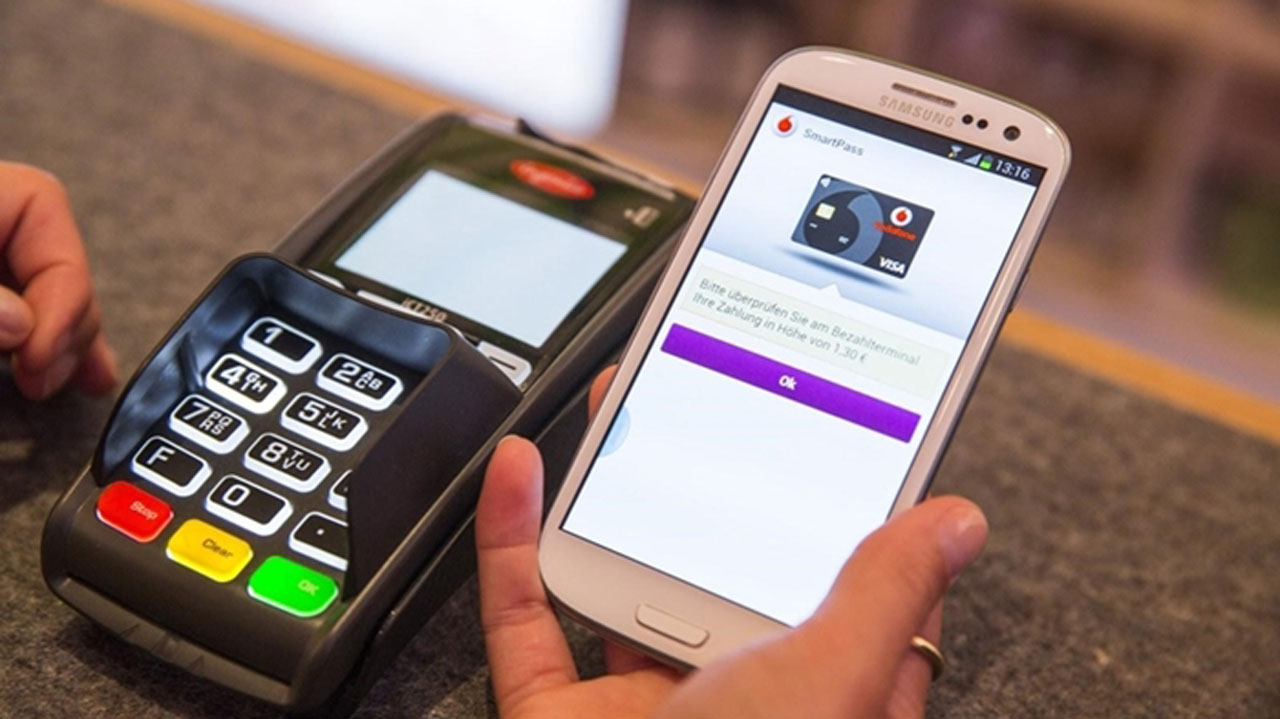
The resulting cash crunch has masterminded a significant shift to digital transactions that has seen financial institutions struggle to meet the unprecedented demand. The Association said the situation may erode customers’ trust in Nigeria’s banking system.

As ATMs remain empty amid overwhelming demand for cash, which the N5,000 or less over-the-counter payment quota per individual has abysmally failed to curtail, alternative payment channels such as the PoS have upped their charges by nearly 50 percent, the Association noted.

The national fintech body expressed this concern through its ‘Thought Leadership Series’ titled ‘Cashless Economy on Steroids: Strategic or Suicidal?’ where it further noted that a cashless policy should bring about greater ease and convenience of payments, not the chaotic challenges currently unfolding in Nigeria.

“Challenges with execution may be leading to the erosion of trust in the banking system, with merchants asking for cash payments despite empty ATMs, digital channels increasingly overwhelmed, and POS charges inching towards 50 percent,” the body said.

Reports of delayed and unsuccessful electronic transactions have followed the naira redesign policy, compounding the cash scarcity and creating lack of confidence in digital channels as alternative to cash payments.

The CBN introduced the naira redesign policy in October and set a limited deadline of about two months to fully implement it. The naira redesign has been seen a segment of the apex bank’s decade old broader cashless policy but its implementation has failed to impress advocates of financial inclusion.

The Fintech Association of Nigeria said current challenges may defeat the purpose of the cashless policy which it explains as follows:

“The Central Bank of Nigeria first issued the framework for its cashless policy in 2012, to reduce the amount of physical cash in circulation, deepening financial inclusion by driving digital payments, reducing fraud and curbing cash-aided crimes such as terrorism financing, kidnapping, extortion, blackmail, and so on.

“Today, the maximum weekly withdrawal limits for individuals and corporates across all channels are N500,000 and N5,000,000 respectively. In an event where cash withdrawal exceeds these limits, a processing fee of three per cent and five per cent will be incurred for individuals and corporates, respectively. In addition, third-party cheques exceeding the sum of N100,000 are not eligible for over-the-counter payment.

“On the surface, a cashless economy in itself does not seem like a bad policy. Anyone who has been paying attention to the global payments trend knows that a cashless world looms and that it is only a matter of time till hard notes become obsolete or close enough.”

The Association laid emphasis on the need to create policies that will help emerging fintech firms in Nigeria to meet global digital payment goals. It quoted a Bain and Company report, which said that 67 percent of global payments will become digital by 2025. This, it indicated, means a greater a need for the Nigerian financial system to broaden its operation in order to accommodate the potential significant shift to digital payment.

“The current rise of digital-only banks (neo-banks) and contactless payments with the help of smartphones and super-fast networks indicates that the use of cash as a medium of exchange has been declining gradually for years,” the Association said, noting that while the drive for a cashless economy at all cost by the CBN was strategic, its execution and results had been described by many as suicidal.

The body said the CBN should learn from India’s failed cashless policy of 2016, which happened because the policymakers failed to take into consideration concerns of the people such as preferences, economic development, and technological advancement, during its implementation.

“One thing is clear. When adopting a cashless policy it is more important to have a customer-centric approach rather than a technical one. The success of a cashless policy is directly linked to the incentives offered to encourage mainstream adoption,” it said.