
DD
MM
YYYY

PAGES

DD
MM
YYYY

spot_img

PAGES

Home Blog Page 44

Navigating the Bull’s Twilight: Goldman Sachs Maps Three Divergent Roads for 2026 Equities

0
The logo for Goldman Sachs is seen on the trading floor at the New York Stock Exchange (NYSE) in New York City, New York, U.S., November 17, 2021. REUTERS/Andrew Kelly/Files

In the shadow of a resilient bull market now marking its fourth year, Goldman Sachs offers a roadmap for what lies ahead, emphasizing the pivotal role of broadening participation beyond the tech titans that have dominated recent gains.

Drawing from historical precedents and current economic signals, the firm’s late-January 2026 client note—authored by a team led by U.S. Portfolio Strategy Head Ben Snider—envisions three distinct trajectories for stock performance, each hinging on how the rally expands to encompass laggards like small caps, cyclicals, and international equities.

This analysis arrives amid tentative signs of rotation: the equal-weighted S&P 500 has advanced 4% year-to-date through late January, surpassing the cap-weighted index’s 1% rise, as investors pivot toward undervalued segments in anticipation of sustained growth.

Goldman’s broader 2026 outlook underpins this framework, projecting a sturdy U.S. economy with 2.8% global growth—outpacing consensus estimates of 2.5%—and the S&P 500 climbing to 7,600 by year-end, implying a 12% total return.

CEO David Solomon, in recent commentary, pegs recession odds below 20%, attributing resilience to moderating inflation and potential productivity boosts from AI, though he flags geopolitical tensions and regulatory hurdles as potential “speed bumps.”

The firm identifies five overarching investment themes shaping the year: mid-cycle economic acceleration, the great corporate re-leveraging (as firms boost debt for growth), evolving geopolitics, AI’s next wave, and a pivot to quality assets amid volatility.

Yet, the path to broadening will define whether the bull sustains or stumbles, with earnings momentum emerging as the critical driver.

Path One: The “Catch-Down” Precipice – Mega-Cap Valuations Crater

Echoing the dot-com era’s implosion, this scenario sees a sharp contraction in valuations for the market’s heaviest hitters, particularly the AI-fueled tech behemoths. Historical parallels point to the 2001 tech wreck, where overinflated multiples burst, dragging broader indexes lower before a rebound.

Goldman downplays this risk for 2026, noting that mega-cap tech’s forward price-to-earnings (P/E) ratio hovers around 27—a premium over the S&P 500 that ranks in the modest 24th percentile relative to the past decade’s tech spreads.

Dispersion among these giants remains elevated, but the firm anticipates persistence rather than a collective plunge. Still, investor wariness over AI hype could amplify volatility if earnings disappoint, potentially curtailing the rally’s upside.

Path Two: The “Catch-Up” Surge – Valuations Lift Across the Board

Conversely, this route envisions a valuation expansion rippling through the market’s underperformers, buoyed by accelerating growth during the Fed’s easing phase. Drawing from cycles since 1980, such conditions have historically propelled the equal-weighted S&P 500’s P/E multiple 10% to 15% higher over 12 months.

The strategists temper expectations here, highlighting that the equal-weighted index already trades at a forward P/E of 17—placing it in the lofty 95th percentile versus levels since 1990.

This stretched positioning, combined with macro fair-value assessments, suggests limited room for a dramatic uplift. Small- and mid-caps, however, could see targeted gains if growth momentum holds, aligning with Goldman’s view of early-2026 broadening, favoring these segments before a potential slowdown.

Path Three: Earnings-Led Equilibrium – The Bull’s Sustainable Fuel

Goldman’s base case envisions broadening propelled by robust corporate profits spreading beyond big tech, mirroring the 2021 surge where mid-tier earnings outpaced leaders. Here, the “average stock” delivers superior growth, sustaining the rally without extreme valuation swings.

Consensus forecasts bolster this: S&P 500 EPS is expected to rise 15% annually in 2026, with the equal-weighted index at 10%—among the strongest projections in recent history.

The firm ties this to early-year economic acceleration, forecasting the trend to continue near-term but with a “limited runway” as growth moderates later in 2026.

“We believe the ultimate degree of equity market broadening will depend on the degree of earnings broadening,” the note emphasized, aligning with views from peers like JPMorgan, which also anticipate profit diversification supporting small- and mid-caps.

This earnings-centric path dovetails with Goldman’s global equities forecast of 11% returns over the next 12 months, driven by AI’s productivity tailwinds and a pivot to quality amid uncertainties.

Yet, Solomon’s “speed bumps”—from trade tensions to regulatory scrutiny—could disrupt momentum, particularly if geopolitics escalates.

Investors understand the message to be that diversification matters, with opportunities in cyclicals, quality growth, and international markets as the bull evolves. However, with economic tailwinds in play but valuations stretched, the earnings path offers the most balanced route forward—provided profits deliver on the hype.
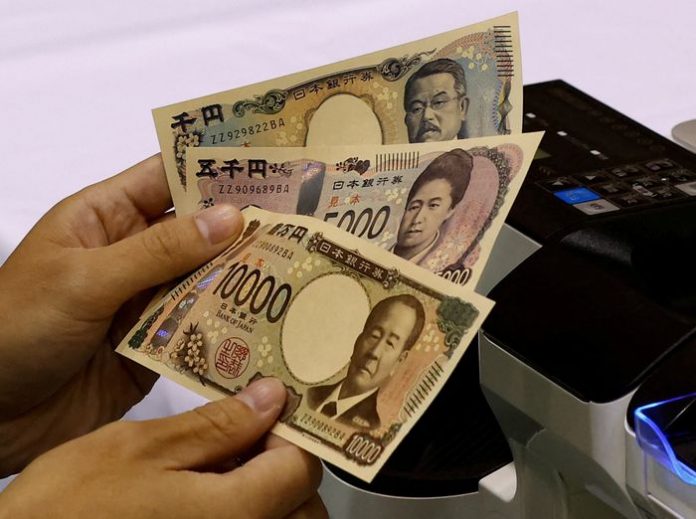

Japan’s Business Lobby Backs Yen Intervention If There Are Rapid, Volatile Moves 

0

Japan’s top business leader on Tuesday said government intervention in currency markets would be justified if aimed at halting sharp and disorderly moves in the yen, as the Japanese currency remains caught between diverging monetary policies and rising trade frictions with the United States.

Yoshinobu Tsutsui, head of Keidanren, Japan’s most powerful business lobby, said recent developments had helped ease some of the damage caused by prolonged yen weakness, after the currency rebounded following so-called rate checks by the New York Federal Reserve.

“We welcome the fact that the demerits caused by excessive yen weakness have been arrested to some extent,” Tsutsui told a news conference.

Rate checks, in which authorities inquire about market prices without direct intervention, are closely watched by traders as a signal that policymakers may be preparing to step in if volatility intensifies.

Tsutsui said the future direction of the yen would depend heavily on the policy paths of both the Bank of Japan and the U.S. Federal Reserve, underscoring how interest-rate differentials continue to dominate currency dynamics.

“The direction of Japanese and U.S. monetary policy would also affect the yen’s future moves,” he said, adding that he hoped the Bank of Japan would respond “appropriately,” without spelling out specific measures.

He was more explicit on the principle of intervention, however, saying it would be warranted under certain conditions.

“If there are rapid, volatile yen moves, then intervention would be justified,” Tsutsui said.

A currency under strain

The yen’s recent rebound comes after months of intense pressure that pushed it to multi-decade lows against the dollar. The currency has been weighed down by Japan’s ultra-loose monetary stance, even as the Federal Reserve kept U.S. interest rates elevated, widening yield gaps and encouraging capital to flow out of Japan.

While a weak yen has supported exporters by boosting overseas earnings when repatriated, it has also driven up import costs, squeezing households and companies dependent on energy, food, and raw material imports. That imbalance has increasingly worried policymakers and corporate leaders, who fear that excessive depreciation does more harm than good.

The currency’s troubles have been compounded by escalating trade tensions between Tokyo and Washington. President Donald Trump has repeatedly criticized Japan’s trade surplus with the United States and has suggested that a weak yen gives Japanese exporters an unfair advantage. His administration has floated the possibility of new tariffs or trade measures if it believes currency movements are distorting competition.

Those threats have revived memories of past U.S. pressure on Japan over exchange rates, particularly during periods when Washington accused Tokyo of tolerating yen weakness to support exports. Japanese officials have consistently denied manipulating the currency, insisting that any intervention would be aimed solely at smoothing volatility, not targeting specific exchange-rate levels.

Tariffs and policy divergence

The tariff faceoff has added another layer of uncertainty to yen markets. Any escalation in trade measures could hurt Japan’s export-driven economy, while also influencing currency flows as investors reassess risk. At the same time, the Bank of Japan faces a delicate balancing act: moving too slowly to normalize policy risks further yen weakness, while moving too quickly could destabilize financial markets and choke off fragile domestic growth.

Against that backdrop, Tsutsui’s comments reflect growing pressure from the corporate sector for stability rather than outright currency weakness. Large manufacturers may benefit from a softer yen, but smaller firms and consumers bear the cost through higher import prices and inflation.

Japan has already demonstrated its willingness to act. In recent years, authorities have spent billions of dollars intervening in the market to stem sharp yen declines, emphasizing that excessive volatility, not the level of the exchange rate itself, is their primary concern.

Tsutsui’s remarks suggest that the stance remains intact. With U.S.–Japan trade relations under strain, global markets on edge over tariffs, and monetary policy paths still diverging, the yen is likely to remain volatile.

Modern sportsbooks explained: how online betting platforms really work

0

It’s widely assumed that online sportsbooks are simple: odds are calculated, bets are placed, and winners get paid. Many beginners, and even casual regulars, also believe that “the house always comes out on top, no matter what you do.”

That perception is partially true, but not because sportsbooks cheat, rather because they look at the bigger picture and factor in a wide range of variables. Their mechanisms are complex and constantly updated, but that doesn’t mean bettors cannot study these patterns and act strategically to put them in their favor.

This article focuses on three hidden truths about sportsbooks (https://tribuna.com/en/betting/sportsbook/) that most bettors either overlook or misunderstand.

Public behavior shapes the odds

Odds aren’t purely statistical. Bookmakers anticipate where the money will come from, and lines are adjusted accordingly. Public sentiment, media coverage, and star-player hype all influence early betting patterns. Platforms like DraftKings and FanDuel show that a significant portion of early bets comes from casual bettors, while sharp money may distribute differently. Heavy skew toward one side can correlate with small but measurable line adjustments, not because the outcome probability changes, but to manage exposure.

The natural takeaway might seem obvious: don’t blindly follow headlines and hype, make your own decisions. But beyond that, there are deeper strategies:

Tip What it means How to apply it
Monitor public betting percentages Track the side casual bettors favor vs. sharp money Use verified sources to see where public money is concentrated
Compare multiple sportsbooks Odds react differently depending on exposure Look across different bookmakers to find temporary value before lines adjust
Distinguish tickets vs dollars Many small bets vs few high-value bets move markets differently Focus on dollar-weighted percentages to see true market impact
Act early, but selectively Lines can shift quickly when volume skews Identify opportunities where the line hasn’t fully reflected heavy public money


The tip ‘Act early, but selectively’ points to another important factor: how sportsbooks respond to big early bets, causing temporary line shifts. This is important enough to deserve its own section, which we cover next.

Early heavy betting can shift lines

Significant early bets can move lines before any statistical reason exists. If a large number of wagers comes in on one side, the sportsbook may adjust the spread or total to balance exposure, not because the team’s star player got injured or similar. Bettors who monitor early betting trends can spot temporary inefficiencies, creating opportunities for value bets without assuming manipulation or unfair odds.

Micro bets don’t reward sports knowledge

Another area where things aren’t always as they seem is micro betting, a relatively new feature offered by many of the best in-play betting sites. This type of betting, also often called ”in-play props” or ”live-action markets,” allows players to wager on extremely short-term events, such as the outcome of the next play in an NFL game, the next two minutes in a basketball match, or a single pitch in MLB. Unlike normal in-play betting, which focuses on quarters, halves, or periods, micro bets resolve almost instantly, often within seconds or minutes.

These bets have little to do with using sports knowledge to gain an edge. The rapid pace forces decisions under time pressure, and even small fluctuations in game flow or line latency can change outcomes. That’s why regulators in states like New Jersey and Pennsylvania monitor or restrict micro betting, citing concerns about impulse wagering and problem gambling. While licensed sportsbooks offer them safely, micro markets are generally high-variance, addictive, and risky, making them very different from traditional in-play markets where analysis and strategy matter.

Promotions guide betting volume

Bonuses and other promotional offers are a special territory for sportsbooks because this is where they compete with each other, and it’s no coincidence that deposit matches, free bets, and enhanced odds are the aspects of a bookmaker you’ll most often see in advertising, at least where regulations allow it. Common knowledge is already a bit skeptical: casual players know that while bonuses might seem like “free profit,” wagering requirements are usually high, making it difficult to convert them into actual cashable wins.

But there’s more to it than that. Promotions are also a strategic tool for managing player behavior and market exposure. Here’s an example for a typical Major League Soccer slate:

Promotion Type Example use case Effect on betting volume Player takeaway
Deposit match bonus $100 bonus for first deposit Casual bettors place standard wagers Match bonus bets with value lines
Free bet Any MLS match (https://tribuna.com/en/match/) Spike in bets on highlighted matchup Watch for skewed public odds
Enhanced odds on props First team to score a goal Increased activity on props Evaluate risk/reward carefully
Parlay boost 3-game MLS parlay Encourages larger combined bets Only include value bets


By paying attention to how promotions influence where players place their bets, bettors can predict how lines might move and which markets will get the most action.

Alternate lines and props are designed around margin

Every sportsbook builds a margin into its odds, a small percentage that ensures the house makes a profit over time. This is why, even on fair and licensed platforms, casual players will usually lose slightly in the long run if they bet blindly. Alternate lines, totals, and prop markets are designed with this margin in mind, often even more so than main lines.

Prop bets, like “first team to 30 points,” usually include higher built-in margins. Alternate spreads, such as -3.5 versus -4.5, are also priced to slightly favor the sportsbook. Totals for niche or low-visibility events may be skewed due to lower liquidity. To use these markets effectively, players need to carefully analyze how they relate to main lines, spotting real value while avoiding unexpected risk.

These facts show that sportsbooks, often billion-dollar giants, are primarily focused on staying profitable over the long term. That’s hardly surprising, and it’s not something an individual bettor can change. But knowing the patterns behind odds, line movement, promotions, and alternate markets gives you tools to act strategically rather than blindly following the crowd.

Another important pattern to recognize is the risk of addiction. Betting is designed to be fun, and losses are part of the system. Only wager what you can afford to lose, set limits, and stop immediately if you feel the experience is becoming stressful or compulsive.

Strategy’s 2932 Bitcoin Buy, Shows Its Resilience on its Digital Assets Investment 

0

Strategy (formerly MicroStrategy) has acquired an additional 2,932 Bitcoin for approximately $264 million. This purchase occurred between January 20 and January 25, 2026, at an average price of $90,061 per BTC including fees and expenses, as disclosed in an SEC filing and announced by Executive Chairman Michael Saylor.

The company funded this primarily through the sale of about 1.57 million shares of common stock netting ~$257 million and some preferred stock sales. This brings Strategy’s total Bitcoin holdings to 712,647 BTC, with: Aggregate purchase cost: ~$54.19 billion

Overall average acquisition price: ~$76,037 per BTC. Current valuation of holdings: Around $62–63 billion based on Bitcoin trading near $87,000–$88,000 at the time of recent reports. This acquisition reflects Strategy’s ongoing “Bitcoin treasury” strategy—aggressively accumulating BTC, often during market dips, by raising capital through equity offerings.

It marks a slowdown from prior weeks’ larger buys of over $2 billion earlier in January but continues their pattern of buying on weakness. Saylor and the company view these dips as accumulation opportunities, maintaining a strongly bullish long-term stance on Bitcoin.

Current Bitcoin price is hovering in the high $80,000s, down from recent peaks above $95,000. Strategy’s moves often influence sentiment in the BTC and MSTR stock markets.

The recent $264 million Bitcoin acquisition by Strategy — adding 2,932 BTC at an average price of ~$90,061 per coin — has several key implications across market, corporate, and broader crypto ecosystem levels.

This move, and covering purchases pushes their total holdings to 712,647 BTC valued at roughly $62–63 billion at current Bitcoin prices around $87,900–$88,000 as of January 27, 2026. This is Strategy’s fourth Bitcoin buy in January 2026 alone, though smaller than prior ones (e.g., over $2 billion earlier in the month).

It reinforces their core “Bitcoin treasury” model: using equity/preferred stock sales—here, $257 million from ~1.57 million common shares + some preferred to fund BTC purchases, often during dips. With an overall average cost of $76,037 per BTC, the holdings show unrealized gains of billions ($8–9 billion paper profit based on recent valuations).

Critics highlight ongoing shareholder dilution from frequent ATM (at-the-market) offerings. Strategy’s stock often trades at a premium or discount to its Bitcoin net asset value (mNAV). Recent reports note it dipping to ~0.94x mNAV (a 6% discount), raising questions about long-term shareholder value if Bitcoin doesn’t rally strongly.

However, proponents see this as “financial alchemy” — leveraging capital markets to amplify BTC exposure. The company’s fate is increasingly tied to Bitcoin’s price. A prolonged downturn could pressure the balance sheet, debt obligations, or trigger index exclusions, potential MSCI delisting risks noted in prior analyses.

Still, leadership including CEO Phong Le remains bullish, viewing 2026 as a major year for both Bitcoin and Strategy. Purchasing at ~$90K amid a pullback from January highs (> $95K) to the high $80K–low $90K range demonstrates conviction in long-term upside. Strategy’s moves often act as a sentiment booster for BTC holders, framing dips as accumulation opportunities rather than bearish signals.

Holding ~3.4% of Bitcoin’s total supply underscores corporate adoption of BTC as a reserve asset. This influences other firms (e.g., smaller players like Hyperscale Data building treasuries) and reinforces narratives around Bitcoin as “digital gold” amid macro concerns (currency debasement, etc.).

Some analysts note that if Strategy ever slows or stops buying or faces forced sales, it could weigh on sentiment given their outsized role as a BTC proxy. However, the current pace (even this “slowdown”) suggests they’re far from tapping out, with remaining ATM capacity.

Bitcoin trades in a volatile but range-bound mode ~$87,900–$88,900 recently, down modestly week-over-week amid mixed macro factors. Strategy’s buy aligns with their pattern of capitalizing on weakness, potentially supporting floor levels in the near term.

This reinforces Michael Saylor’s unwavering thesis: Bitcoin as a superior long-term store of value. It may stabilize sentiment during consolidation but amplifies risks if BTC faces deeper corrections. For now, it keeps Strategy positioned as the leading corporate BTC accumulator.

Moonshot K2.5 AI Raises the Stakes as China’s Model Makers Brace for DeepSeek’s Next Move

0

China’s artificial intelligence race is entering a sharper, more consequential phase, and Alibaba-backed Moonshot AI is signaling that it intends to remain among the front-runners.

With the release of an upgraded version of its flagship Kimi model, the company is not just shipping new features. It is making a statement about where it believes the next phase of competition will be fought: multimodality, developer tools, capital scale, and the ability to survive an increasingly unforgiving consolidation cycle.

Moonshot said its latest model, K2.5, can process text, images, and video simultaneously from a single prompt, placing it firmly in the category of so-called omni models. These systems, designed to reason across multiple data types rather than treating them as separate tasks, are becoming the industry standard globally. OpenAI and Google have already moved in this direction, and Chinese developers are now racing to ensure they are not structurally behind as applications shift from chatbots toward agents, copilots, and real-world automation.

The upgrade lands at a strategically sensitive moment. Over the past several weeks, China’s leading AI firms have rolled out a wave of product announcements, research papers, and funding news. The timing is widely interpreted as pre-emptive positioning ahead of an expected major release from DeepSeek, the research-driven startup whose R1 model shook the domestic market earlier this year and reignited investor enthusiasm for Chinese large language models.

DeepSeek has kept details of its next release tightly controlled, but its signals have been deliberate. Its research arm has published technical papers authored by senior staff, including co-founder Liang Wenfeng, and released code on GitHub, a move often used to showcase confidence in the underlying architecture.

Moonshot’s K2.5 is designed to show technical momentum. The company says the model outperforms open-source peers across several benchmarks and has narrowed the gap with top-tier proprietary models in coding tasks, an area that has become a key differentiator for enterprise adoption. Coding performance is no longer a niche metric. As companies experiment with AI agents that write, debug, and deploy software, models that fall short here risk being sidelined.

To reinforce that point, Moonshot is rolling out an automated coding tool intended to compete with Anthropic’s Claude Code, one of the most widely used AI-assisted programming tools in global markets. This move reflects a broader shift among Chinese model makers, who are increasingly targeting developers rather than focusing solely on consumer-facing chatbots. Developer ecosystems create lock-in, recurring revenue, and data feedback loops, all of which are crucial for long-term viability.

The technical push is closely intertwined with capital strategy. Moonshot raised $500 million last month from investors including Alibaba and IDG Capital, at a post-money valuation of $4.3 billion, according to people familiar with the matter. Those same sources said the company has since initiated additional fundraising discussions, seeking a valuation of up to $5 billion to meet strong investor demand.

That appetite has been fueled by a noticeable change in market sentiment. After a period of caution driven by compute costs, regulatory uncertainty, and fierce competition, investors are again backing the idea that a smaller number of Chinese AI champions will emerge with defensible scale. Recent initial public offerings by rivals Zhipu and MiniMax Group in Hong Kong, which together raised more than $1 billion, have helped reopen exit pathways and provided valuation benchmarks for late-stage private firms.

Moonshot, Zhipu, and MiniMax now form a de facto top tier among China’s independent large model developers, operating alongside technology giants such as Alibaba and Tencent. This is a far cry from the earlier phase of the market, once described as the “War of One Hundred Models,” when dozens of teams competed for attention. DeepSeek’s breakout success earlier this year accelerated a shakeout, leaving many smaller players unable to fund the compute, talent, and data required to keep pace.

The arms race is not limited to model releases. It increasingly spans the entire AI stack, from chips and infrastructure to applications. Zhipu’s recent launch of GLM-Image, which it says is the first domestic image generation model fully trained on Chinese chips, speaks directly to concerns about U.S. export controls and long-term supply security. Alibaba has moved aggressively as well, unveiling a reasoning-focused version of Qwen3-Max and, through its fintech affiliate Ant Group, a spatial perception model for robotics developed by subsidiary Robbyant.

Against this backdrop, Moonshot’s positioning is both ambitious and precarious. Founded by Yang Zhilin, a former Tsinghua University professor with prior experience at Meta and Google, the company has earned respect for research quality. However, it trails some peers in commercialization. While Moonshot offers tiered subscriptions for its chatbot and licenses its technology to enterprise customers, analysts note that rivals have been quicker to translate technical capability into revenue.

That tension reflects a broader reality now confronting China’s AI sector. The era when rapid model iteration alone could justify sky-high valuations is fading. With capital markets reopening and competition intensifying, companies are under pressure to demonstrate credible paths to sustainable business models. Software subscriptions, enterprise deployments, developer platforms, and industry-specific applications are all becoming critical proof points.

Moonshot’s K2.5 release, coupled with its fundraising push, suggests the company understands this shift. By emphasizing multimodal capability, coding performance, and developer tools, it is aligning itself with where demand is likely to concentrate as AI moves deeper into production environments rather than remaining a novelty.

As anticipation builds around DeepSeek’s next release, the competitive dynamics are likely to tighten further. The coming months may determine which Chinese AI firms can combine technical excellence, financial backing, and commercial execution at sufficient scale. Moonshot’s latest move ensures it remains in the race, but the pace of escalation suggests that survival, not just leadership, is now at stake.