DD
MM
YYYY

PAGES

DD
MM
YYYY

spot_img

PAGES

Home Blog Page 4403

Platypusdefi Hacked on a $41.5M Smart Contract Exploit

0

Platypusdefi new stablecoin has been hacked for approximately $8.5 million dollars plus another $33 million $USP today. In the two hour old Platypus hack, the attacker deposited 44 million, borrowed 42 million, and then used the emergencyWithdraw() function which happily gave the attacker the full original deposited funds back – no deductions for the borrow.

However, PlatypusDefi confirmed the hack on a recent Twitter post. Platypus Defi offers two main products:

AMM where users can deposit stable coins and receive LP tokens.

Algorithmic stablecoin that’s pegged to the US dollar.

In 2021, bEarn Fi on the BSC chain lost $11M dollars on exactly same function emergencyWithdraw(pid). It’s a pity that people made the same mistake again in 2023. However, on chain sleuth ZachXBT posted on microblogging platform Twitter, that he’s traced the recent Platypusdefi hack funds to Retlqw a known scammer.

Hi retlqw since you deactivated your account after I messaged you.

I’ve traced addresses back to your account from the Platypusdefi exploit and I am in touch with their team and exchanges.

We’d like to negotiate returning of the funds before we engage with law enforcement.

ZachXBT was able to trace this hack exploits with ENS ‘retlqw.Eth address linked to Opensea and Twitter. Apparently, following intense community calls— Tether USDT blacklisted the stolen Platypusdefi funds with many degens asking how truly decentralized is the USDT stablecoin. In my honest opinion Tether is trying to secure the space and redeem itself from various allegations of auditing imbalances in the past and also not to have a face off from regulators for not taking appropriate measures to securing investors funds.

OxCygaar, a Software and Blockchain Engineer explains in-depth how the scammer exploited the USDC pair, he wrote “The hack starts by taking a flash loan out from Aave for 44 million USDC. For those that don’t know, a flash loan is a temporary loan that needs to be paid back in the same txn.

The exploiter then deposits this $44M into the Platypus USDC pool. This is one of the pools that makes up the Platypus AMM. In return, they receive $44M of Platypus’ LP token called LP-USDC”.

They then take the 44M LP-USDC and deposit that into a staking contract called MasterPlatypusV4 (based of Sushi’s MasterChef contract). Platypus allows LPs to borrow against their staked LP tokens (docs below).

The hacker used their deposit to borrow ~41.8M USP tokens. The 41.8M figure is the max amount they’re allowed to borrow against the 44M LP-USDC they put up. So the exploiter now holds 41.8M USP tokens and has 44M LP-USDC staked in the MasterPlatypus contract.

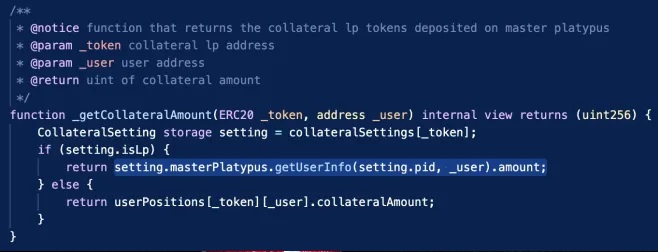
Everything up to this point has worked as intended. However, the hacker then calls the emergencyWithdraw function in the MasterPlatypus contract. This is where things break. You’ll notice on line 583 that the master contract calls PlatypusTreasure to see if the user is solvent and allowed to withdraw their staked LP-USDC.

The PlatypusTreasure code will in turn call MasterPlaytpus to get the amount of tokens staked to determine solvency. However, because the user’s staked amount is not yet set to 0 (line 599 of master), it appears that the user will still have 44M LP-USDC staked. This makes the PlatypusTreasure contract think that the user is solvent, which allows the emergency withdrawal to go through.

The rest of the exploit is straightforward: they swapped the LP-USDC back to USDC and returned the 44M USDC back to Aave. They then swapped as much of the 41.8M USP token for other stable coins as they could ($8.5M USDC/USDT/BUSD/DAI). The hacker still has 33M USP tokens.

SEC Sues Do-Kwon and TerraForm Labs for Running Crypto Pyramid Scheme

0

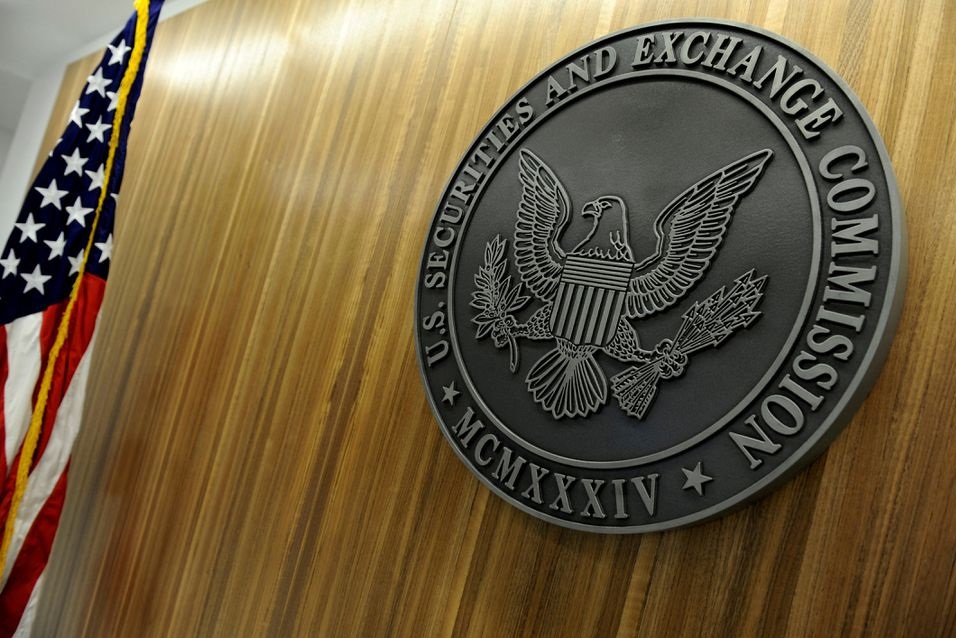
The Security and Exchange Commission [SEC] is suing Do Hyeong Kwon and Terraform Labs, the issuer of collapsed algorithm stablecoin UST and Crypto tokens, LUNA now LUNC Blockchain for instituting Crypto pyramid schemes. A very interesting fact is that the SEC is being more thorough than usual, specifically running through the Howey Test for various assets (UST, LUNA, and wLUNA).

The Luna crypto crash was caused by its connection to TerraUSD (UST), the algorithmic stablecoin of the Terra network. On May 7, over $2 billion was wiped from the global Cryptocurrency market. When the Luna crypto network collapsed, it’s estimated that $60 billion got wiped out of the digital currency space in general. But the ‘Steady lad, deploying Capital’ crooner couldn’t salvage the deteriorating situations.

Algorithmic stablecoins (UST) are not the same as Tether or USD Coin, which are backed by actual dollars or assets stored in a bank. Terraform Labs created the UST coin to be an algorithmic stablecoin on the Terra network. While other stablecoins (USDC or Tether) are fiat-backed, the UST would not be backed by real assets. Instead, the value of UST would be backed by its sister token, Luna. Once Luna plumage the support level for UST Depegged leaving many investors in oblivion.

An arrest warrant was issued on Do Kwon by the South Korean government around November 2022, but the co-founder of Terraform Labs where the sister tokens Luna and TerraUSD were held absconded seeking asylum in Seychelles.

Apparently a new twist has surfaced, the US Security and Exchange Commission is suing Do-Kwon and Terraform Labs, SEC tweeted on 16th February, 2023 “Today we charged Singapore-based Terraform Labs PTE Ltd and Do Hyeong Kwon with orchestrating a multi-billion-dollar crypto asset securities fraud involving an algorithmic stablecoin and other crypto asset securities.”

We allege that Terraform and Do Kwon failed to provide the public with full, fair, and truthful disclosure as required for a host of crypto asset securities, most notably for LUNA and Terra USD,” said SEC Chair Gary Gensler. “We also allege that they committed fraud by repeating false and misleading statements to build trust before causing devastating losses for investors.”

Read SEC’s official Press Release

The Securities and Exchange Commission today charged Singapore-based Terraform Labs PTE Ltd and Do Hyeong Kwon with orchestrating a multi-billion dollar crypto asset securities fraud involving an algorithmic stablecoin and other crypto asset securities.

According to the SEC’s complaint, from April 2018 until the scheme’s collapse in May 2022, Terraform and Kwon raised billions of dollars from investors by offering and selling an inter-connected suite of crypto asset securities, many in unregistered transactions. These included “mAssets,” security-based swaps designed to pay returns by mirroring the price of stocks of US companies, and Terra USD (UST), a crypto asset security referred to as an “algorithmic stablecoin” that supposedly maintained its peg to the U.S. dollar by being interchangeable for another of the defendants’ crypto asset securities, LUNA. The complaint further alleges that Terraform and Kwon offered and sold investors other means to invest in their crypto empire, including the crypto asset security tokens MIR—or “mirror” tokens—and LUNA itself.

The SEC’s complaint alleges that Terraform and Kwon marketed crypto asset securities to investors seeking to earn a profit, repeatedly claiming that the tokens would increase in value. For example, they touted and marketed UST as a “yield-bearing” stablecoin, which they advertised as paying as much as 20 percent interest through the Anchor Protocol.

The SEC’s complaint also alleges that, while marketing the LUNA token, Terraform and Kwon repeatedly misled and deceived investors that a popular Korean mobile payment application used the Terra blockchain to settle transactions that would accrue value to LUNA. Meanwhile, Terraform and Kwon also allegedly misled investors about the stability of UST. In May 2022, UST depegged from the U.S. dollar, and the price of it and its sister tokens plummeted to close to zero.

“We allege that Terraform and Do Kwon failed to provide the public with full, fair, and truthful disclosure as required for a host of crypto asset securities, most notably for LUNA and Terra USD,” said SEC Chair Gary Gensler. “We also allege that they committed fraud by repeating false and misleading statements to build trust before causing devastating losses for investors.”

“I commend the SEC’s hard-working staff who remained vigilant in such an important investigation, even when the defendants attempted to prevent us from obtaining important information about their business,” Chair Gensler added. “This case demonstrates the lengths to which some crypto firms will go to avoid complying with the securities laws, but it also demonstrates the strength and commitment of the SEC’s dedicated public servants.”

“Today’s action not only holds the defendants accountable for their roles in Terra’s collapse, which devastated both retail and institutional investors and sent shock waves through the crypto markets, but once again highlights that we look to the economic realities of an offering, not the labels put on it,” said Gurbir S. Grewal, Director of the SEC’s Division of Enforcement. “As alleged in our complaint, the Terraform ecosystem was neither decentralized, nor finance. It was simply a fraud propped up by a so-called algorithmic “stablecoin” – the price of which was controlled by the defendants, not any code.”

The complaint, filed in the U.S. District Court for the Southern District of New York, charges the defendants with violating the registration and anti-fraud provisions of the Securities Act and the Exchange Act.

LINK Trading Volume Up, Shiba Inu Is Down, What Does This Mean For Orbeon Protocol?

0

The cryptocurrency market has experienced a turbulent start to February. Cryptocurrencies like Chainlink (LINK) have seen huge surges in trading volume, while projects like Shiba Inu (INU) have decreased. But what does this market turbulence mean for top presales like Orbeon Protocol (ORBN)?

>>BUY ORBEON TOKENS HERE<<

Chainlinks Price Struggles To Break $8 Barrier

Chainlink (LINK) is a DeFi project that connects blockchains with real-world external data. By itself, the blockchain is limited in the data it has. With Chainlink (LINK), blockchain projects can access data from around the world in real time.

Chainlink (LINK) uses LINK as its native currency. LINK is used to reward nodes for verifying data and can collateralize smart contracts on the network. Chainlink (LINK) is also open source, which means any developer can contribute to its code.

Throughout January Chainlink (LINK) increased in value, hitting highs of $7.75. However, it has struggled during the recent market decline. One Chainlink (LINK) token is currently worth $6.58, a 7% decrease in the last week alone. However, trading volume is up, which suggests investors remain bullish about Chainlink (LINK) despite downward market trends.

Shiba Inu Crashes 11% After Monthly Highs

Shiba Inu (SHIB) is the second largest memecoin and a top performer in January. Shiba Inu (SHIB) is mostly built around community hype, and despite lacking any real-world utility, Shiba Inu (SHIB) continues to rise.

Shiba Inu (SHIB) hit all-time highs of $0.00008616 in 2021, and although it has since declined, its community remains more active than ever. Throughout January, the price of Shiba Inu (SHIB) increased by 42.45%, and its trading volume surged with it.

However, Shiba Inu struggled in February, with an 11% price decrease in the last five days. Nonetheless, much like Chainlink (LINK), trading volume is still up, with many analysts believing cryptocurrency is just going through a correction period before the market increases again. If this is true, Shiba Inu (SHIB) is certainly set for positive price movement.

>>BUY ORBEON TOKENS HERE<<

Orbeon Protocol Price Surges Amid Stage Six Sellout

While the general cryptocurrency market struggles, Orbeon Protocol (ORBN) continues to defy market trends. The unique DeFi launchpad has just successfully sold out during stage seven of its presale, in which its price increased from $0.071 to $0.0766. Now analysts are predicting a high of $0.24 before its presale ends.

Using Orbeon Protocols (ORBN) multi-chain launchpad, real-world businesses can create NFT collections representing shares in their business. These can be sold directly to everyday investors to help startups raise funds. Once purchased, they’re held in Orbeon Wallets like a traditional stock and can be traded on the Orbeon Swap.

ORBN tokens will be used to buy NFTs, which are protected with a “Fill or Kill” feature. This feature required a startup to hit certain funding targets before it receives funding. If these targets are missed, investors will have their money returned.

Investors who buy into Orbeon Protocol (ORBN) and hold their tokens will also earn a number of rewards when using the Orbeon ecosystem. These include staking bonuses, early access to investment rounds, cashback and exclusive access to an investment group known as the “Winners Circle.”

Having already achieved returns of over 1815%, Orbeon Protocol (ORBN) is selling at record rates during stage eight of its presale. Investors are optimistic that the project will continue to rise, with some predicting new all-time highs within the next few weeks.


Find Out More About The Orbeon Protocol Presale

Website: https://orbeonprotocol.com/

Presale: https://presale.orbeonprotocol.com/register

Billionaire Investor Charlie Munger Describes Crypto Currencies as “Worthless”

0

American billionaire investor and vice chairman of Berkshire Hathaway, Charlie Thomas Munger during a Wednesday annual shareholder meeting of the daily journal corporation, described cryptocurrencies as “worthless”.

He revealed that crypto is not different from gambling which amazes him that a lot of people invest in the asset.

In his words, “Sometimes I call it crypto ‘crappo’, sometimes I call it ‘crypto s—.’ It is just ridiculous that anybody would buy this stuff. It is totally absolutely crazy stupid gambling”.

Despite crypto advocates maintaining that digital assets offer some form of advantages such as better security high transaction speed and lower costs than traditional financial institutions.

Munger doesn’t buy it and is not in any way impressed, which has seen him call out those against his position, also stating that he doesn’t think there is a rationale against his position.

The billionaire investor who in 2018 described Bitcoin as “Noxious Poison”, disclosed that he is not proud of his country, the united states, for allowing the trade of digital assets which he described as crap, urging the U.S. government to ban it.

He has also compared crypto to “rat poison”, a “venereal disease”, and “open sewer”, stating that he wouldn’t want a crypto executive to marry into his family.

Munger heaped praises on China’s president Xi Jinping, for his wise economic policy of banning cryptocurrencies and suggested that the U.S. government should take a cue and replicate same. “Thank the Chinese communist leader for his splendid example of uncommon sense”, he said.

Beyond Munger’s call for the ban of cryptocurrencies, his point seemed to be that if these crypto assets must be permitted in the country, they should be regulated like securities, rather he noted that they are publicly traded without any governmental pre-approval of disclosures.

He noted that thousands of cryptos have become publicly traded with little or no government oversight. The billionaire investor further disclosed that some crypto businesses have handed large amounts of virtually free coins to promoters, in return for them coaxing the public into buying it at much higher prices.

Munger bemoaned the “wild and woolly capitalism” at play. He compared it to mining, where salesmanship is often key to convincing investors to finance digging for precious metals that may not exist.

He then referred to England’s reaction to the collapse of the South Sea Bubble based on an incredibly poorly thought-out company with a worthless slave-trading monopoly and the subsequent depression it caused; a ban, Munger said on “all public trading in new common stocks”.

Meanwhile, while Munger might not be a fan of cryptocurrencies, American billionaire entrepreneur Mark Cuban, has disclosed that Bitcoin is a better investment than Gold, and he prefers to invest in the former.

Cuban believes that gold, unlike Bitcoin, isn’t a very safe investment to make as a hedge against economic uncertainty because he says, someone could “kill you and take your gold bar in the event of a major economic catastrophe”.

Due to the high risk of having physical gold stolen, Cuban has described investing in the metal as “useless.”

He suggests that Bitcoin could serve a similar purpose to gold as a store of value, but be an even better bet. He also stated that he plans to buy more BTC when the price drops.

Naira Redesign: What’s Behind APC Governors’ Defiant Move Against Buhari?

0

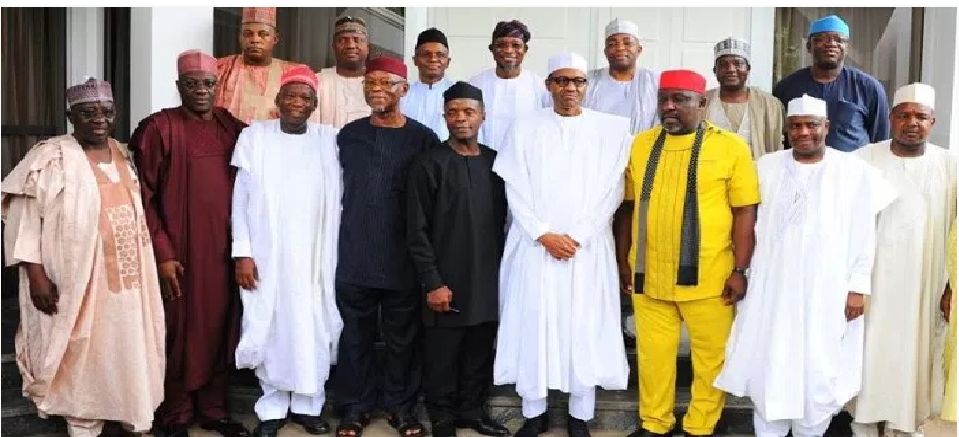
Members of the ruling All Progressive Congress (APC), led by the governors, have surprisingly intensified their attack on President Muhammadu Buhari over the recent naira redesign policy of the Central Bank of Nigeria (CBN), geared toward the elimination of moneybag politics among other things.

The CBN announced the policy late last year, setting a January 31 deadline for the implementation, which requires that the old N200, N500 and N1,000 notes be phased out and be replaced with the redesigned notes.

The governors, under the aegis of Progressive Governors Forum (PGF), were quick to approach Buhari, requesting that both the old and new notes be allowed to co-circulate. The deadline was later extended to February 10 as scarcity of the new notes mars the currency swap exercise, exposing Nigerians to forced cashlessness that scuttles economic and social activities.

Led by three states; Kogi, Kaduna and Zamfara, the PGF dragged the federal government to the Supreme Court, praying the apex court to compel the CBN to rescind the monetary policy and allow both the old and new naira notes to co-exist. In February 8, the Supreme Court granted an ex parte order, restraining the federal government from enforcing the February 10 deadline, until the matter, which has now been adjourned to February 22, is determined by the court.

However, the CBN did not obey the order. The apex bank declared days later that the old naira notes will cease to be legal tender after the expiration of its February 10 deadline, opening a few-days window for people to deposit the old notes in their possession at central bank branches across the country.

The federal government, in its response to the three states’ lawsuit, had questioned the jurisdiction of the Supreme Court to entertain the case. The Attorney General of the Federation Abubakar Malami had argued that the three states failed to make the CBN a party to the case, and as an independent institution, that makes the Supreme Court’s order non-binding on the apex bank.

When on Tuesday the CBN declared that the old naira notes are no longer legal tenders following the expiration of the deadline, the APC governors erupted in protest. Nearly all the APC governors, in defiance of Buhari who they have supported through thick and thin in the past seven years, have kicked against the CBN policy – declaring the old notes legal tender in their various states.

It was the APC’s presidential candidate, Bola Ahmed Tinubu, who first alleged that the naira redesign policy was meant to scuttle the party’s chances in the coming elections. The allegation was reechoed by El-Rufai days later. The Kaduna State governor said that some “elements” in the presidency, who are upset that their candidate didn’t win the APC presidential ticket, orchestrated the policy in addition to fuel scarcity to undermine Tinubu’s chances at the February 25 presidential poll.

Since then, the sentiment has been spreading from members and supporters of the APC. This is as opposition political parties, including the Peoples Democratic Party (PDP) and the Labour Party (LP), openly throw their support behind the policy.

On Wednesday, the speaker of the House of Representatives, Femi Gbajabiamila said: “Nobody can convince me that it is not a plot to stop Asiwaju (Tinubu) from becoming the president of this country,”

On Tuesday, Ogun State governor, Dapo Abiodun threatened to “shut down any Commercial bank operating in Ogun state that refuses to accept old naira notes.”

Other APC governors have done something similar. Kano, Lagos, Jigawa, Bauchi Yobe etc, have joined the throng of APC states pushing to thwart the implementation of the naira redesign policy, with some of the states’ governors issuing arrest orders for those who reject the old notes.

Kano State governor Abdullahi Ganduje said on Thursday that President Muhammadu Buhari did not achieve anything throughout his eight years in office, and is now determined to ruin the APC before leaving office in May 2023.

“In the first term, nothing of great importance can point out as his achievement, same as in his second term. So, why is he bringing out all these policies now? Why not seven years ago? He just wants to collapse the party that produced him,” he said.

On Thursday, Gbajabiamila issued a statement criticizing the resolution of both the federal government and the central bank to see to the full implementation of the policy.

“It is disheartening that the CBN has resolutely refused to admit error and change course in the face of mounting evidence that the implementation of this policy has been a devastating failure,” the speaker said. “It is deeply troubling that neither the intervention of the National Council of State nor an order of the Supreme Court is sufficient to cause the governor of the Central Bank of Nigeria to review the decisions that have brought us to this entirely avoidable moment.”

Reinforcing the belief that the policy had been engineered to cost the APC presidential election, El-Rufai had in a statement on Thursday, pointed at unnamed persons as the architects of the design.

“My dear of people of Kaduna State, with the foregoing revelations, it is clear that our peaceful coexistence as a state, and a nation, is being placed under deliberate danger using the intentional combination of fuel and cash supply disruptions,” he said.

“These evil people using the instrumentality of the Federal Government and the President as convenient covers are willing to truncate our democracy because they have personally lost out. They are massively deploying resources and tools to defeat the political party that gave us the platform to serve the country just because they could not impose the candidates of their choice. Let us not help them.”

Thus, in a daring charge on Thursday, El-Rufai asked Kaduna residents to ignore whatever directive the CBN has issued on the old naira notes and continue to use them as legal tender in the state.

“Hold on to them. Continue to use them as legal tender as ordered by the Supreme Court of Nigeria. No deadline can render them worthless, ever. The law is on your side,” he charged.

The number of states fighting against the implementation of the policy in court has risen to more than 10, following the joinder of seven other sates made by the Supreme Court on Wednesday. The federal government’s decision to allow the old N200 note to circulate alongside the new notes, which was announced by Buhari on Thursday, was not enough to quell their fight.

“The address by the President earlier this [Thursday] morning limiting the legal tender status of old notes to only N200 amounts to total disregard and disobedience of the ruling of February 8th which was extended further [Wednesday]  by the Supreme Court,” El-Rufai said in his statement on Thursday.

The states said their decision to sue the federal government was inspired by the suffering the chaotic implementation of the policy has caused the masses. But it is a claim that a large section of Nigerians have disagreed with for obvious reasons.

The federal government is notorious of flouting court orders, a disappointing notoriety that had been flagrantly backed by the APC. Nigerians were quick to outline occasions where the federal government had disobeyed court orders, citing some of its policies targeting the wellbeing of the people that both the APC governors and the party’s bigwigs did not challenge.

Nigerians are citing Endsars protest, border closure, Twitter ban and the federal government’s refusal to obey court orders to release the leader of the Indigenous People of Biafra (IPoB) Nnamdi Kanu and the leader of the Islamic Movement of Nigeria (IMN) El-Zakzaky as popular cases of the federal government’s culture of disregard to the rule of law.

They said the APC’s desperate moves to stop the implementation of the naira redesign policy lend credence to assertions that the ruling party is planning to influence the result of the elections with money. It is believed that the governors have stored huge amounts of cash outside the banks ahead of the election.

A chieftain of the New Nigeria Peoples Party (NNPP) has alleged that a certain APC governor in the Northwest has as much as N22 billion stockpiled at home for the election. The huge cash, which will be rendered useless following the implementation of the currency redesign policy – and the consequential outcome – defeat at the polls, is believed to be the reason the APC bigwigs are kicking.