DD
MM
YYYY

PAGES

DD
MM
YYYY

spot_img

PAGES

Home Blog Page 442

Crypto News: ADA Price Prediction, Solana ETF Updates As Cardano Holder Bets HUGE On Remittix

0

Investors are seeking the best cryptocurrency to buy now as we approach the final quarter of 2025. While Solana and Cardano still matter, concerns over scalability and adoption weigh heavily on Solana’s prospects and ADA price prediction.

According to analysts, attention is shifting to Remittix (RTX). Ranked #1 on CertiK, RTX has raised over $26.7M in funding and is set for its wallet beta launch, positioning it for real-world adoption.

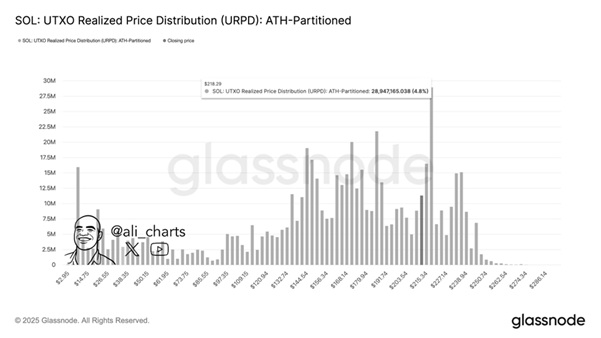
Solana ETF Updates and Prediction

Source: Ali-charts on X

The Solana price is currently around $240, with slight increases over the past week. Resistance sits around $245. A move toward $255 is likely if demand rises.

Its speed and scalability are firmly rooted in driving DeFi and Web3, yet analysts foresee steady growth rather than exponential profits.

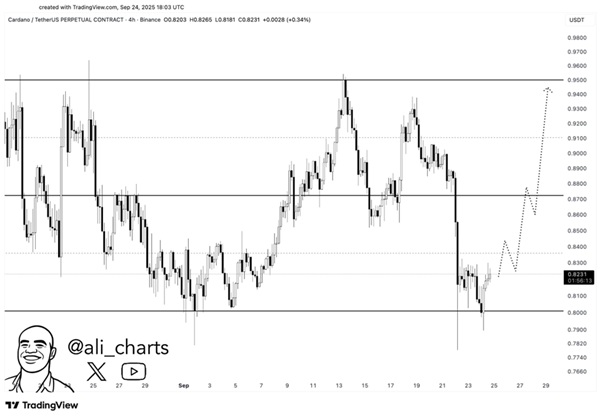
ADA Price Prediction

Source: ali_charts on X

ADA Price prediction models in the past week are not reassuring, as the token price holds support but struggles to break $0.95. Investors remain skeptical, expecting modest ADA price movements throughout Q4.

Cardano’s research-first approach is appreciated, but slow upgrades continue to push many investors toward faster-moving alternatives with less belief in any bullish ADA price prediction.

Remittix Shows Why It Is The Best Crypto To Buy Now

Remittix (RTX) is revolutionizing the way payments should be made with its PayFi model. With Remittix, crypto-to-fiat transfers settle instantly as local currency in over 30 countries, with near-zero fees. This use case addresses the problems that other blockchains have been unable to resolve.

Attention is rising, funding has surpassed $ 26.7M, with over 672M tokens sold. This level of confidence is backed by a live BitMart listing, confirmed LBank approval and full CertiK verification. Ranked #1 by CertiK for pre-launch tokens, RTX has credibility that meme coins and older networks cannot match.

On top of this, the 15% referral program is live and pays rewards in USDT daily, fueling viral adoption and community growth.

In summary:

  • Wallet beta now live
  • Crypto-to-fiat transfers across 30+ countries
  • Zero FX fees with instant settlement
  • $26.7M+ raised and 672M+ tokens sold
  • BitMart listing live, LBank confirmed
  • CertiK verification + ranked #1 pre-launch token
  • $250K giveaway live
  • 15% referral rewards in USDT, claimable daily

Solana and Cardano continue to maintain their reputation as market leaders, but their growth paths appear to be restrained. Remittix, with its wallet beta, CertiK rank and adoption-focused PayFi system, is emerging as the best crypto to buy now, backed by credibility and explosive profit potential.

Discover the future of PayFi with Remittix by checking out their project here:

Website: https://remittix.io/

Socials: https://linktr.ee/remittix

$250K Giveaway: https://gleam.io/competitions/nz84L-250000-remittix-giveaway

The Faceoff Between Dangote Refinery and Unions is Getting Ugly – And Nigeria’s Economy May Pay for It

0

What began as a business decision aimed at cutting inefficiencies in Nigeria’s fuel supply chain has spiraled into a bitter confrontation between Dangote Refinery and two of the country’s most powerful unions. At stake is not just the smooth running of Africa’s biggest refinery but the stability of Nigeria’s oil supply, the welfare of millions of households, and even the country’s economic outlook.

The trigger came in mid-June when Dangote Refinery, still in the early months of rolling out operations, announced a bold new distribution strategy. On June 15, the company announced the purchase of 4,000 compressed natural gas (CNG)-powered tankers, a move it argued could slash transport inefficiencies and save Nigeria over N1.7 trillion annually. By June 29, the company introduced a nationwide petroleum distribution scheme built around the new fleet.

But what Dangote saw as modernization was interpreted as provocation by the unions. The Nigeria Union of Petroleum and Natural Gas Workers (NUPENG), whose members dominate tanker operations, accused the refinery of sidelining existing drivers by planning to recruit new operators barred from union membership. To NUPENG, this was a brazen violation of Section 40 of Nigeria’s Constitution, which guarantees freedom of association, as well as international labor conventions ratified by Nigeria.

The Petroleum and Natural Gas Senior Staff Association of Nigeria (PENGASSAN) soon joined the fray. Its leaders alleged that Dangote was not just restructuring logistics but actively undermining workers’ welfare and threatening their means of livelihood. The unions declared that if Dangote pressed ahead, they would block supplies — crude, gas, and refined products — from reaching the refinery.

The tension escalated on September 25, after Dangote Refinery terminated the contracts of some workers, who joined the unions, citing “sabotage” and safety risks. In a sternly worded letter, the company insisted the decision was necessary to protect the refinery from internal threats that had “dire consequences on human life and operational efficiency.” The refinery stressed that only a small number of staff were affected and that more than 3,000 Nigerians remain employed in the facility.

But PENGASSAN quickly retaliated. On September 26, it issued a circular directing its members at TotalEnergies, Seplat, Chevron, Shell, Oando, and NGIC to halt crude and gas deliveries to the refinery. The union framed its action as a defense of workers’ rights, accusing Dangote of misinformation and propaganda.

“You are hereby directed to cut off gas supply to NGIC effective immediately. All crude oil supply valves to the Refinery should be shut. The loading operation for vessel headed there should be halted immediately. NGIC Chairman, ensure that gas supply to the Refinery is cut off effective immediately,” the circular issued by PENGASSAN read in part.

Dangote hit back hard, calling the order “lawless” and “criminal.” The company insisted PENGASSAN had no legal authority to disrupt contracts between the refinery and suppliers. It warned that halting fuel and gas flows would not only destabilize operations but also constitute “economic sabotage.”

“There is also no law in our statute books that would support or enable the PENGASSAN branches having to “cut off” gas and crude oil supplies to Dangote Refinery or at all,” the refinery said in a statement on Saturday.

A Familiar Battle

The unions’ position can be traced to a precedent in the not distant past. In 2007, NUPENG pressured then-President Umaru Musa Yar’Adua into reversing the sale of government-owned refineries to private investors, a move that many now see as a setback for Nigeria’s refining capacity. It is believed that this history is repeating itself, with unions once again attempting to strong-arm a private operator that has invested billions into what government-owned facilities repeatedly failed to deliver.

Energy economist Kelvin Emmanuel pointed out that Nigerian labor law lays out a clear dispute-resolution process: from ministerial mediation to arbitration and ultimately industrial court adjudication. None of these steps, he argued, were followed before the unions resorted to blocking trucks or directing crude cut-offs. In his words, “That’s the law. Now tell me, which of these processes did NUPENG follow before it took trucks to block the entrance and exit to the Dangote Refinery?”

The Economy At the Mercy of It All

Some analysts see this as not just a labor dispute but a test of whether Nigeria can create the kind of investment climate that attracts and sustains multibillion-dollar projects. Dangote’s $20 billion refinery is not just a private business; it is a national strategic asset. It has already begun to ease Nigeria’s dependence on imported refined products, stabilized foreign exchange pressures by reducing fuel import demand, and reassured investors that private capital can succeed where state-led refineries collapsed.

Against this backdrop, economists warn that disrupting Dangote Refinery amounts to economic sabotage.

“Dangote bought NNPC refineries. Local unions said no. Dangote left and built his own refinery. Now unions want to move into his refinery. If you can’t see danger from 100km, you can’t see danger from 1km,” financial analyst Kalu Aja argued.

“So that tomorrow, one guy wearing a facecap will say PENGASSAN will strike over another issue, and Aliko will shut down his $15b refinery. Will the union pay the $ loan? Not only the union, also demand that workers get 10% equity for free, abi (right)?” he added.

This faceoff, meanwhile, means different things for everyone. For the unions, the fight is about preserving influence in a sector where automation and modernization are threatening long-held privileges. For Dangote, it is about protecting a fragile investment from being held hostage. For Nigerians, it is about whether the pumps run dry, whether transport costs spike, and whether hard-won gains in foreign exchange stability evaporate.

However, while the refinery may not solve all of Nigeria’s oil sector problems, it has brought a measure of stability to fuel supply and the naira. Undermining it through prolonged labor hostilities would be self-defeating. As many economists agree, crippling Dangote Refinery’s operation in any form is not just a business quarrel — it is economic sabotage.

7 Best Cryptos to Watch in 2025 That Could Deliver Explosive Gains for Early Investors

0

What if the next life-changing cryptocurrency investment is already live and unfolding before everyone’s eyes? Meme coins, once dismissed as jokes, have flipped the script and become some of the most explosive performers in the digital asset space. Communities rally behind them, memes fuel momentum, and overnight millionaires are made. From Shiba Inu’s legendary run to the rise of fresh tokens like Brett, Gigachad, Just a Chill Guy, Pudgy Penguins, Bonk, and now MoonBull, the meme coin era is far from over.

MoonBull shines among the best cryptos to watch in 2025, standing out not just because of hype but because of real, structured opportunities for investors. While Brett and Bonk thrive on their raw community energy and Shiba Inu still holds a historic crown, MoonBull enters the field with powerful features, high ROI potential, and a presale that is already generating urgency. This article explores why MoonBull could be the next big crypto star, alongside other meme coins that are expected to dominate 2025.

1.  Stake Big, Refer Smart: MoonBull’s Dual Reward System

MoonBull shines among the best cryptos to watch in 2025 because it delivers utility alongside hype. At Stage 10 of its presale, MoonBull unlocks 95% APY staking, allowing holders to grow their tokens without complications. With no minimum staking amount, participants can lock their tokens directly from the dashboard, earning rewards from a dedicated pool while retaining control of their assets. Rewards are calculated daily, making this system accessible, flexible, and powerful for anyone looking to build passive growth.

But that’s only half the story. MoonBull also introduces a referral system that feels like a game-changer. When someone joins using your referral, they instantly receive 15% extra tokens, while you pocket 15% of their purchase. To supercharge this model, the top referrers receive USDC bonuses every month, 10% for leaders and 5% for runners-up, distributed instantly with no manual claiming required. With 8.05 billion tokens allocated specifically for referrals, MoonBull builds community loyalty while rewarding those who spread the word. It’s simple, lucrative, and transparent, qualities that crypto whales and everyday investors can’t ignore.

MoonBull Presale Ignites: Early Access to Explosive Gains

The MoonBull presale is live now, and it’s already making waves across the top meme coin presale charts. With 23 stages mapped out, every stage pushes the price higher, and the window to grab tokens at ground-floor levels shrinks by the day. Stage 3 tokens were launched at just $0.00004057, with each subsequent stage increasing by 27.40%. By the time it lists at $0.00616, the ROI from Stage 1 to listing stands at a jaw-dropping 24,540%. To put that into perspective, a $200 purchase made early would have returned nearly $49,280 at listing. Numbers like these don’t come around often, and that’s why MoonBull is being called the MoonBull’s next big crypto play.

The presale hype in September–October has become an event in itself, with early access, exclusive presale bonuses, and limited supply driving urgency. Missing out on this phase means walking away from one of the highest ROI meme coins of 2025. MoonBull shines among the best cryptos to watch in 2025 because it isn’t just selling tokens, it’s offering entry into a movement before whales tighten their grip.

2. Brett: The Underdog with Momentum

Brett has emerged as one of the strongest community-driven meme tokens of 2025. Built around relatable internet humor and meme culture, Brett captures the kind of grassroots energy that often sparks viral growth. The project thrives on simplicity, making it easy for new investors to engage without confusion. Brett continues to ride waves of engagement across X and Telegram, demonstrating that humor combined with tokenomics can transform an underdog into a heavyweight. Brett earns its spot on the best meme cryptos 2025 list because of its consistent traction and loyal backers.

3. Gigachad: The Meme of Strength

Gigachad is more than just a meme; it’s a cultural symbol of dominance, confidence, and resilience. This crypto captures the idea of strength in the digital age, channeling internet culture into a project with growing investor backing. Its branding alone creates instant recognition, and its presence in the top upcoming presales discussions shows that investors are paying attention. Gigachad’s combination of cultural relevance and meme appeal secures its place as one of the top meme coins to join for long-term gains.

4. Just a Chill Guy: Relaxed but Effective

In a market often defined by hype and volatility, Just a Chill Guy offers a refreshing change. The project positions itself with a calm, community-first approach, which appeals to investors seeking a more laid-back vibe without sacrificing potential. Behind the lighthearted branding lies a growing, engaged base that has kept momentum alive. With increasing chatter on crypto forums and meme spaces, Just a Chill Guy is proving that even relaxed projects can deliver strong results. That’s why it comfortably lands in the best meme cryptos 2025 list.

5. Shiba Inu: The Legacy Giant

Shiba Inu remains one of the most influential meme tokens of all time. Known as the Dogecoin killer, it sparked a wave of meme coin adoption and continues to command massive market activity. With its ecosystem expanding through Shibarium and strong global community support, Shiba Inu continues to set benchmarks for meme projects everywhere. Even though it’s no longer the cheapest buy, its enduring popularity makes it impossible to overlook in any best meme cryptos 2025 list.

6. Pudgy Penguins: Cute but Profitable

Pudgy Penguins began as a beloved NFT collection and has evolved into a broader ecosystem that combines memes, collectibles, and crypto rewards. With partnerships and mainstream cultural references boosting visibility, Pudgy Penguins has proven that cuteness and profitability can align. Its fan-driven growth shows resilience and adaptability, giving it a lasting edge among meme-themed assets. This combination makes it one of the top meme coin presale mentions worth noting.

7. Bonk: The Solana Star

Bonk became the first meme token to explode within the Solana network truly, showcasing both the chain’s speed and the power of meme culture. With high trading volumes, strong liquidity, and an ever-expanding community, Bonk has grown from a niche experiment to a serious contender. Its ability to maintain relevance in a fast-moving market has made it a prime choice among low-cap meme coin gems. Bonk has proven it belongs on the list of the best meme cryptos of 2025 by staying both fun and profitable.

Conclusion: MoonBull’s Presale Is the Game Changer

Based on the latest research, MoonBull stands out among the best cryptos to watch in 2025, alongside Brett, Gigachad, Just a Chill Guy, Shiba Inu, Pudgy Penguins, and Bonk. Each coin carries its own story, but the MoonBull presale stands out with its dual reward system, presale hype, and explosive ROI potential.

The fact that the presale is now live and surging in its early stages creates an opportunity that investors rarely see twice. The stage-by-stage growth, exclusive presale bonuses, and high staking rewards position MoonBull as not just another meme coin but as the top meme coin presale that could deliver massive 2025 gains. Missing this wave means missing what could be the most lucrative presale of the year. The most brilliant move for anyone seeking 100x potential presales is to act now, before MoonBull’s listing makes headlines.


For More Information:

Website: Visit the Official MOBU Website

Telegram: Join the MOBU Telegram Channel

Twitter: Follow MOBU ON X (Formerly Twitter)


Frequently Asked Questions about MoonBull Presale

What makes MoonBull different from other meme coins?

It combines 95% APY staking with a lucrative referral system, creating real utility.

Is the MoonBull presale live right now?

Yes, it’s already live and moving quickly through its 23 stages.

How high is the ROI potential for MoonBull?

From Stage 1 to listing, it’s projected at 24,540%.


Glossary of Key Terms

APY: Annual Percentage Yield, the yearly return from staking.
Presale: Early sale of tokens before official listing.
Referral System: A program that rewards users for inviting others.
Liquidity: Ease with which tokens can be bought or sold.
Listing Price: The initial market price when a coin launches on exchanges.

Article Summary

Meme coins continue to dominate the crypto spotlight, and 2025 looks set for another explosive year. Among Brett, Gigachad, Just a Chill Guy, Shiba Inu, Pudgy Penguins, and Bonk, MoonBull shines among the best cryptos to watch in 2025. With its 95% APY staking, referral system, and a presale already live, MoonBull offers rare chances for both passive growth and explosive returns. It’s 23-stage presale promises up to 24,540% ROI from the first stage to listing. For investors seeking the next big crypto gem, MoonBull’s combination of utility and hype sets it apart from every other meme coin today.


Anthropic Sets Sights on Global AI Domination, Plans to Triple Workforce as International Demand Surges

0

Anthropic, the $183 billion artificial intelligence powerhouse behind the Claude family of models, is ramping up its global ambitions as international demand for enterprise AI reaches new heights.

The company has announced plans to triple its International workforce and expand its applied AI team fivefold in 2025.

In just two years, Anthropic has grown its enterprise customer base from fewer than 1,000 to over 300,000 organizations worldwide, a surge fueled by Claude’s rapid adoption across multiple industries and regions.

Nearly 80% of Claude’s usage now comes from outside the U.S., with countries such as South Korea, Singapore, and Australia showing higher per-person adoption rates than the American market.

As part of its plans to triple its International workforce, the company has already begun hiring country leads in India, Singapore, Australia, New Zealand, and Korea while preparing for broader growth across Europe, including the UK, Nordics, Southern Europe, and DACH regions.

To spearhead this expansion, Anthropic appointed Chris Ciauri, former CEO of Unily, as Managing Director of International. Ciauri will oversee operations in new regional hubs, with offices planned for Zurich, Dublin, London, and Tokyo.

In a LinkedIn post announcing his appointment, Ciauri expressed excitement about joining Anthropic during what he called “a pivotal moment for enterprise AI,” highlighting the company’s explosive growth from $1 billion to $5 billion in revenue within a single year.

He further noted that the global demand for enterprise AI is accelerating, and he can’t wait to help more organizations worldwide discover what Claude can do.

In an exclusive interview with CNBC, Paul Smith, Anthropic’s Chief Commercial Officer, revealed that the company’s international growth exceeds expectations.

What’s amazing is that up until recently, we didn’t have a significant human presence in Europe or Japan, yet we already have a substantial business there. Entire sectors like life sciences and sovereign wealth management are adopting Claude at an unprecedented pace”, he said.

On September 1, 2025, Anthropic skyrocketed to a $183 billion post-money valuation following its massive $13 billion Series F funding round. This marked a staggering nearly threefold increase from its $61.5 billion valuation just six months earlier, in March 2025. This underscored the blistering pace of AI investment amid surging demand for safe, enterprise-grade models like Claude.

Anthropic’s rapid rise is reshaping the enterprise AI landscape. The company recently reached a $5 billion revenue run-rate, up dramatically from just $87 million at the start of 2024. This positions Anthropic as a direct competitor to OpenAI, Microsoft, and Google, but with a distinct strategy: providing a pure-play AI platform rather than embedding its technology as an add-on within legacy software systems.

This differentiation comes at a time when enterprises are shifting from experimenting with AI to fully integrating it into their core operations. Companies are now using Claude for advanced tasks such as customer service automation, fraud detection, regulatory compliance analysis, code review, and high-level decision-making.

Claude’s global usage has reached an inflection point with nearly 80% of activity coming from outside the United States. On a per-person basis, adoption in countries like South Korea, Australia, and Singapore has already surpassed that of the U.S.

Notably, over 300,000 business customers now rely on Claude for mission-critical tasks, from API integrations in finance and healthcare to developer tools like Claude Code (launched May 2025). Also, Fortune 500 firms and AI-native startups alike are betting big on Anthropic’s safety-focused approach, which prioritizes AI alignment and compliance.

Looking Ahead

The company’s global expansion plan underscores a critical shift that AI growth is no longer a U.S. first story. The future of AI will be determined by how quickly companies can build trust locally and execute globally.

With its aggressive international strategy and rapidly growing customer base, Anthropic is positioning itself to lead the next decade of enterprise AI adoption worldwide.

Trump Slashes ‘Gold Card’ to $1m, Sparking Interest from Global Elite

0

President Donald Trump has slashed the price of America’s new “Gold Card” residency visa from $5 million to $1 million, triggering a surge of interest from the global elite and reshaping competition in the $25 billion international residency and citizenship market.

Announced last week by executive order, the Gold Card promises residency approvals in “record time,” giving applicants access to the U.S. education, health care, and financial systems. Immigration attorneys and wealth advisors say the lower entry point makes it one of the most competitive so-called “golden visas” worldwide, cheaper than most similar programs, according to CNBC.

By comparison, Singapore’s investor visa program costs nearly $8 million, New Zealand’s new scheme is just under $3 million, and Samoa requires $1.4 million.

“The Gold Card is almost too cheap,” said Reaz Jafri of international law firm Withers. “You get access to everything the U.S. has to offer, all for $1 million. It’s a pittance for many families. I think they should have kept it at $5 million to make it special.”

Demand Surges from Asia’s Wealthy

CNBC reports that already, lawyers say the phones are ringing. At a family office conference in Singapore, Jafri said he was approached by three families — two from China and one from India — who were eager to sign up. He expects his firm alone will process “hundreds” of applications once the first cards are issued.

Commerce Secretary Howard Lutnick said the administration plans to issue 80,000 Gold Cards, projecting together with a proposed $5 million “Platinum Card” and higher H-1B visa fees to raise $100 billion in federal revenue.

But rollout has been uneven. Despite the White House announcement, no formal application process exists yet. The Gold Card website, live since June, allows pre-registration, but applicants say they’ve received no follow-up.

Legal Gray Zone

Immigration attorneys caution that the program rests on fragile legal ground. Because Congress controls immigration law, Trump used executive authority to create the Gold Card by repurposing the existing EB-1 and EB-2 visa categories. The $1 million fee is labeled an “unrestricted gift” to the U.S. government, rather than an official filing fee.

This workaround could spark lawsuits or congressional pushback, experts say. Applicants from China and India face additional complications, since EB-1 and EB-2 visas already have long backlogs for those nationalities.

“If Gold Card buyers skip ahead of the line, lawsuits are almost certain,” said Dominic Volek, group head of private clients at Henley & Partners.

For that reason, many wealthy families may wait to see the first Gold Cards issued before wiring funds. “These things always take time to ramp up,” Volek said, predicting the program could eventually attract 5,000 to 10,000 applications annually.

Lessons from EB-5: A Troubled Predecessor

The Gold Card is not America’s first attempt at selling residency to investors. For decades, the U.S. ran the EB-5 Regional Center program, which offered green cards to foreigners who invested as little as $500,000 in projects that created at least 10 U.S. jobs. At its peak in the mid-2010s, the EB-5 drew thousands of wealthy Chinese families, who funded real estate projects in New York, California, and Florida.

But the EB-5 became mired in scandals. Projects failed to deliver, fraud proliferated, and backlogs for Chinese applicants stretched beyond a decade. Critics called it a “green card for sale” scheme that enriched developers more than the U.S. economy. Congress repeatedly threatened to shut it down, and in 2021, lawmakers allowed parts of the program to lapse before reviving it under tighter rules.

The Gold Card differs in key ways. Rather than tying funds to job-creating projects, Trump has set a flat $1 million “donation,” making it simpler but also stripping it of an economic multiplier. Its steep discount from the original $5 million price tag has made it instantly popular, while also raising questions about fairness compared to the EB-5, where thousands of families are still waiting after years in line.

For Trump, the Gold Card is also part of a broader ideological shift. By pairing it with a $100,000 H-1B visa fee hike, he has signaled that U.S. immigration under his watch should be reserved for the world’s wealthiest or highest-value individuals, not ordinary workers or students.

The Gold Card requires a non-refundable $1 million donation, unlike other golden visas structured as investments that can generate returns. And U.S. residency carries an additional sting: taxation on worldwide income, a policy that often deters ultra-wealthy foreigners.

To address this, the administration has floated a $5 million “Platinum Card,” allowing holders to spend up to 270 days a year in the U.S. without paying taxes on global income. Yet advisors are skeptical.

“Few will consider it worth $5 million just to spend an additional 91 days in the U.S.,” said David Lesperance of Lesperance Associates.

Still, interest is emerging from billionaires in Asia and the Middle East who want more U.S. presence without triggering IRS rules. Jafri said four Brazilian family offices have already inquired about the Platinum option.

A Hot Global Market

CNBC reports that the U.S. launch comes amid booming demand for “Plan B” residencies as geopolitical instability pushes wealthy families to diversify their citizenship. An estimated 142,000 millionaires will relocate globally in 2025, according to Henley & Partners and New World Wealth, with the U.S. ranking as the second-most popular destination after the UAE.

Most of the millionaires heading to the U.S. are from China, India, the U.K., and Latin America. But China and India face the bottleneck of America’s visa quotas, raising questions about whether Trump’s promises of “record time” residency will apply equally.

The Next Tier: A ‘Black Card’?

Some advisors argue the Gold Card’s relatively low entry point could pave the way for an ultra-premium option. Jafri suggested a “Black Card” priced at $20–25 million, exempting holders from estate tax.

“That would be a game changer. I bet 1,000 people would do it and they would bring all their assets to the U.S.,” he said.

However, the rush of inquiries from Asia’s wealthy suggests demand is real. But until the first Gold Cards are issued — and withstand inevitable legal and political challenges — the program remains more promise than product.