DD
MM
YYYY

PAGES

DD
MM
YYYY

spot_img

PAGES

Home Blog Page 4424

Welcome Be The Help Foundation To Tekedia Institute

0

Join me to welcome a really fascinating non-profit in Nigeria to Tekedia Institute: Be The Help Foundation. Be The Help Foundation runs an agroforestry project and offers hands-on training centers for agroforestry and rural development. The team will spend weeks at Tekedia Institute, starting Monday, Feb 13, 2023, and together we will co-learn on business systems and productivity elements.

Tekedia Institute Corporate Training helps companies optimize factors of production to become more efficient. From farming entities to microfinance banks, from logistics firms to real estate companies, from fintech to consulting firms, dozens of companies come to co-learn with us every year.

Welcome BHF Foundation; learn about it here.

What are Open Editions NFTs and Why are They Surging?

0

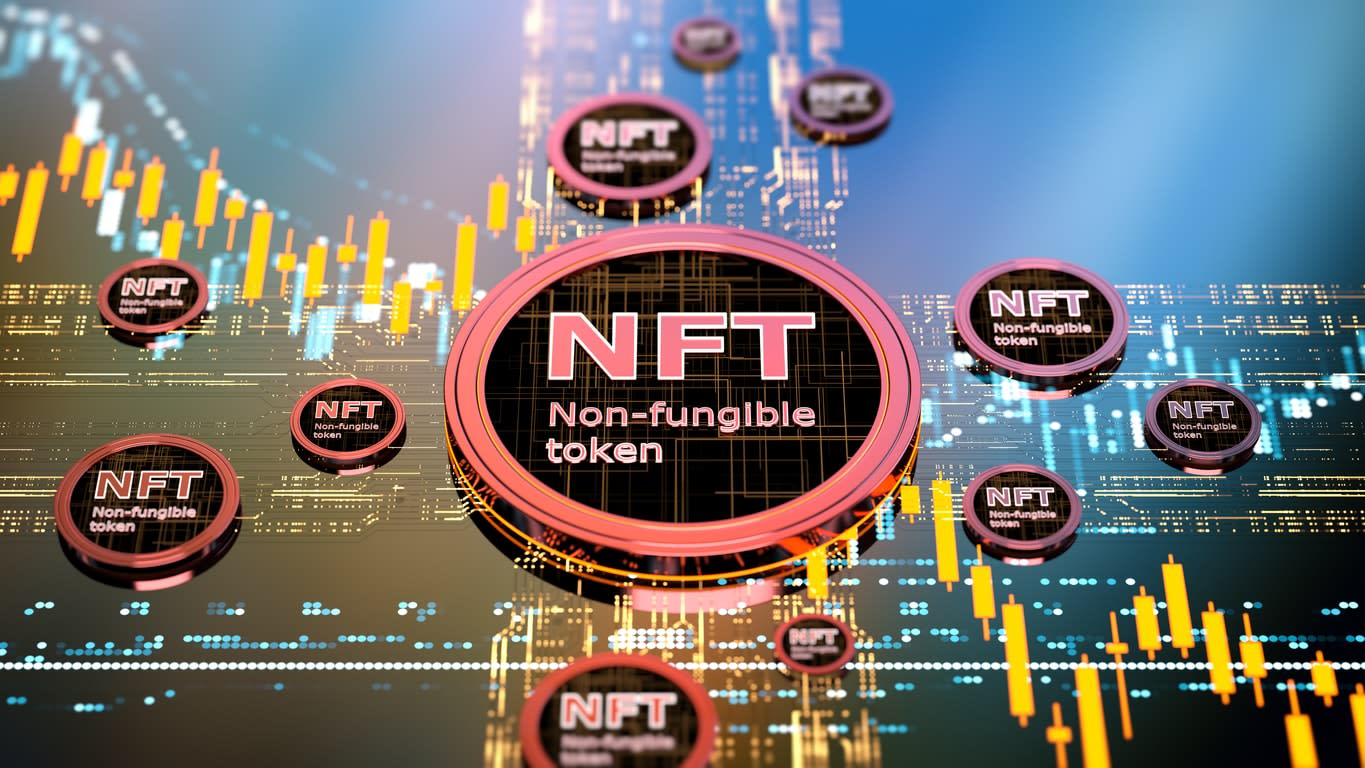
Non-fungible tokens (NFTs) have transformed the art world by making it easier to own and trade unique digital pieces. Although the NFT industry experienced a downturn in 2022, there has recently been a resurgence in demand for Open Edition NFTs.

What Are Open Edition NFTs?

Open Edition NFTs are digital assets or collectibles that can be minted in unlimited quantities, with no cap on the number of copies available. This contrasts with Limited Editions, which restrict the number of copies. Open Edition NFTs generally fall into two categories:

Timed Open Edition NFTs

Timed Open Editions NFTs can be minted repeatedly during a specific period set by the creator. Once the minting period ends, no additional copies can be created.

Infinite Open Edition NFTs

Infinite Open Edition NFTs can be minted endlessly without any time restriction, allowing collectors to generate as many copies as they wish.

How Do Open Edition NFTs Work?

Open Edition NFTs use blockchain technology to issue digital certificates of ownership for each collectible. All transactions and ownership records are stored on the blockchain, and creators earn a percentage from each sale of their digital assets.

What Are the Benefits of Open Edition NFTs?

Open Edition NFTs play a significant role in reshaping NFTs and advancing Web3. Here are some of their key advantages:

Cost-Effectiveness

Most Open Edition NFTs are priced below $10, making them affordable and accessible to a broader audience. This lowers the entry barrier for Web3 and also attracts new users.

Artist Control and Reach

Creators can continually add value to their collections and reach a wider audience. The affordability and unlimited availability of these NFTs reduce the risk for buyers, potentially increasing sales.

Fan Support

Collectors can support their favorite artists by minting unlimited editions, showing appreciation, and backing the creators they admire.

Brand Promotion

High sales volumes can increase creators’ visibility and reputation, helping them gain global recognition over time.

Flexibility

Open Edition NFTs are easier to create than Limited Editions because they require less programming. Platforms like Zora and Manifold simplify the process for creators.

How Did Open Edition NFTs Become Popular?

The rise of Open Edition NFTs began in 2022, largely driven by infrastructure-minting platforms like Manifold and Zora, which attracted many artists at the time. In January 2023, several Open Editions achieved notable sales. For instance, the Checks VV NFTs generated significant revenue, with 19 ETH (approximately $29.87) recorded in secondary sales.

The emergence of derivative projects has also contributed to the boost in NFT sales. For example, Vincent VanDough’s Pepe meme collection, which featured Checks VV NFTs, sold 238,000 copies at $6.90 each. This resulted in $1.6 million in revenue and a substantial increase in NFT trading volume in 2023.

What Is the Future of Open Edition NFTs?

Open Edition NFTs are growing in popularity and may witness price surges. However, as the NFT industry grows, they may become just another market trend, similar to Zero-Utility NFTs or unconventional art collections. Trends in the NFT space are often speculative, which means their popularity might wane over time.

Final Thoughts

Open Edition NFTs have gained traction since their introduction in 2022. Given the speculative nature of the market, their success may fluctuate. So, always ensure to conduct thorough research (DYOR) before investing in any NFT collection.

Nigerian Govt Will Obey Supreme Court’s Order on Naira Swap Deadline – AG Malami

0

The federal government of Nigeria has said it would obey the ruling of the Supreme Court, suspending the implementation of the February 10 deadline for the naira swap exercise mandated by the Central Bank of Nigeria (CBN).

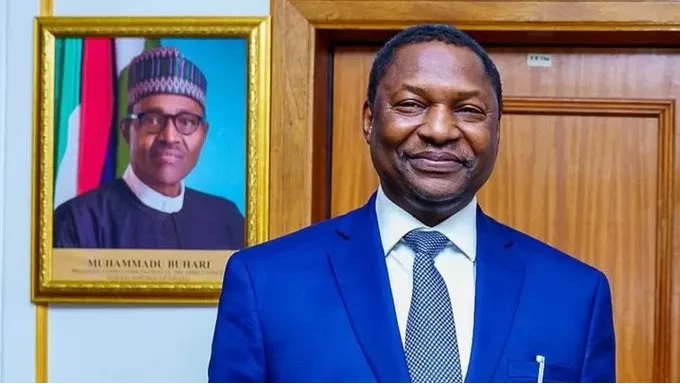
This was made known by the Attorney General of the Federation (AGF) and Minister of Justice, Abubakar Malami, during his appearance on AriseTV on Thursday. But the AGF said the federal government is taking necessary steps to ensure that the Supreme Court’s interim order is set aside.

He disclosed that the federal government, in regard to rule of law, will obey the Supreme Court’s order while working out modalities within the provisions of law to challenge the lawsuit that resulted in the order.

The Minister called the Supreme Court’s jurisdiction to handle the case into question. He said that the singular fact that the CBN was not joined as a party in the suit robbed the apex court of necessary jurisdiction. He said the federal government will be challenging the jurisdiction of the Supreme Court to handle the case next week Wednesday, and also will fight to vacate the interim order.

On Wednesday, a seven-member panel of the apex court presided by Justice John Okoro, suspended the February 10 deadline, pending the determination of an ex parte application brought by three northern states; Kogi, Kaduna and Zamfara, challenging the CBN’s policy. The hearing is billed to hold on Wednesday, February 15.

The three states had asked the Supreme Court to quash the CBN’s implementation of the February 10 deadline, set to phase out the old naira notes. The federal government had, late last year, unveiled redesigned N200, N500 and N1,000 notes, setting a January 31 deadline for the old notes to be returned to the banks. The deadline was later extended to February 10.

However, the implementation of the currency swap has been marred by the insufficiency of the redesigned naira notes, unleashing economic hardship as cash scarcity undermines economic activities. The three states, in their argument, said in addition to the suffering the currency swap has caused, the federal government did not give adequate period of time for the implementation of the policy and that the CBN did not follow laid down procedure.

However, the Supreme Court’s restraining order has been criticized by many legal practitioners, with some asking the federal government to ignore it and go ahead to enforce the February 10 deadline.

Malami, clearing the confusion that has trailed the apex court’s ruling, said the federal government will abide by the order until Wednesday next week when it will challenge the lawsuit brought by three states.

“I think what we are talking about is not whether the ruling is binding or not binding, we are talking about what we intend to do, there is no doubt about the fact that the ruling of the Supreme Court, regardless of the prevailing circumstances, is binding and then within the context of the rule of law.

“And what we are doing in essence is in compliance with the rule of law both in terms of obedience to the ruling and in terms of challenging the ruling by way of putting across our own side of the story, putting across our case, challenging jurisdiction.

“So the issue of obedience to the ruling of the Supreme Court is out of it. We are wholeheartedly in agreement that naturally, we are bound by it and will comply accordingly. But within the context of compliance, we shall challenge the ruling by way of filing an application seeking for it to be set aside, it is all about the rule of law,” he said.

Malami added that the federal government will challenge the Jurisdiction on the grounds that when you talk of monetary policy, regardless of the characters they take, the central bank is an indispensable and a necessary party for that matter.

“What we have at hand is a situation where the central bank was not joined as a party and if the central bank as an institution was not joined as a party, the position of the law is clear that the original jurisdiction of the Supreme Court cannot be properly invoked,” he said.

The federal government is arguing that it is the Federal High Court and not the Supreme Court that is vested with the exclusive jurisdiction to entertain this suit.

On Monday, a Federal High Court sitting in Abuja had ruled against any move to force the CBN to extend the February 10 deadline. The federal government is arguing based on this, that the plaintiffs have no cause of action.

“This suit is an abuse of judicial process. The plaintiffs have no locus standi to institute this action. The plaintiffs have no reasonable cause of action against the defendant,” it said in its response to the lawsuit.

Yes indeed, with Neuromorphic Computers, AI Chatbots like ChatGPT will Change the World

1

“until now, artificial intelligence could read and write, but could not understand the content. The new programs like ChatGPT will make many office jobs more efficient by helping to write invoices or letters. This will change our world” – says Bill Gates.

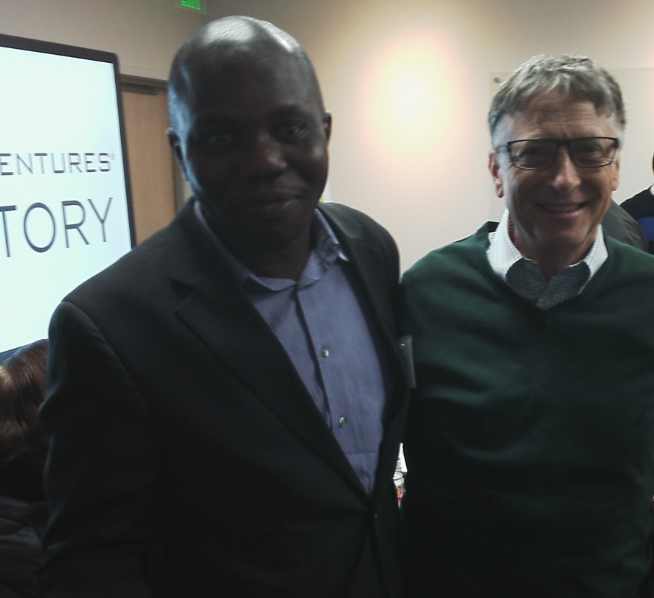
Microsoft co-founder Bill Gates in a recent interview revealed that OpenAI Chatbot ChatGPT which is currently the rave of the moment will change the world.

Gates, while speaking to a German business daily, stated that a chatbot that gives strikingly human-like responses to user queries is as significant as the invention of the internet.

Yes, my engineering PhD was on neuromorphic computational system where we work to model the event-driven asynchronous parallelism of the central nervous system, bringing the plasticity which is evident in biological systems into silicon, to enable a new age, not based on zeroes and ones, but on spiking-neural computing. I got a US patent on that effort and the US Government licensed the effort (with many goodies for the village boy). But what we are toiling to achieve on silicon cannot be compared to what the natural language computing paradigm we’re witnessing by the likes of ChatGPT, Bard, etc has demonstrated in production.

Indeed, as we work to recreate the synaptic-neural communication in circuits, these guys invented a way for machines to become like humans, on natural language computing.

People, that is a huge deal.  But a bigger deal will come when these ChatGPTs become powered by neuromorphic computers, drastically reducing the energy requirements to juice them up. Amazing things are coming up in this world. My company, an Intel programmable microprocessor partner, remains at the epicenter of that future.

Our world will change! #invent

Comment on Feed

Comment 1: In May of 2002, W.D. Smart and L.P. Kaelbling, researchers at Washington University and M.I.T., respectively, published a paper at the IEEE International Conference on Robotics and Automation
entitled “Effective Reinforcement Learning for Mobile Robots” in which they laid out the framework for programming robots with the ability to prioritize outcomes of actions.

In other words, the Smart and Kaelbling framework made it possible for automated systems, including autonomous robots, to want some things to happen in preference to others. This reward system was seen as the basis for artificial intelligence learning in a
chaotic environment.

This capability is what separates automated machines from welfare-aligned sentient beings. This is a better test of artificial intelligence than the “fool an observer into thinking you’re a human while carrying on a conversation” test. It’s relatively easy to predict what might happen next. Being able to care what happens next is another matter!

Comment 2: This is indeed huge going by the impact that programs like chatGPT are offering as well as many AI driven innovation.

On one hand, the future of work and expertise will change as I can simply chatGPT anything and assume the role of a subject matter expert within minutes simply by using the right prompts.

Critics of AI will say “it will replace people”, ” it’s putting people’s job at risk” etc.

Yes. That’s true.

The same way that Computer replaced typewriters but went on to create new job opportunities is what I see AI will do.

In the immediate, one way of re-inventing oneself for the future of work is to understand how to utilize these AI tools for your advantage.

You can start on this journey by Googling or ChatGPTing PROMPT ENGINEERING

Microsoft Co-Founder Bill Gates Says ChatGPT Will Change The World

0

Microsoft co-founder Bill Gates in a recent interview revealed that OpenAI Chatbot ChatGPT which is currently the rave of the moment will change the world.

Gates, while speaking to a German business daily, stated that a chatbot that gives strikingly human-like responses to user queries is as significant as the invention of the internet.

In his words, “until now, artificial intelligence could read and write, but could not understand the content. The new programs like ChatGPT will make many office jobs more efficient by helping to write invoices or letters. This will change our world”.

Also, while speaking in a Forbes interview, the Microsoft billionaire said, “interest in AI goes back to my very earliest days of learning about software. The idea of computers seeing, hearing and writing is the long-term quest of the entire industry. It’s always been super interesting to me.

And so as these machine learning techniques started to work extremely well, particularly things for speech and image recognition I’ve been fascinated by how many more inventions we would need before [AI] is really intelligent, in the sense of passing tests and being able to write fluently.

“What OpenAI has done is very very impressive, and they certainly lead in many aspects of AI, which people are seeing through the broad availability of ChatGPT”.

Reports reveal that during the summer of last year, Bill Gates had met with OpenAI co-founder and President, Greg Brockman to review some of the upcoming AI products coming out of the startup unicorn.

Following the launch of ChatGPT last year in November, the app crossed 100 million users in just two months after launch, which has seen it rated as the fastest-growing consumer app in history.

Ever since its launch, giant tech companies like Google, Facebook, Baidu, and Microsoft are already working their way around Artificial Intelligence (AI), to introduce something similar to ChatGPT on their platform.

Last month, Microsoft announced another multibillion-dollar investment in OpenAI in the form of cash and the provision of cloud computing. The tech giant then went ahead to launch a premium version of its team product backed by ChatGPT, offering AI-powered extras such as automatically-generated meeting notes.

Also, the emergence of ChatGPT has reportedly changed Google’s routine as the tech giant is feeling the heat which has seen it move ahead to launch its AI chatbot “Bard”, which is powered by LaMDA to take on ChatGPT (Language Model for Dialogue Applications).

According to Google, Bard can provide fresh high-quality responses to users’ queries by drawing information from the web. It combines the internet’s knowledge with the powerful intelligence and creativity of Google’s advanced AI capabilities and language models.

Already, ChatGPT is changing expectations and practices in education, as well as in professional fields that involve skills like coding.  A publication on Tekedia revealed that a professor at the University of Pennsylvania’s Wharton School of Business used ChatGPT to take an MBA exam where it passed.

There is no doubt that the future of generative AI sources such as ChatGPT is promising and has the potential to significantly change the way we do things.