DD
MM
YYYY

PAGES

DD
MM
YYYY

spot_img

PAGES

Home Blog Page 4430

The Google’s $100 Billion AI Chatbot Error

1

Bard went to a game of AI and scored a massive own-goal, wiping $100 billion in the market capitalization of Alphabet (Google parent company): “Alphabet Inc lost $100 billion in market value on Wednesday after its new chatbot shared inaccurate information in a promotional video and a company event failed to dazzle, feeding worries that the Google parent is losing ground to rival Microsoft Corp. Alphabet shares, which slid as much as 9% during regular trading, were flat after hours. Microsoft shares rose around 3% before paring gains. They were also flat in post-market trading.”

Google CEO, Sundar Pichai, has heralded Bard, Google’s planned rival to OpenAI’s ChatGPT, as a category-king AI system, but during its first play on stage (a promotional ad), Bard was really bad, blowing calls with underwhelming performance. Investors panicked and when all was done, more than $100 billion had been wiped out.

Remember what I wrote two days ago: “It is all about perception until it becomes about results.” Yes, in the evolution of disruptive technologies, your heritage will give you a seat at the game but when the play begins, your results are the only thing that will matter. And that is the message to Google: you have been an amazing engineering powerhouse and people will give you the benefit of the doubt, but in the end, you have to deliver results through engineering. If you fail to do that, the end will come. It is that simple.

It is all about perception until it becomes about results. Yes, IBM went to the mountain, trumpeting the new age of exponential computing, as IBM Watson touched the face of the future when it won Jeopardy! Fast forward today, no one remembers IBM as Big Tech enters an injury time on who wins the race of natural language computing.

And before I go: “Bard, how much was spent on your development?” I hope it includes this $100 billion that was taken off the market cap today.

Google’s much-hyped new AI chatbot tool Bard, which has yet to be released to the public, is already being called out for an inaccurate response it produced in a demo this week.

In the demo, which was posted by Google on Twitter, a user asks Bard: “What new discoveries from the James Webb Space Telescope can I tell my 9 year old about?” Bard responds with a series of bullet points, including one that reads: “JWST took the very first pictures of a planet outside of our own solar system.”

The Role of Business Education in the World of Foreign Exchange

0

The foreign exchange market, also known as Forex, is one of the world’s largest and most liquid financial markets. The forex market involves the exchange of one currency for another and operates 24 hours a day, 5 days a week. The increasing globalization of businesses has created a need for well-informed individuals in foreign exchange principles and practices. This is where business education offers individuals the knowledge and skills necessary to succeed in this dynamic market.

Understanding Foreign Exchange

A comprehensive understanding of forex trading platforms is essential for success in this market. Foreign exchange refers to the buying and selling of currencies to make a profit. The foreign exchange market operates as a decentralized network, meaning no central exchange or governing authority exists. Instead, currency trading is conducted through a network of banks, financial institutions, and individuals.

The foreign exchange market is incredibly dynamic and constantly changing in response to global economic and political events. This can make it difficult for individuals to stay up-to-date with the latest developments and make informed decisions in their trading and investment activities. This is where business education in foreign exchange comes in, providing individuals with the knowledge and skills necessary to succeed in this complex and ever-changing market.

The Need for Business Education in Foreign Exchange

Gaining a comprehensive understanding of foreign exchange is just one of the benefits of business education in this field. Business education in foreign exchange also allows individuals to develop critical analysis and decision-making skills, which are essential for success in the foreign exchange market. In addition, business education programs prepare individuals for foreign exchange career opportunities, helping them build their resumes and gain valuable experience in the field.

Business education programs offer a solid foundation of knowledge and skills for individuals looking to enter the foreign exchange market. These programs cover a range of topics, including currency trading strategies, macroeconomic analysis, risk management, and technical analysis. Through these courses, individuals will understand the foreign exchange market deeply and learn how to make informed decisions in their trading and investment activities.

Business Education Programs in Foreign Exchange

Several business education programs are available in foreign exchange, catering to individuals at different stages of their careers. Undergraduate and graduate degree programs are available for individuals seeking a comprehensive education in foreign exchange, while online and distance learning programs offer flexible options for those who are unable to attend traditional brick-and-mortar institutions. Certifications and professional development courses are also available for individuals looking to enhance their knowledge and skills in foreign exchange.

The Benefits of a Business Education in Foreign Exchange

Business education in foreign exchange offers a range of benefits, both in terms of personal and professional development. Improved career prospects are one of the primary benefits, as individuals with a solid understanding of foreign exchange principles and practices are in high demand in the foreign exchange market. In addition, business education in foreign exchange enhances individuals’ knowledge and skills, providing them with the confidence they need to make informed decisions in their trading and investment activities.

The Future of Foreign Exchange and Business Education

The foreign exchange market is constantly evolving, and it is important for individuals to stay up-to-date with the latest trends and developments. Emerging trends in foreign exchange include the increased use of technology and automation, as well as the growing importance of environmental, social, and governance (ESG) considerations. Business education programs in foreign exchange will continue to play a vital role in preparing individuals for success in this dynamic market, helping them to stay ahead of the curve and succeed in this fast-paced and ever-changing field.

Conclusion

In conclusion, business education plays a critical role in the world of foreign exchange. With a solid understanding of foreign exchange principles and practices, individuals are equipped with the knowledge and skills necessary to succeed in this dynamic market. Business education programs in foreign exchange offer a range of benefits, including improved career prospects, enhanced knowledge and skills, and the confidence to make informed decisions in the foreign exchange market. As this market continues to evolve, business education will continue to play a vital role in preparing individuals for success by helping them stay ahead of the curve in this fast-paced and ever-changing field. Whether you are looking to enter the foreign exchange market or advance your career in this field, business education in foreign exchange is an excellent investment in your future.

African tech startup raised more than US$3 billion in 2022

0
Fund, money cash dollar

Investment into the African tech startup ecosystem passed the US$3 billion mark for the first time in 2022, with the space withstanding global economic headwinds to post a record year.

This is according to the eighth edition of the annual African Tech Startups Funding Report released by startup news and research portal Disrupt Africa, which is available free to all as part of an open-sourcing initiative in partnership with Flat6Labs, MarketForce, 4Di Capital, Mercy Corps Ventures, Newtown Partners, and InsiderPR.

The report tells the story of an impressive 2022 in which more startups raised more funding than ever before, in spite of a global downturn in investments, especially in riskier asset classes such as venture capital. In all, 633 startups raised a combined US$3,333,071,000 in 2022. This represented incredible growth. The number of funded startups increased by 12.2 per cent on 564 in 2021, while the total secured funding jumped 55.1 per cent on US$2,148,517,500 in 2021.

Nigeria, Egypt, South Africa and Kenya remain Africa’s “big four” from a funding perspective, yet they secured a smaller share of total funding between them than in 2021, with startups from more African countries than ever before securing investment. Nigeria remained the undisputed leader, however, with 180 startups raising a combined US$976,146,000.

Though Nigeria and the rest of the “big four” remain clear leaders, there is still plenty of activity elsewhere on the continent, with startups backed in 27 African countries.

The fintech sector was, yet again, the most attractive to investors in 2022, with more startups securing funding than any other sector and a combined total that dwarfed all others. The sector raised almost US$1.5 million in funding.

Other sectors also had impressive years, however, with the likes of e-commerce and retail-tech, e-health, logistics, energy, agri-tech and transport.

The report is available for free download here. Aside from providing a full list of the funded startups, who invested in them, and, where possible, the amount raised, from the previous year, the annual reports also provide deep-dives into investment trends within key startup geographies and verticals, as well as data on African startup acquisitions.

“In spite of global pressures, 2022 was another outstanding year for the African tech space. Who knows what the future holds, and whether the sector will now enter a more fallow period, but for now the space can reflect on a very good 12 months work,” said Disrupt Africa co-founder Gabriella Mulligan.

Previously available for sale, the African Tech Startups Funding Report was previously purchased each year by leading tech companies from Africa and the rest of the world, Big Four consulting firms, banking and fintech leaders, venture capital firms, supranational investors and international trade bodies. Now, however, Disrupt Africa releases the publication for free, making it accessible to those for whom the information is most valuable – African entrepreneurs.

This year it is doing this with the help of partners Flat6Labs, MarketForce, 4Di Capital, Mercy Corps Ventures, Newtown Partners, and InsiderPR, with whose support Disrupt Africa will be distributing the African Tech Startups Funding Report 2022 to as many ecosystem stakeholders as possible.

“For too long access to crucial industry data such as this has been out of reach for active or aspiring entrepreneurs, as they are usually priced out of access,” said Disrupt Africa co-founder Tom Jackson. “It is the Disrupt Africa ethos to make as much information freely accessible as possible, and we can’t thank our partners enough for helping us with the open-sourcing of this publication.”

“In 2022, MarketForce raised a US$40 million Series A round – a significant milestone in its own right, but even more so for a startup founded by two young black men. On a continent where capital continues to pour in, it also matters where it is going. As an operator and investor myself, seeing the continued disparity in investment opportunities for growth-stage startups and underrepresented founders, including black and female founders, is disheartening. Yet, we must succeed – the impact of what we stand for and who we serve is too important not to. Let’s make this journey count,” said Muthoni Wachira, chief of staff at MarketForce.

“Well done and thank you to Tom, Gabriella and the Disrupt team for once again producing a top quality report. This information is crucial and very valuable for all players in the ecosystem,” said Anton van Vlaanderen, 4Di Capital partner.

“Africa remains one of the most exciting and diverse regions to invest in innovation globally. We see a huge impact potential with many of the continent’s startups and are pleased to partner with Disrupt Africa on their sector-leading insights report,” said Scott Onder, managing director of Mercy Corps Ventures and chief investment officer at Mercy Corps.

“As an active investor in Africa, we are eager to see the advancement of the ecosystem through knowledge-sharing and collaboration between local and international players. We are therefore delighted to support this initiative by Disrupt Africa to make this report freely available to all stakeholders,” said Newtown Partners managing partner Llew Claasen.

“InsiderPR was founded on the idea that visibility is the missing link for the entrepreneurs and investors driving innovation in African economies. We are proud to partner with Disrupt Africa to spotlight the African startup ecosystem’s successes in a year full of strong headwinds,” said Aubrey Hruby, co-founder of InsiderPR.

Young People, Do NOT Lose Focus Due to the Current Paralysis in Nigeria

1

I visited a family member who lived in a flat within his property in Owerri.  The man who would later become the king of Owerri asked me: “Ndubuisi, how are you doing with studies in FUTO?”.

I responded: “Sir,  Abacha is causing problems in Nigeria. He is making things very hard”.

Quickly, he explained: “Ndubuisi, your Abacha now is FUTO and you need to do well, graduate with good grades, etc. Leave Abacha for us”.

That conversation remains evergreen. Yes, one needs to know what his “real problems are”, and develop a plan to deal with them. That Elom Musk wants to relocate to the moon is not my problem today. As the paralysis deepens in Nigeria, young people, do not lose focus. Deal with things you can control and understand the ones you cannot. 

There is no argument, things are hard. But understand that every generation in Nigeria has had its own challenges. When I was in FUTO, we used to leave the hostel at 3am for a class scheduled at 8am. If you go there at 7am, you will likely not see the professor’s face. They used loudspeakers in MPH (a big hall in Lake Nwaebere campus) to teach those general courses with thousands of students.  

It was a mess; many broke down and dropped out! My engineering drawing exam was done on the floor because the space for the exam was not large enough to accommodate the drawing boards! Fast forward, every student in FUTO has his or her own hall with extra space to throw away.

Sure, this is not to say that young people should not pursue causes and activism. But the key thing here is this: understand when you can make impacts. Do your constitutionally protected demonstrations and show your frustrations, but destroying banks, ATMS, burning cars, etc will not advance the mission. Think about it: what has that auntie done for you to burn her family car? #focus is key. And make sure you vote in days! That would be the best response to bad situations.

Naira Redesign: Supreme Court Restrains the CBN from Enforcing Feb 10 Deadline [Update: Govt Reacts]

0
Naira

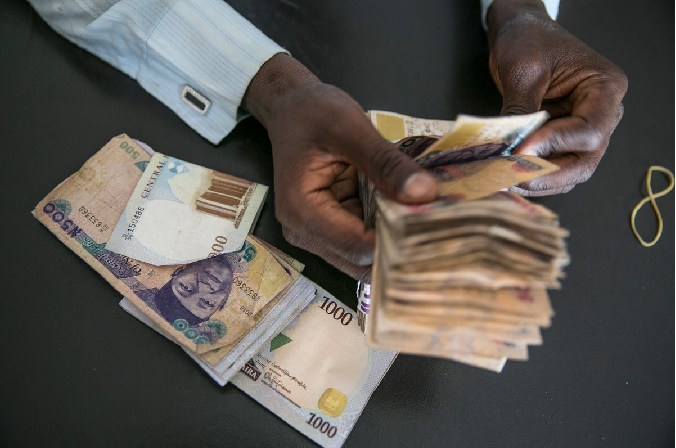
In a new development on Wednesday, the Supreme Court of Nigeria has restrained the Federal Government from enforcing the February 10 Deadline, earlier issued by the Central Bank of Nigeria (CBN) for redesigned N200, N500 and N1,000 notes to permanently replace the old ones.

The controversial policy, which has been widely criticized due to the chaos resulting from its implementation, has recently been contested by the ruling All Progressive Congress (APC) that has alleged it was meant to undermine its chances in the February 25 elections. Kaduna State governor, Mallam Nasir El-Rufai, had last week echoed the allegation that some elements in the presidency are working hard to undermine the APC because their candidate didn’t win the primary election.

Based on this, three northern states — Kaduna, Kogi and Zamfara — had on February 3rd, filed a motion ex-parte, praying the Supreme Court to stop the CBN from implementing the currency swap deadline.

In response to the prayer led by the states’ lawyer, AbdulHakeem Mustapha (SAN), a seven-man panel of the Supreme Court led by Justice John Okoro, in a unanimous ruling, granted an interim injunction restraining the federal government, the central bank and commercial banks etc from implementing the February 10, deadline for the old 200, 500 and 1000 Naira notes to stop being a legal tender.

The apex court further held that the FG, CBN, commercial banks, by this ruling, must cease to enforce the February 10 deadline pending the determination of notice scheduled to hold on February 15 on the issue.

After the ruling, counsel to the three states, Mustapha told the press that they made the decision to drag the matter to the Supreme Court because among other things, the CBN policy has brought about a lot of hardship on Nigerians, riling the public up against commercial banks.

“We invoke the original jurisdiction of the Supreme Court when there is a dispute between the state government and the Federal Government. It is one of the few occasions where the Supreme Court act as the original jurisdiction. So, we invoked the powers of the Supreme Court to hear this application.

“The reason for it is that as well-intentioned as this policy of the Federal Government on this naira redesign, it is causing hardship all over the country. As we can all see, banks are being harassed, Nigerians are suffering, especially the downtrodden, even in the urban areas they are having difficulty, but it is more excruciating in the rural areas.

“So, the three state governments – Zamfara, Kaduna and Kogi deemed it fit for us to invoke the powers of the Supreme Court to intervene,” Mustapha said.

However, other lawyers in the country have faulted the Supreme Court’s ruling, saying the apex court isn’t the proper place “for the adjudication of this issue.”

“What the States have done is used the apex court to extend the deadline for currency swap. The Supreme Court is not the proper place for the adjudication of this issue. The proper place is the High Court – for judicial review of the lawfulness of the decision of the CBN,” Abdul Mahmud, a senior lawyer and rights activist said. He added that the Supreme Court has kept turning itself into a political instrument, diminishing its respect.

It could be recalled that a Federal High Court sitting in Abuja, had on Monday, restrained the CBN from extending the February 10 deadline.

“An order of interim injunction is hereby made restraining the defendants whether by themselves, staff, agents, officers, interfacing banks or whosoever not to suspend, stop, extend, vary or interfere with the extant termination date of use of the old N200, N500, and N1000 bank note being 10th day of February, 2023, pending the hearing and determination of motion on notice,” the court held.

However, going by the Supreme Court’s ruling, the Nigerian public will have five more days to transact with the old naira notes. But experts have warned about courts’ rulings against the CBNs policies, saying it undermines the apex bank’s independence which will impact the economy negatively.

Update: The Nigerian Government Reacts

Premium Times reports that the Nigerian government has asked the Supreme Court to dismiss states’ suit.

The federal government has called on the Supreme Court to dismiss a suit challenging the 10 February deadline set by the Central Bank of Nigeria (CBN) to end the legal tender status of the old versions of some newly designed currency notes.

It argues that the Supreme Court lacks jurisdiction to hear the suit. The suit was filed by three states – Kaduna, Kogi and Zamfara States, all in the northern part of Nigeria and controlled by the ruling All Progressives Congress (APC).

The respondent maintains that the case is not a dispute between the federation and the state governments, but merely an issue about CBN’s policy.

It says the suit is, therefore, not qualified to be taken directly to the Supreme Court for adjudication. It argues that the suit ought to have been commenced at the Federal High Court.

The Attorney-General of the Federation (AGF), Abubakar Malami, sued as the sole defendant as the representative of the federal government, filed his opposition to the suit as a preliminary objection against it at the Supreme Court on Wednesday.

Mr Malami’s filings came hours after the Supreme Court granted a request by the three state governments for an order temporarily halting the CBN’s plan to end the use of the old currency notes on 10 February.

Neither the federal government nor the CBN has commented on their plan to comply with the ruling.