DD
MM
YYYY

PAGES

DD
MM
YYYY

spot_img

PAGES

Home Blog Page 4442

What Does Critical Media Concentration Look Like in Nigeria and Why Should We Be Concerned?

0

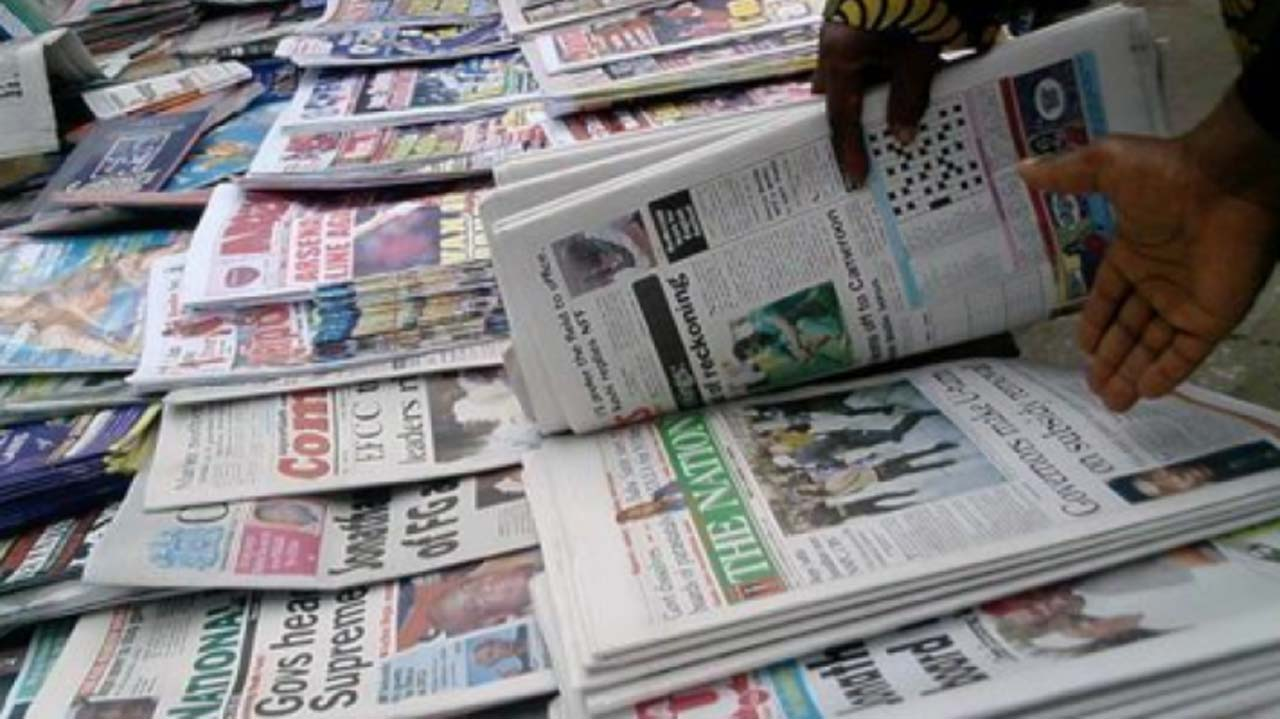
Nigeria has been playing significant roles in Africa’s economic and political development before and since her independence in 1960. In the area of media and communication, the first indigenous newspaper was established by a Nigerian. The newspaper was founded in 1859 and named “Iwe Irohin Fun Awon Egba ati Yoruba.” In Nigeria, the first television station was established in 1959 and was located in the western region. Some years later, the northern and eastern regions had their own television stations. The trends partially ended the British Broadcasting Corporation’s content distribution from London to the country through its African Broadcasting Service. It was partial because the new television stations still incorporated the BBC’s content as part of their international news for Nigerians.

The movement from the parliamentary system of government to the federal system ended the regional ownership of the stations. They became the Nigeria Television Authority and were dubbed the largest African television network because of their presence in almost all the states. During the military administration of General Ibrahim Babangida, the stations witnessed radical challenges through the implementation of public broadcast policies that enhanced organisational structures and employees’ capacity to deliver coordinated national information to the public. This continued throughout successive military and democratic administrations. However, President Olusegun Obasanjo’s administration’s implementation of neoliberalism policy in 1999, which allowed deregulation and privatisation to take centre stage in media development, opened up print and broadcast markets to a number of media entrepreneurs, and business and non-business corporate organisations now own media outlets across the country.

Similar to what is prevalent in other democracies such as the United States of America, the United Kingdom, Canada and some countries in the global south, our analyst examines Nigeria’s media concentration and ownership patterns and draws out critical insights from the emerging trends. The majority of the existing 677 media organisations (mainstream conventional television, radio, and newspaper) are concentrated in the south-west and north-central regions, with the north-east and south-east having low concentrations. State-by-state analysis indicates that of the 64.10% of privately-owned media organisations, Lagos has 10% of them, and the Federal Capital Territory follows with 6.10%. Kaduna (2.50%) and Lagos (2.20%) states have the highest levels of public ownership among the 677 media organizations, accounting for 35.80%. This public ownership includes the state and federal governments.

Analysis by media type reveals that the Nigerian media system has more radio and television stations than newspapers. From the 677 media organisations, 511 and 103 outlets are radio and television stations respectively. In the radio market, Lagos State has 5.90% of the outlets, while Oyo State also has the same percentage (5.90%). The FCT (4.60%), Kano (4.00%), Kaduna (4.00%), Ogun (3.70%), and Anambra (3.40%) follow. A state-by-state analysis reveals that television stations are overwhelmingly concentrated in Lagos State (2.10%) and the Federal Capital Territory (1.20%). The only two thriving magazines (The Tell and Newswatch) are situated in Lagos State. Four percent of the 61 newspapers are located in Lagos State. The FCT (1.50%) and Kogi (1.30%) State partially follow Lagos State in terms of the high concentration of newspapers.

Critical Media Concentration

Now, here are critical insights from our analysis, which informed the assumption that critical media concentration exists in Nigeria similar to what is available in other countries and markets. Of the 434 media outlets owned by private individuals and organisations, over 22% are located in the south-west region, while the north-central region follows with 13%. The north-west and south-south regions share the same percentage (8.60%) of private ownership, while the south-east region has 8.40%. The north-east is the only region with less than 5% (3%) of the outlets. Again, the south-west region dominates the public ownership pattern, with 8.70% of the 243 public media establishments across the country. The north-central region retains its second position with 6.90% of the outlets, while the north-west (6.40%), north-east (4.70%), south-south (4.70%) and south-east (4.40%) regions follow.

Why Should We Care

In all, the south-west region owns the media in Nigeria follows by the north-central region. This has several implications. While it is obvious that people would have access to different contents and possible diverse voices, the high concentration of media in the two regions indicates media dominance and the possible misrepresentation or framing of other regions. For instance, Sule, after analysing the coverage of various ethno-religious crises by the south-west newspapers, notes that Nigerian mass media played roles as diverse as protecting the interest of their owners and editors, geographical locations, ethnic and religious affiliations of the owners or editors. Abubakar and his colleagues reported how The Nation, a newspaper in the south-west region and privately-owned by a politician, reported ENDSARS protest by providing little spaces and publishing most of the stories using inside pages, while The Guardian, situated in the same region and privately-owned by a south-southern business man, provided much spaces for the coverage and used front pages.

In a study by Asekhamhe and others that analysed the reportage of the Indigenous People of Biafra (IPOB), a group agitating for the independence of Ibo ethnic group from Nigeria, only a few newspapers in the south-east provided adequate coverage of IPOB activities, while most of the newspapers in the south-west cited official sources towards representing agitators in line with their editorial philosophies and ownership interests, according to another set of researchers. The insights from analyses and findings from these studies reaffirm existing views that increase in media concentration hardly leads to diversity of voices. Instead, content fragmentation and polarization of groups are on the increase.
Orbeon Protocol (ORBN) May Gain On Kadena (KDA) and Harmony (ONE) in Overall Profit

0

The crypto industry is a goldmine for cryptocurrency enthusiasts who know their tokens. Harmony (ONE) and Kadena (KDA) are two promising tokens that have attracted investors with their impressive appreciation.

However, Orbeon Protocol (ORBN) has proven to have what it takes to overtake the duo of Harmony (ONE) and Kadena (KDA).

Investors are investing in the Orbeon Protocol (ORBN) token en masse to take advantage of the forecasted 6000% price surge.

>>BUY ORBEON TOKENS HERE<<

Kadena (KDA) Rising Despite Market Dip

Kadena (KDA) is a proof-of-work (PoW) blockchain that incorporates directed acyclic graph (DAG) with proof-of-work consensus. The goal is to offer crypto lovers a better and a more scalable Bitcoin (BTC) version.

The Kadena (KDA) team has a mission to change the landscape of the crypto industry and give users some features they can’t find in Bitcoin (BTC) and other digital currencies.

Kadena (KDA) offers similar security to Bitcoin’s (BTC) while offering the best throughput that makes it a go-to alternative to Bitcoin (BTC) for entrepreneurs and enterprises.

KDA is the Kadena (KDA) utility token that powers all its activities. KDA is also used by Kadena (KDA) users for transactional purposes.

Investors appreciate the Kadena (KDA) token’s appreciation which makes it a worthy investment. From $0.1213 per KDA coin about five years ago, the token goes for $1.18 per KDA coin right now.

>>BUY ORBEON TOKENS HERE<<

Harmony (ONE) is Looking Up

Harmony (ONE) is a unique blockchain primarily designed for the creation and deployment of decentralized applications (dApps). Harmony (ONE) was designed to revolutionize the operation of decentralized applications with special emphasis on random state sharding which facilitates block creation.

The team promised that “Harmony (ONE) is expected to introduce cross-shard contracts and a cross-chain infrastructure by the end of 2021.”

Harmony (ONE) gained immense popularity among crypto investors, thanks to its amazing processing speed and validation. For shared membership, it introduced a new concept: Verifiable Random Function (VRF).

The utility token for Harmony (ONE) is ONE. The token is used for several activities on the Harmony (ONE) network, including payment for services and other transactions.

Harmony’s (ONE) circulating supply is over 13 billion ONE tokens and an unknown maximum coin supply.

Over recent days, the ONE token has appreciated by a whopping margin as it increased from $0.001257 to its current price of $0.02177 per ONE token within three years.

>>BUY ORBEON TOKENS HERE<<

Orbeon Protocol (ORBN) is Appreciating Further

Besides Kadena (KDA) and Harmony (ONE) tokens, Orbeon Protocol (ORBN) is appreciating daily as well. Orbeon Protocol (ORBN) is a crypto project exclusively for aspiring entrepreneurs to fundraise their ideas or find the best ideas to invest in.

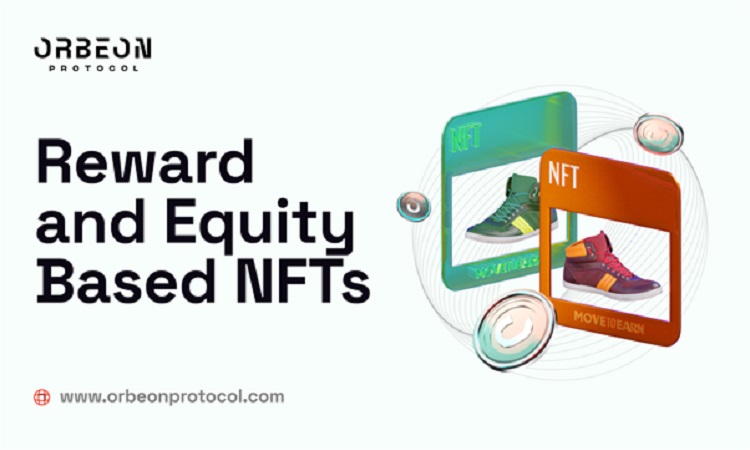
Orbeon Protocol (ORBN) is a decentralized investment platform that allows anyone to invest in the startups of the future with as little as $1, by buying equity-backed, fractionalized NFTs. These NFTs function as a form of investment in the budding companies, allowing everyday investors to buy into the next generation of startups.

This also allows startups to raise capital more efficiently than is possible in the traditional venture capital market, as investment can come from a much wider variety of investors.

As well as this, the project’s native ORBN token grants holders numerous benefits ranging from staking bonuses to governance rights and more. During presale, ORBN has already surged from $0.004 to $0.071 and is on track to eclipse this by rising more than 60x when it hits exchanges.

For this reason, ORBN and its presale has enjoyed a top spot as one of the most popular crypto choices for 2023.


Find Out More About The Orbeon Protocol Presale

Website: https://orbeonprotocol.com/

Presale: https://presale.orbeonprotocol.com/register

Telegram: https://t.me/OrbeonProtocol

RenQ Finance (RENQ) Presale Officially Launched: Next Trending Crypto Token in 2023?

0

With the growing popularity of decentralized finance (DeFi) projects, many investors are looking for the next big thing in the crypto space. RenQ Finance is a new DeFi project that is attracting a lot of attention and is poised to be the next trending crypto token in 2023.

RenQ Finance is designed to be a one-stop-shop for all DeFi services, including yield farming, liquidity provision, and trading. The platform is community-driven and governed by its holders, which means that users have a greater say in the direction of the project and that the platform is less susceptible to centralization and control by a small group of individuals.

One of the key features of RenQ is its advanced security features. Unlike centralized exchanges, RenQ does not store users’ funds, which means that users’ funds are much safer and more secure. This is a major selling point for investors who are looking for a secure and reliable DeFi platform to invest in.In addition to its security and scalability, RenQ is also designed to be user-friendly. The platform has a user-friendly interface that makes it easy for users to navigate the platform and interact with the various DeFi services that are offered. This makes it an attractive option for investors who are new to DeFi and who may not have a lot of technical knowledge.

The all-in-one DeFi solution offered by RenQ Finance is also attracting a lot of attention from investors. With a wide range of DeFi services all in one place, users will be able to take advantage of a range of different DeFi services all in one place, rather than having to use multiple platforms to access different services. This is a major selling point for investors who are looking for a platform that offers a variety of DeFi services and who want to maximize their returns.

The RenQ Finance presale is officially launched and has started at $0.02. During the presale, the price of RENQ will rise gradually and will reach $0.055 in presale stage 8. This provides investors with an opportunity to purchase RENQ at a lower price before it is listed on top tier exchanges.

Many experts are predicting that RENQ has the potential to rise 50x by the end of 2023. This is due to the growing demand for DeFi services and the increasing popularity of RenQ Finance. The project is designed to be scalable and user-friendly, which means that it will be able to accommodate more users and transactions as the platform grows.

In conclusion, RenQ Finance is a DeFi project that is attracting a lot of attention due to its focus on security, scalability, user-friendliness, and range of DeFi services. If you are interested in investing in RenQ or learning more about the project, be sure to visit the RenQ website for more information. With its strong focus on decentralization, security, scalability, user-friendliness, and range of DeFi services, RenQ has the potential to be the next trending crypto token in 2023 and to be one of the best tokens to invest in. So, don’t miss the opportunity to participate in the RenQ Finance presale and be a part of the next big thing in the crypto space.


Website: https://renq.io/
Whitepaper: https://renq.io/whitepaper.pdf
Telegram: https://t.me/renqfinance

Fuel and Naira Scarcity: Lagos Gov Slashes Transport Fares by 50%, Announces Food Banks

0

Lagos State governor Babajide Sanwo-Olu has announced a set of new measures designed to ameliorate the suffering currently being experienced by Lagosians due to fuel and naira scarcity.

In a post shared via social media on Wednesday, the governor announced a 50% cut in fares on all our BRT buses, LAGRIDE taxi-scheme, First Mile and Last Mile buses, and Lagos Ferry Services (LAGFERRY). He said the measures, which include setting up food banks across the state, will take effect from Thursday February 9, and last for the next seven days.

“Dear Lagosians, I have found it necessary to address the good people of Lagos, following some events in our dear country. The currency exchange and the fuel situation have, no doubt, raised the tension in the land.

“I commend our dear citizens for your patience and understanding in the face of hardship that you have experienced in recent days. Your resilience has been remarkable. The current situation has had telling effects and we have taken some steps to cushion these effects.

“To support you in weathering these stormy days, I hereby announce a 50% cut in fares on all our BRT buses, LAGRIDE taxi-scheme, First Mile and Last Mile buses, and Lagos Ferry Services (LAGFERRY).

“This will take effect from tomorrow (Thursday) for the next seven days.

“We will push out more Cowry Cards to enable more Lagosians get onboard our services,” the governor said.

He added: “I have also directed that food banks be set up in various parts of the State to cater for the vulnerable.

“We have identified stakeholders and organizations that will help distribute food stuff to the vulnerable people hit by the current situation.

“We understand this is a difficult moment for vulnerable individuals. The relief will help until normalcy is restored.”

Nigerians have been grappling with the impacts of fuel scarcity and the redesigned naira notes for weeks, increasingly compounding their already-bad economic situation. With its large population, the impact of the crisis on Lagos has doubled compared to other states, especially the cost of transportation.

The Google’s $100 Billion AI Chatbot Error

1

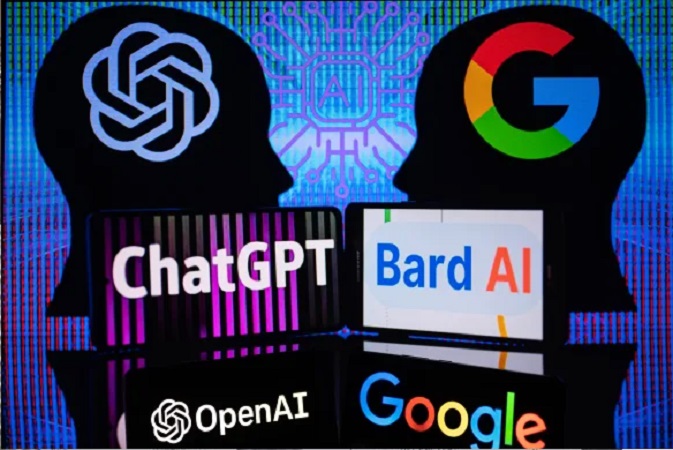
Bard went to a game of AI and scored a massive own-goal, wiping $100 billion in the market capitalization of Alphabet (Google parent company): “Alphabet Inc lost $100 billion in market value on Wednesday after its new chatbot shared inaccurate information in a promotional video and a company event failed to dazzle, feeding worries that the Google parent is losing ground to rival Microsoft Corp. Alphabet shares, which slid as much as 9% during regular trading, were flat after hours. Microsoft shares rose around 3% before paring gains. They were also flat in post-market trading.”

Google CEO, Sundar Pichai, has heralded Bard, Google’s planned rival to OpenAI’s ChatGPT, as a category-king AI system, but during its first play on stage (a promotional ad), Bard was really bad, blowing calls with underwhelming performance. Investors panicked and when all was done, more than $100 billion had been wiped out.

Remember what I wrote two days ago: “It is all about perception until it becomes about results.” Yes, in the evolution of disruptive technologies, your heritage will give you a seat at the game but when the play begins, your results are the only thing that will matter. And that is the message to Google: you have been an amazing engineering powerhouse and people will give you the benefit of the doubt, but in the end, you have to deliver results through engineering. If you fail to do that, the end will come. It is that simple.

It is all about perception until it becomes about results. Yes, IBM went to the mountain, trumpeting the new age of exponential computing, as IBM Watson touched the face of the future when it won Jeopardy! Fast forward today, no one remembers IBM as Big Tech enters an injury time on who wins the race of natural language computing.

And before I go: “Bard, how much was spent on your development?” I hope it includes this $100 billion that was taken off the market cap today.

Google’s much-hyped new AI chatbot tool Bard, which has yet to be released to the public, is already being called out for an inaccurate response it produced in a demo this week.

In the demo, which was posted by Google on Twitter, a user asks Bard: “What new discoveries from the James Webb Space Telescope can I tell my 9 year old about?” Bard responds with a series of bullet points, including one that reads: “JWST took the very first pictures of a planet outside of our own solar system.”