DD
MM
YYYY

PAGES

DD
MM
YYYY

spot_img

PAGES

Home Blog Page 45

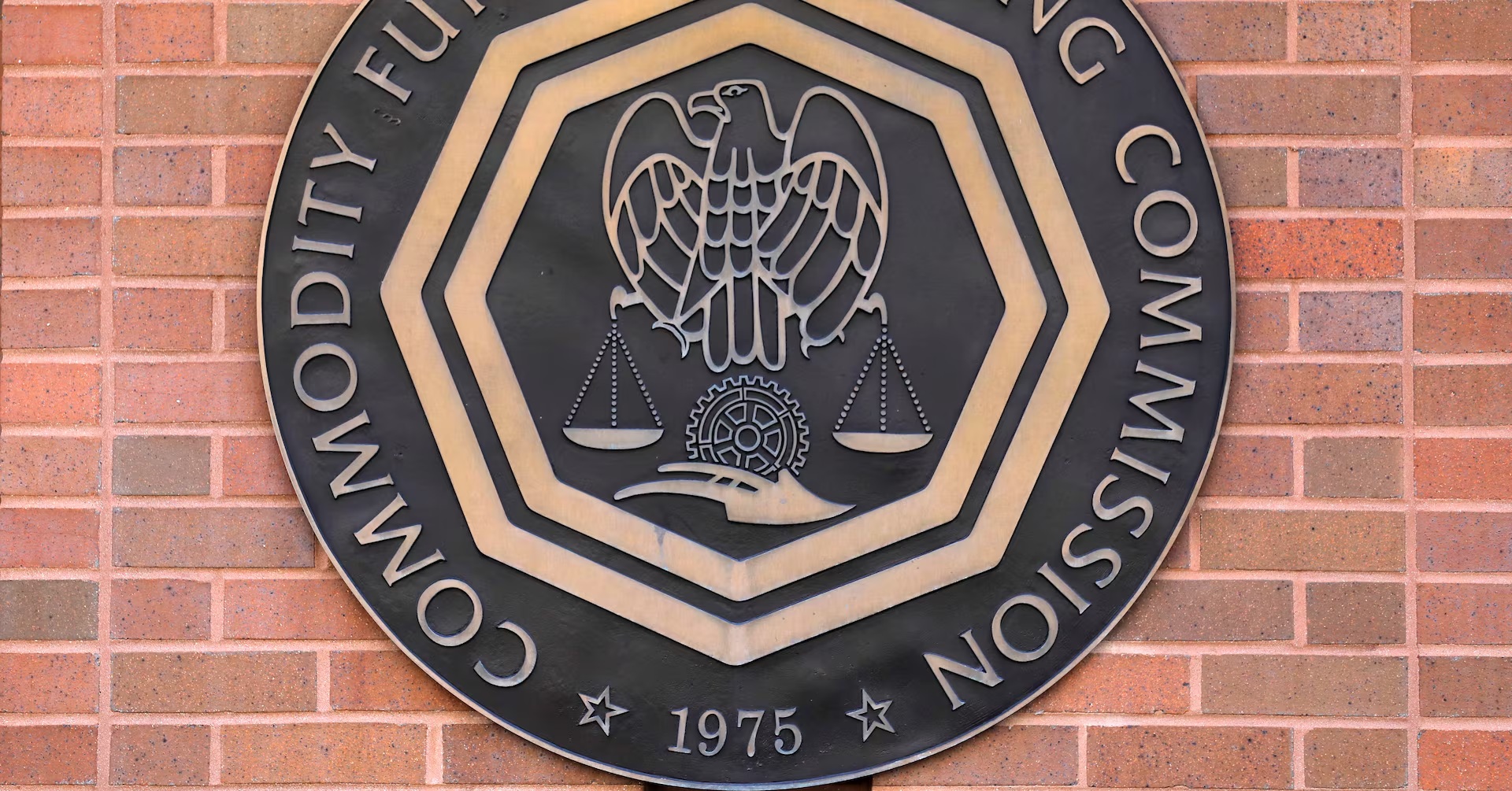
CFTC Allows Passive Derivatives Software Without Broker Registration, Opening New Path for Crypto Trading Infrastructure

0

The Commodity Futures Trading Commission is drawing a sharper line between building financial software and acting as a financial intermediary, potentially opening a new chapter for derivatives markets and crypto trading.

The agency’s position that developers can create passive derivatives software without registering as brokers, including software used in crypto markets, addresses a question that has become increasingly important as financial infrastructure moves from traditional intermediaries into code.

If software merely provides tools for users to interact with markets without taking custody, exercising discretion or executing trades on their behalf, the regulatory treatment can be different from that applied to a conventional broker.

That distinction matters because decentralized finance has increasingly challenged the assumptions embedded in financial regulation.

Traditional markets were constructed around identifiable institutions: brokers accept orders, exchanges match trades, clearinghouses manage settlement and custodians hold assets. In crypto markets, some of those functions can be replaced by smart contracts, automated protocols and interfaces operated by software developers.

The CFTC’s approach could therefore have consequences well beyond a narrow compliance question. It potentially gives developers greater room to build derivatives infrastructure without automatically becoming subject to the registration requirements associated with intermediaries.

The crucial word, is “passive.” Developers do not receive a blanket exemption simply because their products are built with blockchain technology or marketed as decentralized. The regulatory distinction depends on what the software actually does and how much control its operator exercises.

A system that simply provides technical functionality may be treated differently from one that actively solicits customers, manages transactions, controls funds or exercises discretion over trading activity.

That creates an important boundary for the emerging crypto derivatives industry. Developers can build infrastructure, but the closer a product moves toward brokerage, execution or financial intermediation, the greater the possibility that existing regulatory obligations become relevant.

For the crypto industry, this clarification could encourage experimentation. Derivatives are among the most sophisticated and economically significant products in digital assets, offering tools for hedging, leverage and price discovery. Yet they also carry substantial risks.

Leverage can amplify losses, while poorly designed protocols can expose users to liquidation cascades, smart-contract vulnerabilities and market manipulation. The challenge is therefore not simply whether developers should be allowed to build.

It is whether regulators can distinguish technological infrastructure from financial activity without creating loopholes that allow regulated functions to migrate into supposedly neutral software.

That question will become more important as financial applications become increasingly autonomous. An interface may look passive while its underlying architecture performs functions that resemble those of a traditional intermediary.

Imposing broker-style obligations on every developer who creates open financial software could discourage useful innovation and push activity toward less transparent jurisdictions. The CFTC’s position represents an attempt to navigate that middle ground.

It recognizes that writing software is not necessarily the same thing as operating a brokerage, while preserving the possibility of regulatory oversight when developers cross into active financial services. For crypto, that distinction could prove consequential.

The next generation of derivatives markets may not be built around firms that look like yesterday’s brokers. They may be built around protocols, smart contracts and permissionless software.

The regulatory question is becoming less about who owns the trading desk and more about what the code actually does. That shift could define the next phase of digital-asset market structure.

But the lasting test will be whether regulatory clarity can encourage innovation without allowing financial risk to disappear behind the word “software.”


Coinbase CEO Brian Armstrong Says Crypto Clarity is Coming Regardless After Senate Blocks CLARITY Act

0

Coinbase CEO Brian Armstrong has stated that the U.S. cryptocurrency industry will still receive regulatory clarity even after the Senate failed to advance the Digital Asset Market Clarity Act.

In a post on X shortly after the vote, Armstrong expressed disappointment but made it clear that the industry would not remain stalled. He noted that the congress can’t be waited upon anymore, while stating that the SEC and CFTC have the tools needed to create clear rules under existing authority.

He wrote,

“The CLARITY Act didn’t advance in the Senate today, which was a disappointment. While it’s possible bi-partisan conversations continue and it lives to fight another day, we can’t wait on Congress anymore. The SEC and CFTC have the tools they need to create clear rules under existing authority, and I expect will begin working on this in earnest. So clarity is coming to crypto regardless.

“And of course GENIUS is already the law of the land for stablecoins, which is even more permissive on rewards. There were some concessions we made on CLARITY that were tough to swallow, so perhaps it’s for the best. Crypto can’t be uninvented. With clarity emerging through the regulators, we’ll continue updating the financial system.”

His comment comes after the U.S Senate vote on the motion to invoke cloture for H.R. 3633, known as the CLARITY Act, ended 49-50, falling short of the 60 votes required to advance the legislation.

According to report, no Democrats supported advancing the legislation. The vote also highlighted that the disagreement was not entirely partisan.

Four Republican senators joined Democrats in opposing the procedural motion. Notably, Senator Thom Tillis, who voted against advancing the measure, reportedly switched his vote in a way that preserves the possibility of bringing the legislation back for reconsideration.

Armstrong had anticipated the possibility of failure in the days leading up to the vote. In interviews, he argued that the industry would benefit either way, passage would deliver legislation, while failure would prompt the SEC and CFTC to move forward with their own rulemaking.

He noted that both agencies had indicated readiness to publish rules and that key concerns previously raised by Coinbase had largely been addressed in negotiations. Ethics provisions governing elected officials’ holdings of digital assets remained a point of contention in the final days.

In his post-vote comments, Armstrong struck a pragmatic tone. He acknowledged that bipartisan discussions could continue and that the bill might return, but he emphasized that progress could no longer depend solely on Congress.

He pointed to the already-enacted GENIUS Act, which provides a framework for stablecoins and is more permissive on rewards than some provisions considered in the CLARITY Act.

Armstrong also noted that Coinbase and the industry had made concessions during negotiations that were difficult, suggesting the current outcome might ultimately prove preferable in some respects. “Crypto can’t be uninvented,” he wrote. “With clarity emerging through the regulators, we’ll continue updating the financial system.”

The CLARITY Act aimed to create the first comprehensive federal framework for digital assets in the United States. It sought to clarify the division of oversight between the Securities and Exchange Commission and the Commodity Futures Trading Commission, establish clearer rules for exchanges and market participants, and address issues such as stablecoins and consumer protections.

The House had passed an earlier version of the bill in 2025. Supporters, including many in the crypto industry and some Republicans, viewed it as essential for bringing institutional capital into the sector and keeping innovation in the United States rather than pushing it overseas.

However, the failure of the cloture vote effectively places comprehensive market-structure legislation on hold for the remainder of the current Congress, with lawmakers preparing to leave Washington ahead of the November midterm elections.

Industry observers note that regulatory agencies already have authority under existing securities and commodities laws to issue interpretations and rules that could reduce uncertainty for exchanges, token issuers, and investors.

Armstrong’s message reflects a broader shift in the crypto sector’s approach. After years of lobbying for explicit congressional legislation, companies are increasingly prepared to work with the SEC and CFTC to achieve workable rules.

While legislative action would provide more durable clarity across future administrations, agency-level rulemaking offers a nearer-term path forward.

The coming weeks and months will show how quickly the regulators move and whether any revived bipartisan effort on Capitol Hill can regain momentum.

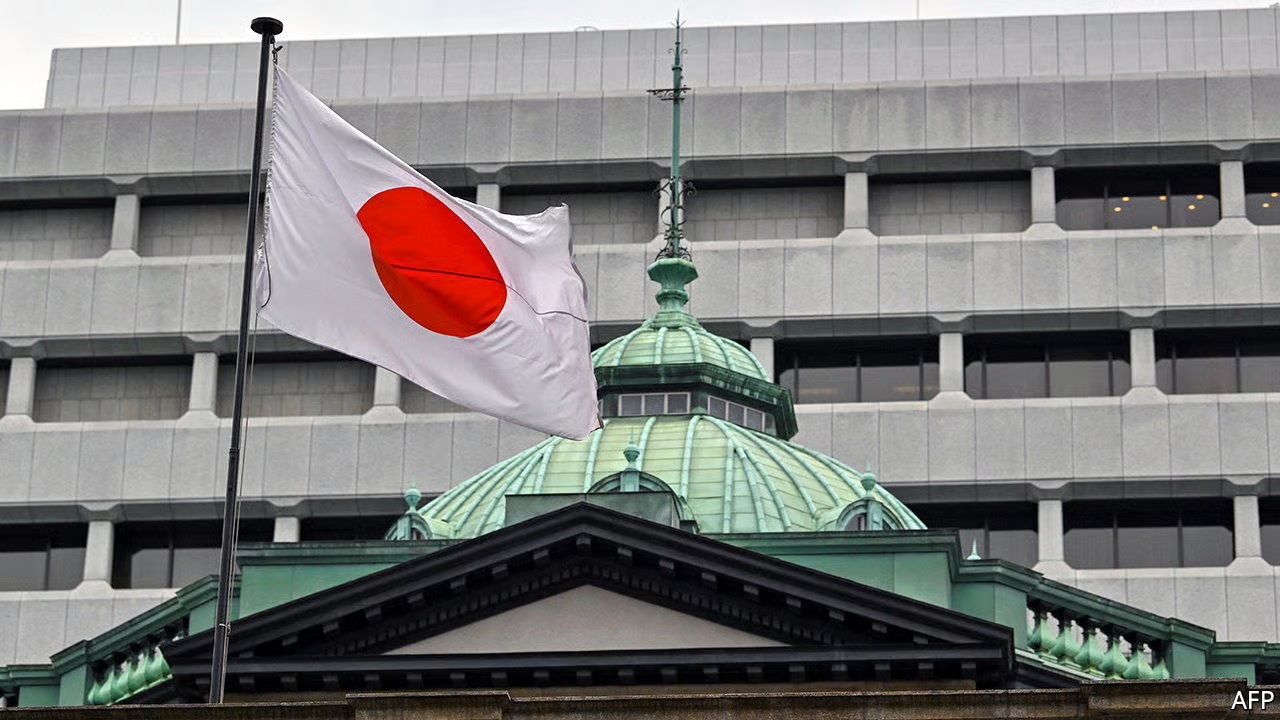
BOJ Seen Raising Rates to 1.25% as Inflation and US Pressure Accelerate Japan’s Policy Shift

0

The Bank of Japan is expected to raise its policy rate to 1.25% on Friday, according to a CNBC survey, as persistent inflation, stronger wages and pressure from Washington increase the case for a faster withdrawal of Japan’s long-running monetary stimulus.

About 89% of the 18 economists and analysts surveyed by CNBC between Sept. 9 and 14 expect the BOJ to raise its benchmark rate by 25 basis points at the conclusion of its two-day meeting.

Such a move would represent more than another incremental rate increase. It would signal that the BOJ is becoming more comfortable accelerating the tightening cycle after maintaining roughly six-month intervals between increases since it began normalizing monetary policy in March 2024.

The central bank last raised rates in June.

The case for another increase has strengthened as inflation and wages have moved higher. Japan’s headline inflation rate reached 1.9% in July, its highest level this year, as energy costs rose amid the Iran war. Real wages also increased 2.4% in July, marking their seventh consecutive month of growth.

The combination is important for the BOJ because sustained wage gains provide a stronger foundation for inflation than temporary increases in energy prices alone. Policymakers have been seeking evidence that Japan can sustain a cycle in which higher wages support consumption and prices, allowing monetary policy to move further away from the ultra-loose settings that defined the country’s economy for years.

The timing is also being shaped by Washington.

Washington Wants a Stronger Yen

The Trump administration has been vocal about the need for Japan to continue raising interest rates, putting Prime Minister Sanae Takaichi’s preference for easier monetary policy and expansionary fiscal policy under greater pressure.

Treasury Secretary Scott Bessent most recently urged BOJ Governor Kazuo Ueda to take “decisive market and monetary steps” at the G20 finance ministers and central bank governors meeting earlier this month.

The U.S. has an interest in a stronger yen partly because of its implications for global bond markets.

A persistently weak yen can increase pressure on Japanese investors and authorities to support the currency. Japanese institutions hold large amounts of overseas assets, including U.S. Treasurys, and a sharp yen decline could create incentives to sell some foreign assets and bring funds home. That could put additional upward pressure on U.S. Treasury yields at a time when long-term borrowing costs are already elevated.

The currency issue has already moved beyond rhetoric. Japan and the United States conducted a joint intervention in late July aimed at strengthening the yen, marking a significant step in efforts to stabilize the currency.

“The Trump administration has effectively checked any potential move by a Takaichi administration to block the Bank of Japan from raising interest rates,” said Takahide Kiuchi, executive economist at Nomura Research Institute and a former BOJ policy board member.

“Consequently, the Bank of Japan has gained a free hand to proceed with rate hikes,” he said.

That does not mean Washington controls Japanese monetary policy. The BOJ remains responsible for setting rates, and domestic inflation, wages, economic activity and financial conditions remain the formal basis for its decisions. But the interaction between monetary policy and exchange rates has become difficult to separate from the broader U.S.-Japan economic relationship.

Recent comments from BOJ board members have also taken a hawkish tone, leaving open the possibility that the central bank could move more quickly than previously expected.

Economists Split on How Fast the BOJ Should Move

The survey nevertheless shows that the path beyond Friday remains uncertain.

Jesper Koll, expert director at Monex Group, is the most aggressive outlier. He expects the BOJ to deliver a 50-basis-point increase in a “one and done” move, rather than the conventional 25-basis-point increase.

Carlos Casanova, senior economist for Asia at UBP, takes the opposite view. He expects the BOJ to leave rates unchanged for now, although he believes the central bank is already behind the curve and eventually expects two 25-basis-point increases every six months.

“Data doesn’t yet support a regime shift,” Casanova said, arguing there is “insufficient visibility to justify a faster pace of rate hikes.”

Iran tensions and oil prices remain his main concern, since a sustained energy shock could raise headline inflation while simultaneously weakening household purchasing power and economic activity.

Higher inflation caused by stronger domestic demand and wages gives policymakers more reason to tighten. Inflation driven primarily by imported energy costs is more difficult because rate increases cannot directly reduce oil prices and could further weaken economic activity.

The composition of the inflation increase will therefore remain important as the central bank determines whether higher prices represent a durable shift in Japan’s inflation regime or another external shock.

Political appointments could also make Friday’s meeting more contentious.

Around one-third of survey respondents identified Toichiro Asada and Ayano Sato as the BOJ board members most likely to dissent if the central bank raises rates. Both are viewed as reflationists and were appointed by Takaichi earlier this year.

Their positions could matter more if the government seeks to balance expansionary fiscal policy with tighter monetary conditions. A stronger fiscal push could support demand and wages while simultaneously making it more difficult for the BOJ to justify maintaining very low interest rates.

Yen Faces Its Own Policy Test

The yen is likely to be the most immediate market indicator of how investors interpret the BOJ’s decision. About 61% of respondents expect the currency to trade between 155 and 160 against the dollar over the next month.

A rate increase should, in principle, narrow the interest-rate gap between Japan and the United States and provide support for the yen. But the currency’s reaction will depend heavily on what the BOJ signals about subsequent increases.

A 25-basis-point hike accompanied by cautious guidance could produce a limited response if markets have already priced it in. A stronger indication that the central bank intends to accelerate normalization could generate a more substantial repricing of Japanese assets and the yen.

Homin Lee, senior macro strategist at Lombard Odier, expects the BOJ’s hawkish shift to help keep the yen below 160 per dollar. But he does not expect further appreciation to come easily.

A move through 150 would be difficult, he said, because government and business officials would push back against what they regard as “inappropriately” rapid appreciation, creating an unusual policy tension. The United States wants a stronger yen partly to reduce external imbalances and limit risks to U.S. bond markets, while Japanese policymakers and exporters have historically been sensitive to the economic effects of rapid currency appreciation.

For global investors, the BOJ decision extends well beyond Japan.

A faster tightening cycle could change the attractiveness of Japanese bonds relative to overseas assets, influence the behavior of Japanese institutional investors, and affect global funding markets. If Japanese investors repatriate capital as domestic yields rise, the effects could reach U.S. Treasurys and other major bond markets.

OpenAI Taps Telon to Bring Advanced AI Workflows to Lawyers and Legal Teams

0

OpenAI’s latest move into the legal sector signals a shift in how enterprise AI may be deployed: rather than simply giving lawyers access to powerful models, the company is building an ecosystem around implementation, training and workflow integration.

Its newly announced partnership with London-based startup Telon illustrates that strategy. Telon, founded in June 2026 by former trial attorney Lewis Bretts, specializes in what it calls “legal engineers.”

These professionals are primarily former lawyers who help law firms and corporate legal departments configure AI systems, develop prompts and agents, and train employees to use the technology effectively.

OpenAI has designated Telon a “select partner,” bringing the startup into its broader Partner Network. The significance of the arrangement lies in the problem it attempts to solve. Artificial intelligence has already demonstrated its usefulness for legal research, document analysis, drafting and other knowledge-intensive tasks.

Yet purchasing an AI subscription does not automatically transform a law firm’s workflow. Lawyers still need to understand how to structure requests, evaluate outputs, integrate AI into existing systems and maintain appropriate human oversight.

That implementation gap is becoming an important battleground in enterprise AI. OpenAI’s own work with law firms illustrates the opportunity.

Australian firm Gilbert + Tobin has reported using ChatGPT and Codex across its operations, reducing some recruitment research and data-extraction work from roughly four hours to 20 minutes and cutting selected conflict, KYC and AML checks to about five minutes.

The firm says governance and human accountability remain central to its deployment. OpenAI has also collaborated with Willkie Farr & Gallagher on firmwide AI adoption and the development of proprietary AI platforms through the firm’s innovation organization.

These examples suggest that the legal market is moving beyond experimentation toward deeper integration of generative AI into professional workflows. Telon’s model adds another layer. Instead of building another standalone legal AI application.

It positions people with legal expertise between the technology and the organizations using it. That approach could prove important because legal work carries unusually high requirements for accuracy, confidentiality and professional judgment.

A lawyer cannot simply accept an AI-generated answer because it sounds convincing. Legal conclusions must be supported by authoritative sources, relevant facts and applicable law. Errors can create financial, regulatory and reputational consequences.

The human lawyer therefore remains responsible for judgment even when AI performs much of the preliminary work.

This makes the “legal engineer” potentially more than a technical consultant. The role sits at the intersection of legal practice, software engineering and AI workflow design.

The partnership represents a way to scale specialized expertise without building every industry-specific implementation capability internally. The company launched its Partner Network in June, with a broader goal of enabling consultants and partners to deploy its technology inside organizations.

The legal industry is already crowded with specialized AI providers, including companies such as Harvey and other legal technology firms. Reuters reported earlier this year that AI companies were increasingly competing for law firms and even law students as the next generation of legal professionals becomes an important customer base.

The emerging competition is therefore not simply about whose model is most capable. It is increasingly about who can make AI reliable, usable and deeply embedded in professional environments. OpenAI’s partnership with Telon points toward that next phase.

The future of AI in law may depend less on replacing lawyers than on redesigning how lawyers work—with AI handling increasingly complex tasks while human professionals retain responsibility for interpretation, strategy and accountability.