DD
MM
YYYY

PAGES

DD
MM
YYYY

spot_img

PAGES

Home Blog Page 4535

Safaricom Rolls Out New Payment Service That Allows Users Pay For Goods And Services With Mobile Data

0

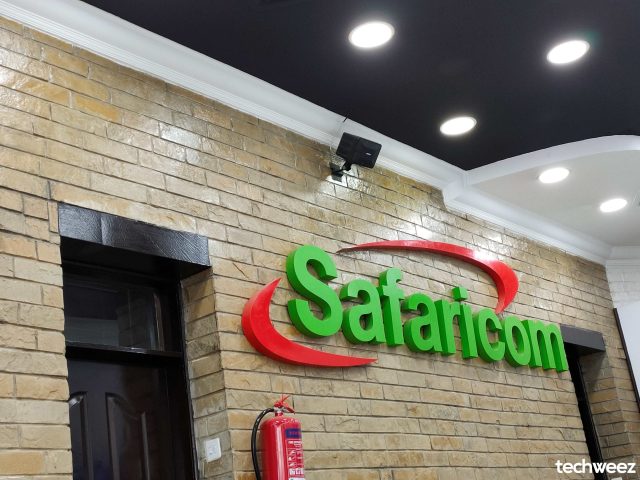
Kenya’s top Communication company Safaricom has rolled out a new payment service that allows customers to pay for goods and services using mobile data.

The new service tagged ‘Lipa na Data’, allows Safaricom’s postpaid users with a data balance of 5GB and above, to make payments for goods and services. Additionally, this service is also accessible to prepaid users with no expiry bundles above 5GB.

Users will be required to dial *544*34# through their Safaricom line and will then be prompted to pay the amount keyed in via till numbers or pay bills.

On dialing the payment request code, the bundle calculator gives the bill in Kenya shillings in its data bundle equivalent and prompts the user to either agree or decline to proceed with payment.

For example, 500 Megabytes of Mobile data, is equal to 32.50 Shillings, and 2,000 shillings is equal to 30,769.23 MBs (30.8GB).

However, this service does not allow users to proceed beyond the dialing code, in the event that one does not have the threshold of the required data balance. They will receive a feedback message saying, “You are not eligible for this service”.

Safaricom has continued to hold a firm grip on its existing customers, also amassing more customers through the rollout of its new services and the expansion of product offerings to address customers’ needs.

The telco giant has also recently embarked on an aggressive revenue optimization drive. Among the most notable moves are expanding the fifth generation (5G) network coverage to Kenya’s 21 countries in April, and introducing the Fuliza overdraft service for businesses last month.

Notably, Safaricom controls approximately 64.5% percent of the Kenyan market as of 2020 with a subscriber base estimated at approximately 35.6 million. In terms of voice market and SMS market share, Safaricom controls 69.2% and 92.2% respectively.

Safaricom’s Dominance in Kenya

Formed in 1997, Safaricom has revealed that it exists to transform lives. The telecommunications giant believes that the role of business extends far beyond making profits, which is why the company sees mobile telecommunications and its related products and services as a unique opportunity to improve the quality of life and contribute to sustainable livelihoods for people in Kenya and beyond.

The company has continued to contribute greatly to the Kenyan economy. In the year ended March 2020, the company added KES. 654 billion to the Kenyan economy, an equivalent of 6% of the country’s GDP, cementing its position as the single largest contributor to the economy.

In the same year, the company paid over KES. 110 billion in taxes, and registered over KES. 71 billion in profits.

Safaricom was ranked as Africa’s Best Employer, 67th in the World by the Forbes Global 200 list of the World’s Best Employers. As of 2020, Safaricom was reported to have employed over 4,500 people permanently and over 1,900 people on contract.

In March 2018, the company was ranked as the number one company to work for in the annual BrighterMonday Best 100 Companies to Work for in Kenya according to career professionals and job seekers.

Growth of Safaricom’s Fintech Platform M-PESA

In 2007, Safaricom launched its fintech platform M-PESA, a mobile phone-based money transfer, financing, and micro-financing service. M-PESA was originally designed as a system to allow microfinance-loan repayments to be made by phone, reducing the costs associated with handling cash.

After the pilot testing, it was broadened to become a general money-transfer scheme. Since then Safaricom M-PESA brand has reached 12 countries in Africa and three countries outside the continent.

It provides services to more than 51 million customers every month. It also has a wide range of financial services including Person to Person, ATM withdrawal, Payments, Bulk Payments, and Bank to M-PESA.

The fintech platform has quickly captured a significant market share for cash transfers and grew to 17 million subscribers by December 2011 in Kenya alone.

The growth of M-PESA reportedly forced formal banking institutions to take note of the new venture. As of November 2014, M-PESA transactions for the 11 months of 2014 were valued at KSh.2.1 trillion/=, a 28% increase from 2013, and almost half the value of the country’s GDP.

The Communications Commission of Kenya reported in September 2021 that there were 29.1 million M-Pesa customers in Kenya, making up 63% of the population. According to the research, Kenyans used M-Pesa to do business worth KSh 5.1 trillion (about $47 billion) in the three months ended in September 2021.

The development of M-Pesa has also aided Kenya’s economic expansion. An analysis by the World Bank found that since M-Pesa in 2007, it has contributed 2 percent to Kenya’s GDP. According to the research, M-Pesa creates 185,000 employees in Kenya.

Notably, as a result of M-popularity Pesa’s in Kenya, it has been introduced to other markets such as Tanzania, Mozambique, India, and Romania.

What to take into account when choosing a bookmaker

0

It can be difficult for beginner forecasters to guess an accurate result of a sporting event. In pursuit of big wins, they are left without a game bank. The player must be responsible for making predictions and choosing a bookmaker. The experts of the resource DailySports compiled a rating of  betting sites, using such criteria as license, availability of online broadcasts, convenience of payments, user reviews. With the help of such a rating it is possible to read the information in detail in order to choose a verified site and at any time to bet on your preferred sports and cyber sports disciplines.

How to find a fine betting site

In the global network, you can find a huge number of sites that belong to betting companies. Such gaming platforms offer an extensive line of outcomes for betting, a deep description, various bonuses and promotions. Not every bookmaker is able to meet the needs of its customers. Unscrupulous bookmakers block players’ accounts and refuse to pay them winnings. In order not to make a mistake with the choice of BC, you need to pay attention to the following nuances:

The breadth of the money line.

The more sporting events the bookmaker offers, the better for the bettor. The bookmaker’s line should include traditional sports. Also, players often bet on esports disciplines. In the money line of any event, there should be many markets available with various positive and bottom values.

  • Each reputable bookmaker has documents that allow it to work legally in the country. Bookmakers receive licenses from independent gambling commissions.
  • deposit and withdrawal. The bookmaker must guarantee the players the rapid implementation of cash transactions. To deposit and withdraw money, bettors usually use bank cards, electronic payment services or cryptocurrency.

Pay attention to the support service of the bookmaker. Technical support should work daily and promptly respond to players. You should also familiarize yourself with the promotions and the bookmaker’s loyalty program. With the help of bonuses and freebets, you can significantly increase your winnings. The better does not have to spend a lot of money to place a bet.

Increase opportunities with the right choice

Choosing the right bookmaker can greatly expand your options in the world of sports betting. Here are some examples of 1XBET opportunities:

An abundance of events: renown betting sites propose many events, comprising major championships and leagues, as well as lesser known tournaments. This gives you the opportunity to bet on a variety of sporting events and choose the most interesting and promising options.

Multiple bet types: a decent site offers different bet types, including singles, combinations and system bets. This allows you to experiment with different strategies and choose the one that best suits your preferences.
High odds: the chosen bookmaker might provide high odds on most of the events. This means that you can enhance your chances of success.

The Evolving Nigeria’s Economic and Human Geography; The Latent Opportunity of Uyo

0

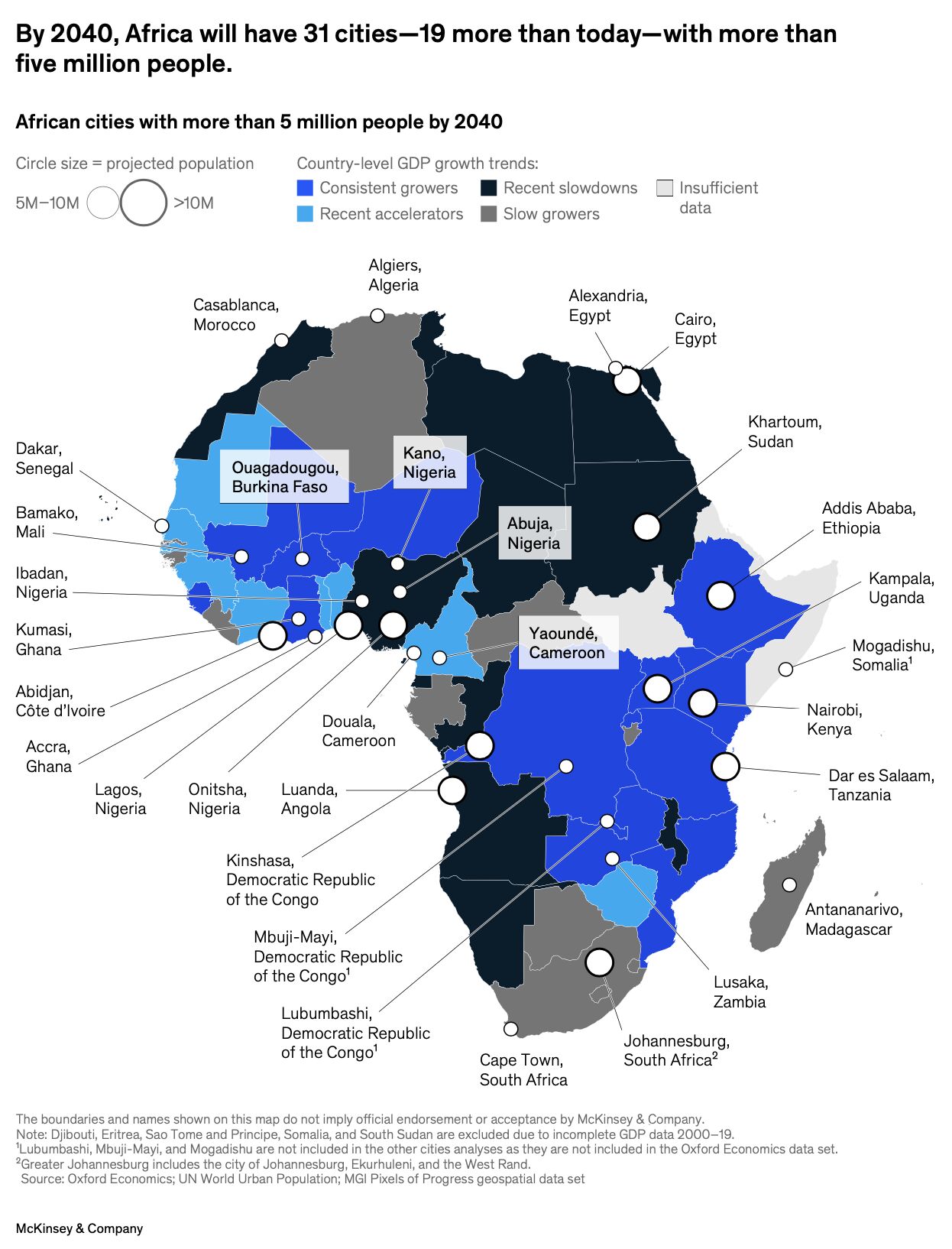
McKinsey, a consultancy, thinks that Nigeria’s HUMAN geography will be rewired within two decades. Today, the tier 1 cities are Lagos, Abuja and Port Harcourt when you are planning a  “broad” growth strategy (for some sectors, those vary) within economic opportunity geography. Kano, Ibadan, Onitsha and Kaduna come along, with Aba, Ilorin and a few others tagging.

But by 2040, McKinsey thinks Lagos and Onitsha will become dominant in human geography. Onitsha, the largest market in Africa (the first wow in my secondary school Geography class, reminding me that geography could be local) is repositioning. Ibadan, Africa’s largest indigenous city (another geography class discovery) is also going to expand, marginally. But for Kaduna and Kano, Abuja will gain from both. Abuja could become one of the largest cities in Nigeria due to infrastructure which is unrivaled in Nigeria.

While I think the models for Onitsha and Lagos are right on the money, I think the report ignores the latent potency of Uyo. If Nigeria builds a deep seaport which I think Akpabio, now the senate president will make a priority, Uyo will grow massively and Onitsha could become even larger. With a deep seaport in Akwa Ibom, Uyo, Aba and Onitsha will become bigger cities for trade and commerce.

I am long on Uyo and Aba because if Ibom deep seaport takes off, more than 20% of Lagos port traffic will move to Akwa Ibom and Uyo will become super-vital to Nigeria’s economy. A container transport from Uyo to Maiduguri will cost less than Lagos to Maiduguri (a tie for Kano). So, Uyo wins to most of Northeast and NorthCentral Nigeria (east axis). May Nigeria advance and bring prosperity to all.

A Lesson on Growth Innovation – Soulmate Industries Nigeria

0

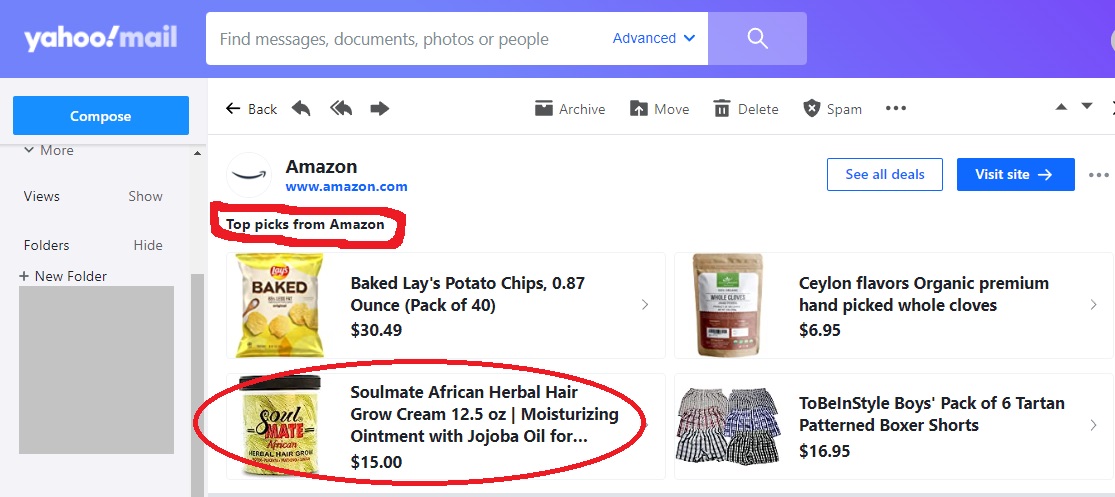
Just opened my Yahoo and saw this promo from Amazon. Yes, Soulmate’s haircare product is one of Amazon’s top picks, and it is pushing that message to American customers. It remains like yesterday when we encouraged Soulmate Industries, led by our big FUTO Alumni, Chief Ndukwe Osogho-Ajala, to go global. Soulmate Industries is Africa’s largest indigenous haircare brand.

The products are breaking sales records on Amazon, demonstrating that when you take care of your hair, that additional soul mate of beauty arrives.

Soulmate was the first corporate client which signed up when we began Tekedia Mini-MBA and more than 100 of its staff have co-learned with us. A key focus on the Growth Hour was “This Product Has To Be Everywhere”. They executed the playbook, and I know so because Amazon is promoting this African brand as one of its Top Picks. #thinkBIG

Comment on Feed

Comment on Feed  A bank stole my idea when I pitched it to it

My Response: Even though I do not know the bank which did this, I can assure you that nothing is new. The idea you pitched possibly came from somewhere. If you share it, we will share where someone has done it. Personally, I post my own business ideas on my blog. Anyone is free to pick. 

To win in the market, the difference is execution because nothing is really new (Sure, that is not to say you do not protect IPs or ideas). So, I will suggest that you TAKE ACTION and build. We tell our startups to go to events and tell people what they do so that they can get help. Some cannot even tell their staff their visions because they could be “stolen”. 

Focus on execution; and do not pitch banks. Rather, take a product to them and ask for partnerships. 

Politics and Ethics of Cancelling Davido Over Extramarital Affairs

0

The intertwining worlds of politics, ethics, and cancel culture have converged in the case of Nigerian artist Davido, who faced public backlash due to allegations of engaging in extramarital affairs. This piece examines the complexities of the politics and ethics surrounding the act of canceling Davido over his personal choices, exploring the broader implications and the need for nuanced discussions in our society.

The Context of Cancel Culture

Cancel culture, a phenomenon marked by public disapproval and withdrawal of support for individuals due to objectionable behavior, has become a prevalent aspect of our digital age. While it is crucial for society to hold public figures accountable, cancel culture often tends to oversimplify complex issues, offering little room for redemption or personal growth. The case of Davido and his alleged extramarital affairs brings these dynamics into sharp focus.

Ethical Considerations

When examining the ethics of canceling Davido, it is vital to distinguish between personal choices and professional conduct. Extramarital affairs, while deemed ethically questionable in the context of committed relationships, do not necessarily equate to professional misconduct. Ethical judgment should be tempered by an understanding of the distinction between an artist’s private life and their public persona.

Navigating Politics and Public Opinion

The politics surrounding Davido’s alleged extramarital affairs are multifaceted. As a prominent Afromusician, Davido’s personal life intersects with his public image and cultural influence. Critics argue that his actions are incongruous with the values he purportedly represents, while others contend that personal choices should not overshadow an artist’s creative contributions. Understanding the dynamics of power, societal expectations, and the influence of public opinion is crucial when evaluating the politics at play.

The Limits of Cancel Culture

While cancel culture aims to promote accountability, it often operates without a comprehensive understanding of the individual’s journey towards growth and redemption. The act of canceling Davido raises questions about the fairness of permanently tarnishing a person’s reputation for their personal shortcomings. It is essential to recognize that individuals are capable of change and should be given an opportunity to learn from their mistakes, without being eternally defined by them.

Balancing Accountability and Forgiveness

Striking a balance between accountability and forgiveness is key when evaluating the actions of public figures. Holding Davido accountable for his alleged extramarital affairs is a legitimate concern, but it is equally important to allow space for introspection, growth, and the possibility of redemption. Engaging in nuanced conversations about the consequences of one’s actions and supporting individuals in their efforts to rectify past mistakes can be a more constructive approach than outright cancellation.