DD
MM
YYYY

PAGES

DD
MM
YYYY

spot_img

PAGES

Home Blog Page 4536

Tekedia Mini-MBA Introduces a Course on Starlink Satellite Broadband

1

As a dynamic business school which educates with the antennas of the market, Tekedia Mini-MBA will teach a new course on satellite broadband with a case study of SpaceX Starlink now that we have the product and the pricing model ($600 hardware, $43 monthly service).

Elon Musk’s SpaceX Starlink is just about ready in Nigeria. But the price will shock many people: US$43/month service and a one-time hardware cost of $600. With that, you get a high-speed, low-latency broadband internet in remote and rural locations across the nation. In the US, the average cost for service is $110/month. So, it will be interesting to know if the bandwidth will be the same since the price in Nigeria is well lower.

Your business will change. Your career will change. Because satellites will unlock new vistas; join the next Tekedia Mini-MBA starting Feb 6 

Your business will change. Your career will change. Because satellites will unlock new vistas; Register.

New York Court Blocks Uber, Lyft Drivers’ Attempt to Raise Ride Fares

0

Uber and Lyft drivers in New York will have to wait for another time to implement increases in ride-hailing rates, as a court has blocked their earlier attempt.

The ruling came following a suit by Uber in December, challenging the city’s Taxi & Limousine Commission (TLC)’s decision to hike ride rates. Uber claimed the Commission used a flawed methodology to determine the per-minute and per-mile rate increases.

In his ruling, Manhattan state court Justice Arthur Engoron, who according to Bloomberg was a taxi driver in his college days, agreed with Uber.

“It’s just not enough to say there’s inflation and 100 drivers said gas prices shot up,” he said.

Uber and Lyft drivers across the US have for long clamored for better pay and improved welfare, with the drivers going to court seeking to be declassified as independent contractors in some states like California.

In November, the TLC unanimously approved the city’s first metered fare increases in a decade, including for ridesharing trips, per Engadget. The new meter increased per-minute rates by 7.4 percent and per-mile rates by 24 percent.

This means, under the new metered fares, a 30 minutes trip that covers 7.5 miles would have earned a ridesharing driver at least $27.15, an increase of more than $2.50 compared with current rates, according to Engadget.

Uber filed a suit seeking to stop the Commission from implementing the rate hikes before its due date of December 19th. In its argument, the ride-hailing giant said the increases would result in higher ride rates for its customers, which will harm the company’s reputation. A judge temporarily restrained the hikes from going into effect.

“Drivers do critical work and deserve to be paid fairly, but rates should be calculated in a way that is transparent, consistent and predictable. Existing TLC rules continue to provide for an annual review tied to the rate of inflation, which will take place in March,” Uber spokesperson Josh Gold told Bloomberg.

Uber said, according to Engadget, that implementing the pay raise would cost it between $21 million and $23 million per month, a huge financial responsibility for the ride-hailing giant that has been dealing with quarterly revenue losses. Uber reported a net loss of $1.2 billion for the third quarter 2022.

Bhairavi Desai, executive director of The New York Taxi Workers Alliance, told Engadget in a statement that the drivers will not rest until the raise is implemented.

“We call on the Taxi and Limousine Commission to immediately redo the rules so drivers do not have to wait one day longer for their raise. A few missing words in a Statement of Basis and Purpose does not justify denying a raise meant to help thousands of drivers pay their rent and put food on the table for their families

“Shame on Uber for spending millions on this heartless lawsuit only to deny drivers an increase of $1.66 more on an average trip. Uber woke a sleeping giant. This raise belongs to the drivers and we will not rest until it’s back in our hands,” he said.

Some Twitter Sacked Employees Reveal That They Are Yet to Receive Their Severance Pay

0

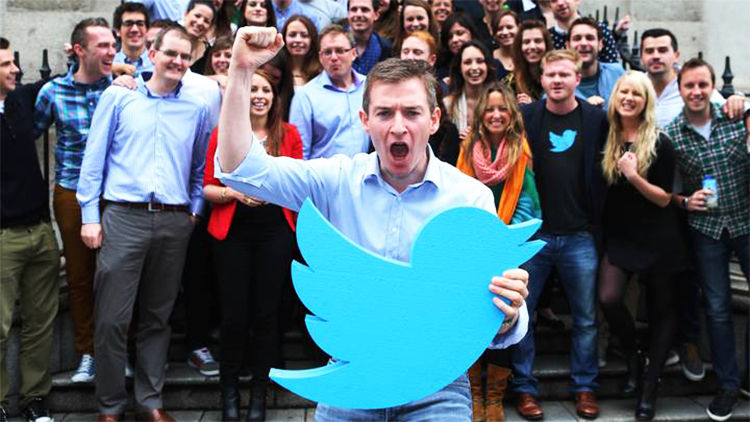
Months after Musk laid off some Twitter employees after taking over as the company’s CEO, they have disclosed that they are yet to receive their severance pay.

The affected employees from departments such as wellness, public policy, Marketing and communication disclosed that they are still yet to receive any severance information from the company.

According to spokesperson of Shannon Liss-Riordan, the attorney representing hundreds of former Twitter employees, Kevin Ready, he disclosed that her clients are yet to receive any severance information from the company.

“There was some anticipation that they would be sent yesterday, but we haven’t seen that,” he added.

It is however interesting to note that Liss-Riordan has filed four proposed class action lawsuits against Twitter on behalf of the former employees affected by layoffs, claiming that Twitter backtracked on promises of remote work and severance benefits, as well as complaints related to alleged disability and gender-based discrimination.

Five employees who filed for a class action suit against Twitter on November 1, revealed that they were promised at least two months of severance pay, bonus plan compensation, cash value of vested Twitter equity, and healthcare coverage, but disclosed that these promises were not kept by Musk.

Reports reveal that Musk is evading the payment of severance to laid-off workers as he seeks to reduce expenses at the company he acquired for $44 billion, including a significant amount of debt which has seen him lay off half of the company’s employees.

Also, a report by The New York Times last month, disclosed that Twitter had internally discussed not providing severance pay to laid-off employees to further save on costs, causing uncertainty among affected workers.

On the 4th of November last year, Twitter CEO Elon Musk fired half of the company’s.  employees across different teams and regions. Out of these 3,500 employees, 1,000 were posted in California, according to the documents filed with the state.

Twitter by state and federal laws, is required to pay employees in the state of California regular paychecks after the termination of their contracts for the last two months.

The 60-day period ended on January 4, 2023, marking the official termination of California employees. However, these employees note that they are yet to receive any formal severance offer or separation agreement.

80.7% – Magic number in Nigeria; the debt service to revenue ratio

0

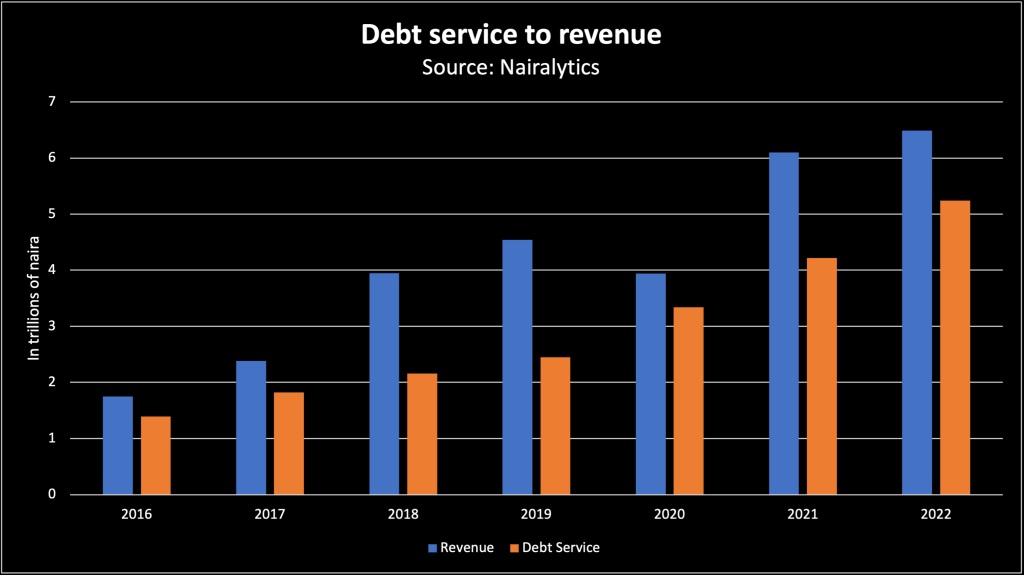
80.7%. That is the magic number in Nigeria, the debt service to revenue ratio for the 2023 national budget. In other words, you pay N81 to service debt for every N100 received as revenue. If you swap that debt service for marketing cost, you get the financial trajectory of some e-commerce companies in Africa. Of course, we know the destinations and outcomes for those companies – and the reason Nigeria must avoid packing debts when the debts are not used for productive endeavours which can earn revenue to pay them off.

Nigeria’s debt service to revenue ratio is reported as 80.7% according to the information contained in the 2023 Budget presentation made by the Minister of Finance.

The report reveals a total debt service of N5.2 trillion in the first 11 months of 2022 out of a total revenue of N6.49 trillion.

That said, Buhari has innovated well on revenue collection. Our tax agency has deployed new playbooks. Our business received an email on Jan 2nd on ITF fee, and I was like: really, the government was already open for 2023.

Of course, we need to innovate on growth policies at the same rate we have put on tax collections. But generally, the government is doing better on revenue – those bars continue to go up even though I would have wished, it rises faster. If we keep the debts off, we will have more funds to take care of things in Nigeria. Right now, it is a vicious circle as the more debt servicing rises, the fewer are the funds available for education, healthcare, etc.

Indeed, we can learn from agency banking and explore how to use some of those structures to improve tax collections.

This year also saw an increase in Agent Banking with an all-time high of about 1.4 million agents spread across the country, through the Shared Agent Network Expansion Facility (SANEF). Consequently, the volume of PoS transactions rose by 24.3 % to 878.4 million as of September 2022, from 706.8 million in the corresponding time last year. The value stood at 4.6 trillion.

Zenith Bank Suspends International Transactions on Naira Debit Cards

0

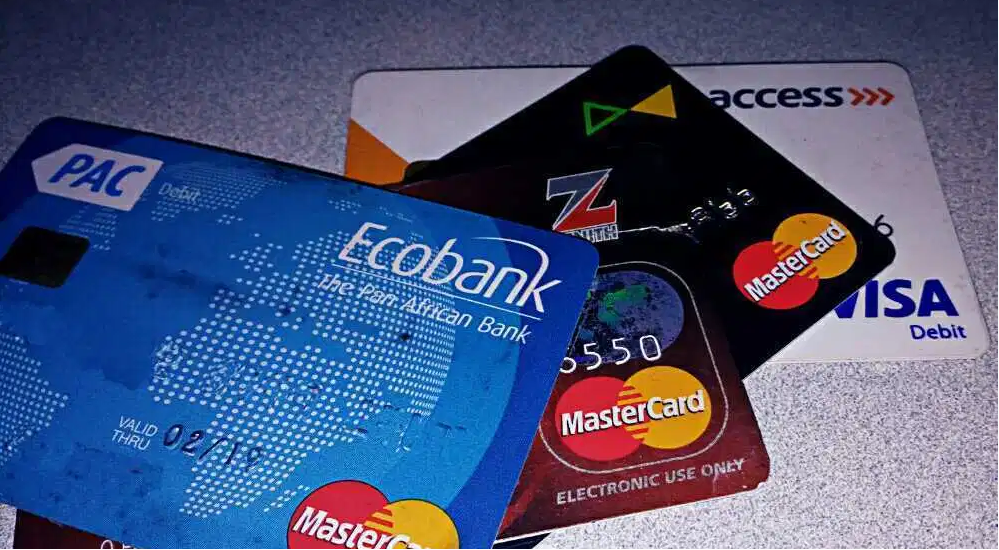
Zenith Bank has become the latest financial institution in Nigeria to suspend naira debit card transactions on international POS and web due to the nation’s forex crisis.

In an email to customers this week, the tier-1 bank said the Visa or Mastercard-powered naira-based operation will be suspended henceforth, joining a growing number of other banks that have made the same decision.

“Please be informed that you will be unable to use your Zenith Bank Naira cards for International Automated Teller Machine (ATM) cash withdrawals, POS transactions and web transactions,” the bank said.

Zenith bank said the suspension will take effect from January 9th, 2023.

“If you have international spend requirements, simply visit any of our branches and request for a foreign currency debit or prepaid card, which are available in US Dollar, Pounds and Euro variants,” the bank added.

Other financial institutions have made similar moves as the situation tightens. Last week, Guaranty Trust Bank announced the same decision in an email sent to customers, compounding the concerning development that began last year.

In early February and March 2022, Zenith Bank and the United Bank for Africa reduced their international spending limit on their naira cards from $100 to $20 a month, a decision understood to be born of the stringent policies by the Central Bank of Nigeria, aimed at protecting the naira.

The CBN governor, Godwin Emefiele, had last year, revealed that the apex would not continue to supply banks with foreign currencies. He said banks need to engage in export to generate forex.

With limited supply of foreign currencies, the banks apparently do not have enough forex liquidity to sustain thousands of POS, ATM and web-based international transactions powered by debit cards. The situation has eventually created the suspension of debit card international transactions, which every Nigerian bank is expected to effect very soon.

In July last year, Standard Chartered Bank announced it’s suspending international transactions on its naira visa debit. The announcement was followed by other financial service operators like Flutterwave, Eversend and other fintech platforms, announcing they have stopped virtual card services for international transactions.

In September 2021, First Bank announced that it’s suspending international transactions on its naira Mastercard, after an earlier decision to reduce the international spending limit on naira cards from $100 to $20.

The banks have always advised customers to get foreign currency debit or prepaid cards, which are going to be funded outside the Investor and Exporter official exchange rates. This means that individuals and businesses in Nigeria depending on bank-issued cards to carry out international transactions will still have to buy their respective foreign currencies at parallel market rates.

At the unavailable I&E window rates, dollar sells for N461.50/$1 while at the parallel market, it exchanges at about N731/$1, as of Friday.