
DD
MM
YYYY

PAGES

DD
MM
YYYY

spot_img

PAGES

Home Blog Page 4548

How Corporate Communication Impacts Organizational Performance

0

Communication is an act of living; it is the process of exchanging ideas or disseminating information to achieve a particular purpose. In an organizational setting, information and communication flow constitutes an integral part of the management system; it is the systemic movement of instructions or ideas within or across different levels of the organization to achieve the organizational goal.

Information is an important part of decision making and problem solving. Lack of access to the right information or poor communication invariably leads organizations to make avoidable mistakes. Through effective communication, people can be well informed about the circumstances of the system or have the required system knowledge to effectively and optimally perform their respective roles towards actualizing the overall goal of the organization.

More so, effective communication of ideas or problems enables the workers and especially the management to reach informed decision when encountered with the day-to-day operational and administrative problems of the organization.

The Role of Communication in Stakeholders’ management

It is believed that the success of an organization depends on the effective communication flow or information that happens between the internal stakeholders as well as between the internal and the external stakeholders of the organization. Internal stakeholders here comprises people such as  employees, management, founders or owners etc whereas the external stakeholders include; partners, suppliers, creditors, customers, clients, sponsors, shareholders, Government, and the general public.

Several reports have shown that organizations that do not take external communications seriously to constantly update their external stakeholders often experience trust and reputational problems. Likewise, poor internal communication develops process problems for organizations. In any case, it is important to clearly define the relationship between the organisation and its internal or its external stakeholders to map out what kind and level of information that each of the stakeholders can possess.

The Role of Communication in Employee motivation

Communication is an integral part of strategic leadership. Most CEOs in the corporate world admit that they tend to get the best of their employees during personal interaction with them and that this crucial moment affords them the opportunity to see through the formal climate into the informal conditions that affect work and employees’ productivity.

Through effective communication, the leader is able to inquire into the inner desires and troubles of his subordinates and provide viable solutions to them. This help the leader garner more respect as someone who cares about the workers and can be consulted. More important is that frequent communication with your employees and not leaving them to deal with their personal problems alone will preempt a tendency for licensing effect in them during crisis situation or moral dilemma.

Equity Dilemma, Comparison Bias and System Thinking in Corporate Management

0

The Equity Dilemma

Mr Ayomide is an Information and PR Analyst at Bazep Limited, a major Real Estate company in the country. On a Monday morning, after what he’d term ‘’a rather short weekend’’ Ayomide walks into his office prepared for the week’s activities. He discovers that his office looks rather different today. Titi, the office cleaner, has done an excellent Job which has a positive effect on the mental state of Ayomide.

Behind his computer, motivated Ayomide begins with his goal for the day, to project the company in the most professional style to the public. He finally comes up with a detailed article about the company’s offerings, which he then publishes on the Harvard Business Review website.

Comrade Majekodunmi is a Nigerian-American medical doctor based in Boston, US. He’s been looking for an opportunity to secure a property in his home country Nigeria in preparation for his retirement. He therefore runs into Ayomide’s write-up on the HBR and afterwards makes effort to know more about the company via the Google search engine. Having typed the keyword on the Google search engine, Comrade is referred to the company’s website which is managed by Mr Isaac, the company’s IT manager.

Comrade Majekodunmi is really impressed with the online presence of the company. So he decides he needs to check up what other people’s perception and remarks about the brand looks like. He goes to the company’s social media page which he thinks is no less interesting. ‘’The level of people’s engagement on the company’s social media is out of this world’’ he remarks.

Thus, in the course of his interaction with Abdu, the company’s head of digital marketing, Comrade reveals his interest to acquire one of the company’s products. With great delight and alacrity, Abdu hands the Comrade to Mss Fiyinsade, the company’s business executive who with panache and impressive rendition of product knowledge, talks him into buying.

After a long walk through the system, Comrade Majekodunmi is closed. But then, the dilemma is; who should the successful conversion count for among the above named employees of Bazep Limited?

Usually, many organizations are subtly caught in equity dilemma regarding employee ranking and rewards. Organizations invariably rely on key performance index to rank their employees. However, some job roles have more determinable KPIs than the others –for example, research and development Vs sales and marketing— and this usually leads to comparison bias.

It has been observed that organizations that focus too much on the end results usually record high turnover. These organizations have many unsung heroes who feel their efforts are not being appreciated enough and decide to leave for other places where they hope their values will be better appreciated. It has also been observed that companies that overcome comparison bias and equity dilemma and are able to retain talents are mostly adept at system thinking.

What is system thinking?

System thinking is a quintessential element of strategic leadership and corporate management. It is a model of thought that puts to perspective all aspects of a system as well as their interaction. In other words, system thinking is a corporate management strategy in which the organization measures its progress through the efficiency of a unit in terms of the performance of other units, rather than the differences among the units.

System thinking is predicated on the awareness that the organization itself comprises distinct but interdependent components. Hence, inefficiencies in one unit will result in problems for the organization which will in turn trickle down to every other unit of the organization. For instance, applying system thinking in a football team management, the manager will not attribute the team’s success merely to the number of goals scored by the strikers but also to the number of complete passes made by the midfielder, the strength of the defense and the number of saves by the goal keeper.

This method of analysis and approach to management directs attention to every detail and nuance of the system, and easily exposes the weak links that need urgent attention.
When system thinking is incorporated in the management structure of an organization, unfounded or misplaced comparison of employees which give rise to licensing can be minimized.

Resource:

Ismail Ayotunde Tiamiyu. Nov. 2020. Moral Licensing Syndrome: How Your Category-Best Employees Can Endanger Your System. Kindle Publishing. https://www.amazon.com/Moral-Licensing-Syndrome-Category-Best-Employees-ebook/dp/B08P3S9NH7

Nigeria Must Take Critical Action to Curb Oil Theft in 2023

0

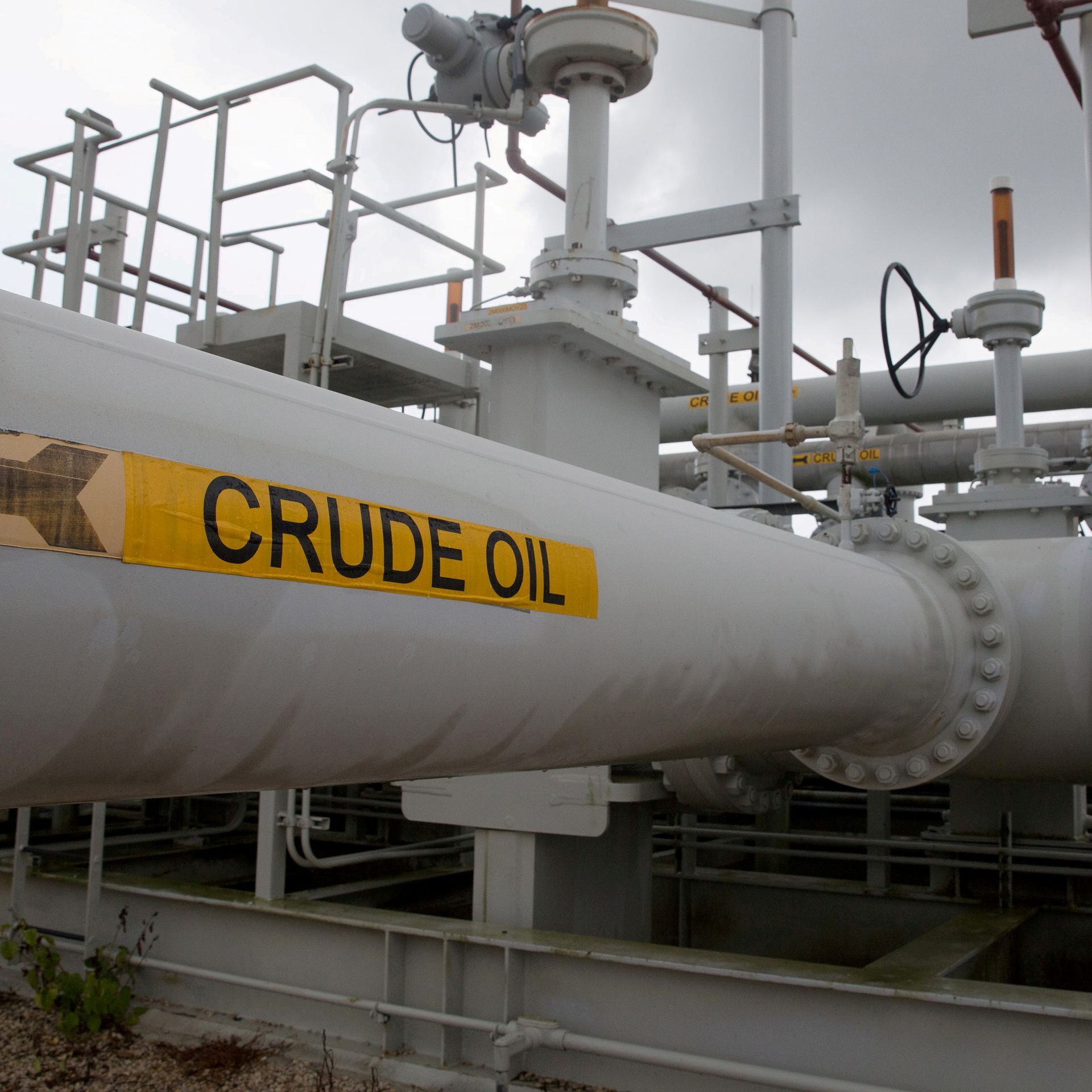
The incessant oil theft in Nigeria no doubt took a toll on the Nation’s economy this year 2022, which calls for the federal government of Nigeria to take decisive action to curb the menace of oil theft in the country.

The case of oil theft has posed so many implications to Nigeria and its economy, which has led to the massive loss of revenue that would have been used to support the country’s fiscal deficits and budget implementation.

Reports disclose that Nigeria loses about 100,000 barrels per day at $100 per barrel, which is equivalent to $10 million per day that is being stolen, which has resulted in the country’s inability to meet OPEC’s production quota.

One major impact of the oil theft which led to a drop in Nigeria’s oil revenue, is that the Nigerian National Petroleum Corporation (NNPC) Ltd failed to carry out its obligation of remitting funds to the account of the federation for seven straight months.

It is however interesting to note that the case of oil theft which happens majorly in the Niger Delta region, has been happening as far back as the late 1970s when Nigeria was predominantly under military rule.

The alarming crude oil theft has sparked several agitations from individuals, companies, and communities, calling on the government to secure pipelines, to protect them from constant vandalism. Unfortunately, the case of crude oil theft persists.

This year, the house of senate set up an ad-hoc committee to investigate oil theft and its consequent impact on Nigeria’s economy. It disclosed that Nigeria lost N1.3 trillion ($2 billion) to oil theft between January and August this year.

The report therefore called for an immediate streamlining of agencies present at the terminals in line with the relevance of their PIA-delineated upstream and midstream/downstream statutory functions, stating that the Nigerian Upstream Petroleum Regulatory Commission (NUPRC) should fast-track the upgrade of the National Production Monitoring Systems to enable real-time monitoring of flow station and terminal activities.

In an article published on Tekedia, it revealed that the head of Nigeria’s petroleum company disclosed to a legislative committee that a 4- kilometer pipeline from the Forcados export terminal has been used to steal oil for Nine years, resulting in the theft of hundreds of thousands of barrels of oil per day.

This is why the CEO of chevron Nigeria Richard Kennedy disclosed that crude oil theft in Nigeria is an organized crime.

Also, Nigeria Security and Civil Service Defense Corps, NSCDC, Delta state command, disclosed that some high-profile individuals are behind crude oil theft in Nigeria, noting that heads will roll if they decide to publish the names of these individuals.

It is disappointing to discover that some high-profile individuals are behind the vandalization of pipelines and crude oil theft in Nigeria, which has continued to cripple the Nigerian economy.

Aside from the negative economic effect of vandalism and crude oil theft, these careless acts also cause serious damage to the environment.

It has led to the pollution of lands which makes it unfavorable for planting, and has also increased the mortality of animals in the aquatic habitat due to oil spillage.

It also causes environmental degradation, which poses a serious health challenge to those living around the environment. Some of the arable lands and waters in the vicinity of the areas where crude oil theft has taken place are almost permanently unusable for either farming or fishing.

The menace of oil theft has no doubt become a national embarrassment, especially now that the oil price is at its peak, and other nations and corporations are smiling to the bank, rebuilding their economies from the proceeds of the oil windfall, meanwhile, Nigeria’s revenue is at risk and is bleeding with complicated economic challenges.

Persistent crude oil theft and pipeline vandalism have also contributed significantly to the loss of investor interest and confidence in the oil and gas space. This explains why Nigeria is no longer mainly an attractive destination for foreign direct investment.

Pertaining to its impact on investment, crude oil theft and related pipeline sabotage have forced some companies to shut down production and sell off their assets.

Shell, Chevron, Mobil, and other international oil companies (IOC) are divesting their land and shallow offshore assets mainly because they no longer see growth potential in them.

It is disheartening that the previous and present administration have failed to muster the political will to adopt effective policies to stop crude oil theft and vandalization of pipelines that have ravaged the oil sector.

The government on the other hand needs to do better in 2023, to implement technologies that would constantly monitor oil pipelines across the country and signal to the necessary officials when such pipelines have been tampered with.

Flasko (FLSK) May Surpass Chainlink (LINK) And Toncoin (TON) In 2023

0

Picking a coin that will rise to the moon in the next bull run is challenging. With prices of popular coins like Chainlink (LINK) and Toncoin (TON) freefalling, that choice is even more difficult.

However, analysts believe they have found a diamond in the rough – Flasko! Please keep reading to learn about that project and why it has been making headlines in the crypto sphere.

Chainlink (LINK) Introduces Staking But Is It Enough?

Chainlink (LINK) is a decentralized network built on blockchain that enables smart contracts to interact with different databases, like stocks. Recently, Chainlink (LINK) began its staking program.

With this program, users pledge their Chainlink (LINK) tokens as assurance; in return, they will receive a 4.75% yearly payout. Unfortunately, this did not help Chainlink (LINK) see a rise in value. On the contrary, Chainlink (LINK) is bleeding, with a 12% price drop in the past month.

Toncoin (TON) Seen As A Bad Investment Option

Toncoin (TON) is the native token of the Open Network blockchain. Toncoin (TON) also functions as a staking and a governance token. These use cases helped push the Toncoin (TON) to its all-time high of $5.29 in 2021.

Nevertheless, it has all been downhill for Toncoin (TON) since then. Toncoin (TON) has a price of $2.45 at the time of this writing which is nearly 53% less than its peak. And with a drop of 11% in the weekly price charts, this negative trend is bound to continue.

Flasko (FLSK) Brings Something New To The Table

Flasko will establish the original alternative investment platform where users can exchange and buy NFTs with lavish champagne, rare wine, and unique whiskey supporting them. The Flasko platform will tokenize this always-appreciating industry by fractionalizing these NFTs.

On the Flasko Launchpad, high-end beverage start-ups or established entities may advertise their products. This partnership will open them up to a new community they may not have been able to access in the past. Early Flasko investors will also gain price cuts and first dibs on these items.

For those who invest an immense amount, the Flasko project has three VIP tiers or Clubs, as they call them: The Wine, Whiskey, and Champagne Club. These tiers provide additional perks like a personal account manager and two yearly trips to the Champagne region of France!

Flasko also completed an audit by Solid Proof, another plus in its book! It has a price of only $0.111, and if you buy in now, you may receive 40x the profit when the coin reaches its predicted $3.90 price point in June 2023.

Website: https://flasko.io

Presale: https://presale.flasko.io

Telegram: https://t.me/flaskoio

Twitter: https://twitter.com/flasko_io

Sparklo (SPRK) Appears To Be A Dominant Cryptocurrency Over Polygon (MATIC) and Ripple (XRP)

0

Before the bear market, Polygon (MATIC) and Ripple (XRP) maintained their reputation as strong and profitable cryptocurrencies. Being trapped and affected by the bear market, investors are looking for other investment opportunities like Sparklo.

Ripple (XRP) Continues To Go Through Challenges

Ripple (XRP) is used to offer investors great returns. However, Ripple (XRP) is now facing different challenges that prevented it to generate satisfying profits. The biggest challenge Ripple (XRP) has to overcome now is the dispute with the SEC (Securities Exchanges Commission). Crypto experts believe that Ripple (XRP) can overcome this challenge. However, a considerable percentage of investors have lost their faith in Ripple (XRP). As a result, they are less likely to buy Ripple (XRP) anytime soon.

Polygon (MATIC) Will Drop Further

Polygon (MATIC) offers an outstanding platform for developers to deploy their decentralized applications. However, the overall platform is currently going through a series of challenges that left investors unhappy.

Since the beginning of 2022, the value of Polygon (MATIC) has been dropping. The main reason why this cryptocurrency is not able to secure any positive returns is that it had to go through a negative breakout earlier in the year.

Sparklo (SPRK) Will Be A Good Investment To Consider

One of the biggest threats to the two cryptocurrencies mentioned above is Sparklo. Sparklo is a new player in the market. But its presale stage, which started recently, is able to secure lots of attention from investors.

The Sparklo project will allow investors to buy NFTs backed with gold, silver, and platinum. Right now,  Sparklo is only $0.013. But, most cryptocurrency analysts believe that the value of Sparklo will increase by around 4,000% in the upcoming three months.

Sparklo offers investors huge growth potential. Thus, we recommend checking out Sparklo now.


Find out more about the presale:

Buy Presale: https://invest.sparklo.finance

Website: https://sparklo.finance

Twitter: https://twitter.com/sparklo_finance

Telegram: https://t.me/sparklofinance