DD
MM
YYYY

PAGES

DD
MM
YYYY

spot_img

PAGES

Home Blog Page 4556

Why Great Leaders Modulate Power to Build Efficient Teams

1

He flew in from the United States for a Board meeting. The founders wanted him to speak with someone they had concluded for a very important and lucrative growth role.  But he had a different plan, asking them that instead of waiting for the candidate to come to the board room, he would go where she was with others to meet her.

When he got there, there was a little excitement that he came in person. Some staff asked for selfies, etc. But one person did not show any sign, staying focused on her laptop. Then, one of the staff tapped her: meet our Chairman. She jumped up and extended her hands….Decision time: the Chairman was concerned, not because of himself, but because of potential customers. They did not hire her – and a company which later hired her let her go after 4 weeks.

Good People, as you rise in power and status, people will like to impress and please you. What happens is that under that power influence, you lose the capacity to judge character because people will mask everything to please you, especially if you lead by projecting absolute power, instead of leadership power.

That explains why great leaders  modulate power, so that by doing so, the opportunity to understand team members will not be lost. You need that knowledge to build a great company especially at the senior leadership level. Teams win markets because every great company has great products and  superior execution capacity. Only efficient teams execute at the highest level.

India Explores Framework for Prohibition of Unbacked Crypto Leveraging Its G20 Presidency

0

India is planning to develop a framework for global regulation for unbacked crypto assets under its G20 presidency, marking the first country to make the move amid rising calls for the industry to be regulated.

The South Asian country said Thursday that assets in consideration under the framework include stablecoins and decentralized finance. It added that it will explore the “possibility of [their] prohibition” in a potentially large setback for the nascent industry, per TechCrunch.

India is seeking to use its newly-found influence to push the framework globally. TechCrunch reports that India started its role as the head of G20 in early December. The group, which comprises 19 nations across continents and the EU, represents 85% of the world’s GDP. In addition to this number of economically viable countries in its membership, the G20 also invites non-member countries including Singapore and Spain and international organizations such as World Bank and the IMF.

But the crypto industry has had to deal with an unfriendly environment in India as the government introduced new rules, including taxation of digital assets, as part of efforts to regulate the market.

To crypto investors, the rules become a preamble of what India’s global framework for crypto regulation will look like.

The move

The Reserve Bank of India, the Indian central bank, said in a report on Thursday that crypto assets are highly volatile and exhibit high correlations with equities in ways that dispute the industry’s narrative and claims around the virtual digital assets being an alternative source of value due to their supposed inflation-hedging benefits.

The Indian central bank warned that policymakers across the globe are concerned that the crypto sector may become more interconnected with mainstream finance and “divert financing away from traditional finance with broader effect on the real economy.”

The Indian central bank is among one of the most vocal critics of the crypto industry. RBI Governor Shaktikanta Das warned last week that private cryptocurrencies will cause the next financial crisis unless its usage is prohibited.

“Change in value in any so-called product is the function of the market. But unlike any other asset or product, our main concern with crypto is that it doesn’t have any underlying whatsoever. I think crypto or private cryptocurrency is a fashionable way of describing what is otherwise a 100% speculative activity,” he said in a conference.

Das said crypto owes its origin to the idea that it bypasses or breaks the existing financial system. “They don’t believe in the central bank, they don’t believe in a regulated financial world. I’m yet to hear a good argument about what public purpose it serves,” he said, adding that he holds the view that crypto should be prohibited.

India is among the nations that has taken a stringent approach with cryptocurrencies. Earlier this year, it began taxing virtual currencies, levying a 30% tax on the gains and a 1% deduction on each crypto transaction.

The nation’s move, alongside the market downturn, has severely depleted the transactions that local exchanges CoinSwitch Kuber, backed by Sequoia India and Andreessen Horowitz, and CoinDCX, backed by Pantera, process in the nation.

Changpeng “CZ” Zhao, founder and chief executive of the world’s largest crypto exchange Binance, told TechCrunch in a recent interview that the firm doesn’t see India as a “very crypto-friendly environment.” He said the firm is attempting to relay its concerns to the local authority about the local taxation, but asserted that tax policies typically take a long time to change.

“Binance goes to countries where regulations are pro-crypto and pro-business. We don’t go to countries where we won’t have a sustainable business — or any business, regardless of whether or not we go,” he said.

Coinbase, which has backed both CoinDCX and CoinSwitch Kuber, launched its crypto platform in the country earlier this year but quickly rolled back the service amid a regulatory scare. Coinbase co-founder and chief executive Brian Armstrong said in May that the firm disabled Coinbase’s support for local payments infra UPI “because of some informal pressure from the [central bank] Reserve Bank of India.”

With more than 600 million connected users, India is the second largest internet market globally. The nation, home to one of the world’s largest startup ecosystems, has attracted over $75 billion in investment from the likes of Google, Meta, Amazon, Sequoia, Lightspeed and Tiger Global in the past decade.

Centralized exchanges (CEXs) vs Decentralized exchanges (DEXs): What Are the Pros and Cons?

1

With a crypto exchange, you can trade crypto assets with other crypto assets, cash, or other digital assets. So you want to trade and hear about centralized exchanges (CEXs) and decentralized exchanges (DEXs), the two primary forms of crypto exchanges. How do they differ? Which one is better for you?

What Is a CEX?

A CEX is a cryptocurrency exchange with a single authority and its own order book mechanism. Because CEXs hold user funds, traders must trust them to trade. They also provide a wide range of cryptocurrency-fiat currency transaction options and charge fixed fees.

CEXs are regulated and have strict know-your-customer regulations in place, all in a bid to safeguard customer assets. As a result, they aggressively pursue fraudsters under current law to avoid financial fraud.

A CEX allows traders to purchase and sell assets because its order book monitors and records all pending transactions. The CEX’s internal network safeguards this information.

MEXC Global, Binanc, Coinbase, and Kraken are examples of CEXs.

Pros of Centralized Exchanges

  • Simple user interface and easy access to cryptocurrency trading
  • They offer high liquidity because of their large trading volume and cash flow
  • Transactions are processed swiftly and in real-time
  • Wide range of trading pairs and currencies for transactions, withdrawals, and deposits

Cons of Centralized Exchanges

  • Customers will lose their assets if they go bankrupt or yield to vulnerabilities.
  • Legal teams, CEX authorities, and other operators have control over trades, contrary to the foundational idea of cryptocurrencies.

What Is a DEX?

A decentralized exchange allows peers to trade digital assets without middlemen or centralized authority. This type of crypto exchange aligns with the peer-to-peer electronic cash system introduced by Satoshi Nakamoto in his whitepaper.

DEXs facilitate the exchange of all online currencies. To utilize a DEX, you typically only need a public address.

Although DEXs can be established on any cryptocurrency network, most DEXs are based on Ethereum and use Ether (ETH) as their primary currency. Decentralized exchanges have evolved. Initially, order books were used, similar to what is obtainable in the traditional financial market. However, the most recent DEXs employ an automated market maker (AMM). But order book DEXs and DEX aggregators are still available.

Examples of DEXs include Uniswap and Yeti Swap.

Pros of Decentralized Exchanges

  • As no intermediaries or centralized authorities are present here, customers maintain control over their assets and trades.
  • User anonymity is assured with a DEX, as you are not required to submit your personal information to use one.
  • Lower chances of system breaches and inaccessibility due to server collapse because a decentralized server network is employed.

Cons of Decentralized Exchanges

  • Transactions are typically resolved slower than on CEXs
  • Generally lower liquidity than CEXs
  • The user interface of a DEX will likely be too complex for new traders
  • DEXs do not offer as many advanced trading features as CEXs

Differences Between a CEX and a DEX

Although centralized and decentralized exchanges set out to enable you to trade crypto assets, they are fundamentally distinct. Here are a few differentiating factors.

Custody

If you use a DEX, you likely hold your crypto assets. Centralized exchanges employ the use of custodial wallets, meaning that they keep your assets on your behalf. As a result, a CEX manages your security, but you’re in charge of securing your assets with a DEX.

Trade Method

Most centralized exchanges use order books, while most decentralized exchanges use automated market makers (AMMs). And with many CEXs, the process of trading and matching orders is centrally owned and protected. On the contrary, many DEXs make their processes open source, allowing anyone in their community to audit the code and detect vulnerabilities.

Checks and Privacy

There is no need for identity verifications in a DEX, unlike in a CEX where know-your-customer (KYC) and anti-money laundering (AML) checks are typically required. Because DEXs do not have a centralized authority, it is difficult for the government to force them into compliance.

Liquidity

In a centralized exchange, the platform owner pays for the liquidity. As a result, users can usually always trade their assets anytime they want. This is not so with DEXs. Trade on decentralized exchanges is peer-to-peer (P2P), so there might not be enough users willing to trade an asset, especially at your given price.

Intermediary

In a CEX, the platform (a single organization) authorizes and regulates transactions. Meanwhile, smart contract technology is employed in a DEX to regulate and authorize transactions.

Fees

Decentralized exchanges are generally less expensive because no third parties or intermediaries are involved.

CEXs and DEXs Are Vital in the Crypto Industry

Like other comparisons, both CEXs and DEXs have pros and cons. Choosing one ultimately depends on your money management style. In addition, several CEXs have recognized the authority distributed via decentralized trading and are improving their versions or incorporating DEX capabilities into their platforms. Thus, CEX and DEX will likely combine to offer a bit of both worlds.

With CEXs, new crypto traders can focus on trading and leave exchange management to the platform, placing their safety and assets at the feet of the CEX. However, DEXs offer more freedom and perhaps better payoffs but may demand more knowledge. Which is better for you?

Brazilian Government Declares a-Three-Day Public Holiday To Mourn Deceased Soccer Maestro, Pele

0

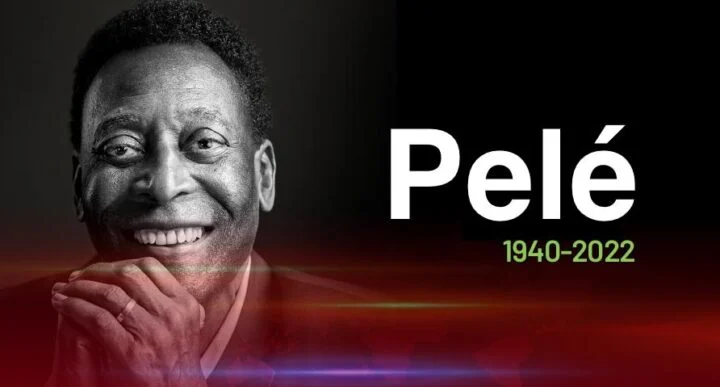
The Brazilian government has declared a-three-day national holiday to mourn the late Brazilian soccer maestro, Edson Arantes do Nascimento aka Pele, who died yesterday after a long battle with cancer.

The announcement was made on Friday by President Jair Bolsonaro, whose tenure at office as the 38th president of Brazil is expected to come to an end in two days. In his address, Bolsonaro made the following remark about the deceased footballer:

“Pele was a great citizen and patriot, raising the name of Brazil wherever he went,” he said.

In a tweet the president-elect, Luiz Inacio Lula da Silva has reacted to this announcement saying: “few Brazilians carried the name of our country as far as he did”.

In less than 24 hours since the announcement of the death of the great legend, there has been an overflow of tributes from netizens across the worlds.

Why That Product Is Struggling in the Market – Check Your Product-Channel Fit

0

At the early stages of companies, we spend significant efforts to attain product-market fit or PMF (customers love the product and are paying for it). I posit that you must attain PMF before you begin to scale your company, if not, you will waste your marketing budget, and at the end, will be unable to retain customers.

When companies fail to attain PMF, most times, it is not that the product and the market (customers) cannot attain sustained transaction equilibrium, what actually happens is that the founder has not worked first to attain a Product-Channel Fit (PCF). We do ignore PCT which I think is a critical prerequisite to PMF.

You have built that product with Facebook as the channel. As you are about launching, Facebook changes its algorithm, making your product class harder to be distributed. If you do not understand that, you may think that your market is off when the real issue is that the channel is the problem. Of course, most times, we have no control on the channel; we can only control our product. So, everything falls back to the product.

It is painful when you see fintech companies in Nigeria with  mobile app-only strategy. I have no idea how they plan to attract mid-size companies . Those companies will never  allow staff to access their financial resources via smartphones. If you check, the startups have missed the distribution channel fitness. (Most mid-size firms prefer to use a dongle to lock laptops or desktops to access their banking resources).

Pay attention to your product channel fitness even as you architect your Product-Market Fit.

To win in markets, you need to have a great product-market fit. It is a spot where the frictions in markets and the “forces” (the products and services) you are creating to overcome them attain equilibrium.

[Bear with me for using big grammar. My grandmother, Lechi, truly liked them because it showed that I was learning in secondary school. How do you come back from school without saying something she could not understand, after all the school fees? ]

So, when Peloton, an experience exercise company, which helped people do exercise at home, was raking it at the peak of the pandemic, I wrote: “before you invest, think beyond Covid-fit to market-fit”. In other words, that product must not just do well during Covid pandemic, but also when normalcy returns.

A new course in Tekedia Mini-MBA extrapolates this to include Model alongside Channel, Product and Market. The convergence of these four factors are catalytic in a company’s ability to scale. I hope to welcome you to Tekedia Institute as we study Product Development and Roadmapping.

Comment on Feed

Comment: Great words Ndubuisi Ekekwe , the reason for a startups inability to attain PMF may just be because the right channel hasn’t been discovered yet.
However, what do you have to say about companies that achieve false PMF? Where the supposed PMF attained is actually detrimental to scaling.

The startup had seemingly ticked all the boxes and customers are buying the product yet it’s failing to attract mainstream customers while using that model. What do you advise at that juncture sir?

My Response: From my perspective, there is nothing like “false  PMF” – it is either you are there or not. What happens is this: most times, we use marketing blitz to cushion PMF. In other words, you sell $100 for $70 and think people are buying. But once you stop that promo, those customers go.  Yes, you are unable to retain them, and if you are unable to retain customers, do not bother to scale. 

In a course I am developing on this for Tekedia Mini-MBA, I added the power law of distribution to show how the greatest  companies get up to 70% of their customers from a single channel.  For Tekedia Mini-MBA, more than 80% of our learners come from LinkedIn (we have stopped updating Twitter).

Comment 2: so is it safe to say…. beyond finding the right distribution channel for a product , it’s also important to put it up against the varying conditions along the distribution channel ?

My Response: Absolutely. Those varying conditions are part of the factors. Zynga did well under Facebook Desktop. But when FB moved to mobile, Zynga faded. Of course, the company went back and acquired mobile-first gaming startups, to re-initiate growth. This is a dynamic game and never static.