DD
MM
YYYY

PAGES

DD
MM
YYYY

spot_img

PAGES

Home Blog Page 4557

Turkey’s Central Bank has Completed Trial for CBDC Roll-out

0

The Central Bank of the Republic of Turkey (CBRT) has completed the first trial of its central bank digital currency (CBDC), the Digital Turkish Lira, and has signaled plans to continue testing throughout 2023.

According to a statement released by the CBRT on Dec. 29, the central bank authority said it successfully executed its “first payment transactions” using the digital Lira.
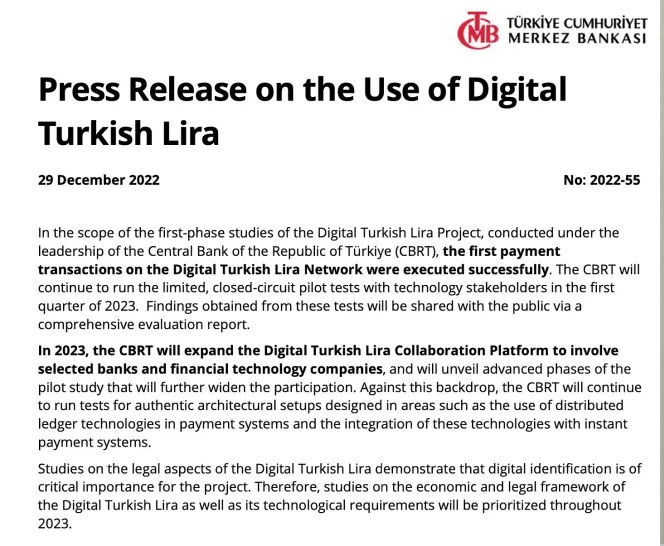
It said it will continue to run limited, closed circuit pilot tests with technology stakeholders in the first quarter of 2023, before expanding it to include selected banks and financial technology companies in the rest of the year.

The Turkish central bank first announced it was looking into the benefits of introducing a digital Turkish Lira in Sept. 2021 in a research project called “Central Bank Digital Turkish Lira Research and Development.”

At the time, the government made no commitment to the ultimate digitalization of the country’s currency, noting it had “made no final decision regarding the issuance of the digital Turkish lira.”

In its most recent statement, the CBRT said it will continue testing the use of distributed ledger technologies in payment systems and their “integration” with instant payment systems.

It will also prioritize studying the legal aspects around the digital Turkish Lira, such as the “economic” and “legal framework” around digital identification, along with its technological requirements.

Several countries, including the United Kingdom and Kazakhstan, have recently begun piloting central bank digital currencies.

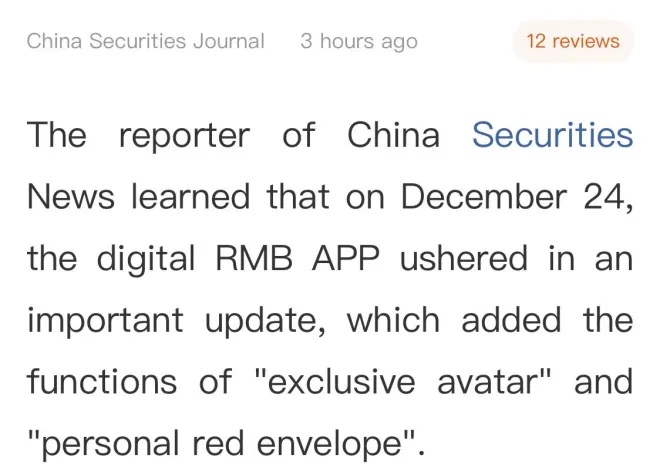
Relatively, China’s wallet app for its digital yuan central bank digital currency (CBDC) introduced a feature for users to send money in an electronic version of traditional “red packets”.
The Bank of England has opened applications for a proof of concept for a CBDC wallet, while the Kazakhstan central bank has recommended the introduction of an in-house CBDC as early as 2023with a phased implementation over three years.

The Reserve Bank of Australia (RBA) recently expressed hesitation about its own CBDC plans, with assistant governor Brad Jones warning in a speech on Dec. 8 that a CBDC could displace the Australian dollar and lead to people avoiding commercial banks entirely.

Cash-flow Management and How to Overcome Cash-flow Trap

0

Capital is an important factor of production; it is inevitably required to drive the strategy and success of a business or any creative enterprise. Hence, it is no brainer why most companies tend to prioritize cash flow among other things. However, too much emphasis on cash flow can be counterproductive to the business.

Cash flow is to the business what blood is to the body system. For instance, an injury in any part of the body preventing proper flow of blood through that area can have a ripple effect on the entire body system. Likewise lack of proper cash flow to adequately fund the execution of the marketing plans of a business will affect sales performance and this may result in employee demoralization due to delayed remuneration.

Cash flow is like a heavy rain; when proper channels are not created for the waters to flow through, problems such as erosion or flood may develop, therefore causing the environment to be inhospitable to the plants, animals or humans that are supposed to flourish or grow in that environment.

Many small businesses have failed not necessarily because of a lack of cash flow but due to cash flow trap. Cash flow trap entails a false consciousness that a business is doing well due to massive inflow of cash or funds from shareholders’ investments. This kind of mindset reinforces a lavish tendency of small business leaders. Usually, it is lack of clarity or inability of the business owners to distinguish between profit and cash flow that subjects them to the cash flow trap.

Therefore, Cash flow management is an essential skill for business managers to lead a successful business. Central to cash flow management is financial literacy which is the ability to read numbers and make business decisions based on numbers or data or facts. ‘’The ability to run a company from the financial statement is one primary difference between a small business owner and a big business owner’’ argues Robert Kiyosaki in his Rich Dad financial handbook entitled, Fire Yourself.

The following are recommended cash flow management tactics and how they can impact the financial performance of a business:

  1. Reviewing the business cash position daily and considering the business cash needs and sources for the week, month or quarter ahead allows managers to plan for any large cash need before it becomes a cash crisis.
  2. For businesses at the initial startup stage, practicing delayed gratification such as delaying personal rewards or making expenses that could wait until the business generates cash flow from sales helps to avoid overdependence on shareholders’ investment.
  3. Positioning the business for a multiple source of income through intrapreneurship fosters more creativity and liquidity.
  4. Ensuring a easy but secure payment system increases conversion rate
  5. Having investment plan for the cash at hand helps to maximize its earning potential
  6. Establishing good internal controls on the handling of cash averts leakages and shrinkages.

Regarding internal cash control, Robert kiyosaki suggested the following:

  • The people who record the cash receipts on the bank deposits should be different from those who post it to the accounts receivable and general ledger.
  • Also, the people authorized to sign checks should not prepare the vouchers or record the disbursements and post to the accounts payable and general ledger.
  • The person who reconciles the bank statement should have no regularly assigned functions related to cash receipts or cash disbursements.

Elon Musk Encourages Tesla Workforce to Push For A Strong Fourth-Quarter Finish

0

Tesla CEO Elon Musk via an email has commended the company’s workforce for their work in 2022, also encouraging them to push for a strong fourth-quarter finish.

Musk urged them to volunteer to help deliver Tesla vehicles to customers before midnight on Dec. 31st, if at all possible.

As it is a custom at the company, every last day of most quarters, it enlists employees from all over the company to bring new cars to customers to reach or exceed target delivery goals.

Meanwhile, Tesla’s Q3 2022 earnings results dropped, although it saw a decent finish. The company reported a revenue of $21.45 billion in Q3 and earnings of $1.04 per share, which fell below analysts’ expectations of $21.96 billion.

Tesla’s automotive revenue stood at $18.69 billion, an increase of 55% from a year ago. The cost of revenue for the company’s core automotive business rose to $13.48 billion during the quarter, up from $10.52 billion during the second quarter (Q2), in line with the increase in automotive sales.

Its automotive regulatory credits made up 1.5% of automotive revenues at $286 million for the quarter.

The company’s net income (GAAP) for Q3 2022 reached $3.33 billion, with automotive gross margins holding steady at 27.9%, exactly where it stood in the second quarter of 2022. During the same period last year, Tesla reported $1.62 billion in profits.

Despite its weak performance and failure to meet analysts’ expectations in the Q3 earnings, Elon Musk is optimistic that there will be a significant increase in the fourth quarter earnings.

He had earlier disclosed that the company already has an excellent demand for Q4 and expects to sell every car it has so far produced.

Musk revealed that all Tesla factories across the globe are running at full speed, and the company is delivering every car it makes, keeping operating margins strong.

I’m of the opinion that we can far exceed Apple‘s current market cap. In fact, I see a potential path for Tesla to be worth more than Apple and Saudi Aramco combined. That doesn’t mean it will happen or will be easy,” he said.

Meanwhile, Tesla Stock Is Headed for Its Biggest-Ever Annual Decline. Its current stock price of TSLA 8.08%, is poised Friday to close the worst year in the stock’s history, having lost more than $700 billion in market valuation amid investor concerns about production disruptions, and worries as Elon Musk shifts to focus on Twitter.

Reports reveal that while 20% of the Tesla stock decline is due to concerns about demand and growing EV competition, 80% is because of his focus on Twitter.

The electric-vehicle maker’s shares fell roughly 65% from the start of the year, which is pushing Elon Musk to change strategy, which has seen him sell Tesla stock after pledging not to do so.

GTBank Suspends International Transactions on Naira Mastercard

0

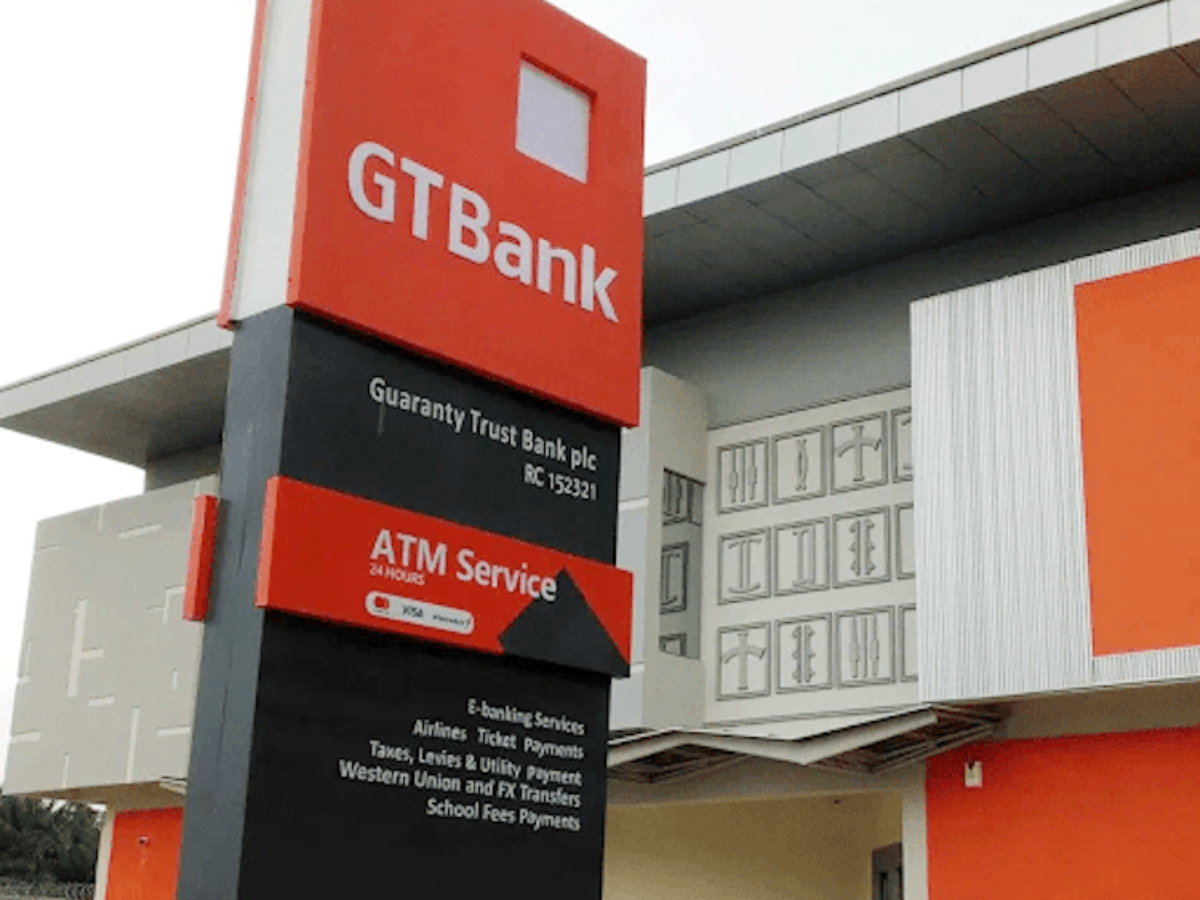
Guaranty Trust Bank (GTBank) has joined the growing number of Nigerian banks limiting and suspending international transactions on debit cards.

The bank announced in a statement sent to customers on Thursday, that it will suspend international transactions on its naira Mastercard from Saturday, December 31, 2022.

According to the statement, customers will be unable to make international automated teller machines (ATM), and point of sales (POS) transactions on their naira Mastercards.

“We write to inform you that you will no longer be able to use your naira Mastercard for international online and POS transactions effective 31st December 2022,” the statement said, urging customers to get and make use of “GTBank dollar card for all your international spending requirements.”

The statement further said that the bank’s dollar card allows a daily $1,000 (or equivalent in the transaction local currency) withdrawal limit on ATM transactions. It added that there would be no withdrawal limit on “annual spend and POS transactions” for the dollar cards.

The bank’s decision is understood to be born of Nigeria’s forex crisis that has forced the Central Bank of Nigeria to initiate strict policies to protect the country’s currency, the naira. Other financial institutions have made similar moves as the situation tightens.

Following the decision of Standard Chartered Bank to suspend international transactions on its naira visa debit card in July, other financial service operators like Flutterwave, Eversend and other fintech platforms have also stopped virtual card services for international transactions.

In September, First Bank announced that it’s suspending international transactions on its naira Mastercard, citing Nigeria’s forex situation. The bank had earlier in March, reduced the international spending limit on naira cards from $100 to $20.

Earlier in February and March, Zenith Bank and the United Bank for Africa reduced the international spending limit on their naira cards from $100 to $20 a month.

As at Dec. 30, the Naira trades at N736/$1 at the parallel market, an uptick from its lowest in the year which soared above N850/$1. The backdrop has been attributed to many factors headed by insufficient dollar liquidity. Nigeria’s oil export, its major means of earning forex, has been severely stymied by oil theft and lack of functioning refineries, which has forced the country to import refined products at international rates.

With low earnings from oil export, Nigeria’s foreign reserve has depleted to zero from its $3.0 billion balance in 2014. The West African country’s push for economic diversification has yielded little success, indicating the government’s helplessness in the face of a deteriorating forex crisis.

The CBN governor Godwin Emefiele has told the banks to get involved in exports to generate forex. He said the apex bank will soon stop supplying dollars to commercial banks. With the central bank’s stringent policies targeted at stopping the naira from total collapse and lack of sufficient forex supply, the banks are increasingly halting debit cards-based international transactions.

But this means more trouble for Nigerian businesses, especially, Small and Medium Enterprises (SMEs) and individuals who depend on bank-issued debit cards to carry out international transactions.

$1.7 Million Assets Swapped by Alameda Research through various Crypto Mixing Services

0

30 Cryptocurrency wallets linked to Alameda Research, the bankrupt sister company of crypto exchange FTX, became active on Dec. 28 following four weeks of inactivity. These wallets swapped and mixed over $1.7 million worth of crypto assets through various crypto-mixing services.

Crypto mixers are often used by market exploiters and criminals to obscure the transaction path so that the funds cannot be traced to the original source.

As Cointelegraph reported on Dec. 28, the sudden movement of funds from Alameda wallets just days after Sam Bankman Fried was released on bail raised suspicions across the crypto community. Nearly 24 hours later, it seems the culprit behind these fund transfers used extensive planning to hide transaction routes.

According to data shared by the crypto forensic group Arkham, the first transfer of funds began with multiple Alameda addresses swapping tokens for Ether and sending them to crypto mixers. A majority of these transfers were tracked to two main wallets starting with 0xe5D and 0x971.

Tokens from the Alameda wallet were first sent to an address starting with 0x738, and then on to an address 0x64e. This 0x64e wallet then splits up the ETH and sends it to smaller wallets, in sizes of generally $200,000 and $50,000. After that, it was sent to services such as Fixedfloat and ChangeNOW.

In a statement on its company blog, ChangeNow spoke out against “fraudulent actions”, such as those connected to the Alameda wallets case. The team statement indicated that the company is putting, “serious effort into preventing such incidents,” continuing:

“Currently, [ChangeNow’s] compliance team is working closely with investigators to detect the flow of the illegal funds, while also keeping a close eye on alerts from the community on funds with suspicious trails.”

Another wallet was used to swap for stablecoins, where wallet assets were first swapped into USDT and then sent to Fixedfloat. A total of 800,000 USDT was swapped out using mixers, while another 400,000 USDT was funneled via other methods. An additional 200,000 USDT worth of stablecoins were sent to the Bitcoin network using renBTC.

In total, $1.7 million worth of funds were swapped and sent through various mixing services as follows:

  • 270.5 ETH through ChangeNOW (~$325k)
  • 800,000 USDT through Fixedfloat
  • 200,000 USDT through Curve SynthSwap to native BitcoinBTC
  • 200,000 USDT through Airswap
  • 200,000 USDT through other crypto-mixing services

The movement of funds from the Alameda wallet funneled through mixing tools created quite a buzz in the crypto community. Many question the timing of the fund transfers while others point toward the use of mixing services and the inability of authorities to prevent such a thing despite the matter being sub-judice.