DD
MM
YYYY

PAGES

DD
MM
YYYY

spot_img

PAGES

Home Blog Page 4559

Repugnant to natural justice; The repugnancy test

0

Every student of law must have come across the phrase; “repugnant to natural justice”. It is out of it that the term “repugnancy test” came about.

This repugnancy test is to the effect that every law, custom and tradition of every cultural society in Nigeria must be subjected to a validity test which is checks and balances and such culture and tradition should only be applied if after being subjected to the test it passes it with flying colours but should be discountenanced if after subjected to the test it failed the test partially or woefully.

The repugnancy test is the process of determining the acceptance/ adoption/ validity of a customary rule or the abolition/rejection of perceived unwholesome or inhuman Customary law on the ground that it is obnoxious, discriminatory and inhumane, therefore repugnant to natural justice, equity and good conscience.

This doctrine postulates that the courts of law shall neither apply nor enforce any customary law rule or traditional norm if it is contrary to public policy, in conflict with the constitution or repugnant to natural justice, equity and good conscience.

What then is repugnant to natural Justice; repugnant to natural justice simply means that customary law, culture or traditional rule of society in Nigeria that is inhuman and obnoxious should not be applied or enforced or given validity in the court of law. For instance, the customary law of the Ikwerre people of Rivers State and other neighbouring societies that postulated that a girl child is prohibited from inheriting her parent’s property on the bases that she’s a girl child is repugnant to natural justice equity and good conscience and so it has been held by the Supreme Court of Nigeria.

In the landmark case of Ukeje v. Ukeje (2014) 11 NWLR (PT.1418) 384, The Supreme Court of Nigeria voided this tradition and custom of the Ikwerre people prohibiting a girl child from inheriting the parent’s estate on the grounds that this custom is discriminatory and in conflict with the provision of s.41(2) of the constitution of the Federal Republic of Nigeria, therefore it is repugnant to natural justice, equity and good conscience.

The repugnant test has since become a popular principle in the Nigerian legal system and has been adopted in a plethora of cases/ instances and it is of the unwavering opinion that every custom and tradition be subjected to checks and balances to ensure that it is not discriminatory or against public policy before such custom will be applied, enforced and given validity by the courts of law in Nigeria.

In conclusion, this doctrine prescribes that the courts shall not enforce any customary law rule if it is contrary to public policy or repugnant to natural justice, equity and good conscience.


Meta Intensifies Metaverse Vision, Acquires 3D Smart Glass Company

0

Facebook parent company Meta has recently acquired Luxexcel, a 3D smart glass company as it intensifies its Metaverse vision for 2023.

The acquisition would likely see Luxexcel integrate the elements needed to create an augmented reality (AR) experience, with a prescription lens, such as holographic film and projectors.

Speaking on the acquisition of the eyeglass company, Meta said in a statement “we’re excited that Luxexcel team has joined Meta, deepening the existing partnership between the two companies”.

Meta however did not disclose how much it spent to acquire the company.

Luxexcel is a technology company based in the Netherlands that has developed and patented the methodology to 3D print glasses. This includes a suite of proprietary hardware, software, materials, and processes that work together to create high-quality lenses unlike any other lens available.

The company’s experienced team helps its customers to develop their designs while guiding them to harness the unique abilities of 3D lens printing technology.

Reports disclose that Meta and Luxexcel have worked together on Project Aria, a research device that is worn like regular glasses that will help Meta build the software, including a live map of 3D spaces and hardware necessary for future AR devices.

By acquiring Luxexcel, Meta will likely leverage the company’s technology to produce prescription AR glasses, a product that has long been anticipated to come out of Meta’s billions of dollars of investment into its Reality Labs.

Recall that Meta CEO Mark Zuckerberg in 2021, laid out the vision of the metaverse as the successor to the mobile internet, a set of interconnected digital spaces that lets one do things they can’t do in the physical world.

The Metaverse has been generally characterized as a growing 3D virtual universe where individuals can live their digital life as an avatar, working, playing, shopping, or just hanging out.

The digital environment will eventually encompass work, entertainment, and everything in between. Like phones and laptops today, the platform needs to be flexible enough to accommodate all these different use cases.

Meta looks at the metaverse as a sort of successor to the mobile Internet, which has taken more than a decade to assume its current form.

The social media giant has disclosed that it will stay on course in 2023 with investment in its metaverse division Reality Labs expected to account for 20 percent of its overall expenses.

The company’s Reality Labs Chief Technical Officer, Andrew Bosworth, disclosed in a blog that Meta plans to spend about as much on the metaverse division next year as it did this year, despite a reported loss of $9.4 billion through the first nine months of 2022.

Tekedia Mini-MBA New Year Sale – Enjoy Massive Discounts

0

Every year, we update our courseware at Tekedia Institute Mini-MBA. In the next edition, starting on Feb 6, 2023, you will see new modules. A new module on Products, First Team & Early Customers is coming; in this module, I will teach the following courses:

  • -The Mechanics of Minimum Viable Product and product dev.
  • – The NEP Framework – Discovering and Listening to Customers.
  • – Customer validation & building for what customers really want.
  • – Founders and Finding Co-Founders.

In the same module, a very important course on scaling, created by a Facebook’s parent company (Meta) executive on How to Grow a Startup is included. A Texas-based Deloitte manager has one on how to bake security while designing and developing a product.

A Tekedia module includes an average of 5 courses and we have the following modules:

  • -Innovation, Design Thinking & Growth
  • -Business Systems & Processes;  Business Model & Transformation
  • -Exponential Technologies and Singularity
  • -New Technologies, Growth, Disruptive Innovation
  • -Products, First Team & Early Customers
  • -Finance, Investing, Fundraising
  • -Logistics & Supply Chain Management
  • -Marketing, Sales Management & Business Objectives
  • -Law, Contracting & Globalization
  • -Leadership, Human Capital & Project Management
  • -Business Communication, Design, Media & Branding
  • -Accounting, Sustainability & Risk Management
  • -Growth, Opportunity & Taxation
  • -Business Execution
  • —3 Weekly Live Zoom Sessions (Tue, Thur, Sat at 7pm WAT)

The courses are taught by executives from Fortune 500 firms, Founders/CEOs of leading startups, and managers in great local and global firms.

If you have not registered, do so. Go here and join the best business school in Africa.

Program Cost 

Note: After the early bird deadline, the price of MINI becomes $170 or N90,000; others are not affected.

How To Register

Chimamanda Adichie, the Odeluwa Abba: One Who Writes for the World

0

My early decision to study at the university of Ibadan was generally impacted by the collection of literatures I was exposed to as a pupil in the foundational school. Onward, my penchant for the Nigeria’s premier University was often projected with a show of devout resoluteness. Consequently, I was often described as UI-obsessed by my peers.

Many of the books I was made to read as a teenager, some with a threat of being beaten up and others based on my personal volition, were authored by notable names that were invariably linked to the University of Ibadan as the school’s alumni or retired teachers. The list comprised of Nigerian first generation writers such as Wole Soyinka, Chinua Achebe, JP Clark, Ola Rotimi, etc whose contributions transcend schorlaship and literary appreciation to politics and sociocultural milieu.

Another influence, Chimamanda Ngozi Adichie, is in her own league and has dignifiedly extended the legacy of the first generation writers. Hailed from Abba, Anambra state in the southeastern part of Nigeria, Chimamanda Adichie has contributed to knowledge and spiced the global stage through her literary works, public lectures and speeches.

From her début, Purple Hibiscus, to Half of a yellow Sun, based on Nigerian political history, and then to Americana which got much eclat in the US, Adichie has projected herself as a highly imaginative juggler of words. Her TEDx speech, Danger of a single story, brought about a paradigm shift in storytelling.

However, her début novel seem to have the most striking influence on my childhood. Adichie’s constructive characterization of Kambili and picturesque description of the University of Nigeria (NSUKKA), Enugu in  Purple Hibiscus offered me a fresh perspective about diligence, romance, and education in the southeastern part of Nigeria.

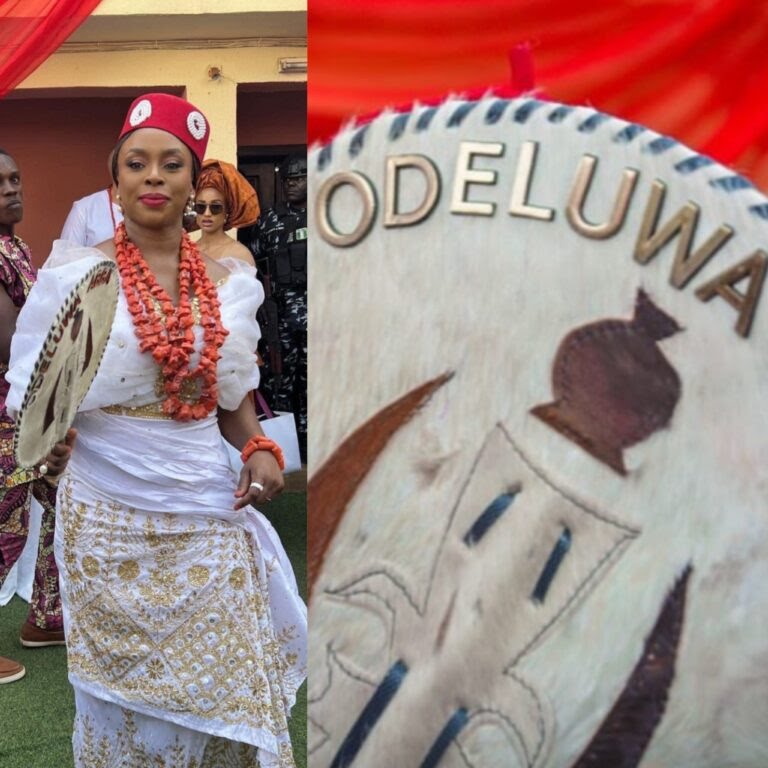
The Nigerian-American novelist and award-winning global celebrity author was conferred a chieftaincy title in recognition of her contributions to the welfare and development of her hometown during the 45th Ofala festival and 80th birthday celebration of HRH. Igwe Sir Leonard Nwankwo Ezeh (Eze Abba) on Friday December 30, 2022. Present at the ceremony was the Governor of Anambra State, Charles Soludo, amongst other dignitaries.

Adichie’s newest title “Odeluwa Abba” which means “The one who writes for the world” is indeed a well deserved honour.

Who Holds the Key to Africa’s Radical and Stunted Growth in 2023 and Beyond?

0

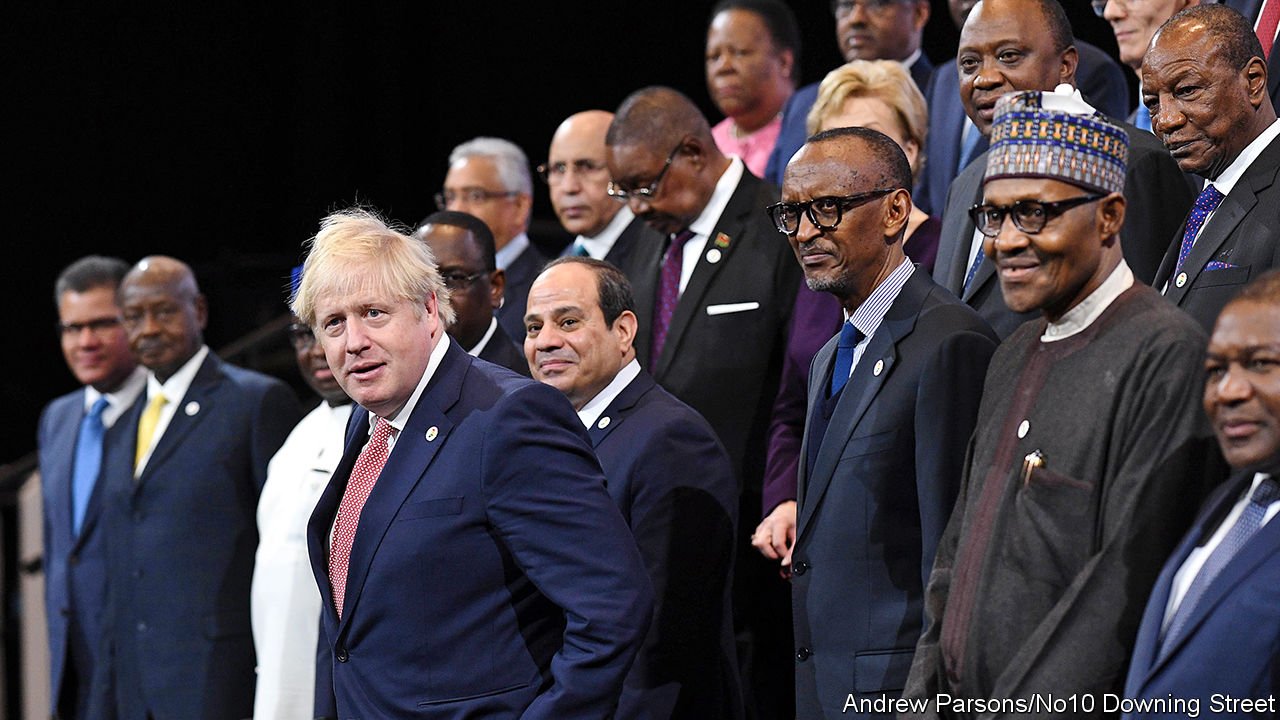
According to United Nations estimates, Africa’s population was 1,420, 587,823 as of Friday, December 30, 2022, as tracked in real time by Worldmeters. According to the source, this equates to 16.72% of the total world population. Several sources also indicate that children, women, and youth make up a large proportion of the population, indicating the continent’s youth and the ability of women to continue reproducing in multiple folds. This has always been linked to the continent’s potential contribution of an additional 1.1 billion people to the global population by 2050.

Aside from the continent’s population size, it also has several natural resources that have yet to be fully utilized by political and business leaders for the genuine benefit of Africans and residents. The continent contains 40% of the world’s gold and up to 90% of its chromium and platinum reserves. Africa has the world’s largest reserves of cobalt, diamonds, platinum, and uranium.

It is a continent that has been linked to a number of socioeconomic and political conflicts and crises as a result of a failure to identify individual differences holistically and develop better strategies for establishing mutual interests and benefits. Despite this, the continent has never been too neglected by countries in the global north and some in the global south, including China and Iran, for natural resource exploration and people harnessing for economic growth through migration.

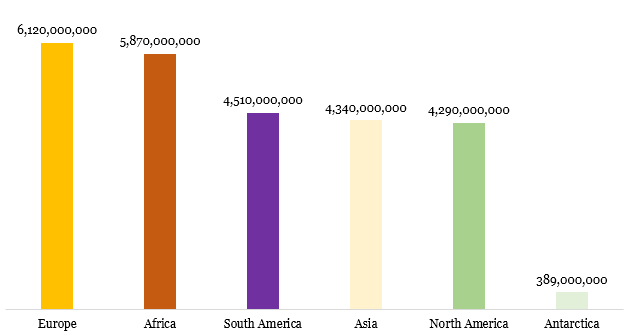
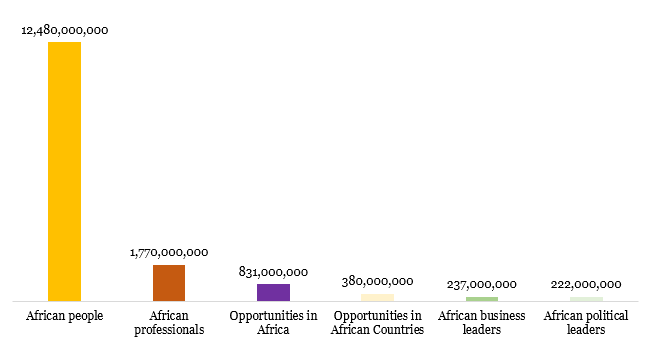
A quick navigational search using “Africa” as of December 30, 2022 yields approximately 5.8 billion results in published information. The continent came in second to Europe, which had 6.1 billion results (see Exhibit 1). Examining Africans in terms of people, professionals, business leaders, and political leaders yields a variety of results. Our search yielded more results for African people and professionals than for business and political leaders. We also discovered that opportunities in Africa produced more results than opportunities in African countries (see Exhibit 2).

Exhibit 1: Volume of publications about continents on search engine as at December 31, 2022

Source: Google Search Engine, 2022; Infoprations Analysis, 2022

One of the most important implications of these outcomes is that the world is very interested in Africans and African professionals. With this, our analyst observes that Africa’s growth is in the hands of its people, particularly professionals in various sectors and industries. Our analyst also notes that having a strong interest in opportunities in Africa indicates that people all over the world are interested in advancing Africa, which is an opportunity that the people of the continent must seize wholeheartedly as it prepares to join the rest of the world in 2023.

The poor performance of African political leaders in comparison to business and professional leaders suggests that the world does not value political leaders as dominant players in exploring Africa and its investment and/or business climate. It demonstrates the importance of business leaders and professionals forming strong alliances across sectors and industries in 2023 in order to assist pan-African political leaders in righting the wrongs in the areas of socioeconomic indicators. Already, Africa appears to be in the grip of a severe debt crisis at the state, regional, and national levels. According to our analyst, escaping the debt trap will necessitate multidimensional and multicentric strategies from business leaders and professionals across the continent.

Exhibit 2: Volume of publications about key indicators for Africa on search engine as at December 31, 2022

Source: Google Search Engine, 2022; Infoprations Analysis, 2022

We have seen how political leaders have visited the West and Europe in the belief that the two geopolitical powers have solutions to the continent’s numerous socioeconomic and political challenges. We have seen how countries on both geopolitical axes scrambled for natural resource exploration in 2022 through their business investors. We’ve also seen a large number of Africans migrate to the global north and some countries in the global south in search of greener pastures. In all aspects, Africa requires radical changes to achieve radical growth in 2023 and beyond. And it is up to business leaders, professionals, and pan-African political leaders to make it happen. Failure to use the key judiciously in 2023 and beyond would have disastrous consequences for Africa’s development by 2050.