DD
MM
YYYY

PAGES

DD
MM
YYYY

spot_img

PAGES

Home Blog Page 4561

Musk Searching for “Someone Foolish Enough” to Head Twitter

0

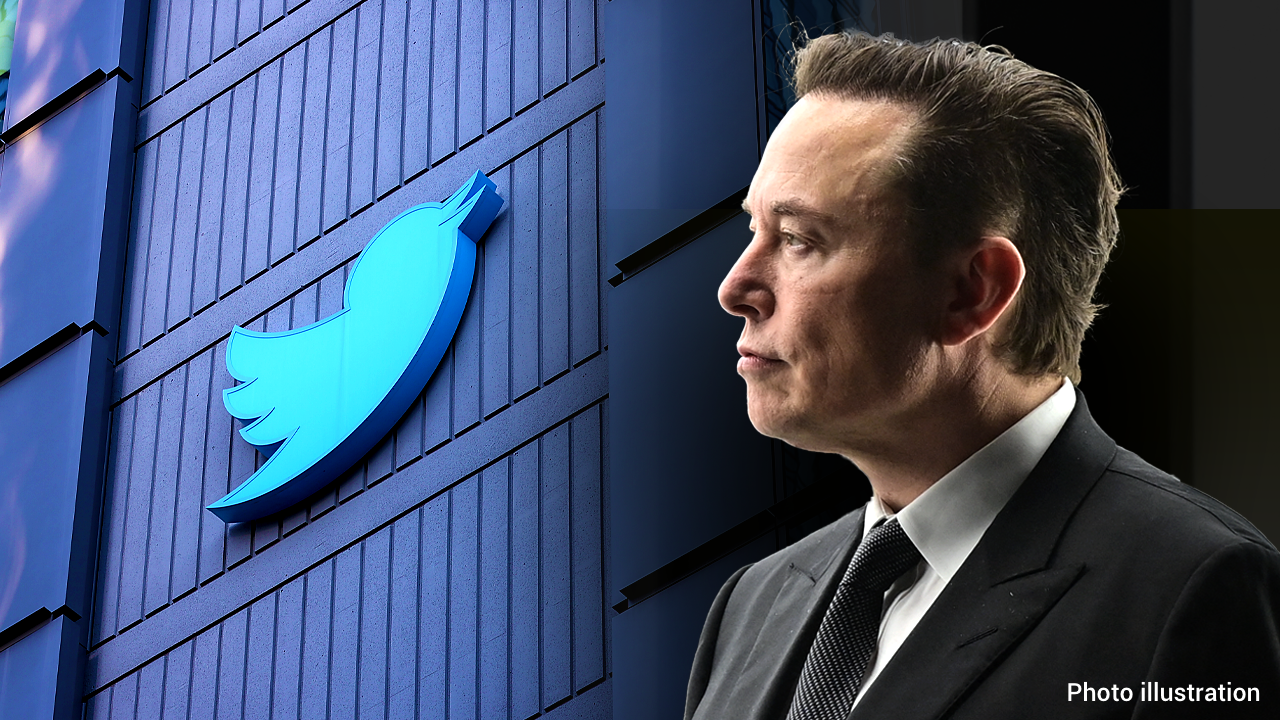
Elon Musk announced Tuesday he will step down as Twitter CEO, following the result of a poll he conducted on Sunday.

“I will resign as CEO as soon as I find someone foolish enough to take the job! After that, I will just run the software & servers teams,” he said.

The Tesla and SpaceX CEO had on Sunday, conducted an informal poll where he asked Twitter users if he should step down as the head of the social media company. With majority (57.5%) of the 17 million respondents voted yes, Musk has begun looking for his replacement.

The Boring company founder has relied on polls to make some decisions since he took over Twitter. He said on Sunday that he will abide by the result of the poll. The entrepreneur said that “going forward, there will be a vote for major policy changes.”

Musk’s $44 billion acquisition of Twitter has been rocky, enveloped by controversies that have been dominated by free speech. The billionaire has introduced changes to the social media company that his critics have described as absurd.

From sacking more than 50% of Twitter’s workforce, including the content moderation team, to reinstating many suspended accounts, including former US President Donald Trump, to charging $8 fee for verification tick, Musk’s style of running Twitter has not been acceptable to many, including advertisers.

Critics have alleged that his style of leadership has resulted in spike of racist hate speech, especially anti-Semitism. Although Musk has repeatedly claimed that hate speech has significantly dropped and “Twitter usage” (by real humans) has reached “all-time highs”, advertisers have left the platform in droves while those who remain have cut their ad spending.

The call for Musk to step down has been on as early as he took over Twitter. Investment advisor, Gary Black, asked Musk on Tuesday to look within the social media space in his search for a replacement.

“Elon – please focus on seasoned media executives who are passionate about advertising AND technology. There are plenty of people from $DIS, $META, $GOOGL with all the requisite skills and foolish enough to take the job. How about Bret Taylor?” he said.

Musk has been accused of running Twitter all the way a social media company shouldn’t be run, with the layoff of the majority of the platform’s key staff as a typical example.

Besides how his actions affect Twitter, Musk’s other companies, particularly Tesla and SpaceX, have been at the receiving end of his romance with the social media company. Tesla has lost over 60% of its market value since Musk made his bid to acquire Twitter, prompting complaints from the electric vehicle company’s shareholders.

Musk has sold billions of dollars worth of Tesla shares this year to finance the Twitter acquisition, a development shareholders believe is affecting the auto firm market performance. Following the cut of Twitter staff, he pulled in talent from Tesla, SpaceX and the Boring Co., including executives, engineers and attorneys, to assist him at Twitter.

Besides Tesla shareholders, people in government have expressed concern about Musk’s Twitter business. On Monday, Sen. Elizabeth Warren, D-Mass., wrote to the chair of Tesla’s board, Robyn Denholm, expressing concern that Musk and the board may have violated legal obligations to Tesla shareholders, per CNBC.

Warren had asked the board to answer specific questions about the alleged misappropriation of Tesla resources and conflicts of interest resulting from Musk’s purchase of Twitter.

Also, NBC News reported earlier this month that NASA Administrator Bill Nelson asked SpaceX President and COO Gwynne Shotwell whether Musk’s “distraction” at Twitter might affect SpaceX’s work with the space agency. Though Nelson said she reassured him it would not, the query underscores the facets of growing concerns over Musk’s position as Twitter CEO.

Musk, at the end of the Sunday poll, removed “Chief Twit”, a title he had added upon the completion of Twitter acquisition, from his bio.
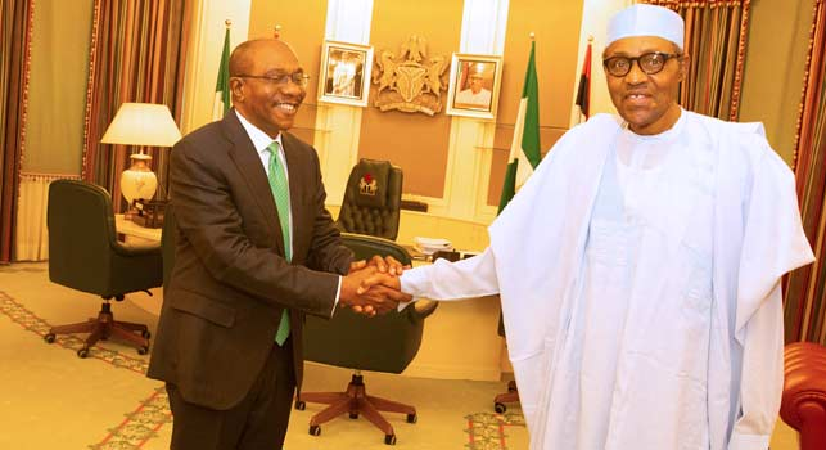
Very Commendable as Emefiele, Buhari Move to Stop Cash Withdrawal from Public Accounts

1

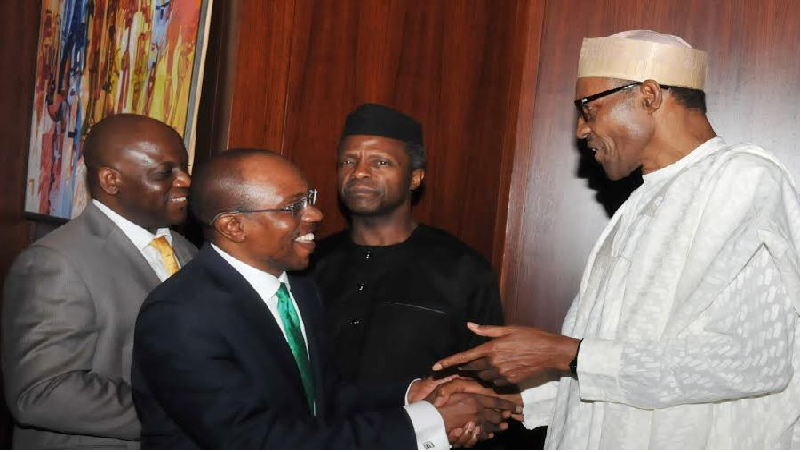
This is a really great call by the Central Bank of Nigeria and the Presidency to phase out cash withdrawal from public bank accounts in Nigeria. Yes, the Central Bank of Nigeria governor, Godwin Emefiele, is having one  of his most fascinating quarters. He is working. That does not mean we like everything he is doing. But the CBN team is putting real efforts. And you can add Mr. President in that list also. I give Buhari credit because he can shut down all these new initiatives Emefiele is putting in place.  I wish this started earlier instead of a few months to the end of this administration. To the CBN team, I salute.  This is what we have been asking: show energy and serve the nation.

When I wrote this ”So, CBN, it’s the government that needs a cash withdrawal limit and not companies and citizens”, I posited that a cash withdrawal policy should focus on the government, as I withdrew my support of clipping citizens and companies, when we unable to reconcile electronic-based stamp duty cash collection.

Magically, that is the case: “The federal government of Nigeria has moved to implement a new policy that will restrict cash withdrawal from all public accounts. The policy, which will take immediate effect, mandates public office holders to open both domiciliary and local bank accounts.”

The statement explained that the introduction of the new policy became necessary due to “the consistent devaluation of the Naira and the introduction of a new Naira Policy, which automatically activates Section 1 of the Money Laundering Prohibition Act.”

The move comes on the heels of the decision by the Central Bank of Nigeria (CBN) to redesign naira notes and introduce a new policy that limits cash withdrawal to N100,000 for individuals and N500,000 for corporate organizations per week. The policy, which also limits the POS withdrawal to N20,000 per day, is geared toward promotion of the country’s cashless policy and tackling vote-buying among other ills as the general election nears.

The statement said the policy prohibiting cash withdrawal from public accounts was initiated following the observation that most cash withdrawals from government accounts, including payments for estacode for public officials, are often in excess of the cash withdrawal limit provided by the Money Laundering Act.

If they can sustain this new playbook especially in the military and security-focused agencies, Nigeria will enter a new dawn. Well done Mr. President, Mr. Governor. Charity begins at home, and the government should be cashless first before companies and the citizens. Hello estacodes….no more cash for that.

Comment on Feed

Comment 1: Ndubuisi Ekekwe I always enjoy reading your post because your words are always so powerful and factual. As you have rightly said sir this is a welcome development I just hope and pray the NASS and Senate won’t come and kick against it again.

Comment 2: I do not believe that this decision is coming too late, rather, it is the appropriate time. I applaud the CBN Team as well as Mr president, for taking these bold decisions.Our nation is on the verge…..the Nation is edgy, and thus, critical steps, though albeit painful, they have to be taken. I believe Nigeria will be better. I believe the Nation can still get back and better. God bless Nigeria.

Comment 3: A very thoughtful policy, if implemented to the letter, we will see corruption reduced by minimum of 50%.

Nigeria Moves to Stop Cash Withdrawal from Public Government Bank Accounts

0

The federal government of Nigeria has moved to implement a new policy that will restrict cash withdrawal from all public accounts.

The policy, which will take immediate effect, mandates public office holders to open both domiciliary and local bank accounts.

According to a statement signed by the Nigerian Financial Intelligence Unit (NFIU)’s Chief Media Analyst, Ahmed Dikko, the new policy was made known by the Director/CEO of the unit, Modibbo Hamman Tukur in Abuja, at a parley with the Chairman of Independent National Electoral Commission (INEC), Prof. Mahmud Yakubu.

The statement explained that the introduction of the new policy became necessary due to “the consistent devaluation of the Naira and the introduction of a new Naira Policy, which automatically activates Section 1 of the Money Laundering Prohibition Act.”

The move comes on the heels of the decision by the Central Bank of Nigeria (CBN) to redesign naira notes and introduce a new policy that limits cash withdrawal to N100,000 for individuals and N500,000 for corporate organizations per week. The policy, which also limits the POS withdrawal to N20,000 per day, is geared toward promotion of the country’s cashless policy and tackling vote-buying among other ills as the general election nears.

The statement said the policy prohibiting cash withdrawal from public accounts was initiated following the observation that most cash withdrawals from government accounts, including payments for estacode for public officials, are often in excess of the cash withdrawal limit provided by the Money Laundering Act.

Public office holders are notorious for withdrawing massive cash from public accounts, which does not only violate the Money Laundering Act but also enables corruption. Tukur said the new policy will create transparency and accountability, exposing public officials to being liable to imprisonment.

He said the NFIU is already developing an advisory to the Secretary to the Government of the Federation, state governors and local government chairmen across the country. The aim is to direct all public servants in their employ to open both domiciliary and naira accounts before the policy, which becomes compulsory by law, is fully implemented.

President Muhammadu Buhari’s administration appears to be on a last minute push to make changes to some policies in the Nigerian financial sector. Despite public outcry about the naira redesign and the new withdrawal limits, the financial industry regulator has said there is no going back in their implementation.

The central bank had earlier lamented about the excess amount of the naira in circulation, saying there is much less in the banks’ vaults.

Part of the concerns raised by experts, the public and lawmakers is that the cash withdrawal policy will negatively impact Small and Medium Enterprises (SMEs), stifling the country’s economic growth.

But the CBN governor Godwin Emefiele said he has presidential backing to implement the policies, allaying concern that the cash withdrawal policy will harm small businesses in rural areas. He said the apex bank has put measures in place to ensure that rural dwellers get the needed financial inclusion.

As part of the drive to promote financial inclusion, Tukur said governors and LG chairmen will need to organize training for market men and women on how to use ATM and POS Services.

We Have Been Interpellated Without Any Possible Resistance

0

I am a person given birth to and brought up in an African country whose cultural values and traditions are different from the rest of the world. My differences with the rest of the world also stem from family, educational background as well as professional experiences. My family has a strong tradition of standing with the oppressed. In addition to the family tradition, having knowledge and skills entrenched in social and humanities assumptions such as realism and that people would always remain unpredictable constitute my sources of canvasing for doing good and discouraging people from violating existing rules for collective shared positive future.

I believe that in most cases, the majority would want to violate existing rules and norms. The fixed belief that powerful people or organisations always want to make life unbearable for the less privileged using owned and collective resources influences my ways of representing human and material reality. However, my positions may not totally represent objective truth but a product of discursive categorizations. Nevertheless, “they are always relatively stable at a specific point of time within a social/cultural situation.”

Despite the belief that I have control over my life I have been interpellated in many ways.   Althusser sees interpellation as a process through which we encounter a culture’s or ideology’s values and internalise them. Relating this to my personal life and identity discussed earlier, I would like to say that I have been interpellated in many ways. My family tradition of fighting and supporting the oppressed is an ideology passed on to me by my father, who also inherited it from his father several years ago. I have been interpellated to believe that fighting for and supporting justice are critical to ensuring equality for all and also getting God’s favour on the earth and hereafter.

Both previous and current schools as well as workplaces have interpellated me towards believing that human beings would always remain unpredictable. The schools and workplaces have equally interpellated me to accept that they cannot be effectively corrected when there are mistakes on their part using one approach because humanity is complex and not always flexible. All these are within the ideological state apparatuses of interpellation, in which I have been made subject by the “actors” who called my attention (who “hailed” me) to accept the ideologies through consent not repressive approach that aligns with apparatuses of power (e.g., government) and repressive state apparatuses [e.g., the police].

I believe that I am not alone in this “hailing” culture because everyone must have been “hailed” directly or indirectly by different “actors”. In politics, governments have “hailed” citizens using various deregulation, commercialization and privatization policies, which in my view, favour the capitalists. In other words, the “goal is to legitimize the interests” of the business elites. Business owners have equally “hailed” consumers by developing products and services that are not needed but were (consumers) forced to purchase when emotional and fear appeals were used for advertising and marketing purposes.

I would like to conclude that neoliberal consumer culture will continue to be with us because being interpellated cannot occur in one position. Therefore, it would be absurd to absolutely consider neoliberal consumer culture as bad because the material conditions of production and circulation are largely in the hands of the political and business elites which necessitate being “hailed” before consuming. It is on this basis I believe that the chance of resistance is highly lean because we have voluntarily given the elites the needed authority by not having the capacity of producing and circulating our own consumables.

How has the 2022 Fiscal Plan Fared?

0
Presenting the budget proposal

The Nigerian Fiscal plan for the year 2022 set out on a budget of N17.13trn, 18 percent higher than the expenditure for the previous year. The budget which had initially highlighted a deficit of N6.39trn later projected a deficit of N7.157trn after the ministry of finance reviewed the expected revenue for the year downward to N9.97 trillion from N10.74trn. The budget had also included a recurrent non-debt spending of N6.91trn, capital expenses of N5.96trn and debt servicing of N3.61trn.

The deficit review as contained in the budget call circular released by the ministry of finance on August 5, in preparation for the year 2023, was partly informed by the government earnings (N1.63trn) for the first four months which significantly fell short of the expected revenue of N3.32trn despite N4.72trn expenses made within the same period. This generally impacted other elements of the fiscal provision.

The projected oil production for the year was reviewed downward from 1.88mbpd to 1.66mbpd while the estimated oil price was reviewed upward from $62pb to $73pb. Naira exchange rate maintained the initial estimate of N410.15 to a dollar, whereas the projection for inflation rate went south to 16.11 percent from 13 percent.

Furthermore, the Nominal consumption was reviewed to N120.17trn from N119.28trn and Nominal GDP adjusted to N198.93trn from N184.38trn earlier budgeted for and the projected GDP growth rate was pegged at 3.55 percent against 4.20 percent earlier projected at the beginning of the year.

By Q3, oil production dropped to less than 1mbpd but later improved to 1.01mbpd in October; oil price recorded a spike at $106.34pb in August but later dropped to $93.25pb in September and in October it further increased to $96.57pd. The inconsistency in oil production and the consistent fall in oil revenue have been generally attributed to increasing oil theft and public property vandalism in the Niger-Delta region.

As at December 20, the Naira exchanges to a Dollar at N450.35 official rate and over N750 at the parallel market. The annual inflation rate reached 17 years all time high at 21.47 percent in November which is a far cry from the 16.11 percent earlier projected for. According to Afrinvest’s report on Nigeria’s public debt outlook for Q322, Nigeria’s public debt profile increased by N4.5trn with domestic borrowing accounting for more than 70 percent of this new increase; the report also reveals that the debt-service-to-revenue ratio was already at 83 percent for the Q3 and may hit 91.8percent by the end of the year.

The Budget office of the federation had earlier reported that the 2022 budget seeks to continue the reflationary policies of the 2020 and 2021 budgets, hence was prepared using zero-based budgeting approach based on the policies/strategies contained in the 2022-2024 Medium Term Expenditure Framework (MTEF) and Fiscal Strategy Paper (FSP).

A Snapshot of Nigeria’s Expenditure Performance for the 2021 Fiscal Year and Projections for 2022