DD
MM
YYYY

PAGES

DD
MM
YYYY

spot_img

PAGES

Home Blog Page 4566

Big Eyes Coin Might Surge 50x More Than Hedera And Algorand

0

So many crypto investments have been proclaimed to be the best investments. However, the majority of them don’t live up to the hype as they’re easily brought down by the constantly changing market conditions. The demand for profitable cryptocurrencies has never been higher, especially as the bear market continues.

Some cryptocurrencies have increased in value significantly during the current bad market due to their exceptional utility qualities, making them wonderful long-term investments for buyers to think about. Three cryptocurrencies are covered in this article that current market players might wish to think about for long-term investments. Hedera (HBAR), Algorand (ALGO) and Big Eyes Coin (BIG) have all shown genuine potential and the capacity to surge massively in the following year.

Hedera – Sustainable Public Network

Hedera Hashgraph (HBAR) is a powerful and popular blockchain platform that makes use of the HBAR token as its base currency. The company’s DApps (decentralized applications) and servers can run on HBARs, and the crypto tokens serve as the main source of power for the whole Hedera ecosystem. The company’s major objective is to improve the interoperability and scalability of the blockchain ecosystem. Users will be able to make transactions in a safer and digitized environment thanks to this.

According to Hedera, the company processes over 10,000 blockchain transactions each second, which is an impressive rate. The company is also governed by a council made up of numerous conglomerates and multinational corporations.

Algorand – The Permissonless Distribution Ledger

Algorand (ALGO) is a permissionless distributed ledger that aims to get over some of the issues with blockchain technology. Algorand employs a pure proof-of-stake (PoS) approach based on a Byzantine agreement to address the blockchain trilemma. Algorand was developed in reaction to the lengthy transaction times of Bitcoin and other blockchains. Algorand reportedly offers lower transaction fees and no mining (unlike Bitcoin, which requires a lot of energy to mine).

A number of applications are made possible by the decentralized and self-sustaining blockchain network known as Algorand. The native coin of the Algorand blockchain, ALGO, is used for network security and transaction fees. The bear market has had an impact on the token as well, but analysts believe things will turn around before 2023.

Big Eyes Coin – The Cutest Cat Community

Due to its features and applications, The Big Eyes Coin may end up being the finest meme coin available on the cryptocurrency market. Presales for the meme currency, which is expected to hit the market in 2023, took up the most of this year. Based on its presale trend, Big Eyes Coin could enjoy a big price increase for its token investors by giving them a head start. Analysts have therefore suggested that investors buy the token during the presale rather than waiting for a price reduction following a surge.

The new cat-based meme currency Big Eyes Coin is generating a lot of interest in the cryptocurrency community after generating more than $11 million in its presale. The project is starting to receive comparisons to some of the most popular meme coins, including Dogecoin (DOGE), ApeCoin (APE), and Shiba Inu (SHIB). It is anticipated to exceed these meme coin market leaders, and given the present market conditions, it is beginning to appear as a viable alternative for long-term cryptocurrency investment.

Right now, Big Eyes Coin (BIG) is available for presale to everyone in the world. The security of the Ocean body will be maintained while simultaneously increasing Big Eyes Coin’s fame through its charity endeavor. Growing popularity leads to the cryptocurrency asset becoming more well-known and widely used. A terrific new year is coming, and there’s a good chance it will produce a high profit.


Find Out More About Big Eyes Coin (BIG) In The Links Below:

Presale: https://buy.bigeyes.space/

Website: https://bigeyes.space/

Telegram: https://t.me/BIGEYESOFFICIAL

YouTube: https://www.youtube.com/watch?v=Qd10tahuX2A

Promotional Code: Ocean85
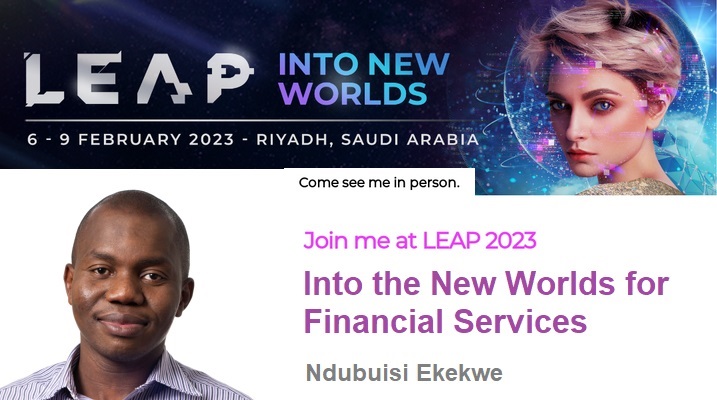
Ndubuisi Ekekwe To Speak in LEAP 2023 Saudi Arabia on Topic “Into the New World of Financial Services”

0

In February 2023, I will be in Riyadh, Saudi Arabia, for LEAP 2023. And my presentation before the global audience is titled “Into the New World of Financial Services”. To our Tekedia Capital and Tekedia Institute members in Saudi Arabia, please connect – I want to use this opportunity to thank.

LEAP is the global platform and unique event for future technologies and the most disruptive tech professionals from around the world.  

(This will be my first physical large event since Covid-19. I have declined to speak in many events, including ones which were held this month in Washington- the US-Africa Leaders Summit and US-Nigeria Business Forum. From Feb, the calendar opens. The village boy from Ovim, Nigeria, is now available once again to make your event the best yet by delivering keynotes and lead presentations. Reach my team here  )

China Develops First Home-Grown DPU Chip

0

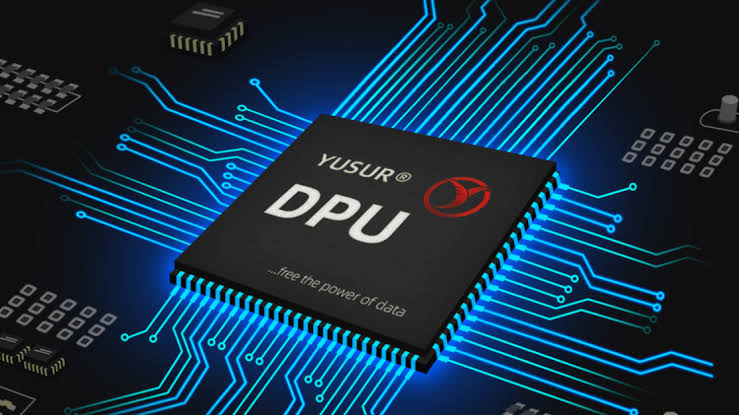
A group of Chinese researchers in a Beinjing-based tech firm, YUSUR Technology Co. Ltd, has been said to have recorded a huge milestone in the domestic chip industry of China following its development of the country’s first Data Processing Unit (DPU) chip which has been described as an integral part of the homogeneous computing that will shape the future generation of intelligent computing.

The DPU named “K2” was developed using a 28 nanometres process and has also been tagged the “third main chip” suggesting an incremental innovation on previous chips such as the Central Processing Unit (CPU) and the Graphics Processing Unit (GPU).

“Heterogeneous computing based on the combination of DPU, CPU and GPU has become the mainstream technology of the next-generation intelligent computing centers” a news article by the CGTN reads.

Chinese researchers have developed the country’s first Data Processing Unit (DPU) chip, known as the “third main chip” after Central Processing Unit (CPU) and Graphics Processing Unit (GPU), marking a milestone in the domestic chip industry.

Heterogeneous computing based on the combination of DPU, CPU and GPU has become the mainstream technology of the next-generation intelligent computing centers.

China’ first domestically-developed DPU chip was developed by Beijing-based YUSUR Technology Co., Ltd. using 28 nm process.

According to the CGTN article, the DPU chip has many advantages including; low cost, excellent performance and low power consumption as well as the capacity to achieve ultra-low latency of 1.2 microseconds and support up to 200G network bandwidth.

“The DPU chip will be used in data centers, financial computing and high-performance computing, according to technicians of YUSUR, whose founding members come from a key state laboratory under the Chinese Academy of Sciences” the article further highlights.

YUSUR has the backing of the Chinese Academy of Sciences and has been certified as one of China’s “little giant” companies by the Ministry of Industry and Information Technology.

“The term “little giant” refers to companies that specialise in niche sectors, command a high market share, and have a strong innovative capacity and core technologies. Yusur has all of these characteristics” a newstory by Joseph Chacko published in Frontier India claims, adding “there have yet to be third-party reviews on the Chinese DPU”.

Chomsky versus Foucault in Seun Adegunsoye’s 2010 Invasion of University of Ibadan Central Mosque

0

The development of structuralism, which proposes that the world should be understood through structures, is dated to the early 20th century while post-structuralism emerged in the 1960s as a movement critiquing this proposition. In both movements, there are many thinkers across several disciplines who have debated and still debating the essence of the two concepts in understanding man in relation to his environment. However, sometimes it is difficult to separate structuralists from poststructuralists because of their thoughts which are neither against nor supporting principles associated with the concepts.

Nevertheless, in this piece, our analyst examines the outcomes of the 1971 debate between Noam Chomsky and Michel Foucault about human nature and try see how the thinkers align with or depart from propositions of the two concepts. The judgment delivered by the University of Ibadan Management in 2010 after Seun Adegunsoye, a Christian, broke into the University’s Central Mosque during Friday prayers and preached to the worshipers is then contrasted with their points of view.

For Chomsky, there is a human nature, which needs to be understood through relatively fixed structures such as language. Chomsky notes that a bio-physical structure that is basic to mind and enables determination of a unified language from the multiplicity of individual experiences (Rainbow, 1984) is highly imperative in conceptualizing and understanding human nature. “Chomsky insists, a “mass of schematisms, innate governing principles, which guide our social and intellectual and individual behaviour … there is something biologically given, unchangeable, a foundation for whatever it is that we do with our mental capacities,” (Rainbow).

In our analyst’s view, these responses seem to be fixated on the essentialism approach of structuralists and suggest that human nature is better known and managed when structures that enable their movement or participation in various activities are analysed. Michel Foucault queried Chomsky’s responses asking if human nature exists?  Foucault sees Chomsky’s positions as claims to universal truths which we need to be cautious of accepting because there are no universal truths in using only language to assess existence or non-existence of human nature.

For him (Foucault), “in the history of knowledge, the notion of human nature has played certain types of discourse in relation to or in opposition to theology or biology or history. Instead, he calls for “historicisation of grand abstractions,” which allows us to understand people based on their history not by our own external position. In this regard, Foucault could be seen as a poststructuralist because he seeks to change the way humans are seen and related with in relation to their environment thereby resisting the dominance approach of the structuralists.

Saussure seems to strike a balance between Chomsky’s and Foucault’s positions by stating that language cannot only be used to construct reality because reality itself exists outside language, “but it only gains meaning through discourse.” The lecture reemphasizes Foucault’s position that some views could be accepted as meaningful and true when they are situated in particular historical epochs. Therefore, histories are necessary conditions for understanding people in order not to see them as barbarians when they act in accordance with their traditions and values.

On politics and justice, the two thinkers also differed in line with their structuralism and post-structuralism orientations. Like his position on using structures for understanding human nature, Chomsky notes that political actions are guided by reason and human nature. This means whenever leaders and followers engage in certain actions the wrongness or correctness of the actions should be judged based on their application of innate qualities for solving and/or addressing challenges.

The failure to utilize creativity (human nature) to conceptualize a humane and just social order should not be blamed on science, “but in the social and political organization of our society” (Rainbow, 1984), the idea which Foucault opposes. Foucault argues that political task is to criticise the working of institutions in order to unmask their hidden agenda and fight them towards social justice. In my view, this position aligns with the idea of rhizome expressed in the lecture note which represents poststructuralists as being optimistic about the network’s ability to liberate people from all the structural constraints of society. In essence, analysing and accepting outcomes of injustices of the political elites and capitalists through structures alone is not adequate in providing universal social order.

From the two thinkers, our analyst notes that post-structuralism orientations are more appropriate in enforcing established or desired norms of behaviour as exemplified by Foucault’s examination mechanism which makes it possible to qualify, to classify and to punish, in normalizing judgement without necessarily being rigid. In other words, understanding what facilitates a misbehaviour would enable passing of judgement creatively without being strict with the offender.

This resonates with Miss Seun Olubunmi Adegunsoye’s case. She was a final year Christian student at the University of Ibadan, who was suspended for intruding the university’s Central Mosque during a Friday congregational prayer and preached that all the worshippers would not be in paradise if they did not accept Jesus Christ as their saviour. The University Management employed suspension out of numerous codes of punishment for transforming erring students having discovered that using expulsion could lead to another crisis which could arise from her Christian Community. However, the suspension was not acceptable to some members of the Muslim Community because the crime highlights the level of hate motivated provocations that Nigerian Muslims face.

NAICOM Reviews Third-Party Motor Insurance Policy for Nigerian Road Users

0

The National Insurance Commission (NAICOM) has reviewed the premium for the third-party motor insurance mandated on all private vehicle owners from the present rate of N5,000 to N15,000 effective January 1, 2023.

Consequently, private vehicle owners covered in the third-party motor insurance can make a claim of third party property damage of up to the tune of N3million as against the sum of N1million they are accustomed to.

The adjustment in the insurance policy was contained in a circular titled, New Premium Rate for Motor Insurance numbered; NAICOM/DPR/CIR/46/2022 and dated December 22, 2022.

The signatory to the circular, Mr Leo Akah, Director for policy and Regulation, NAICOM, remarked that the circular on the new motor insurance premium rates was issued in pursuant to the exercise of the commission’s function of approving rates of insurance premium under section 7 of NAICOM Act 1997 and other extant laws.

Also contained in the circular are rates for other kind of vehicles and road users which include the following:

Premium for staff bus has been put at N20,000 with a TPPD of N3million. Also, the premium for own goods was marked at N20,000 but with compensation of up to N5million.

Commercial vehicles, trucks/general cartage has TPPD limit of N5million with a premium cost of N100,000 while special types has TPPD benefit limit of N3million with a premium of N20,000.

More so, tricycle, TPPD limit of N2million with a premium N5000; and Motorcycle, TPPD limit N1million with a premium of N3000.

According to the circular, failure to comply with the new provision shall attract appropriate regulatory sanction. Also mentioned in the circular is; the comprehensive motor insurance policy premium rate shall not be less than five percent of the sum insured after all rebates or discounts.

The National Insurance Commission approved the new rates following a series of meetings between the commission and Insurance companies in the country, the Nation reported.