DD
MM
YYYY

PAGES

DD
MM
YYYY

spot_img

PAGES

Home Blog Page 46

Polymarket To Integrate Prediction Technologies Across Dow Jones Platforms

0

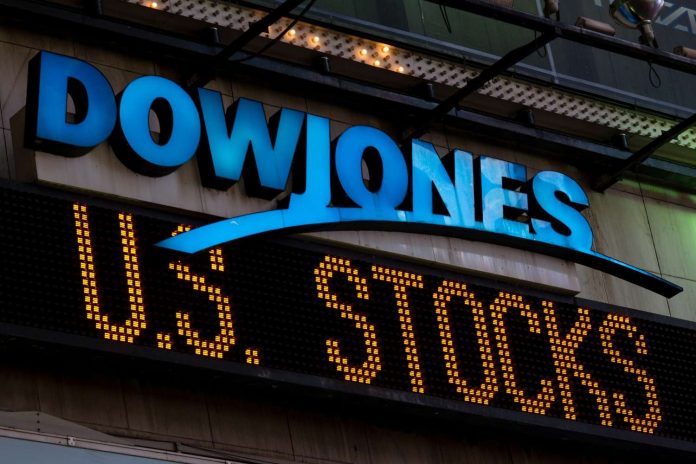
Polymarket announced an exclusive partnership with Dow Jones, the publisher of The Wall Street Journal, to integrate its real-time prediction market data across Dow Jones platforms, including WSJ, Barron’s, MarketWatch, and Investor’s Business Daily.

This data, which reflects crowd-sourced probabilities on future events like elections, sports, and financial outcomes, will appear in digital stories and select print editions to provide readers with additional market sentiment insights alongside traditional reporting.

Polymarket’s CEO, Shayne Coplan, described it as a “monumental step for institutional adoption,” noting that such a collaboration with major legacy media outlets seemed unlikely just a year prior.

The partnership builds on Polymarket’s growing mainstream traction, following integrations with platforms like X and Yahoo Finance, and aims to blend decentralized prediction markets with established financial journalism.

This move could accelerate the normalization of prediction markets in traditional finance, potentially driving higher user engagement and volumes on Polymarket while offering Dow Jones audiences a novel tool for gauging event probabilities.

Chainlink, a partner of Polymarket, congratulated them on the deal, highlighting its significance for the crypto ecosystem. This deal, announced marks a pivotal moment for prediction markets, bridging decentralized crypto platforms with legacy financial media.

Prediction markets are now positioned as a credible financial indicator alongside traditional tools like polls, analyst forecasts, and economic data.

By embedding Polymarket’s real-time probabilities into WSJ articles, Barron’s, MarketWatch, and print editions, it normalizes “skin-in-the-game” crowd wisdom over opinion-based reporting. This follows Polymarket’s prior integrations with X, Yahoo Finance and counters rivals like Kalshi’s CNN deal, giving Polymarket exclusivity in high-prestige financial journalism.

Readers gain a new layer: market-implied odds on events e.g., Fed rate hikes, corporate earnings beats, elections. Features like a custom earnings calendar will show probabilities of companies exceeding expectations, potentially outperforming traditional analyst consensus due to financial incentives aligning predictions.

Shifts focus from “what experts think” to “what people bet on,” often more accurate as capital risks drive better forecasting. Massive visibility boost: Exposure to millions of WSJ/Dow Jones readers could drive user sign-ups, trading volume already >$10B in late 2025, and liquidity.

Accelerates institutional adoption—Polymarket CEO Shayne Coplan called it “monumental,” unimaginable a year ago. Strengthens Polymarket’s lead in the sector, building on U.S. relaunch post-2022 CFTC settlement.

Signals growing TradFi embrace of blockchain-based tools, potentially attracting hedge funds/institutions to use prediction markets for hedging sentiment on politics, macro events, or earnings. Could diminish reliance on traditional polling already declining post-2024/2025 elections where prediction markets proved superior.

Positive for crypto ecosystem: Highlights decentralized platforms’ real-world utility, following partnerships like xAI/Grok integration. Regulatory scrutiny may intensify—prediction markets face ongoing debates over gambling vs. hedging classifications.

Media bias concerns: Integrating betting odds into journalism could blur lines, though it adds transparency via verifiable on-chain data. This partnership accelerates the shift toward probability-based truth discovery in finance and news, potentially making 2026 a breakout year for prediction markets. It’s a clear win for institutional credibility and user growth.

Polymarket data is poised to appear in real-time across high-traffic platforms like WSJ.com, Barron’s, MarketWatch, and Investor’s Business Daily, exposing millions of traditional finance readers to crowd-sourced probabilities.

This exclusivity positions Polymarket as a primary indicator alongside polls and analyst forecasts, with features like a dedicated earnings calendar showing odds on companies beating expectations.

Community reaction on X is overwhelmingly positive: Traders and analysts describe it as “mainstream af,” a “huge win for on-chain data,” and a signal that “prediction markets just crossed fully into TradFi.”

Polymarket’s 24-hour trading volume shows strength at ~$195M up 13.8% recently, contributing to broader platform metrics like $15B+ cumulative volume. The deal aligns with ongoing recovery: Open interest at ~$253M, and diverse markets like Fed decisions, sports, geopolitics seeing high activity.

Analysts note this could accelerate user inflows from institutional and retail audiences trusting WSJ as a “source of truth,” potentially driving sign-ups and liquidity in non-election periods.

OpenAI Introduces ChatGPT Health, A New Dedicated Experience For Personalized Health And Wellness Support

0

OpenAI has introduced ChatGPT Health, a dedicated experience within ChatGPT designed to help people better understand, manage, and navigate their health and wellness.

This new feature securely combines users’ personal health information with ChatGPT’s intelligence, enabling more informed, relevant, and personalized conversations while prioritizing privacy, safety, and user control.

As millions of people already turn to ChatGPT each week for health-related questions, ChatGPT Health marks a major step toward delivering more tailored, supportive, and secure wellness guidance for everyday life.

The feature builds on users’ behavior by offering an environment specifically designed for sensitive health information, with enhanced privacy protections, purpose-built encryption, and data isolation to ensure conversations remain secure and compartmentalized.

Announcing the rollout of ChatGPT Health, the OpenAI wrote via a blogpost,

“We’re introducing ChatGPT Health, a dedicated experience that securely brings your health information and ChatGPT’s intelligence together, to help you feel more informed, prepared, and confident navigating your health.”

ChatGPT Health is currently rolling out to a limited group of early users, with plans to expand access in the coming weeks. Users on Free, Go, Plus, and Pro plans outside the EEA, Switzerland, and the UK are eligible for early access.

Today, health data is often scattered across multiple platforms apps, portals, PDFs, wearables, and medical notes making it difficult for individuals to see the full picture of their wellbeing. ChatGPT Health brings these sources together, allowing users to securely connect medical records and wellness apps such as Apple Health, Function, and MyFitnessPal.

With these connections, ChatGPT Health can help users interpret lab results, prepare for doctor appointments, understand lifestyle patterns, explore nutrition and fitness insights, and evaluate insurance options based on personal health trends. However, the experience is designed to support not replace clinical care, empowering users to feel more informed and prepared for conversations with healthcare professionals.

Privacy and Security at the Core

Recognizing the deeply personal nature of health data, OpenAI has built ChatGPT Health with multiple layers of protection. All conversations are encrypted by default, both at rest and in transit. Health adds additional safeguards, including specialized encryption and data isolation.

Health exists in its own dedicated environment, where chats, files, and connected apps are stored separately from other ChatGPT conversations. While limited non-health context such as lifestyle changes may be used to improve relevance, health data never flows into non-health chats. Users can review, manage, or delete Health memories at any time.

Users can also choose to connect their medical records and wellness apps to ChatGPT Health. In the U.S., OpenAI partners with b.well, a secure healthcare data network, to enable access to trusted medical providers. Users can revoke access at any time.

Built with Physicians

ChatGPT Health was developed in close collaboration with over 260 physicians across 60 countries and multiple specialties. Their feedback provided more than 600,000 times has shaped how the system responds to health questions, emphasizing clarity, safety, appropriate escalation, and responsible guidance.

The system is evaluated using HealthBench, a physician-informed framework that assesses responses based on real-world clinical standards rather than simple accuracy tests. This ensures ChatGPT Health is helpful for tasks such as explaining lab results, summarizing care instructions, preparing appointment questions, and interpreting wearable data.

Outlook

As ChatGPT Health expands to more users globally, it is expected to play a growing role in how individuals interact with and understand their personal health data.

By centralizing fragmented medical and wellness information into a single, intelligent interface, the platform could help users become more proactive, informed, and engaged in their care journeys.

President Trump’s Order to Cease Funding 66 International Organizations Creates Loops on U.S. Foreign Policy

0

President Donald Trump signed a Presidential Memorandum directing U.S. executive departments and agencies to cease participation in and funding for 66 international organizations deemed no longer to serve American interests. This breaks down as: 35 non-UN organizations, 31 UN-affiliated entities.

The action follows a review of U.S. involvement in intergovernmental organizations and aims to end taxpayer funding for entities seen as advancing “globalist agendas” over U.S. priorities.

Reports from sources like Reuters, others confirm the signing, though the White House briefly posted and then removed details, and no full list of the specific organizations was publicly released at the time. This aligns with Trump’s “America First” policy, building on prior withdrawals from WHO, Paris Agreement, and certain UN bodies during his second term.

The U.S. withdrawal from 66 international organizations— 31 UN-affiliated and 35 non-UN marks a significant escalation of America First isolationism, with profound short- and long-term effects on global diplomacy.

The move signals a broad retreat from multilateralism, building on prior withdrawals. It diminishes U.S. influence in global standard-setting on issues like climate, labor, population, and human rights, which the administration labels as promoting “woke” or “globalist” agendas.

Experts and reports from AP, and Washington Post describe it as a further erosion of post-WWII institutions the U.S. helped build, weakening collective responses to transnational challenges.

For instance, exiting the UNFCCC underlying the Paris Agreement hampers international climate negotiations and gives other nations an “excuse” to delay emissions reductions, per climate scientists.

Strain on Alliances and Trust

Allies view this as rattling transatlantic and global partnerships, especially amid concurrent U.S. actions like threats regarding Greenland, military operations. European sources express alarm over declining U.S. reliability, prompting calls for greater EU autonomy in defense and diplomacy.

The decision reinforces perceptions of U.S. unpredictability, potentially pushing partners toward alternative frameworks like stronger EU-China ties on climate or trade. The administration aims to redirect resources to bodies where U.S.-China competition is direct seeking to counter Chinese influence.

However, critics argue the withdrawals create vacuums that China and Russia can fill, enhancing their soft power in global governance. In UN-related entities, reduced U.S. funding may force program cuts, indirectly benefiting authoritarian narratives against “Western-dominated” institutions.

Supporters frame it as ending wasteful spending on “mismanaged” or “redundant” entities that threaten U.S. sovereignty. No widespread public international support is evident in early reporting; instead, regret from UN agencies and concerns over weakened global cooperation dominate.

This aligns with a transactional, unilateral approach, prioritizing bilateral deals over multilateral commitments. It could accelerate fragmentation of the liberal international order, complicating diplomacy on issues requiring U.S. buy-in such as health pandemics, climate finance.

While the U.S. retains core engagements like UN Security Council veto, the scale—66 entities—represents the most sweeping disengagement in modern history, likely reshaping global diplomacy toward a more multipolar, less cooperative landscape. Effects will unfold over months and years as funding ceases and participation ends.

U.S. now fully outside UNFCCC/IPCC frameworks building on Paris Agreement exit effective Jan 27, limiting influence on trillions in global investments and clean energy standards—potentially ceding ground to China in renewable tech.

Immediate directives to cease contributions where lawful; reports of looming UN staffing cuts and NGO project closures, echoing prior aid slashes. Withdrawal from Senate-ratified treaties like UNFCCC may face challenges; experts anticipate lawsuits over unilateral executive action.

This sweeping move—described as the largest U.S. disengagement from multilateralism in history—accelerates a transactional, unilateral foreign policy. Heightened tensions with allies, reduced U.S. soft power.

Fragmented global cooperation on transnational issues, with effects compounding as withdrawals formalize in coming months. Developments remain fluid amid ongoing reviews of additional entities.

Maduro’s Ordeal is Showing a Positive Impacts on Caracas Stock Exchange’s Index

0

The Caracas Stock Exchange’s main index— IBC or IBVC surged significantly following the U.S. military operation on January 3-4, 2026, which captured Venezuelan President Nicolás Maduro and his wife, Cilia Flores.

Maduro was brought to New York to face narco-terrorism and drug trafficking charges he pleaded not guilty on January 5. Specifically: On January 2 last trading day before the weekend capture, the IBC closed around 2,231 points.

By January 6, it reached approximately 3,897 points — representing a 74.68% increase over that short period. This was driven by: A ~16-17% gain on January 5 first trading day post-capture.

Followed by a ~50% surge on January 6. The rally reflects investor optimism about potential regime change, lifted U.S. sanctions, debt restructuring, and renewed access to Venezuela’s vast oil reserves for Western companies. Venezuelan bonds (sovereign and PDVSA) also rallied sharply on similar hopes.

Note that the Caracas exchange is small, illiquid only ~15 actively traded stocks, and dominated by local investors, so moves can be extremely volatile. The index has posted massive longer-term gains too, thousands of percent annually in recent years, often tied to hyperinflation and currency dynamics.

As of January 7-8, 2026, the IBC has continued climbing, hitting highs around 4,459-4,545 points amid ongoing developments. Venezuelan bonds experienced a sharp rally following the U.S. capture of President Nicolás Maduro over the January 3-4, 2026 weekend, driven by heightened expectations of regime change, lifted sanctions, accelerated oil production, and a potential sovereign debt restructuring.

Pre-event prices (close of January 2, 2026): Sovereign bonds traded around 28-33 cents on the dollar; PDVSA (state oil company) bonds around 21-24 cents. January 5 rally (first trading day post-capture): Sovereign bonds surged 7-10 cents (20-30% gains in some cases). Many reached ~40 cents on the dollar. PDVSA bonds gained at least 9 cents, to ~30 cents. 2027 sovereign maturity up ~7 cents (22% single-day gain).

January 6 extension: Gains continued with sovereign bonds adding >2 cents e.g., 2034 maturity to 43.01 cents; PDVSA 2031 to 42.60 cents. As of now: rally sustained, with select benchmarks around 43 cents; some at multi-year highs, highest since pre-2017 escalation of U.S. sanctions.

Venezuela defaulted in 2017 on ~$60 billion in bonds (sovereign + PDVSA face value); total external claims including interest, bilateral loans to China and Russia, arbitrations estimated at $150-170 billion. Bonds nearly doubled in 2025 amid Trump pressure; post-capture surge reflects bets on fast-tracked restructuring to enable U.S. oil firms’ investment in Venezuela’s reserves.

Analysts from JPMorgan and Citi see potential recovery values rising to 40-60 cents or higher with oil-linked warrants, but warn of complexity —multi-creditor web, political risks. Market remains illiquid, dominated by hedge funds and distressed investors; volatility high.

This mirrors the Caracas stock surge, both fueled by optimism over economic reopening. However, restructuring could be protracted and contentious. The U.S. capture of Nicolás Maduro has introduced significant uncertainty into Venezuela’s already fragile economy, which contracted ~70-80% since 2013 and had a 2025 nominal GDP of ~$83-110 billion.

Venezuela’s oil production ~1 million bpd pre-event faces immediate risks from U.S. control over exports and stored oil, 30-50 million barrels initially rerouted to the U.S. Analysts warn of potential short-term collapse in output due to blocked diluent imports and tanker issues, reducing revenues and threatening imports of essentials.

This could exacerbate humanitarian issues, with risks of social unrest if social spending cuts follow. The bolívar continues depreciating rapidly official rate ~300-560 VES/USD pre-event trends persisting. Hyperinflation risks rise if monetary financing increases amid revenue shortfalls.

Despite stock (IBC up >200% in recent weeks) and bond rallies these reflect speculative hopes rather than fundamentals. Illiquid markets amplify volatility. Optimism centers on potential regime stabilization, partial sanctions relief, and U.S.-led investment in oil infrastructure.

Analysts from JPMorgan and Goldman Sachs project +0.5-1 million bpd in 1-2 years to 1.5-2 million bpd with stability and investment; full recovery to 3+ million bpd could take a decade and $50-100+ billion.

This would boost revenues, enabling debt restructuring ~$150-170 billion total claims. Short-term forecasts downgraded from 4-6% to lower due to disruptions, but medium-term upside if oil flows resume: possible rebound with migrant returns and foreign investment. However, political fragmentation and protracted restructuring pose risks.

Reduced global oil prices from added supply; potential weakening of OPEC+ influence. For Venezuela, reversal of poverty and hyperinflation possible but “bumpy” transition likely. Overall, while markets price in a “bonanza” scenario, experts emphasize years of challenges before meaningful recovery, with risks of worsening conditions in the interim.

The trajectory hinges on political stability and U.S. policy on sanctions and oil revenues.

Wyoming Launches FRNT Stablecoin With Interest, as Florida Introduces Legislation to Establish a Strategic BTC Reserve

0

Wyoming has officially launched the Frontier Stable Token (FRNT), the first fully state-issued stablecoin in the United States, making it publicly available as of now. Frontier Stable Token ($FRNT) — previously referred to as WYST during development.

Pegged 1:1 to the U.S. dollar, fully backed by cash and short-term U.S. Treasuries, with a statutory 102% overcollateralization requirement for added stability. Reserves are managed by Franklin Templeton, with custody by its affiliate Fiduciary Trust Company International.

Natively issued on Solana initial trading focus, with multi-chain support via Stargate bridging to Ethereum, Arbitrum, Avalanche, Base, Optimism, and Polygon. Public purchase started on Kraken, a Wyoming-domiciled exchange via Solana, and accessible on Avalanche through Rain a Visa-powered card platform for real-world spending.

Interest earned from reserves funds Wyoming’s public school system. It’s positioned as a transparent, government-overseen alternative to private stablecoins like USDT or USDC, emphasizing efficiency, low costs, and public accountability.

Authorized by the 2023 Wyoming Stable Token Act, with mainnet deployment in 2025 and full public rollout in early 2026 after testing and delays. Governor Mark Gordon described it as a “defining moment” in blending regulation with blockchain innovation.

Early trading volumes are modest, typical for new stablecoins, and the state plans expansions in 2026, including more partners and potential integration into government operations. This marks a milestone for state-level digital assets, potentially serving as a model for others amid growing U.S. stablecoin regulation.

Implications of Wyoming’s Frontier Stable Token ($FRNT) 

The public launch of $FRNT— the first fully state-issued stablecoin in the U.S.—represents a pioneering step in public-sector digital finance. Backed 1:1 with 102% overcollateralization by U.S. dollars and short-term Treasuries, managed by Franklin Templeton, it combines government oversight with blockchain efficiency.

Interest earned on reserves funds Wyoming’s School Foundation Program (public education), providing a new income stream independent of volatile oil/gas taxes. This could ease taxpayer burdens and address state budget shortfalls, with projections for net positive returns by 2027-2028.

Government efficiency: Plans to integrate $FRNT into state agencies for payments, reducing fees and settlement times, seconds vs. days, costs < $0.01. Reinforces Wyoming’s status as a crypto hub via SPDI banks and blockchain laws, potentially drawing fintech firms and talent.

Positions $FRNT as a transparent, regulated option vs. USDT/USDC, emphasizing no private profiteering and full accountability. It mitigates surveillance fears associated with CBDCs by lacking transaction restrictions. Early volumes are low; success depends on utility like real-world spending via Rain’s Visa cards. Wyoming’s small population limits organic growth, requiring broader appeal.

Currently non-yielding to holders, interest goes to the state but officials are exploring yield-sharing, which could boost demand if implemented. Provides a blueprint for state-issued tokens amid federal GENIUS Act clarity. Other public entities are already consulting Wyoming; could inspire similar projects to fund public goods.

Highlights states innovating where federal CBDC efforts stall. $FRNT avoids CBDC-like controls no freezing without legal orders, aligning with U.S. dollar hegemony without central bank issuance. In a $300B+ market, it tests government-backed options, potentially influencing national regulation and reducing reliance on private issuers.

Native on Solana, bridged to Ethereum, Arbitrum, Avalanche, Base, Optimism, and Polygon via Stargate/LayerZero—demonstrates scalable, low-cost cross-chain design. Partnerships with Kraken for trading, Franklin Templeton for reserves bridge TradFi and crypto, encouraging more institutional participation.

Proves public entities can issue programmable money, enhancing DeFi liquidity and real-world payments without full CBDC risks. Overall, while early and modest in scale, $FRNT is a “defining moment” per Governor Gordon for blending regulation with blockchain.

Success could accelerate state-level digital assets nationwide; failure might highlight adoption hurdles for non-private stablecoins. As of January 8, 2026, it’s live with modest trading, and expansions more partners, agency uses are planned for 2026.

Florida Introduces Legislation to Establish a Strategic Bitcoin Reserve

Florida has recently introduced legislation to establish a Strategic Bitcoin Reserve. Republican Representative John Snyder filed House Bill 1039 (HB 1039) in the Florida House of Representatives.

This bill aims to create the Florida Strategic Cryptocurrency Reserve as a special fund outside the State Treasury, managed by the state’s Chief Financial Officer (CFO). The goal is to hedge against inflation and enhance financial security for residents by allowing limited investments in qualifying cryptocurrencies.

Only cryptocurrencies with an average market capitalization of at least $500 billion over the most recent 24-month period qualify. Currently, Bitcoin (BTC) is the only asset that meets this threshold with a market cap well above $1 trillion.

The CFO would oversee purchases, holdings, management, and potential sales. The bill includes requirements for independent audits, an advisory committee, and regular reporting to the legislature. The reserve could be funded through legislative appropriations, dedicated revenues, investment earnings, or direct cryptocurrency purchases.

If passed, the bill would take effect on July 1, 2026, conditional on full approval. This is a revived and narrowed effort after similar proposals like HB 487 and SB 550 stalled or were withdrawn in 2025. Companion Senate bills such as SB 1038 and SB 1040, sponsored by Senator Joe Gruters support the framework, including trust structures for management.

The move positions Florida among other U.S. states exploring Bitcoin as a reserve asset like New Hampshire, Texas, and Arizona have advanced similar initiatives. Florida’s CFO, Jimmy Patronis, has publicly called Bitcoin “digital gold” and supported limited exposure for diversification.

The bill has just been filed and is in the early stages — it will need to pass through committee hearings, floor votes in both chambers, and potential signing by the governor during the 2026 legislative session which begins soon. It’s generating buzz in the crypto community as a sign of growing state-level adoption.

Statewide Bitcoin reserves, like the one proposed in Florida’s HB 1039 represent a growing trend among U.S. states to treat Bitcoin as a strategic asset — similar to gold or other reserves — for long-term financial resilience. As of early 2026, states such as New Hampshire, Arizona, and Texas have already passed or advanced similar laws, while many others including Florida are in legislative stages.

This approach aims to diversify state treasuries, hedge against inflation and fiat currency devaluation, and signal pro-innovation policies. However, it introduces significant risks due to Bitcoin’s characteristics. Bitcoin’s fixed supply (21 million cap) positions it as “digital gold,” potentially protecting against dollar depreciation. States can’t print money like the federal government, so a small allocation via surplus funds or unclaimed property could offset purchasing power loss over time.

If Bitcoin continues its historical upward trend, reserves could generate substantial gains for taxpayers, similar to how corporate treasuries like MicroStrategy have benefited. States with reserves attract crypto businesses, talent, and investment, boosting innovation and positioning them as forward-thinking and  “tech-friendly” branding.

Blockchain enables public auditing of holdings, and bills often mandate secure custody like cold storage, independent audits, and advisory committees for accountability. Bitcoin experiences extreme price swings, which could lead to significant paper losses during downturns, raising concerns about prudent management of public funds.

Critics argue taxpayer money shouldn’t fund speculative assets; a market crash could spark backlash or legal challenges. States need expertise in secure custody, risk management, and compliance — often requiring third-party custodians — which adds costs and complexity.

Widespread state adoption could increase demand— pushing prices up, but also risks centralization if governments influence mining or consensus. For Florida specifically, the narrowed focus only assets with ?$500B average market cap over 24 months — currently just Bitcoin and safeguards, outside the main treasury, audits, reporting starting late 2026 aim to mitigate risks while testing the concept.

If passed, it could encourage a domino effect among other states, accelerating Bitcoin’s shift from speculative asset to recognized treasury tool. This trend reflects a broader 2025–2026 shift: from federal-level recognition like U.S. Strategic Bitcoin Reserve via executive order to state experimentation.

Supporters see it as fiscal innovation; skeptics view it as unnecessary risk. What aspect of statewide Bitcoin reserves interests you most — the economic hedge, the risks, or how it might impact Bitcoin’s price?