DD
MM
YYYY

PAGES

DD
MM
YYYY

spot_img

PAGES

Home Blog Page 460

As AI Layoffs Hit Entry-Level Workers, Goodwill CEO Warns of “Flux of Unemployed” — Advocates Reskilling

0

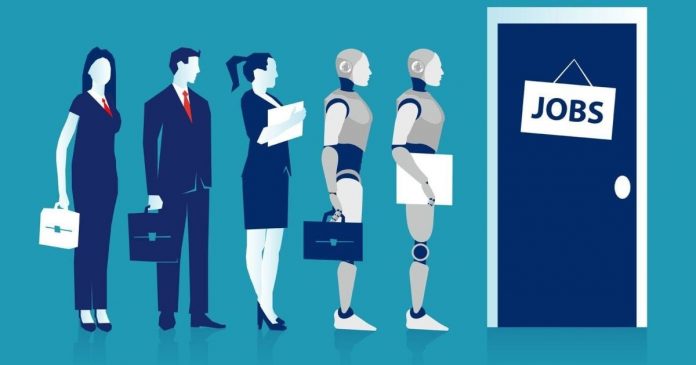
Some tech leaders have been swift to dismiss predictions that artificial intelligence will spark widespread unemployment, while others believe the impact will be significant. Steve Preston, CEO of Goodwill—a U.S. nonprofit with more than 650 job centers— agrees with the latter, saying the shift is no longer hypothetical, according to Fortune.

He noted that it is already unfolding, with consequences most acutely felt by entry-level and low-wage workers.

Last year alone, over 2 million people sought help from Goodwill’s employment services. Now, Preston says the charity is preparing for a “flux of unemployed young people—as well as other people—from AI.” The 65-year-old, who previously served as the 14th U.S. Secretary of Housing and Urban Development, told Fortune that large organizations are already making “significant layoffs based on a move to AI.”

Call centers and sales teams are feeling the brunt of automation. “I don’t know that it’ll be catastrophic,” Preston explained, “but I do think we’re going to see a significant reduction in a number of jobs. I think it’s going to hit low wage workers especially hard.”

A Blow to Young Workers, Especially Non-Grads

Entry-level jobs, often seen as stepping stones for young workers fresh out of school, are shrinking. Preston notes that the labor market squeeze is particularly painful for Gen Z, especially those without college degrees.

“It’s much harder to find a job,” he said. “It’s really hitting college students right now in the marketplace. It’s really hitting young adults without college degrees.”

Research suggests young men are especially exposed to this wave of unemployment.

This reality contrasts with earlier arguments that skills-based hiring would make degrees less relevant.

“What I’m seeing is of the overall unemployment, people without college degrees have no jobs,” Preston stressed.

And while entry-level jobs once provided the foundations for career growth—mentorship, skill-building, and workplace familiarity—AI is eroding these opportunities. Without that training ground, even higher-level roles could be starved of fresh talent in the future.

U.S. vs. Global Workforce Shifts

The U.S. is not alone in this reckoning. In Europe, unions have warned that AI is hollowing out clerical and customer service jobs, leading governments in countries like France and Germany to expand reskilling subsidies. In Asia, call centers in the Philippines—a major global outsourcing hub—are under pressure, as generative AI begins to replicate tasks previously offshored to human workers.

In contrast, economies like India are attempting to balance the disruption by aggressively promoting “AI plus human” service models, where workers are retrained to supervise or complement automated systems rather than be replaced outright.

The comparative picture highlights the uneven pace of adaptation: while U.S. nonprofits like Goodwill brace for a surge in unemployment claims, other countries are embedding AI literacy and clean tech training directly into national policy.

Preston believes that the path forward lies in skills—both digital and practical. Goodwill has been working with employers to identify what will matter tomorrow.

“Digital skills are really critical,” he said, warning that being active on social media is not the same as mastering workplace technologies.

He pointed to tools like Microsoft Excel, Google Docs, and increasingly AI assistants like ChatGPT and Gemini as gateways to employability.

“People who are proficient in using AI tools are beginning to leapfrog other people going into the marketplace,” he said.

For those outside the corporate track, Preston says clean tech jobs—from solar panel installation to EV charging station maintenance—offer promising alternatives without requiring a college degree.

The warning extends beyond Gen Z. “If you are someone seeking a job in your 30s—or even 40s—and you haven’t acquired those skills, you’re pretty much locked out of a massive percentage of the jobs that are available,” he said.

However, Preston insists it is not too late. He recalls cases of people who went from homelessness to high-paying jobs at firms like Accenture and Google after completing intensive digital boot camps.

“When those people get those skills, we just see the doors busting open,” he added.
The Competitive Evolution of Nigeria’s Petroleum Distribution

0

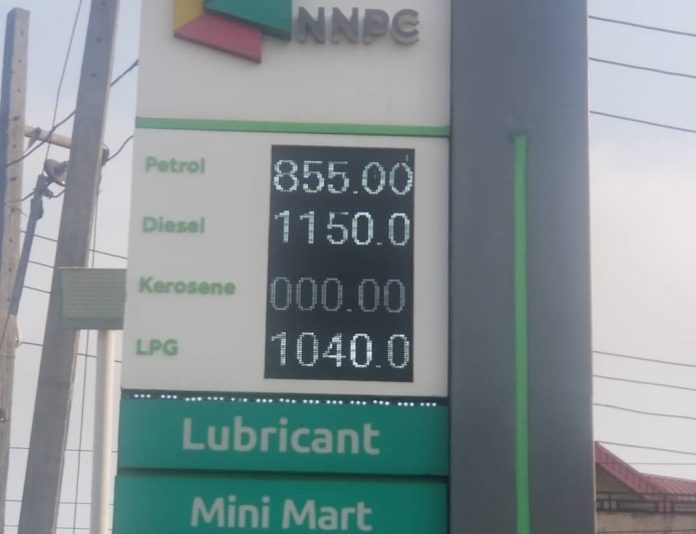
For more than half a century, petroleum distribution in Nigeria has been shaped by a succession of policies, each one designed to solve the shortcomings of the last. What began as a tightly centralised system is now moving toward a market where efficiency, logistics, and capital strength matter more than political connections. The transition, however, is far from complete, and the competitive stakes for industry players remain high.

Centralisation and Its Aftermath

Nigeria’s earliest petroleum policies were developed under colonial influence. The Oil Pipelines Act of 1956 and the Petroleum Act of 1969 vested sweeping control of resources and infrastructure in the state. With the creation of the Nigerian National Petroleum Corporation (NNPC) in 1977, distribution became essentially a government monopoly. Competition was limited. Multinationals dominated upstream production, while NNPC controlled imports, depots, and allocations. Supply reliability depended on government planning rather than market efficiency.

As inland cities expanded, the cost of trucking fuel to remote areas created sharp disparities. The Petroleum Equalisation Fund of 1975 was introduced to reimburse marketers for the extra haulage costs of serving distant states. This ensured uniform pump prices nationwide but weakened incentives for competition. Efficiency gains were irrelevant because reimbursements equalised outcomes. Marketers competed more in navigating bureaucratic claims than in innovating logistics.

Distortion Through Price Regulation and Subsidies

By the early 2000s, recurrent fuel scarcity and opaque pricing led to the establishment of the Petroleum Products Pricing Regulatory Agency (PPPRA). The agency set price bands, monitored supply, and allocated import permits. This changed the nature of competition. Success was determined by who could secure an import licence rather than who could move fuel most efficiently. International oil companies gradually exited the downstream retail market, leaving indigenous independents such as Oando, Conoil, and Forte Oil to fill the gap.

Over time, the fuel subsidy regime deepened these distortions. Marketers earned profits less from efficient distribution and more from capturing subsidy reimbursements. Smuggling, round-tripping, and “paper imports” thrived. Smaller firms without political influence often struggled, while larger players with access to subsidy flows expanded. Consumers saw artificially low pump prices but still endured frequent shortages. Distribution infrastructure stagnated because the subsidy rewarded import volumes rather than investments in depots or pipelines.

Reform and the Liberalisation Shock

The Petroleum Industry Act (PIA) of 2021 signaled a new approach. It unbundled regulators, clarified licensing rules, and created a framework for midstream and downstream investment. The PIA introduced the Midstream Network Code to guarantee fair access to pipelines and storage facilities. On paper, this provided the foundation for a competitive market. In practice, execution has been slow, and incumbents continue to dominate existing assets.

The decisive moment came in May 2023 with the removal of the fuel subsidy. Overnight, competition shifted from political access to commercial survival. Retail prices rose sharply, but so did the pressure for efficiency. Larger marketers with strong balance sheets, access to foreign exchange, and integrated supply chains adapted quickly. Smaller firms struggled to stay afloat. NNPC Limited retained major advantages, including guaranteed crude access, which raised concerns that the market could re-concentrate around a few dominant players.

New Competitive Frontiers

A new phase is emerging. The Dangote Refinery, alongside modular refiners, promises to transform the supply landscape by reducing dependence on imports. The government’s Compressed Natural Gas (CNG) programme is creating a parallel distribution network that competes directly with petrol. Strategic reserves and new depot licences, if implemented transparently, could shorten supply chains and reduce volatility.

The next phase of competition will be defined by who can integrate refining with distribution, diversify into gas, and invest in efficient depots. Larger players already enjoy economies of scale, but smaller marketers can remain relevant if financing and regulatory access are fairly managed.

Balancing Market Forces and Public Interest

The trajectory of Nigeria’s petroleum policies shows a clear evolution. Monopoly was followed by artificial uniformity, which gave way to permit-based rent seeking, and finally to market competition. Each policy generation attempted to correct the failures of the last. The challenge today is to ensure that liberalisation does not simply create a new oligopoly.

For government, the priority is transparent enforcement of the PIA’s access rules and support for smaller marketers through affordable financing. For private players, competitive advantage now lies in logistics efficiency, integration with refining, and diversification into gas-based fuels. For consumers, the promise is a more reliable and resilient energy supply.

The Best Crypto Presale Coins of 2025: Why BDAG, BEST, SNORT, and HYPER Are All Heating Up!

0

The search for opportunities in crypto often leads to presales, where tokens are offered before hitting major exchanges. These moments can create strong entry points, especially when the network has real adoption, technology, or hype behind it.

What sets certain presales apart is not just token pricing but the infrastructure and communities already forming around them. Among the best crypto presales, four names are standing out right now: BlockDAG (BDAG), Best Wallet Token (BEST), Snorter (SNORT), and Bitcoin Hyper (HYPER).

Each of these is pushing forward with unique strategies. BlockDAG is scaling globally with miners and mobile apps, BEST is tying into wallet utility, SNORT is linking meme coin energy to trading bots, and HYPER is aiming to expand Bitcoin’s reach with a layer-2 approach. Together, they show how presales can deliver value across different angles of crypto.

1. BlockDAG: Awakening Testnet Delivers Proof!

BlockDAG is leading the charge in presales with numbers that show real traction. The project has already raised more than $408 million, onboarded 312,000+ holders, and attracted 3 million active users through its X1 mobile miner app.

Unlike many networks that wait until launch to reveal their systems, BlockDAG will roll out its Awakening Testnet on September 25 as a live prequel. This stage will deploy the chain’s core architecture, introduce account abstraction, and integrate miners directly with the blockchain using the Stratum Protocol. It also includes explorer tools, vesting contracts, and stress testing, giving the community a full view of how the network performs under real conditions.

What makes BlockDAG stand out further is the delivery of hardware. Over 20,000 X-Series miners have already shipped across 130+ countries, with production scaling to 2,000 units weekly. These devices are actively mining during the testnet phase, providing early rewards while confirming decentralized participation. At the same time, millions of mobile users contribute through the X1 app, creating a dual-layer system of accessibility and high-power validation.

With the Batch 30 price locked at $0.0016 for a limited time, BlockDAG is giving participants a chance to enter before momentum peaks. Its ability to showcase proof instead of promises makes it one of the best crypto presales available, fueling urgency for those waiting on the sidelines.

2. Best Wallet Token: The Wallet Token With Utility

Best Wallet Token is powering up as a presale that combines wallet utility with token perks. The Best Wallet app already supports over 60 blockchains, with features like cross-chain swaps, fiat on-ramp, and built-in DEX aggregation.

Holders of BEST gain access to reduced fees, exclusive presales, and even governance rights to influence future development. Reports also mention an upcoming “Best Card” offering up to 8% cashback, making the token useful beyond speculation.

The presale has gathered strong traction, with nearly $16 million raised as of mid-September 2025. Pricing is advancing in stages, giving early backers better entry points before the sale closes at the end of December or earlier if allocations sell out.

With predictions suggesting BEST could reach $0.063 by the end of 2025, there’s a clear belief it could grow quickly once listed. Its mix of financial utility and presale perks places it firmly among the best crypto presales available now.

3. Snorter: Meme Coin With Bot Brains

Snorter is taking a different route, tying the hype of meme coins to a real trading bot ecosystem. Its Telegram-based bot includes tools like honeypot detection, MEV protection, rug-pull alerts, and copy-trading features, which help users trade with more confidence in high-risk markets. The token’s role is central, offering reduced transaction fees for holders and high staking APY options that reward long-term participation.

As of late September 2025, the presale has crossed the $4 million mark with token prices near $0.1039. At the same time, SNORT is already trading on decentralized platforms, with prices seen around $0.00039 and a market cap of about $390K, reflecting its early growth stage.

With a supply of 500M tokens and wide interest from the meme coin crowd, SNORT has a strong narrative. Its ability to turn hype into tool-driven adoption makes it a contender in the best crypto presales category.

4. Bitcoin Hyper: Bitcoin’s Layer-2 Ambition

Bitcoin Hyper is branding itself as Bitcoin 2.0 through a layer-2 solution. The goal is to deliver faster transactions, lower fees, and smart contract functionality on top of Bitcoin. Using Solana Virtual Machine integration, it plans to unlock DeFi, dApps, and bridges so BTC can be deposited, wrapped, and used in new ways before being withdrawn back to the main chain. This gives Bitcoin more flexibility without altering its base structure.

The presale is already strong, raising between $16.2 and $16.7 million with token prices near $0.012935. Backers also see staking rewards advertised around 68-69% APY, alongside audits from Coinsult and SpyWolf.

Momentum is building quickly, with reports of $300K inflows in a single day. Analysts point to potential growth if Bitcoin Hyper executes on its roadmap, especially as more projects fight to expand Bitcoin’s utility. With this mix of ambition and early traction, it earns its place in the best crypto presales lineup.

Looking Ahead

Presales continue to be a place where crypto users search for the next big move. The examples above show how different approaches can work: BlockDAG scaling live infrastructure, Best Wallet Token linking to financial tools, Snorter combining meme energy with trading bots, and Bitcoin Hyper attempting to give Bitcoin a broader role. Each has its own mechanics, price stages, and target users, but they all share the potential for growth before major listings.

BlockDAG, however, is pulling ahead thanks to its numbers and delivery before mainnet. With miners shipped worldwide, millions on the mobile app, and over $408 million raised, it offers proof rather than promises. That is why it stands out as the most hyped pick in the best crypto presales space today. For those keeping watch, this is the presale cycle that could shape the next major moves in 2025.

FTX Recovery Trust to Distribute $1.6B To Eligible Creditors By September 30th

0

The FTX Recovery Trust has confirmed it will distribute approximately $1.6 billion to eligible creditors as part of its third major payout under the Chapter 11 reorganization plan. This distribution is scheduled to begin on September 30, 2025, with funds expected to reach recipients via selected providers BitGo, Kraken, or Payoneer within 1-3 business days.

~$1.6 billion, bringing cumulative distributions to over $7.8 billion since the exchange’s collapse in November 2022. Creditors must have completed verification on the FTX Claims Portal and onboarded with a distribution provider by the record date.

This includes both “convenience class” (smaller claims, e.g., under $50,000) and non-convenience class holders. FTX’s bankruptcy estate has recovered over $15 billion in assets, including cash from operations, clawbacks, and sales of holdings like Solana (SOL) tokens and stakes in Anthropic and Robinhood.

This has enabled near-full recoveries for many retail users, exceeding initial balances due to accrued interest and asset appreciation. However, some creditors have raised concerns over legal fees nearly $1 billion paid to firms and the use of 2022 crypto valuations for payouts, arguing for adjustments based on current market prices.

Recent discussions on X highlight optimism about the process but also skepticism around costs and asset sales (e.g., discounted SOL liquidations). Future rounds are expected, with ~$16.5 billion still earmarked for remaining claims.

With $7.8 billion distributed to date, many creditors, especially those with smaller “convenience class” claims, are achieving full recovery plus interest (120% of claim value). This restores trust for some retail investors but leaves larger claimants (e.g., Dotcom customers at 78% recovery) awaiting further payouts.

The influx of $1.6 billion into creditors’ hands could increase spending or reinvestment in crypto or other assets, potentially stimulating market activity. Creditors receiving payouts may face tax liabilities, as distributions could be treated as capital gains depending on jurisdiction, complicating financial planning.

The successful distribution reinforces confidence in crypto bankruptcy processes, potentially reducing stigma from FTX’s 2022 collapse. However, X posts indicate mixed sentiment, with some users questioning the fairness of payout calculations based on 2022 asset valuations rather than current market prices.

Previous FTX asset sales (e.g., Solana tokens) have occasionally pressured prices. While this round is cash-based, future liquidations of remaining assets (~$16.5 billion) could influence markets, particularly for tokens like SOL.

The use of providers like Kraken and BitGo for distributions may drive user activity on these platforms, potentially increasing trading volumes or onboarding. FTX’s ability to recover over $15 billion and distribute significant sums sets a benchmark for handling crypto insolvencies, potentially shaping future legal frameworks.

High legal fees (~$1 billion) have drawn criticism on X and elsewhere, raising questions about efficiency in bankruptcy proceedings. This could prompt regulatory reviews of fee structures in similar cases. Ongoing clawback efforts targeting pre-collapse withdrawals may lead to legal disputes, affecting creditors who received funds earlier.

The payout demonstrates that crypto users can recover funds post-collapse, which may encourage participation in decentralized finance, though skepticism persists due to FTX’s fraud history. Creditors on X express frustration over payouts tied to 2022 crypto prices. This could fuel demands for updated valuation methods in future cases.

The distribution process keeps FTX’s collapse in the spotlight, reminding the industry of risks tied to centralized exchanges and the need for better governance. The $1.6 billion payout is a milestone in FTX’s bankruptcy resolution, offering relief to creditors and signaling progress in asset recovery.

However, it also highlights ongoing challenges, including valuation disputes, high legal costs, and market impacts from future asset sales.

OpenAI Study Finds AI Hallucinations Are a Mathematically Unavoidable, Drawing Contrast With Rivals’ Claims

0

In a shift from what it formerly held, OpenAI has acknowledged that hallucinations—instances where artificial intelligence generates plausible but false information—are not only common but mathematically unavoidable, regardless of improvements in training data or engineering techniques.

The admission came in a landmark study published on September 4 by OpenAI researchers Adam Tauman Kalai, Edwin Zhang, and Ofir Nachum, alongside Georgia Tech professor Santosh S. Vempala. The paper, republished by Computer World, establishes a mathematical framework showing why large language models (LLMs) will always produce some level of falsehood, even when trained on perfect data.

“Like students facing hard exam questions, large language models sometimes guess when uncertain, producing plausible yet incorrect statements instead of admitting uncertainty,” the authors wrote.

The finding carries weight given OpenAI’s role in igniting the global AI boom with ChatGPT, which has since been integrated into enterprises, schools, and governments. It also marks a departure from earlier industry claims that hallucinations could be engineered away with better training, fine-tuning, or retrieval-augmented methods.

When Better Models Still Fail

The study demonstrated that hallucinations result from statistical properties inherent to model training. The researchers derived mathematical lower bounds proving that generative models will always retain an irreducible error rate.

Even state-of-the-art systems stumbled on seemingly trivial tests. When asked, “How many Ds are in DEEPSEEK?” DeepSeek-V3, Meta AI’s models, and Anthropic’s Claude 3.7 Sonnet all returned incorrect counts ranging from two to seven. OpenAI confirmed its own systems were no exception.

“ChatGPT also hallucinates,” the paper admitted. “GPT-5 has significantly fewer hallucinations, especially when reasoning, but they still occur. Hallucinations remain a fundamental challenge for all large language models.”

Ironically, OpenAI’s most advanced reasoning models hallucinated more than simpler ones. Its o1 model fabricated details in 16 percent of tests, while newer o3 and o4-mini models produced fabricated results 33 percent and 48 percent of the time, respectively.

“Unlike human intelligence, it lacks the humility to acknowledge uncertainty,” said Neil Shah, VP at Counterpoint Technologies. “When unsure, it doesn’t defer to deeper research or human oversight; instead, it often presents estimates as facts.”

How Rivals Have Positioned the Problem

The study directly challenges the narrative advanced by OpenAI’s competitors. Anthropic, the maker of Claude, has often marketed its constitutional AI framework as a way to reduce hallucinations, emphasizing “alignment” and “trustworthiness.” Google’s DeepMind similarly claimed that retrieval-augmented generation (RAG) could drastically cut hallucinations by grounding answers in external databases. Meta, too, has argued that scaling model size and refining evaluation would push the problem closer to elimination.

But the OpenAI study points in the opposite direction, noting that hallucinations are not byproducts of immature engineering, but consequences of deep mathematical laws. By showing that even rival flagships like Claude and DeepSeek-V3 produced wildly incorrect answers to simple factual questions, OpenAI positioned its research as not just a self-diagnosis but a critique of the broader industry’s optimism.

Flawed Benchmarks, Flawed Incentives

The study also exposed how industry evaluation methods worsen the problem. Current benchmarks such as GPQA and MMLU-Pro penalize models for responding “I don’t know,” effectively rewarding confident but wrong answers.

“We argue that language models hallucinate because the training and evaluation procedures reward guessing over acknowledging uncertainty,” the researchers said.

Analysts say this dynamic is already harming real-world deployments. “Clients increasingly struggle with model quality challenges in production, especially in regulated sectors like finance and healthcare,” noted Forrester’s Charlie Dai.

Permanent Challenge, New Strategies

Experts believe the inevitability of hallucinations calls for a governance shift. “This means stronger human-in-the-loop processes, domain-specific guardrails, and continuous monitoring,” Dai said, adding that existing risk frameworks “underweight epistemic uncertainty.”

Shah drew a comparison to automotive safety regulations. “Just as car components are graded under ASIL standards, AI models should be dynamically graded nationally and internationally based on reliability and risk profile.”

Recommendations include calibrated confidence targets, real-time trust indices for evaluating AI output, and updated benchmarks driven by regulatory pressure and enterprise demand.

A Reality Check for Enterprises

The OpenAI findings echo earlier warnings from academia. A Harvard Kennedy School study found that downstream oversight often fails to catch subtle AI-generated falsehoods due to constraints of cost, scale, and context.

The OpenAI team concluded that the path forward requires industry-wide reform in how systems are tested and trusted, while acknowledging that hallucinations will never fully disappear.

For enterprises, the message is that hallucinations are not an engineering flaw to be patched out, but a mathematical certainty requiring new governance, oversight, and adaptation strategies.

By admitting this publicly, OpenAI not only sets itself apart from rivals who continue to promise engineering solutions but also reframes the debate over AI reliability. Thus, the question is no longer when hallucinations will disappear, but how businesses, regulators, and users adapt to their permanence.