DD
MM
YYYY

PAGES

DD
MM
YYYY

spot_img

PAGES

Home Blog Page 4603

Tekedia Mini-MBA End of Year Boat Cruise Knowledge Party [video]

0

The most amazing part of Tekedia Mini-MBA is that it brings people, learners and innovators together.  And those learners have come together to start companies, improve businesses, and do many awesome things. As our learners organize in cities and communities independently, Tekedia Institute wishes everyone safe connections and success.  I just received that some Tekedia Institute alumni organized an End of Year party / Boat Cruise Party.

We are truly thankful for how our small contributions at the Institute are bringing people together. Please include me in the Aso Rock Innovation Party!!!

Tekedia Institute >> more than a business school, you meet future business and professional partners here.

New Borrowing by The Nigerian Government Sees Its Public Debts Surge to N44.06 Trillion

0

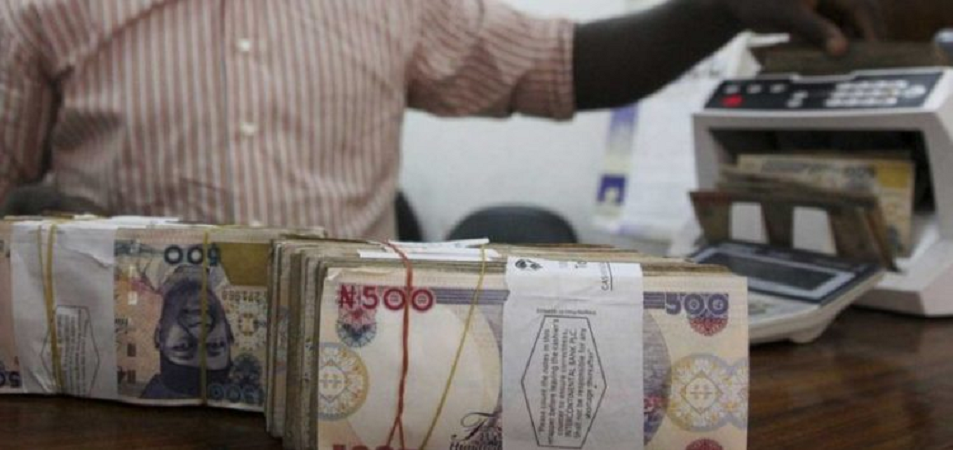
Nigeria’s public debt recently rose to N44.6 trillion in the third quarter (Q3) of 2022, due to recent borrowings.

Amid the growing concerns that Nigeria might be approaching a debt trap, the Debt Management Office (DMO) in a statement, revealed that the recent increase in the nation’s public debt was due to new borrowings by the government to part finance the deficit in the 2022 Appropriation Act, as well as new borrowings by sub-nationals.

The statement reads, “Total public debt stock which comprises the total domestic and external debt stock of the federal government of Nigeria (FGN), all State Governments and the Federal Capital Territory (FCT) stood at N44.06 trillion.

“In comparison, the total public debt figure as of June 30, 2022, was N42.84 trillion. The total domestic stock as of September 30, 2022, was N26.92 trillion while the total external debt stock as of September 30, 2022, was N17.15 trillion.

The increase in the Debt Stock was largely due to New Borrowings by the Federal Government to part-finance the deficit in the 2022 Appropriation Act, as well as, New Borrowings by sub-nationals.”

Also, data from the DMO’s external and domestic debt service revealed that Nigeria spent N1.17 trillion on debt in the third quarter (Q3) of 2022.

Nigeria’s latest debt of N44.06 trillion represents a 2.9 percent quarter-on-quarter increase when compared to N42.84 trillion recorded in Q2 in 2022.

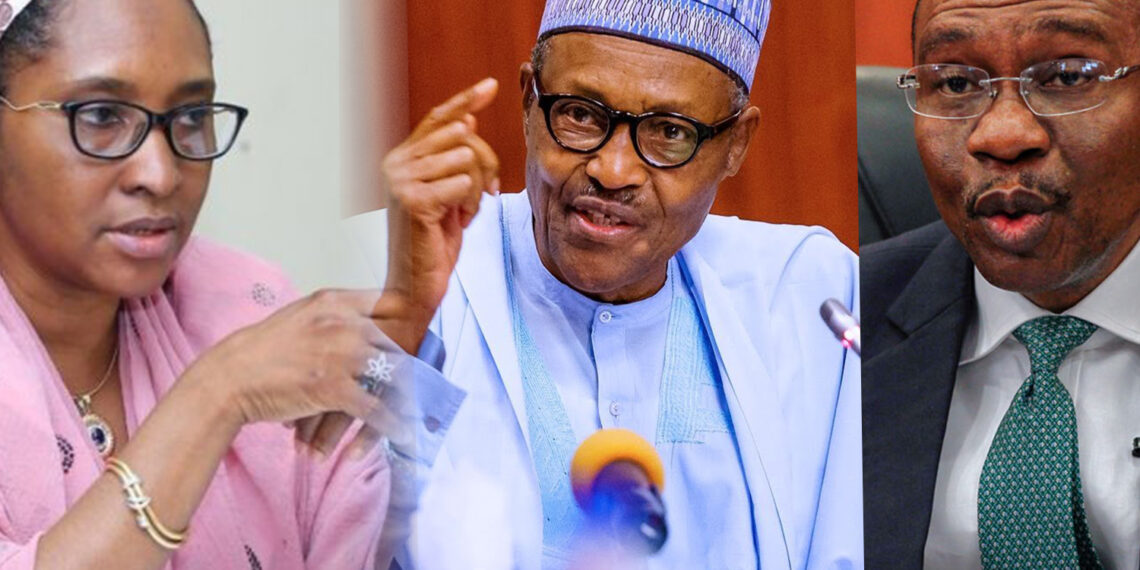
Reports reveal that Nigeria’s public debt has risen the most under President Buhari’s administration when compared to other administrations since 1999.

The government keeps borrowing to meet its debt financing obligations, a development many economists describe as disturbing and unsustainable.

Meanwhile, in 2021, the DMO justified President Muhammadu’s continuous borrowing, noting that it has been instrumental in helping Nigeria bounce back from the recession caused by economic shocks which put a strain on the country’s revenue.

Analysts in the financial sector projected that the continuous borrowings by the federal government in 2022, were due to low oil outputs resulting in a decline in oil revenue which was affected by incessant oil theft.

However, in a 2021 report, the World Bank placed Nigeria among the top 10 countries in the world with the highest debt risk exposure.

The world bank therefore, cautioned Nigeria against excessive debts, urging a balance between massive spending for development on one hand and moderation in borrowing on the other hand.

Due to the country’s incessant borrowings, last year, some prominent statesmen and leaders warned the international community against lending to the Nigerian Government, stating that Nigeria is a country with questionable sovereignty.

Starbucks Building a Web3 Project To Reward Its Community

0

Starbucks plans to build a new, global digital community that can be defined by collaboration, experiences, and shared ownership.

Creating private communities on Web3 is now common at big brands. But this time, consider it all centered around coffee to start and perhaps expand into many areas Starbucks has played over the years, like art, music, books, and beyond.

As you know, Starbucks, which is the most popular coffee chain in the world, appears as an encouraging brand with its projects in the digital field.

The coffee giant responds to people who prefer their products with specific reward systems if they make transactions through the application. Now Starbucks is working on a project that will integrate this reward system into the Web3 world.

The brand has always had an audience that is happy to use its products. However, we have never seen this audience engage.

With the world of Web3 Starbucks will now have a community with benefits of its own. Centering on coffee-focused NFTs, the company plans to build a structure where it will offer exclusive content and opportunities to NFT owners rather than a ordinary digital collection.

New technologies associated with what is commonly referred to as “Web3” are now creating a space to expand the concept of community, which has always been at the heart of Starbucks. Web3 refers to many things in the blockchain space, but NFTs are the unique technology that has the brand’s attention.

Many people consider NFTs as a new form of ownership of digital art, often traded in a highly speculative way. While it was somewhat true in the early days of space now, NFTs allow people to own a programmable, brandable digital asset that serves as an access card.

What Is Starbucks Rewards

Starbucks plans to launch an NFT collection, the ownership of which initiates community membership, and allows for access to exclusive benefits. These collections’ themes will be inspired by Starbucks’ aesthetic expressions, both traditional and contemporary, as well as through world-class collaborations with other innovators brand skinning.

Additionally, Starbucks has a track of adopting cutting-edge technology, developing, and making it friendly and accessible for general audiences. They are always good at engaging customers at scale to create possibilities from brand history with loyalty, mobile payment, mobile ordering, and Wi-Fi.

A Starbucks Digital Community Web3 platform might also lead the way in this area by combining a user-friendly, broadly accessible front-end with the appropriate, quick, and affordable blockchain technology.

Starbucks is planning to start with their first NFT collection, membership and community later this year, based on coffee art and storytelling. It will come with a host of unique experiences and benefits, worthy of a genesis NFT collection from Starbucks.

Private Nigerian citizens can prosecute crimes without the authorization of the AG

0

According to S.211 of the Constitution of the federal republic of Nigeria, it is the Attorney General of the state who has the power to institute and prosecute crimes in the state. By the subsequent provision of subsection 2 of this section, these powers of the attorney general can also be delegated to officers in the state ministry of justice only. 

This provision by its reason, therefore, introduced a rule  which has stood for a long time in the Nigeria legal system and the rule is that institution and prosecution of crimes is reserved exclusively for the Attorney General of the state, therefore private citizens or private legal practitioners cannot exercise that power unless that such private individual who wishes to prosecute a crime applies to the Attorney General to delegate such power to him and the Attorney General can thereby delegate the power to the private citizen to prosecute crime by the issuance of a legal document known as “fiat” to that private citizen. 

This has been a long-held rule that a private citizen cannot institute and prosecute crime in Nigeria excerpt with the consent and authorization of the attorney General of the state but this rule has been overruled by the recent (2022) judgment of the Supreme Court of Nigeria in the case of RAPHAEL OBIJIAKU V CHIEF JOE OBIJIAKU & 2 ORS (2022) 17 NWLR (PT. 1857) 377 at 405 Paras E- F. His Lordship Aboki JSC while reading the leading judgment held inter alia thus; 

“A private legal practitioner or indeed a private citizen, has the indisputable right, under section 301(1) of the Anambra State Administration of Criminal Justice Law, 2010, to lay a complaint and prosecute same, without the fiat of the Attorney General of the State”

By the above judgment, the Supreme Court of Nigeria, the long-known and long-held position of the law that it is only the Attorney General of the State can prosecute or authorize the prosecution of criminal complaints in the Courts has been overturned. 

The Supreme court further emphasized that the notion that the provision of the Administration of the Criminal Justice Act/ Law granting powers to private legal practitioners or private citizens to prosecute without the authority of the Attorney General of the State is in conflict with Section 211 of the Constitution of the Federal Republic of Nigeria 1999 ( As Amended) is held in error, therefore, the power issued to private citizens by the ACJL to prosecute crimes is not in conflict with any constitutional provision. 

This is the new position of the law as ruled by the supreme court of Nigeria, therefore lawyers and students of the law should thereby take note of it. 

How To Register A Bank Neutral Cash Hub In Nigeria

0

The Central Bank of Nigeria in the course of its legitimate mandate to promote a sound financial system birthed the  Nigerian Cash Management System which seeks to reduce costs and improve operational efficiency in the country’s cash management value chain, leading to the creation of Bank Neutral Cash Hubs (BNCH) which are cash collection centers established by licensed processing companies or deposit money banks based on business needs.

This article will be looking at the following topics:-

– The components of the regulatory framework governing BNCHs in Nigeria.

– The objectives of the regulatory framework governing BNCHs in Nigeria.

– Permissible and Non-permissible activities of  BNCHs.

– Registration requirements for BNCHs in Nigeria.

What are the main components of the regulatory framework governing BNCHs in Nigeria?

BNCHs are regulated by the CBN Guidelines For the Registration & Operation of Bank Neutral Cash Hubs in Nigeria . These Guidelines are made pursuant to the Central Bank of Nigeria Act 2007.

What are the objectives of the CBN Guidelines?

– To provide minimum standards and requirements for BNCH registration and operations for effective supervision.

– To reduce the risks and costs borne by banks, merchants & huge cash handlers in the course of cash management activities.

What are the permissible and non-permissible activities of BNCHs under the CBN Guidelines?

Permissible Activities

– The receipt of Naira denominated deposits on behalf of FIs from individuals and businesses with high cash volumes.

– The disbursement of Naira denominated withdrawals on behalf of FIs to individuals and businesses with high cash volumes.

Non-permissible Activities

– Lending activities.

– Investing activities.

– Subcontracting another entity to carry out BNCH operations.

– Engaging in foreign exchange transactions.

– Any other activity prohibited by the CBN.

Who is eligible to promote and own a BNCH?

BNCHs can only be promoted by either deposit money banks or cash processing companies (you can consult your lawyer on the registration requirements for cash processing companies).

What are the registration requirements for BNCHs in Nigeria?

BNCHs registrations are processed in 2 stages :-

  1. The Approval-in-Principle (AIP) stage.
  1. The Final Approval stage.

The AIP stage

This involves sending the following to the CBN :-

  1. A written application for BNCH registration.
  1. A valid deposit money bank license or proof of CPC registration issued by the CBN.
  1. Evidence of a non-refundable application fee payment of 100 Thousand Naira to the CBN.
  1. Evidence of a board resolution approving the application signed by the deposit money bank /CPC board chairman and secretary.
  1. A detailed business plan/feasibility report.

The Final Approval stage

Upon the grant of an AIP, the promoters of a BNCH shall submit the following:-

  1. Evidence of office location for the purpose of BNCH business take off.
  1. Evidence of an active insurance policy to cover the hub’s vault cash.
  1. Evidence of ability to meet the technical requirements and provision of modern infrastructural facilities.
  1. Evidence of a collaboration arrangement with the Nigerian Police Force.
  1. A business continuity plan.
  1. Evidence of a non-refundable 500,000.00 Naira approval fee payment to the CBN.

What are the ways in which a BNCH can cease operations?

A BNCH can cease operations by :-

– An order of the CBN.

– Voluntarily by the BNCH itself subject to communicating a minimum 90 day notice to the CBN.

A BNCH ceasing operations is also subject to the CBN having the powers to order any BNCH to meet its outstanding obligations before shutting down its operations.