DD
MM
YYYY

PAGES

DD
MM
YYYY

spot_img

PAGES

Home Blog Page 4623

On Nigeria’s Cute Economy

0

Cute economy is one of the economies that emerged from the creation of new technologies. It is an economy that is reputed for curating and disseminating animals’ images by their owners or passersby who developed interest in their (animals) “cuteness” on social networking sites with the purpose of having financial reward or helping others feel their essence in human life. In this piece, our analyst discusses Maddox’s (2020) recent empirical paper which explores the economy through the views of selected Pet Instagram account users and also connect the scholar’s outcomes with Nigeria’s cute economy, establishing how people also participate in it which leads to mixed outcomes as exemplified by Maddox.

To justify the emergence of the economy due to technological revolution, using various scholars and responses of the interviewed pet owners, Maddox conceptualises mediated pets as 19th century Industrial Revolution driven culture of sharing human-pet relationship images in which “individuals often have intense emotional attachments to their furry companions.”

This position is further explored from the responses of 23 individuals who run Instagram accounts for their pets. Self-representation and humanistic pet ownership, politics of pet photos and, imperative and problem of joy emerged as dominant themes for understanding the “cuteness” of animals, benefits curators and their followers are getting from viewing the images.

According to the Pet Instagram account owners, engaging in the economy afforded them the opportunity of digitally constructing self-image through animals. This is similar to what some Nigerian celebrities, who believe in sharing pet images, are getting. In some cases, they have literarily used babies of their pets to indicate that they (celebrities) are proud mothers. This manifests most often when the owners are also in the images.

In other words, owners feel that they are being concerned with the ways animal live and showing others that they could as well make the world enjoyable for animals. However, Maddox seems to be warning us that we should not be complacent with the furry of being making animals “Cuteness” through images dissemination on social networking with the finding that “Pet Instagram images may reveal more information about the poster than the pet.”  This is in consonance with Nigerian celebrities, who use animal images for establishing their presence in particular locations with the intention of letting their fans know what they have achieved instead of revealing animal’s contributions to humanity.

Therefore, curators could be accused of playing politics with pet images. Politics of pet photos, the second theme, found by Maddox expatiates this submission through weighing animal images in terms of monetary values they (images) could bring to the curators, how followers joke with the animals and also get frustrated when seeing pictures of the same animal. While our analyst has never experienced the case of negotiating the price of images in Nigeria, there are cases of joking about personality and essence of some animals on various online communities or forums such as Nairaland.

For instance, referring to his dog’s prowess, one commented thus: “He kills every live chicken he comes across angrily.” Another person says: “When she is unchained and outside the compound with me or anybody, no dog passes her territory without a fight.”

With all these, it is easier to conclude that both the curators and followers are oppressing animals. Taking images and negotiating price without getting the animals’ consent and to state their worth represents some of the cruelties of man against animals in the economy. Joking about them, our analyst submits that, could be due to the poor representation by the Pet Instagram owners. If followers, as documented by Maddox, know the essence of animals in their health management, they would not be using derogatory words to describe them because life in the digital sphere is “not all about doom, gloom and capitalism.”

Therefore, it is essential that pet owners take quality photos and describe the values of their animals in positive terms. The emphasis should be on how to communicate animal values to relieve people of their psychological problems, especially mental health challenges, as the world still faces many negatives as a result of various socioeconomic and political challenges.

Despite giving animals a sense of belonging in the digital age through sharing of their images, from Maddox’s (2020) findings to my experience, our analyst notes that cute economy is more beneficial to man than animals. Therefore, it is hard to accept the concept of “more than human”, which expects man to be respectful of animal rights and include them while working towards managing the environment sustainably.

An Open Letter to the New Wigs

0

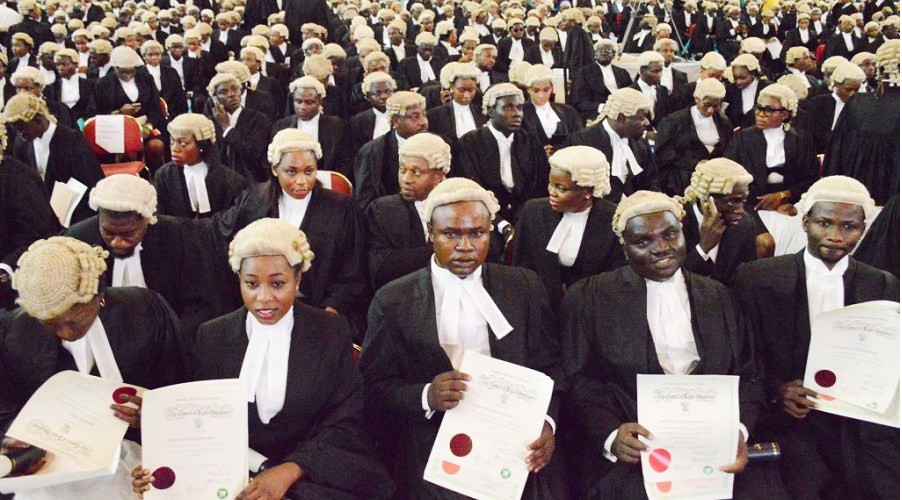
For the brief period that I have been a lawyer, I have learnt some few things that have helped  me stand out as a young lawyer and I would love to share thirteen of them with the new wigs. 

1.Law practice is a noble profession and appearance matters a lot. Borrow some wisdom from Robbert Greene’s Laws of power that if you dress as royalty you will be treated like a king. If you dress well, big and high-profile individuals will approach you with briefs. Don’t look tattered, unless you want to be regarded as a charge and bail lawyer.

2. Let the new wigs know that practicing law and surviving in the practice is wild and takes a whole lot; therefore, being book smart is important but you need to also be street smart, have street credibility, and have a hustling spirit to survive in the practice. 

3. You need to be a voracious networker and a confident marketer to scale as a lawyer. Therefore, attend events (especially nonlawyers events), meet new people that are not lawyers and network, always introduce yourself as a lawyer and market yourself. These are proven ways of getting briefs. 

4. If you have the opportunity to work in another sector that offers better pay and better opportunities other than the law sector please grab it with both hands unless you are passionate about practicing this law. 

5. As you must have learned in law school that the lawyers’ rules of professional conduct (RPC) preaches against having a second hustle or a second job as another source of income joined to your law practice, but if there is any rule of the Rpc you ever plan to break, please break this rule and have a second hustle so you don’t die of hunger or turn into a charge and bail lawyer. 

6. Mentorship and learning under senior lawyers at the early stage of your career is good but if you can build your law practice by yourself and scale it immediately you get called please do that for it is better. 

7. I have found out that the amount you charge a client determines how the client will rate you. If you charge some clients low they will doubt your competence to handle the case. Therefore never charge outrageous low fees just because you want to survive, you will only earn the title of a charge and bail lawyer.

8. Don’t accept every brief, don’t be an all-weather lawyer, let people know what you stand for, and maintain a standard. 

9. Create an online profile, everything is now online. Clients now search for lawyers online. Google online profile is the best for now and it’s free. 

10. When you get a brief, handle that brief with a high level of competence because a pleased client will bring more briefs and will definitely refer more clients to you. 

11. Do not believe the fallacy that you have to be active in litigation or be a litigation lawyer to make money from the law practice. Corporate practice pays more than litigation. If you doubt me ask the likes of Messrs Olumide Akpata, Gbenga Oyebode, Asue Ighodalo, Adewale Tinubu, Ibrahim Jimoh, etc.

12. Build relationships and sustain relationships with clients and even with co-lawyers. 

13. Learn new skills and get more degrees; as much as you can afford to add to your law degree, that will make you the first choice for the employers of labor in the job market. 

WhatsApp Unveils 3D Personalized Avatars, Enables Users to Create Digital Versions of Themselves

0

Meta-owned messaging platform Whatsapp has commenced the rolling out of 3D avatars that enable users to create a digital version of themselves, which can be used as a profile photo or custom stickers.

The launch is coming after the company’s CEO Mark Zuckerberg announced the new feature on Wednesday.

He said, “We’re bringing avatars to WhatsApp! Now you can use your avatar as a sticker in chats. More styles coming across soon”.

The announcement is coming months after Whatsapp rolled out the new feature in June, through beta testing that was first reported by WhatsApp beta tracker WABetaInfo in June.

The new feature allows users to choose from the 36 custom stickers that reflect different emotions and actions.

The company said via a blog post, “Today we’re excited to bring avatars to WhatsApp, a new and personalized way to express yourself. Your avatar is a digital version of you that can be created from billions of combinations of diverse hairstyles, facial features, and outfits.

“On WhatsApp, you can now use your personalized avatar as your profile photo or choose from one of 36 custom stickers reflecting many different emotions and actions.

“Sending an avatar is a fast and fun way to share feelings with friends and family. It can also be a great way to represent yourself without using your real photo so it feels more private.”

WhatsApp further disclosed that it will continue to look for ways to enhance the avatars by including lighting, shading, hairstyle textures, etc, to enhance users’ experience.

How Users Can Create Their Avatar

1.) Go to Settings

2.) Tap Avatar

3.) Follow the Steps to create an Avatar

4.) Click Done

How To Make Your Created Avatar Your Whatsapp Profile Picture

1.) Click on Settings

2.) Tap on your profile photo and click edit

3.) Tap Use Avatar

The privacy setting of users current profile photo will also apply to the new avatar profile photo which can be changed in the settings.

WhatsApp has continued to roll out new features for both Android and iOS users to enhance their interactive messaging experience.

CBN Plots A Grand Tax Revenue Playbook Even As Nigeria Ignores the Godzilla of Revenue

1

CBN Plots A Grand Tax Revenue Playbook Even As Nigeria Ignores the Godzilla of Revenue

First, there are many activities which are ongoing in the Central Bank of Nigeria (CBN) headquarters. The apex bank is doing everything to digitize how people pay and are being paid in Nigeria. Of course, the passion to digitize payment is not driven by the construct to make the economy more efficient, rather, to make it easier to collect taxes in the nation. Nigeria’s tax collection ability is abysmal. (Do not remind me of the inefficiency of the utilization of the little which is being collected.)

So, from the tax collection perspective, CBN is working to boost the nation’s revenue: NNPC has financially divorced from Nigeria on the old terms, and is now pursuing a new mission under the quasi-private structure, thereby putting enormous pressure on the government to find new revenue sources.

If CBN can get most transactions to happen within the banking system, connected to BVNs, you can see financial miracles. Yes, that man owns 10 cows and generates tons of money, but while a teacher in Benue State pays tax on his N18,000 salary, this farmer pays nothing. The other man inherited lands which he leases to farmers in your village, generating good revenue yearly, but that man has never paid tax. That man is a goat farmer who sells 3 goats every main market day. But check, he does not understand tax. CBN believes that if payments move digital, good things can happen to the national revenue. That is how I see this cash withdrawal limit policy. 

Yet, as CBN goes after the small marginal boost on tax revenue, I challenge the apex bank and the government to go after the real deal: real estate tax. Nigeria is a place where rich people do not pay taxes. They build mansions and pay zero taxes. That is the reason why South Africa budgets more than $120 billion when Nigeria can muster $42 billion yearly. In South Africa, the government has the money; in Nigeria, the money stays with the citizens. The problem though is this: with no public funds, the government cannot fund initiatives to help many who need help!

If Nigeria implements an effective real estate tax policy, our national budget will hit at least $80 billion. You may ask why can’t this be done? Answer: real estate tax will affect the 1% who unfortunately have the power to influence who makes it to the government houses. They cannot fund you (the politician) only for you to make them less whole!

But if CBN wants to fix Nigeria, that is the real deal. If you tax all the mansions in your village as the Americans do (real estate tax funds basic education), your local school will have resources to make it a top-grade primary and secondary school system. Magically, the local government will have real budgets, out of the resources on its land.

People, from CBN to the Presidency, Nigeria knows what to do but since 1999, everyone is afraid because doing it will cost you votes! A real estate tax that charges 0.8% on property value per year will transform Nigeria. 

In the Igbo nation, real estate tax belongs to the class of “Osisi na ami ego” [revenue that comes by you doing nothing because the houses are there]. You can also call real estate tax the godzilla of revenue. Nigeria needs that playbook. 

Comment on Feed

Comment 1: Yes my Prof. CBN has done well with this particular policy. In my presentation to one of the regulatory agencies in the financial service sector three weeks ago, I told them that a mere redesign of Naira was not going to achieve much for us. I suggested to them to accompany the naira redesign with a withdrawal of the N500 and N100k bills from circulation and strict implementation of the cashless policy. I’m glad to see they were thinking along that line. CBN right now need to assist in massive deployment of POS devices and network improvements to reduce cases of failed transactions.

This recent push has wide positive effect on the Nigerian economy. Tax effect is one huge one. Transactional taxes will increase significantly, property taxes could become the new oil. We equally need to introduce inheritance tax in Nigeria. My worry is that the Tax Authorities at the federal, states and LGAs might not be ready to take advantage of this. 

Comment 2: You need to do more “GLOBAL” research,  People  can be Asset  rich and cash poor. Even in Nigeria , maybe you guys don’t see it in your “day to day”. But Yes!!! many  Nigerians  worked damn “haaarrrdddd” for their money in those darn days of the Military  regimes, bought their properties in the hinterlands that have now become prime areas in major cities, thinking in their retirement they’ll live happily ever after. Now you want to tax them 0.8% annually or if they can’t pay make them homeless or force them to sell up.  Asset  Rich, Cash poor happens all over the world, and it is rather for want of a better word NAIVE  to simplify peoples lives into  Monetize  the  Asset . Once a gain it shows the lack of  empathy  in the make up of  Nigeria . Every “thinking” is punitive,  Nigerians  can’t ever think of ways to not make people uncomfortable. 

Comment 3:  a simple policy document or legislation can address your concern, it’s not as complicated as you paint it. How about designating one property of choice as ‘home’, which won’t be taxed? This way, you take care of retirement or ancestral property. Once you own more than one property, the rest should be taxed. People build so many mansions that are never occupied, yet they are not paying for laundering money via such schemes. There’s no excuse for bad behaviour, this we must always bear in mind.

Comment 4: This is one of the very rare times I would totally disagree with Prof Ndubuisi Ekekwe. There have to be an exception of your primary home which happens even in a tax crazy place like the UK. Many working class Nigerians work all their lives to be able to build a home so that they could stop paying rent and not a house for economic activity. How would u have such person to pay yearly tax on a family house he isn’t using for commercial purposes. So every single home owner must sell their homes or commercialize it just to pay tax to government on asset value?? And is this inclusive of the money being collected via the Land Use Act??

My Response: Americans pay this tax for primary homes where they live and they have not disappeared. It is about 1% of the value, say N100k on a home worth N10 million. There is no emotion on this – Nigeria can remain where it is or move to the next level as a nation. The good schools in America are financed from real estate tax. – “Property taxes, or real estate taxes, are paid by a real estate owner to county or local tax authorities. The amount is based on the assessed value of your home and vary depending on your state’s property tax rate. Most U.S. homeowners have to pay these fees, usually on a monthly basis, in combination with their mortgage payments. If you pay off your loan, you receive a bill for the tax from local government occasionally during the year.”  https://www.rocketmortgage.com/learn/property-taxes-by-state

Comment 5: Ndubuisi Ekekwe this is in a system where social support is prevalent. If a home owner ends up not being able to take care of them self post retirement the government steps in. That homeowner in the US doesn’t provide his own water, security on his street/house, alternative power with generators.. not to mention being taxed in multiple ways. We can’t always just copy what is done in US without context to the social structure and Marco economy that supports that policy to thrive over there.

My Response: As I noted, this post is not a debate on the use of the little we have. If South Africa spends $120 billion on 60 million people, Nigeria cannot just spend $42 billion on 220 million. Your choice: Nigeria continue digging and make no change.

Nigerian Police Launches Vehicles Portal Hub to Curb Car Theft

0

The Nigerian Police has devised a digital means aimed at curtailing car theft in the country. The Inspector-General of Police, IGP Usman Alkali Baba launched the digitalized Central Motor Registry (CMR) Command Centre at the Force Headquarters, Abuja.

The CMR is designed as a platform for information of registered vehicles that will help the police with search and investigation in case they are stolen.

A statement issued by the Force Public Relations Officer, CSP Muyiwa Adejobi said the CMR, which has two command centers located in Lagos and Abuja, and 37 information centers across Nigeria, will be available for Nigerians to report vehicles stolen as far back 2018.

“The newly digitalized Central Motor Registry Command Centre will make it possible for members of the public to report vehicles stolen from as far back as 1st January 2018, and yet-to-be-recovered to input the vehicle details on the online platform to serve as a reliable data point for the possible recovery of the vehicle.

“The platform will also process motor vehicle information to support police operations and efforts toward enhancing national security.

“The digitalization of the CMR is complete with 2 Command Centres in Abuja and Lagos, 37 CMR Information Centres across the Country and in the Federal Capital Territory, 200 e-Enforcement Operational Patrol Vehicles with automatic number plate recognition on each vehicle as part of the first batch,” he said.

The PRO said the Centre is domiciled at the Department of Information and Communication Technology and urged Nigerians to make use of it to help the police to tame rising cases of stolen vehicles in the country.

“This is in line with the IGP’s quest to ensure a digital environment for policing the country for robust and more proactive measures in crime prevention, investigation, and prosecution.

“The Inspector-General of Police, therefore, admonished Nigerians and other residents in the country to take advantage of the platform at https://reportcmr.npf.gov.ng to upload their vehicle information on the website with effect from today 7th December 2022, as a security step for preventing it from being stolen and re-registered,” he said.

Car theft results in substantial loss of fortune in Nigeria. Between 2013 and 2015, data analysis on stolen vehicles shows that car owners lost about N1.8 billion to car theft. This is due to poor recovery.

Out of 2,544 vehicles stolen between 2013 and 2015, only 1,377 were recovered, putting the national recovery rate at 54%, according to data from the National Bureau of Statistics.

This means that the police and other institutions involved in recovery of stolen vehicles could only recover five out of every 10 vehicles or half of the vehicles reported stolen within the period.

The CMR, if fully implemented, is expected to help the police in tracking and recovering more stolen vehicles.