DD
MM
YYYY

PAGES

DD
MM
YYYY

spot_img

PAGES

Home Blog Page 464

Kraken Launch Enables Users Participate In ICO Amid Kevin Durant Recovery of Coinbase Account

0

Kraken, a major cryptocurrency exchange, unveiled Kraken Launch in partnership with Legion, a crypto-native fundraising platform. This new initiative serves as a compliant launchpad for early-stage token sales and Initial Coin Offerings (ICOs), allowing vetted crypto projects to directly access Kraken’s global user base for fundraising.

All sales adhere to the EU’s Markets in Crypto-Assets (MiCA) regulations, featuring white papers, market-abuse rules, and automated compliance tools for transparency and investor protection.

About 20% of tokens are reserved for users based on a “merit score” (evaluating social activity, developer contributions, and on-chain history), while the rest are available first-come, first-served to verified Kraken users (intermediate KYC required).

Kraken and Legion split transaction fees from ICOs and subsequent spot trading. Legion provides underwriting-like services, including pricing, distribution, liquidity management, and sell-side research.

High-profile sales occur simultaneously on Kraken Launch and Legion, with tokens available for trading on Kraken shortly after. This platform aims to modernize ICOs by blending their speed with traditional market safeguards, positioning Kraken for growth ahead of a potential public listing in Q1 2026. It’s described as “crypto’s first IPO-style token platform,” drawing parallels to stock market underwriting.

Coinbase Recovers Kevin Durant’s Locked Account

NBA star Kevin Durant has regained access to his long-locked Coinbase account, which held Bitcoin he purchased in 2016—nearly a decade ago. Coinbase CEO Brian Armstrong confirmed the recovery via a social media post: “We got this fixed. Account recovery complete!” The issue stemmed from lost login credentials and recovery details, a common frustration for Coinbase users highlighted in recent discussions.

Durant bought Bitcoin around $600–$650 per coin in 2016, inspired by conversations at a dinner with Golden State Warriors teammates and venture capitalist Ben Horowitz. He and his agent, Rich Kleiman (through their firm Thirty Five Ventures), are early investors in Coinbase and have promoted it via their media outlet, Boardroom.

The lockout was publicly joked about by Durant and Kleiman at CNBC’s Game Plan conference on September 17, 2025, in Los Angeles, where Kleiman noted, “Bitcoin keeps going up… so, it’s only benefited us.”

With Bitcoin now trading over $117,000 (as of September 20, 2025), Durant’s untouched holdings have appreciated more than 17,700%—though the exact amount remains undisclosed.

The case has amplified user complaints about Coinbase’s account recovery process, with many sharing similar struggles on social media. It underscores challenges in self-custody and password management in crypto.

Kraken Launch’s MiCA-compliant framework could legitimize and revive ICOs, which lost popularity after 2017–2018 due to scams and regulatory crackdowns. By offering a structured, transparent platform, Kraken may attract both retail and institutional investors, potentially increasing token sale volumes and market liquidity.

Positioning Kraken as a pioneer in “IPO-style” token sales could strengthen its market share against competitors like Binance and Coinbase, especially in Europe where MiCA provides regulatory clarity. This may draw projects seeking compliant fundraising channels.

The merit-based token allocation (20% based on user activity) and first-come, first-served model for verified users could broaden retail participation. However, KYC requirements and merit scoring may exclude some users, potentially limiting inclusivity.

Kraken’s revenue-sharing with Legion (from ICO fees and spot trading) could bolster its financials, supporting its rumored Q1 2026 public listing. This aligns with Kraken’s strategy to diversify beyond spot trading amid competitive fee pressures.

By emphasizing compliance and investor protections, Kraken could rebuild trust in token sales, countering the negative stigma from past ICO failures. However, any mismanaged or failed projects on the platform could harm its reputation.

Durant’s high-profile case highlights persistent issues with Coinbase’s account recovery process. While resolving his case demonstrates responsiveness to prominent users, it amplifies criticism from regular users facing similar lockouts, as seen in widespread social media complaints.

The disparity in attention given to a celebrity versus average users could fuel perceptions of unfair treatment, potentially alienating Coinbase’s broader user base unless recovery processes improve.

The case underscores the importance of secure key management and backup solutions. It may prompt users to prioritize self-custody or explore hardware wallets, potentially boosting demand for such products.

Coinbase’s struggles with account recovery reflect a broader industry challenge. Competing exchanges may face increased pressure to streamline recovery processes or risk losing users to platforms with better support.

Durant’s recovered Bitcoin, likely worth millions, highlights the wealth-building potential of early crypto investments. Similar stories could inspire speculative inflows, though they also risk inflating expectations in a volatile market.

Both developments could boost crypto market optimism—Kraken by enabling new investment opportunities, and Coinbase by reinforcing the narrative of long-term gains. However, user frustrations and regulatory hurdles remain risks.

Kraken Launch could reshape token sales by blending innovation with compliance, potentially strengthening Kraken’s market position. Coinbase’s handling of Durant’s case, while a PR win, exposes ongoing customer service weaknesses that could hinder trust unless addressed.

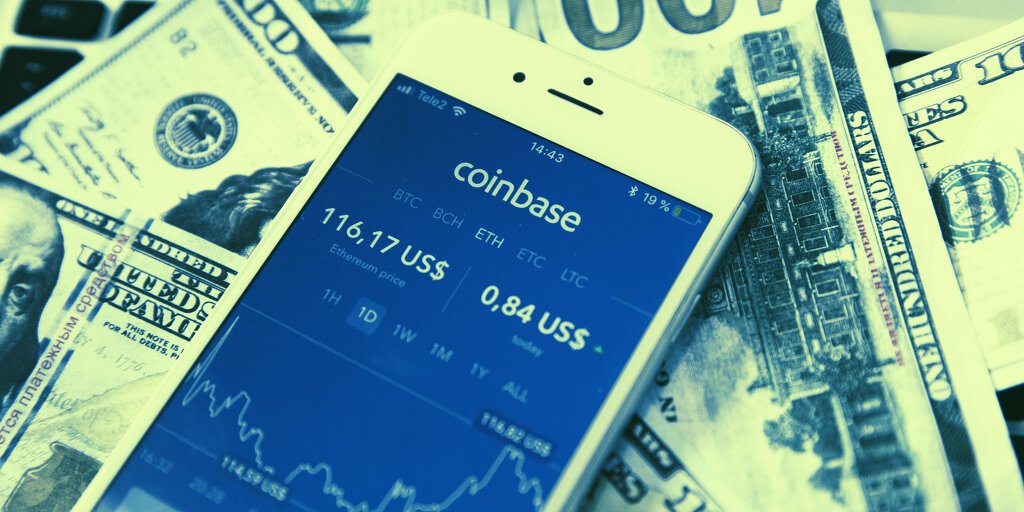
Crypto Neobank Shield Raises $5 Million to Revolutionize Global Trade Payments With Stablecoins

0

Shield, a pioneering neobank focused on global trade, has announced the raise $5 of million in seed funding, bringing its total funding to $7 million.

The round was led by Giant Ventures, with participation from existing investor a16z crypto and new backers such as Factor Capital, along with strategic angel investors from Bank of America, Coinbase, American Express (AMEX), and Menlo Ventures.

With the new funding, Shield plans to:

Expand licensing coverage and enhance its compliance capabilities.

Launch USDT-friendly bank accounts and additional banking products tailored to exporters.

Enter new trade verticals where businesses face similar payment and compliance challenges. Given the overwhelming demand for its services, Shield will initially roll out USDT-friendly accounts with limited capacity on a first-come, first-served basis.

Commenting on the seed round, Shield co-founder and CEO Emmanuel Udotobong, via a LinkedIn post expressed excitement about the company’s recent milestone.

Part of his post reads,

Our mission is to build the neobank for global trade enabling faster, more reliable, and compliant cross-border payments powered by stablecoins like USDT. In our first year public, we’ve processed $150M+ in transactions including $40M last month alone serving real businesses moving real goods. Thank you to our incredible clients, team, and investors for believing in this mission. This is just the beginning.”

Launched in 2022, Shield’s founding team comprises of talent from MIT, Princeton, Facebook, and McKinsey, combining deep technical expertise in blockchain with hands-on experience in global trade. This dual perspective positions the crypto firm to uniquely address the financial pain points of exporters, particularly in underserved regions such as Latin America and Africa.

Shield’s mission stems from the personal experiences of its founders, who have first-hand knowledge of the challenges faced by exporters. Before launching, the founding team operated export businesses, moving millions of dollars’ worth of commodities across the U.S., South America, Africa, and Asia. These experiences exposed the choke points in international banking and payments that stifle trade and economic growth.

Despite providing proper documentation such as invoices and shipping records, legitimate payments often get stuck for days or even weeks, while accounts are closed without warning.

Traditional compliance systems, originally built for small domestic transactions of $50–$100, are ill-equipped to handle high-value, cross-border trade payments in the six- or seven-figure range. This creates operational bottlenecks, locks up working capital, and forces many exporters to shut down entirely.

In its mission to solve this challenge, Shield offers a USDT-friendly neobank solution designed specifically for exporters and global trade businesses. The platform enables exporters to accept stablecoin payments, such as USDT, from international buyers and settle them as same-day USD wire transfers.

This hybrid approach combines the speed and cost savings of blockchain with the reliability of traditional banking systems. Exporters gain financial stability and operational flexibility while eliminating the risk of sudden account closures or payment delays.

With its innovative offering and services Shield’s demand has been remarkable. In just its first year of operations, the crypto neo-bank has processed over $150 million in cross-border payments, including $40 million in August alone, supporting real businesses engaged in the movement of goods worldwide.

According to the company two major shifts have paved the way for it’s innovative model which include;

Regulatory clarity: The recently enacted GENIUS Act has established clear, stablecoin-specific guidelines, offering stronger consumer protections and a legal framework for adoption.

Technology maturity: Advances in blockchain infrastructure, modern banking APIs, and AI-driven compliance systems now enable Shield to deliver the speed, scale, and security required for global trade without compromising compliance standards.

Notably, Shield has verticalized its compliance strategy, tailoring it to the complexities of cross-border trade. This ensures legitimate exporters can operate smoothly while suspicious activities are flagged effectively.

The company leverages AI-powered compliance tools to dramatically increase efficiency. Instead of hiring hundreds of manual reviewers, Shield’s lean compliance team uses AI to process massive amounts of documentation, allowing them to focus on higher-value tasks while maintaining rigorous oversight.

The Bigger Vision

Shield envisions a future where global trade payments move as seamlessly as domestic wires, where compliance becomes a gateway for opportunity rather than an obstacle, and where exporters around the world particularly from developing regions gain access to reliable, transparent, and efficient financial services.

With its latest funding round, the crypto-neobank is poised to transform the way exporters conduct cross-border business, driving greater inclusion and growth across the global trade ecosystem.

Coinbase-Base Is Exploring A Token To Help Boost Base’s Decentralized Ethos

0

Coinbase CEO Brian Armstrong confirmed via a post on X that the company is exploring the possibility of a native network token for Base, its Ethereum Layer-2 scaling network.

He emphasized that this is still in the early stages, with no definitive plans, timing, design, or governance details available yet, and described it as an update to their philosophy rather than a commitment.

The potential token could serve as a “great tool for accelerating decentralization and expanding creator and developer growth in the ecosystem.” This announcement followed a presentation by Jesse Pollak, creator of Base and a Coinbase executive, at the BaseCamp 2025 event in Vermont.

Pollak stated that Base is “beginning to explore a network token” to strengthen ties with the Ethereum ecosystem, while committing to transparency, regulatory compliance, and staying built on Ethereum.

Base currently uses Ethereum’s ETH as its gas token, so a native token would mark a significant evolution toward greater independence and decentralization.

This represents a shift from Coinbase’s earlier stance. In late 2023, Armstrong explicitly stated there were “no plans” for a Base token, focusing instead on broad adoption without proprietary incentives. By mid-2025, discussions had evolved, with the company now viewing a token as a way to foster community ownership and innovation.

Base, launched in 2023, has grown rapidly as a low-cost Ethereum Layer-2 solution, handling billions in transaction volume and attracting developers for on-chain apps. A native token could align incentives further, similar to how tokens power networks like Optimism or Arbitrum on which Base is built.

A native token could distribute governance and economic incentives, reducing Coinbase’s centralized control over Base and aligning with Ethereum’s ethos of decentralization. This could attract more developers and users who prioritize decentralized networks, boosting Base’s credibility in the crypto community. It may also mitigate regulatory scrutiny by shifting ownership to the community.

A token could incentivize developers, creators, and users through rewards, staking, or governance participation, driving app development and user adoption. Increased activity on Base could lead to higher transaction volumes, more dApps and greater network utility, potentially rivaling other Layer-2 solutions like Optimism or Arbitrum.

Introducing a native token might replace or complement ETH as the gas token for transactions on Base, altering the network’s economic model. This could lower transaction costs further if designed to be cheaper than ETH but may introduce complexity for users managing multiple tokens. It could also reduce Base’s direct dependency on Ethereum’s gas dynamics.

The announcement alone has likely sparked speculative interest, as seen with price movements in related tokens following similar news historically. If a token is launched, it could attract significant capital inflows, but volatility is likely during early trading. Coinbase’s stock may also see increased attention due to Base’s growing prominence.

A native token would need to navigate U.S. regulatory frameworks, especially given Coinbase’s public commitment to compliance. Delays or restrictions could arise if regulators classify the token as a security, requiring registration or exemptions. Coinbase’s transparent approach may mitigate risks but could slow development.

A token could position Base as a stronger competitor to other Ethereum L2s like Arbitrum, Optimism, or zkSync, many of which already have native tokens. Base could capture more market share in the L2 space, especially if its token offers unique utility or governance features, but it risks fragmenting liquidity across L2 ecosystems.

A token could empower the Base community to influence network upgrades, fee structures, or protocol changes via decentralized governance. This could foster a stronger sense of ownership, attracting developers to build innovative dApps and increasing user retention through token-based rewards or loyalty programs.

Introducing a token could lead to governance disputes, speculative bubbles, or misalignment with Ethereum’s broader roadmap. Poorly designed tokenomics or governance could harm Base’s reputation or lead to community fragmentation. Additionally, a token launch might strain resources if not carefully managed.

This move aligns with Coinbase’s goal to be a leader in the on-chain economy, leveraging Base’s rapid growth billions in transaction volume since 2023 to compete in the L2 space. A Base token could strengthen Ethereum’s scaling ecosystem by adding another robust L2 option, but it may also compete with other L2s for developer and user attention.

The crypto market often reacts strongly to token announcements, so short-term price movements in Coinbase’s stock or Ethereum-related assets may occur, though long-term success depends on execution. If this develops, it would be shared openly with the community, per Coinbase’s commitments.

BlockDAG’s $0.0016 Entry Among Best Cryptos to Buy Now, as Little Pepe Gains Hype & Pepenode Trends

0

When analyzing the best cryptos to buy now, three names stand out for very different reasons: Pepenode, Little Pepe, and BlockDAG. Pepenode has caught attention with its gamified presale, giving users the chance to earn rewards right from day one through mining dashboards and token-burning upgrades. Meanwhile, Little Pepe has moved from $0.001 to $0.0021, making it one of the hottest meme coins of this cycle.

But while Pepenode and Little Pepe offer novelty and meme-driven gains, BlockDAG (BDAG) has turned presale entries into something much bigger. Starting from a Stage 1 price of $0.001, BlockDAG has climbed to a nearly $410 million presale raise. Buyers are grabbing BDAG coins at the special $0.0016 entry price before it closes.

Why Pepenode’s Presale Model Stands Out

Pepenode reshapes presales by allowing participants to begin earning immediately. From the moment you join, you can access a personal mining dashboard, set up nodes, and generate rewards. A unique feature is that 70% of the tokens spent on upgrades are burned, adding deflationary pressure.

Its three-tier reward system is also noteworthy. Users can mine tokens, gain from price increases as stages advance, and engage in every round for extra participation benefits.

This all happens before any exchange listing or market launch, making Pepenode a project designed to reward engagement over long waits. For those seeking a structured and interactive crypto project, Pepenode’s format is an appealing choice.

Little Pepe Could Be the Meme Coin Breakout of 2025

Little Pepe (LILPEPE) is gaining momentum as one of 2025’s strongest meme coins. Its price doubled from $0.001 to $0.0021 in early trading, showing clear demand. Analysts predict it could eventually hit $3, a massive 1,500x growth for early buyers.

Running on an Ethereum Layer 2 network with low transaction fees, Little Pepe combines meme appeal with practicality. Its tokenomics and real-world use cases suggest it has more to offer than hype, giving it room to run further.

For those watching meme coins with serious upside, Little Pepe is positioning itself as a top contender in the meme coin race.

BlockDAG: Building the Strongest Ecosystem Before Listing

BlockDAG is far beyond a simple presale; it has already built a fully functional decentralized economy. Unlike other projects that promise utility after launch, BlockDAG is live now, with builders and users actively participating. Its no-code dApp creator and low-code smart contract tools let anyone deploy applications within minutes.

The BDAG Explorer adds full transparency, and the X1 mobile miner app, with over 3 million users, makes daily mining as simple as tapping a screen. Together, these elements create an ecosystem that is running even before the official listing.

The numbers speak for themselves: BlockDAG has sold over 26.4 billion coins, raised nearly $410 million, and attracted more than 312,000 holders worldwide. With nearly 20,000 miners shipped, adoption is expanding globally, and market strength is clear. At its limited $0.0016 entry, BlockDAG stands out among the best cryptos to buy now, offering a powerful 3,746% ROI against the confirmed $0.05 listing.

With developers building, miners earning, and community participation soaring, BlockDAG is creating an unstoppable movement. At a time when the current batch is priced at $0.03, the $0.0016 entry is a chance to be part of a network that is already thriving, not just starting out.

Final Say

The narratives of Pepenode and Little Pepe highlight how creativity and meme culture can drive early traction in the crypto space. Pepenode’s gamified mining model fuels strong user interaction, while Little Pepe’s Layer 2 setup and viral appeal spark speculation and rapid price gains.

However, neither can match BlockDAG’s scale or execution. With over 3 million X1 app users, close to 20,000 miners sold, and a full suite of no-code tools already running, BlockDAG is more than a concept; it is a functioning ecosystem. The limited $0.0016 entry still promises an impressive 3,746% ROI window. For those analyzing the best cryptos to buy now, BlockDAG demonstrates that adoption, infrastructure, and a thriving global community are what truly set a project apart.

Presale: https://purchase.blockdag.network

Website: https://blockdag.network

Telegram: https://t.me/blockDAGnetworkOfficial

Discord: https://discord.gg/Q7BxghMVyu

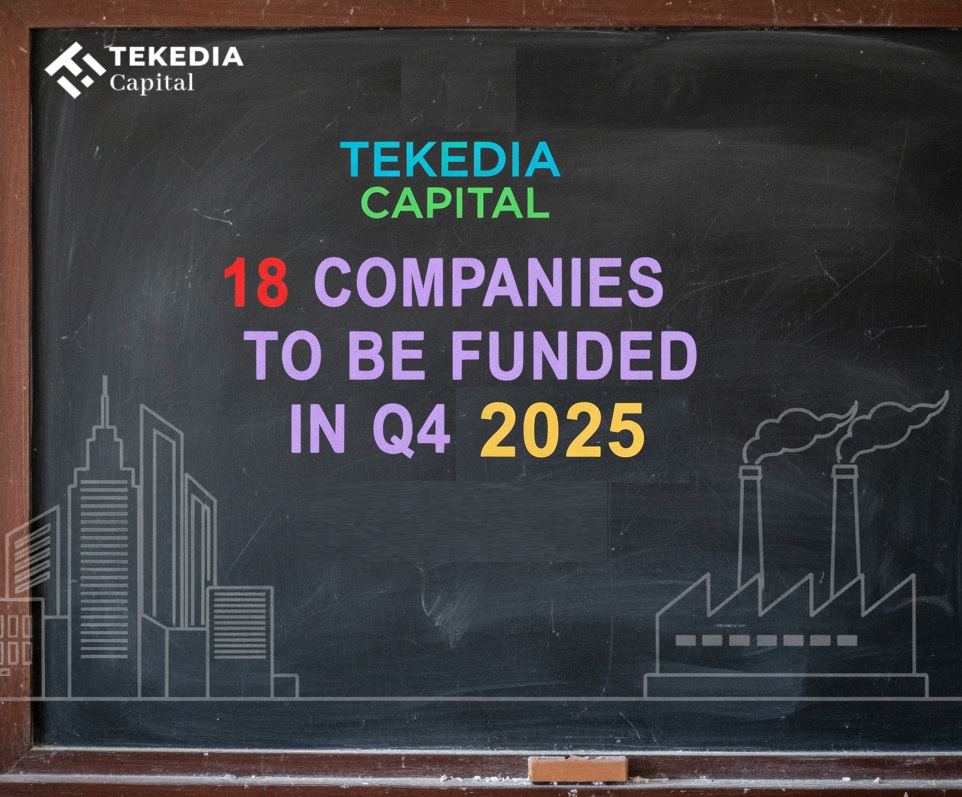
Tekedia Capital Investment Cycle Will Begin On Oct 6 2025 with 18 Companies

0

Good People: This is a friendly reminder that the next Tekedia Capital investment cycle will begin on October 6, 2025, to conclude on Nov 3, 2025. About 18 companies representing multiple continents and across many industrial sectors will participate. Kindly plan accordingly.

Please renew your membership or join us here.