DD
MM
YYYY

PAGES

DD
MM
YYYY

spot_img

PAGES

Home Blog Page 4655

Helium (HNT) and Chain (XCN) dip into lows as Snowfall Protocol (SNW) continues its growth trend!

0

Most people interested in crypto want to invest in tokens and earn good returns, as the industry offers better returns than conventional investment avenues. Since the mainstream investment systems have failed to give fair returns and the rising economic slowdown, investors want to pick good options in the blockchains to build a strong and safe income stream.

Blockchain and the new decentralized financial systems that are possible because of it are helping people reimagine all financial work. Decentralized finance, or DeFi as it is popular now, envisions an open and worldwide financial system built for digital assets. It is ideologically provided as a substitute for a conventional system that’s inflexible, biased, and held together by outdated systems and procedures.

However, like any fair market, there are always losers and gainers that rise and fall according to market demand. The top performers lead on the basis of the utility they offer to their investors and users. In these, the Snowfall Protocol (SNW) is among the top rising cryptos right now, pushing out Helium (HNT) and Chain (XCN) in terms of capital growth.

Helium (HNT)

Helium (HNT) was started to offer utilities specific to the internet of things (IoT-) and was therefore popular with users working on the internet of things.  While Helium (HNT) also addresses issues in its exclusive niche as much as possible, the coin faces multiple challenges that make things turbulent.

The primary issue is that Helium (HNT) has a very high gas fee, and its transaction costs are also very high. This is a significant reason why it constantly fluctuates in and out of the gainers’ lists. Helium (HNT) has also been recently impacted indirectly by the FTX security breach, and its prices have been wobbling since

Chain (XCN)

Chain (XCN) is a blockchain that is supported by famous investment capital firms like Khosla Ventures (KV), Pantera Capital (PC), Capital One, and Nasdaq. Chain (XCN) uses crypto technology to push its visions of a more creative and linked economy.  However, such sponsored chains are usually seen with skepticism as they push the centralized finance versions of transaction processing and are received with caution by genuine crypto users.

Snowfall Protocol (SNW)

The Snowfall Protocol (SNW) is virtually the opposite of the Helium (HNT) and Chain (XCN) tokens. The platform addresses the obstructive practices of most blockchains and decentralized platforms and enables cross-chain and multi-chain user needs.

Snowfall Protocol (SNW) accomplishes this by presenting options for users that make it simple to transmit their crypto assets over multiple chains. Snowfall Protocol (SNW) makes it stress-free for crypto users to perform cross-chain processes and implement a multi-chain investment portfolio to earn better returns than single-chain portfolios.

Snowfall Protocol (SNW) offers users a simple software platform, making cryptocurrencies available to a more significant number of users. Snowfall Protocol (SNW) aspires to grow in the cryptocurrency market by giving it is trading users an efficient decentralized finance solution.

The Bottom-Line

As investors, we must assess the most promising cryptocurrencies and exchanges to ensure we do not miss attractive opportunities. As market analysts, investors’ interests are undoubtedly compatible with investing in the Snowfall Protocol (SNW) pushing out Helium (HNT) and Chain (XCN).


Click the links below to Learn more now!

Presale: https://presale.snowfallprotocol.io

Website: https://snowfallprotocol.io

Telegram: https://t.me/snowfallcoin

Twitter: https://twitter.com/snowfallcoin
Ponzishorter Mass Shorting CRV-Token Pose High Liquidation Risk on Aave Users

0

The FTX and Alameda Research Implosion has the potential to impact Crypto Industry for years to come. Today, new information brings confusion, speculation and the potential for another bankruptcy. CRV, war was played out on Aave yesterday and ended with the longer defeating the shorter.

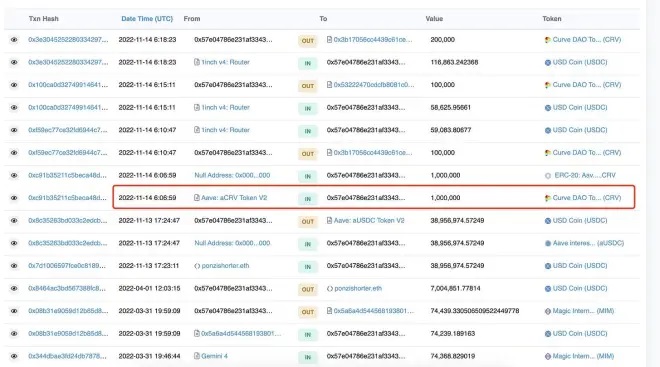
Ponzishorter.eth shorted $CRV by borrowing and dumping $CRV; $CRV guardians bought $CRV, soaring the price to $0.72, and liquidating all collateral of ponzishorter.eth, he began to borrow a small amount of $CRV and sell from November 14, causing the price to slowly drop from $0.625 to $0.464, a drop of 26%. If he shorts $CRV through the perpetual contract on CEX, he will make a great profit.

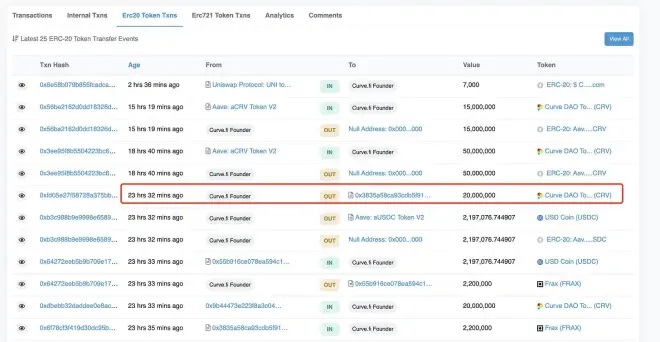
Ponzishorter.eth’s shorting of $CRV also makes many people who use $CRV as collateral face liquidation. Among them is the Curve.fi founder, whose health rate on Aave has dropped to 1.5 (currently 1.62). Ponzishorter.eth increased the scale of borrowing and selling on $CRV. The Curve.fi founder saw this and increased the collateral on the position, ponzishorter.eth attempt liquidating Curve.fi founder’s $CRV on Aave by shorting $CRV.

Aave Finance, tweeted about the liquidation of Assets on its protocol.

The Aave ecosystem, was built with a number of mechanisms that the Aave community can deploy to cover events like this, including the Safety Module, the Ecosystem Reserve and the DAO Treasury.

Let’s say you deposit $100 USDC into Aave lending marketplace, and then you borrow 85$ of CRV (let’s say 1$ per CRV). If CRV starts going up in price and you don’t return the CRV, then aave will use your $100 USDC to buy back the CRV you borrowed. But if on-chain liquidity is too thin, if price goes up quickly, then that $100 USDC might not be enough to buy back 85 CRV tokens, which leads to a bad debt.

On-chain lending devised by open source smart contracts isn’t as full proof as they want us to believe and there is still incentive for 3rd party interference we saw that with Solana earlier this year. DeFi was supposed to be about over-collateralization, trustless, permissionless, and neutral position brokering by code and contracts but it’s actually Dev teams and hyper-inflationary farm tokens instead.

From what I understand, the debt that Aave needs to cover came from slippage when ponzishorter’s collateral was sold for CRV. So perhaps some kind of weighted collateral requirement based on available liquidity?

Algorithmically factor the aggregated liquidation price at all times and then the % difference of the current price prior to selling. This % difference is the slippage and is already imposed in the liquidation penalty, but maybe it wasn’t enough?

Basically, get the notional size of bids in the orderbook, and get a weighted liquidation price from that. If the amount borrowed on AAVE is greater than 5% of the depth of bids, then prevent borrowing or some other deterrent (high APR, liq threshold lowering for new borrows, etc.)

Curve Stable ELI5

OxAlunara, stated that; the Old fashioned CDPs have a liquidation price. If your collateral goes below price then boom. LLAMMA is a loan that constantly rebalances your collateral, such that if your collateral price dips, your collateral gets swapped for what you borrowed.

So, instead of a big bang boom you’re dead, your collateral slowly gets ‘liquidated’ continuously so that as your loan nears ‘liquidation price’, your collateral is also enough to cover your debt. Math glasses guy says people will lose less this way.

Now this is a personal guess, but if you take a loan at $1000 ETH price and ETH wicks from $1000 to $30 back to $1000 you probably won’t be liquidated. Cannot confirm this, just my own speculation. I guess it’s kinda like Uniswap v3 ranges, except you don’t buy more of the loser.

Company Winding-up Procedures in Nigeria

0

In one of my previous articles, i already spoke about winding up petitions as a means of recovering debt as well as bringing to a close a company on several grounds.

Winding up a company can also be deemed necessary as a means of restructuring a company by carrying out a phoenix-like regeneration of a company which might have been performing badly or seeking rebranding.

In this article, we will be taking a deeper look into winding-up of companies in Nigeria, with a deeper focus on :-

– The Regulatory Framework governing winding-up of companies in Nigeria.

– The types of winding-up processes available under Nigerian law.

– Who can have a company wound up.

What makes up the Regulatory Framework governing Winding-up of companies in Nigeria?

Winding-up of companies in Nigeria is governed by :-

– The Companies and Allied Matters Act (CAMA) 2020.

– The Corporate Affairs Commission CAC

– The Federal High Court of Nigeria through the Federal High Court Act 2005

– The Federal High Court Civil Procedure Rules 2019

-Company Regulations 2021

– The Companies Winding-up Rules

– The Companies Proceedings Rules

– The Investment and Securities Act (ISA)

Who is eligible to apply for a company to be wound-up?

The following persons can apply to have a company wound up :-

– A director of the company sought to be wound-up

– A creditor of a company sought to be wound-up

– A contributory of a company sought to be wound-up

– A Receiver of a company sought to be wound-up

– An official receiver of a company sought to be wound-up

– The Corporate Affairs Commission (CAC)

What are the grounds for winding-up a company?

The valid grounds for winding-up a company are :-

– as a debt recovery measure;

– where members of a company fall below the required number of 2(Two);

– where there’s a failure on the part of a company to hold its statutory meeting or file statutory reports as required under CAMA;

– where the court deems it just and equitable to have the company wound-up.

What are the types of winding-up processes in Nigeria?

Winding-up a company in Nigeria can be either as a :-

Court-ordered winding-up :- This is where anyone eligible to have a company wound up makes an application to the Federal High Court via a petition followed by an affidavit of verification followed by the publication of the petition note in a national daily newspaper inviting all interested parties to enter an appearance within a period (usually 15 days ).

A Court-supervised winding-up :- This involves a company  through its board of directors/members passing a voluntary winding-up petition and then asking the court (also through a petition)  to supervise the winding-up process, although the court in this case will have the option of appointing an additional liquidator.

A Voluntary Winding-up which can be either :- 

a). a members voluntary winding-up :- Where members of a company commence the winding-up process through a special winding-up resolution and the appointment of a liquidator to complete the winding up process.

The appointment of a liquidator would typically render defunct the powers of the board of directors except where the contrary is decided upon by the company.

b). Or a Creditors winding-up process :- Which is where the company along with its creditors decide via separate meetings to have the company wound up, followed by the notice of the creditor’s meeting being published in at least 2 daily newspapers.

This process will also be followed by the appointment of a liquidator to complete the process.

Nigeria’s New Naira Redesign Gets “C” – Many Color-blind Citizens Will Struggle

4

Many years ago during the regional JETS (junior engineers technicians and scientists) competition, I co-represented Secondary Technical School Ovim at the regional level. The venue was Federal Government College Okigwe. In that program, there was a physics experiment where light had to be passed through objects to create many colors due to repositioning on focal length/refraction index/etc. 

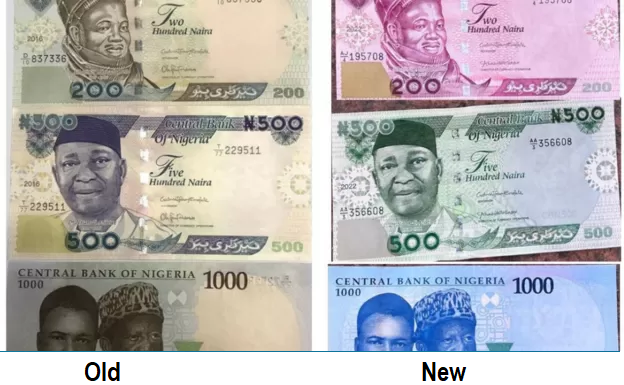
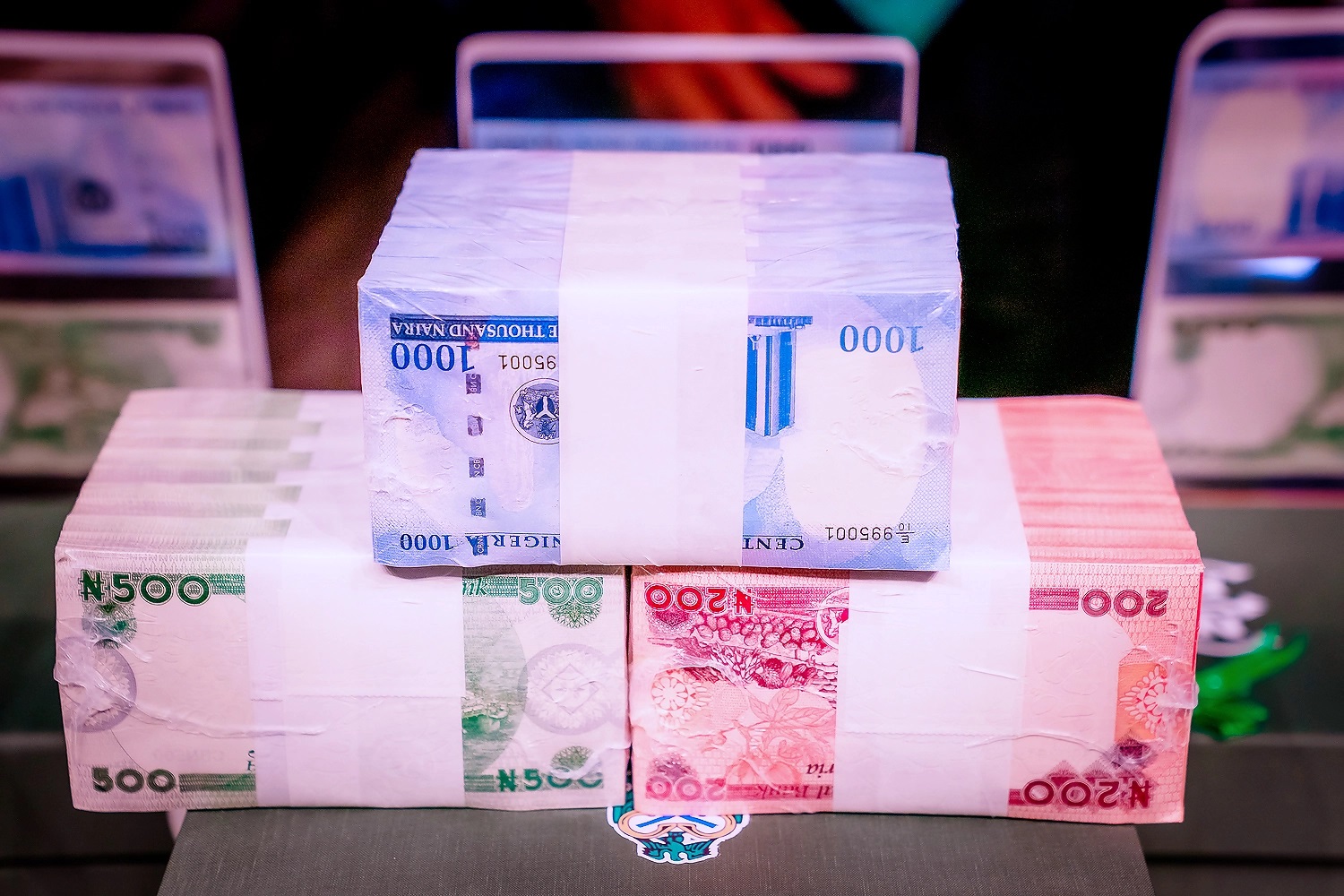
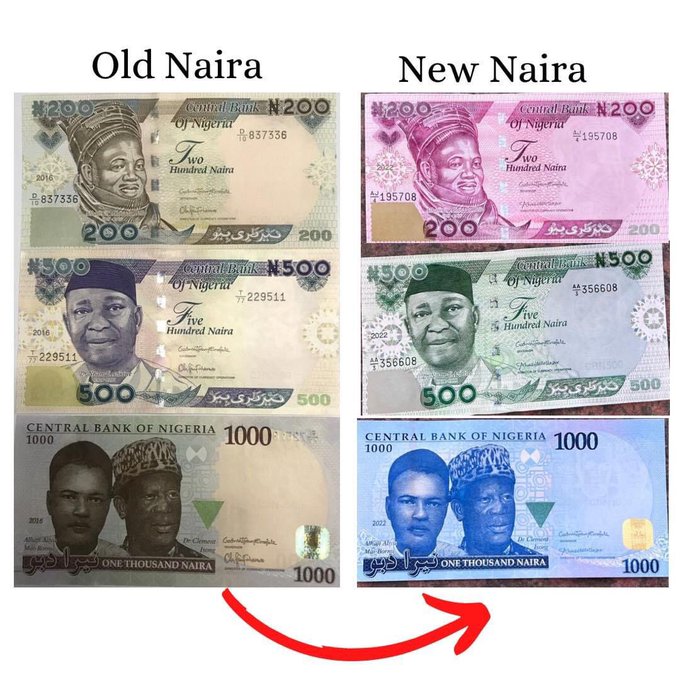
The experiment comes handy as I watch the old and new central bank of Nigeria (CBN) Naira notes. A good physics teacher can ask students in secondary schools to design an experiment on how different light sources at different focal lengths can make an old note look like a new Naira note. Indeed, the CBN did really nothing but manipulate colors of the note; no fundamental redesign that would have produced absolute, native and unambiguous distinctive features for color-blind, elderly and non-literate citizens in Nigeria.

CAUTION: if you are collecting the new N500 from anyone, do not do it under a blue waterproof (the one they use to cover some store areas in markets). I project that if you put that note under a natural light incident on a blue waterproof, at 8 inches, the old note may look like a new one (WAEC: you have an idea for alternatives to practical in Physics).

I support this redesign project but CBN created a big problem here with this color scheme-based redesign. My grade: C

Comment on Feed

Comment 1: Another major concern for this new Naira note is when you view them under incandescent bulb. It might be difficult to distinguish between the old and new notes. This might be a concern for those elderly citizens who own corner shops. The CBN should have done better. We could experiment this, let view both old and the new Naira notes under (incandescent and fluorescent bulbs at 19h 00) and note our observations.

Comment 2: More specifically, if you run a boutique shop in Nigeria, please insist that when payment for selected clothes is to be made let it be done outside the shop under sunlight.?

Comment 3: I totally agree with this. Not just the colour blind people, other people may still collect the old note without noticing the difference.

No matter the security features the CBN claims this new notes have, they should have made one distinctive feature obvious for all to see. The colour change is not enough.

Another problem I anticipate is, some fraudsters may choose to mix the old notes in a bundle of cash and pay for goods.

Better we do cashless for transactions above what we can examine each note carefully.

The Mechanism of Digitally Transforming Enterprises – Tekedia Mini-MBA

0

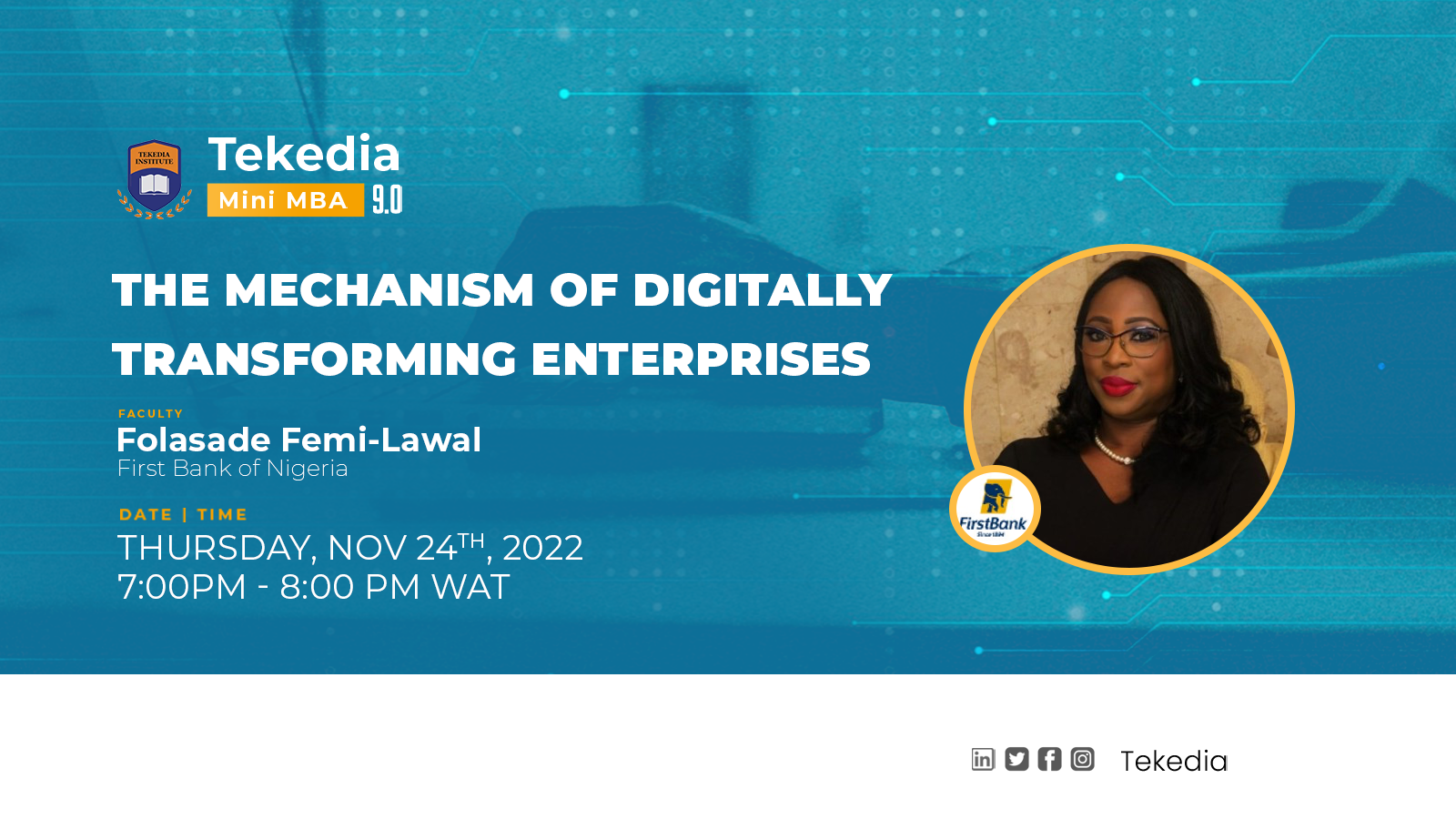
She is a Fellow of the Institute of Chartered Accountants of Nigeria (ICAN), the zenith of recognition in the accounting profession in Nigeria. She is currently overseeing the largest card base in Nigeria with millions of cards and $$millions transaction value  annually. As the AGM of Cards & Messaging Business in First Bank of Nigeria, she holds one of the most important roles in the digital redesign of Nigeria’s financial services and the broad economy.

Tomorrow at Tekedia Mini-MBA Live,  Folasade Femi-Lawal (FCA,FCIT,MBA) will educate on how to transform enterprises to win in the digital era. The topic is “The Mechanism of Digitally Transforming Enterprises” and she will explain the critical elements to help companies get into the future.

Tekedia Institute Mini-MBA >> learn from the best.