DD
MM
YYYY

PAGES

DD
MM
YYYY

spot_img

PAGES

Home Blog Page 4670

Strengthen Your Crypto Portfolio by Adding Huobi, Ripple and Snowfall

0

One common piece of advice given to investors is to be greedy when others are cautious, and cautious when others are greedy.

The FTX saga is winding down, and crypto prices are possibly as low as they will ever be. Accordingly, now is the ideal time to diversify your holdings by identifying the tokens with the greatest potential and long-term viability. Snowfall Protocol’s (SNW) is one of the tokens that checks all the boxes. Market experts hail the token as an undervalued gem that will produce lucrative returns during the upcoming bull market. Huobi’s HT and Ripple’s XRP are two other tokens that could strengthen your portfolio. Let’s find out why. 

Huobi (HT) Price Is Rallying After Rebranding and Releasing Expansion Plans

Huobi Global (HT) launched its new branding strategy on November 22, changing its name to Huobi (HT). These changes come a month after the exchange’s acquisition by About Capital.

The once-dominant Chinese cryptocurrency exchange hopes to rebuild its reputation and return to the top three cryptocurrency exchanges on the market. Huobi (HT) also announced that it would tap into the Caribbean region’s crypto base as one of the steps toward this goal. The Caribbean is renowned for its friendly policy frameworks for cryptocurrencies. These new developments position Huobi (HT) as a viable short- and long-term investment.

Huobi Token (HT) gained 13% in 24 hours following Huobi Global’s (HT) rebranding and announcement of expansion plans, making it one of the day’s top gainers. The momentum, however, failed to hold, resulting in a correction. But this doesn’t mean that bullish momentum is over. At the time of writing, HT was trading near a critical support level at $4.9, which suggests that another rally is possible as investors buy the dip. 

Ripple (XRP) Is Backed by A Strong Team and Investors

The team behind a crypto project has a significant impact on the project’s long-term viability. Many cryptocurrencies are unable to withstand even minor storms due to weaknesses in their core teams. Ripple (XRP) isn’t one of them

Ripple (XRP) is what you get when you combine two of the best minds in the crypto industry and top it off with their influence to make luring venture capital and significant investors as simple as it can be. As an Ripple (XRP) holder, you never have to worry about risks like rug pulls. Such guarantees make Ripple (XRP) a good addition to your portfolio. 

Snowfall Protocol Is A Promise of Long-Term Viability and Juicy Returns

Snowfall Protocol (SNW) is a new undervalued market player that has recently been making waves. In its first round of presale, Snowfall sold a total of 95,000,000 Snowfall Protocol (SNW) tokens. The second round is currently underway and is approximately 75% complete. As more investors come on board during this time, the price of Snowfall Protocol (SNW) has increased by an impressive 500%.

In addition to having a knowledgeable and visionary team, Snowfall Protocol (SNW) is presented as a trendsetter in both its whitepaper and roadmap. With a wide range of features, the protocol aims to eliminate the technical obstacles that currently burden cross-chain interactions. Noteworthies are its stablecoins bridge and NFT bridge, which enable transfers of stablecoins between compatible chains and wrapping for NFTs between blockchains using autonomous swaps, respectively.

At the pinnacle of Snowfall Protocol’s (SNW) conquest, every blockchain user will be able to interact with their favorite projects in a much easier way.

With only a week until the presale ends, there has never been a better time to sign up and become an early Snowfall Protocol (SNW) holder! Snowfall Protocol (SNW) is currently trading at $ 0.045 and is projected to return 1000% upon launch. Moreover, industry experts believe Snowfall Protocol (SNW) will be a major  bull run’s gem due to its low market cap and immense potential.


Click on any of the links below to learn more about Snowfall Protocol (SNW) and its ongoing presale:

Presale: https://presale.snowfallprotocol.io

Website: https://snowfallprotocol.io

Telegram: https://t.me/snowfallcoin

Twitter: https://twitter.com/snowfallcoin

Discovering Opportunities and Structuring Companies – Tekedia Mini-MBA

0

Samuel Taylor Coleridge wrote the ageless words to describe the predicament of the ill-fated hero stuck on a ship in the middle of a becalmed ocean: “Water, water, every where,. Nor any drop to drink.” In Shakespeare’s Twelfth Night, Duke Orsino delivered one of the most memorable lines when he said “If music be the food of love, play on”. Shakespeare did not stop there: in a scene in Hamlet, when Lord Polonius asked Hamlet “What do you read, my lord?”; Hamlet responded “Words, words, words”.

Those “words” could go for “opportunities”. How do you discover them? Indeed, how can one be in the middle of the oceanic sea and still be thirty? How can the beats of opportunities by playing and yet we cannot hear? What do you see in Nigeria, Africa and the world? I hope you respond: opportunities.

Tomorrow at Tekedia Mini-MBA Live, I will explain how we can discover opportunities in markets. Yes, like Russell Conwell’s Acres of Diamond, we can find new vistas.

And as I conclude on that, I will then explain the best ways to structure modern startups in Africa. Remember, I was a banker and I understand deals well well. And as an investor, there are things we like to see in startups. Tomorrow at the best school, come and let us co-learn. This is Tekedia Institute, the uncommon business school.

Please register for the next edition which begins Feb 6 2023 here 

Think Beyond Credit Scores in Nigeria To Grow That Business

1

If you offer credit and depend on credit provision to grow your business, and you come to a village where most people who have borrowed money in the past have failed the decent credit history test, what would you do next?

  1. Abandon the idea to operate in that village because most of the villagers are not good credit managers; they cannot repay as agreed.
  2. Investigate the root cause which is preventing most of the villagers from keeping their credit histories clean. The outcome will help you determine the next plan for the business.
  3. Change your business model where instead of offering credits which enable people to buy more (in volume), you reduce product packaging to fit into pay and carry which can fit customer budgets without any requirement for credit.

Read this from me: the African credit system can send really bad signals. Yes, that guy has a really poor credit. That is not the whole story. The whole story is that in most state governments in Nigeria, less than 30% of workers  and pensioners receive their emoluments/wages on time.

What that means is this: digital credit scoring systems will certainly catch up with them, but that does not mean most are natural defaulters. In other words, the credit score may not be what you think. Of course, you can argue that whenever that happens, it means the credit process is working; you are able to weed out those who are unable to repay irrespective of the circumstances.

I doubt if that is sustainable in Nigeria. In America, you cannot owe people salaries and with that, the credit system offers a clear view of  a person’s capacity to take credits and service them. In Nigeria, that is different; you can have means but that may not be accessible due to irregular salary payments. And if that village has everyone working in such a system, if you do not find a creative way to serve that village, your business will struggle.

As you operate in Nigeria, think beyond what the credit score says. More than 90% of Nigerian university lecturers might have defaulted on loans in the last 12 months since they were not paid during the recent strike. As you look at bureau data, do not allow that to cloud your judgment, thinking that professors and lecturers in Nigeria cannot manage credit. Indeed, think beyond the credit score in Nigeria.

Nigerian Fintech Startup Pivo Secures $2m in Seed Funding to Expand Freight Services

0

Nigerian fintech startup Pivo has secured $2 million in a seed fund backed by investors such as Precursor Ventures, Vested World, Y Combinator, FoundersX and existing investor, Mercy Corp Ventures.

The investment was attracted by the company’s innovative solution to SME’s payment bottleneck that slows down the industry’s supply chain. It takes small and medium businesses several days to receive invoice after executing orders. Pivo speeds up payment for freight carriers by providing a bank account, a debit card and digital invoicing tools that track payments.

Launched in 2021 by Nkiru Amadi-Emina and Ijeoma Akwiwu, Pivo provides financial services that include credit, payments and expense management, to SME vendors within large manufacturing supply chains. These services make it easy for supply chain SMEs to make, receive and track payments.

“We launched Pivo in 2021 with our credit product, Pivo Capital. Since then we have launched Pivo Business which offers business accounts with features like invoicing and bulk payments to help SMEs manage their cash flow better. We’re focused on building an all-in-one financial services platform for supply chain SMEs and are glad to have the backing of our investors,” the company said.

Pivo said in a statement it intends to use the financing to upgrade existing products, build new ones, hire talent and expand outside of Lagos, its first market and other African countries, particularly in East Africa.

The startup, which has raised $2.55 million since launch, told TechCrunch in an interview that the prevalence of friction in companies’ management of cashflow inspired its founders to seek solution.

“In most cases, we found out that managing cash flow was the primary issue for these businesses — it was either nonexistent or just paper-based,” Amadi-Emina said. “A lot of the payments made were made with cash and we thought to build a digital bank that provides financial services geared towards solving these various problems for SME vendors that operate within large manufacturing supply chains, starting first and foremost with the logistics providers, and then gradually moving to the supplier pockets and at the tail end of things.”

Pivo said it relies on manufacturing supply chain relationships and deploys financial services to the SMEs within them.

Truckers usually need advance or full payment before they leave a depot for their destination – a situation that usually creates a vacuum in the supply chain. To solve this problem, Pivo has deployed the credit play of its platform, Pivo Capital, as an early payment alternative for truckers and allows logistics companies to deal with any upfront costs such as diesel and driver’s allowance.

Pivo Business, its payments reconciliation arm, helps these small businesses to facilitate payments via peer-to-peer transfers and track payments with debit cards with spend controls, per TechCrunch.

With less competition, Amadi-Emina explained that all these features will drive Pivo to capture a sizable portion of a $4 billion addressable market opportunity.

The startup currently serves about 500 SMEs as direct customers and makes revenue by charging interest on capital and fees on payments processed. Pivo Capital which is one of its products has disbursed over $3 million to SMEs and currently records a 98% repayment rate while transaction volume on Pivo Business grew over 400% between April and September this year. The startup has registered a total volume of $4.7 million from July to date, according to Amadi Emina.

ChangeMaker Ed: Ecole Les Rossignol, Runda, Kamonyi — Rwanda

1
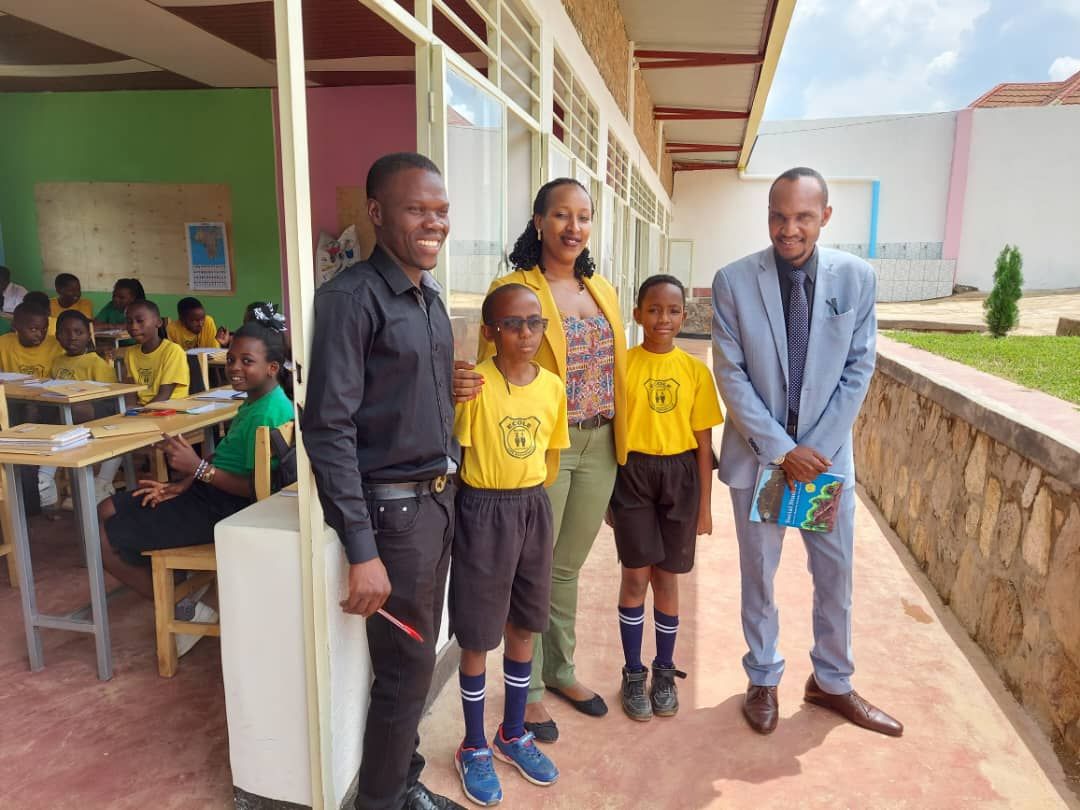
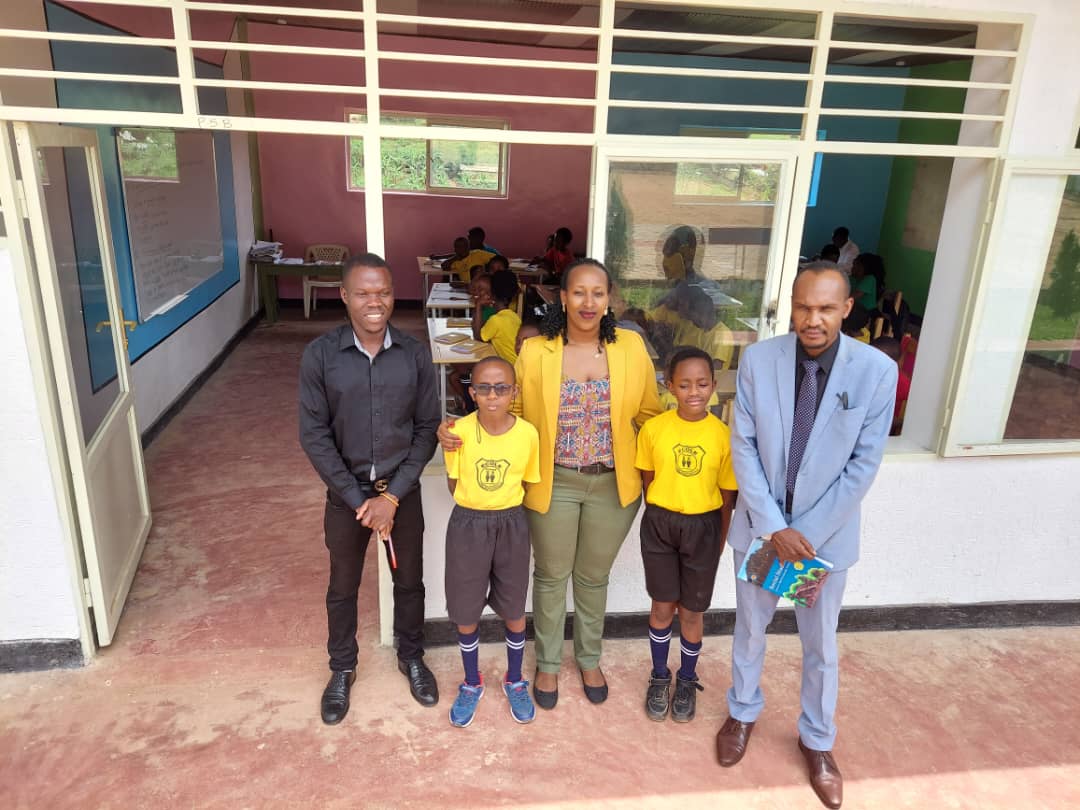
My recent visit, Thursday, 17 November 2022, to a school in a rural area in the Southern Province of Rwanda was eye-opening and, therefore, worth reporting. For company, I had a woman companion, Tuyishimire Germaine, who had other things in mind especially with regards to the education of the “Girl Child” notably those in P5 — a point I will return to shortly. In the meantime, it is worth pointing out that the visit started out from the nursery section working our way from M1 (Nursery 1) all the way to M3 (Nursery 3).
Indeed, M3 is the last post towards transition to primary. It also has some language implications as pupils transition from French to English tuition at this point. The primary section was the highlight of the day as we visited almost every arm cutting across P1 to P5 (P means primary). It wasn’t hard to identify the Head Boy, Shimwa Alain Divin, from class interactions considering his speed of response to the numerous questions posed — especially in relation to mathematics and social studies.

However, the primary section, although currently just up to P5, was reminded about the need for an ‘exit strategy’ to which the response was positive.

“The school is currently advertising for P6 teachers and preparing pupils for the National exams which are usually taken in P6.”

Going back to the Girl Child education (i.e., SDG4), my female colleague undertook a tour with six P5 girls (including the head girl) to discuss matters of feminine hygiene, toilet usage and dealing with puberty — these touch upon SDG3 and SDG5 — and provides some further insights as to why it matters.

Why it Matters — Because everyone counts

According to the National Institute of Statistics of Rwanda (NISR), the current projections show that Rwanda’s population is estimated to continue growing for the rest of the century and reach 21 million by 2050, and 30 million in 2076. Around 70% are youth with 27.6% between the ages of 16 and 30, which underlines the importance for Rwanda to continue to invest in harnessing the demographic dividend. The 2022 Population and Housing Census, the fifth in the series (since the first in 1978) is themed: “Be counted because you count” which translates to “Ibaruze kuko uri uw’agaciro” in Kinyarwanda, to have the data to inform decisions and policies to build the “Rwanda We Want” and the “Africa We Want.”

As captured in the recent United Nations Population Fund (UNFPA) Rwanda Newsletter Issue 3, 2022, “As the world has the prospect of reaching 8 billion people by the end of this year, Rwanda is projected to have a population size of 13 million people in 2022.” This milestone is a moment for celebration. As we celebrate, let us remember what this population growth implies.

“Rwanda We Want” from Germaine to “Germane for the World”

The UNFPA advocates for:

“…measuring and anticipating demographic changes with its emerging opportunities and challenges in addressing maternal mortality, voluntary family planning and addressing gender-based violence often which is below the waterline of visibility.”

The Government of Rwanda has been commended for its strong leadership and commitments made to support Sexual and Reproductive Health and Rights for all and together with partners, including donors, private sector and civil society organizations in achieving the International Conference on Population and Development (ICPD) programme of action.

As my companion, Germaine, recently demonstrated, sexual and reproductive health is “germane” to the mental (psychosocial) development of the “Girl Child” in Africa — and especially as they transition to adolescence, is feminine hygiene. At the ages from 9–12 (the current range at P5), the physical and cognitive skills are important, and hopefully this would provide a platform for the mothers of these girls to be invited to parent evenings to discuss the development of their daughters, as well as the need for open communications between both parties.

“We observed the absence of such communications following interactions with the young girls.”

Quality education as enshrined in SDG4 goes beyond knowing “math” and “English”, it requires psychosocial development, including understanding the biological makeup, improving communications skills, and developing self-confidence alongside leadership skills — thereby leaving no one behind — “Ibaruze kuko uri uw’agaciro”.

The Rwanda We Want, Africa We Want — Some key pointers/ takeaways

1. Opportunities and challenges in addressing maternal mortality, voluntary family planning and addressing gender-based violence requires more visibility.

2. The Government of Rwanda has demonstrated strong leadership commitments in support of sexual and reproductive health for all with a range of partners.

3. Young people form 70% of the population — a demographic dividend — with prospects and challenges.

4. There is a prospect to leverage inclusive development “leaving no one behind,” which is embedded in the National Strategy for Transformation.

5. The updated population data will help inform not only decisions and policies, but also strategic planning, effective implementation, monitoring of interventions and data disaggregation which is crucial in achieving the SDGs.

6. Runda in Kamonyi District is a deprived neighbourhood compared with other districts in Rwanda.

7. Ecole les Rossignol is more than your average school — providing educational services to the local community and employing local workers.

8. Leadership is formed at the grassroots, and universities need to be involved in the education value-chain from primary upwards and onwards — not just secondary school leavers.

9. School visits by stakeholders are educational and can inform targeted policy interventions – in areas of civic duty, leadership and governance, and especially as enshrined in the social studies P5 curriculum.

10. There is a need for institutional support including financial and non-financial (e.g., books, ICT equipment, and know-how) from key stakeholders including those in the different tiers of government, development partners and non-governmental organisations.
11. The Centre for Economic Governance and Leadership at the University of Kigali is happy to work alongside  key stakeholders including embassies, the Ministry of Education and the Rwanda Basic Education Board to provide support to social initiatives such as these, and especially in deprived areas of the country.
12. This is very important considering HE Paul Kagames case for “education for all ”, recently published as photos.