DD
MM
YYYY

PAGES

DD
MM
YYYY

spot_img

PAGES

Home Blog Page 4674

How to Invest in ETH In 5 Simple Steps

0

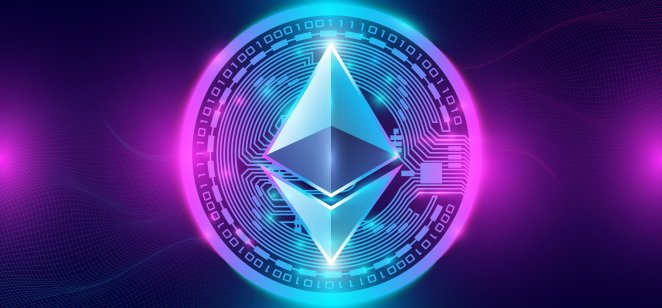
If you are interested in cryptocurrencies, then you’ll probably know that Ether, the native token of the Ethereum platform, is the second-largest coin worldwide today, behind Bitcoin, the original and first cryptocurrency. If you are interested in investing in crypto then ETH is certainly a coin worth considering buying. With more functionality behind it compared to other cryptocurrencies, and the token behind the increasingly popular NFTs or non-fungible tokens, Ethereum and ETH are only set to get bigger and bigger as time goes on. The easiest way to invest in Ether is through a cryptocurrency exchange. Keep reading to find out more about how.

Find the Right Exchange for You

With cryptocurrency growing rapidly, there are now several exchange options that you can choose from if you are interested in buying digital coins. Before you invest in ETH, the first step is to research crypto exchanges to find one that meets your needs. There are several exchanges that are ideal for beginners, which you may want to consider if you are completely new to the scene. You can use OKX.com to track ETH prices, learn more about cryptocurrencies, and invest in digital coins.

Sign Up and Be Verified

Any reputable cryptocurrency exchange will have you go through Know Your Customer (KYC) anti-terrorism and anti-money laundering checks before you can become a member and start investing in cryptocurrencies. This is usually a fairly quick process in which you will need to upload a copy of your identification to be verified. Depending on the exchange you use, it could be done instantly or take a couple of days.

Deposit Fiat Currency

Before you can get started with purchasing ETH and other cryptocurrencies, you will usually be required to deposit a fiat currency into the exchange. A fiat currency refers to a regular currency that is kept in the back and regulated by the government, such as dollars and pounds. You will usually be able to do this using a payment method that you are familiar with, such as a debit or credit card, or a bank transfer payment.

Set Up a Wallet

It’s a good idea to set up a separate crypto wallet before you start purchasing digital coins. You can either set up a software or a hardware wallet. Both have their advantages and disadvantages, and with several options available some are more beginner-friendly than others, so it’s worth taking some time to research what’s out there and find the right option for you.

Purchase ETH

Once you’ve done all of the above, it’s time to buy ETH for the first time. To do this, all you need to do is select it in your chosen cryptocurrency exchange, choose how much you would like to buy and follow the process. Once you have purchased the coins, you will either be able to keep them stored on your chosen exchange or move them to your software or hardware wallet for safer storage.

ETH is an excellent investment if you are looking to purchase cryptocurrency for the first time. Using a good crypto exchange is usually the easiest and most secure way to make the investment.


You Can Now Shop Soulmate Products on Amazon

0

It was founded by our great alumni, Chief Sir Ndukwe Osogho Ajala-Ajala, out of the hallowed laboratories of Federal University of Technology Owerri (FUTO). He turned a final class project into Africa’s largest wholly indigenous hair beauty brand. Ladies and gentlemen, join me, and all Nigerians, and all Africans, to celebrate the 30th year of operations of Soulmate Industries Limited Industries. The team in Soulmate has demonstrated uncommon tenacity and vision to run a manufacturing business for 30 years, employing thousands of people, in Africa.

As we celebrate, let me say that Soulmate is now global, selling the products in many countries. Today, the Amazon store is live and what that means, you can buy from Europe, Canada, US and other countries. Being included in Amazon Prime means you get it shipped at no additional cost. I just bought one now and it is amazing!

I am truly excited for this moment because Soulmate was the first company which sent dozens of staff when we began Tekedia Mini-MBA. From Lagos to the world, here is the soul of beauty, and find your hair soul mate when you shop Soulmate on Amazon here 

CEMRI ROUNDTABLE: How African Scholars Discussed Potential Metrics for Defining Influential Research

0

It is not new for African academics to gather and discuss various issues related to conducting research and presenting results. Thousands of academic conferences, workshops, and seminars have been held across the continent by institutions, groups, and centers since January 2022. According to our analyst, the majority of the events concentrated on how academia will continue to make significant contributions to African society.

The Centre for Multidisciplinary Research and Innovation hosted a roundtable discussion as one of these gatherings.  “CEMRI is a group of researchers who want to make impact from research and innovative activities. The group aims to share knowledge, orientate youth, proffer solutions to problems in businesses and government sector, also to empower young scholars on contributing actively to innovative research. Members of CEMRI comes from various research discipline and countries.”

Early career and established researchers from Africa and other continents attended the Zoom event. The discussion was started by Professor Olumuyiwa Asaolu from the University of Lagos, who presented a paper on measuring African scholars’ publications using the U-index. The paper was co-authored with some academics at the University.

It is “a new Universal metric as unique indicator of researcher’s contributions to academic knowledge.

“U is an indicator of an author’s impact over career-span, which appropriately aggregates how well their articles actually perform (TCIs) relative to projection (JIFs). It inherently normalizes for time and field without imposing a benchmark Expected Citation Rate that is burdensome to estimate or lacking in worldwide acceptability. Different entities use arbitrary weights for scoring co-authorship and a major contribution in our model is a prescription of simple formulae for general weights that fairly addresses three basic scenarios. U-index measures a researcher’s academic impact based on the contributions that such individual has made in authoring scholarly articles with or without citations. It will bring some relief to scholars in the emergent era of ‘publish, be cited or perish’ that is indirectly stimulated via institutional rankings.”

According to Professor Asaolu, the idea for researching the metric arose when it became clear that existing metrics for ranking African scholars did not accurately reflect the characteristics of African academics. Participants, for example, discussed the differences between social scientists and natural scientists. Google scholar was used as an example, considering its limitations.

Professor Ebo Hinson, pro-Vice Chancellor of Ghana Communication Technology University, however, urged Professor Asaolu and his team to consider how the metric could compete with the existing one by presenting its unique selling propositions. He believes that when this occurs, scholars and ranking organizations in the global north will accept the metric.

Professor Hinson emphasizes the importance of intra-citation and networking in increasing African publications and making research outcomes impactful on the continent and beyond in his paper titled Scholarly metrics beyond impact factor for Africans by Africans. According to Professor Hinson, it is extremely rare for scholars in the global north to cite those in the global south. As a result, African scholars must collaborate and cite one another. Furthermore, before the global north can reckon with Africa, it must produce and publish good articles. He, on the other hand, objects to African students’ attitude of ignoring African scholars in their works.

Professor Hinson emphasizes the importance of networking during academic events, noting that many scholars rarely engage with other scholars outside of conferences. Conferences and other academic events, he believes, should not be solely for presentation. “Scholars from other regions need to be really engaged. African scholars should not forget that the connection (within Academia) can compliments their theoretical presentation.”

“I agree with you Professor, we need to be proud of innovation from Africa. We should cite colleagues working in our area of expertise often as possible,” one of the participants says. One of the conclusions of the discussion was a call for the creation of a reliable African ranking database and/or the enhancement of the 1998-founded “African Journals Online.”

WhatsApp New Feature Enables Users to Send Messages to Themselves

0

Meta-owned messaging app Whatsapp has announced plans to roll out a new feature “message yourself”, that enables users to send messages to themselves.

With this new feature, Whatsapp seeks to ensure that users can easily access important messages such as reminders, to-do lists, notes, etc.

The “message yourself” feature which is slowly rolling out, is reportedly available to most Apple users and some Android users, as the company has disclosed that it will soon be made accessible to all users.

Messages sent by users to themselves will be visible on all their linked devices, which are end-to-end encrypted.

Users can also pin their self-chat messages to the top of the conversation list if they don’t want to go through the hassle of searching for their messages amid other chats.

How Users Can Use the WhatsApp “Message Yourself” feature

Step 1: Open your WhatsApp

Step 2: Click on the action button in the lower-right corner of the screen

Step 3: Users can find their contact at the top of the contact list

Step 4: Click on the contact and start messaging

Before the launch of this feature, Whatsapp in October 2022, embarked on testing improvements for sending messages to yourself on iOS and Android beta.

The “message yourself” feature will no doubt be very useful to those who use WhatsApp to take notes or those who use it to write things they want to buy when going for shopping.

Meanwhile, this feature is not new to some messaging platforms, as instant messaging platform Slack, has a feature titled “Jot Something Down” that enables users to send messages to themselves.

Also, a cloud-based instant messaging app, Telegram offers a similar feature called Saved Messages that lets users bookmark any important messages as well as save their notes and reminders that can be later accessed when needed.

WhatsApp’s “Message Yourself” feature comes shortly after the messaging platform in November, launched a new tool called communities, which lets users message multiple groups at once.

Remittance to Nigeria’s Foreign Reserve Has Dried Up – Central Bank of Nigeria

0

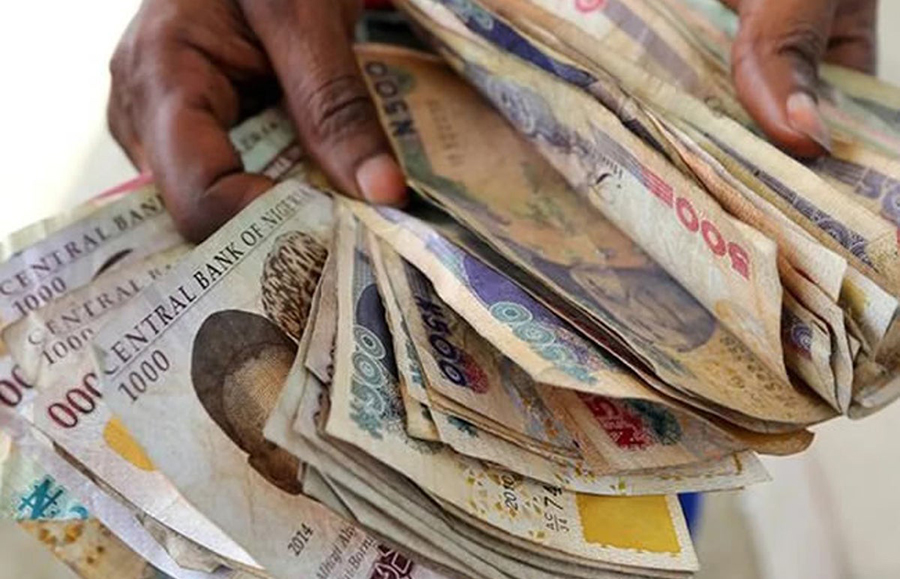
The Central Bank of Nigeria (CBN) on Friday dropped a bombshell that has once again ignited discussion on Nigeria’s falling currency, the naira.

At the 57th Chartered institute of Bankers Nigeria (CIBN) annual lecture entitled: “Radical Responses to Abnormal Episodes: Time for Innovative Decision-making”, the CBN Governor, Godwin Emefiele, while outlining policy thrust for 2023, expressed optimism that the short-term outlook of the Nigerian economy remains good.

While he projected that the rate of inflation will remain elevated and above the 12.5% growth-aiding threshold, Emefiele said that the CBN will maintain the current tight Monetary Policy stance in the near-term, “especially in view of rising inflation expectations and exchange market pressures.”

The CBN governor, while assuring Nigerians that the central bank will continue to act in the best interest of the economy, revealed that remittance to Nigeria’s foreign reserve has dried up.

“The official foreign exchange receipt from crude oil sales into our official reserves has dried up steadily from above US$3.0 billion monthly in 2014 to an absolute zero dollars today,” he said.

As Emefiele reiterates the need to boost Nigeria’s foreign exchange inflows through non-oil proceeds, it dawned on Nigerians that he had just revealed that the country’s foreign resee went from receiving $36 billion annually in 2014 to nothing in 2022 under his watch.

This underpins economic experts’ take on the naira’s free fall and Nigeria’s inflation. Experts have for long pointed at insufficient liquidity as the reason for the naira’s growing decline in the foreign exchange market, while Emefiele keeps pointing fingers at many things.

At the CIBN Annual Bankers Dinner, Emefiele blamed the current state of the naira on Nigerian students seeking education abroad. He said that Nigeria recorded a tremendous increase in visa issuances by the United Kingdom in 2022 alone.

According to him, the number of student visas given to Nigerians by the United Kingdom spiked from a yearly average of about 8,000 visas in 2020 to almost 66,000 in 2022, implying an eight-fold increase amounting to $2.5 billion yearly in study-related forex outflow to the UK alone.

He stated that the move had immensely put pressure on Nigeria’s foreign reserves and the Naira.

In September 2021, the central bank governor notoriously accused AbokiFX, an online FX aggregator, of economic sabotage. He said the forex rates publisher is responsible for the naira’s dwindling performance against the dollar, forcing it to shut down operations. The naira was at N570/$1 then.

Several months after AbokiFX suspended operation, the naira’s depreciation spiraled further downward. Emefiele said then that it was due to non-working refineries in the country, which forces the Nigerian National Petroleum Corporation Limited (NNPCL) to spend as much as 40% of the proceeds from crude oil exports on importation of petroleum products – gulping the foreign exchange that should have built up the foreign reserve.

As 2022 winds down, the naira has been dangling below and above N800/$1 irrespective of Emefiele’s blames and monetary policies. The crisis has been duly traced to Nigeria’s low oil output mainly orchestrated by oil theft.

Nigeria is the only oil producing country that did not benefit from the oil windfall induced by the Russia-Ukraine war. This is because more than half of the oil produced in the West African country has been stolen, leaving the government with meager oil export that is significantly insufficient for the amount of forex liquidity required to boost the naira.

Against the backdrop of oil theft, Emefiele’s open admission that the foreign reserve is not receiving any remittance from the NNPCL, underscores the belief that his blame antics emanates from cluelessness – his inability to proffer a solution to Nigeria’s raging forex crisis. It also paints a gloom future for Nigeria as an oil-based economy. The country has taken to borrowing as the revenue shortfalls bite harder, shooting its public debt profile high.

With non-oil exports yielding insignificant forex proceeds, the oil theft-inspired revenue shortfalls mean that the naira’s recovery is still farfetched.