DD
MM
YYYY

PAGES

DD
MM
YYYY

spot_img

PAGES

Home Blog Page 468

Cash in on Crypto Wins of MoonBull’s $15K Presale Giveaway While Dogecoin and Apecoin Keep Sending It Skyward

0

Which meme coin could skyrocket next and capture the attention of crypto enthusiasts across the globe? Among the plethora of options, three coins stand out: MoonBull, Dogecoin, and ApeCoin. Each offers unique opportunities and challenges, making them worthy of comparison. Dogecoin, once a joke, has transformed into a mainstream asset, while ApeCoin, tied to the Bored Ape Yacht Club ecosystem, continues to hold its ground.

However, the best new upcoming crypto, MoonBull, is making waves with its innovative approach and exclusive whitelist opportunities. As meme coin popularity continues to surge, understanding the nuances of these coins is crucial for making informed investment decisions. MoonBull’s whitelist is live now, offering early access to its presale and staking rewards. This article delves into a comparative analysis of MoonBull, Dogecoin, and ApeCoin, highlighting their market positions, growth potential, and unique features.

Get Ahead With MoonBull: Early Access Benefits Revealed

MoonBull ($MOBU) is an Ethereum-based best upcoming crypto built for traders and meme coin enthusiasts chasing big gains. Designed to reward supporters with elite staking rewards and secret token drops, MoonBull fuses the viral energy of meme culture with rock-solid smart contract security. Ethereum’s reliable infrastructure ensures seamless DeFi integration, making MoonBull a standout in the next wave of meme coins.

The MoonBull whitelist is live now, offering a first-come, first-served chance to secure the lowest entry price, unlock bonus allocations, and gain exclusive hints about upcoming roadmap reveals. Only a limited number of whitelist spots are available, making this an opportunity that could disappear in seconds. Submitting an email now positions investors at the forefront of the next big crypto meme coin.

Whitelist members receive access to the lowest launch price, secret staking rewards, bonus token allocations, and private roadmap hints. All details remain under wraps until launch. Entry to Stage One is open to everyone once it goes live, but whitelisted users get the exact launch date in advance and early access, giving them an edge over the broader public.

$15,000 MoonBull Giveaway – Your Chance To Win Big

MoonBull is kicking off its launch with a $15,000 Giveaway split among five winners, all paid in crypto. The deadline to enter is September 26, 2025, at 6 PM UTC, with winners announced within a week. Getting involved is simple: whitelist your email, follow and repost @MoonBullX on X, join Telegram, drop your ETH wallet, and follow on Instagram. Every step boosts your chances by up to 63%. Time is ticking, rewards are massive, and this rare opportunity won’t last.

Dogecoin (DOGE) Jumps 7.68% as Price Hits $0.287

Dogecoin (DOGE) is currently trading at $0.287, with a market cap of approximately $43.38 billion. The coin has seen a 7.68% increase in the last 24 hours, indicating renewed investor interest. The recent launch of the Dogecoin ETF has further propelled its mainstream adoption.

Analysts predict that if Dogecoin can overcome the $0.29 resistance level, it could potentially surge to $1. This optimistic outlook hinges on sustained investor confidence and broader market acceptance. While Dogecoin boasts a strong community and significant market presence, MoonBull offers unique advantages through its whitelist incentives and Ethereum-based infrastructure. Investors seeking early access and exclusive rewards may find MoonBull a compelling option.

ApeCoin (APE) Hits $0.607 As Market Cap Approaches $457M

ApeCoin (APE) is currently trading at $0.607, with a market cap of approximately $456.77 million. The coin has experienced a 5.4% increase in the last 24 hours, reflecting steady investor interest.

Despite its association with the popular Bored Ape Yacht Club, ApeCoin’s growth has been relatively modest. The coin’s performance is closely tied to the success and popularity of the broader NFT ecosystem. ApeCoin’s established presence offers stability, but MoonBull’s innovative approach and whitelist benefits present a unique opportunity for early investors. The potential for higher returns may attract those willing to embrace new projects with promising prospects.

Final Words

Based on the latest research and market trends, Moon Bull emerges as the best upcoming crypto in 2025. Its innovative approach, exclusive whitelist opportunities, and Ethereum-based infrastructure position it as a strong contender in the meme coin space.

While Dogecoin and ApeCoin offer established market presence and stability, MoonBull’s potential for high returns and access to rewards make it an attractive option for investors seeking new opportunities.

For More Information:

Website: https://www.moonbull.io/

Telegram: https://t.me/MoonBullCoin

Twitter: https://x.com/MoonBullX

Frequently Asked Questions About The Best Upcoming Crypto

What is the best crypto presale to invest in 2025?

MoonBull’s presale offers exclusive benefits for whitelist members, including the lowest entry price and early access to staking rewards.

Which meme coin will explode in 2025?

Analysts predict that MoonBull has the potential for significant growth, driven by its innovative approach and strong community backing.

Which meme coin to buy right now?

Investors seeking early access and exclusive rewards may consider MoonBull, while those looking for established options might explore Dogecoin or ApeCoin.

How to pick a good meme coin?

Look for projects with strong community support, innovative features, and clear growth potential. MoonBull’s whitelist and Ethereum-based infrastructure make it a compelling choice.

Do meme coins have a future?

Yes, meme coins continue to gain popularity, with projects like MoonBull offering new opportunities for investors.

Glossary Of Key Terms

  • Whitelist: A list of approved participants who receive early access to a project’s presale or token sale.
  • Presale: The initial sale of tokens to a select group of investors before the public launch.
  • Staking Rewards: Earnings distributed to token holders who lock their tokens to support network operations.
  • Ethereum: A decentralized blockchain platform that enables smart contracts and decentralized applications.
  • Market Cap: The total value of a cryptocurrency, calculated by multiplying the current price by the circulating supply.
Innovation, Growth, and the Mission of Firms: Lecture #1, Tekedia Mini-MBA ed18

0

Markets are magnificent, but they are not perfect. They leak value through frictions—information gaps, mistrust, logistics bottlenecks, price opacity, poor user experience, and weak coordination across value chains. A firm is society’s organized response to those frictions. That is the mission of firms: to transform market frictions into profit and prosperity. When a company removes a friction, it captures value (profit) and creates value (welfare). Both can flourish together.

In that sense, innovation is not entertainment; it is an instrument. It is the disciplined redesign of how demand and supply meet—through better products, superior processes, stronger platforms, or smarter policies. Growth, then, becomes the reward for consistent friction-removal at scale. And strategy is simply the allocation of scarce capability to the frictions that matter most.

In the Igbo Nation we say, “Onye kwe, chi ya ekwe.” When you commit, your chi (personal god/destiny) aligns. In business, commitment is expressed through capabilities—people, processes, capital, tools, etc —accumulated over time and deployed with precision against a chosen friction.

The market smiles when your product/service removes its pain. And when the market smiles, growth compounds, categories form, and societies rise. That is the calling. That is the craft. That is the mission of firms. Hahahahha

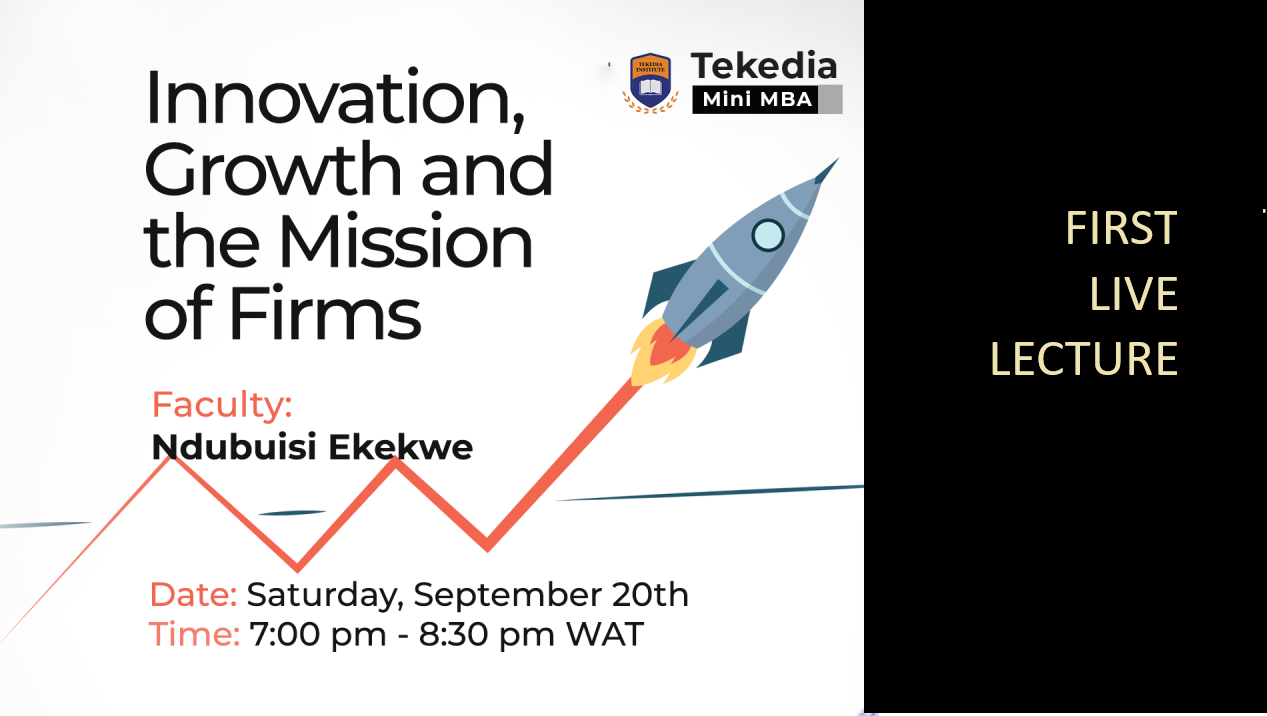
Tomorrow, we begin: The first lecture of Tekedia Mini-MBA edition 18.

Sat, Sept 20| 7pm-8.30pm WAT | Innovation, Growth and the Mission of Firms – Ndubuisi Ekekwe | Zoom link

Huawei Unveils SuperPoD AI Interconnect as Beijing Blocks Nvidia Chips

0

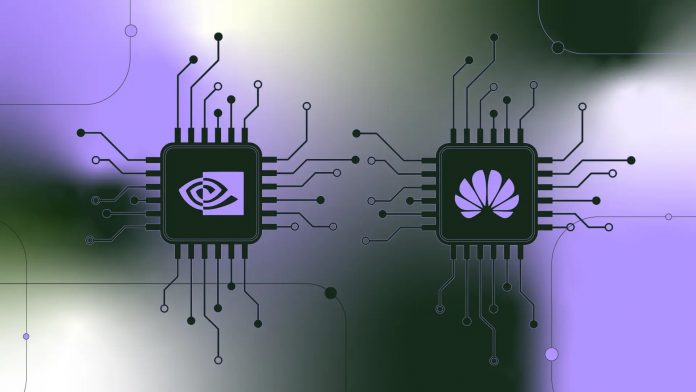
Huawei is moving assertively to position itself as China’s answer to Nvidia in the escalating global race for artificial intelligence hardware.

At its annual Huawei Connect conference on Thursday, the Shenzhen-based tech giant unveiled new AI infrastructure that it says will dramatically boost computing power for Chinese firms — a development that lands just as Beijing shuts the door on Nvidia’s products in the domestic market.

The centerpiece of Huawei’s announcement is its SuperPoD Interconnect technology, an advanced system capable of linking up to 15,000 graphics cards, including Huawei’s in-house Ascend AI processors, into a single cluster. The approach mirrors Nvidia’s NVLink interconnect, which has become essential to the U.S. chipmaker’s market dominance by enabling high-speed communication across massive GPU arrays.

Huawei acknowledged that its Ascend chips remain less powerful on a per-unit basis than Nvidia’s GPUs, but emphasized that clustering them together could provide the raw computing muscle needed to train and scale AI systems at levels required by Chinese cloud providers, research institutions, and corporations. “Technology like this is critical for Huawei to compete,” one executive stressed during the keynote.

The timing stirs interest. On Wednesday, Beijing banned domestic tech firms from purchasing Nvidia’s hardware, including the specially designed RTX Pro 600D servers Nvidia had created for the Chinese market. The move effectively cuts off access to the most advanced U.S. GPUs and underscores how deeply the AI arms race has become entangled in the broader U.S.-China technology rivalry.

The rollout of Huawei’s SuperPoD signals not only a commercial play but also a political one. Analysts say it reflects China’s push for self-sufficiency in advanced technology, particularly in semiconductors, as Washington continues to tighten restrictions on high-end chip exports. With U.S. sanctions preventing Huawei from acquiring cutting-edge lithography tools, the company has been forced to innovate around constraints — clustering more chips together to achieve computing gains that single processors cannot yet match.

The stakes are high. According to the FTC and other observers, compute power is now the bottleneck for AI development, with Western cloud giants such as Microsoft, Google, and Amazon investing tens of billions into Nvidia GPU-powered data centers. In this context, Huawei’s SuperPoD is more than a technical advance; it is a strategic attempt to ensure China’s AI ecosystem can scale despite being locked out of U.S. hardware.

Huawei’s effort also raises questions about how far Washington might go in response. If Huawei succeeds in providing a credible domestic alternative to Nvidia, U.S. policymakers may seek to expand sanctions further to block the flow of enabling technologies — from advanced networking chips to software tools — that could support large-scale Chinese AI training.

For now, Huawei is betting that its clustering approach will give China’s AI industry a lifeline. The SuperPoD is expected to gain rapid adoption across China’s cloud and research sectors, helping the country build its own AI foundation models at scale. This is expected to be driven by strong domestic demand, which will allow Huawei to close the performance gap with Nvidia through volume, clustering, and continued refinements. Under this outlook, Beijing’s backing ensures funding, infrastructure, and market protection, positioning Huawei as a viable global alternative within the next decade.

However, there is concern that while Huawei achieves moderate success within China, carving out a protected domestic market, it will struggle to expand globally due to both technical hurdles and U.S. sanctions. This means, while SuperPoD becomes a symbol of China’s determination for self-sufficiency, Nvidia and other Western chipmakers continue to dominate the high end of the global AI market.

Jack Butcher’s Gas Wars Is A Provocative Exploration of Art Commercialization Using Blockchain

0

Jack Butcher’s “Gas Wars,” a generative art collection of 500 pieces released on Art Blocks, sold out rapidly despite intense competition for blockchain transaction priority, known as a “gas war” in the crypto space.

The term “gas war” here refers to the bidding frenzy where buyers pay higher Ethereum gas fees to secure their transactions for limited NFTs, often driving up costs significantly. The project’s mechanics, inspired by survivorship bias and priced from $0 to $499 based on simulation number, fueled this frenzy, with each piece available for only 500 seconds.

Simulation Zero was auctioned without reserve, while the remaining 499 simulations saw fierce competition, reminiscent of early Art Blocks Curated drops. The phrase “amidst an actual gas war” seems to align with the crypto context rather than a literal gasoline conflict, as no concurrent real-world gas price wars or shortages.

Gas Wars is a collection of 500 unique generative artworks inspired by the concept of survivorship bias, a statistical principle highlighted during World War II by Abraham Wald. The sale mechanism, limited to a 500-second window with a one-per-wallet restriction, introduces scarcity and urgency, mimicking the “gas wars” of early NFT drops.

Unpurchased simulations are permanently destroyed, amplifying the stakes. Gas Wars transforms art purchasing into a gamified, high-pressure event. The time-limited sale and variable pricing based on simulation number create a competitive environment where collectors must strategize under constraints.

This mirrors speculative financial markets, where scarcity and timing drive value. By tying art acquisition to Ethereum’s gas fees and network dynamics, Butcher critiques and leverages the speculative frenzy of NFT markets, blurring the line between art collection and economic game theory.

This approach challenges traditional art commercialization, which often relies on curated galleries or auctions, by introducing decentralized, algorithm-driven dynamics. Butcher’s work, rooted in his Visualize Value brand, examines how value emerges in networked culture.

Gas Wars uses survivorship bias to metaphorically comment on NFT markets: just as Wald noted that surviving planes showed where damage could be sustained, the surviving artworks in Gas Wars reflect what collectors prioritize under pressure.

The destruction of unsold pieces underscores scarcity, a core driver of NFT value, and critiques the disposability of digital art in a market obsessed with exclusivity. This raises questions about whether art’s value lies in its aesthetic, conceptual weight, or market mechanics.

Democratization vs. Elitism

The project’s structure—starting at $0 for Simulation Zero—appears to democratize access, but the escalating price and one-per-wallet limit favor strategic, well-funded collectors who can navigate gas wars. This mirrors broader NFT market trends, where low entry points attract wide participation, but high gas fees and technical barriers exclude many.

Butcher’s design thus highlights the paradox of blockchain art: while decentralized platforms promise inclusivity, market dynamics often reinforce elitism, aligning with historical art market patterns where access is stratified by wealth and expertise.

As a generative art project, Gas Wars leverages algorithms to create unique outputs, aligning with Butcher’s broader exploration of technology’s role in art. His collaboration with Art Blocks, a leading platform for generative art, and his prior work like Checks and Opepen show a shift from traditional commercial design to blockchain-native art.

This fusion challenges the art world’s gatekeeping by galleries and institutions, allowing artists to directly engage collectors via smart contracts. However, it also ties art’s value to volatile crypto markets, raising questions about sustainability and commodification.

Butcher’s background in advertising informs Gas Wars’s critique of commercialization. His Visualize Value brand distills complex ideas into minimalist visuals, and Gas Wars extends this by visualizing market dynamics as art. The project’s reference to wartime analysis juxtaposes life-or-death decisions with the speculative absurdity of NFT gas wars.

This aligns with historical debates about art’s commodification, such as those surrounding Pop Art’s embrace of consumer culture or the CIA’s use of modern art as Cold War propaganda. Butcher’s work asks whether art can retain its critical edge when it’s a speculative asset.

While Gas Wars is digital, Butcher’s other projects, like Checks Elements and Latent, pair NFTs with physical prints, signaling a trend in art commercialization where digital assets gain tangible counterparts to enhance perceived value.

This hybrid approach bridges crypto and traditional art markets, appealing to collectors who value physicality while maintaining blockchain’s authenticity and provenance. It also reflects Butcher’s strategy of “building once, selling twice,” maximizing revenue by leveraging both digital and physical formats.

Gas Wars reflects a shift toward artist-led commercialization. By bypassing traditional galleries, Butcher controls his narrative and revenue, a model enabled by blockchain’s disintermediation. Yet, this freedom comes with risks: dependence on crypto markets, environmental concerns tied to Ethereum’s energy use pre-Merge, and the potential for art to be reduced to a speculative asset.

While Gas Wars is innovative, its reliance on Ethereum’s gas fee dynamics and speculative pricing may alienate audiences who see NFTs as inaccessible or environmentally harmful. The project’s critique of commercialization risks being undermined by its own success within that system, echoing Andy Warhol’s paradoxical embrace of consumer culture.

Additionally, the art world’s growing acceptance of NFTs, as seen in Butcher’s Christie’s auctions, suggests a mainstreaming of crypto art, but it’s unclear if this will democratize art or reinforce existing hierarchies.

By gamifying acquisition, emphasizing scarcity, and blending digital-physical formats, it challenges traditional art market models while raising questions about accessibility, value, and artistic intent in the NFT era. As Butcher continues to shape the digital art landscape, Gas Wars underscores both the creative potential and the contradictions of art as a networked, commercial enterprise.

Nvidia Bets $5bn on Intel, Aligning with Trump’s Domestic Chip Push

0

What began as a government-engineered lifeline for Intel has now drawn in the world’s most valuable chipmaker. Nvidia on Thursday announced a $5 billion investment in Intel, instantly becoming one of the embattled manufacturer’s largest shareholders and sending Intel’s stock soaring 25% in a single day.

The move is being widely read not just as a corporate gamble, but also as a quiet endorsement of U.S. President Donald Trump’s campaign to repatriate more semiconductor production.

The stake gives Nvidia roughly 4% of Intel after new shares are issued, coming just weeks after Washington took an unprecedented 10% government stake to stabilize Intel’s finances and leadership. Once seen as the company that gave Silicon Valley its name, Intel has struggled for years to recover lost ground to rivals in the data center, PC, and AI markets.

A Strategic Bet, With Political Undertones

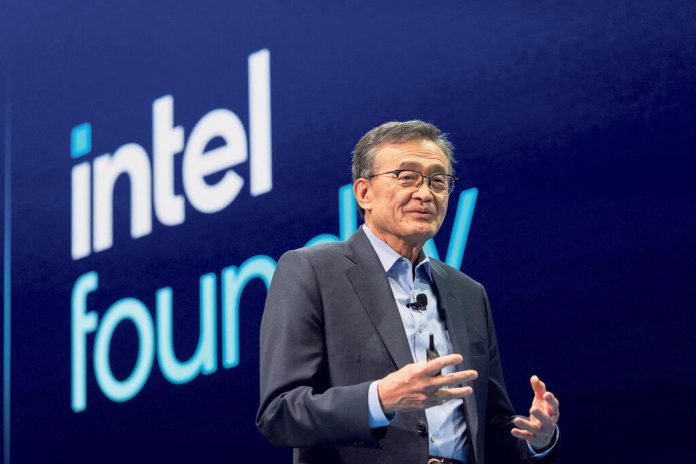
The Nvidia deal is as much about strategy as symbolism. Intel’s new chief executive, Lip-Bu Tan, took the helm in March but quickly drew criticism over his ties to China. Trump publicly called for his resignation, leading to an emergency meeting in Washington and a White House-brokered deal that left the federal government with a significant ownership stake.

Now, Nvidia’s involvement bolsters Intel’s credibility and aligns with the Trump administration’s broader push to build up domestic chipmaking. Nvidia CEO Jensen Huang told reporters that the White House was not involved in shaping the pact but said the administration would almost certainly welcome it. Huang was seen alongside Trump and other business leaders earlier the same day during the president’s state visit to the U.K.

What the Partnership Covers

At the heart of the deal is a plan to jointly develop PC and data center chips. Nvidia will not outsource its graphics processors to Intel’s contract manufacturing business — known as its “foundry” — but Intel will supply central processors and advanced packaging to combine with Nvidia’s AI-focused GPUs. Huang confirmed that Nvidia has been testing Intel’s foundry technology for nearly a year, though no long-term shift away from Taiwan’s TSMC has been made.

For Intel, which has long lagged in AI, the pact is a breakthrough. “This is a massive game-changer for Intel and effectively resets its position of AI-laggard into a cog in future AI infrastructure,” said Gadjo Sevilla, senior AI and tech analyst at eMarketer.

Financial details of the collaboration were not disclosed, but the companies confirmed they will produce “multiple generations” of joint products. Nvidia said it would pay $23.28 per share for Intel stock, just below Intel’s $24.90 Wednesday close but comfortably higher than the $20.47 that Washington paid. Nvidia’s stock rose 3.8% after the announcement.

Intel’s Cash Reserve Grows

The fresh $5 billion injection adds to Intel’s war chest, which has been swelled by $2 billion from SoftBank and $5.7 billion from the U.S. government. CEO Tan has promised a leaner Intel, vowing to build factory capacity only in response to firm customer demand.

“This may be the first step of an acquisition or breakup of the company (Intel) among U.S. chip makers, though it is entirely possible the company will remain a shadow of its former self but will survive,” said Nancy Tengler, CEO of Laffer Tengler Investments.

Risks for Competitors

The partnership carries big implications for the industry’s competitive balance, according to an analyst who spoke to Reuters.

TSMC, which currently produces Nvidia’s flagship processors, faces the looming risk of losing a critical customer. AMD, Intel’s traditional rival in PCs and data centers, may also see its recent market share gains eroded.

“AMD has been seizing market share in desktops and laptops for quite some time and this will help Nvidia out against its closest domestic peers, but I think TSMC may have the bigger risk to its operation over the long term,” said David Wagner, portfolio manager at Aptus Capital Advisors.

Intel will design custom data center CPUs for Nvidia’s GPUs, linked by a proprietary Nvidia interconnect that dramatically speeds communication between chips. That feature has made Nvidia’s AI servers the gold standard in the industry. The new arrangement allows Intel to capture part of that lucrative business for the first time.

The combined chips could also pose challenges for AMD, which is developing rival AI servers, and Broadcom, which supplies chip-to-chip links for companies like Google. AMD’s shares fell 2.3% after the announcement, while Broadcom gained 0.4%.

In consumer markets, Nvidia will provide Intel with custom graphics processors for PCs. Coupled with Intel CPUs and Nvidia’s high-speed links, that could give Intel new leverage against AMD in the desktop and laptop segment.

Revival or Realignment?

While the companies offered no timeline for their first joint products, the alliance underscores how Intel’s future now rests on outside partners. For some analysts, Nvidia’s investment is a prelude to something bigger.

It is believed that this deal could set up three very different futures for Intel. In the first, Intel becomes a core U.S. player in AI hardware, stabilized by government and corporate backers. In the second, it is slowly absorbed into Nvidia or another chipmaker, effectively broken up. And in the third, Intel never fully regains its old dominance but survives as a junior partner in the new AI ecosystem.