DD
MM
YYYY

PAGES

DD
MM
YYYY

spot_img

PAGES

Home Blog Page 469

Nscale Emerges as Europe’s New AI Infrastructure Giant With Backing From Nvidia, Microsoft, OpenAI

0

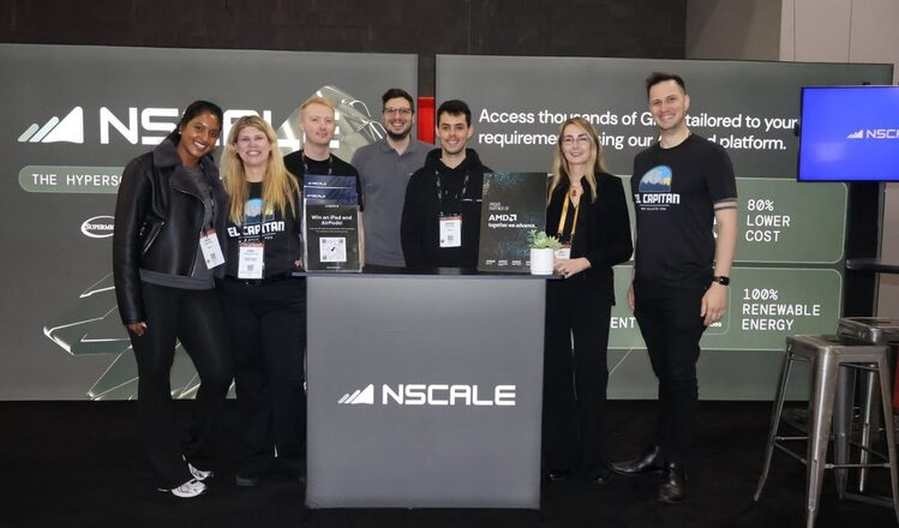
When Nvidia moves, the global AI ecosystem shifts. The world’s most valuable chipmaker has made yet another aggressive push into AI infrastructure, this time with a £500 million ($683 million) equity investment in London-based startup Nscale.

The deal is part of a broader £11 billion ($15 billion) commitment with Nscale and U.S. rival CoreWeave to expand the U.K.’s AI capacity — and it underscores how Nvidia is rapidly extending its influence well beyond silicon.

Nvidia’s strategy has been clear for months: invest directly in companies building the backbone of AI. The chipmaker recently took a 4% stake in Intel, and it has poured billions into CoreWeave, one of its biggest infrastructure customers. With Nscale, Nvidia is now anchoring itself to Europe’s rising push for “sovereign AI,” a bid to keep critical workloads and data on local soil.

Nscale’s Meteoric Rise

Just two years ago, Nscale didn’t exist as a standalone entity. It was spun out of Arkon Energy, a crypto-mining infrastructure provider, to meet surging demand for AI-specific data centers after OpenAI’s ChatGPT sparked the AI boom in late 2022.

Like CoreWeave in the U.S., Nscale repurposed its crypto roots into an AI infrastructure business, combining vast data center capacity, high-density power, and thousands of GPUs with software layers for clients.

The transformation has been astonishingly fast. In May 2023, Nscale came out of stealth, quickly partnering with the UAE’s Open Innovation AI to deploy 30,000 GPUs. It acquired Finnish high-performance computing firm Kontena, then struck a deal with Asian telecom giant Singtel to offer GPU-as-a-Service in Europe and Southeast Asia. Initially reliant on AMD hardware, Nscale pivoted to Nvidia GPUs as its partnerships deepened.

By December, it closed one of the largest Series A rounds in U.K. history — $155 million led by Sandton Capital Partners. With that, the company expanded its pipeline from 300 megawatts to 1.3 gigawatts in just one year and set a target of running 350,000 GPUs by 2027.

Microsoft and OpenAI, Too

Tuesday’s announcements signaled Nscale’s leap into the big leagues. The company was named an AI infrastructure partner for Nvidia, Microsoft, and OpenAI. It also revealed a five-year, $6.2 billion deal with Microsoft and Norwegian industrial group Aker to develop “hyperscale AI infrastructure” across Europe, with Norway as the anchor.

Microsoft committed $15.5 billion of new investment in the U.K., headlining plans to build the country’s largest supercomputer in Loughton, Essex. That site will house 23,040 Nvidia Blackwell GPUs by early 2027, providing 50 megawatts of AI power, scalable to 90 megawatts.

“No one can make that kind of capital investment unless they’ve got somebody already committed to spend the money once the work is complete, and that’s the role we’re playing,” Microsoft President Brad Smith explained.

Meanwhile, OpenAI confirmed it would launch Stargate U.K. in partnership with Nscale and Nvidia, initially deploying 8,000 GPUs next year, with the capacity to expand to 31,000. The sites will span several regions, beginning with Newcastle’s Cobalt Park.

Nvidia’s CEO Jensen Huang personally announced the £500 million equity injection, telling reporters: “We convinced ourselves that Nscale could be a national champion for AI infrastructure in the U.K.”

Europe’s Sovereign AI Gamble

Nscale’s emergence coincides with Europe’s drive for “sovereign AI” — a policy push requiring data centers and AI workloads to remain within European jurisdictions. Britain’s AI action plan, rolled out in January, promised to slash bureaucratic barriers to domestic AI growth.

Josh Payne, Nscale’s founder and CEO, framed the Microsoft and Aker partnership as a “huge win for European-owned AI infrastructure.” In earlier remarks, he said Europe’s biggest challenges were a lack of computing capacity and a “very fragmented market.” His vision is to create massive projects that smaller players can consume from, unlocking productivity and economic growth.

Nick Patience, AI practice lead at Futurum Group, said the announcements signal government recognition that “it has to do something to get the AI infrastructure built here, which has been a long slog.”

Scaling Targets, Heavy Costs

Payne has set ambitious targets: 50,000 GPUs by the end of 2025 and 150,000 by the end of 2026. Long term, Nscale aims to reach 350,000 GPUs by 2027. Its Norwegian project with OpenAI alone has a $1 billion commitment, with plans to host 100,000 GPUs before 2027.

But scaling at this pace is intensely capital-intensive. Building AI data centers requires billions in both debt and equity. CoreWeave has already raised $12.4 billion in debt and over $1 billion in equity, plus a $1.5 billion bond issue in July after a $2 billion debt sale in May.

Nscale is following a similar path, reported earlier this year to be raising $1.8 billion in private credit through Goldman Sachs.

Outlook

Analysts sketch three possible paths for the partnerships. In the optimistic case, Nscale leverages its Microsoft, Nvidia, and OpenAI alliances to secure long-term contracts and dominate Europe’s AI infrastructure landscape, emerging as a “CoreWeave of Europe.” In the base case, it achieves steady growth but faces periodic financing strains, forcing slower buildouts. The downside scenario sees mounting debt, regulatory bottlenecks, or execution delays stalling projects, leaving Nscale vulnerable to acquisition.
Notion Unveils First AI Agent, Expanding Its Push Into Productivity Automation

0

At its “Make with Notion” event on Thursday, productivity platform Notion introduced its first AI agent, a significant step that transforms the service from a flexible collaboration tool into a more autonomous productivity assistant.

The new agent will draw on all of a user’s Notion pages and databases as context, automatically generating meeting notes, competitor evaluation reports, and feedback landing pages. It can also create entirely new pages and databases or update existing ones with fresh data, properties, or views.

One of the key features is cross-platform connectivity. Users can trigger Notion’s agent from other linked services such as Slack, email, or Google Drive. In one demo, the agent was asked to assemble a bug-tracking dashboard by pulling information from multiple external sources — a task that would otherwise require manual setup.

The company positioned the agent as a major leap from its earlier Notion AI tool, which focused on summarization and search. The new agent leverages agentic AI, meaning it can handle complex, multi-step workflows. According to Notion, it can sustain a process running up to 20 minutes across hundreds of pages without user intervention.

To keep outputs aligned with user preferences, Notion has introduced customizable “profile” pages. These allow users to instruct the agent on referencing sources, formatting style, and task updates. The agent can also “remember” recurring points and store them in the profile page for ongoing use, giving teams greater control over long-term workflows.

During its demonstration, Notion showed examples of the agent updating landing pages with feedback, preparing competition analysis reports, creating restaurant trackers, and synthesizing meeting notes. For now, users must trigger such actions manually. But the company said it is working on customizable agents that operate on schedules or triggers, which will enable more hands-free automation. A template library of prebuilt agents is also in development, designed to help teams quickly adopt the new system.

The launch comes after two years of steady expansion. Notion has rolled out a calendar app, Gmail client, meeting note-taker, and enterprise search that integrates information from external platforms. Those features now serve as the contextual backbone for its new automation push.

Notion is also entering a crowded field. Competitors like Salesforce, Fireflies, and Read AI have already launched their own AI-driven agents, each designed to extract, analyze, and update enterprise knowledge bases. With the new agent, Notion is betting that its flexible, all-in-one workspace will give it an edge over rivals by combining automation with deeply personalized context.

Some say the move marks a pivotal moment for the platform, as it marks the logical evolution of Notion’s vision — from being a customizable productivity canvas to becoming an autonomous system that works on your behalf.

Outlook

The introduction of Notion’s agent is likely to deepen the competitive reshaping of the enterprise productivity market, where AI agents are fast becoming the centerpiece. Analysts outline three possible outcomes:

1. Fast Adoption, Competitive Differentiation. If Notion’s agent proves reliable, users who already depend on the platform’s flexible interface may quickly adopt it as a trusted productivity partner. This could position Notion as a credible alternative to Microsoft’s Copilot ecosystem, especially among startups and mid-sized companies that value customization over standardization.

2. Integration Pressure. Larger enterprises, however, often prioritize seamless integration across software ecosystems. Here, Salesforce’s Einstein Copilot and Microsoft 365’s AI assistants may have the upper hand, given their deep links to enterprise infrastructure. For Notion to succeed, it will need to scale integrations beyond Slack and Google Drive to enterprise-grade platforms like SAP, Oracle, and ServiceNow.

3. Automation Fatigue and Caution. A more cautious scenario involves pushback from users hesitant to give agents too much control over workflows, citing accuracy concerns, over-automation, or compliance risks. If errors creep into automated competitor reports or meeting summaries, organizations may hold back adoption until governance tools and quality guarantees mature.

However, what is clear is that AI agents are no longer experimental add-ons — they are becoming central to how productivity software competes. The move by Notion represents both a growth opportunity and a challenge: to prove that a lightweight, flexible platform can stand up to tech giants that are embedding AI into every layer of enterprise software.

Fiverr Cuts 250 Jobs as It Pivots to an “AI-First” Strategy, Joining a Growing Trend in Tech

0

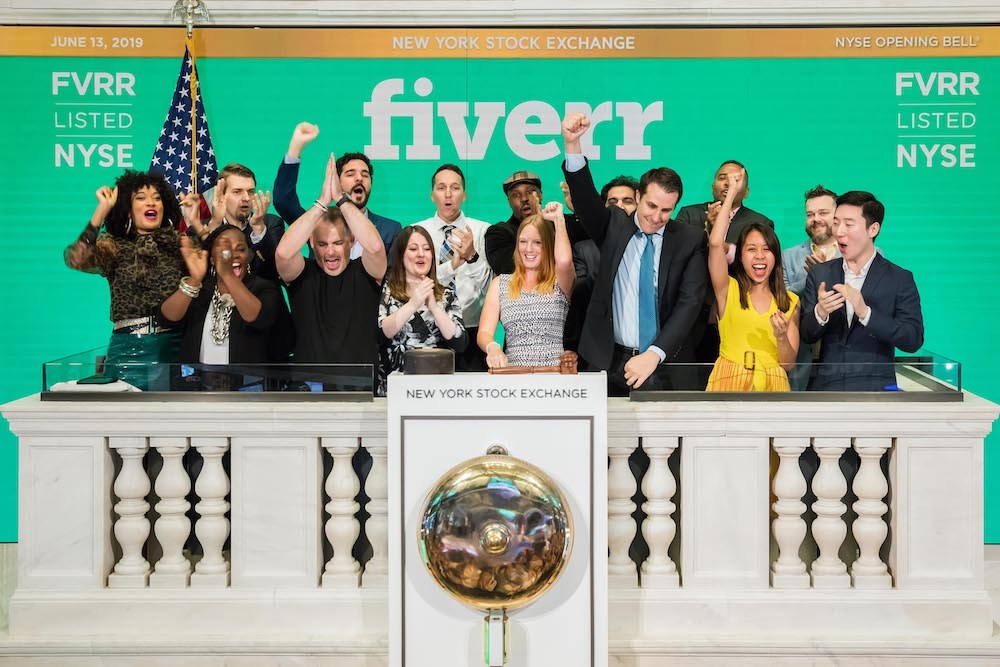
Fiverr is laying off 250 employees, about 30 percent of its workforce, as part of a sweeping shift to become an “AI-first company.” CEO Micha Kaufman confirmed the move in an essay posted on X, calling it a return to “startup mode.”

The Register, which first reported the layoffs, noted that Fiverr’s move is far from unique in 2025. Several tech companies, including language-learning platform Duolingo, announced similar “AI-first” pivots that come with significant workforce reductions.

In his essay, Kaufman said the transformation would make Fiverr “leaner, faster, with a modern AI-focused tech infrastructure, a smaller team, each with substantially greater productivity, and far fewer management layers.” The company has already integrated AI into areas like customer support and fraud detection, and Kaufman argued that these changes mean Fiverr doesn’t “need as many people to operate the existing business.”

The layoffs add a layer of irony to Kaufman’s earlier comments on AI. In May 2025, during an interview with CBS News, he advised workers to “automate 100 percent” of their roles using AI, insisting that doing so would not make them replaceable because human employees still bring “non-linear thinking” and “judgement calls.” For the 250 staff members affected this week, that reassurance has not held up.

The scale of the cuts is smaller than those at larger firms. Workday, for example, eliminated 1,750 roles in February 2025 as it too restructured around AI. Still, for employees, the result is the same: more responsibilities shouldered by fewer people, a dynamic becoming increasingly familiar across the tech industry as automation reshapes staffing needs.

Different Paths in the AI-first Era

Fiverr’s AI-first gamble highlights a broader split in how companies are navigating the technology shift. While some, like Fiverr and Duolingo, are embracing AI as a replacement for large chunks of their workforce, others are focusing on augmentation rather than substitution. Microsoft and Salesforce, for instance, have leaned into AI by building copilots and automation tools aimed at supporting employees rather than replacing them outright.

The contrast reflects an unresolved debate in Silicon Valley: should AI serve as a complement to human workers or a justification for streamlining them out of the picture? Fiverr is squarely in the second camp, betting that leaner operations and higher productivity per employee will create long-term shareholder value.

Yet there are risks. Gig economy platforms thrive on creativity and human connection, and industry analysts warn that a fully AI-driven approach could alienate both workers and clients who value human oversight. Rivals like Upwork, while also investing heavily in AI, have so far avoided mass layoffs, positioning their AI tools as enhancements to freelancer capabilities rather than wholesale replacements.

Fiverr’s layoffs also play into a larger divide about AI’s impact on jobs. CEOs like Anthropic’s Dario Amodei have warned that AI could displace half of all entry-level white-collar positions within a decade, while Nvidia’s Jensen Huang has countered that AI will create new categories of work. Despite those differing views, most analysts agree that the technology is already eroding job security in areas where tasks can be automated.

If its AI-first strategy delivers greater efficiency and customer satisfaction, Fiverr could establish itself as a model for leaner, tech-driven gig platforms. But if the move alienates freelancers or clients who see less value in an AI-heavy marketplace, it risks opening the door to competitors who balance automation with human-centered services.

The outcome may signal the future direction for mid-sized tech firms navigating similar pressures — whether AI will serve primarily as a tool for empowering workers or a mechanism for cutting them loose.

TokenWorks’ NFTStrategy Could Drive Demand, Increase Liquidity, And Boost Visibility For BAYC, Pudgy Penguins, Moonbirds, Meebits, CryptoDickButts

0

TokenWorks has announced the launch of NFTStrategy, a novel initiative introducing tokens designed to perpetually purchase NFTs from prominent collections, including Bored Ape Yacht Club (BAYC), Pudgy Penguins, Moonbirds, Meebits, and CryptoDickButts.

According to posts on X, the Day 1 tokens—$APESTR (BAYC), $PUDGYSTR (Pudgy Penguins), $BIRBSTR (Moonbirds), $MEEBSTR (Meebits), and $DICKSTR (CryptoDickButts)—aim to capitalize on the buzz generated by TokenWorks’ previous project, $PNKSTR. The NFTStrategy tokens are intended to continuously acquire NFTs from these collections, potentially impacting their market dynamics.

Bored Ape Yacht Club (BAYC): Created by Yuga Labs, BAYC remains a flagship NFT collection with a market cap of approximately $405.6 million. Despite a recent 14.7% floor price drop to 9.59 ETH, BAYC continues to dominate the NFT space. Yuga Labs has shifted focus back to BAYC after selling the intellectual property (IP) of CryptoPunks and Meebits, while Moonbirds characters will still appear in Yuga’s Otherside game.

Pudgy Penguins: With a market cap of $399.1 million and a token ($PENGU) market cap of $2 billion, Pudgy Penguins is a leading NFT project. Its floor price recently fell 17.3% to 10.32 ETH, but trading volume remains robust at 2,112 ETH (~$9.36 million) in a week. The project has expanded into physical merchandise and the Pudgy Party game, which saw over 50,000 downloads despite a 20% $PENGU token price drop in August.

Moonbirds: Launched in April 2022 by PROOF Collective, Moonbirds generated $280 million in initial sales. Yuga Labs acquired Moonbirds in 2024 but sold its IP to Orange Cap Games in May 2025. The collection’s floor price dropped 10.5% recently, with a trading volume of 1,979 ETH (~$8.77 million).

Meebits: Originally created by Larva Labs and acquired by Yuga Labs in 2022, the Meebits IP was sold to The Meebit Company in February 2025. The collection of 20,000 3D voxel characters has seen significant trading, with historical sales around $227 million.

CryptoDickButts: While less detailed in recent news, CryptoDickButts is included in TokenWorks’ strategy, indicating its relevance in the NFT space. Its inclusion alongside blue-chip collections suggests a niche but active community.

The NFTStrategy tokens could drive demand for these NFT collections by continuously purchasing them, potentially increasing floor prices and trading volumes. However, the broader NFT market has faced challenges, with recent double-digit floor price declines across major collections tied to Ethereum’s price correction.

The perpetual buying mechanism of tokens like $APESTR, $PUDGYSTR, $BIRBSTR, $MEEBSTR, and $DICKSTR could create consistent demand for the targeted NFT collections. This may stabilize or increase floor prices, especially for collections like BAYC and Pudgy Penguins, which have recently seen floor price declines of 14.7% and 17.3%, respectively.

Continuous buying could attract speculators, driving short-term price spikes. However, if the buying mechanism is not sustainable (e.g., due to limited token liquidity or funding), it could lead to artificial inflation followed by sharp corrections, harming investors.

The speculative nature of NFTs, combined with a novel token-buying mechanism, may lead to unsustainable hype. If the strategy fails to deliver consistent value, it could erode trust in TokenWorks and the broader NFT market, which is already grappling with volatility tied to Ethereum’s price corrections.

Perpetual buying could enhance liquidity for the targeted collections, making them more attractive to traders. For instance, Moonbirds and Meebits, recently transitioned to new IP owners, may see renewed interest. The focus on specific collections could divert attention and capital from other NFTs.

TokenWorks’ strategy may appeal to investors seeking exposure to blue-chip NFTs without directly purchasing them. The tokens could offer a novel investment vehicle, though their value will likely depend on the underlying NFTs’ performance and the strategy’s execution.

The NFT market’s volatility, coupled with the untested nature of perpetual buying tokens, poses significant risks. Investors could face losses if the tokens fail to maintain value or if the NFT market continues its downward trend (e.g., recent double-digit floor price drops).

Perpetual buying mechanisms could attract attention from regulators, especially if perceived as manipulative or speculative schemes. The SEC and other bodies have increasingly focused on NFTs and token-based projects, which could lead to compliance challenges for TokenWorks.

The perpetual buying model requires significant capital. If TokenWorks relies on token sales or external funding, any shortfall could disrupt the strategy, impacting token holders and NFT prices. The strategy’s success is tied to the broader NFT market’s health.

The success of NFTStrategy may depend on market sentiment, the sustainability of perpetual buying mechanisms, and TokenWorks’ execution. Posts on X suggest excitement around the initiative, but skepticism about speculative NFT investments persists.

US Federal Reserve 25-Basis-Point Signals Shift Toward A More Accommodative Monetary Policy

0

A 25 basis point (0.25%) interest rate cut by the Federal Reserve generally signals a shift toward a more accommodative monetary policy, aimed at stimulating economic activity by making borrowing cheaper and increasing liquidity.

Lower interest rates reduce the appeal of traditional safe assets like bonds, which offer lower yields, pushing investors toward riskier assets like cryptocurrencies. This can lead to increased capital inflows into Bitcoin, Ethereum, and altcoins as investors seek higher returns.

Markets often price in expected rate cuts, so a 25-basis-point cut may not trigger an immediate price spike if already anticipated (e.g., a 95.4% likelihood was noted for a December 2024 cut). Instead, short-term volatility could occur as traders react to the Fed’s broader economic projections or comments from Chair Jerome Powell.

Bitcoin is often viewed as a hedge against fiat currency depreciation, especially in a low-rate environment where increased liquidity could weaken the U.S. dollar. A 25-basis-point cut may enhance Bitcoin’s appeal as a store of value, particularly with its fixed supply of 21 million coins.

However, if the cut signals deeper economic concerns (e.g., recession fears), Bitcoin could face near-term selling pressure alongside other risk assets. Altcoins and decentralized finance (DeFi) protocols may see amplified effects due to their higher risk profiles. Lower rates could spur investment in DeFi projects, as cheaper borrowing encourages speculative ventures.

However, volatility risks remain high, and rapid price swings could follow. Stablecoins, pegged to the dollar, may see increased usage in a low-rate environment, as their issuers earn less on reserves, but demand could grow for trading volatile tokens.

The crypto market’s response may be tempered by external factors, such as incoming U.S. policies under President Donald Trump (e.g., tariffs, tax cuts), which could drive inflation and limit further rate cuts in 2025. This uncertainty may dampen bullish sentiment.

Regulatory developments, like enhanced SEC oversight or pro-crypto legislation (e.g., the CLARITY Act), could also influence market dynamics, potentially overshadowing the rate cut’s impact. The Fed’s forward guidance, including projections for 2025 rate cuts (currently estimated at two more), will heavily influence crypto markets. Unexpected hawkish signals could trigger sell-offs.

Job reports, inflation data (e.g., CPI at 2.7% in November 2024), and GDP growth will shape the Fed’s future moves, indirectly affecting crypto sentiment. Posts on X suggest optimism for Q4 2025, with expectations of new all-time highs for crypto if liquidity increases. However, these are speculative and not definitive.

A modest 25-basis-point cut may have a muted impact compared to larger cuts (e.g., 50 basis points in September 2024), as markets often anticipate smaller moves. Crypto’s high volatility means price movements may not solely reflect Fed policy. Factors like institutional adoption (e.g., Bitcoin ETFs) or regulatory shifts can dominate.

Economic uncertainties, such as Trump’s policies or global growth concerns, could counteract liquidity-driven gains. A 25-basis-point rate cut is likely to support crypto prices by increasing liquidity and risk appetite, potentially driving short-term gains in Bitcoin and altcoins.

However, the effect may be limited if already priced in, with volatility possible based on Fed guidance and broader economic signals. Investors should monitor FOMC projections, regulatory developments, and macro trends while avoiding emotional trading driven by market hype.