DD
MM
YYYY

PAGES

DD
MM
YYYY

spot_img

PAGES

Home Blog Page 4712

Meta (Facebook) Plans Large-Scale Layoff As Revenue And Share Price Decline

0

Following the plunge in Meta’s revenue, which saw it fall to the lowest since 2019, the company plans to lay off a large-scale of its employees.

In a report according to insider sources, Meta which witnessed a 24% fall in its shares price in October, disclosed that the massive lay-off of workers was necessary, and a possible retrenchment may begin as soon as possible.

While announcing Meta’s unimpressive third quarter (Q3) result with a revenue of $27.71 billion, the company’s CEO Mark Zuckerberg said that there would not be an increase in Meta’s staff by the end of 2023, which might even decrease slightly.

Facebook joins the likes of Twitter and Stripe which are recently laying off members of their workforce due to the global economic situation that is forcing them to downsize.

Since the start of the year 2022, Meta shares have been down by more than 61% due to fierce competition from rival video-sharing platform TikTok, plus a broad slowdown in online ad spending and challenges from Apple’s iOS privacy update.  

The company’s CEO Mark Zuckerberg in July had signaled to employees of tough times ahead as the company was recording a massive decline in revenue and share price. He also told Meta’s employees that they should be prepared to do more work with fewer resources.

“I think some of you might decide that this place isn’t for you, and that self-selection is OK with me. Realistically, there are probably a bunch of people at the company who shouldn’t be here,” he said. 

The third quarter of 2022 was another disappointing three-month period for Meta, as the Facebook parent company posted revenue of $27.71 billion, a decline of 4% from $29.01 billion recorded in the third quarter of 2021.

The company’s disappointing quarter and weak outlook further underline the view that advertisers have been cutting back on spending as the overall economy battles with inflation, higher interest rates, and shifting consumer patterns.

The social media platform is also being negatively impacted by worsening macroeconomic headwinds, such as soaring inflation and worries about a possible recession. Meta had warned that the fourth quarter would be more of the same outcome as previous quarters, with a weaker-than-expected outlook.

The company expects the revenue for the fourth quarter to be $30 billion to $32.5 billion, while analysts have predicted sales of $32.2 billion. Meta’s CEO Mark Zuckerberg reiterated his commitment to spending billions of dollars developing the metaverse.

The company’s reality Labs unit, which is responsible for developing the virtual reality and related augmented reality technology that underpins its plans for the metaverse, has lost $9.4 billion so far this year.

“In 2023, we’re going to focus our investments on a small number of high-priority growth areas. So that means some teams will grow meaningfully, but most other teams will stay flat or shrink over the next year. In aggregate, we expect to end 2023 as either roughly the same size or even a slightly smaller organization than we are today” Zuckerberg said on the last earnings call in late October.

He further disclosed that he expects the metaverse investments to take about a decade to bear fruit. In the meantime, he has been forced to freeze hiring, cut the workforce, shutter projects and reorganize teams to trim costs. 

Dogecoin (DOGE), Chain (XCN) Are On The Downtrend Once Again – Why Experts Suggest Snowfall Protocol (SNW) Instead!

0

Cryptocurrencies are known for their volatility. Dogecoin (DOGE) and Chain (XCN) are two examples of this.

Recently, both currencies have been on a downtrend, and there is no indication that this will change anytime soon. So why not switch to Snowfall Protocol (SNW)? Learn more here: https://snowfallprotocol.io

SNW is a new cryptocurrency that offers many advantages over Dogecoin (DOGE) and Chain (XCN). Keep reading to find out more!

Why You Should Avoid Dogecoin (DOGE) and Chain (XCN)

Dogecoin (DOGE) and Chain (XCN) are two popular cryptocurrencies. However, they have both been on a downtrend in recent months.

Dogecoin (DOGE) is down significantly since its all-time high and Chain (XCN) is struggling to maintain investors’ interest. This is because Dogecoin (DOGE) is a meme currency and Chain (XCN) is an altcoin that has been heavily overhyped.

Neither one offers anything unique or innovative. Dogecoin (DOGE) is simply a coin with no real purpose other than to be a joke currency. Chain (XCN) was supposed to be a new and improved blockchain but it doesn’t really do anything that other blockchains don’t already do.

What’s more, both Dogecoin (DOGE) and Chain (XCN) are facing serious competition from newer and better cryptocurrencies. Dogecoin (DOGE) is up against the likes of Shiba Inu (SHIB) and while Chain (XCN) is up against the likes of Aptos (APT) and other blockchain solutions.

Why Snowfall Protocol (SNW) Is A Better Choice!

Snowfall Protocol (SNW) is a new cryptocurrency that is quickly gaining popularity. SNW offers a unique cross-chain transfer ecosystem that allows users to swap assets across different chains. This includes both EVM and non-EVM-compatible chains.

This is similar to how the first trade route between China and Europe was established. By connecting different regions of the blockchain industry, SNW can offer a much-needed service in the cryptocurrency space.

What’s more, Snowfall Protocol (SNW) has already experienced significant growth. With its one-of-a-kind interoperability model, Snowfall Protocol (SNW) has seen a growth of over 140% at the start of its presale phase. Stage 1 is already sold out.

However, stage 2 began on November 2nd. Some experts are saying the cryptocurrency Snowfall Protocol (SNW) has the potential to grow by 5000% when it is launched.

Top market analysts predict that Snowfall Protocol (SNW) can be the next 1000x token. So, make sure to check out the links below because you don’t want to lose out on this opportunity!


Website: https://snowfallprotocol.io

Telegram: https://t.me/snowfallcoin

Presale: https://presale.snowfallprotocol.io

Twitter Recalling Some Fired Employees As Work Gets Tighter

0

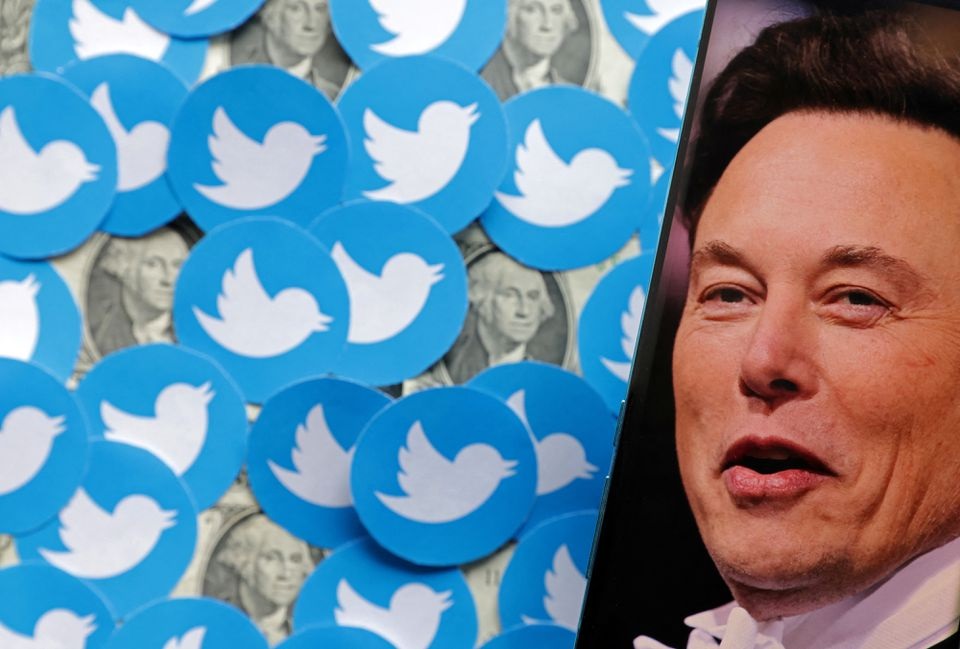
Elon Musk made a hasty decision to lay off half of Twitter’s employees, days after he completed his $44 billion acquisition of the company that now he is being forced to return some of the workers to their roles.

Bloomberg reports that Twitter is now reaching out to dozens of workers who were among the 3,700 fired late last week, asking them to return to work as they are needed to build new features Musk wants to introduce to the platform.

The report, which cites two people with knowledge of the matter, said some of the employees had been laid off before it was realized how much their experience is needed for Musk’s Twitter vision.

Twitter with roughly 7,500 employees had to cut about 3,700 of its workforce, following a claim by Musk that the platform is losing $4 million daily.

“Regarding Twitter’s reduction in force, unfortunately there is no choice when the company is losing over $4M/day,” Musk tweeted on Friday.

The decision to lay them off has come with fierce criticism and some of the staff have initiated a class action lawsuit against Twitter.

Many of the sacked employees said they became aware of their situation after their access to company-wide systems, such as email and Slack, were suddenly denied when they woke the next day.

Musk has been criticized over how he is handling the social media company since he took over – firing firstly the executives and then others, including the ethical AI team, the communications team and the human rights organization – all deemed essential by advertisers. Ad buyers are concerned about Twitter direction since Musk’s takeover, especially as it relates to content moderation. And 75% of the sacked employees is said to be from the section of Twitter that moderates contents.

Most advertisers, including United Airlines, Pfizer and General Motors, have paused ads on Twitter, causing the company a massive loss in revenue.

Musk had claimed that the massive drop in revenue is as a result of “activists groups pressuring advertisers”, adding that “they’re trying to destroy free speech.”

In response to this, an advertiser, Lou Paskalis, told Musk:  “Elon, Great chat yesterday, As you heard overwhelmingly from senior advertisers on the call, the issue concerning us all is content moderation and its impact on BRAND SAFETY/SUITABILITY. You say you’re committed to moderation, but you just laid off 75% of the moderation team!

“Advertisers are not being manipulated by activist groups, they are being compelled by established principles around the types of companies they can do business with. These principles include an assessment of the platforms commitment to brand safety and suitability.”

Musk rolled out a plan to Twitter Blue last week, by monetizing the verification. He put the price at $8 per month, riling up further controversy on the platform. The $8 per month verification check is believed to be an avenue he is trying to use to make up for the lost ad revenue.

The idea has been widely criticized and employees have expressed concern that the verification, which will be available for every user, may be used to, among other things, spread disinformation that will disrupt Tuesday’s midterm elections. The New York Times reported on Sunday that Twitter will delay changes to the check marks until after the elections.

Musk, pushing new products, including half the ads, the ability to post longer videos and get priority ranking in replies, mentions and searches, appears to have understood that the remaining close to 3,700 Twitter employees can’t get the job done. The people who spoke with Bloomberg said the employees have slept at the office in some cases as the push to meet new deadlines becomes tighter.

Musk has justified the monetization of the check marks. Besides his aim to generate revenue from it, he said on Sunday that “widespread verification will democratize journalism & empower the voice of the people.” He then warned that impersonation will no longer be tolerated in a clear attempt to allay concern that the idea will be exploited.

“Going forward, any Twitter handles engaging in impersonation without clearly specifying “parody” will be permanently suspended,” he said.

“Previously, we issued a warning before suspension, but now that we are rolling out widespread verification, there will be no warning. This will be clearly identified as a condition for signing up to Twitter Blue.”

Normalising Travel Warning in Global Political Discourse

0

As the world continues to change in social and economic aspects, no country can survive without engaging in global politics to ensure a better livelihood for citizens. It is also important to understand that predicting what will happen in international politics is difficult. This is primarily due to the fact that global leaders rely on a variety of data to make decisions that protect their countries’ interests, which will eventually pay off for citizens.

The terrorist attack on the Pentagon in the United States on September 11, 2001, was one of many noteworthy events that year. It served as a strategic turning point for world leaders, particularly American presidents, regarding how to ensure adequate security. When insecurity and safety issues are discussed in various fora or covered by the media, some groups, people, and nations are constructed and portrayed as folk devils as a result of the incident. The global south’s citizens and nations have borne the majority of the burden of construction and representation.

As mentioned previously, the incident served as a strategic turning point that sparked ongoing changes in how nations in the global north advise their citizens to travel to nations in the global south. Travel warning information is frequently updated by nations like the United States of America, Canada, France, Germany, Australia, and New Zealand in response to changes in public health, crime, terrorism, hostage-taking or kidnapping incidents, civil unrest, natural disasters, and other risks. World Nomads documents the changes every day.

Formulated Indicators

An examination of the existing indicators reveals that these countries use various constructs to define a specific indicator. For example, after reviewing the characteristics of the risks mentioned earlier, the United States of America and Canada typically issued four levels of travel alert. The four levels from US embassies to Americans are: normal precaution, increased caution, reconsider travel, and do not travel. Canada embassies follow a similar pattern, with minor differences in the wording of the levels. Instead of exercising normal security precautions, Canadian embassies issue alerts using normal security precautions.

Exercise a high degree of caution is the second level of alert for Canada instead of exercise increased caution level of the US’ alert statement. Avoid non-essential travel and avoid all travel are the third and fourth level of Canadian embassies. These levels are similar to those used by other countries in the global north when communicating travel alerts to their citizens.

According to a critical analysis of these levels, the US and Canada appear to have mastered the construction and representation of individuals and nations in the global south in relation to risks that have been identified. For instance, it is highly derogatory to use phrases like “a high degree of” and “avoid all travel.” The phrases imply that even though there are people in the country, it is not at all safe for them, and that the government does not genuinely care about their quality of life. “We issue an overall Travel Advisory level for a country, but levels of advice may vary for specific locations or areas within a country,” the US Department of State denotes.

Our analyst interprets this as “travel warning hegemony.” A new concept that could be properly positioned in global political discourse, in which lower and middle socioeconomic and political status countries are expected to compete and negotiate for recognition before capturing value from global opportunities.

Knowledge or Power in Contesting the Indicators

According to our checks, governments and individuals, including friends of the countries profiled as not secure and safe, have taken the course of contesting the alerts, describing them as discriminatory and capable of jeopardizing economic growth. The protest’s outcomes are still mixed. In some cases, the global north countries simply reduced the travel advisory based on the previously discussed indicators. The Nigerian government recently expressed concern about travel advisories issued by some embassies to their personnel in Nigeria.

Our analyst believes that improving intelligence gathering is critical for countries in the global south that are contesting the indicators. External organizations or parties issuing security status scorecards for countries based on intelligence gathering is absurd. When it comes to security and safety, governments and security agencies must recognize that it is rarely about power. It is a question of who has the necessary knowledge to make strategic decisions.