DD
MM
YYYY

PAGES

DD
MM
YYYY

spot_img

PAGES

Home Blog Page 473

North America Leads Global Institutional Crypto Adoption in 2025, With The U.S Securing Second Place

0

North America has firmly established itself as a dominant force in the global cryptocurrency landscape, driven largely by the United States’ rising role as a digital asset innovation and regulation hub.

According to the Chainalysis 2025 Adoption Index, the U.S. ranked second, accounting for 26% of all cryptocurrency transaction activity during the period studied.

Between July 2024 and June 2025, the North American region received a staggering $2.3 trillion in crypto transaction value, peaking in December 2024 when an estimated $244 billion flowed in during a single month. This December surge was marked by unprecedented stablecoin activity, setting a record for the highest monthly stablecoin transfers ever recorded.

Analysts attribute this spike partly to the election of President Donald Trump in November 2024, which fueled bullish market sentiment and optimism around clearer, more crypto-friendly regulatory policies. Monetary easing in Q4 2024 and increased institutional trading activity including ETF-driven flows and portfolio rebalancing also played key roles.

Although activity moderated slightly in 2025, transaction levels remained significantly higher than in the previous year, signaling sustained interest in digital assets. North America exhibited greater volatility than other regions, largely due to its heavy concentration of institutional players and active trading strategies.

Between September 2024 and June 2025, monthly transaction growth rates swung wildly, from a sharp 35% month-on-month decline in September to an 84% surge in November, demonstrating how sensitive the region is to short-term catalysts such as macroeconomic signals and shifts in investor sentiment.

By contrast, other regions displayed more stable adoption trends, reflecting differing market structures with North America leaning heavily on institutional and investment-driven activity, while other regions focus more on utility-driven and remittance-based usage.

Retail Participation Remains Strong

Despite the institutional dominance, retail investors continue to play a major role. Data from centralized exchanges between June 2024 and July 2025 revealed that everyday users purchased $2.7 trillion worth of Bitcoin using U.S. dollars, followed by $1.5 trillion in Ethereum (ETH) and $454 billion in Tether (USDT).

Remarkably, Bitcoin’s share of fiat-based trading has held steady at around 42% over the past four years, underscoring its enduring role as the leading digital asset for retail investors.

Regulatory Shifts Boost Institutional Growth

The year 2025 has seen sweeping regulatory reforms in the U.S., creating a more favorable environment for institutional crypto adoption. Agencies such as the Securities and Exchange Commission (SEC), Office of the Comptroller of the Currency (OCC), and Commodity Futures Trading Commission (CFTC) have reversed restrictive policies and introduced clearer guidelines that encourage broader participation by traditional financial institutions.

The President’s Working Group on Digital Asset Markets further bolstered these efforts by issuing recommendations aimed at positioning the U.S. as the “crypto capital of the world.” This shift marks a departure from the SEC’s previous “regulation by enforcement” strategy, which had long been a source of uncertainty for market participants.

As a result, North America now leads the world in high-value transactions, with 45% of all crypto transaction value involving transfers over $10 million. Europe trails behind at 34%, highlighting the U.S.’s outsized influence in global institutional adoption.

Two segments have emerged as key drivers of growth: tokenized real-world assets and spot Bitcoin ETFs.

The market for tokenized money market funds, particularly those holding U.S. Treasuries, has expanded dramatically. Assets under management (AUM) for these funds nearly quadrupled, rising from $2 billion in August 2024 to over $7 billion by August 2025.

These tokenized products are attractive for both crypto-native investors and institutions seeking regulated, yield-bearing assets that can also be deployed in decentralized finance (DeFi) protocols or fintech platforms.

Meanwhile, the Bitcoin ETF market has experienced explosive growth. As of mid-July 2025, global Bitcoin ETF AUM reached approximately $179.5 billion, with U.S.-listed ETFs accounting for over $120 billion of this total. This rapid growth since their approval in early 2024 highlights the deepening integration of crypto into traditional financial systems.

These developments signal that cryptocurrencies are increasingly recognized as mainstream investible asset classes.

Notably, the U.S. dollar’s global dominance is mirrored in the explosive growth of stablecoins, which now facilitate trillions in cross-border transfers every month. In 2025, stablecoin transfer volumes regularly exceeded $2 trillion per month, with peaks approaching $3 trillion.

From January to July 2025, the total adjusted stablecoin transaction value reached nearly $16 trillion, almost triple the levels recorded during the same period in 2024. This underscores how dollar-backed digital assets have become deeply embedded in global finance, serving not only as a settlement mechanism for crypto trades but also as a lifeline for populations underserved by traditional banking systems.

By enabling efficient, stable, and borderless transactions, stablecoins are reinforcing the U.S. dollar’s influence on a global scale extending America’s monetary reach far beyond its domestic borders.


Stage 3 Ends Soon: $4,500 Gets 62M BullZilla Tokens as Ripple ETF and TRON Growth Fuel the Top Crypto Coins to Invest in This Week

0

What happens when whales rush into a presale that climbs every 48 hours or every $100,000 raised? Investors are finding out as Ripple pushes institutional adoption and TRON expands stablecoin dominance. These two giants are making headlines, but it’s BullZilla ($BZIL) that’s roaring the loudest.

In just a few stages, the BullZilla presale has surged past $530,000 with over 1,700 holders and 27 billion tokens sold. The price is currently locked at $0.00007241, with Stage 3C offering a projected 7179.94% ROI at listing ($0.00527). For anyone seeking top crypto coins to invest in this week, $BZIL is quickly rising from a meme coin narrative into a generational wealth play. The next price surge of 9.21% is already on the clock, making this one of the top weekly crypto investments before it races further.

BullZilla’s Progressive Presale Engine: The Bull That Never Sleeps

How many projects can promise investors that the price goes up either by time or by capital flow? The BullZilla presale is built on a Progressive Price Engine, a design where the token price climbs automatically every 48 hours or the moment $100,000 is raised. This dual mechanism forces urgency into every buying decision. Every hesitation costs money, because the presale never flatlines.

At the current Stage 3 (404: Whale Signal Detected), $BZIL trades at $0.00007241. With over $530,000 already raised and whales showing signs of accumulation, the next trigger point is closing in fast. Token holders already exceed 1,700, proving that early conviction is spreading among the top crypto coins to invest in this week.

Stage Current Price Raised Holders Tokens Sold ROI to Listing ($0.00527)
3rd (404 Whale Signal) $0.00007241 $530K+ 1700+ 27B 7179.94%

Now consider the potential. A $4,500 investment at the current stage buys 62,148,114 BZIL tokens. At the presale listing price of $0.00527, those tokens are worth $327,506. That’s a life-changing 7179.94% ROI baked into the mechanics. With whales already buying in, this stage won’t last long.

Secure BullZilla Coins Before Stage 3 Ends

Set up a wallet like MetaMask or Trust Wallet, fund it with ETH from Binance or Coinbase, then connect to the Bull Zilla presale portal. Swap ETH for $BZIL, confirm, and your allocation is secured. The earlier you buy, the bigger the multiple.

Every $100K fed the beast. Every 48 hours pushed the price higher. Only those who acted early on the top crypto coins to invest in this week walked away with the apex rewards.

Ripple’s Institutional Push: ETF Launch and RLUSD Expansion

Ripple has just scored one of its biggest wins with the launch of the first U.S. spot XRP ETF (XRPR), which hit $24 million in 90 minutes and nearly $38 million by day’s end. This ETF provides institutions with a direct channel into XRP, making it one of the top crypto coins to invest in this week for exposure to regulated markets.

At the same time, Ripple partnered with DBS and Franklin Templeton to tokenize a U.S. dollar money market fund on the XRP Ledger. This fund, combined with Ripple’s RLUSD stablecoin, now offers trading and collateralized lending options for institutional players. These moves are game-changers following Ripple’s SEC lawsuit updates, cementing XRP as a regulated yet innovative asset for top weekly crypto investments.

TRON Expands Stablecoin Power: PayPal USD and Whale Watch

TRON continues to flex its ecosystem power with new integrations. PayPal USD (PYUSD) is now live on the TRON blockchain through LayerZero’s cross-chain system, positioning TRON as a settlement hub for global stablecoin payments. This follows consistent reports of strong TRON blockchain activity, including a deflationary token model that saw TRX inflation drop to –1.6%.

Price action shows TRX holding steady around $0.33–0.35, with analysts pointing toward near-term upside if the momentum continues. For investors comparing meme presales performance with established blockchains, TRON is offering stability while new coins joining exchanges build speculative fire. Its combination of stablecoin growth and network revenue keeps it in the list of top crypto coins to invest in this week.

Conclusion

The BullZilla presale is setting a new benchmark for meme coin tokenomics. With a 7179.94% ROI projection, automatic price climbs, and whale accumulation already visible, its stages are flying by. Ripple’s ETF milestone and TRON’s stablecoin expansion add credibility to the crypto market, but BZIL’s presale is where exponential growth stories are born.

The clock is ticking on the top crypto coins to invest in this week, and each $100,000 raised tightens the window. Whales have already heard the roar. The only question is: will you act before the next surge resets the price floor?

For More Information:

BZIL Official Website

Join BZIL Telegram Channel

Follow BZIL on X  (Formerly Twitter)

FAQs

What makes BullZilla unique among meme presales?

Its Progressive Price Engine guarantees price climbs every $100K or 48 hours, forcing early buying pressure.

How much has BullZilla raised so far?

Over $530,000 has been raised, with more than 1,700 token holders.

What’s Ripple’s latest breakthrough?

The launch of the first U.S. spot XRP ETF and institutional RLUSD adoption via DBS and Franklin Templeton.

How is TRON attracting investors?

By integrating PayPal USD through LayerZero, driving TRON blockchain activity and deflationary TRX tokenomics.

What’s the projected ROI for BullZilla?

At listing, investors at current stages can earn up to 7179.94% ROI, turning $4,500 into over $327,000.

Glossary

Presale – Early fundraising stage where tokens are sold before exchange listings.

Progressive Price Engine – Mechanism where price rises by time or capital raised.

ROI – Return on investment.

Stablecoin – Cryptocurrency pegged to a stable asset like USD.

ETF – Exchange-traded fund holding real assets.

LayerZero – Protocol enabling cross-chain token movement.

Token Burn – Permanent removal of tokens to reduce supply.

APY – Annual percentage yield from staking.

Liquidity Injection – Funds added to stabilize markets.

Deflationary Token – Asset with decreasing circulating supply over time.

Keywords

Top crypto coins to invest in this week, Ripple SEC lawsuit updates, TRON blockchain activity, top weekly crypto investments, meme presales performance, new coins joining exchanges, BullZilla presale ROI, BZIL token holders, XRP ETF launch, TRON PYUSD expansion

Summary

BullZilla ($BZIL) is redefining meme coin presales with a Progressive Price Engine that ensures the token price climbs every $100K or 48 hours. Already past $530K raised with over 1,700 holders, Stage 3 offers investors a 7179.94% ROI projection by listing. A $4,500 investment today can grow into over $327,000. Meanwhile, Ripple’s U.S. spot ETF launch and DBS/Franklin Templeton partnership highlight institutional growth, while TRON secures PayPal USD integration, boosting stablecoin settlement and network revenue. Together, these updates cement BullZilla, Ripple, and TRON as the top crypto coins to invest in this week.

Disclaimer: This article is for informational purposes only and does not constitute financial advice. Cryptocurrency investments carry risks, including potential loss of capital. Conduct your own research before investing.

Microsoft to Spend $4bn on Second Wisconsin Data Center as AI Demand Surges

0

Microsoft said Thursday it will allocate $4 billion to construct a second data center in Wisconsin, expanding its U.S. footprint as demand for artificial intelligence infrastructure continues to accelerate.

The announcement comes just months after the company committed $3.3 billion to its first Wisconsin facility, located in Mount Pleasant, which is expected to go online in early 2026. Together, the two sites represent one of Microsoft’s largest single-state infrastructure projects, underscoring the intensifying race among global cloud providers to secure capacity for AI workloads.

The first Mount Pleasant data center will house hundreds of thousands of Nvidia Blackwell GB200 GPUs, Microsoft President and Vice Chair Brad Smith said at a town hall meeting. The chips, unveiled earlier this year, are designed to handle the most advanced AI training and inference workloads.

“It will deliver 10x the performance of the world’s fastest supercomputer today, enabling AI training and inference workloads at a level never before seen,” Microsoft CEO Satya Nadella wrote in a post on X.

Smith, who spent part of his childhood in Mount Pleasant, said the company paused to carefully evaluate the second phase of construction before committing another $4 billion. The new facility will be of a similar scale to the first and is expected to go live in 2027 or later.

A Homegrown Power Play

Wisconsin’s Democratic Governor Tony Evers hailed the announcement, noting the state will now be home to the largest concentration of GPUs under one roof in the world. The project also repurposes land once slated for Foxconn’s manufacturing plant, which failed to materialize at the promised scale.

Water use has been a concern for locals, but Smith emphasized that the facility’s impact will be modest compared with Foxconn’s plans. The data center will require about 2.8 million gallons of water annually, while Foxconn had been permitted to consume over 7 million gallons per day.

Smith acknowledged that building such a vast computing infrastructure raises energy concerns. The two data centers together may require more than 900 megawatts of power. To mitigate the impact, Microsoft has pledged to match its fossil fuel use with carbon-free contributions to the grid.

“I just want you to know we are doing everything we can, and I believe we’re succeeding, in managing this issue well, so that you all don’t have to pay more for electricity because of our presence,” Smith told residents.

A 250-megawatt solar farm currently under construction about 150 miles northwest of the site will contribute renewable energy to the project.

Part of a Global Buildout

The Wisconsin announcement is the latest in a string of multibillion-dollar data center investments by Microsoft. Earlier this week, Smith said the company has earmarked $15.5 billion for infrastructure in the U.K. through 2028, as part of efforts to scale up AI capacity in Europe.

Separately, Amsterdam-based Nebius Group disclosed last week that Microsoft agreed to spend up to $19.4 billion over five years to rent AI data center capacity, highlighting the company’s reliance on both owned and leased infrastructure.

With more than 700 million users relying on OpenAI’s ChatGPT, which runs on Microsoft’s Azure cloud, and with enterprise software makers from Adobe to Salesforce rolling out AI enhancements, demand for GPUs and hyperscale infrastructure has reached unprecedented levels.

For Microsoft, the Wisconsin buildout represents more than just capacity. It signals the company’s ambition to dominate the global AI infrastructure market, placing it in direct competition with rivals Amazon Web Services and Google Cloud.

Smith suggested that Microsoft’s careful phasing reflects both market opportunity and community engagement.

“We did pause to think through exactly what we would build for phase two, how we would build it,” he said, adding that the company is balancing growth with sustainability.

If completed on schedule, the dual Wisconsin sites will cement the state as a central hub in the global AI arms race — a transformation few anticipated when Foxconn first broke ground in Mount Pleasant.

Uber Partners With Flytrex to Test Drone Deliveries for Uber Eats in U.S. Markets

0

Uber will begin testing drone deliveries for its Uber Eats platform in select U.S. markets by the end of 2025, in partnership with Israeli drone startup Flytrex.

The company confirmed that the deal includes a small investment in Flytrex, though Uber told Bloomberg News the investment was “not material.”

The move signals a renewed focus by Uber on aerial logistics, a technology the company first experimented with in 2019 but later abandoned amid regulatory hurdles and shifting priorities. At the time, Uber had launched its “Elevate” aviation division to explore drone deliveries and air taxis, but the unit was sold to Joby Aviation in 2020.

Now, Uber is re-entering the skies at a time when U.S. regulators are loosening restrictions on drone flights beyond the line of sight, and as aerial delivery slowly gains traction as part of the broader logistics industry.

Flytrex has become one of the most active players in the U.S. drone delivery space, with more than 200,000 deliveries completed across suburbs in North Carolina, Texas, and other states. It already works with DoorDash, Uber Eats’ largest U.S. competitor, giving it a track record in scaling drone logistics for food and retail deliveries.

Under the partnership, Uber Eats customers in pilot markets will be able to order food and groceries that can be dispatched by drone. While details of the test cities have not yet been disclosed, industry analysts expect the program to start in suburban areas where drone routes are easier to manage than in dense urban environments.

Uber’s Renewed Tech Bet

The drone initiative comes as Uber doubles down on futuristic transport partnerships. The company has been working with Alphabet’s Waymo to integrate self-driving robotaxis into its ride-hailing app in Atlanta and Austin, while also pledging to bring Joby’s electric vertical takeoff and landing air taxis to its platform in the next few years.

The company is positioning itself at the intersection of automation and logistics by layering drones into Uber Eats. If successful, the move could shorten delivery times and cut costs in a sector where margins are notoriously thin.

A Second Chance at the Sky

Uber first trialed drone food deliveries in San Diego in 2019, but the program was short-lived due to Federal Aviation Administration (FAA) restrictions and the company’s decision to prioritize core ride-hailing operations during its path to profitability.

The environment has shifted since then. The FAA has begun expanding test zones for commercial drone operations, and companies like Zipline, Wing (owned by Google parent Alphabet), and Flytrex are pushing aerial logistics closer to mainstream adoption.

Uber’s re-entry into drones also reflects intensifying competition in the U.S. food delivery market. DoorDash, Grubhub, and Instacart have all been experimenting with automation, including delivery robots and aerial systems. DoorDash, in particular, has leaned on its own partnership with Flytrex to test drone deliveries, meaning Uber will now share a technology partner with its closest rival.

For Uber Eats, which has grown into one of the company’s biggest revenue drivers, the new initiative could be a way to differentiate and capture customer loyalty in a crowded delivery market.

However, some analysts caution that while drone delivery offers promise, scaling it nationwide faces hurdles, including safety concerns, noise complaints, and the economics of building aerial networks. Still, Uber’s decision to invest—even modestly—in Flytrex suggests a strategic bet on being ready once the market matures.

325K Members Across 130 Countries and a $0.0013 Entry Still Open: BlockDAG’s Global Growth Story Is Just Beginning

0

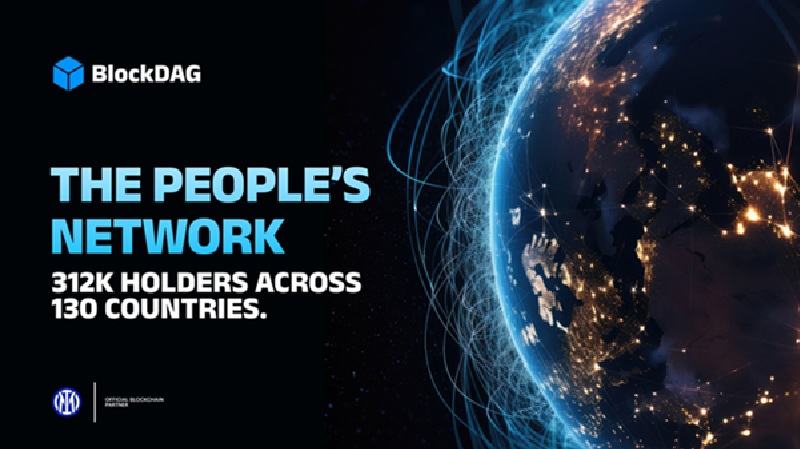
Most crypto projects chase short-term attention on Twitter or a quick influencer shoutout. BlockDAG (BDAG) has chosen a different direction. With more than 325,000 members spread across over 130 countries, its progress comes from reach, not noise.

Through local Telegram groups and community-led AMAs in multiple languages, the conversation has shifted away from a central hub. It now lives in the hands of everyday users who adapt it to their culture and share it widely. Add to that 26.2 billion coins already sold and nearly $410 million raised, and the result is clear: this isn’t just hype. It’s trust, language, and shared infrastructure across 130 regions and is still growing.

Local Voices Driving BlockDAG’s Global Reach

BlockDAG’s worldwide presence didn’t come from hashtags or ads. It came from building roots in real communities. In Vietnam, Telegram chats focus on setting up miners with step-by-step guides.

In Turkey, AMAs are led in the local language by community moderators. In Venezuela, where people distrust banks, referrals and mobile mining are spreading adoption quickly.

The real power isn’t the sheer amount of posts; it’s the translation of trust. Each message fits the local language, culture, and curiosity of that region.

Other projects rely on one-language promotion. BlockDAG’s network works like a translation engine powered by people. That’s why members don’t just hear about its mission; they understand it, share it, and help it grow.

How 325K Members Build and Coordinate Worldwide
Having 325,000 members is strong. But the real highlight is how well-coordinated the group has become. With active spaces across 130+ countries and discussions happening in many languages, the BlockDAG community already acts like a global hub without needing formal titles.

Members launch referral drives, share tips on the X1 miner, and write detailed guides for wallet use. Problems often get solved before official support responds.

This didn’t happen by accident. Weekly updates, real-time presale numbers, and feedback loops from the testnet shaped this trust. The group isn’t being managed from the top; it manages itself. That kind of teamwork is more than casual chatter. It’s proof of decentralized onboarding at work.

And momentum keeps building. Over 26.2 billion coins are gone, and nearly $410 million has been raised. Batch 30 is open at $0.03. Yet, a live campaign means early buyers can still access the $0.0013 rate until October 1. That’s a 2,900% ROI since Batch 1. People in the community share this math, make videos, and guide others on how to join.

Mobile Miners Driving Global Reach

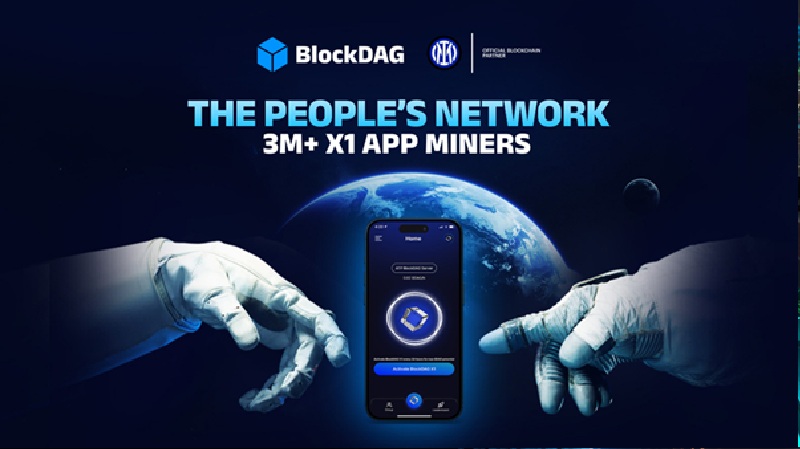
The X1 mobile miner app is one of BlockDAG’s strongest tools. It now has over 3 million active users. But its reach wasn’t driven by large ads. It spread through grassroots action.

In different countries, group leaders record tutorials in Hindi, Tagalog, Arabic, and Spanish. Miners in smaller towns post unboxing videos of X10 and X100 machines, showing setup steps for others.

This shows what makes BlockDAG different. Mining isn’t abstract here. It’s visible, shareable, and tied to real people. The blend of hardware and community turns coin holders into operators, validators, and teachers. As more groups start mining, the proof is not just on-chain; it’s in people’s hands.

All of this activity is building toward the Awakening Testnet. This phase isn’t about boasting transaction speed. It’s about showing how decentralization works before the mainnet goes live. Most testnets happen quietly. BlockDAG is being stress-tested by real users in real setups. No simulations, just mobile apps, mining gear, and global feedback in dozens of languages.

A New Model for Global Crypto Growth

BlockDAG didn’t just create a single community. It fostered many of them. Some focus on technical learning. Others run contests or share tutorials. Together, they’ve turned what could have been a campaign into a movement.

With 325,000 members across 130+ countries and active chats in many languages, this is more than a user base. It’s a global system preparing for launch.

And the story is still early. Nearly $410 million has already been raised. More than 26.2 billion BDAG coins have been sold. Batch 30 is open at $0.03, but the $0.0013 price remains available until October 1. That’s not a guess at ROI; it’s a recorded 2,900% gain from Batch 1.

But maybe the real signal isn’t just numbers. It’s people sharing this story in their own words, teaching in their own languages, and bringing more users along. That’s not short-term noise. That’s lasting change.


Presale: https://purchase.blockdag.network

Website: https://blockdag.network

Telegram: https://t.me/blockDAGnetworkOfficial

Discord: https://discord.gg/Q7BxghMVyu