DD
MM
YYYY

PAGES

DD
MM
YYYY

spot_img

PAGES

Home Blog Page 4768

Is it a crime for a woman to collect money from a man with the promise of visiting him but failed to fulfill the promise?

0
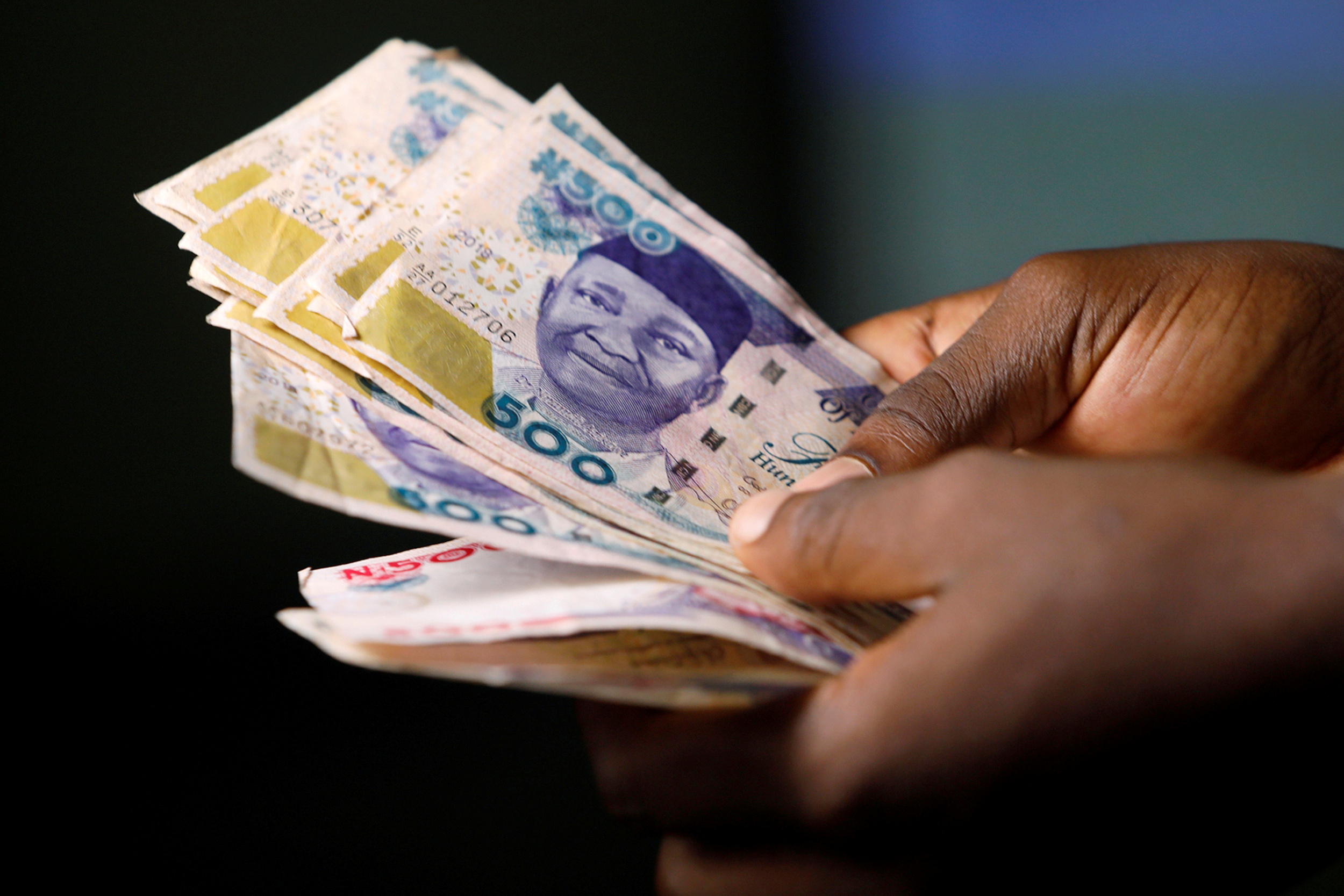
Nigerian naira banknotes are seen in this picture illustration, September 10, 2018. REUTERS/Afolabi Sotunde/File Photo

A netizen called out a lady during the week. The gist was that he met the girl on TikTok and they started bonding together, they decided to meet in person and get to know each other better, but unfortunately, they live in different cities, so the girl asked the guy to book a flight for her or send her transport fare so she could come and see him. The guy booked the flight for the lady only for the lady to reroute the flight to another destination and ghosted the guy. 

The guy said he has been calling the girl to refund him the flight money since it became obvious that the girl does not want to come and see him but the girl refused to reply to his messages. The guy is threatening legal action against the girl, he boasted that if the girl didn’t refund him the flight money in 24hours he will make sure that the girl rots in jail. 

The legal issue here is; is the action of the girl asking the guy to book a flight for her or to send her transport fare to come and see him only to ghost the guy a criminal offense? 

In section 418/419 of the criminal code, it is provided that obtaining money or property of another by false pretense or fake promise is a crime punishable with at least seven years imprisonment term. 

On this note, the guy can file a petition against the lady for obtaining from him under false pretense and fake promise that she will come and see him BUT in another section of the criminal code, specifically, S.223(2), it is a criminal offense for a man to pay or send money to a woman money for sex. It is called procurement. 

This section provides thus; S.223(2) Any person who procures a woman or girl to become a common prostitute either in Nigeria or elsewhere is guilty of a misdemeanor and is liable to imprisonment for two years.

On this note, the lady can argue in her defense that the man sent her money to visit him for sex thereby committing the crime of procurement. Maybe the man can as well argue that he was just inviting the lady out on a date and not for sex hence have not committed the crime of procurement by booking a flight for the lady. 

Both of them have a case and whoever presents a more solid argument wins. 

Protecting and Growing Wealth During Era of Inflation and Currency Deterioration

0

Let us discuss inflation and currency deterioration and how we can build financial defenses for our wealth.  In this presentation, I will explain how you can build a resilient economic playbook that mirrors Nigeria 1994 World Cup team.

I will explain how you can have Eguavoen, Keshi, Iroha  and Okechukwu in your defense with Rifai controlling at the goalpost of money. Chidi Nwanu, Ezeugo, Okafor and Emenalo will ensure you have the best economic defense possible. But it is not going to be defense only, I will explain how you can score financial wins with Yekini,  Siasia, Okocha, Finidi and Ikpeba. With Adepoju and Oliseh, you will score and defend; balance and you will have the best team ever in the history of Nigerian football. But here, it is finance!

Register for the next Tekedia Mini-MBA which begins Feb 6 and ask for access to the Zoom link to join this important session tomorrow (Saturday). Begin here 

Join me and I will explain a winning playbook that depicts the incomparable Super Eagles Fifa 1994 World Cup team; the all-time greatest team for Nigeria. We will discuss inflation and currency deterioration on a topic I have titled “Protecting and Growing Wealth During Era of Inflation and Currency Deterioration”.

(This team won the Africa Cup of Nations in 1994; I watched the game in hostel C while in FUTO. The next day, students declared celebration day. It was magical because Amuneke, the hero of the game, is from the village which partly hosts the university. Nigeria needs more wins)

Children at Risk of Water Borne Diseases Due to Recent Flood in Nigeria – UNICEF Warns

0

The United Nations Children’s Emergency Fund (UNICEF) has warned that the recent flooding witnessed in Nigeria puts about 60 percent of children at risk of waterborne diseases, drowning, and malnutrition.

According to UNICEF, it reports that the recent flooding in Nigeria has so far affected 34 out of the 36 states in the country. A total of 1.3 million people have been displaced, over 600 people have lost their lives and over 200,000 houses have either been partially or fully damaged.

UNICEF Communication Specialist Geoffrey Njoku in a press release said that cases of diarrhea and water-borne diseases, respiratory infection, and skin diseases have already been on the rise. 

Mr. Njoku said the North -Eastern states of Borno, Adamawa, and Yobe alone had a total of 7,485 cases of cholera and 319 associated deaths were reported as of 12 October, as rains are expected to continue for several weeks which calls for the increase in humanitarian needs.

Also, UNICEF Representative in Nigeria Cristian Munduate said,  “Children and adolescents in flood-affected areas are in an extremely vulnerable situation. They are particularly at risk of waterborne diseases and emotional and psychological distress. UNICEF is working closely with the Government and other partners to provide life-saving assistance to those who are most in need.

“The floods are adding another layer of complexity to an already precarious humanitarian situation in the country. Immediate priority needs for children include health, water, sanitation, and hygiene; as well as shelter and food”.

Additional funding and resources are required to respond to growing needs and to sustain ongoing humanitarian interventions, with a focus on the most vulnerable, including children with disabilities.”

According to UNICEF’s Children’s Climate Risk Index (CCRI), Nigeria is considered at ‘an extremely high risk of the impacts of climate change, ranking second out of 163 countries.

Children in ‘extremely high risk’ countries face a deadly combination of exposure to multiple climates and environmental shocks combined with high levels of underlying child vulnerability, due to inadequate essential services, such as water and sanitation, healthcare, and education.

The recent flooding witnessed in Nigeria lately has been severe which has led to the loss of lives and properties without showing any sign of stopping.

As regards the effect of the flood on the country’s economy, businesses in the country have lost over N1 trillion in two weeks to the flooding crisis.

The National Emergency Management Agency (NEMA) had earlier stated that the increase in rainfall and the release of excess water from a dam in neighboring Cameroon was what contributed to the recent flooding in Nigeria.

In a bid to effect the recent flood, the federal ministry of water resources is currently working toward the construction of about two dams.

Enjin Coin (ENJ), ApeCoin (APE) Fall Significantly; Chronoly Explodes After CRNO’s Public Listing

0

After a gigantic rise of 690% on the price chart during the pre-sale phase, Chronoly.io is on the path of conquering new peaks with the launch of CRNO tokens on the UniSwap exchange. CRNO tokens were launched on the crypto exchange on October 6, 2022. On the contrary, Enjin Coin (ENJ) and ApeCoin (APE) have faced a loss in value lately. The prices of Enjin Coin (ENJ) and ApeCoin (APE) have dropped significantly in recent weeks.

>>Buy Chronoly Tokens<<

Enjin Coin (ENJ) Searches For Green Signals

Since the beginning of 2022, Enjin Coin (ENJ) has lost a large chunk of its value due to the recent market crash. The value of Enjin Coin (ENJ) has fallen by more than 6.42% this week, causing a further drop in the trading price of Enjin Coin (ENJ). The decline in the tokens price is more severe on the monthly chart, where it has lost around 15%. Currently, the trading price of Enjin Coin (ENJ) is $0.42, which is more than 91% below its all-time high of $4.85.

Enjin Coin (ENJ) has been developed as an ecosystem of blockchain-based, interconnected gaming products. It is built on the Ethereum network.

The Yacht of ApeCoin (APE) In Doldrums

The price of ApeCoin (APE) has witnessed a decline of about 13% this week. ApeCoin (APE) has registered a drop in price after it recorded some positive growth in the previous weeks. Before the latest dip, ApeCoin (APE) was being traded at $5.55. However, the current price of ApeCoin (APE) has fallen to $4.49, which is around 84% below its all-time high of $27.50.

ApeCoin (APE) is a metaverse-based token that works as a tradable coin in the crypto market. It is the native cryptocurrency for the ecosystem of the Bored Ape Yacht Club.

Chronoly (CRNO) Prepares Strong Foundation To Rule On Crypto Exchange

The public launch of Chronoly’s CRNO tokens has followed the massive success of the project’s pre-sale phase, which began in May 2022. All CRNO tokens were sold out before the closing date of the pre-sale phase with a sharp increase of 690% in value. Chronoly’s CRNO tokens were later launched on the UniSwap exchange at the price of $0.079. Chronoly’s tokens are expected to reach $3 in the next few weeks.

Chronoly.io is a digital, decentralized marketplace for investors who want to put their money into luxury watches. Chronoly (CRNO) mints NFTs of high-end collectable watches to enable retail investors to partially own the rare timepieces. Chronoly (CRNO) procures luxury watches from multinational companies in the real world and mints their NFTs. These watch NFTs are broken into smaller fractions, enabling investors to purchase a share of luxury watches for as low as $10.

Chronoly stores the purchased watches in secured vaults worldwide to provide backing to its CRNO tokens. The backing from real-world physical rare timepieces makes Chronoly stable and profitable. According to Chronoly’s white paper, the market of luxury watches could grow to $49 billion in the coming years. If this happens, Chronoly’s value, which is directly linked to the luxury watch market, will inevitably rise.

Chronoly investors can use the platform’s lending protocol and stake their CRNO tokens in the lenders’ pool or take loans against their NFTs at competitive rates. They get to earn up to 18.6% per year by staking their CRNO tokens. Chronoly (CRNO) users are also entitled to participate in the platform’s monthly watch lottery, wherein the winner receives a physical Rolex watch. Participation in the watch lottery is free for all users.

Since Chronoly has such an immense growth prospect, experts are confident that the price of CRNO will rise sharply in the next few months. They have forecasted that CRNO tokens will go as high as $8 soon.


For more information about Chronoly.io

Website: https://chronoly.io/

Telegram: https://linktr.ee/chronolyio

Twitter: https://twitter.com/Chronolyio

For Start-ups:- The Most Important Provisions of The Nigerian Start-up Act

0

The Nigerian Start-up Act was finally signed into law by President Muhammadu Buhari on the 19th of October, 2022, making it the first dedicated piece of legislation dedicated to the creation of a Regulatory Framework for the registration, operation and support of Start-up ventures in Nigeria.

The Start-up Act was created for the purposes of :-

– Providing an enabling environment for the establishment, development & operation of Start-ups in Nigeria.

– Providing for the development & growth of Technology-related talent.

– Positioning Nigeria’s start-up ecosystem as the leading digital Technology centre in Africa, having excellent innovators with cutting-edge skills and exportable capacity

This Act is specifically applicable to :

– Companies registered under the Companies and Allied Matters Act (CAMA) 2022.

– Organizations & establishments whose activities affect the creation, support and incubation of labelled start-ups in Nigeria.

The Act also provides for the creation of a National Council For Digital Innovation & Entrepreneurship( operating through its Secretariat)  for the purposes of:-

– formulating & providing general policy guidelines for the realization of the objectives of the Act;

– providing overall direction for the harmonization of laws & regulations that affect a start-up;

– supporting digital technological development through grants to persons, research institutions & universities pursuing postgraduate programs in the areas of science, technology and innovation;

– ensuring monitoring and evaluation duties to encourage the development of Start-ups in Nigeria.

What are the major provisions of the Act for start-ups?

For start-ups, the Act makes a number of provisions, the major ones being the following :-

The creation of a Start-up Support & Engagement Portal

The secretariat with the approval of the Council shall establish a start-up support and engagement portal through which start-ups can conduct registration processes with relevant government Ministries, Departments & Agencies (MDAs).

This portal is also for the registration of what are called labelled start-ups eligible for incentives and benefits under this Act which include interaction opportunities between start-ups and the Federal Government, private institutions, angel investors, Venture Capitalists (VCs), incubators, accelerators & other relevant institutions as well as access to financing, information, Innovation and the global market.

A “Labelled Start-up” under this Act is a start-up that has been issued a certificate by the Secretariat upon the fulfilment of labelling requirements.

Which startup is eligible for labelling under this Act?

A startup is eligible for labelling under this Act where :

– it is registered as a limited liability company under the Companies and Allied Matters Act CAMA 2022 & has been in existence for 10 years;

– its objects are innovation, development, production, improvement and commercialization of a digital technology, innovation, product or process;

– it is a holder or repository of a product or process of digital technology, or the owner of a registered software;

– it has at least 1 Nigerian as a founder or co-founder of the start-up, provided the Nigerian founder or co-founder will share from profits of the start-up or revenue from the sale of its shares;

– in the case of a sole proprietorship or partnership, it satisfies the conditions set out in the other conditions mentioned above.

The Act will not apply to holding companies or subsidiaries of existing companies not registered as start-ups.

You can consult your lawyer on the process of applying for labelling your start-up under this Act. Start-up label certificates are valid for 10 years

The creation of a Start-up Investment Seed Fund

This fund is to be managed by the Nigerian Sovereign Investment Authority as its fund manager and paid into annually from sums to be approved by the Council.

This fund is for:-

– providing labelled start-ups with finance;

– providing early stage financing for a labelled start-up on the recommendation of the fund manager subject to the approval of the Council;

– providing relief to Technology laboratories, Accelerators, Incubators and hubs.

Tax & Fiscal Incentives

– Labelled Start-ups that fall under industries classified as Pioneer Status Industries (PSI) can under this Act apply to the Nigerian Investment Promotion Commission (NIPC) for Tax reliefs and incentives applicable to pioneer industries.

– Labelled Start-ups under this Act are also entitled to tax reliefs on their incomes for a 4-year period from the date of the issuance of the start-up label certificate.

– Labelled start-ups with a minimum of 10 employees, 60% of them being employees without any previous work experience and within 3 years of graduating from any school or vocation within the assessment period shall enjoy tax relief from income tax of 5%  of their accessible profits in the year of assessment in which the profits were generated.

– Tax reliefs under this Act shall last for a maximum 5-year period.

Access to Export Facilities

Labelled export business start-ups eligible under the Export (Incentives & Miscellaneous) Act are entitled to incentives and assistance from the Export Development Fund, Export Expansion Grant and the Export Adjustment Scheme Fund.

Access to Government Grants,Loans & Facilities

Labelled start-ups have access to grants and loan facilities administered by the Central Bank of Nigeria CBN, the Bank of Industry (BOI) & other bodies statutorily empowered to financially assist Small, Medium & Micro Enterprises (SMEs) .

The Creation of a Credit Guarantee Scheme

This is for:

– the provision of accessible financial support to labelled start-ups;

– the provision of financial and credit information to start-ups;

– the provision of Financial management and capacity building programs;

– the creation of a framework for credit guarantees for labelled start-ups.

Income Tax Incentives for Employees of Labelled Start-ups

Eligible employees of labelled start-ups are eligible to a 2-year personal income tax exemption of 35%.

Incentives for Investors in labelled start-ups

– The provision of a tax credit of 3% of the Investment in a labelled start-up.

– the removal of Capital Gains Taxes (CGTs) on gains from the disposal of assets by an angel investor, Venture Capitalists (VCs), private equity funds, accelerators or incubators with respect to a labelled start-up.

Tax Incentives for External Service Providers

Foreign entities providing technical, professional or management services to labelled start-ups shall be subjected to a 5% withholding tax on income from the provision of such services, provided that such payment shall qualify as the final tax to be paid by a company not registered in Nigeria.

Support with Regulatory Compliance

Corporate Affairs Commission (CAC) Compliance

Under this Act, a Corporate Affairs Commission section is to be designated on the start-up portal to ease CAC compliance for start-ups seamlessly.

Intellectual Property (IP) Compliance Support

An Intellectual Property (IP) compliance section is to be designated on the startup portal via a collaboration of the Council with the Trademarks, Patents & Design Registry as well as the Nigerian Copyrights Commission (NCC) for seamless Intellectual Property rights registrations, compliance, and the Internationalization & Commercialization of the IPs belonging to start-up which rely on the knowledge based-service package deliveries that are prone to theft and conversion.

The Provision of Crowdfunding Support for Start-ups

The Secretariat under this Act is to engage in liaising with the Securities and Exchange Commission SEC, the agency in charge of Crowdfunding in Nigeria, towards qualifying all labelled start-ups as eligible for accessing Crowdfunding facilities on SEC-licensed Crowdfunding portals and Commodities Investment Portals (CIPs).

Transfer of Foreign Technology.

The Start-up portal is to have a designated section dedicated to smoother and easier Technology Transfer agreement registrations and discounts on applicable fees.

SEC & CBN Licensing

Under this Act, there is to be a liaison with the Central Bank of Nigeria CBN and the Securities and Exchange Commission SEC for seamless and supported Fintech license acquisitions for labelled start-ups. This shall also apply to CBN Sandbox and SEC Regulatory Incubation program registrations.

Listing of Start-ups in exchanges

The Secretariat under this Act is to liaise with the Nigerian Exchange limited (NGX) to enable the easier meeting-up of exchange listing requirements for interested start-ups.

Repatriation of Capital & Profits by Foreign Investors

The Secretariat is to collaboration with the Central Bank of Nigeria CBN to guarantee repatriation of investments in start-ups at the CBN official rate as long as there’s a presented Certificate of Capital Importation (CCI).

Accelerators and Incubators

The Secretariat shall establish accelerator & incubator programs for start-ups and shall regulate the relationships between accelerators, incubators & start-ups.

Start-up accelerators and incubators registered with the Secretariat shall be entitled to incentives that include grants and aids for research and development, training and expansion projects as well as grants given under the Nigerian Digital Innovation, Entrepreneurship & Start-up policy.

Clusters, Hubs, Innovation Parks and Technology Development Zones.

The Council shall issue a framework for the establishment and operation of start-up Innovation clusters, hubs, and physical/virtual innovation parks in each state of the Federation to provide:-

– Free or subsidized workspaces.

– A detailed team, help desk and contacts for start-up support.

– Assistance and facilitation for the expansion of a start-up into foreign markets .

The Secretariat shall collaborate with the Nigerian Export Processing Zone Authority (NEPZA) to establish a Technology Development Zone in Nigeria to spur the growth and development of Start-ups, accelerators and incubators.